

Polymer Testing Equipment Market Report 2026
Global Outlook – By Product Type (Universal Testing Machines, Impact Testers, Hardness Testers, Melt Flow Index Testers, Other Product Types), By Testing Type (Mechanical Testing, Thermal Testing, Rheological And Flow Testing, Physical Property Testing, Environmental And Durability Testing), By Mode Of Operation (Manual Testing Equipment, Semi Automated Testing Equipment, Fully Automated Testing Equipment, Robotic Testing Systems), By Application (Quality Control, Research And Development, Product Development, Raw Material Inspection, Production Process Control, Supplier Qualification), By End User Type (Polymer Resin Manufacturers, Compound And Masterbatch Manufacturers, Plastic Product Manufacturers, Polymer Component Manufacturers) – Market Size, Trends, Strategies, and Forecast to 2035
Polymer Testing Equipment Market Overview
• Polymer Testing Equipment market size has reached to $1.49 billion in 2025 • Expected to grow to $2.27 billion in 2030 at a compound annual growth rate (CAGR) of 8.7% • Growth Driver: Rising Electric Vehicle Adoption Driving The Market Growth Due To Increasing Demand For Efficient Power Conversion And Energy Management • Market Trend: High-Performance Rheometers Improve Polymer Testing Efficiency Through Advanced Rheological Analysis And Rapid Data Acquisition • North America was the largest region in 2025 and Asia-Pacific is the fastest growing region.What Is Covered Under Polymer Testing Equipment Market?
Polymer testing equipment refers to specialized instruments and devices used to evaluate the physical, mechanical, thermal, chemical, and rheological properties of polymers, plastics, elastomers, and composite materials. These equipment help manufacturers, researchers, and quality control laboratories assess material performance, ensure compliance with industry standards, support product development, and verify the quality and durability of polymer-based products across various applications. The main product types of polymer testing equipment include universal testing machines, impact testers, hardness testers, melt flow index testers, and other product types. Universal testing machines refer to equipment used to evaluate the mechanical properties of polymer materials by measuring characteristics such as tensile strength, compression, elongation, and related performance parameters. These machines support mechanical testing, thermal testing, rheological and flow testing, physical property testing, and environmental and durability testing, and are available as manual testing equipment, semi automated testing equipment, fully automated testing equipment, and robotic testing systems. They find application in quality control, research and development, product development, raw material inspection, production process control, and supplier qualification, serving end user types including polymer resin manufacturers, compound and masterbatch manufacturers, plastic product manufacturers, and polymer component manufacturers.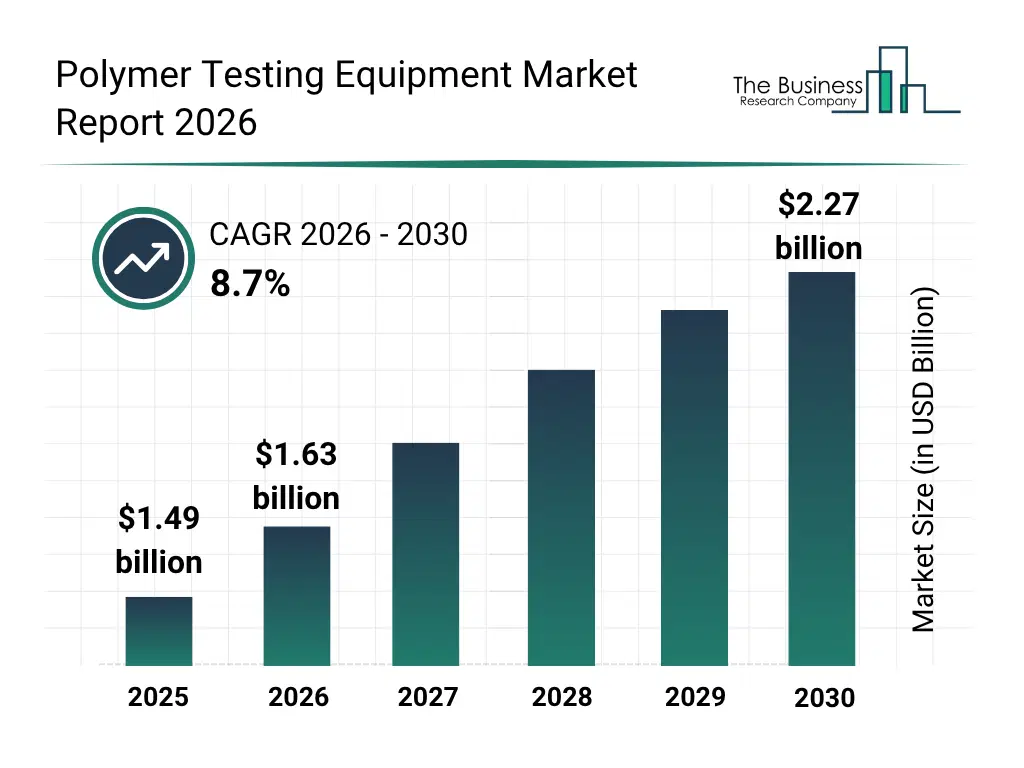
What Is The Polymer Testing Equipment Market Size and Share 2026?
The polymer testing equipment market size has grown strongly in recent years. It will grow from $1.49 billion in 2025 to $1.63 billion in 2026 at a compound annual growth rate (CAGR) of 9.1%. The growth in the historic period can be attributed to increasing polymer production volumes, growing demand for polymer quality control, rising adoption of standardized material testing, expansion of plastics and composites manufacturing, increasing research and development in advanced polymers.What Is The Polymer Testing Equipment Market Growth Forecast?
The polymer testing equipment market size is expected to see strong growth in the next few years. It will grow to $2.27 billion in 2030 at a compound annual growth rate (CAGR) of 8.7%. The growth in the forecast period can be attributed to growing demand for sustainable polymer materials, increasing use of high-performance polymers in automotive applications, rising adoption of automated testing equipment, expanding need for advanced polymer characterization, increasing regulatory requirements for material performance and quality. Major trends in the forecast period include automated polymer property characterization, advanced rheological testing techniques, high-temperature polymer testing systems, multi-parameter material testing platforms, non-destructive polymer testing methods.Tariff Impact On Polymer Testing Equipment Market
Tariffs are impacting the polymer testing equipment market by increasing the cost of imported testing instruments, precision components, sensors, electronics, and laboratory equipment used in polymer characterization. Universal testing machines, thermal analyzers, rheological testing systems, and automated equipment may face greater cost pressures, particularly in North America, Europe, and Asia-Pacific due to globally distributed manufacturing and supply chains. These higher costs can delay equipment purchases and laboratory expansions, while tariffs may also encourage manufacturers to localize production, diversify suppliers, and strengthen domestic testing-equipment capabilities.
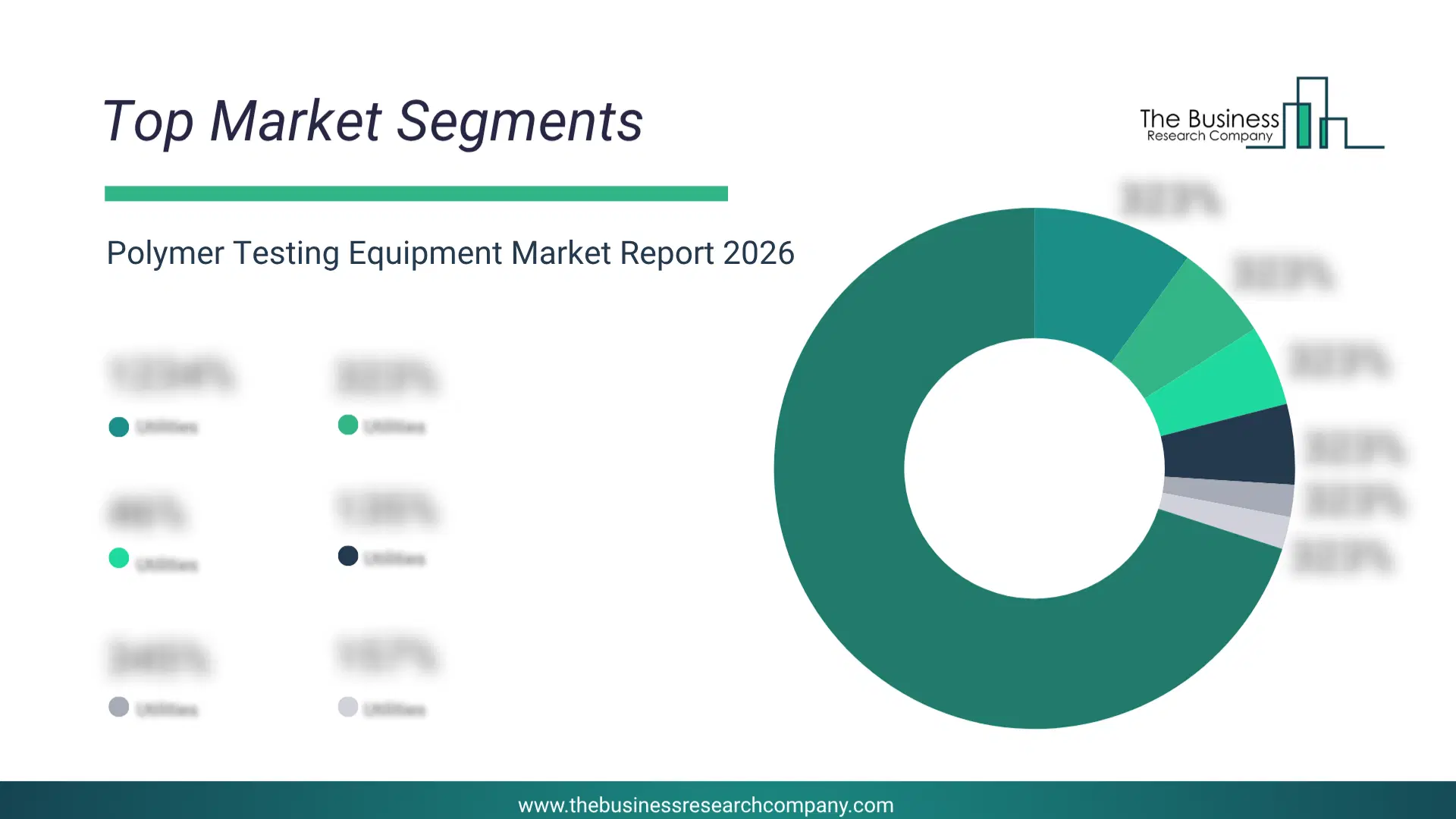
Global Polymer Testing Equipment Market Segmentation
2) By Testing Type: Mechanical Testing, Thermal Testing, Rheological And Flow Testing, Physical Property Testing, Environmental And Durability Testing 3) By Mode Of Operation: Manual Testing Equipment, Semi Automated Testing Equipment, Fully Automated Testing Equipment, Robotic Testing Systems 4) By Application: Quality Control, Research And Development, Product Development, Raw Material Inspection, Production Process Control, Supplier Qualification 5) By End User Type: Polymer Resin Manufacturers, Compound And Masterbatch Manufacturers, Plastic Product Manufacturers, Polymer Component Manufacturers Subsegments: 1) By Universal Testing Machines: Single Column Universal Testing Machines, Dual Column Universal Testing Machines, Servo Hydraulic Universal Testing Machines, Electromechanical Universal Testing Machines, High Capacity Universal Testing Machines 2) By Impact Testers: Izod Impact Testers, Charpy Impact Testers, Drop Weight Impact Testers, Instrumented Impact Testers, Pendulum Impact Testers 3) By Hardness Testers: Shore Hardness Testers, Rockwell Hardness Testers, Barcol Hardness Testers, Micro Hardness Testers, Portable Hardness Testers 4) By Melt Flow Index Testers: Manual Melt Flow Index Testers, Automatic Melt Flow Index Testers, Multi Load Melt Flow Index Testers, High Temperature Melt Flow Index Testers, Computer Controlled Melt Flow Index Testers 5) By Other Product Types: Differential Scanning Calorimeters, Thermogravimetric Analyzers, Dynamic Mechanical Analyzers, Environmental Stress Cracking Testers, Density Gradient ColumnsWhat Is The Driver Of The Polymer Testing Equipment Market?
The rising adoption of electric vehicles (EVs) is expected to propel the growth of the polymer testing equipment market going forward. Electric vehicles are automobiles powered by electric motors using energy stored in rechargeable battery systems. The adoption of electric vehicles is increasing due to stricter emission regulations, government incentives, advancements in battery technology, expanding charging infrastructure, and growing environmental concerns. Rising adoption of electric vehicles increases EV production, which drives the demand for advanced polymer materials used in batteries, lightweight components, electrical insulation materials, and vehicle interiors, thereby increasing the need for polymer testing equipment to ensure material performance, safety, durability, and regulatory compliance. For instance, in July 2026, according to the U.S. Energy Information Administration, a US-based government agency, combined sales of hybrid, plug-in hybrid, and battery electric vehicles (BEVs) reached 24% of total new light-duty vehicle sales in the second quarter of 2026 (2Q26), up from 22% in the second quarter of 2025 (2Q25). Therefore, the rising adoption of electric vehicles is driving the growth of the polymer testing equipment industry.Key Players In The Global Polymer Testing Equipment Market
Major companies operating in the polymer testing equipment market are Hitachi Ltd., Thermo Fisher Scientific Inc., Agilent Technologies Inc., Mettler-Toledo International Inc., Shimadzu Corporation, Bruker Corporation, Waters Corporation, HORIBA Ltd., Spectris plc, Anton Paar GmbH, NETZSCH-Gerätebau GmbH, ZwickRoell GmbH & Co. KG, AMETEK Brookfield Engineering Laboratories Inc., Tinius Olsen Testing Machine Company Inc., Torontech Inc., Industrial Physics Holdings Ltd., GÖTTFERT Werkstoff-Prüfmaschinen GmbH, Presto Stantest Pvt. Ltd., Pacorr Testing Instruments Pvt. Ltd., Coesfeld Materialtest GmbH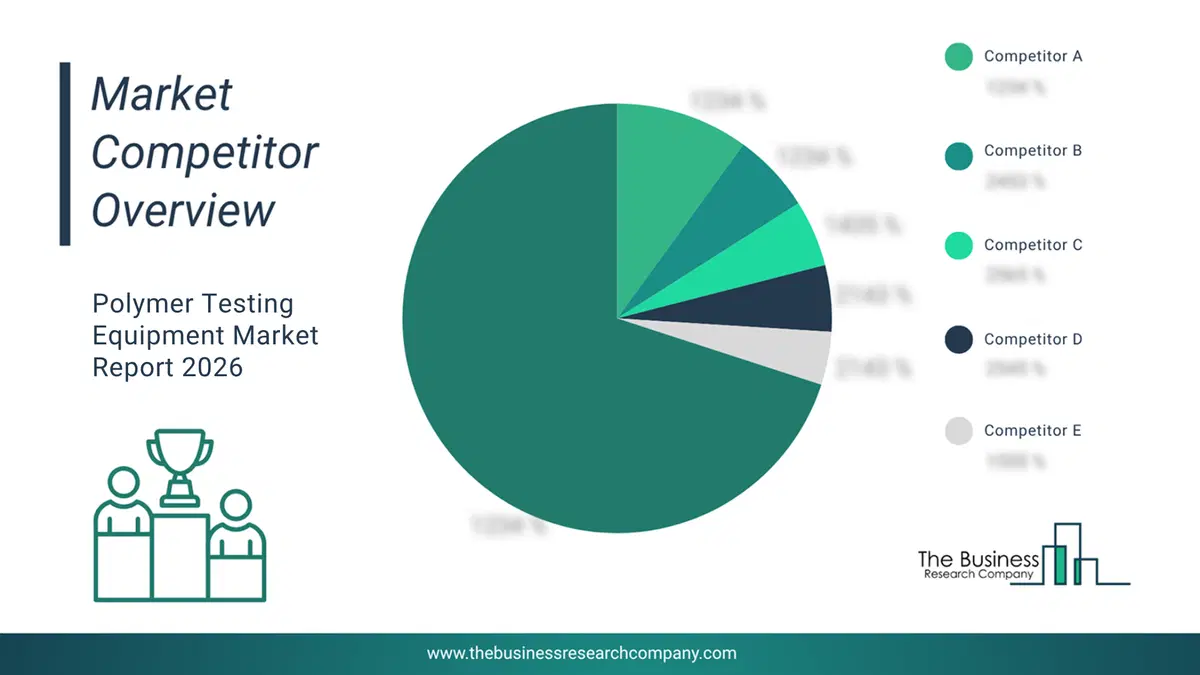
This chart is for illustrative purposes; the full report includes a detailed competitor analysis and comprehensive overview of the top 10 companies in the market.
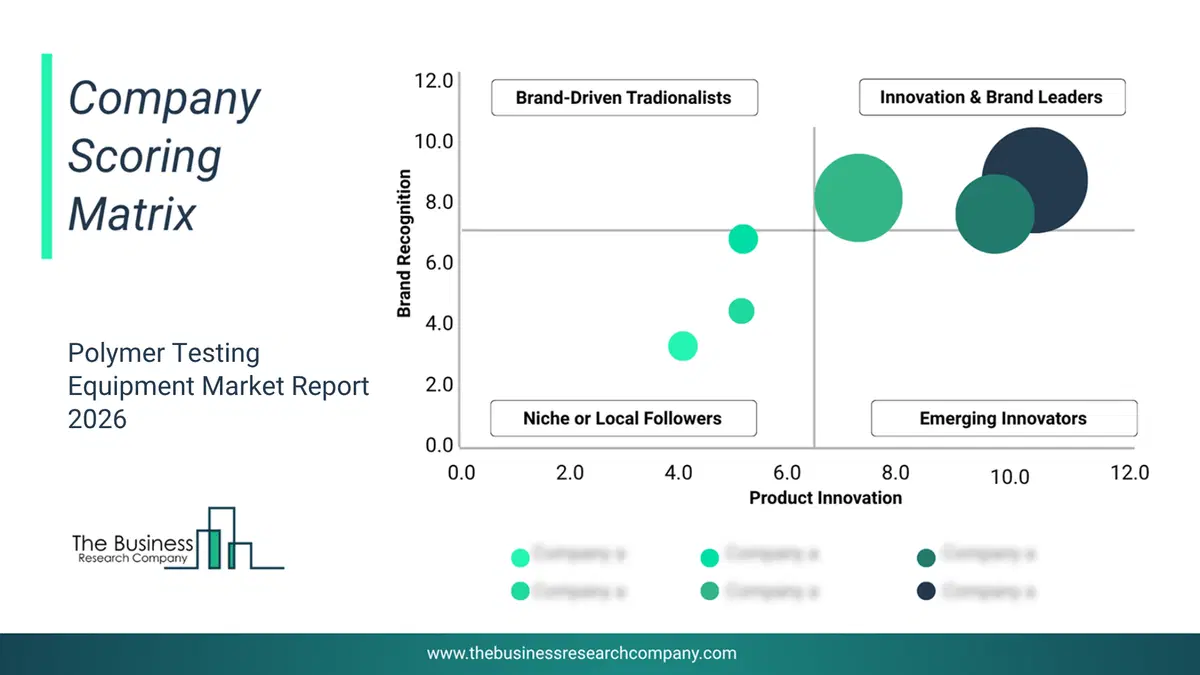
This chart maps companies by product innovation and brand strength, with bubble size indicating relative revenue, helping identify market leaders, challengers, and niche players. This is an illustrative chart; the full report provides a complete and accurate competitive analysis.
Global Polymer Testing Equipment Market Trends and Insights
Major companies operating in the polymer testing equipment market are focusing on developing innovative solutions, such as high-performance rheometers, to enhance the speed, accuracy, and reliability of polymer material characterization for research, quality control, and product development. High-performance rheometers are advanced analytical instruments that measure the flow and deformation behavior of polymer melts, solutions, and solid materials under controlled stress or strain conditions. For instance, in March 2026, Waters Corporation, a US-based analytical instruments company, launched the TA Instruments ARES-G3 Rheometer, an advanced rheological testing system for polymer and materials analysis. The instrument captures up to 25,000 data points per second and incorporates fast frequency chirp technology, reducing standard testing times by up to 80% while maintaining high data quality. It provides exceptional torque sensitivity and wide frequency coverage for evaluating the viscoelastic behavior of polymers, composites, coatings, and advanced materials. The rheometer supports both research and industrial laboratories by enabling faster, more accurate characterization of material performance, accelerating product development and quality assurance across polymer manufacturing applications.What Are Latest Mergers And Acquisitions In The Polymer Testing Equipment Market?
In July 2025, Alpha Technologies Inc., a US-based manufacturer of rheology testing instruments and materials analysis solutions, acquired Metravib Material Testing from Acoem Group for an undisclosed amount. With this acquisition, Alpha Technologies aims to expand its global materials testing capabilities, broaden its product portfolio beyond rheology testing, strengthen its capabilities in dynamic mechanical analysis (DMA), fatigue testing, viscoelastic property characterization, failure analysis, and thermo-mechanical analysis, enhance customer support, and accelerate product innovation for research and industrial laboratories worldwide. Metravib Material Testing is a France-based vibro-acoustic engineering company that specializes in providing high-end polymer testing equipment.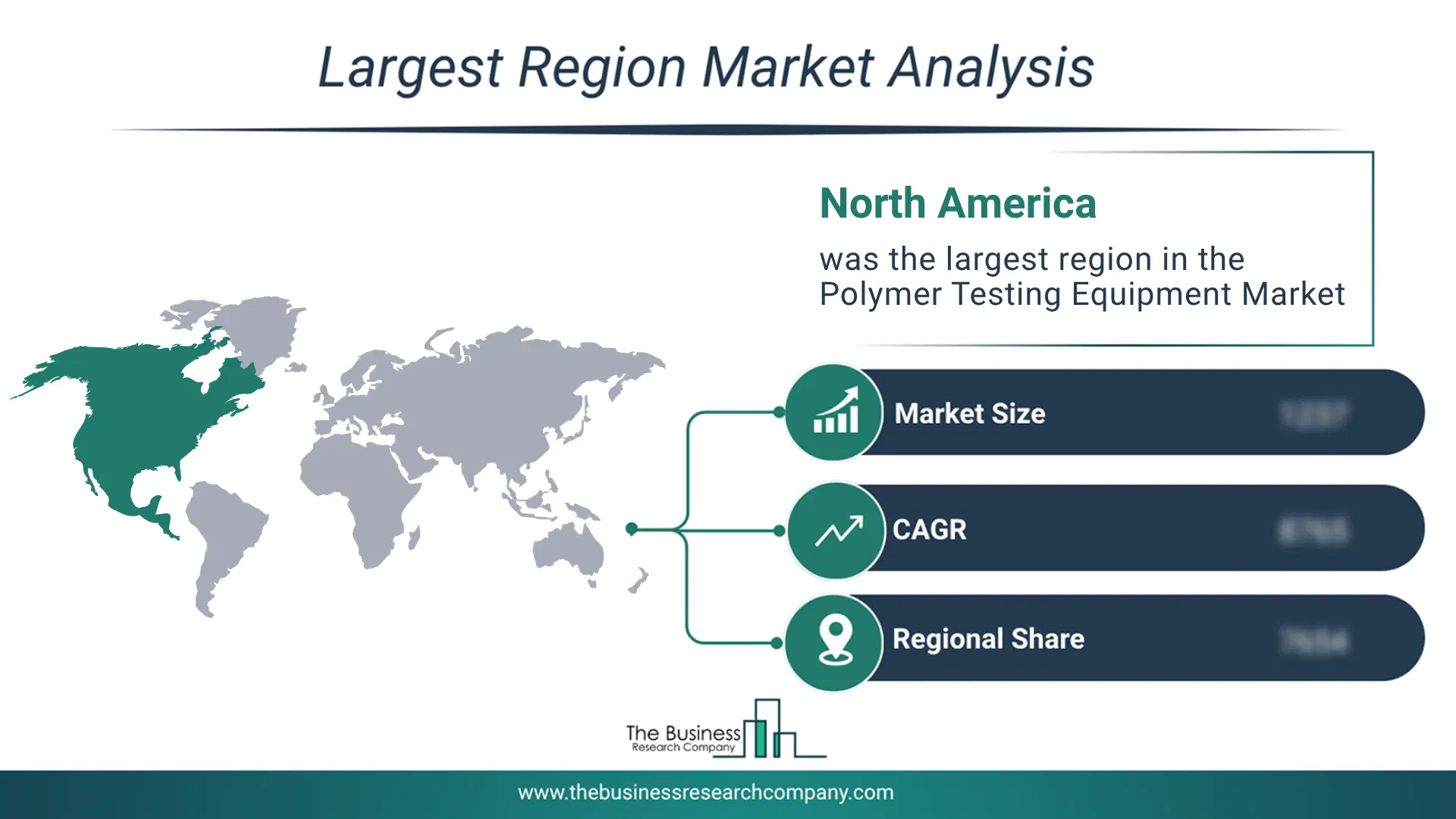
Regional Outlook/Insights
North America was the largest region in the polymer testing equipment market in 2025. Asia-Pacific is expected to be the fastest-growing region in the forecast period. The regions covered in this market report are Asia-Pacific, South East Asia, Western Europe, Eastern Europe, North America, South America, Middle East, Africa. The countries covered in this market report are Australia, Brazil, China, France, Germany, India, Indonesia, Japan, Taiwan, Russia, South Korea, UK, USA, Canada, Italy, Spain.What Defines the Polymer Testing Equipment Market?
The polymer testing equipment market consists of sales of differential scanning calorimeters, thermogravimetric analyzers, dynamic mechanical analyzers, and environmental stress cracking resistance (ESCR) testers. Values in this market are ‘factory gate’ values, that is, the value of goods sold by the manufacturers or creators of the goods, whether to other entities (including downstream manufacturers, wholesalers, distributors, and retailers) or directly to end customers. The value of goods in this market includes related services sold by the creators of the goods.How is Market Value Defined and Measured?
The market value is defined as the revenues that enterprises gain from the sale of goods and/or services within the specified market and geography through sales, grants, or donations in terms of the currency (in USD unless otherwise specified). The revenues for a specified geography are consumption values that are revenues generated by organizations in the specified geography within the market, irrespective of where they are produced. It does not include revenues from resales along the supply chain, either further along the supply chain or as part of other products.
This chart presents market attractiveness based on a quantitative evaluation of growth, competition, strategic alignment, and risk, offering a clear view of opportunity areas for decision-making. This chart is for illustrative purposes; the full report contains the complete analysis.

This chart highlights the Total Addressable Market (TAM) by estimating the maximum revenue opportunity using an assumption-driven approach, supporting strategic planning and opportunity sizing across markets. The chart is illustrative; the full report provides a more comprehensive analysis.
What Key Data and Analysis Are Included in the Polymer Testing Equipment Market Report 2026?
The polymer testing equipment market research report is one of a series of new reports from The Business Research Company that provides market statistics, including industry global market size, regional shares, competitors with the market share, detailed market segments, market trends and opportunities, and any further data you may need to thrive in the polymer testing equipment industry. The market research report delivers a complete perspective of everything you need, with an in-depth analysis of the current and future state of the industry.Polymer Testing Equipment Market Report Forecast Analysis
| Report Attribute | Details |
|---|---|
| Market Size Value In 2026 | $1.63 billion |
| Revenue Forecast In 2030 | $2.27 billion |
| Growth Rate | CAGR of 8.7% from 2026 to 2035 |
| Base Year For Estimation | 2025 |
| Actual Estimates/Historical Data | 2020-2025 |
| Forecast Period | 2026 - 2030 |
| Market Representation | Revenue in USD Billion and CAGR from 2026 to 2030 |
| Segments Covered | Product Type, Testing Type, Mode Of Operation, Application, End User Type |
| Regional Scope | Asia-Pacific, Western Europe, Eastern Europe, North America, South America, Middle East, Africa |
| Country Scope | The countries covered in the report are Australia, Brazil, China, France, Germany, India, Indonesia, Japan, Taiwan, Russia, South Korea, UK, USA, Canada, Italy, Spain. |
| Customization Scope | Request for Customization |
| Pricing And Purchase Options | Explore Purchase Options |