
Polymeric Biomaterials Market Report 2026
Global Outlook – By Product (Polylactic Acid, Polyglycolic Acid, Polyurethanes, Polytetrafluoroethylene, Polyaryletherketone, Polydioxanone, Other Products), By Application (Cardiovascular, Dental, Orthopedic, Plastic Surgery, Other Applications), By End-User (Hospitals, Clinics, Other End-users) – Market Size, Trends, Strategies, and Forecast to 2030
Polymeric Biomaterials Market Overview
• Polymeric Biomaterials market size has reached to $69.32 billion in 2025 • Expected to grow to $141.61 billion in 2030 at a compound annual growth rate (CAGR) of 15% • Growth Driver: Polymeric Biomaterials Addressing The Rising Tide Of Chronic Diseases • Market Trend: Reinforced PEEK 3D Printing Filaments Driving Advanced Medical Implants • North America was the largest region in 2025 and Asia-Pacific is the fastest growing region.What Is Covered Under Polymeric Biomaterials Market?
Polymeric biomaterials refer to materials that have been engineered to interact with biological systems for therapeutic or diagnostic purposes. These materials have evolved to induce specific biological responses and are crucial in tissue engineering, offering a wide range of functionalities such as drug delivery, micropatterning, and microfluidics. The main types of polymeric biomaterial products are polylactic acid, polyglycolic acid, polyurethanes, polytetrafluoroethylene, polyaryletherketone, polydioxanone, and others. Polylactic acid (PLA) refers to a biodegradable thermoplastic polyester derived from renewable resources such as corn starch, cassava roots, chips or starch, or sugarcane. These are used for several applications, such as cardiovascular, dental, orthopedic, plastic surgery, neurology, and others, by various end-users, including hospitals, clinics, and others.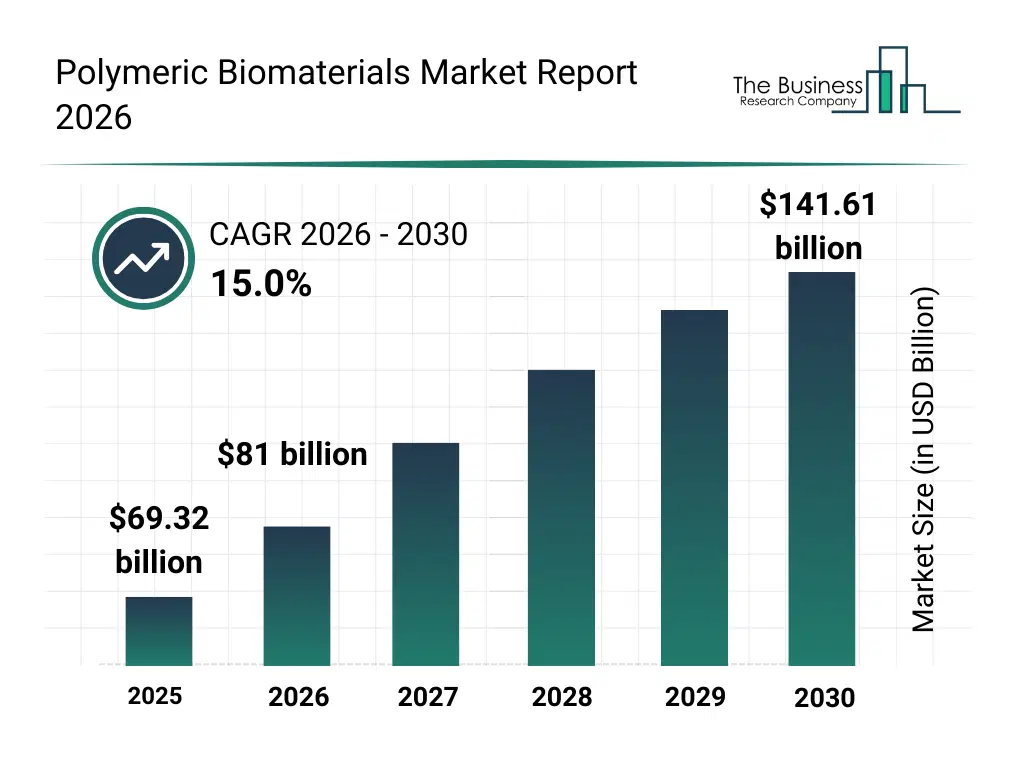
What Is The Polymeric Biomaterials Market Size and Share 2026?
The polymeric biomaterials market size has grown rapidly in recent years. It will grow from $69.32 billion in 2025 to $81 billion in 2026 at a compound annual growth rate (CAGR) of 16.8%. The growth in the historic period can be attributed to medical implant demand, growth in surgical procedures, polymer science advancements, hospital infrastructure expansion, healthcare technology adoption.What Is The Polymeric Biomaterials Market Growth Forecast?
The polymeric biomaterials market size is expected to see rapid growth in the next few years. It will grow to $141.61 billion in 2030 at a compound annual growth rate (CAGR) of 15.0%. The growth in the forecast period can be attributed to aging population healthcare needs, regenerative medicine growth, minimally invasive surgeries, personalized medicine development, biodegradable polymer innovation. Major trends in the forecast period include rising adoption in tissue engineering, increasing use in drug delivery systems, expansion of biodegradable implant materials, growing demand for advanced surgical polymers, focus on personalized medical biomaterials.
Global Polymeric Biomaterials Market Segmentation
1) By Product: Polylactic Acid, Polyglycolic Acid, Polyurethanes, Polytetrafluoroethylene, Polyaryletherketone, Polydioxanone, Other Products 2) By Application: Cardiovascular, Dental, Orthopedic, Plastic Surgery, Other Applications 3) By End-User: Hospitals, Clinics, Other End-users Subsegments: 1) By Polylactic Acid (PLA): PLA-Based Scaffolds, PLA-Based Sutures And Stents 2) By Polyglycolic Acid (PGA): PGA-Based Sutures, PGA-Based Scaffolds 3) By Polyurethanes: Polyurethane-Based Wound Dressings, Polyurethane-Based Implants 4) By Polytetrafluoroethylene (PTFE): PTFE-Based Vascular Grafts, PTFE-Based Membranes 5) By Polyaryletherketone (PAEK): PAEK-Based Implants, PAEK-Based Prosthetics 6) By Polydioxanone (PDO): PDO-Based Sutures, PDO-Based Drug Delivery Systems 7) By Other Products: Biodegradable Polymers, Natural PolymersWhat Is The Driver Of The Polymeric Biomaterials Market?
The growing prevalence of chronic diseases is expected to propel the growth of the polymeric biomaterials market going forward. Chronic diseases refer to long-lasting conditions that generally progress slowly and persist over a long period of time, often for the rest of a person's life. The increasing prevalence of chronic diseases is due to several factors, such as the aging population, lifestyle factors, economic burden, healthcare demand, and public health challenges. Polymeric biomaterials are used in treating chronic diseases by offering innovative solutions that enhance the effectiveness of medical treatments and contribute to the overall quality of life for individuals with chronic conditions. They are also used in the development of various medical devices and implants, including stents, catheters, and joint replacements, which are essential for managing chronic diseases that require surgical intervention. For instance, in September 2023, according to the World Health Organization (WHO), a Switzerland-based intergovernmental organization, each year there are 41 million deaths worldwide, accounting for 74% of all fatalities attributed to chronic diseases. This includes 17.9 million deaths from cardiovascular diseases, 9.3 million from cancer, 4.1 million from chronic respiratory diseases, and 2.0 million from diabetes. Therefore, the growing prevalence of chronic diseases is driving the growth of the polymeric biomaterials industry.Key Players In The Global Polymeric Biomaterials Market
Major companies operating in the polymeric biomaterials market are BASF SE, 3M Company, Medtronic plc, Toray Industries Inc., Evonik Industries AG, Covestro AG, Stryker Corporation, Solvay SA, DuPont Biomaterials, Arkema Group, Mitsubishi Chemical Holdings Inc., Celanese Corporation, Royal DSM, TEIJIN Limited, Zimmer Biomet Holdings Inc., Dentsply Sirona Inc., W. L. Gore & Associates Inc., Corbion NV, Integra LifeSciences Holdings Corporation, Victrex plc, Collagen Matrix, Berkeley Advanced Biomaterials, Bezwada Biomedical LLC, Covation Biomaterials, Starch Medical Inc.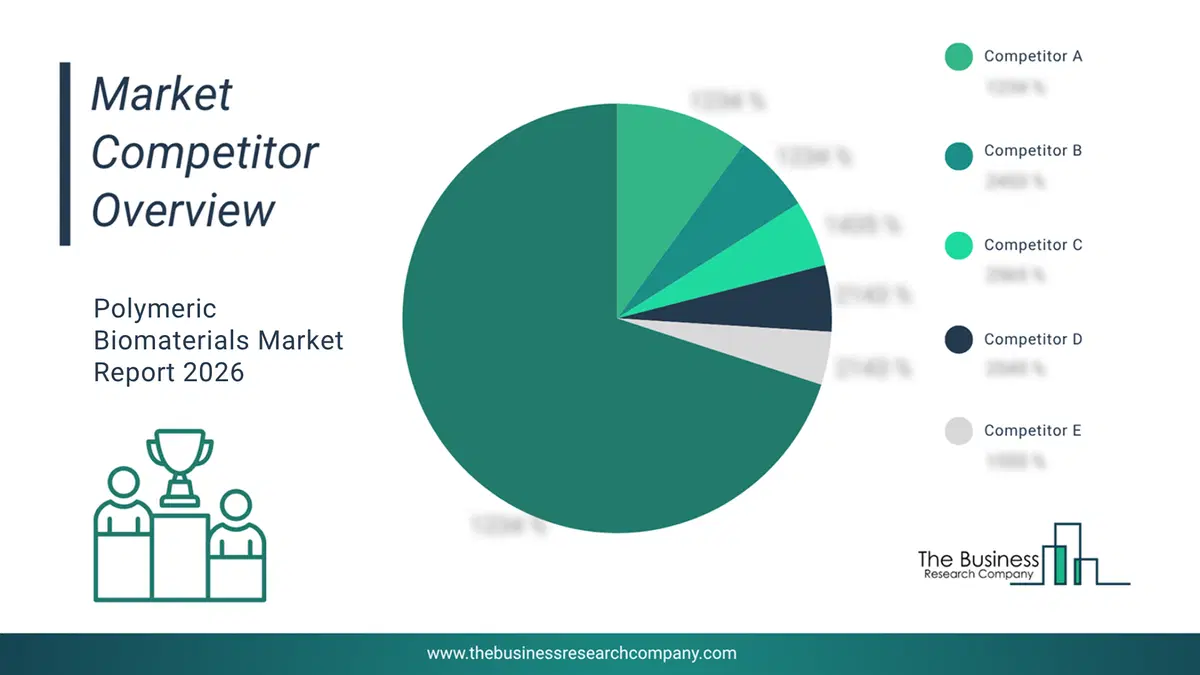
This chart is for illustrative purposes; the full report includes a detailed competitor analysis and comprehensive overview of the top 10 companies in the market.
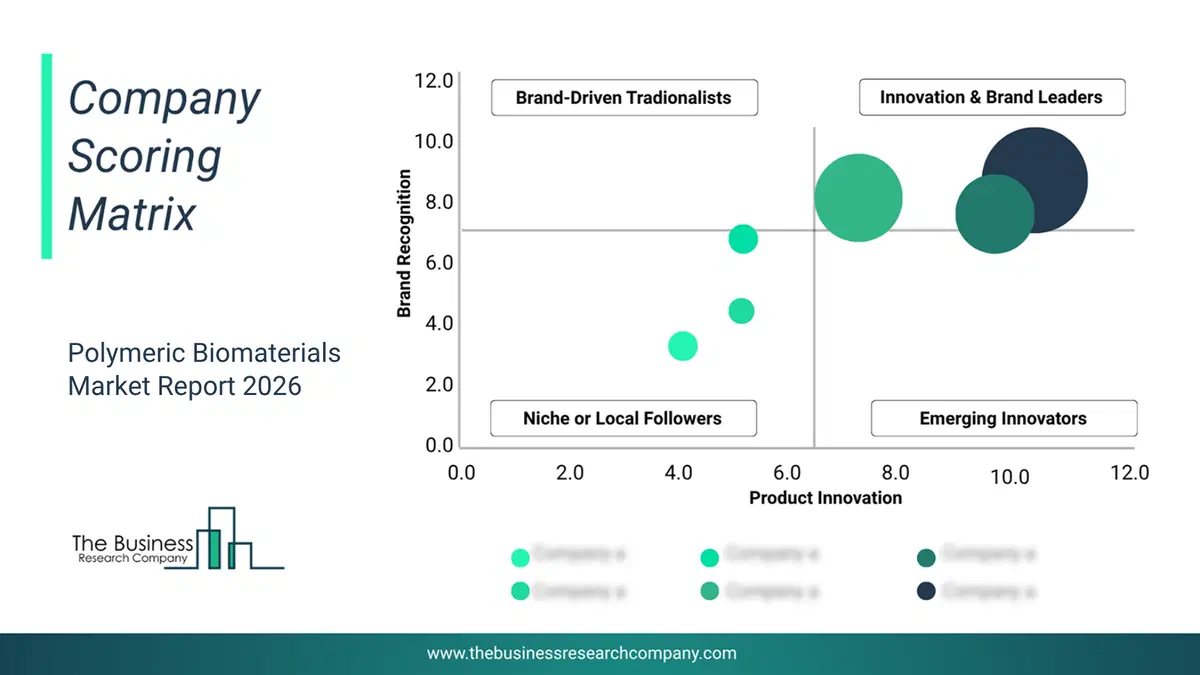
This chart maps companies by product innovation and brand strength, with bubble size indicating relative revenue, helping identify market leaders, challengers, and niche players. This is an illustrative chart; the full report provides a complete and accurate competitive analysis.
Global Polymeric Biomaterials Market Trends and Insights
Major companies operating in the polymeric biomaterials market are focusing on developing advanced innovations, such as reinforced PEEK 3D printing filaments, to gain a competitive advantage. Reinforced PEEK 3D printing filaments are high-performance polymer biomaterials enhanced with carbon fiber that enable extrusion-based 3D printing of custom medical implants with superior strength, biocompatibility, and metal-free design. For instance, in October 2023, Evonik Industries AG, a Germany-based specialty chemicals company, introduced VESTAKEEP iC4620 3DF (and its 12% carbon fiber counterpart, VESTAKEEP iC4612 3DF). These filaments offer a high strength-to-weight ratio, control over fiber alignment during printing for optimized mechanical properties, and full biocompatibility for long-term body-contact medical implants. These material innovations support the shift toward patient-specific, 3D-printed implants that rival traditional metal devices, though manufacturers must manage process complexity and ensure quality control for consistent mechanical properties.What Are Latest Mergers And Acquisitions In The Polymeric Biomaterials Market?
In July 2023, Biocoat Incorporated, a US-based provider of hydrophilic biomaterial coatings, coating services, and custom polymer solutions for medical devices, acquired Chempilots for an undisclosed amount. With this acquisition, Biocoat aimed to enhance its polymer development capabilities and broaden its biomaterial product offering to serve complex medical device applications. Chempilots is a Denmark-based provider of specialty polymers and contract synthesis services, offering advanced polymerization and manufacturing of biocompatible polymers and hydrogels for medical device and biomaterials applications.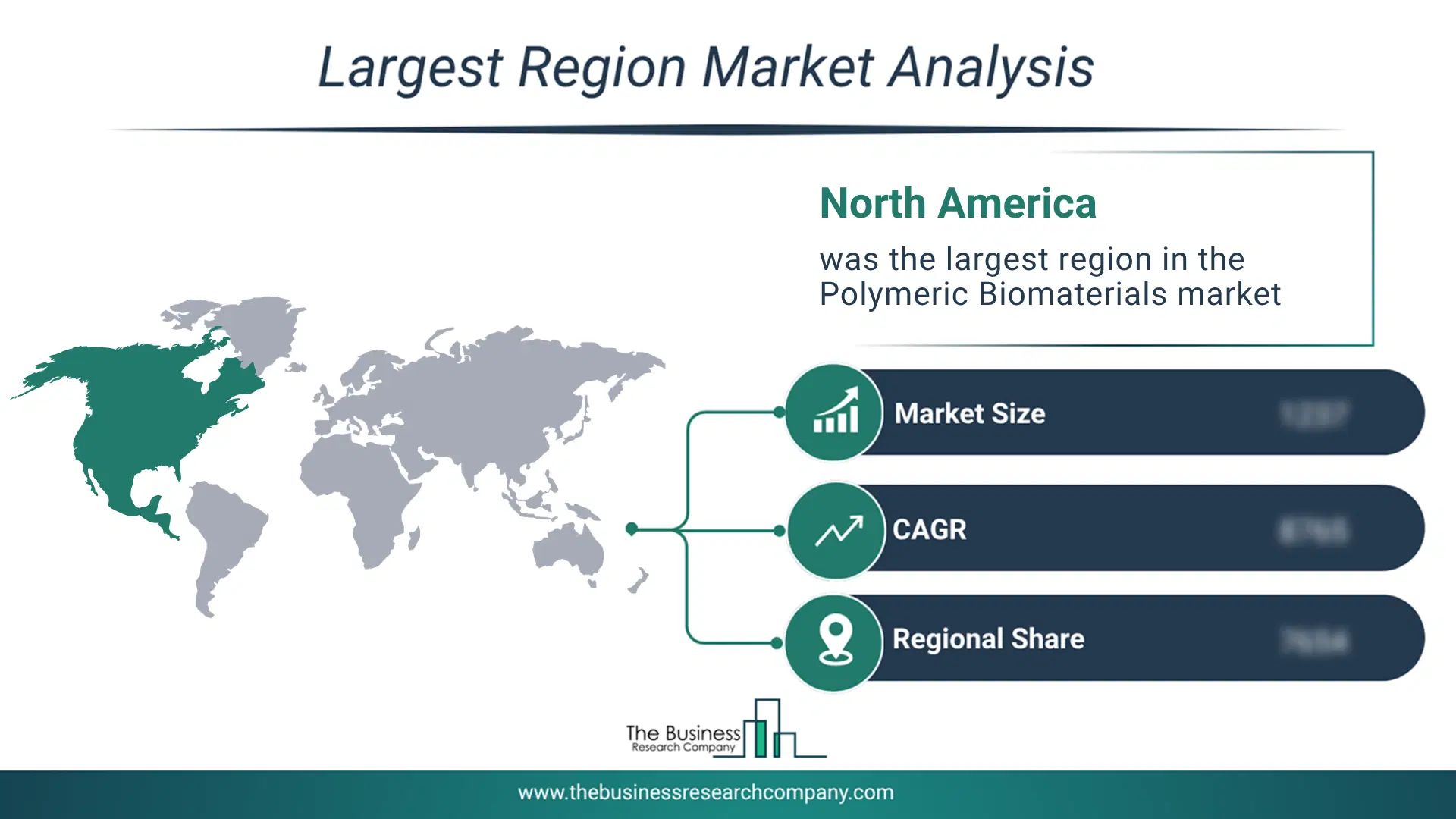
Regional Insights
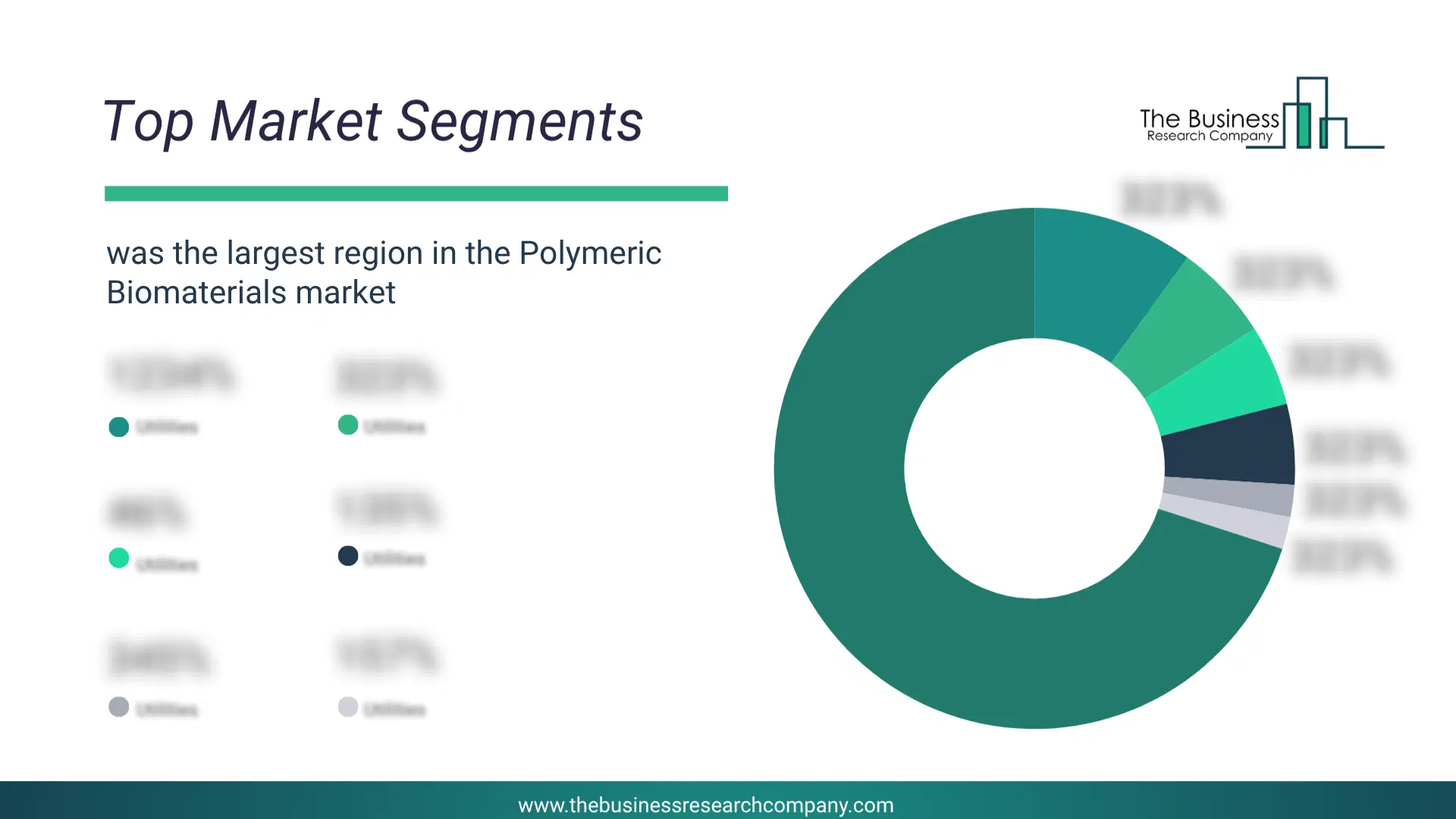
North America was the largest region in the polymeric biomaterials market in 2025. Asia-Pacific is expected to be the fastest-growing region in the forecast period. The regions covered in this market report are Asia-Pacific, South East Asia, Western Europe, Eastern Europe, North America, South America, Middle East, Africa The countries covered in this market report are Australia, Brazil, China, France, Germany, India, Indonesia, Japan, Taiwan, Russia, South Korea, UK, USA, Canada, Italy, SpainWhat Defines the Polymeric Biomaterials Market?
The polymeric biomaterials market consists of sales of biomedical sensors and monitors, dental products, wound care products, medical devices and implants, and dressings and bandages. Values in this market are ‘factory gate’ values, that is the value of goods sold by the manufacturers or creators of the goods, whether to other entities (including downstream manufacturers, wholesalers, distributors and retailers) or directly to end customers. The value of goods in this market includes related services sold by the creators of the goods.How is Market Value Defined and Measured?
The market value is defined as the revenues that enterprises gain from the sale of goods and/or services within the specified market and geography through sales, grants, or donations in terms of the currency (in USD unless otherwise specified). The revenues for a specified geography are consumption values that are revenues generated by organizations in the specified geography within the market, irrespective of where they are produced. It does not include revenues from resales along the supply chain, either further along the supply chain or as part of other products.
This chart presents market attractiveness based on a quantitative evaluation of growth, competition, strategic alignment, and risk, offering a clear view of opportunity areas for decision-making. This chart is for illustrative purposes; the full report contains the complete analysis.

This chart highlights the Total Addressable Market (TAM) by estimating the maximum revenue opportunity using an assumption-driven approach, supporting strategic planning and opportunity sizing across markets. The chart is illustrative; the full report provides a more comprehensive analysis.
What Key Data and Analysis Are Included in the Polymeric Biomaterials Market Report 2026?
The polymeric biomaterials market research report is one of a series of new reports from The Business Research Company that provides market statistics, including industry global market size, regional shares, competitors with the market share, detailed market segments, market trends and opportunities, and any further data you may need to thrive in the polymeric biomaterials industry. The market research report delivers a complete perspective of everything you need, with an in-depth analysis of the current and future state of the industry.Polymeric Biomaterials Market Report Forecast Analysis
| Report Attribute | Details |
|---|---|
| Market Size Value In 2026 | $81 billion |
| Revenue Forecast In 2030 | $141.61 billion |
| Growth Rate | CAGR of 16.8% from 2026 to 2030 |
| Base Year For Estimation | 2025 |
| Actual Estimates/Historical Data | 2020-2025 |
| Forecast Period | 2026 - 2030 |
| Market Representation | Revenue in USD Billion and CAGR from 2026 to 2030 |
| Segments Covered | Product, Application, End-User |
| Regional Scope | Asia-Pacific, Western Europe, Eastern Europe, North America, South America, Middle East, Africa |
| Country Scope | The countries covered in this market report are Australia, Brazil, China, France, Germany, India, Indonesia, Japan, Taiwan, Russia, South Korea, UK, USA, Canada, Italy, Spain |
| Key Companies Profiled | BASF SE, 3M Company, Medtronic plc, Toray Industries Inc., Evonik Industries AG, Covestro AG, Stryker Corporation, Solvay SA, DuPont Biomaterials, Arkema Group, Mitsubishi Chemical Holdings Inc., Celanese Corporation, Royal DSM, TEIJIN Limited, Zimmer Biomet Holdings Inc., Dentsply Sirona Inc., W. L. Gore & Associates Inc., Corbion NV, Integra LifeSciences Holdings Corporation, Victrex plc, Collagen Matrix, Berkeley Advanced Biomaterials, Bezwada Biomedical LLC, Covation Biomaterials, Starch Medical Inc. |
| Customization Scope | Request for Customization |
| Pricing And Purchase Options | Explore Purchase Options |