

Polymyalgia Rheumatica Market Report 2026
Global Outlook – By Treatment (Corticosteroids, Nonsteroidal Anti-Inflammatory Drugs, Disease-Modifying Antirheumatic Drugs, Biologics), By Route Of Administration (Oral, Intravenous, Subcutaneous), By Patient Type (Adult, Geriatric, Elderly Or Aging Population), By Distribution Channel (Hospital Pharmacies, Retail Pharmacies, Online Pharmacies) - Market Size, Trends, Strategies, and Forecast to 2030
Polymyalgia Rheumatica Market Overview
• Polymyalgia Rheumatica market size has reached to $1.36 billion in 2025 • Expected to grow to $1.81 billion in 2030 at a compound annual growth rate (CAGR) of 5.9% • Growth Driver: Rising Demand For Personalized Medicine Driving Growth In The Market Due To Tailored Treatments And Advancements In Genetic Research • Market Trend: FDA Approval Of Advanced IL-6 Receptor Blocker Offers New Treatment For Polymyalgia Rheumatica • Asia-Pacific was the largest region in 2025.What Is Covered Under Polymyalgia Rheumatica Market?
Polymyalgia rheumatica (PMR) is an inflammatory disorder that primarily affects older adults, causing muscle pain and stiffness, particularly in the shoulders, hips, and neck. It is characterized by aching and swelling in the muscles around the shoulders and hips, leading to difficulty in movement and daily activities. The main treatment types of polymyalgia rheumatica are corticosteroids, nonsteroidal anti-inflammatory drugs, disease-modifying antirheumatic drugs, and biologics. Corticosteroids are the primary treatment for polymyalgia rheumatica (PMR), reducing inflammation and alleviating symptoms by mimicking adrenal hormones. It is administered through various routes of administration, such as oral, intravenous, and subcutaneous, for several patient types, such as adult, geriatric, and pediatric. It is distributed through various distribution channels, including hospital pharmacies, retail pharmacies, and online pharmacies.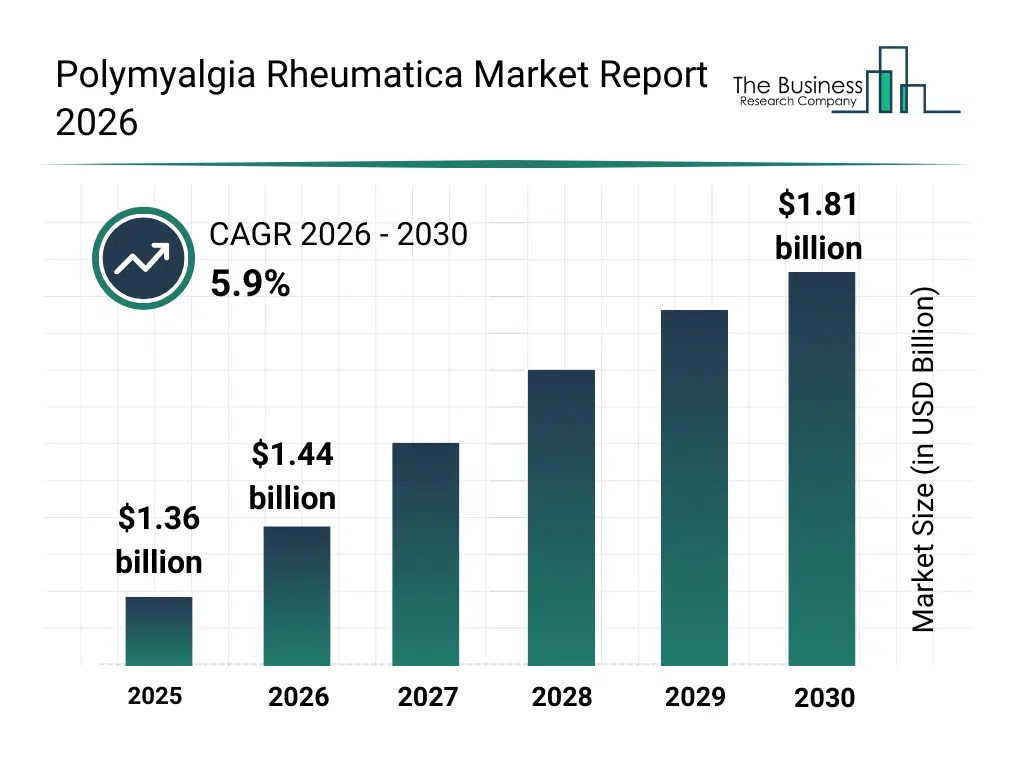
What Is The Polymyalgia Rheumatica Market Size and Share 2026?
The polymyalgia rheumatica market size has grown strongly in recent years. It will grow from $1.36 billion in 2025 to $1.44 billion in 2026 at a compound annual growth rate (CAGR) of 6.2%. The growth in the historic period can be attributed to increasing aging population size, improved clinical awareness of inflammatory disorders, established use of corticosteroids as first-line therapy, growing diagnosis rates in geriatric patients, availability of hospital-based rheumatology services.What Is The Polymyalgia Rheumatica Market Growth Forecast?
The polymyalgia rheumatica market size is expected to see strong growth in the next few years. It will grow to $1.81 billion in 2030 at a compound annual growth rate (CAGR) of 5.9%. The growth in the forecast period can be attributed to growing development of steroid-sparing therapies, rising research on inflammatory biomarkers, increasing adoption of biologics and targeted drugs, expanding access to specialized care, growing focus on reducing long-term treatment side effects. Major trends in the forecast period include increasing adoption of biologic therapies, rising focus on early and accurate diagnosis, growing use of long-term corticosteroid management, expansion of personalized treatment approaches, enhanced monitoring of disease progression.
Global Polymyalgia Rheumatica Market Segmentation
1) By Treatment: Corticosteroids, Nonsteroidal Anti-Inflammatory Drugs, Disease-Modifying Antirheumatic Drugs, Biologics 2) By Route Of Administration: Oral, Intravenous, Subcutaneous 3) By Patient Type: Adult, Geriatric, Elderly Or Aging Population 4) By Distribution Channel: Hospital Pharmacies, Retail Pharmacies, Online Pharmacies Subsegments: 1) By Corticosteroids: Prednisone, Methylprednisolone, Hydrocortisone, Dexamethasone 2) By Nonsteroidal Anti-Inflammatory Drugs (NSAIDs): Ibuprofen, Naproxen, Aspirin, Celecoxib 3) By Disease-Modifying Antirheumatic Drugs (DMARDs): Methotrexate, Leflunomide, Sulfasalazine, Hydroxychloroquine 4) By Biologics: Tumor Necrosis Factor (TNF) Inhibitors, Interleukin-6 (IL-6) Inhibitors, B-Cell Inhibitors, Janus Kinase (JAK) InhibitorsWhat Are The Drivers Of The Polymyalgia Rheumatica Market?
The rise in demand for personalized medicine is expected to propel the growth of the polymyalgia rheumatica market going forward. Personalized medicine is medical treatment tailored to an individual’s genetic profile, lifestyle, and specific health conditions for more effective outcomes. The demand for personalized medicine is driven by advancements in genetic research, growing patient expectations for tailored treatments, and improvements in diagnostic technologies. Genetic research provided a deeper understanding of individual genetic variations, allowing for more customized treatments targeting specific genetic markers. Personalized medicine can help select drugs that are most likely effective based on the patient’s characteristics, leading to a more effective and safer treatment plan. For instance, in February 2024, according to the Personalised Medicine Coalition, a US-based hospital and health care organization, in 2023, the Food and Drug Administration approved 16 new personalized treatments for rare disease patients, up from six in 2022. Therefore, the rise of personalized medicine is driving the growth of the polymyalgia rheumatica industry. The growth in telemedicine services is expected to propel the growth of the polymyalgia rheumatica market going forward. Telemedicine services use digital communication technologies, such as video calls, phone calls, and online messaging, to provide remote medical consultations, diagnoses, treatment, and follow-up care to patients without the need for in-person visits. The growth in telemedicine services is due to increasing demand for convenient healthcare options and cost-effective healthcare solutions. Patients increasingly seek convenience, especially for non-urgent consultations, which telemedicine offers by eliminating the need for in-person visits. The growth of telemedicine services supports polymyalgia rheumatica (PMR) by enabling remote monitoring of symptoms, medication management, and regular follow-ups, which are crucial for managing chronic pain and inflammation. For instance, in November 2024, according to the Australian Bureau of Statistics, an Australia-based government agency, in 2022-23, people using telehealth consultation was 87.7%, which reached 89.2% in 2023-24. Therefore, the growth in telemedicine services is driving the growth of the polymyalgia rheumatica industry.Key Players In The Global Polymyalgia Rheumatica Market
Major companies operating in the polymyalgia rheumatica market are AbbVie Inc., Sanofi S.A., Eli Lilly and Co., Regeneron Pharmaceuticals Inc., Horizon Therapeutics plc, Sparrow Pharmaceuticals Inc., Roche Holding AG, Novartis AG, Pfizer Inc., Bristol Myers Squibb Company, GlaxoSmithKline plc, AstraZeneca plc, Merck & Co. Inc., Janssen Pharmaceuticals Inc., Takeda Pharmaceutical Company Limited, UCB S.A., Amgen Inc., Boehringer Ingelheim, Bayer AG, Teva Pharmaceutical Industries Ltd., Sun Pharmaceutical Industries Ltd., Lupin Limited, Aurobindo Pharma Limited
This chart is for illustrative purposes; the full report includes a detailed competitor analysis and comprehensive overview of the top 10 companies in the market.
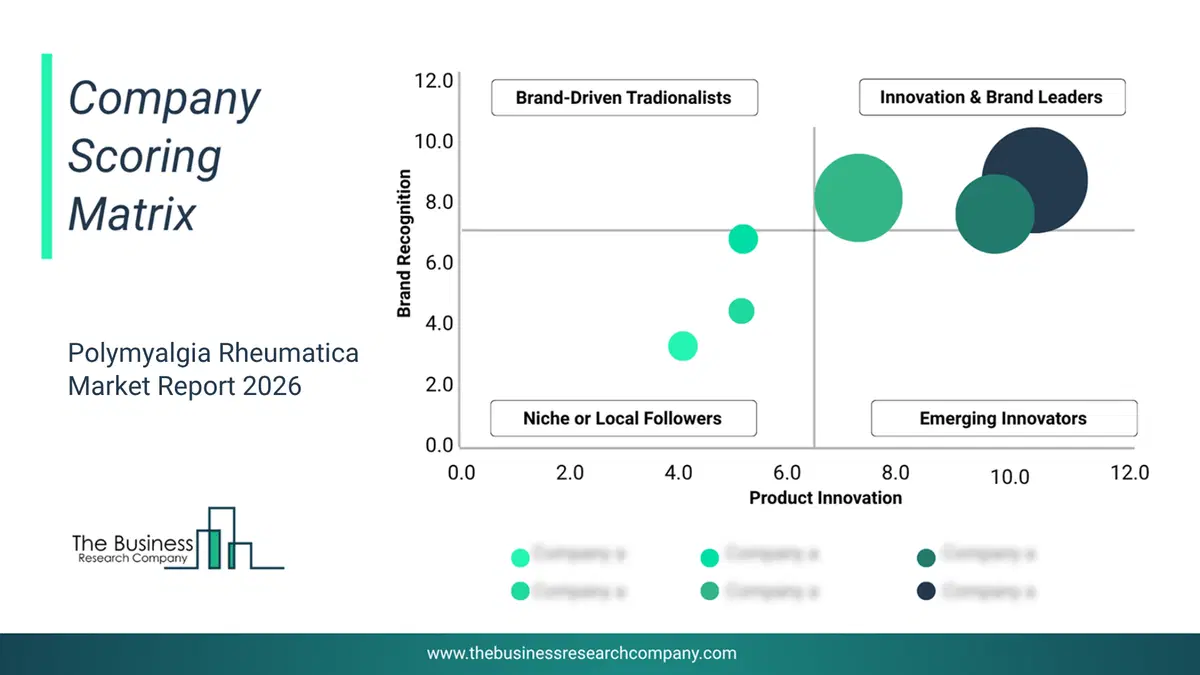
This chart maps companies by product innovation and brand strength, with bubble size indicating relative revenue, helping identify market leaders, challengers, and niche players. This is an illustrative chart; the full report provides a complete and accurate competitive analysis.
Global Polymyalgia Rheumatica Market Trends and Insights
Major companies operating in the polymyalgia rheumatica market are focusing on developing advanced drugs, such as interleukin-6 (IL-6) receptor blockers, to provide more targeted and effective treatment options. Interleukin-6 (IL-6) receptor blockers are biological drugs that inhibit IL-6, a key pro-inflammatory cytokine in autoimmune diseases. By blocking IL-6, these treatments reduce inflammation and improve symptoms, enhancing the quality of life for PMR patients. For instance, in February 2023, Regeneron Pharmaceuticals, Inc., a US-based biotechnology company, and Sanofi, a France-based healthcare company, announced the Food and Drug Administration (FDA) approved Kevzara (sarilumab) for treating polymyalgia rheumatica (PMR) in adults who haven't responded well to corticosteroids or can't tolerate tapering off them. Kevzara, the first and only biologic approved for this condition, works by inhibiting IL-6-mediated signaling. The approval was based on a study where 28.3% of patients on sarilumab achieved sustained remission at week 52, compared to 10.3% on placebo2. Kevzara is administered via subcutaneous injection once every two weeks and is also approved for treating moderately to severely active rheumatoid arthritis. Sanofi's stock (SNY) is currently priced at $54.13 on the NASDAQ.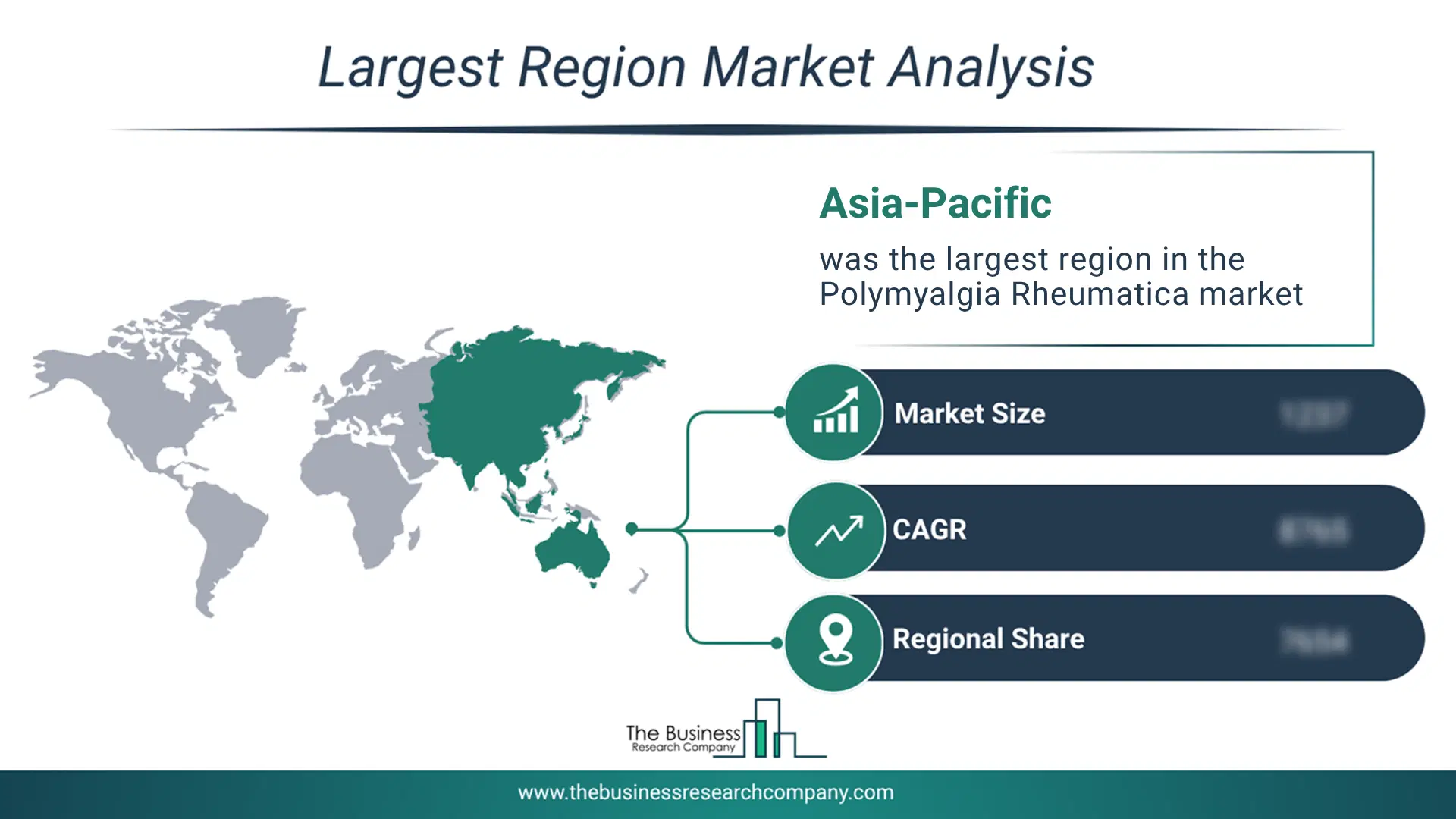
Regional Outlook
Asia-Pacific was the largest region in the polymyalgia rheumatica market in 2025. The regions covered in this market report are Asia-Pacific, South East Asia, Western Europe, Eastern Europe, North America, South America, Middle East, Africa. The countries covered in this market report are Australia, Brazil, China, France, Germany, India, Indonesia, Japan, Taiwan, Russia, South Korea, UK, USA, Canada, Italy, Spain.What Defines the Polymyalgia Rheumatica Market?
The polymyalgia rheumatica market consists of revenues earned by entities by providing services such as medication management, pain management, laboratory testing, and nutritional counseling. The market value includes the value of related goods sold by the service provider or included within the service offering. The polymyalgia rheumatica market includes sales of disease-modifying anti-rheumatic drugs, calcium and vitamin D supplements, assistive devices, and physical therapy aids. Values in this market are ‘factory gate’ values, that is, the value of goods sold by the manufacturers or creators of the goods, whether to other entities (including downstream manufacturers, wholesalers, distributors, and retailers) or directly to end customers. The value of goods in this market includes related services sold by the creators of the goods.How is Market Value Defined and Measured?
The market value is defined as the revenues that enterprises gain from the sale of goods and/or services within the specified market and geography through sales, grants, or donations in terms of the currency (in USD unless otherwise specified). The revenues for a specified geography are consumption values that are revenues generated by organizations in the specified geography within the market, irrespective of where they are produced. It does not include revenues from resales along the supply chain, either further along the supply chain or as part of other products.
This chart presents market attractiveness based on a quantitative evaluation of growth, competition, strategic alignment, and risk, offering a clear view of opportunity areas for decision-making. This chart is for illustrative purposes; the full report contains the complete analysis.

This chart highlights the Total Addressable Market (TAM) by estimating the maximum revenue opportunity using an assumption-driven approach, supporting strategic planning and opportunity sizing across markets. The chart is illustrative; the full report provides a more comprehensive analysis.
What Key Data and Analysis Are Included in the Polymyalgia Rheumatica Market Report 2026?
The polymyalgia rheumatica market research report is one of a series of new reports from The Business Research Company that provides market statistics, including industry global market size, regional shares, competitors with the market share, detailed market segments, market trends and opportunities, and any further data you may need to thrive in the polymyalgia rheumatica industry. The market research report delivers a complete perspective of everything you need, with an in-depth analysis of the current and future state of the industry.Polymyalgia Rheumatica Market Report Forecast Analysis
| Report Attribute | Details |
|---|---|
| Market Size Value In 2026 | $1.44 billion |
| Revenue Forecast In 2030 | $1.81 billion |
| Growth Rate | CAGR of 5.9% from 2026 to 2030 |
| Base Year For Estimation | 2025 |
| Actual Estimates/Historical Data | 2020-2025 |
| Forecast Period | 2026 - 2030 |
| Market Representation | Revenue in USD Billion and CAGR from 2026 to 2030 |
| Segments Covered | Treatment, Route Of Administration, Patient Type, Distribution Channel |
| Regional Scope | Asia-Pacific, Western Europe, Eastern Europe, North America, South America, Middle East, Africa |
| Country Scope | The countries covered in the report are Australia, Brazil, China, France, Germany, India, Indonesia, Japan, Taiwan, Russia, South Korea, UK, USA, Canada, Italy, Spain |
| Key Companies Profiled | AbbVie Inc., Sanofi S.A., Eli Lilly and Co., Regeneron Pharmaceuticals Inc., Horizon Therapeutics plc, Sparrow Pharmaceuticals Inc., Roche Holding AG, Novartis AG, Pfizer Inc., Bristol Myers Squibb Company, GlaxoSmithKline plc, AstraZeneca plc, Merck & Co. Inc., Janssen Pharmaceuticals Inc., Takeda Pharmaceutical Company Limited, UCB S.A., Amgen Inc., Boehringer Ingelheim, Bayer AG, Teva Pharmaceutical Industries Ltd., Sun Pharmaceutical Industries Ltd., Lupin Limited, Aurobindo Pharma Limited |
| Customization Scope | Request for Customization |
| Pricing And Purchase Options | Explore Purchase Options |