
Polypropylene Yarn Market Report 2026
Global Outlook – By Product Type (Monofilament Yarn, Multifilament Yarn, Staple Fiber Yarn), By Yarn Form (Flat Yarn, Twisted Yarn, Intermingled Yarn), By Application (Carpets And Rugs, Ropes And Twines, Packaging Materials, Geotextiles, Upholstery And Furnishings, Industrial Textiles), y End-Use Industry (Textiles And Furnishings, Packaging, Construction, Agriculture, Automotive, Industrial Manufacturing)– Market Size, Trends, Strategies, and Forecast to 2035
Polypropylene Yarn Market Overview
• Polypropylene Yarn market size has reached to $17.92 billion in 2025 • Expected to grow to $25.12 billion in 2030 at a compound annual growth rate (CAGR) of 7% • Growth Driver: Expansion Of Global E-Commerce Fueling The Growth Of The Market Due To Higher Demand For Durable And Lightweight Packaging Materials • Market Trend: Innovations In Polypropylene Yarn Technology Enhance Strength And Versatility Across Industrial Applications • North America was the largest region in 2025 and Asia-Pacific is the fastest growing region.What Is Covered Under Polypropylene Yarn Market?
Polypropylene yarn is a synthetic yarn manufactured from polypropylene polymer, valued for its lightweight structure, high strength, moisture resistance, and chemical resistance. It is primarily used to manufacture carpets, ropes, geotextiles, industrial fabrics, woven sacks, packaging materials, upholstery, webbing, nets, and other textile products requiring durability and low moisture absorption. The main product types of polypropylene yarn include monofilament yarn, multifilament yarn, and staple fiber yarn. Monofilament yarn consists of a single continuous filament and is commonly used in ropes, nets, mesh, and technical textile applications. Multifilament yarn consists of multiple continuous filaments combined into a single yarn and is widely used in carpets, upholstery, ropes, webbing, and industrial fabrics. Staple fiber yarn is produced from short polypropylene fibers that are spun together and is used in textile blends, furnishings, and selected industrial applications. Polypropylene yarn is also available in different denier ranges and in forms such as flat, twisted, and intermingled yarn to meet specific strength, flexibility, and processing requirements.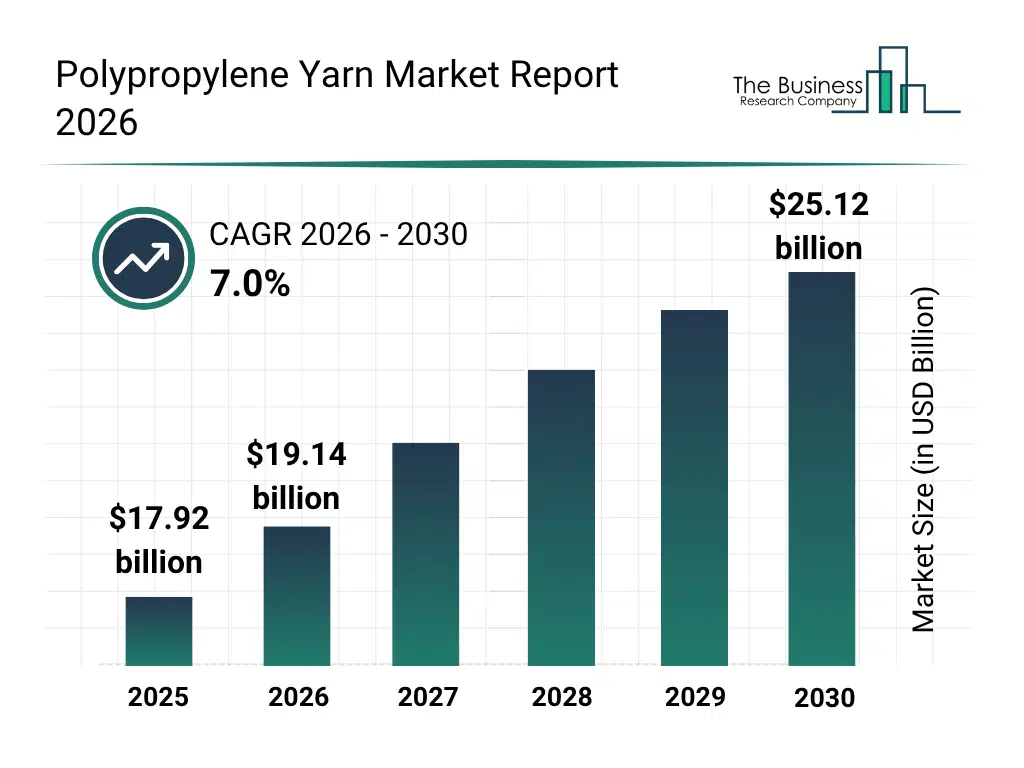
What Is The Polypropylene Yarn Market Size and Share 2026?
The polypropylene yarn market size has grown strongly in recent years. It will grow from $17.92 billion in 2025 to $19.14 billion in 2026 at a compound annual growth rate (CAGR) of 6.8%. The growth in the historic period can be attributed to growing demand for lightweight synthetic fibers, increasing use of polypropylene yarn in industrial textiles, rising adoption of geotextiles, expansion of polypropylene-based packaging applications, growing demand for moisture-resistant textile materials.What Is The Polypropylene Yarn Market Growth Forecast?
The polypropylene yarn market size is expected to see strong growth in the next few years. It will grow to $25.12 billion in 2030 at a compound annual growth rate (CAGR) of 7.0%. The growth in the forecast period can be attributed to increasing demand for recycled polypropylene yarn, rising infrastructure development and geotextile consumption, growing automotive lightweighting requirements, expanding demand for durable industrial fabrics, increasing use of polypropylene yarn in sustainable textile applications. Major trends in the forecast period include recycled polypropylene yarn development, high-strength polypropylene yarn production, lightweight yarn formulations, moisture-resistant yarn applications, chemical-resistant industrial yarn.Tariff Impact On Polypropylene Yarn Market
Tariffs are impacting the polypropylene yarn market by increasing the cost of imported polypropylene polymers, yarn-processing equipment, and textile manufacturing inputs, raising production costs across the value chain. Nonwovens, automotive, packaging, and construction applications are particularly exposed, with Asia-Pacific manufacturing hubs and major importing regions such as North America and Europe facing greater supply-chain pressures. However, tariffs may encourage domestic polypropylene production, regional sourcing, and investments in local yarn manufacturing, strengthening supply-chain resilience and creating opportunities for domestic producers.
Global Polypropylene Yarn Market Segmentation
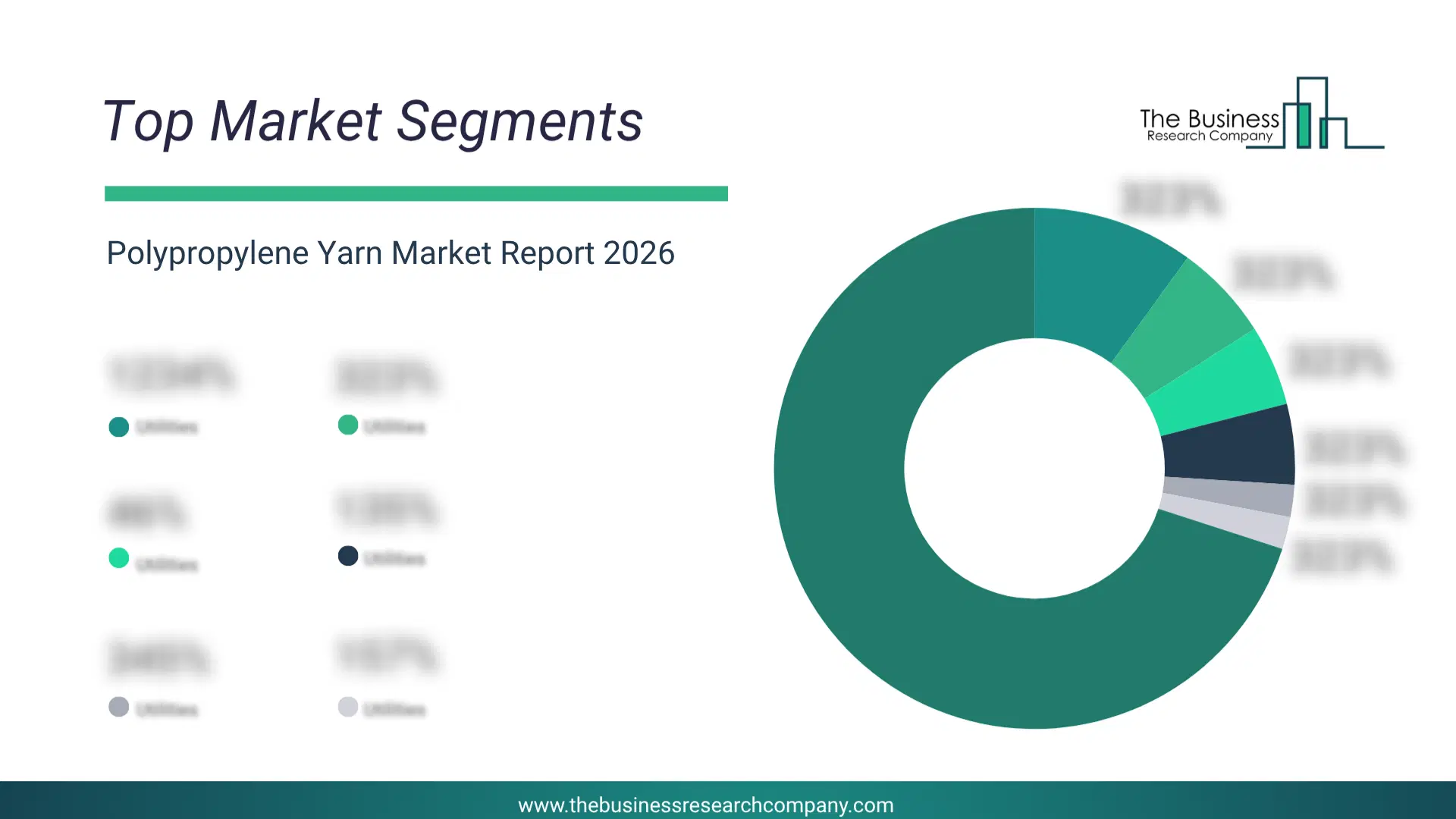
2) By Yarn Form: Flat Yarn, Twisted Yarn, Intermingled Yarn 3) By Application: Carpets And Rugs, Ropes And Twines, Packaging Materials, Geotextiles, Upholstery And Furnishings, Industrial Textiles 4) By End-Use Industry: Textiles And Furnishings, Packaging, Construction, Agriculture, Automotive, Industrial Manufacturing Subsegments: 1) By Monofilament Yarn: Fine Denier Monofilament Yarn, Medium Denier Monofilament Yarn, Coarse Denier Monofilament Yarn< 2) By Multifilament Yarn: Flat Multifilament Yarn, Twisted Multifilament Yarn, Intermingled Multifilament Yarn 3) By Staple Fiber Yarn: Fine Staple Fiber Yarn, Medium Staple Fiber Yarn, Coarse Staple Fiber YarnWhat Is The Driver Of The Polypropylene Yarn Market?
The expansion of global e-commerce is expected to propel the growth of the polypropylene yarn market going forward. Global e-commerce refers to the buying and selling of goods and services through online platforms across domestic and international markets, supported by digital payment systems and logistics networks. The expansion of global e-commerce is increasing because consumers continue to prefer convenient online shopping supported by wider internet access and improved digital payment infrastructure. The expansion of global e-commerce drives demand for polypropylene yarn by increasing the need for durable woven packaging materials, including sacks, bags, and protective packaging used for storing and transporting goods. For instance, in May 2026, according to the United States Census Bureau, a US-based government statistical agency, in the first quarter of 2026, U.S. retail e-commerce sales reached $326.7 billion, representing a 2.7% increase from the fourth quarter of 2025, after adjusting for seasonal variations but not for price changes. Therefore, the expansion of global e-commerce is driving the growth of the polypropylene yarn industry.Key Players In The Global Polypropylene Yarn Market
Major companies operating in the polypropylene yarn market are Beaulieu International Group NV, Radici Partecipazioni SpA, William Barnet & Son LLC, Karatzis SA, Don & Low Limited, AYM Syntex Limited, Filatex India Limited, Cordex Companhia Industrial Textil SA, Chemosvit a.s., Mewar Polytex Limited, Singhal Industries Private Limited, Essegomma SpA, East Asia Textile Technology Co Ltd, Shanghai Vico Industrial Co Ltd, Filatex Tekstil Sanayi ve Ticaret AS, Gama Packthread Industries Limited, Kalyani Polymers Private Limited, Vera Synthetic Private Limited, Parth Poly Coat Yarn Private Limited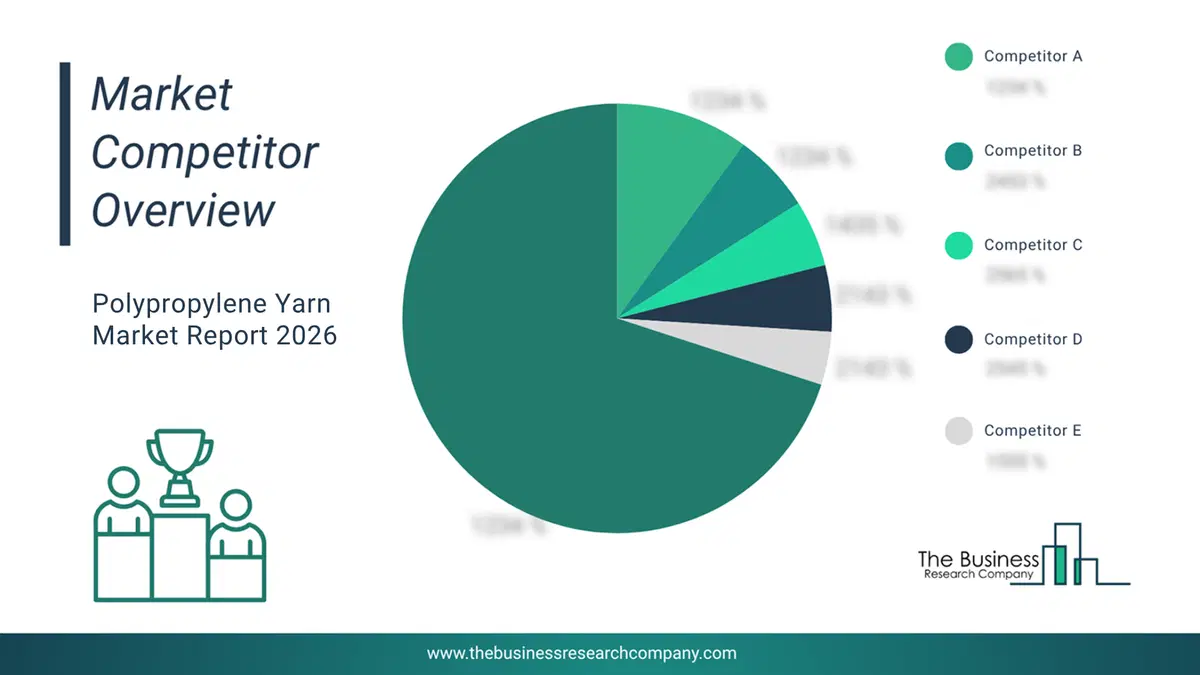
This chart is for illustrative purposes; the full report includes a detailed competitor analysis and comprehensive overview of the top 10 companies in the market.
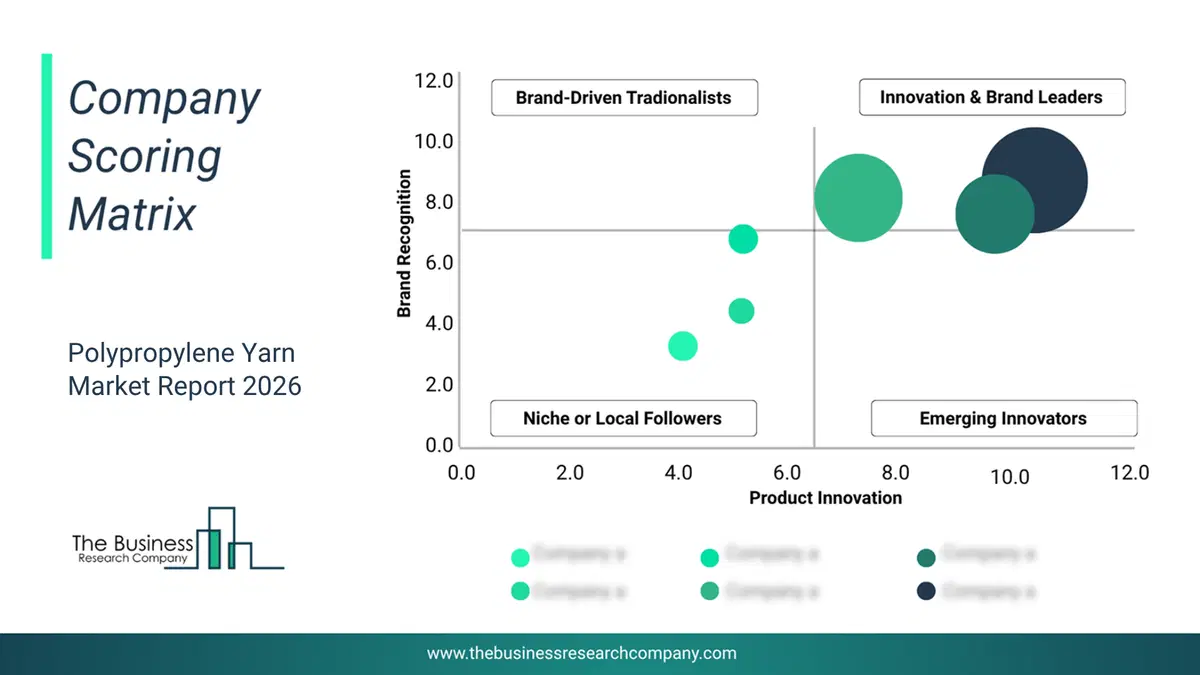
This chart maps companies by product innovation and brand strength, with bubble size indicating relative revenue, helping identify market leaders, challengers, and niche players. This is an illustrative chart; the full report provides a complete and accurate competitive analysis.
Global Polypropylene Yarn Market Trends and Insights
Major companies operating in the polypropylene yarn market are focusing on developing advanced solutions, such as high-strength yarn, to enhance tensile strength, durability, versatility, and suitability for demanding industrial applications. High-strength yarn refers to yarn designed to withstand high tensile forces and heavy loads without breaking, providing enhanced durability and reliable performance in demanding industrial applications. For instance, in June 2025, Disha Jute & Allied Products Pvt. Ltd., an India-based manufacturer of polypropylene woven products and textiles, launched its advanced fibrillated yarn for global markets. It is produced using Swiss-technology equipment. The polypropylene yarn is available in 1,000 to 6,000 denier and 45 to 120 TPM, offering high tensile strength, durability, and customizable properties for applications including webbing, stitching, filtration, ropes, carpet backing, composites, agriculture, packaging, and furnishing.What Are Latest Mergers And Acquisitions In The Polypropylene Yarn Market?
In November 2025, Kanpur Plastipack Limited, an India-based manufacturer of flexible intermediate bulk containers (FIBCs), polypropylene multifilament yarns, woven fabrics, and packaging products, partnered with Essegomma S.p.A. to combine Essegomma’s European expertise in Taslan yarn technology with KPL’s strong manufacturing base and state of art infrastructure facilities in India. Through this partnership, the companies aim to combine Essegomma's expertise in Taslan yarn technology with Kanpur Plastipack's manufacturing capabilities to produce and supply premium-quality high-performance polypropylene yarns for technical textiles, automotive interiors, outdoor furniture, and upholstery applications. Essegomma S.p.A. is an Italy-based manufacturer of polypropylene multifilament yarns and technical textile solutions, specializing in high-performance olefin yarns for industrial and textile applications.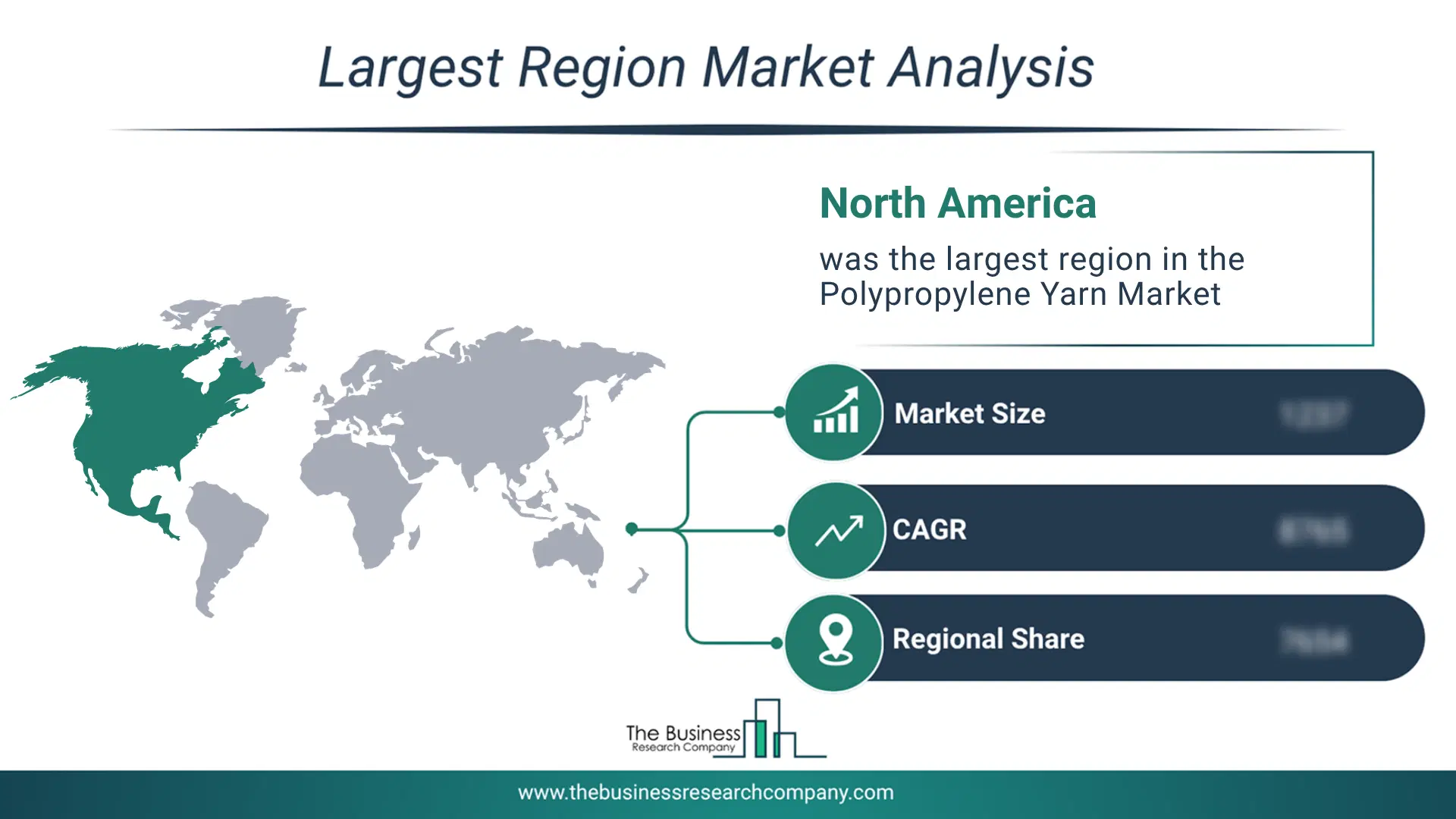
Regional Outlook/Insights
North America was the largest region in the polypropylene yarn market in 2025. Asia-Pacific is expected to be the fastest-growing region in the forecast period. The regions covered in this market report are Asia-Pacific, South East Asia, Western Europe, Eastern Europe, North America, South America, Middle East, Africa. The countries covered in this market report are Australia, Brazil, China, France, Germany, India, Indonesia, Japan, Taiwan, Russia, South Korea, UK, USA, Canada, Italy, Spain.What Defines the Polypropylene Yarn Market?
The polypropylene yarn market consists of sales of polypropylene multifilament yarn, polypropylene monofilament yarn, fibrillated polypropylene yarn, bulked continuous filament (BCF) polypropylene yarn, and other specialty polypropylene yarns. Values in this market are 'factory gate' values, that is, the value of goods sold by the manufacturers or creators of the goods, whether to other entities (including downstream manufacturers, wholesalers, distributors, and retailers) or directly to end customers. The value of goods in this market includes related services sold by the creators of the goods.How is Market Value Defined and Measured?
The market value is defined as the revenues that enterprises gain from the sale of goods and/or services within the specified market and geography through sales, grants, or donations in terms of the currency (in USD unless otherwise specified). The revenues for a specified geography are consumption values that are revenues generated by organizations in the specified geography within the market, irrespective of where they are produced. It does not include revenues from resales along the supply chain, either further along the supply chain or as part of other products.
This chart presents market attractiveness based on a quantitative evaluation of growth, competition, strategic alignment, and risk, offering a clear view of opportunity areas for decision-making. This chart is for illustrative purposes; the full report contains the complete analysis.

This chart highlights the Total Addressable Market (TAM) by estimating the maximum revenue opportunity using an assumption-driven approach, supporting strategic planning and opportunity sizing across markets. The chart is illustrative; the full report provides a more comprehensive analysis.
What Key Data and Analysis Are Included in the Polypropylene Yarn Market Report 2026?
The polypropylene yarn market research report is one of a series of new reports from The Business Research Company that provides market statistics, including industry global market size, regional shares, competitors with the market share, detailed market segments, market trends and opportunities, and any further data you may need to thrive in the polypropylene yarn industry. The market research report delivers a complete perspective of everything you need, with an in-depth analysis of the current and future state of the industry.Polypropylene Yarn Market Report Forecast Analysis
| Report Attribute | Details |
|---|---|
| Market Size Value In 2026 | $19.14 billion |
| Revenue Forecast In 2030 | $25.12 billion |
| Growth Rate | CAGR of 7.0% from 2026 to 2035 |
| Base Year For Estimation | 2025 |
| Actual Estimates/Historical Data | 2020-2025 |
| Forecast Period | 2026 - 2030 |
| Market Representation | Revenue in USD Billion and CAGR from 2026 to 2030 |
| Segments Covered | Product Type, Yarn Form, Application, End-Use Industry |
| Regional Scope | Asia-Pacific, Western Europe, Eastern Europe, North America, South America, Middle East, Africa |
| Country Scope | The countries covered in the report are Australia, Brazil, China, France, Germany, India, Indonesia, Japan, Taiwan, Russia, South Korea, UK, USA, Canada, Italy, Spain. |
| Customization Scope | Request for Customization |
| Pricing And Purchase Options | Explore Purchase Options |