
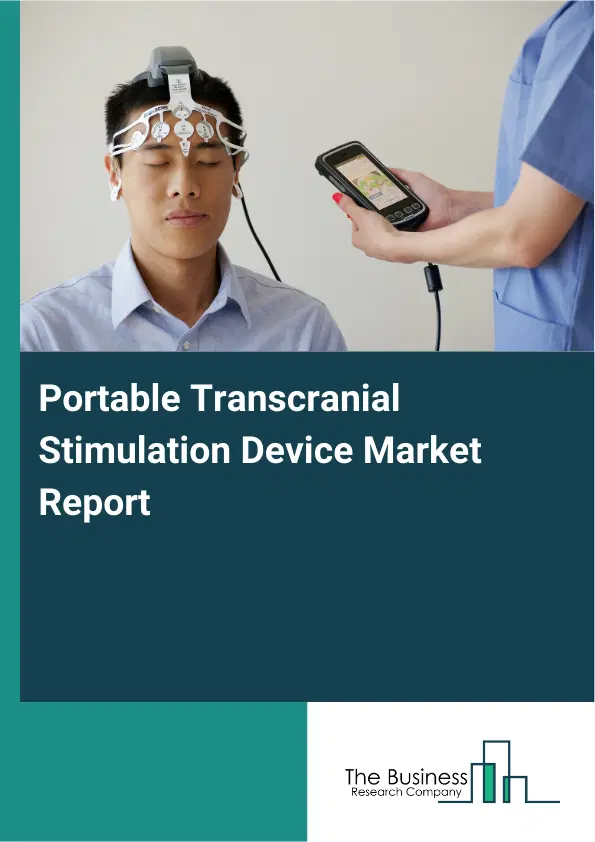
Portable Transcranial Stimulation Device Market Report 2026
Global Outlook – By Product Type (Portable Transcranial Direct Current Stimulation (tDCS) Devices, Portable Transcranial Alternating Current Stimulation (tACS) Devices, Portable Transcranial Random Noise Stimulation (tRNS) Devices, Portable Transcranial Magnetic Stimulation (TMS) Devices, Wearable Transcranial Neurostimulation Devices, Hybrid Portable Transcranial Stimulation Devices), By Distribution Channel (Online, Offline), By Application (Depression, Anxiety, Pain Management, Cognitive Enhancement, Other Applications), By End-User (Homecare, Research Institutes, Other End-Users) – Market Size, Trends, Strategies, and Forecast to 2030
Portable Transcranial Stimulation Device Market Overview
• Portable Transcranial Stimulation Device market size has reached to $1.37 billion in 2025 • Expected to grow to $2.18 billion in 2030 at a compound annual growth rate (CAGR) of 9.8% • Growth Driver: The Rising Prevalence Of Neurological And Psychiatric Disorders Is Fueling The Growth Of The Market Due To Increasing Chronic Stress And Brain Health Challenges • Market Trend: Advancements In Portable Non-Invasive Brain Stimulation Devices For Home And Clinical Use • North America was the largest region in 2025 and Asia-Pacific is the fastest growing region.What Is Covered Under Portable Transcranial Stimulation Device Market?
The portable transcranial stimulation device refers to a compact, mobile device that delivers targeted electrical or magnetic stimulation to the brain to modulate neural activity. It enhances cognitive and neurological functions through precise, non-invasive intervention. Its portable design ensures ease of use and convenience, allowing users to access therapy anytime and anywhere. The portable transcranial stimulation device also supports consistent and controlled stimulation, promoting effective neurological outcomes. The main product types of portable transcranial stimulation devices are transcranial direct current stimulation (tDCS) devices, transcranial magnetic stimulation (TMS) devices, and others. Transcranial direct current stimulation (tDCS) devices are portable devices that deliver low-level electrical currents to specific areas of the brain to modulate neuronal activity for therapeutic or cognitive purposes. These devices are distributed through multiple distribution channels, including online and offline, and are used for various applications such as depression, anxiety, pain management, cognitive enhancement, and others, and are utilized by several end-users, including hospitals and clinics, home care settings, research institutes, and others.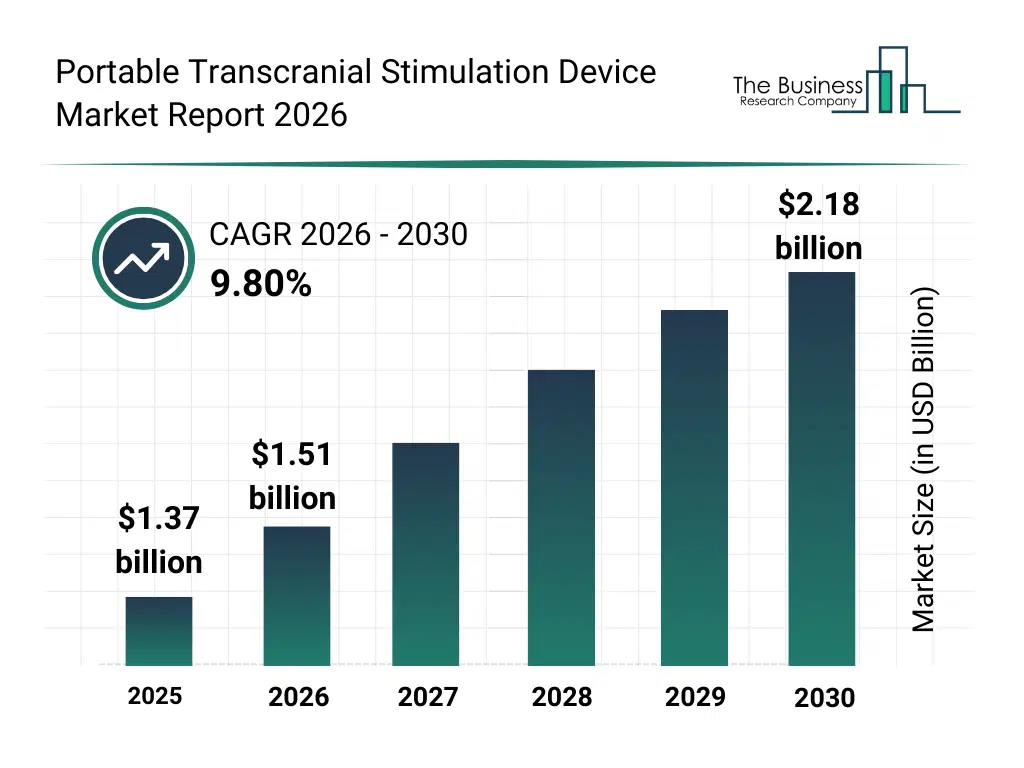
What Is The Portable Transcranial Stimulation Device Market Size and Share 2026?
The portable transcranial stimulation device market size has grown rapidly in recent years. It will grow from $1.37 billion in 2025 to $1.51 billion in 2026 at a compound annual growth rate (CAGR) of 10.1%. The growth in the historic period can be attributed to growth in neurological disorders, advances in neurostimulation technology, rising mental health awareness, demand for non-invasive therapies, increased clinical research.What Is The Portable Transcranial Stimulation Device Market Growth Forecast?
The portable transcranial stimulation device market size is expected to see strong growth in the next few years. It will grow to $2.18 billion in 2030 at a compound annual growth rate (CAGR) of 9.8%. The growth in the forecast period can be attributed to AI-guided stimulation optimization, expansion of home neurotherapy, cognitive performance enhancement demand, integration with digital therapeutics, growth in aging population. Major trends in the forecast period include non-invasive brain stimulation, home-use neuromodulation devices, portable cognitive enhancement tools, personalized stimulation protocols, wearable neurotherapy devices.
Global Portable Transcranial Stimulation Device Market Segmentation
1) By Product Type: Portable Transcranial Direct Current Stimulation (tDCS) Devices, Portable Transcranial Alternating Current Stimulation (tACS) Devices, Portable Transcranial Random Noise Stimulation (tRNS) Devices, Portable Transcranial Magnetic Stimulation (TMS) Devices, Wearable Transcranial Neurostimulation Devices, Hybrid Portable Transcranial Stimulation Devices 2) By Distribution Channel: Online, Offline 3) By Application: Depression, Anxiety, Pain Management, Cognitive Enhancement, Other Applications 4) By End-User: Homecare, Research Institutes, Other End-Users Subsegments: 1) By Portable Transcranial Direct Current Stimulation (tDCS) Devices: Home-Use tDCS Devices, Clinical-Grade Portable tDCS Devices, Wearable tDCS Devices, Smartphone-Controlled tDCS Devices 2) By Portable Transcranial Alternating Current Stimulation (tACS) Devices: Frequency-Specific tACS Devices, Programmable tACS Devices, Wearable tACS Devices, Research-Grade Portable tACS Devices 3) By Portable Transcranial Random Noise Stimulation (tRNS) Devices: High-Frequency tRNS Devices, Low-Frequency tRNS Devices, Multi-Mode tRNS Devices, Home-Use tRNS Devices 4) By Portable Transcranial Magnetic Stimulation (TMS) Devices: Compact Coil Portable TMS Devices, Battery-Operated Portable TMS Devices, Handheld Portable TMS Devices, Home-Use Portable TMS Devices 5) By Wearable Transcranial Neurostimulation Devices: Headband-Based Neurostimulation Devices, Cap-Based Neurostimulation Devices, Patch-Based Neurostimulation Devices, Wireless Wearable Neurostimulation Devices 6) By Hybrid Portable Transcranial Stimulation Devices: tDCS-tACS Hybrid Devices, tDCS-tRNS Hybrid Devices, Multi-Modal Electrical Stimulation Devices, Electrical-Magnetic Hybrid Stimulation DevicesWhat Is The Driver Of The Portable Transcranial Stimulation Device Market?
The rising prevalence of neurological and psychiatric disorders is expected to propel the growth of the portable transcranial stimulation device market going forward. Neurological and psychiatric disorders are conditions that impact the brain and nervous system, leading to changes in thinking, emotions, or behavior. The rise in neurological and psychiatric disorders is mainly driven by chronic stress, which alters brain chemistry and neural function, weakening mental resilience and increasing susceptibility to these conditions. Portable transcranial stimulation devices modulate brain activity by applying low-intensity electrical currents to targeted areas, boosting neural connectivity and function and helping alleviate symptoms of neurological and psychiatric disorders in a non-invasive, accessible manner. For instance, in October 2023, according to the World Federation of Neurology, a UK-based association of national neurological societies, more than 40% of the global population currently experiences some form of neurological condition, and this burden is expected to nearly double by 2050. Therefore, the rising prevalence of neurological and psychiatric disorders is driving the growth of the portable transcranial stimulation device industry.Key Players In The Global Portable Transcranial Stimulation Device Market
Major companies operating in the portable transcranial stimulation device market are Neuroelectrics Barcelona S.L.U., Flow Neuroscience AB, Soterix Medical Inc., Sooma Medical Inc., Fisher Wallace Laboratories Inc., Caputron LLC, PlatoScience Inc., TheBrainDriver GmbH, Neurosoft Ltd., G.Tec Medical Engineering, Ybrain Co. Ltd., Remed Co. Ltd., Nexalin Technology Inc., NeuroSigma Inc., Mind Alive Inc., Ionclinics GmbH, NeuroEM Therapeutics Inc., Salvia BioElectronics B.V., RPW Technology LLC, Neurocare Group AG
This chart is for illustrative purposes; the full report includes a detailed competitor analysis and comprehensive overview of the top 10 companies in the market.
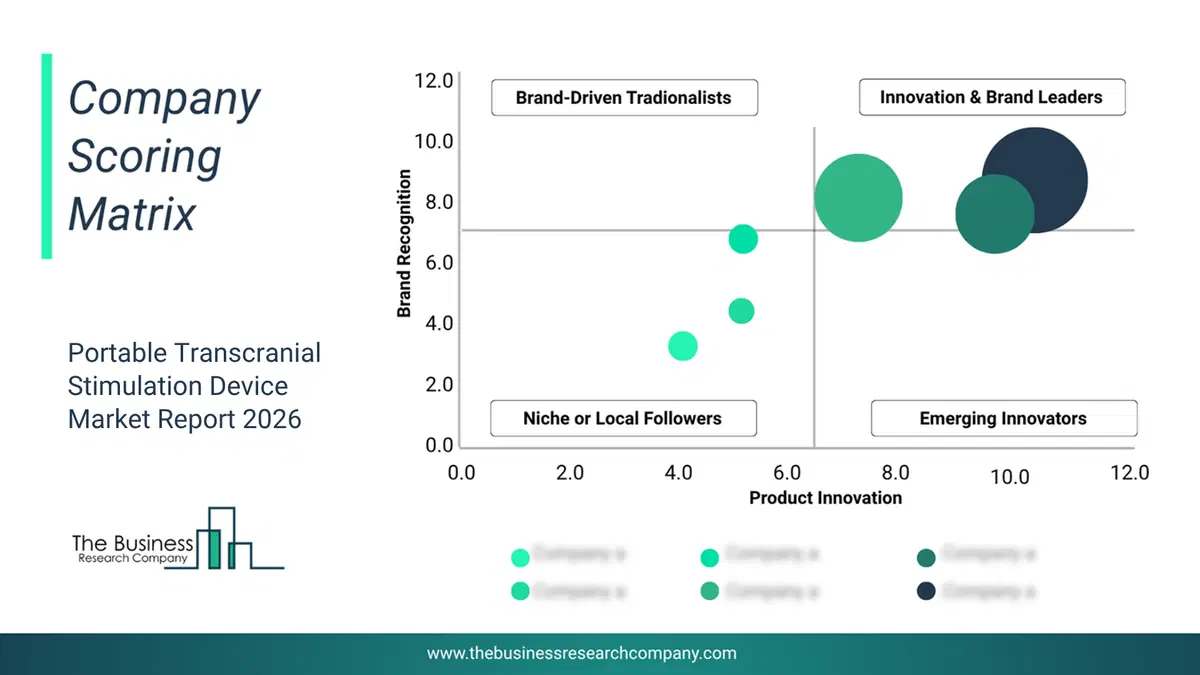
This chart maps companies by product innovation and brand strength, with bubble size indicating relative revenue, helping identify market leaders, challengers, and niche players. This is an illustrative chart; the full report provides a complete and accurate competitive analysis.
Global Portable Transcranial Stimulation Device Market Trends and Insights
Major companies operating in the portable transcranial stimulation device market are focusing on developing advanced products such as transcranial direct current stimulation (tDCS) devices to provide non-invasive, user-friendly options for home and clinical use. Transcranial direct current stimulation (tDCS) devices are non-invasive tools that apply a low-intensity electrical current to targeted brain regions to modulate neuronal activity and improve cognitive functions while aiding in the management of neurological and psychiatric conditions. For instance, in October 2023, Sooma Oy, a Finland-based medical device company, launched Sooma Duo, a transcranial direct current stimulation (tDCS)-based portable brain stimulation device designed to deliver clinician-prescribed neuromodulation therapies for conditions such as depression and chronic pain, featuring remote clinician monitoring, preset electrode positioning, and automatic resistance control. Sooma Duo improves treatment adherence, therapeutic outcomes, and accessibility of brain stimulation therapies in home and clinical environments.What Are Latest Mergers And Acquisitions In The Portable Transcranial Stimulation Device Market?
In March 2025, Lindus Health, a UK-based contract research organization (CRO), partnered with Sooma Medical to conduct a pivotal phase 3 clinical trial evaluating Sooma’s wearable transcranial direct current stimulation (tDCS) cap, Sooma 2GEN, as a home-based therapy for major depressive disorder (MDD). Through this collaboration, Sooma aims to generate robust safety and efficacy data in a real-world remote setting, accelerate regulatory acceptance, and support broader commercialization of its portable brain stimulation platform. Sooma Medical is a Finland-based developer of portable transcranial stimulation devices.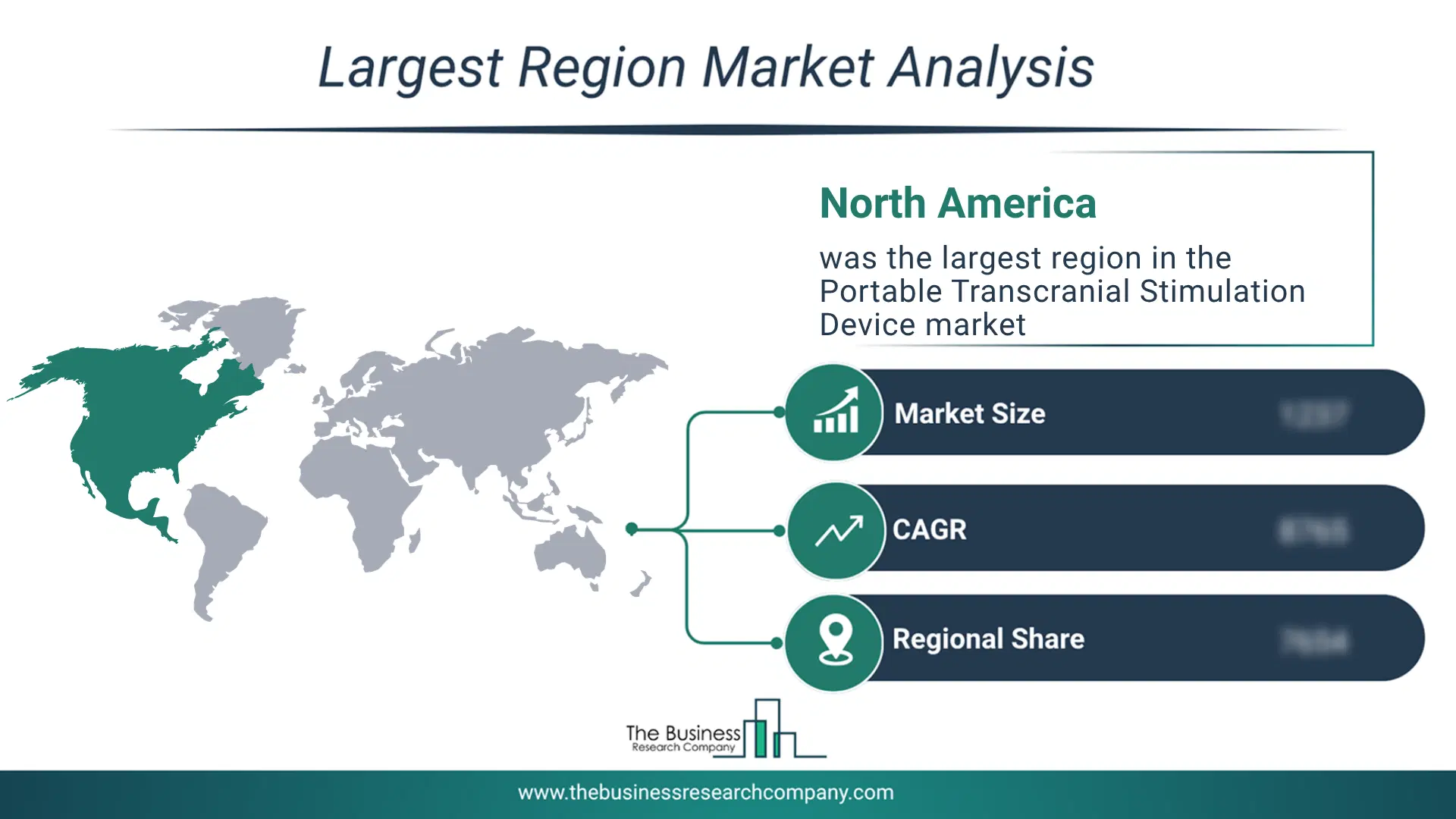
Regional Outlook
North America was the largest region in the portable transcranial stimulation device market in 2025. Asia-Pacific is expected to be the fastest-growing region in the forecast period. The regions covered in this market report are Asia-Pacific, South East Asia, Western Europe, Eastern Europe, North America, South America, Middle East, Africa. The countries covered in this market report are Australia, Brazil, China, France, Germany, India, Indonesia, Japan, Taiwan, Russia, South Korea, UK, USA, Canada, Italy, SpainWhat Defines the Portable Transcranial Stimulation Device Market?
The portable transcranial stimulation device market consists of sales of stimulation headbands, wearable stimulation caps, handheld stimulators, electrode patches, rechargeable battery packs, stimulation kits, and electrode gels. Values in this market are ‘factory gate’ values, that is, the value of goods sold by the manufacturers or creators of the goods, whether to other entities (including downstream manufacturers, wholesalers, distributors, and retailers) or directly to end customers. The value of goods in this market includes related services sold by the creators of the goods.How is Market Value Defined and Measured?
The market value is defined as the revenues that enterprises gain from the sale of goods and/or services within the specified market and geography through sales, grants, or donations in terms of the currency (in USD unless otherwise specified). The revenues for a specified geography are consumption values that are revenues generated by organizations in the specified geography within the market, irrespective of where they are produced. It does not include revenues from resales along the supply chain, either further along the supply chain or as part of other products.
This chart presents market attractiveness based on a quantitative evaluation of growth, competition, strategic alignment, and risk, offering a clear view of opportunity areas for decision-making. This chart is for illustrative purposes; the full report contains the complete analysis.

This chart highlights the Total Addressable Market (TAM) by estimating the maximum revenue opportunity using an assumption-driven approach, supporting strategic planning and opportunity sizing across markets. The chart is illustrative; the full report provides a more comprehensive analysis.
What Key Data and Analysis Are Included in the Portable Transcranial Stimulation Device Market Report 2026?
The portable transcranial stimulation device market research report is one of a series of new reports from The Business Research Company that provides market statistics, including industry global market size, regional shares, competitors with the market share, detailed market segments, market trends and opportunities, and any further data you may need to thrive in the portable transcranial stimulation device industry. The market research report delivers a complete perspective of everything you need, with an in-depth analysis of the current and future state of the industry.Portable Transcranial Stimulation Device Market Report Forecast Analysis
| Report Attribute | Details |
|---|---|
| Market Size Value In 2026 | $1.51 billion |
| Revenue Forecast In 2030 | $2.18 billion |
| Growth Rate | CAGR of 9.8% from 2026 to 2030 |
| Base Year For Estimation | 2025 |
| Actual Estimates/Historical Data | 2020-2025 |
| Forecast Period | 2026 - 2030 |
| Market Representation | Revenue in USD Billion and CAGR from 2026 to 2030 |
| Segments Covered | Product Type, Distribution Channel, Application, End-User |
| Regional Scope | Asia-Pacific, Western Europe, Eastern Europe, North America, South America, Middle East, Africa |
| Country Scope | The countries covered in the report are Australia, Brazil, China, France, Germany, India, Indonesia, Japan, Taiwan, Russia, South Korea, UK, USA, Canada, Italy, Spain. |
| Key Companies Profiled | Neuroelectrics Barcelona S.L.U., Flow Neuroscience AB, Soterix Medical Inc., Sooma Medical Inc., Fisher Wallace Laboratories Inc., Caputron LLC, PlatoScience Inc., TheBrainDriver GmbH, Neurosoft Ltd., G.Tec Medical Engineering, Ybrain Co. Ltd., Remed Co. Ltd., Nexalin Technology Inc., NeuroSigma Inc., Mind Alive Inc., Ionclinics GmbH, NeuroEM Therapeutics Inc., Salvia BioElectronics B.V., RPW Technology LLC, Neurocare Group AG |
| Customization Scope | Request for Customization |
| Pricing And Purchase Options | Explore Purchase Options |