
Postpartum Depression Market Report 2026
Global Outlook – By Types (Postpartum Blues, Postpartum Anxiety, Postpartum Obsessive Compulsive Disorder, Postpartum Panic Disorder, Postpartum Post-Traumatic Stress Disorder, Postpartum Psychosis, Other Types), By Treatment (Psychotherapy, Medication, Supplements, Other Treatments ), By Route of Administration (Oral, Parenteral, Other Route Of Administration), By Distribution Channel (Hospital Pharmacy, Retail Pharmacy, Online Pharmacy, Other Distribution Channels), By End-Users (Hospitals, Specialty Clinics, Homecare, Other End-Users) - Market Size, Trends, Strategies, and Forecast to 2030
Postpartum Depression Market Overview
• Postpartum Depression market size has reached to $16.05 billion in 2025 • Expected to grow to $66.48 billion in 2030 at a compound annual growth rate (CAGR) of 33.1% • Growth Driver: Rise In Number Of Childbirths To Drive The Growth Of Postpartum Depression Market • Market Trend: Companies Innovating In The Postpartum Depression Market With Faster-Acting Therapies And Creative Care Delivery • North America was the largest region in 2025.What Is Covered Under Postpartum Depression Market?
Postpartum depression (PPD) refers to a condition, which is a type of mood disorder that affects some women after giving birth and can remain undiagnosed for long periods of time. It is characterized by feelings of sadness, hopelessness and a lack of interest or pleasure in once-enjoyable activities. The main types of postpartum depression are postpartum blues, postpartum anxiety, postpartum obsessive-compulsive disorder, postpartum panic disorder, postpartum post-traumatic stress disorder, postpartum psychosis and others. Postpartum blues is a frequent yet self-limiting disease that occurs shortly after childbirth and can manifest as a variety of symptoms, including mood swings, irritability and tearfulness. They are treated through various treatments such as psychotherapy, medication, supplements and others. They are administered in various ways, such as oral, parenteral and others. They are available in various distribution channels, such as hospital pharmacies, retail pharmacies, online pharmacies and others. They are utilized by various end-users, such as hospitals, specialty clinics, home-care settings and others.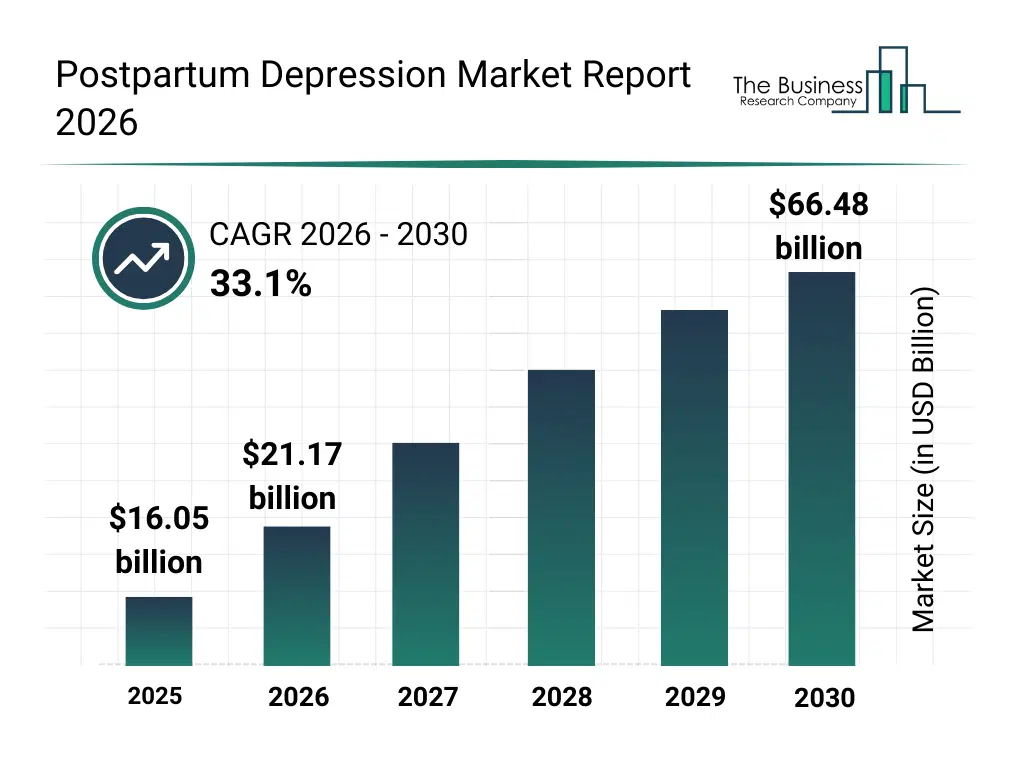
What Is The Postpartum Depression Market Size and Share 2026?
The postpartum depression market size has grown exponentially in recent years. It will grow from $16.05 billion in 2025 to $21.17 billion in 2026 at a compound annual growth rate (CAGR) of 31.9%. The growth in the historic period can be attributed to increasing recognition of maternal mental health disorders, limited early screening practices, underdiagnosis in postpartum care settings, reliance on traditional counseling approaches, growing hospital-based maternal care services.What Is The Postpartum Depression Market Growth Forecast?
The postpartum depression market size is expected to see exponential growth in the next few years. It will grow to $66.48 billion in 2030 at a compound annual growth rate (CAGR) of 33.1%. The growth in the forecast period can be attributed to increasing adoption of digital screening tools, rising focus on preventive maternal healthcare, expansion of tele-mental health services, growing investment in women’s mental health programs, increasing integration of mental health into obstetric care. Major trends in the forecast period include increasing awareness and screening for postpartum mental health, growing acceptance of digital mental health platforms, rising focus on early diagnosis and intervention, expansion of community-based support programs, enhanced integration of mental health services in maternal care.
Global Postpartum Depression Market Segmentation
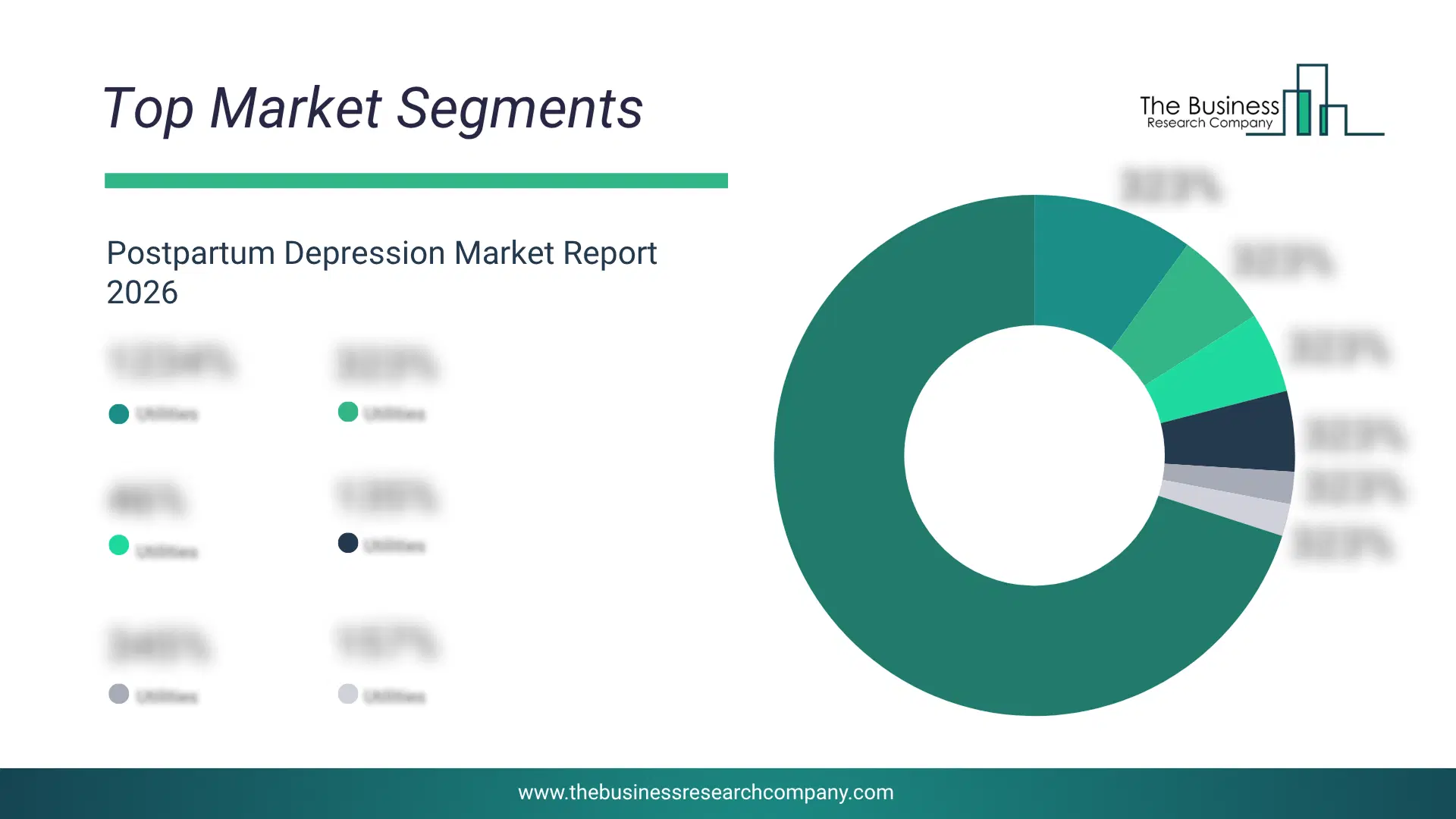
1) By Types: Postpartum Blues, Postpartum Anxiety, Postpartum Obsessive Compulsive Disorder, Postpartum Panic Disorder, Postpartum Post-Traumatic Stress Disorder, Postpartum Psychosis, Other Types 2) By Treatment: Psychotherapy, Medication, Supplements, Other Treatments 3) By Route of Administration: Oral, Parenteral, Other Route Of Administration 4) By Distribution Channel: Hospital Pharmacy, Retail Pharmacy, Online Pharmacy, Other Distribution Channels 5) By End-Users: Hospitals, Specialty Clinics, Homecare, Other End-Users Subsegments: 1) By Postpartum Blues: Mild Emotional Disturbances, Short-term Mood Swings 2) By Postpartum Anxiety: Generalized Anxiety Disorder (GAD), Panic Attacks 3) By Postpartum Obsessive Compulsive Disorder: Intrusive Thoughts, Compulsive Behaviors 4) By Postpartum Panic Disorder: Sudden Panic Attacks, Physical Symptoms 5) By Postpartum Post-Traumatic Stress Disorder (PTSD): Trauma Response To Childbirth, Flashbacks And Anxiety 6) By Postpartum Psychosis: Hallucinations, Severe Mood Swings 7) By Other Types: Mixed Mood Disorders, Comorbid Conditions With PostpartumWhat Is The Driver Of The Postpartum Depression Market?
The rising number of childbirths is expected to propel the growth of the postpartum depression market. Childbirth refers to the process by which a baby is born from the mother's uterus, typically through the vaginal canal. The rising number of childbirths is a factor in the postpartum depression market because postpartum depression (PPD) is a common mental health condition that can affect women after giving birth. It can cause a wide range of symptoms, including sadness, anxiety, fatigue, and difficulty bonding with the baby. For instance, in January 2023, according to a report published by the Centers for Disease Control and Prevention, a US-based national public health organization, the United States witnessed a 1% increase in registered births, totaling 3,664,292, compared to the previous year. Therefore, the rising number of childbirths is driving the growth of the postpartum depression industry.Key Players In The Global Postpartum Depression Market
Major companies operating in the postpartum depression market are Pfizer Inc., Johnson & Johnson, Merck & Co., AbbVie Inc., Novartis AG, Sanofi SA, Bristol Myers Squibb Co., AstraZeneca plc, GlaxoSmithKline LLC, Takeda Pharmaceutical Company, Eli Lilly and Company, Viatris Inc., Teva Pharmaceutical Industries Ltd., Biogen Inc., Sun Pharmaceutical Industries Ltd., Lupin Pharmaceuticals, Mallinckrodt Pharmaceuticals plc, Sage Therapeutics Inc., Otsuka Pharmaceutical Co. Ltd., Lundbeck A S, Janssen Pharmaceuticals, Aurobindo Pharma Ltd.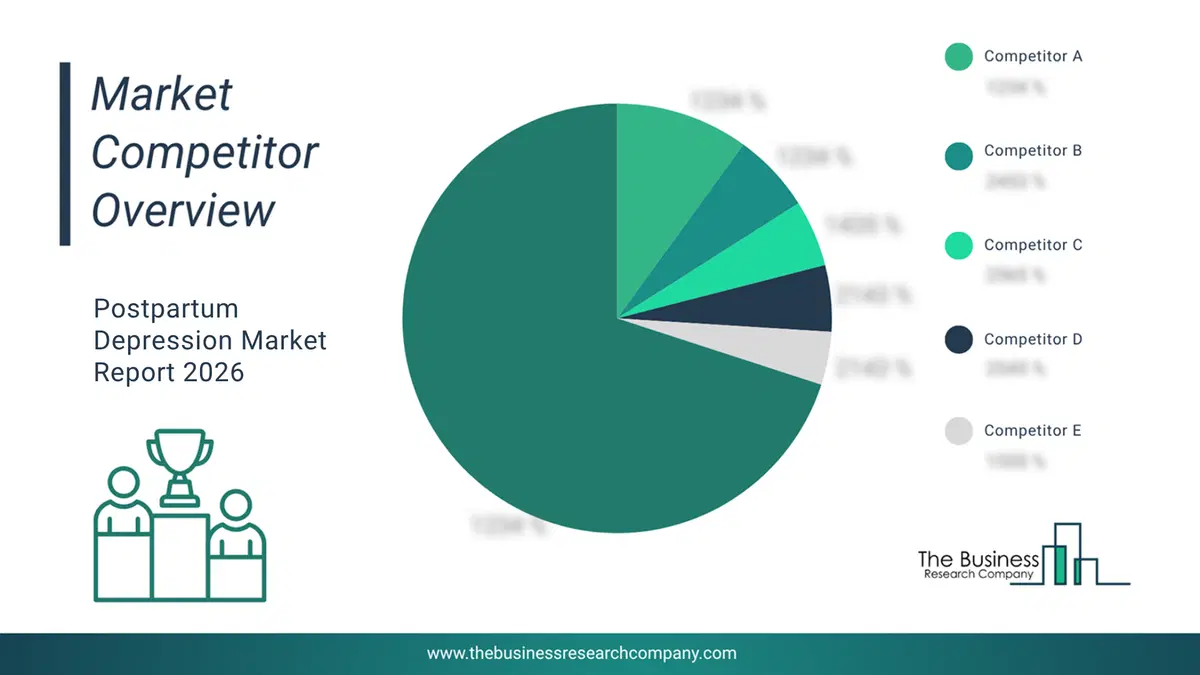
This chart is for illustrative purposes; the full report includes a detailed competitor analysis and comprehensive overview of the top 10 companies in the market.
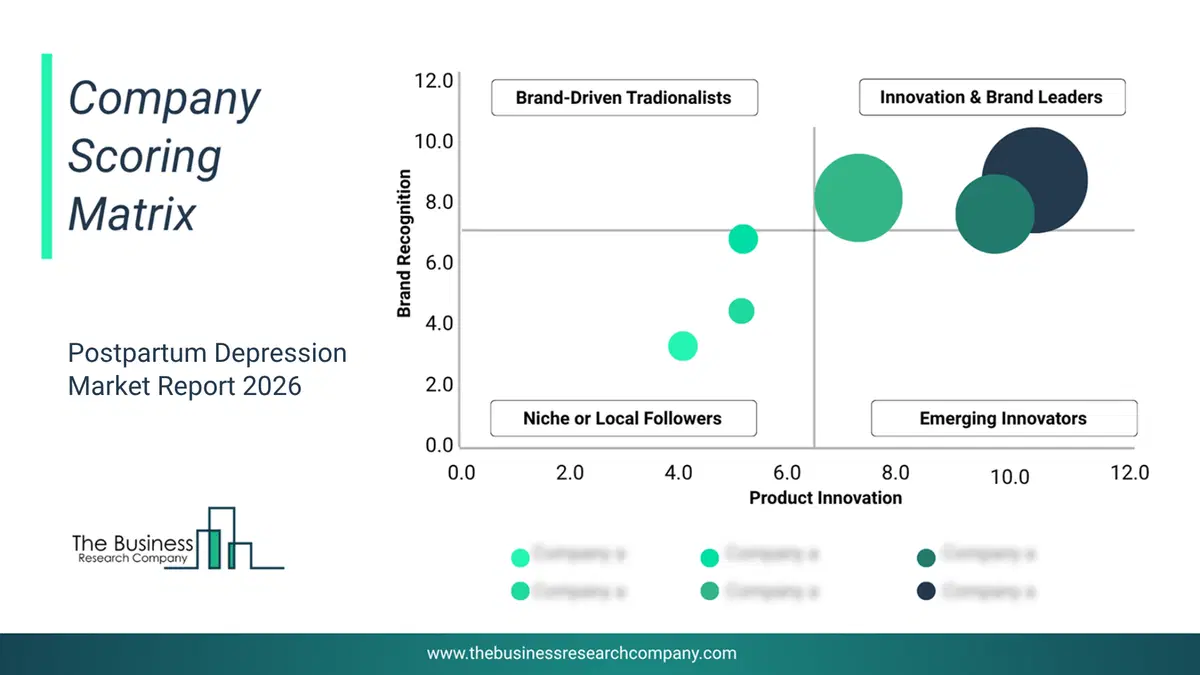
This chart maps companies by product innovation and brand strength, with bubble size indicating relative revenue, helping identify market leaders, challengers, and niche players. This is an illustrative chart; the full report provides a complete and accurate competitive analysis.
Global Postpartum Depression Market Trends and Insights
Major companies operating in the postpartum depression market are working on new product innovations, such as regulatory milestones to enhance the development and potential approval pathway of zuranolone for major depressive disorder and postpartum depression. Regulatory milestone a regulatory milestone is a significant event in the lifecycle of a drug or medical product that marks progress within the approval or compliance process set by governmental authorities. For instance, in February 2023, Biogen Inc., a US-based biotechnology company, and Sage Therapeutics Inc., a US-based biopharmaceutical company, announced that the United States Food and Drug Administration (FDA) had accepted the filing of an NDA (new drug application) for zuranolone in the management of major depressive disorder (MDD) and postpartum depression (PPD). Zuranolone is an experimental medication that is being tested as a 14-day, once-daily, rapid-acting oral therapy in people with MDD and PPD. Zuranolone, a neuroactive steroid, acts as a positive allosteric modulator of GABA-A receptors, which is a unique method of action. It is supposed to operate in persons with depression by swiftly resetting dysregulated neural networks to help restore brain function. Zuranolone affects brain networks that control mood, arousal, behavior and even cognition.What Are Latest Mergers And Acquisitions In The Postpartum Depression Market?
In July 2025, Supernus Pharmaceuticals, Inc., a US-based biopharmaceutical company specializing in developing treatments for neuropsychiatric conditions, completed the acquisition of Sage Therapeutics, Inc. for an undisclosed amount. This deal enables Supernus to expand its portfolio with ZURZUVAE (zuranolone), an FDA-approved oral therapy for postpartum depression (PPD), and leverage Sage’s novel CNS discovery platform to accelerate mid- to long-term revenue growth. Sage Therapeutics, Inc. is a US-based developer of medicines for neurological and neuropsychiatric conditions, including depression, PPD, and other mental disorders.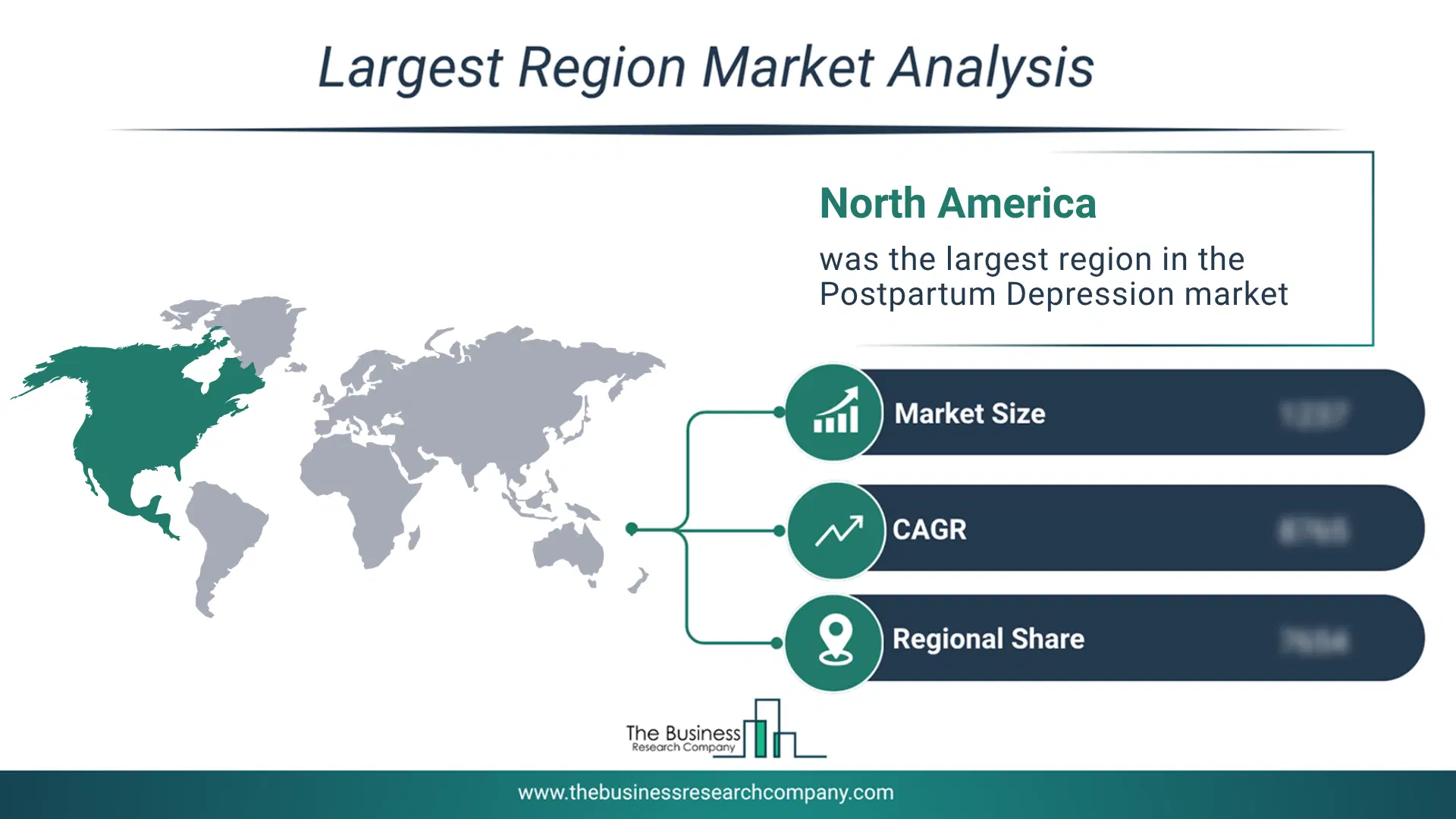
Regional Outlook
North America was the largest region in the postpartum depression market in 2025. The regions covered in this market report are Asia-Pacific, South East Asia, Western Europe, Eastern Europe, North America, South America, Middle East, Africa. The countries covered in this market report are Australia, Brazil, China, France, Germany, India, Indonesia, Japan, Taiwan, Russia, South Korea, UK, USA, Canada, Italy, Spain.What Defines the Postpartum Depression Market?
The postpartum depression market consists of revenues earned by entities by providing services such as medications, psychotherapy (cognitive behavioral therapy) and support group participation. The market value includes the value of related goods sold by the service provider or included within the service offering. The postpartum depression market also includes the sales of medications such as Selective serotonin reuptake inhibitors (SSRIs), Serotonin and norepinephrine reuptake inhibitors (SNRIs), Bupropion and Tricyclic antidepressants (TCAs). Values in this market are ‘factory gate’ values, that is the value of goods sold by the manufacturers or creators of the goods, whether to other entities (including downstream manufacturers, wholesalers, distributors and retailers) or directly to end customers. The value of goods in this market includes related services sold by the creators of the goods.How is Market Value Defined and Measured?
The market value is defined as the revenues that enterprises gain from the sale of goods and/or services within the specified market and geography through sales, grants, or donations in terms of the currency (in USD unless otherwise specified). The revenues for a specified geography are consumption values that are revenues generated by organizations in the specified geography within the market, irrespective of where they are produced. It does not include revenues from resales along the supply chain, either further along the supply chain or as part of other products.
This chart presents market attractiveness based on a quantitative evaluation of growth, competition, strategic alignment, and risk, offering a clear view of opportunity areas for decision-making. This chart is for illustrative purposes; the full report contains the complete analysis.

This chart highlights the Total Addressable Market (TAM) by estimating the maximum revenue opportunity using an assumption-driven approach, supporting strategic planning and opportunity sizing across markets. The chart is illustrative; the full report provides a more comprehensive analysis.
What Key Data and Analysis Are Included in the Postpartum Depression Market Report 2026?
The postpartum depression market research report is one of a series of new reports from The Business Research Company that provides market statistics, including industry global market size, regional shares, competitors with the market share, detailed market segments, market trends and opportunities, and any further data you may need to thrive in the postpartum depression industry. The market research report delivers a complete perspective of everything you need, with an in-depth analysis of the current and future state of the industry.Postpartum Depression Market Report Forecast Analysis
| Report Attribute | Details |
|---|---|
| Market Size Value In 2026 | $21.17 billion |
| Revenue Forecast In 2030 | $66.48 billion |
| Growth Rate | CAGR of 33.1% from 2026 to 2030 |
| Base Year For Estimation | 2025 |
| Actual Estimates/Historical Data | 2020-2025 |
| Forecast Period | 2026 - 2030 |
| Market Representation | Revenue in USD Billion and CAGR from 2026 to 2030 |
| Segments Covered | Types, Treatment, Route of Administration, Distribution Channel, End-Users |
| Regional Scope | Asia-Pacific, Western Europe, Eastern Europe, North America, South America, Middle East, Africa |
| Country Scope | The countries covered in the report are Australia, Brazil, China, France, Germany, India, Indonesia, Japan, Taiwan, Russia, South Korea, UK, USA, Canada, Italy, Spain |
| Key Companies Profiled | Pfizer Inc., Johnson & Johnson, Merck & Co., AbbVie Inc., Novartis AG, Sanofi SA, Bristol Myers Squibb Co., AstraZeneca plc, GlaxoSmithKline LLC, Takeda Pharmaceutical Company, Eli Lilly and Company, Viatris Inc., Teva Pharmaceutical Industries Ltd., Biogen Inc., Sun Pharmaceutical Industries Ltd., Lupin Pharmaceuticals, Mallinckrodt Pharmaceuticals plc, Sage Therapeutics Inc., Otsuka Pharmaceutical Co. Ltd., Lundbeck A S, Janssen Pharmaceuticals, Aurobindo Pharma Ltd. |
| Customization Scope | Request for Customization |
| Pricing And Purchase Options | Explore Purchase Options |