
Prebiotic Fiber Market Report 2026
Global Outlook – By Type (Inulin, Mannan-Oligosaccharide, Fructo-Oligosaccharide, Galacto-Oligosaccharide), By Nature (Organic, Conventional), By Application (Food And Beverages, Baked Foods, Dairy, Breakfast Snacks, Animal Feed, Nutritional Supplements, Other Applications), By Sales Channel (Direct Sales, Indirect Sales, Supermarket, Online Stores, Retail Stores) – Market Size, Trends, Strategies, and Forecast to 2030
Prebiotic Fiber Market Overview
• Prebiotic Fiber market size has reached to $7.99 billion in 2025 • Expected to grow to $12.67 billion in 2030 at a compound annual growth rate (CAGR) of 9.3% • Growth Driver: The Plant-Based Revolution Implications For Prebiotic Fiber Market Growth • Market Trend: Prebiotic Fiber-Enriched Beverages Redefining Consumer Health Choices • Asia-Pacific was the largest region in 2025.What Is Covered Under Prebiotic Fiber Market?
Prebiotic fiber refers to a type of dietary fiber that provides essential nutrition for beneficial gut bacteria, stimulating their growth and functionality. These fibers, unlike other types of fiber, are specifically fermented by probiotic bacteria in the colon, resulting in the synthesis of short-chain fatty acids (SCFAs) and other metabolites that promote digestive health and overall well-being. The main types of prebiotic fiber are inulin, mannan-oligosaccharide, fructo-oligosaccharide, and galacto-oligosaccharide. Inulin is a type of prebiotic fiber found in various plant sources such as chicory root, garlic, and onions, and serves as a food source for beneficial gut bacteria, promoting digestive health and overall well-being. They are categorized by nature into organic and conventional products, which are used in various applications such as food and beverages, baked foods, dairy, breakfast snacks, animal feed, nutritional supplements, and others. These are sold through several sales channels, including direct sales, indirect sales, supermarkets, online stores, and retail stores.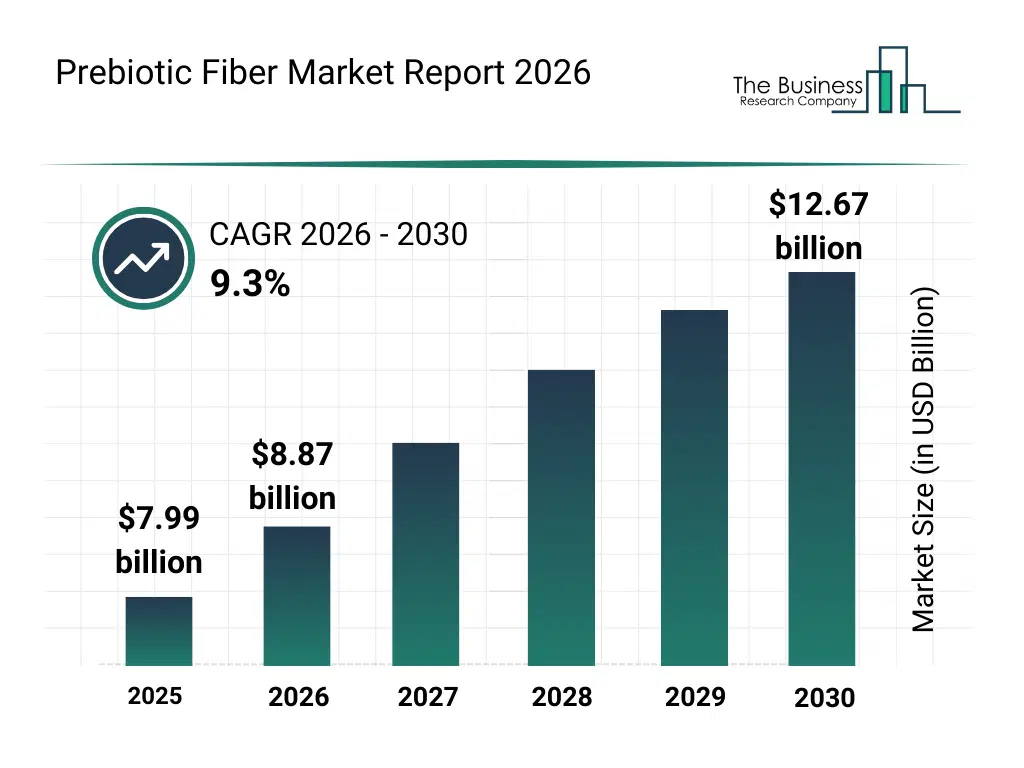
What Is The Prebiotic Fiber Market Size and Share 2026?
The prebiotic fiber market size has grown rapidly in recent years. It will grow from $7.99 billion in 2025 to $8.87 billion in 2026 at a compound annual growth rate (CAGR) of 11.0%. The growth in the historic period can be attributed to increasing consumer awareness of digestive health, rising adoption of fiber-enriched diets, growth of probiotic and synbiotic products, expansion of functional food categories, availability of plant-derived fiber sources.What Is The Prebiotic Fiber Market Growth Forecast?
The prebiotic fiber market size is expected to see strong growth in the next few years. It will grow to $12.67 billion in 2030 at a compound annual growth rate (CAGR) of 9.3%. The growth in the forecast period can be attributed to growing demand for personalized nutrition solutions, rising focus on microbiome-based health, expansion of clean-label food formulations, increasing use in animal nutrition, growing investment in digestive health research. Major trends in the forecast period include increasing incorporation of prebiotic fibers in functional foods, rising demand for gut health products, growing use in dairy and beverage applications, expansion of organic prebiotic fiber offerings, enhanced focus on digestive wellness formulations.
Global Prebiotic Fiber Market Segmentation
1) By Type: Inulin, Mannan-Oligosaccharide, Fructo-Oligosaccharide, Galacto-Oligosaccharide 2) By Nature: Organic, Conventional 3) By Application: Food And Beverages, Baked Foods, Dairy, Breakfast Snacks, Animal Feed, Nutritional Supplements, Other Applications 4) By Sales Channel: Direct Sales, Indirect Sales, Supermarket, Online Stores, Retail Stores Subsegments: 1) By Inulin: Chicory Inulin, Jerusalem Artichoke Inulin, Agave Inulin 2) By Mannan-Oligosaccharide: Soybean-Derived Mannan-Oligosaccharide, Yeast-Derived Mannan-Oligosaccharide 3) By Fructo-Oligosaccharide: Plant-Derived Fructo-Oligosaccharide, Fruit-Based Fructo-Oligosaccharide 4) By Galacto-Oligosaccharide: Lactose-Derived Galacto-Oligosaccharide, Non-Lactose Galacto-OligosaccharideWhat Is The Driver Of The Prebiotic Fiber Market?
The growing popularity of plant-based diets is expected to propel the growth of the prebiotic fiber market going forward. Plant-based diets involve eating primarily or fully plant-derived foods such as fruits, vegetables, grains, nuts, seeds, and legumes, while limiting or eliminating animal products. The growing popularity of plant-based diets can be attributed to increasing awareness of their health benefits, ethical considerations regarding animal welfare, and concerns about environmental sustainability. Prebiotic fiber plays an essential role in providing nutrition for beneficial gut bacteria, supporting digestive health, and enhancing the absorption of nutrients from plant-based foods, thereby complementing the nutritional profile of these diets. For instance, in January 2025, according to The Good Food Institute, a US-based nonprofit organization, 53% of Americans report they have eaten plant-based meat at some point, and 40% say they have eaten it in the past year. Therefore, the growing popularity of plant-based diets is driving the growth of the prebiotic fiber industry.Key Players In The Global Prebiotic Fiber Market
Major companies operating in the prebiotic fiber market are Cargill Incorporated, The Archer-Daniels-Midland Company, Abbott Laboratories, GSK plc, Royal FrieslandCampina N.V., Kerry Group plc, Ingredion Incorporated, Tereos SA, Parmalat S.p.A., Dupont Nutrition & Health, Yakult Honsha Co. Ltd., Tate & Lyle plc, Samyang Foods, NOW Health Group Inc., BENEO GmbH, Nexira, Galam Ltd., Jarrow Formulas Inc, Cosucra Groupe Warcoing SA, Sensus, Attune Foods LLC, KeVita Inc., GTC Nutrition, The Kraft Heinz Company
This chart is for illustrative purposes; the full report includes a detailed competitor analysis and comprehensive overview of the top 10 companies in the market.
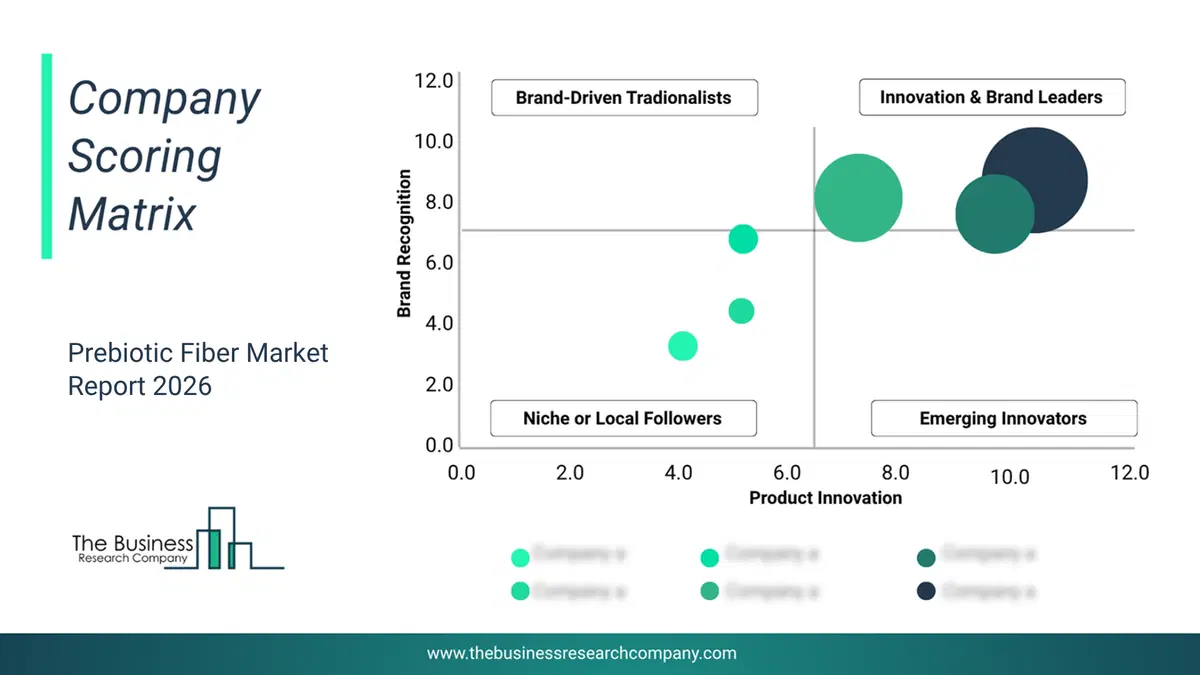
This chart maps companies by product innovation and brand strength, with bubble size indicating relative revenue, helping identify market leaders, challengers, and niche players. This is an illustrative chart; the full report provides a complete and accurate competitive analysis.
Global Prebiotic Fiber Market Trends and Insights
Major companies operating in the prebiotic fiber market are focusing their efforts on introducing functional foods and beverages fortified with prebiotic fiber such as prebiotic fiber-enriched beverages, to reach health-conscious consumers seeking convenient options to support digestive health. Prebiotic fiber-enriched beverages are those that have extra prebiotic fibers added to them to aid in digestion and gut health. For instance, in November 2023, Beliv, a US-based beverage company, launched Mighty Pop, the first soda to include prebiotics, probiotics, and postbiotics in one formula. It aims to provide consumers with a convenient, palatable beverage that also supports health. Each can of Mighty Pop contains one billion live probiotic cultures, three grams of prebiotic fiber sourced sustainably from certified carbon-neutral acacia plants, and postbiotics known to support immune health and microbiome modulation. Mighty Pop offers a healthier soda alternative with three grams of sugar sourced from agave and a low calorie count of 30 per serving.What Are Latest Mergers And Acquisitions In The Prebiotic Fiber Market?
In May 2025, PepsiCo, Inc., a US-based food and beverage company, acquired Poppi for US $1.95 billion. With this acquisition, PepsiCo aimed to expand into the fast-growing functional and “better-for-you” beverage sector and diversify its product portfolio toward health-oriented drinks. Poppi is a US–based prebiotic soda brand that specializes in producing low-sugar, gut-health oriented sodas enriched with prebiotic fiber, fruit juice, and apple cider vinegar.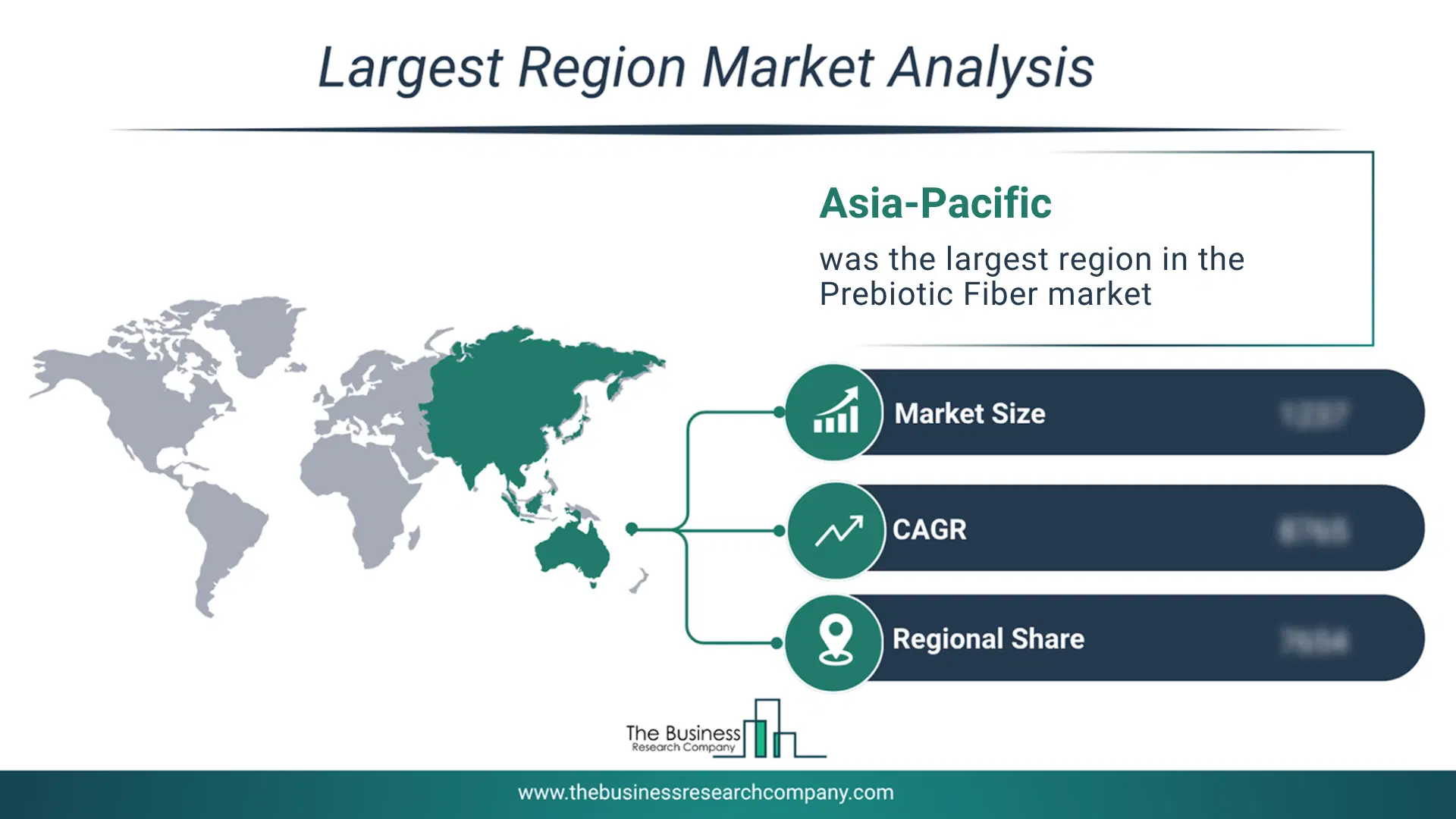
Regional Outlook
Asia-Pacific was the largest region in the prebiotic fiber market in 2025. It is expected to be the fastest-growing region in the forecast period. The regions covered in this market report are Asia-Pacific, South East Asia, Western Europe, Eastern Europe, North America, South America, Middle East and Africa. The countries covered in this market report are Australia, Brazil, China, France, Germany, India, Indonesia, Japan, Taiwan, Russia, South Korea, UK, USA, Italy, Spain, CanadaWhat Defines the Prebiotic Fiber Market?
The prebiotic fiber market consists of sales of prebiotic fiber powders, capsules or supplements, gummies, and dairy products. Values in this market are ‘factory gate’ values, that is the value of goods sold by the manufacturers or creators of the goods, whether to other entities (including downstream manufacturers, wholesalers, distributors and retailers) or directly to end customers. The value of goods in this market includes related services sold by the creators of the goods.How is Market Value Defined and Measured?
The market value is defined as the revenues that enterprises gain from the sale of goods and/or services within the specified market and geography through sales, grants, or donations in terms of the currency (in USD unless otherwise specified). The revenues for a specified geography are consumption values that are revenues generated by organizations in the specified geography within the market, irrespective of where they are produced. It does not include revenues from resales along the supply chain, either further along the supply chain or as part of other products.
This chart presents market attractiveness based on a quantitative evaluation of growth, competition, strategic alignment, and risk, offering a clear view of opportunity areas for decision-making. This chart is for illustrative purposes; the full report contains the complete analysis.

This chart highlights the Total Addressable Market (TAM) by estimating the maximum revenue opportunity using an assumption-driven approach, supporting strategic planning and opportunity sizing across markets. The chart is illustrative; the full report provides a more comprehensive analysis.
What Key Data and Analysis Are Included in the Prebiotic Fiber Market Report 2026?
The prebiotic fiber market research report is one of a series of new reports from The Business Research Company that provides market statistics, including industry global market size, regional shares, competitors with the market share, detailed market segments, market trends and opportunities, and any further data you may need to thrive in the prebiotic fiber industry. The market research report delivers a complete perspective of everything you need, with an in-depth analysis of the current and future state of the industry.Prebiotic Fiber Market Report Forecast Analysis
| Report Attribute | Details |
|---|---|
| Market Size Value In 2026 | $8.87 billion |
| Revenue Forecast In 2030 | $12.67 billion |
| Growth Rate | CAGR of 11.0% from 2026 to 2030 |
| Base Year For Estimation | 2025 |
| Actual Estimates/Historical Data | 2020-2025 |
| Forecast Period | 2026 - 2030 |
| Market Representation | Revenue in USD Billion and CAGR from 2026 to 2030 |
| Segments Covered | Type, Nature, Application, Sales Channel |
| Regional Scope | Asia-Pacific, Western Europe, Eastern Europe, North America, South America, Middle East, Africa |
| Country Scope | The countries covered in the report are Australia, Brazil, China, France, Germany, India, Indonesia, Japan, Taiwan, Russia, South Korea, UK, USA, Canada, Italy, Spain. |
| Key Companies Profiled | Cargill Incorporated, The Archer-Daniels-Midland Company, Abbott Laboratories, GSK plc, Royal FrieslandCampina N.V., Kerry Group plc, Ingredion Incorporated, Tereos SA, Parmalat S.p.A., Dupont Nutrition & Health, Yakult Honsha Co. Ltd., Tate & Lyle plc, Samyang Foods, NOW Health Group Inc., BENEO GmbH, Nexira, Galam Ltd., Jarrow Formulas Inc, Cosucra Groupe Warcoing SA, Sensus, Attune Foods LLC, KeVita Inc., GTC Nutrition, The Kraft Heinz Company |
| Customization Scope | Request for Customization |
| Pricing And Purchase Options | Explore Purchase Options |