
Precision Medicine Market Report 2026
Global Outlook – By Technology (Big Data Analytics, Bioinformatics, Gene Sequencing, Drug Discovery, Companion Diagnostics, Other Technology), By Application (Oncology, Respiratory Diseases, Central Nervous System Disorders, Immunology, Genetic Diseases, Other Applications.), By End-Use (Pharmaceutical Companies, Diagnostic Companies, Healthcare And IT Firms, Others) – Market Size, Trends, Strategies, and Forecast to 2030
Precision Medicine Market Overview
• Precision Medicine market size has reached to $87.91 billion in 2025 • Expected to grow to $137.69 billion in 2030 at a compound annual growth rate (CAGR) of 9.4% • Growth Driver: Rising Cancer Prevalence Propels Growth In The Precision Medicine Market • Market Trend: Artificial Intelligence-Powered Solutions Enhance Drug Discovery And Precision Medicine • North America was the largest region in 2025 and Asia-Pacific is the fastest growing region.Market Gains By 2030 – Top Opportunities By Segment
Market Gain identifies the most promising market opportunities by highlighting the segments or products expected to generate the highest incremental revenue growth over the next five years.
What Is Covered Under Precision Medicine Market?
Precision medicine refers to a type of medication that prevents, detects, or treats disease using knowledge about a person's genes or proteins. To choose a treatment that may be most effective for a person, precision medicine considers their genetics, environment, and lifestyle. The main technologies involved in precision medicine are bioinformatics, big data analytics, drug discovery, gene sequencing, companion diagnostics, and others. Bioinformatics technologies involve the application of computational tools to organize, analyze, understand, visualize, and store information associated with biological macromolecules. It is used in oncology, respiratory diseases, central nervous disorders, immunology, genetic diseases, and others and is implemented in various sectors such as pharmaceuticals, diagnostic companies, healthcare, and IT firms, among others.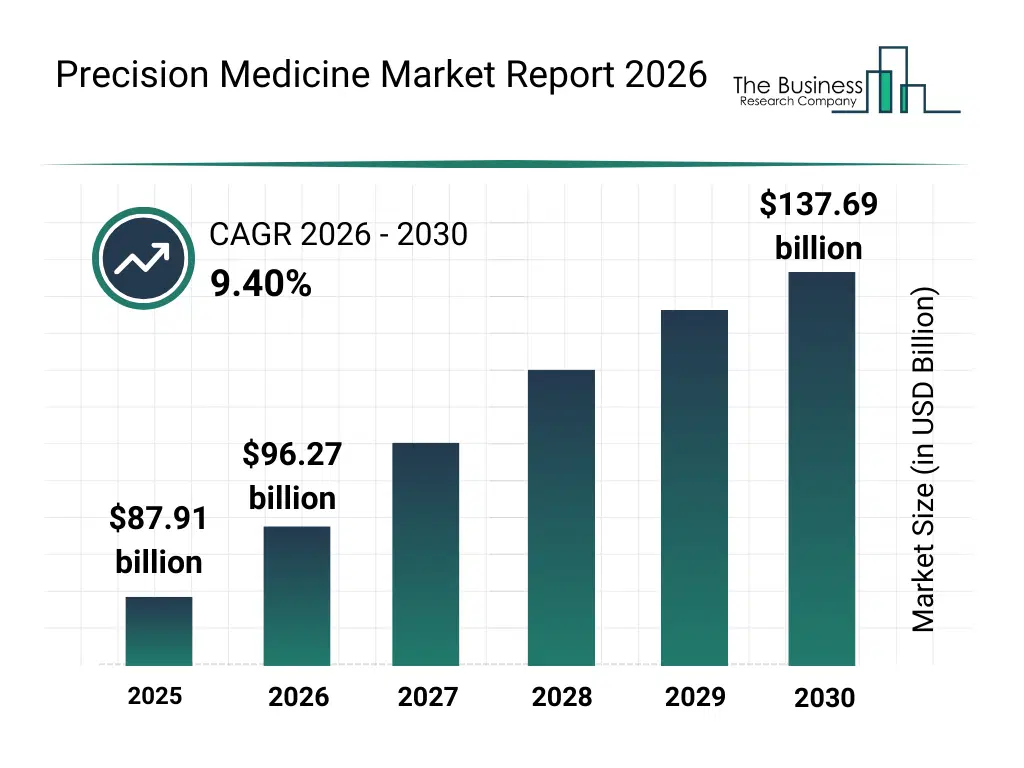
What Is The Precision Medicine Market Size and Share 2026?
The precision medicine market size has grown strongly in recent years. It will grow from $87.91 billion in 2025 to $96.27 billion in 2026 at a compound annual growth rate (CAGR) of 9.5%. The growth in the historic period can be attributed to advancements in genomic research, declining cost of gene sequencing, increasing prevalence of cancer and genetic disorders, growth in biopharmaceutical R&D spending, regulatory approvals for targeted therapies.What Is The Precision Medicine Market Growth Forecast?
The precision medicine market size is expected to see strong growth in the next few years. It will grow to $137.69 billion in 2030 at a compound annual growth rate (CAGR) of 9.4%. The growth in the forecast period can be attributed to expansion of next-generation sequencing adoption, rising demand for personalized treatment plans, growing use of ai-driven drug discovery, increasing investments in precision diagnostics, integration of digital health platforms. Major trends in the forecast period include rising adoption of companion diagnostics, shift toward personalized oncology therapies, integration of multi-omics data in clinical decision-making, expansion of precision medicine in rare and genetic diseases, increasing collaboration between pharma and diagnostic firms.
Global Precision Medicine Market Segmentation
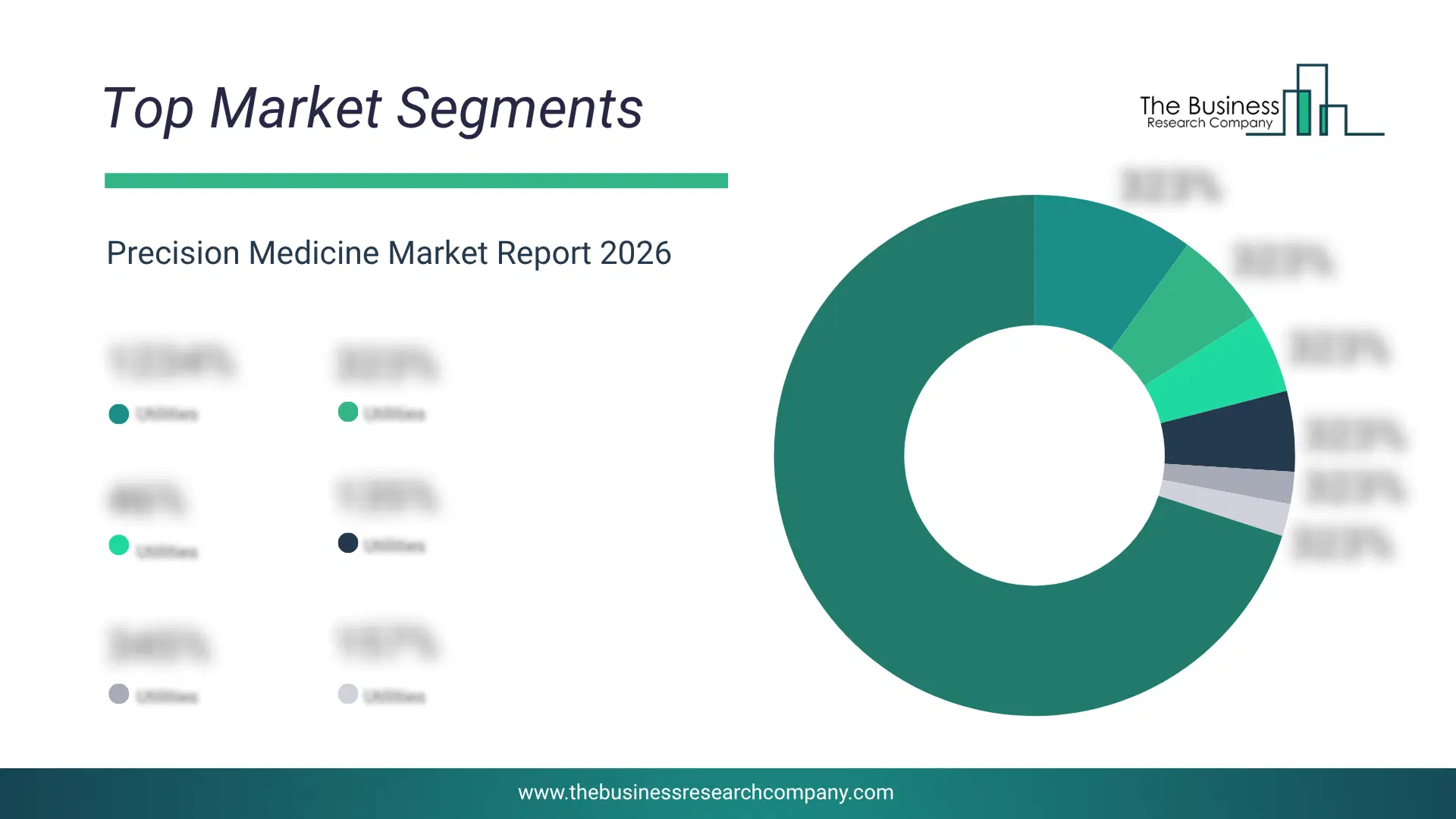
1) By Technology: Big Data Analytics, Bioinformatics, Gene Sequencing, Drug Discovery, Companion Diagnostics, Other Technology 2) By Application: Oncology, Respiratory Diseases, Central Nervous System Disorders, Immunology, Genetic Diseases, Other Applications. 3) By End-Use: Pharmaceutical Companies, Diagnostic Companies, Healthcare And IT Firms, Others Subsegments: 1) By Big Data Analytics: Predictive Analytics, Prescriptive Analytics, Data Mining 2) By Bioinformatics: Genomic Data Analysis, Proteomics Data Analysis, Metabolomics Data Analysis 3) By Gene Sequencing: Next-Generation Sequencing (NGS), Sanger Sequencing, Whole Genome Sequencing 4) By Drug Discovery: Target Identification And Validation, Lead Compound Discovery, Preclinical And Clinical Trials 5) By Companion Diagnostics: Biomarker Testing, Genomic Profiling, Companion Diagnostic Tests 6) By Other Technology: Personalized Treatment Plans, Telemedicine And Digital Health Solutions, Wearable Health Technology The top segments in the precision medicine market will be: • Gene Sequencing will reach $40.87 Billion by 2030. • Drug Discovery will reach $36.12 Billion by 2030. • Bioinformatics will reach $27.79 Billion by 2030. • Big Data Analytics will reach $17.43 Billion by 2030. • Companion Diagnostics will reach $14.67 Billion by 2030.What Is The Driver Of The Precision Medicine Market?
The rising prevalence of cancer is projected to fuel the growth of the precision medicine market. Cancer is one of the main causes of death worldwide, with one out of every five individuals developing cancer at some point in their lives. Precision medicine in cancer entails analyzing DNA from tumors to find mutations or other genetic abnormalities that cause cancer. Physicians may therefore be able to choose a treatment for a specific patient's cancer that best fits, or targets, the tumor DNA alterations. For instance, in February 2024, according to the World Health Organization, a Switzerland-based specialized agency responsible for international public health, by 2050, over 35 million new cancer cases are projected, representing a 77% increase from the estimated 20 million cases in 2022. Therefore, the rising prevalence of cancer drives the growth of the precision medicine industry.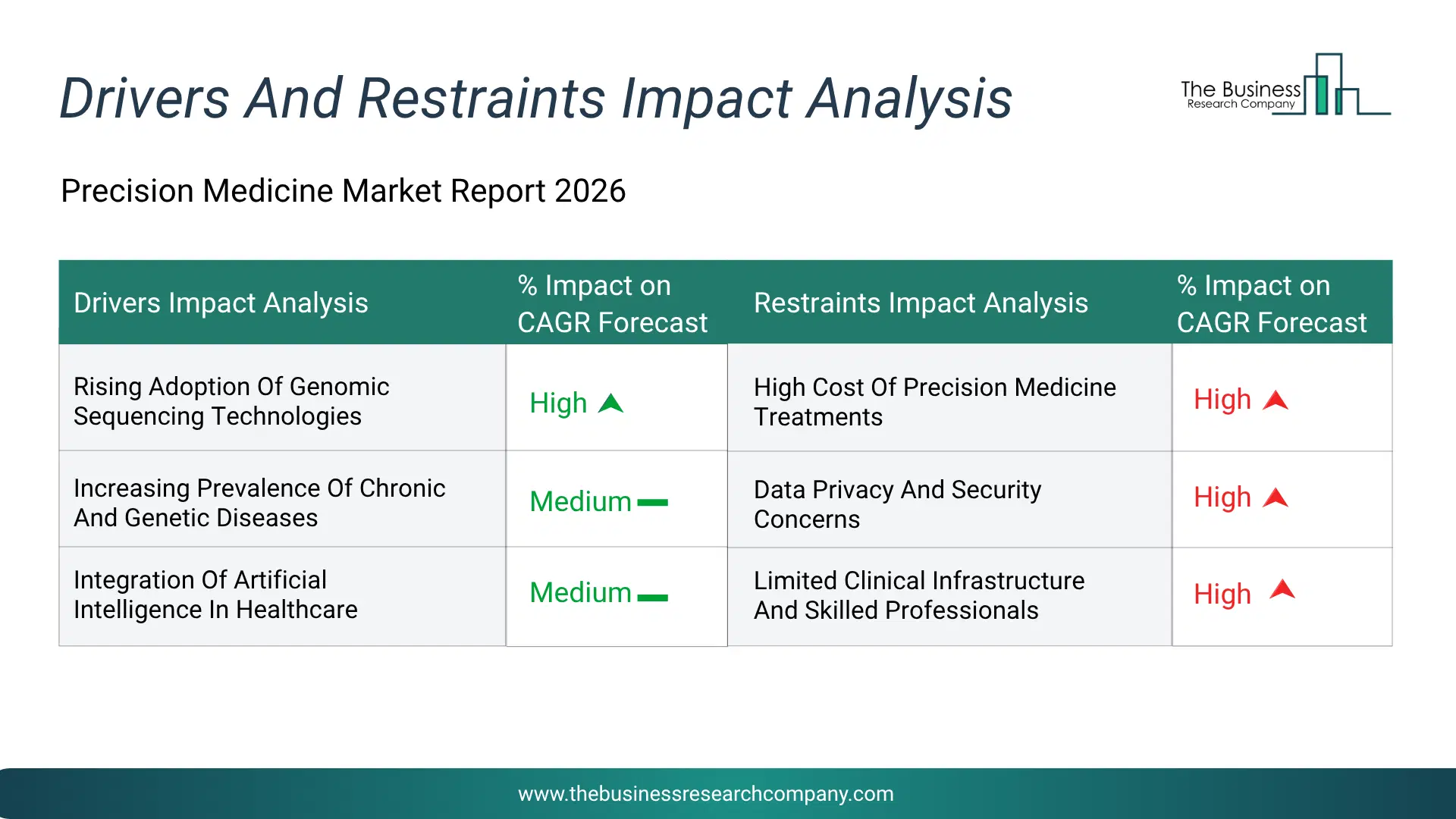
Infographic Chart Showing Key Market Drivers Analysis And Restraints For Precision Medicine Market
The chart presents an impact analysis of key drivers and restraints, quantifying their relative influence on the market's growth rate and helping assess the balance between growth enablers and limiting factors. This chart offers a high-level perspective; the full report contains more detailed insights.
How Will The Drivers Impact Growth In The Global Precision Medicine Market?
• Rising Adoption Of Genomic Sequencing Technologies (High) – During the forecast period, the rising adoption of genomic sequencing technologies is expected to become a key growth driver for the precision medicine market by 2030. Rising adoption of genomic sequencing technologies is accelerating the growth of precision medicine by reducing sequencing costs, improving accessibility, and enabling detailed analysis of individual genetic profiles. These advanced sequencing technologies are supporting personalized diagnosis, early disease detection, and the development of targeted therapies across oncology, rare diseases, and inherited disorders. The integration of next-generation sequencing (NGS), whole-genome sequencing, and molecular profiling is helping healthcare providers identify genetic variations, optimize treatment strategies, and improve patient outcomes through more accurate and data-driven medical interventions. • Increasing Prevalence Of Chronic And Genetic Diseases (Medium) – During the forecast period, the increasing prevalence of chronic and genetic diseases is expected to emerge as a major factor driving the expansion of the precision medicine market by 2030. Increasing prevalence of chronic and genetic diseases is driving demand for individualized treatments, biomarker-based diagnostics, and personalized therapeutic approaches across cancer, cardiovascular disorders, and inherited conditions. The growing burden of complex diseases is increasing the need for advanced diagnostic tools that can identify disease-specific genetic markers and guide effective treatment selection. Precision medicine approaches enable healthcare professionals to develop targeted therapies based on patient-specific characteristics, improving treatment effectiveness, reducing unnecessary therapies, and supporting long-term disease management. • Integration Of Artificial Intelligence In Healthcare (Medium) – During the forecast period, the integration of artificial intelligence in healthcare is expected to act as a key growth catalyst for the precision medicine market by 2030. Integration of artificial intelligence in healthcare is improving genomic data analysis, predictive diagnostics, and treatment selection by enabling faster interpretation of complex biological datasets. AI-driven platforms help analyze genetic information, identify disease-associated mutations, discover potential biomarkers, and predict patient responses to specific therapies. The combination of artificial intelligence with genomics, clinical data, and real-world evidence is enhancing clinical decision-making, accelerating drug discovery, and strengthening precision-based healthcare outcomes through more accurate and personalized interventions.How Will The Restraints Impact Growth In The Global Precision Medicine Market?
• High Cost Of Precision Medicine Treatments (High) – During the forecast period, the high Cost Of Precision Medicine Treatments limits patient accessibility due to expensive genomic testing, targeted therapies, and advanced diagnostic infrastructure requirements in healthcare systems. • Data Privacy And Security Concerns (Medium) – During the forecast period, the data Privacy And Security Concerns restrict adoption because precision medicine relies heavily on sensitive genomic and patient health information requiring strict regulatory compliance and cybersecurity protection. • Limited Clinical Infrastructure And Skilled Professionals (Medium) – During the forecast period, the limited Clinical Infrastructure And Skilled Professionals slows precision medicine implementation due to inadequate genomic testing facilities and shortage of trained bioinformatics and genetic experts.Key Players In The Global Precision Medicine Market
Major companies operating in the precision medicine market are Quest Diagnostics, Thermo Fisher Scientific Inc., Roche Holding AG, Medtronic plc, Novartis AG, Pfizer Inc., Qiagen, AstraZeneca plc., Abbott Laboratories, Nordic Bioscience A/S, Takeda Pharmaceutical Company Ltd., Otsuka Pharmaceutical Co. Ltd., Daiichi Sankyo, China National Pharmaceutical Group Co. Ltd., GE Healthcare, Randox Laboratories, Almac Group, Sun Pharma, Nichi-Iko Pharmaceutical Co. Ltd., Daewoong Pharmaceutical Co.Ltd, GlaxoSmithKline, Teva UK Limited, Vectura Group, Merck & Co., Boehringer Ingelheim, Mylan, Zentiva, Sanofi, Apotex, Gilead Sciences, Bayer, AbbVie Inc., Amgen, Janssen Pharmaceutica, Accord Healthcare Inc., Acerus Precision Medicine Corporation, AA Pharma Inc, Sanfer, LABORATORIOS SENOSIAIN SA DE CV, Siegfried Rhein, Biocrates LifeSciences, Nanostring Technologies, Tepnel Pharma Services, Intomics, Silicon Biosystems, EMS Pharma, Eurofarma, Biolab Farmaceutica, Cristalia, União Quimica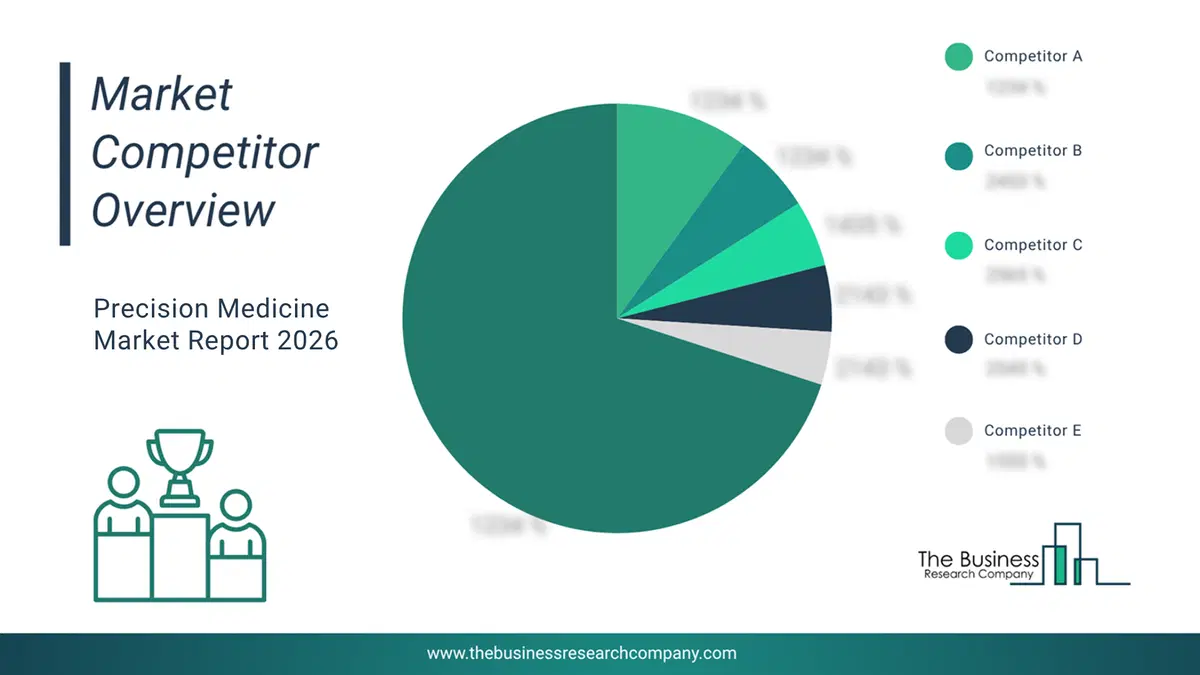
This chart is for illustrative purposes; the full report includes a detailed competitor analysis and comprehensive overview of the top 10 companies in the market.
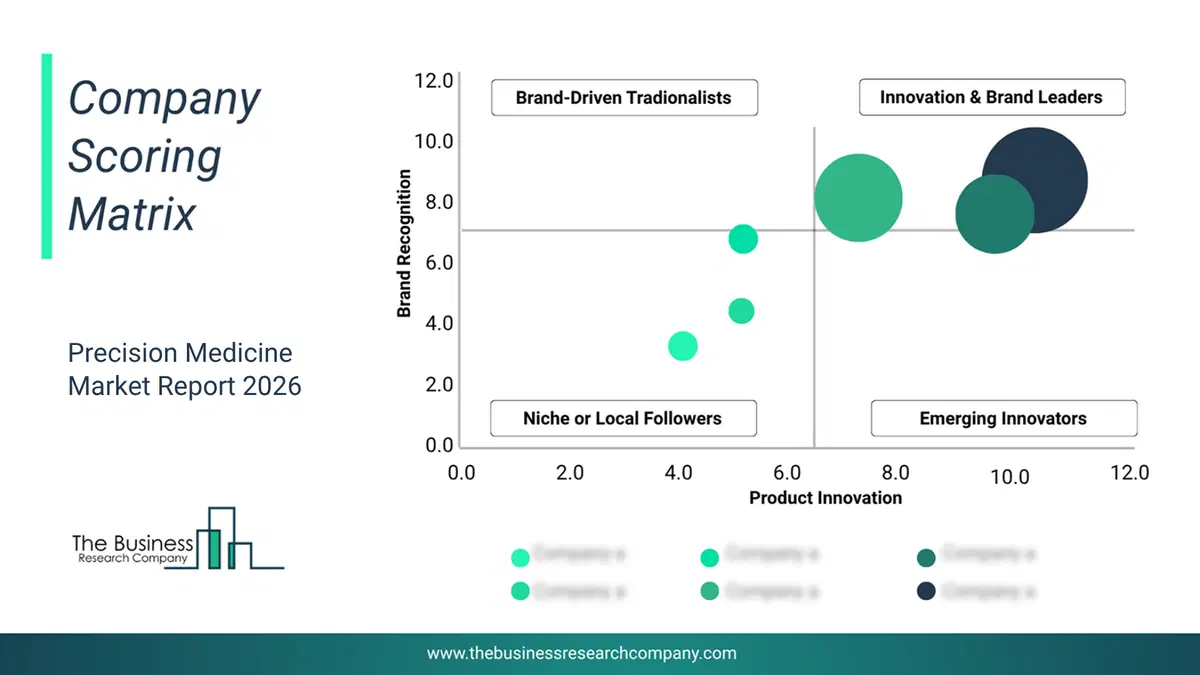
This chart maps companies by product innovation and brand strength, with bubble size indicating relative revenue, helping identify market leaders, challengers, and niche players. This is an illustrative chart; the full report provides a complete and accurate competitive analysis.
Global Precision Medicine Market Trends and Insights
Major companies operating in the precision medicine market are focusing on innovation, such as data ingestion, which facilitates access to public datasets through Google Cloud's Analytics Hub. Data ingestion is the process of collecting and importing data from various sources into a storage system or a data processing platform. For instance, in May 2023, Google Cloud, a US-based software development company, launched two innovative AI-powered solutions aimed at enhancing drug discovery and precision medicine. New AI-powered solutions are helping accelerate drug discovery and precision medicine for the biotech and pharmaceutical industries. Researchers can now identify protein structures and interpret genomic data more efficiently, improving drug development processes. These tools reduce time-to-market for life-saving treatments and enhance collaboration among research teams. They also support multi-cloud environments for seamless integration.What Are Latest Mergers And Acquisitions In The Precision Medicine Market?
In July 2024, Thermo Fisher Scientific Inc., a US-based biotechnology company, acquired Olink Proteomics for an undisclosed amount. This acquisition aims to expand its capabilities in proteomics, a growing field focused on the large-scale study of proteins. Olink Proteomics is a Sweden-based biotechnology research company contributing to precision medicine through its innovative technologies and services focused on protein biomarker analysis.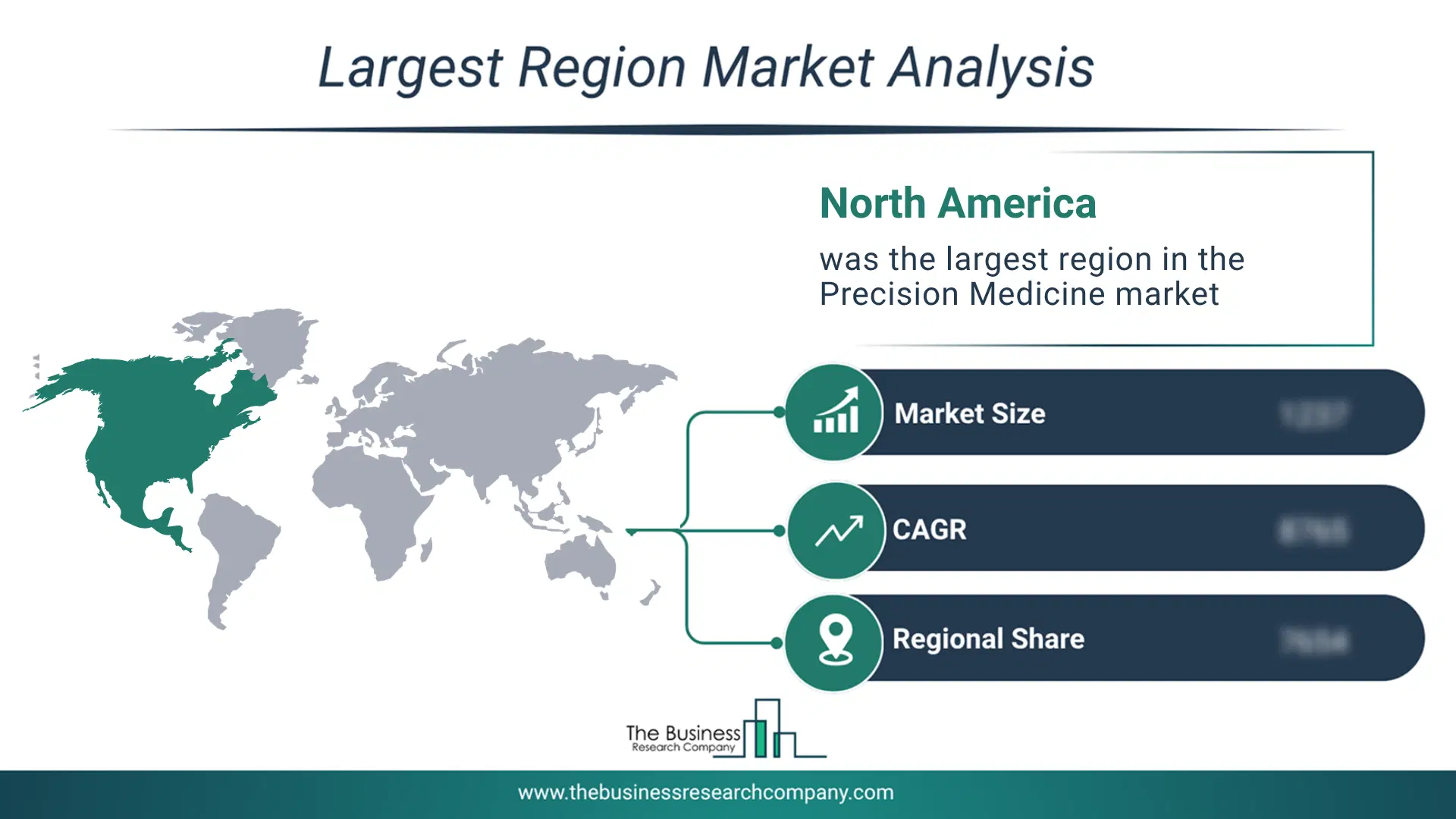
Regional Insights
North America was the largest region in the precision medicine market in 2025. Asia-Pacific is expected to be the fastest-growing region in the forecast period. The regions covered in this market report are Asia-Pacific, South East Asia, Western Europe, Eastern Europe, North America, South America, Middle East, Africa. The countries covered in this market report are Australia, Brazil, China, France, Germany, India, Indonesia, Japan, Taiwan, Russia, South Korea, UK, USA, Canada, Italy, Spain.What Defines the Precision Medicine Market?
The precision medicine market consists of sales of imatinib, personalized medicine, and individualized medicine. Values in this market are ‘factory gate’ values, that is the value of goods sold by the manufacturers or creators of the goods, whether to other entities (including downstream manufacturers, wholesalers, distributors and retailers) or directly to end customers. The value of goods in this market includes related services sold by the creators of the goods.How is Market Value Defined and Measured?
The market value is defined as the revenues that enterprises gain from the sale of goods and/or services within the specified market and geography through sales, grants, or donations in terms of the currency (in USD unless otherwise specified). The revenues for a specified geography are consumption values that are revenues generated by organizations in the specified geography within the market, irrespective of where they are produced. It does not include revenues from resales along the supply chain, either further along the supply chain or as part of other products.
This chart presents market attractiveness based on a quantitative evaluation of growth, competition, strategic alignment, and risk, offering a clear view of opportunity areas for decision-making. This chart is for illustrative purposes; the full report contains the complete analysis.

This chart highlights the Total Addressable Market (TAM) by estimating the maximum revenue opportunity using an assumption-driven approach, supporting strategic planning and opportunity sizing across markets. The chart is illustrative; the full report provides a more comprehensive analysis.
What Key Data and Analysis Are Included in the Precision Medicine Market Report 2026?
The precision medicine market research report is one of a series of new reports from The Business Research Company that provides market statistics, including industry global market size, regional shares, competitors with the market share, detailed market segments, market trends and opportunities, and any further data you may need to thrive in the precision medicine industry. The market research report delivers a complete perspective of everything you need, with an in-depth analysis of the current and future state of the industry.Precision Medicine Market Report Forecast Analysis
| Report Attribute | Details |
|---|---|
| Market Size Value In 2026 | $96.27 billion |
| Revenue Forecast In 2030 | $137.69 billion |
| Growth Rate | CAGR of 9.5% from 2026 to 2030 |
| Base Year For Estimation | 2025 |
| Actual Estimates/Historical Data | 2020-2025 |
| Forecast Period | 2026 - 2030 |
| Market Representation | Revenue in USD Billion and CAGR from 2026 to 2030 |
| Segments Covered | Technology, Application, End-Use |
| Regional Scope | Asia-Pacific, Western Europe, Eastern Europe, North America, South America, Middle East, Africa |
| Country Scope | The countries covered in the report are Australia, Brazil, China, France, Germany, India, Indonesia, Japan, Taiwan, Russia, South Korea, UK, USA, Canada, Italy, Spain. |
| Key Companies Profiled | Quest Diagnostics, Thermo Fisher Scientific Inc., Roche Holding AG, Medtronic plc, Novartis AG, Pfizer Inc., Qiagen, AstraZeneca plc., Abbott Laboratories, Nordic Bioscience A/S, Takeda Pharmaceutical Company Ltd., Otsuka Pharmaceutical Co. Ltd., Daiichi Sankyo, China National Pharmaceutical Group Co. Ltd., GE Healthcare, Randox Laboratories, Almac Group, Sun Pharma, Nichi-Iko Pharmaceutical Co. Ltd., Daewoong Pharmaceutical Co.Ltd, GlaxoSmithKline, Teva UK Limited, Vectura Group, Merck & Co., Boehringer Ingelheim, Mylan, Zentiva, Sanofi, Apotex, Gilead Sciences, Bayer, AbbVie Inc., Amgen, Janssen Pharmaceutica, Accord Healthcare Inc., Acerus Precision Medicine Corporation, AA Pharma Inc, Sanfer, LABORATORIOS SENOSIAIN SA DE CV, Siegfried Rhein, Biocrates LifeSciences, Nanostring Technologies, Tepnel Pharma Services, Intomics, Silicon Biosystems, EMS Pharma, Eurofarma, Biolab Farmaceutica, Cristalia, União Quimica |
| Customization Scope | Request for Customization |
| Pricing And Purchase Options | Explore Purchase Options |