
Precision Oncology Market Report 2026
Global Outlook – By Type (Genomic Sequencing, Immunotherapy), By Test Type (Genetic Tests, Biomarker-Based Tests, Therapeutics), By Cancer Type (Breast Cancer, Lung Cancer, Colorectal Cancer, Prostate Cancer, Skin Cancer, Stomach Cancer, Other Cancers), By Technology (Next-Generation Sequencing, Bioinformatics, Molecular Imaging, Liquid Biopsy), By End-users (Hospitals, Research Laboratories, Pharmaceutical Companies, Diagnostic Centers) – Market Size, Trends, Strategies, and Forecast to 2030
Precision Oncology Market Overview
• Precision Oncology market size has reached to $106.21 billion in 2025 • Expected to grow to $175.38 billion in 2030 at a compound annual growth rate (CAGR) of 10.5% • Growth Driver: Rising Adoption Of Personalized Therapies Driving The Market Growth Due To Advances In Genomic Technologies And Targeted Treatment Approaches • Market Trend: Advancing Personalized Cancer Care Through Genomic-Driven Innovations • North America was the largest region in 2025 and Asia-Pacific is the fastest growing region.What Is Covered Under Precision Oncology Market?
Precision oncology refers to a medical approach that tailors cancer treatment to the individual characteristics of each patient. This involves using molecular and genetic profiling of tumors to identify specific mutations, biomarkers, or pathways driving cancer growth, allowing clinicians to select targeted therapies that are more likely to be effective and less harmful than traditional treatments. The main types of precision oncology include genomic sequencing and immunotherapy. Genomic sequencing is the process of determining the complete DNA sequence of an organism's genome at a single time. Product offerings in this field include genetic tests, biomarker-based tests, and targeted therapeutics, which are used in the treatment of various cancers, such as breast, lung, colorectal, prostate, skin, stomach, and others. Supporting technologies include next-generation sequencing, bioinformatics, molecular imaging, and liquid biopsy. The primary end users comprise hospitals, research laboratories, pharmaceutical companies, and diagnostic centers.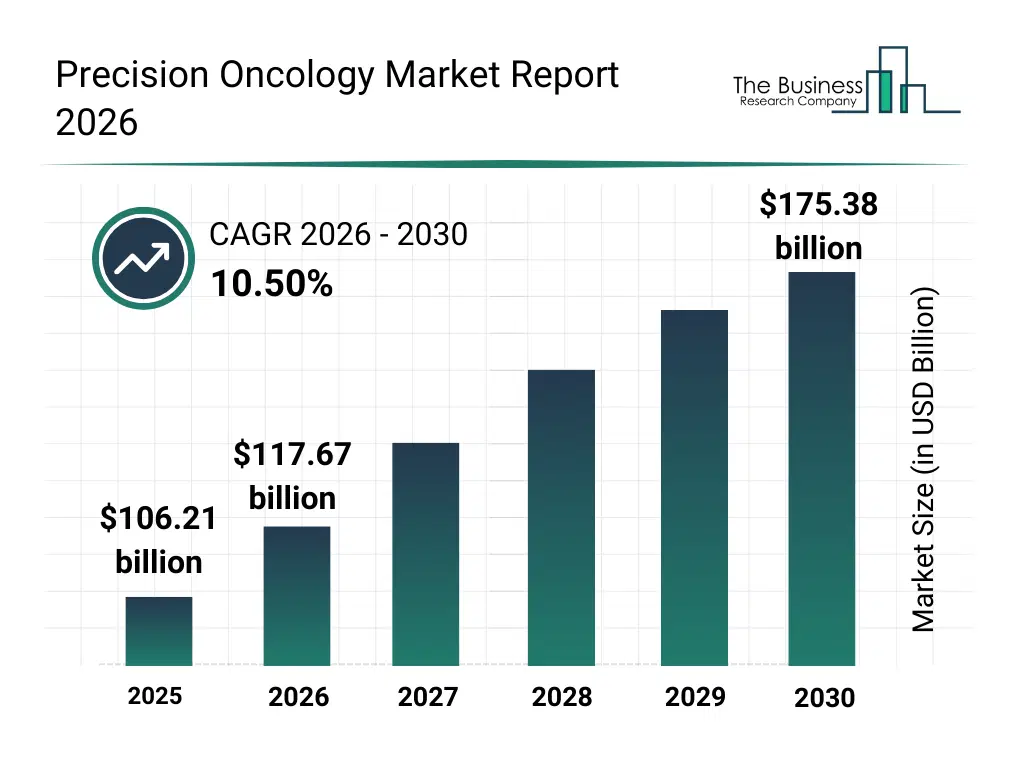
What Is The Precision Oncology Market Size and Share 2026?
The precision oncology market size has grown rapidly in recent years. It will grow from $106.21 billion in 2025 to $117.67 billion in 2026 at a compound annual growth rate (CAGR) of 10.8%. The growth in the historic period can be attributed to limited availability of genomic sequencing technologies, reliance on conventional chemotherapy, increasing cancer prevalence globally, early adoption of immunotherapy, growing research in molecular oncology.What Is The Precision Oncology Market Growth Forecast?
The precision oncology market size is expected to see rapid growth in the next few years. It will grow to $175.38 billion in 2030 at a compound annual growth rate (CAGR) of 10.5%. The growth in the forecast period can be attributed to development of next-generation sequencing platforms, increasing integration of bioinformatics and AI in oncology, rising adoption of liquid biopsy and molecular imaging, expansion of personalized treatment options, growth of research collaborations between hospitals and pharmaceutical companies. Major trends in the forecast period include expansion of targeted cancer therapies based on molecular profiling, increasing adoption of liquid biopsy and non-invasive diagnostic methods, growth in biomarker-based testing for personalized treatment plans, rising integration of immunotherapy with genomic sequencing, enhanced focus on rare and hard-to-treat cancer types.
Global Precision Oncology Market Segmentation
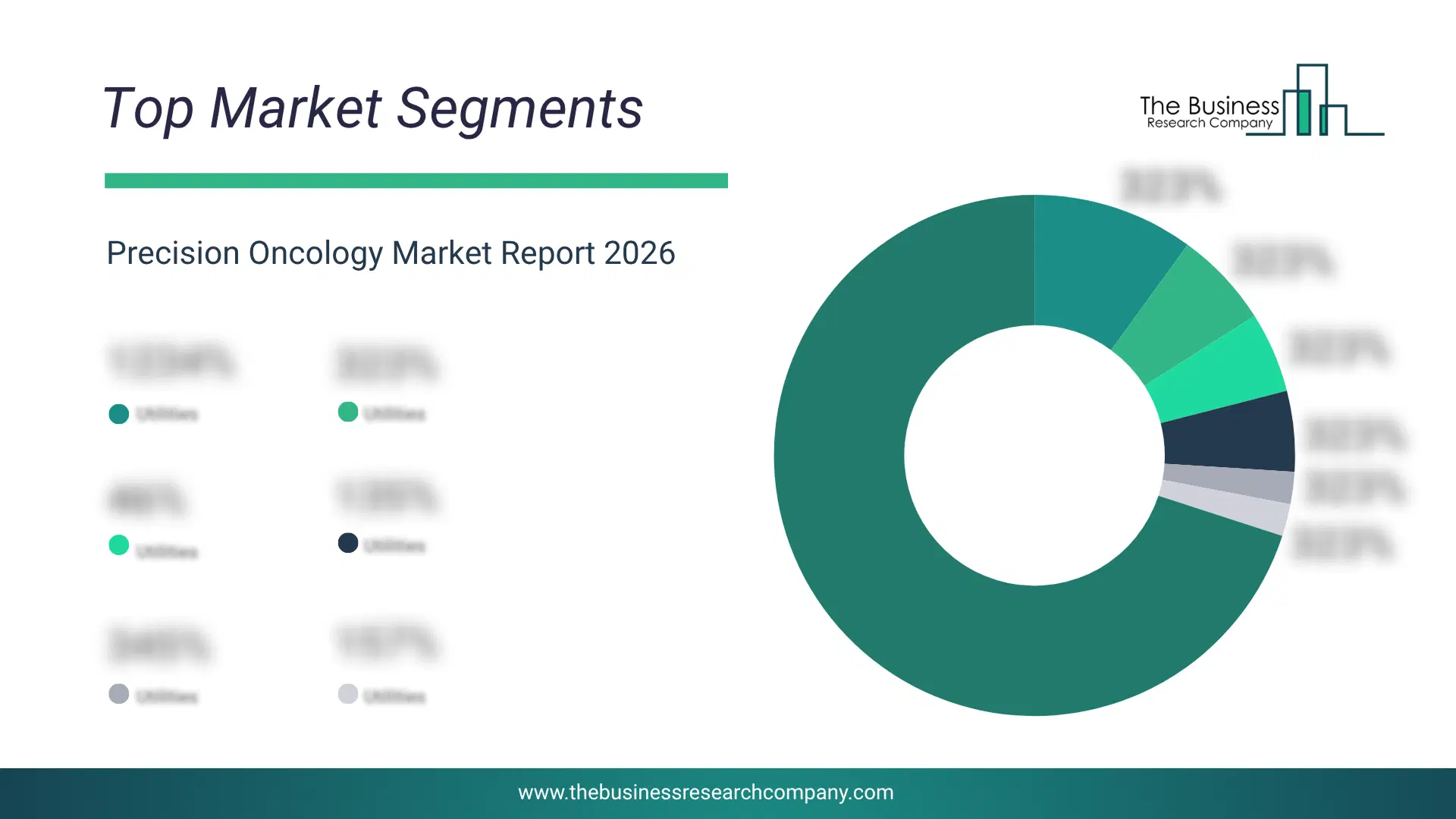
1) By Type: Genomic Sequencing, Immunotherapy 2) By Test Type: Genetic Tests, Biomarker-Based Tests, Therapeutics 3) By Cancer Type: Breast Cancer, Lung Cancer, Colorectal Cancer, Prostate Cancer, Skin Cancer, Stomach Cancer, Other Cancers 4) By Technology: Next-Generation Sequencing, Bioinformatics, Molecular Imaging, Liquid Biopsy 5) By End-users: Hospitals, Research Laboratories, Pharmaceutical Companies, Diagnostic Centers Subsegments: 1) By Genomic Sequencing: Whole Genome Sequencing, Whole Exome Sequencing, Targeted Gene Sequencing 2) By Immunotherapy: Immune Checkpoint Inhibitors, Cancer Vaccines, Adoptive Cell TherapyWhat Is The Driver Of The Precision Oncology Market?
The increasing awareness and shift towards personalized therapies are expected to propel the growth of the precision oncology market going forward. Personalized therapies are treatments customized to an individual's genetic makeup, biomarkers, and specific disease characteristics to enhance effectiveness and reduce side effects. Personalized therapies are increasing due to advancements in genomic technologies that enable the precise identification of disease-driving mutations, allowing for more effective and targeted treatments. Precision oncology helps advance personalized therapies by using genomic and molecular profiling to tailor cancer treatment to the specific genetic makeup of a patient's tumor. For instance, in February 2023, according to GOV.UK, a UK-based government department, Health and Social Care Secretary signed an MoU with BioNTech SE to advance cancer vaccine research in England, aiming to deliver 10,000 personalized therapy doses to UK patients by 2030. Therefore, the increasing awareness and shift towards personalized therapies are driving the growth of the precision oncology industry.Key Players In The Global Precision Oncology Market
Major companies operating in the precision oncology market are Pfizer Inc., F. Hoffmann-La Roche Ltd., Thermo Fisher Scientific Inc., AstraZeneca plc., Novartis AG, Amgen Inc., Agilent Technologies Inc., Illumina Inc., Qiagen N.V., Exact Sciences Corporation, NeoGenomics Laboratories Inc., Myriad Genetics Inc., Invitae Corporation, Caris Life Sciences, Foundation Medicine Inc., NanoString Technologies Inc., Personalis Inc., Strata Oncology Inc.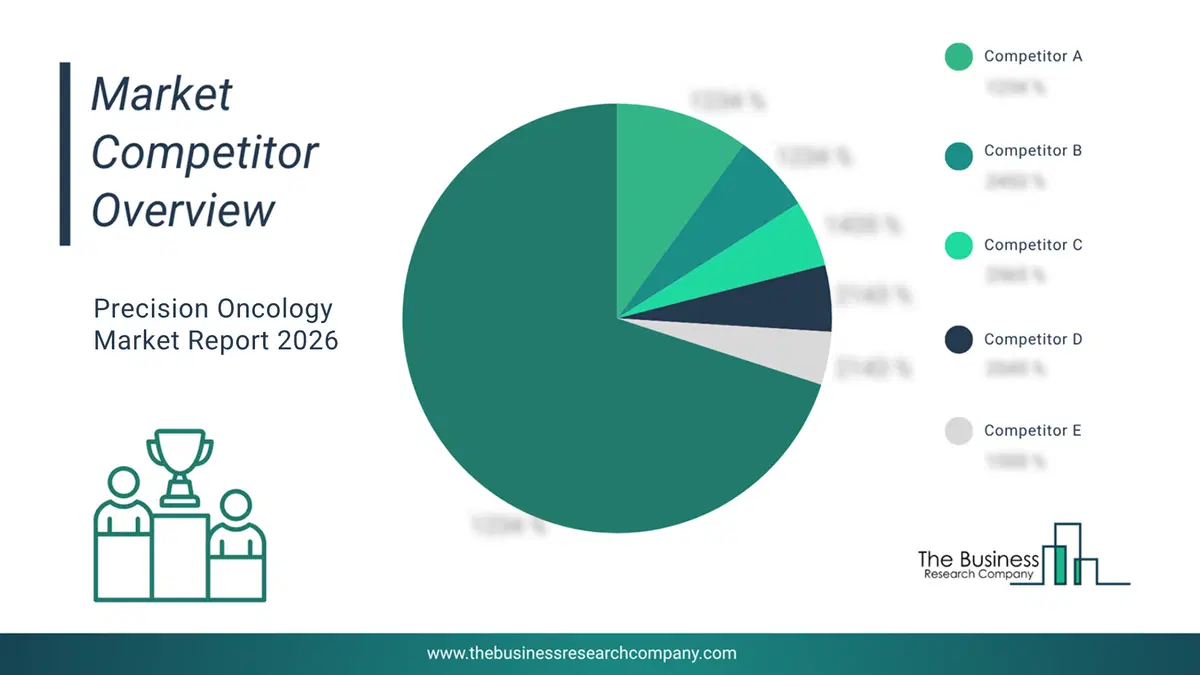
This chart is for illustrative purposes; the full report includes a detailed competitor analysis and comprehensive overview of the top 10 companies in the market.
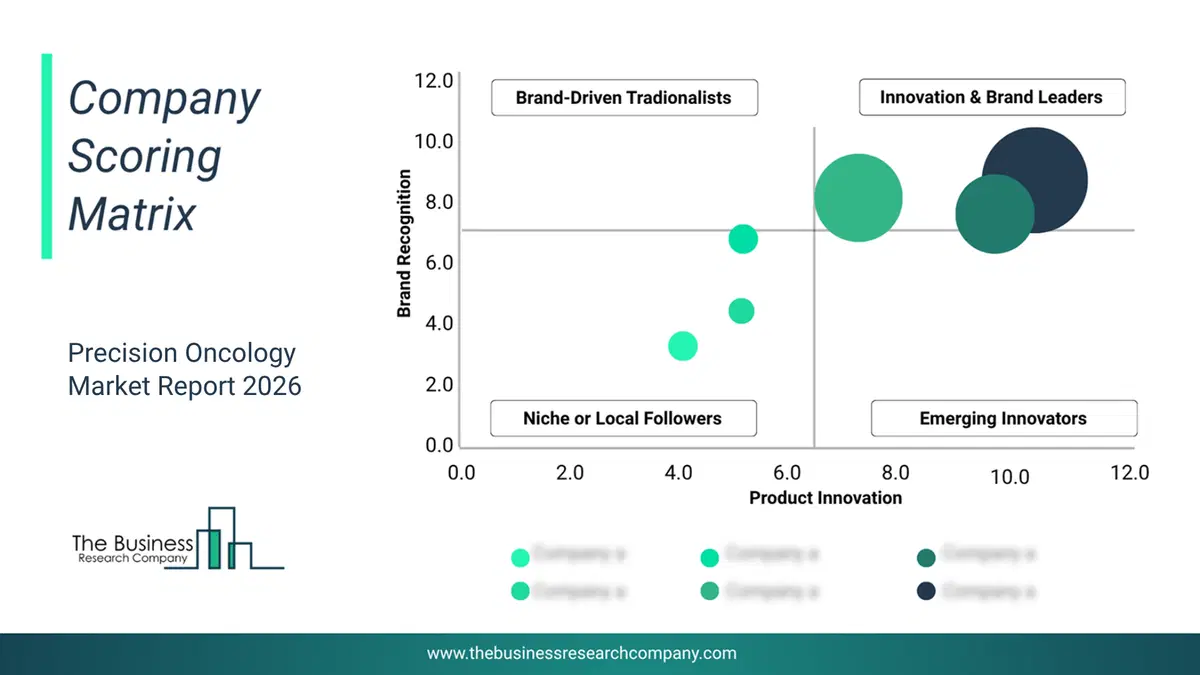
This chart maps companies by product innovation and brand strength, with bubble size indicating relative revenue, helping identify market leaders, challengers, and niche players. This is an illustrative chart; the full report provides a complete and accurate competitive analysis.
Global Precision Oncology Market Trends and Insights
Major companies operating in the precision oncology market are focusing on developing innovative approaches, such as the molecular tumor board, to support personalized treatment decisions by integrating genomic information with clinical context. A molecular tumor board refers to a dedicated panel of specialists that analyzes and interprets complex genomic and molecular test data to inform precision-driven cancer therapies tailored to the specific tumor characteristics of individual patients. For instance, in December 2024, Aster DM Healthcare Ltd., a UAE-based healthcare provider, introduced a precision oncology clinic as part of three personalized cancer care initiatives designed to transform treatment through data-driven, genomic-focused strategies. This clinic delivers customized cancer therapy based on each patient’s tumor genetic profile, enabling more precise, effective treatments with reduced side effects. The approach enhances treatment outcomes, minimizes toxicity, and improves quality of life by aligning therapies to the unique molecular features of a patient's cancer.What Are Latest Mergers And Acquisitions In The Precision Oncology Market?
In March 2024, Bayer AG, a Germany-based pharmaceutical company, partnered with Aignostics GmbH to advance precision oncology by utilizing Aignostics' AI-powered computational pathology and patient data to support the discovery and development of more effective cancer treatments. Aignostics GmbH is a Germany-based artificial intelligence (AI) company that offers technologies tailored for precision oncology.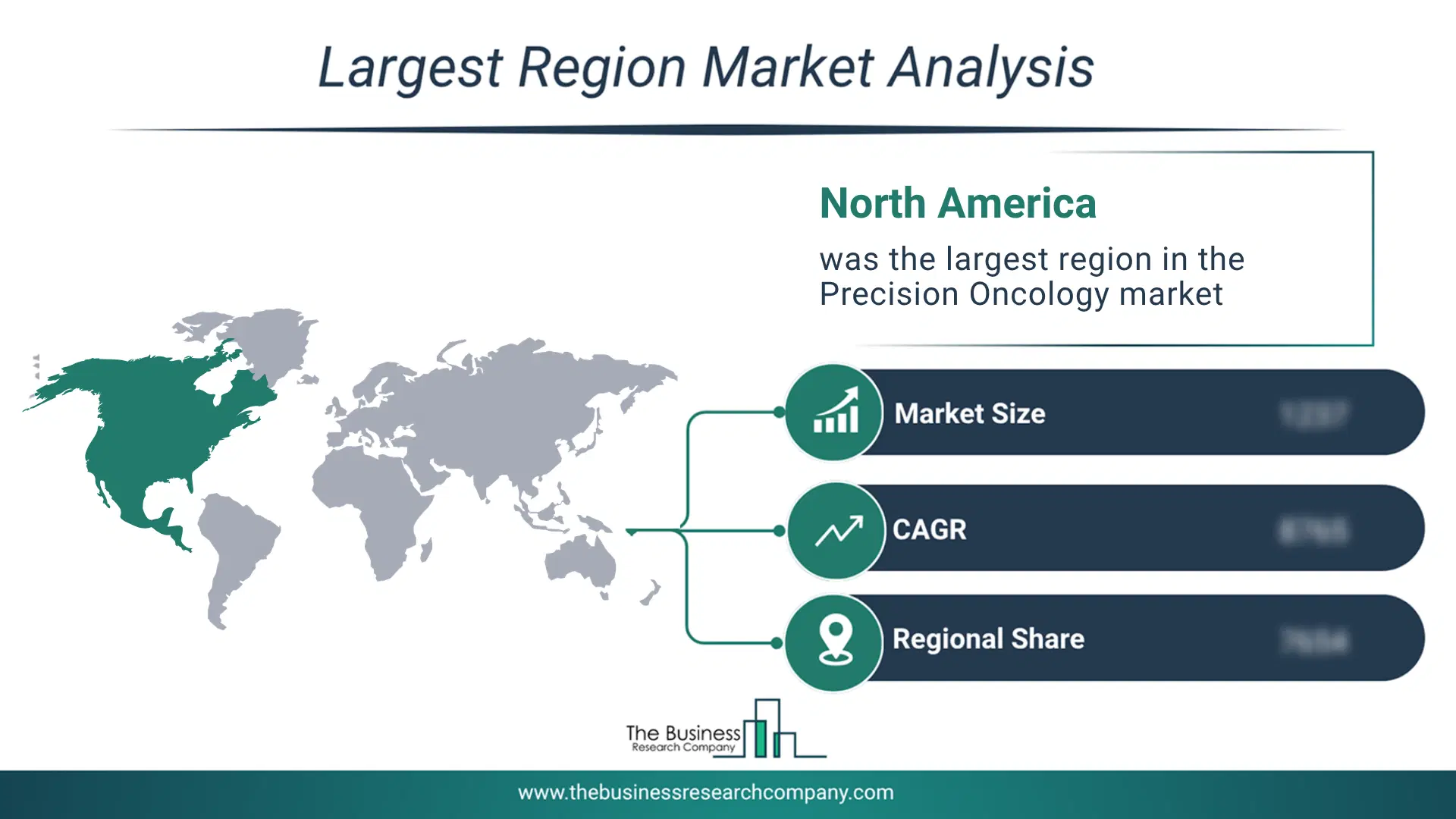
Regional Insights
North America was the largest region in the precision oncology market in 2025. Asia-Pacific is expected to be the fastest-growing region in the forecast period. The regions covered in this market report are Asia-Pacific, South East Asia, Western Europe, Eastern Europe, North America, South America, Middle East, Africa. The countries covered in this market report are Australia, Brazil, China, France, Germany, India, Indonesia, Japan, Taiwan, Russia, South Korea, UK, USA, Canada, Italy, Spain.What Defines the Precision Oncology Market?
The precision oncology market consists of revenues earned by entities by providing services such as genomic and molecular profiling services, companion diagnostics services, and personalized treatment planning. The market value includes the value of related goods sold by the service provider or included within the service offering. The precision oncology market also includes sales of genomic and molecular diagnostic equipment, immune checkpoint inhibitors, and bioinformatics and decision support tools. Values in this market are ‘factory gate’ values; that is, the value of goods sold by the manufacturers or creators of the goods, whether to other entities (including downstream manufacturers, wholesalers, distributors, and retailers) or directly to end customers. The value of goods in this market includes related services sold by the creators of the goods.How is Market Value Defined and Measured?
The market value is defined as the revenues that enterprises gain from the sale of goods and/or services within the specified market and geography through sales, grants, or donations in terms of the currency (in USD unless otherwise specified). The revenues for a specified geography are consumption values that are revenues generated by organizations in the specified geography within the market, irrespective of where they are produced. It does not include revenues from resales along the supply chain, either further along the supply chain or as part of other products.
This chart presents market attractiveness based on a quantitative evaluation of growth, competition, strategic alignment, and risk, offering a clear view of opportunity areas for decision-making. This chart is for illustrative purposes; the full report contains the complete analysis.

This chart highlights the Total Addressable Market (TAM) by estimating the maximum revenue opportunity using an assumption-driven approach, supporting strategic planning and opportunity sizing across markets. The chart is illustrative; the full report provides a more comprehensive analysis.
What Key Data and Analysis Are Included in the Precision Oncology Market Report 2026?
The precision oncology market research report is one of a series of new reports from The Business Research Company that provides market statistics, including industry global market size, regional shares, competitors with the market share, detailed market segments, market trends and opportunities, and any further data you may need to thrive in the precision oncology industry. The market research report delivers a complete perspective of everything you need, with an in-depth analysis of the current and future state of the industry.Precision Oncology Market Report Forecast Analysis
| Report Attribute | Details |
|---|---|
| Market Size Value In 2026 | $117.67 billion |
| Revenue Forecast In 2030 | $175.38 billion |
| Growth Rate | CAGR of 10.8% from 2026 to 2030 |
| Base Year For Estimation | 2025 |
| Actual Estimates/Historical Data | 2020-2025 |
| Forecast Period | 2026 - 2030 |
| Market Representation | Revenue in USD Billion and CAGR from 2026 to 2030 |
| Segments Covered | Type, Test Type, Cancer Type, Technology, End-users |
| Regional Scope | Asia-Pacific, Western Europe, Eastern Europe, North America, South America, Middle East, Africa |
| Country Scope | The countries covered in the report are Australia, Brazil, China, France, Germany, India, Indonesia, Japan, Taiwan, Russia, South Korea, UK, USA, Canada, Italy, Spain. |
| Key Companies Profiled | Pfizer Inc., F. Hoffmann-La Roche Ltd., Thermo Fisher Scientific Inc., AstraZeneca plc., Novartis AG, Amgen Inc., Agilent Technologies Inc., Illumina Inc., Qiagen N.V., Exact Sciences Corporation, NeoGenomics Laboratories Inc., Myriad Genetics Inc., Invitae Corporation, Caris Life Sciences, Foundation Medicine Inc., NanoString Technologies Inc., Personalis Inc., Strata Oncology Inc. |
| Customization Scope | Request for Customization |
| Pricing And Purchase Options | Explore Purchase Options |