
Preclinical Antibody Development Market Report 2026
Global Outlook – By Type (Monoclonal Antibodies, Polyclonal Antibodies, Other Types), By Service Type (Antibody Discovery, Humanization And Engineering, Affinity Maturation, Developability Assessment, Expression And Purification, In Vitro Functional Characterization), By Application (Oncology, Infectious Diseases, Autoimmune Diseases, Other Applications), By End-User (Pharmaceutical Companies, Biotechnology Companies, Research Institutes, Other End-Users) – Market Size, Trends, Strategies, and Forecast to 2030
Preclinical Antibody Development Market Overview
• Preclinical Antibody Development market size has reached to $4.77 billion in 2025 • Expected to grow to $7.93 billion in 2030 at a compound annual growth rate (CAGR) of 10.7% • Growth Driver: The Rise In Autoimmune Diseases Driving The Growth Of The Market Due To Increasing Genetic Predisposition And The Need For Targeted Antibody Therapies • Market Trend: Next-Generation Antibody Drug Conjugates Pave The Way For More Precise And Effective Cancer Therapies • North America was the largest region in 2025 and Asia-Pacific is the fastest growing region.What Is Covered Under Preclinical Antibody Development Market?
Preclinical antibody development is the phase of therapeutic antibody research that occurs after initial discovery and before clinical testing in humans, focusing on optimizing antibody candidates and evaluating their safety, efficacy, and developability. During this stage, antibodies are engineered and characterized through in vitro assays and in vivo animal studies to assess target binding, mechanism of action, pharmacokinetics, and potential toxicity, alongside early manufacturing and formulation work. The main types of preclinical antibody development include monoclonal antibodies, polyclonal antibodies, and other types. Monoclonal antibodies refer to highly specific antibodies produced from a single clone to target a unique antigen for research or therapeutic purposes. The service types include antibody discovery, humanization and engineering, affinity maturation, developability assessment, expression and purification, and in vitro functional characterization. The various applications involved are oncology, infectious diseases, autoimmune diseases, and other applications, and they are used by several end users such as pharmaceutical companies, biotechnology companies, research institutes, and other end-users.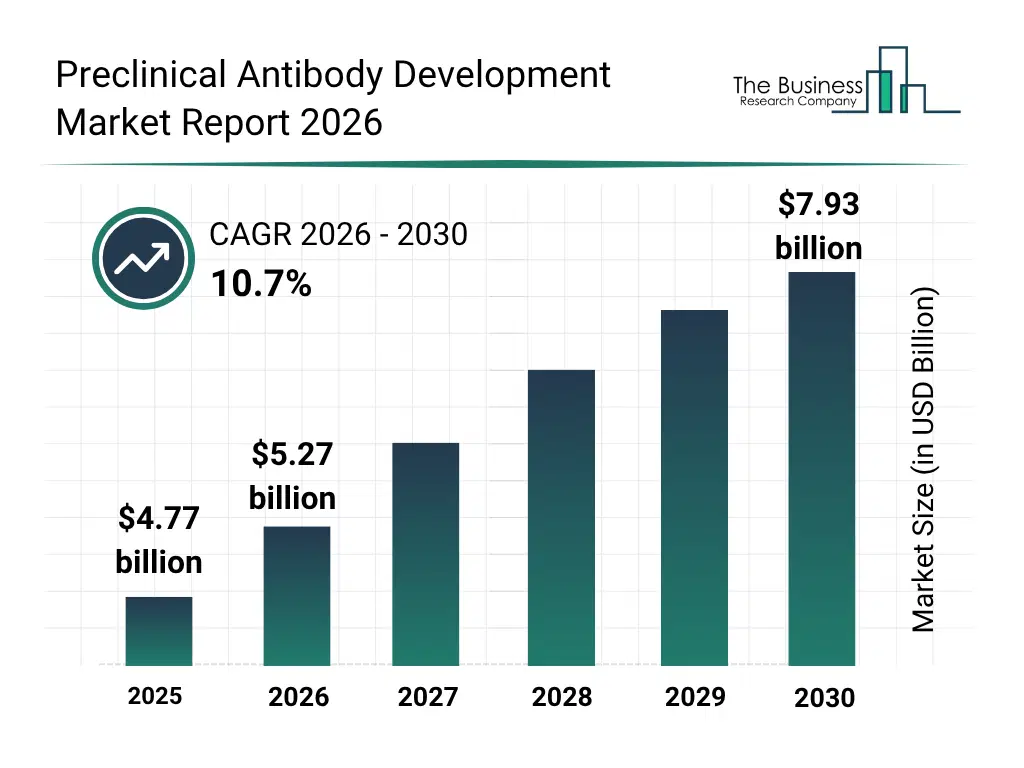
What Is The Preclinical Antibody Development Market Size and Share 2026?
The preclinical antibody development market size has grown rapidly in recent years. It will grow from $4.77 billion in 2025 to $5.27 billion in 2026 at a compound annual growth rate (CAGR) of 10.5%. The growth in the historic period can be attributed to rising demand for therapeutic antibodies, advances in monoclonal antibody technologies, growth of oncology and infectious disease research, improvements in laboratory automation, increasing r&d investments by pharmaceutical companies.What Is The Preclinical Antibody Development Market Growth Forecast?
The preclinical antibody development market size is expected to see rapid growth in the next few years. It will grow to $7.93 billion in 2030 at a compound annual growth rate (CAGR) of 10.7%. The growth in the forecast period can be attributed to adoption of ai-based antibody design platforms, integration of predictive analytics in preclinical studies, expansion of biotechnology research infrastructure, growing focus on personalized medicine, increasing collaborations between pharmaceutical and biotech companies. Major trends in the forecast period include high-throughput antibody screening, ai-driven candidate optimization, advanced in vitro assays, predictive toxicity modeling, early-stage developability assessment.
Global Preclinical Antibody Development Market Segmentation
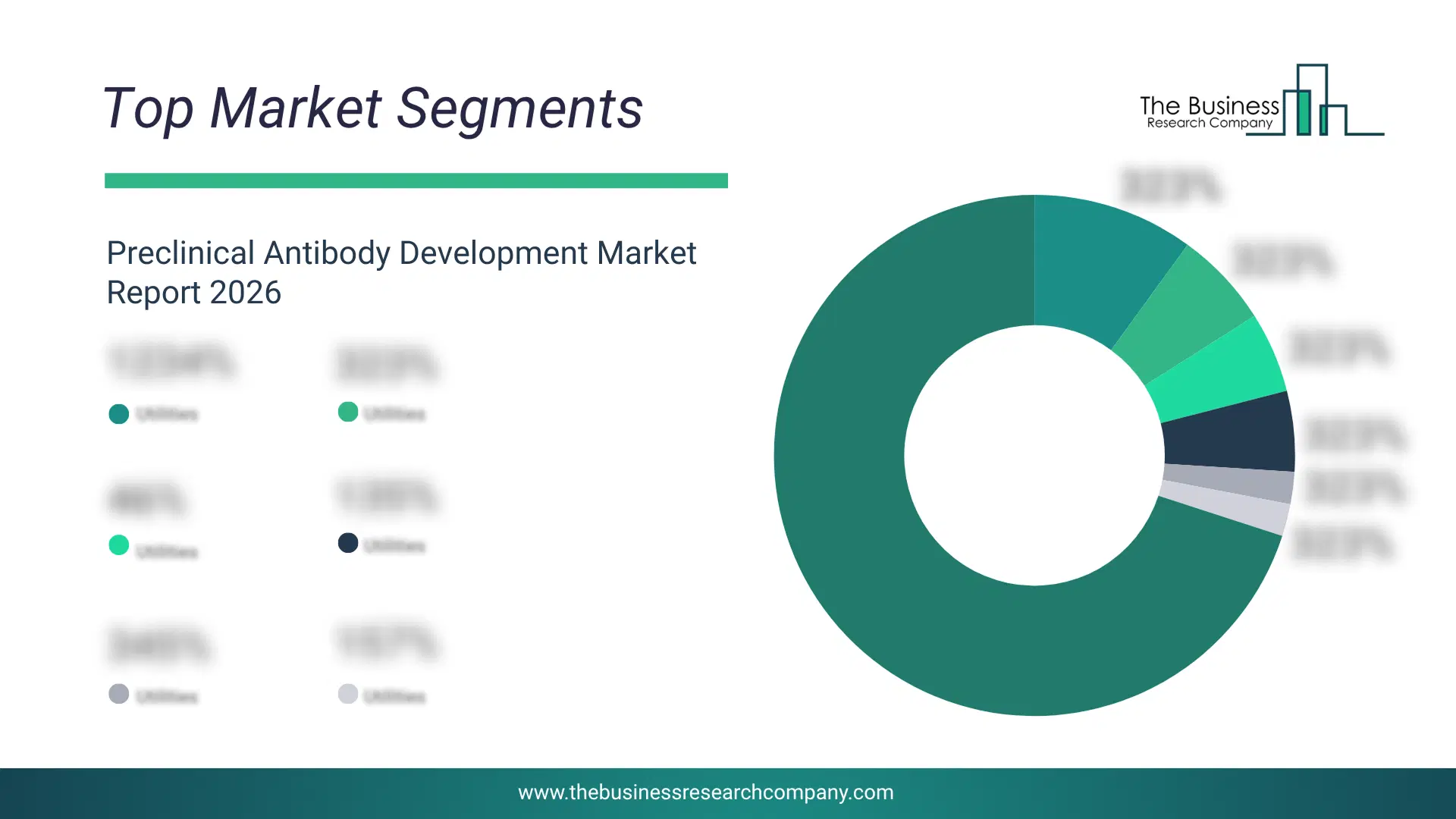
1) By Type: Monoclonal Antibodies, Polyclonal Antibodies, Other Types 2) By Service Type: Antibody Discovery, Humanization And Engineering, Affinity Maturation, Developability Assessment, Expression And Purification, In Vitro Functional Characterization 3) By Application: Oncology, Infectious Diseases, Autoimmune Diseases, Other Applications 4) By End-User: Pharmaceutical Companies, Biotechnology Companies, Research Institutes, Other End-Users Subsegments: 1) By Monoclonal Antibodies: Murine Monoclonal Antibodies, Chimeric Monoclonal Antibodies, Humanized Monoclonal Antibodies, Fully Human Monoclonal Antibodies, Recombinant Monoclonal Antibodies 2) By Polyclonal Antibodies: Primary Polyclonal Antibodies, Secondary Polyclonal Antibodies, Affinity Purified Polyclonal Antibodies, Antiserum Polyclonal Antibodies, Species Specific Polyclonal Antibodies 3) By Other Types: Bispecific Antibodies, Single Domain Antibodies, Antibody Fragments, Conjugated Antibodies, Catalytic AntibodiesWhat Is The Driver Of The Preclinical Antibody Development Market?
The increasing prevalence of autoimmune diseases is expected to propel the growth of the preclinical antibody development market over the forecast period. Autoimmune diseases comprise a group of disorders in which the immune system mistakenly attacks healthy cells and tissues, leading to chronic inflammation and tissue damage. The rising prevalence of these conditions is driven by a combination of genetic susceptibility, environmental and lifestyle factors, changes in immune-modulating exposures, and improved disease awareness and diagnostic capabilities. The growing burden of autoimmune diseases has resulted in significant unmet medical needs, prompting pharmaceutical and biotechnology companies to expand research and development efforts focused on targeted biologic therapies. Preclinical antibody development plays a critical role in this process by enabling the discovery, screening, and optimization of antibodies designed to selectively modulate or suppress dysregulated immune responses prior to clinical evaluation. For instance, in February 2024, according to Arthritis Australia, an Australia-based non-profit organization, the number of males with rheumatoid arthritis (RA) (an autoimmune disease) is 212,136 and females 362,137 in 2025, with these numbers expected to rise by 2040 to approximately 280,040 males and 479,828 females. Therefore, the increasing prevalence of autoimmune diseases is driving the growth of the preclinical antibody development industry.Key Players In The Global Preclinical Antibody Development Market
Major companies operating in the preclinical antibody development market are Thermo Fisher Scientific Inc., WuXi AppTec Co Ltd., Charles River Laboratories International Inc., Sartorius Aktiengesellschaft, Samsung Biologics Co. Ltd., Evotec SE, KBI Biopharma Inc., GenScript Biotech Corporation, Abzena plc, Crown Bioscience Inc., AbCellera Biologics Inc., Adimab LLC, Creative Biolabs Inc., Boehringer Ingelheim BioXcellence GmbH, Integral Molecular Inc., ProMab Biotechnologies Inc., Eurofins Scientific SE, Ablexis Inc., Mabsilico Inc., Fujifilm Diosynth Biotechnologies Inc., Recipharm AB.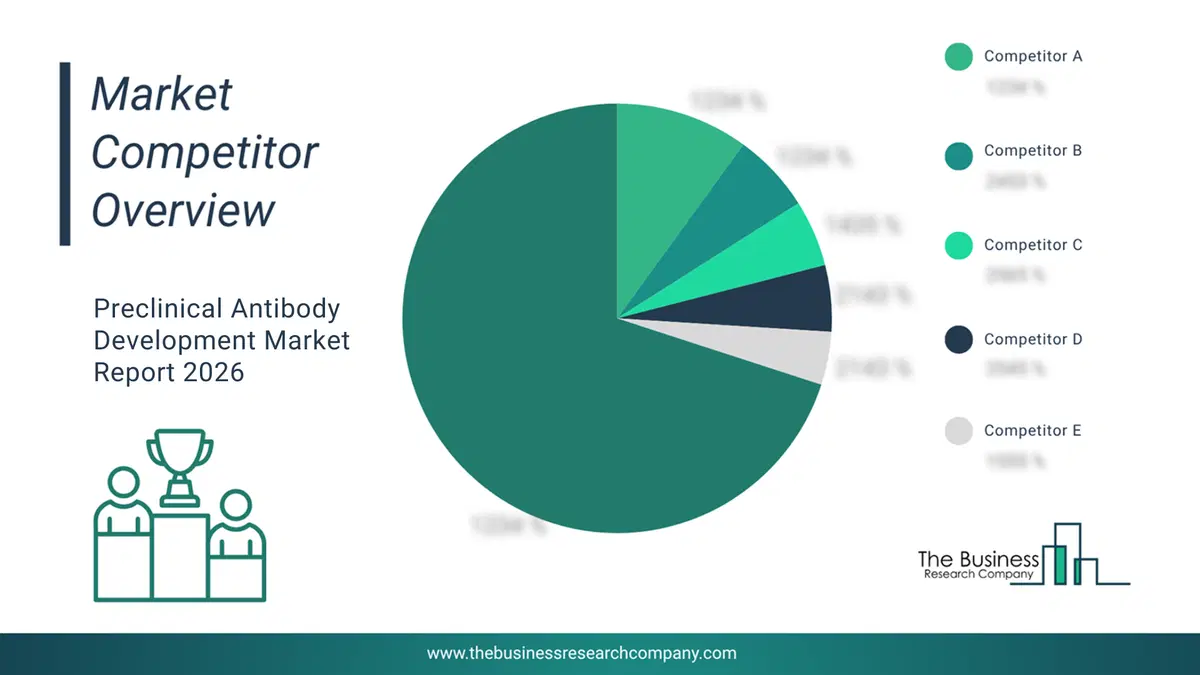
This chart is for illustrative purposes; the full report includes a detailed competitor analysis and comprehensive overview of the top 10 companies in the market.
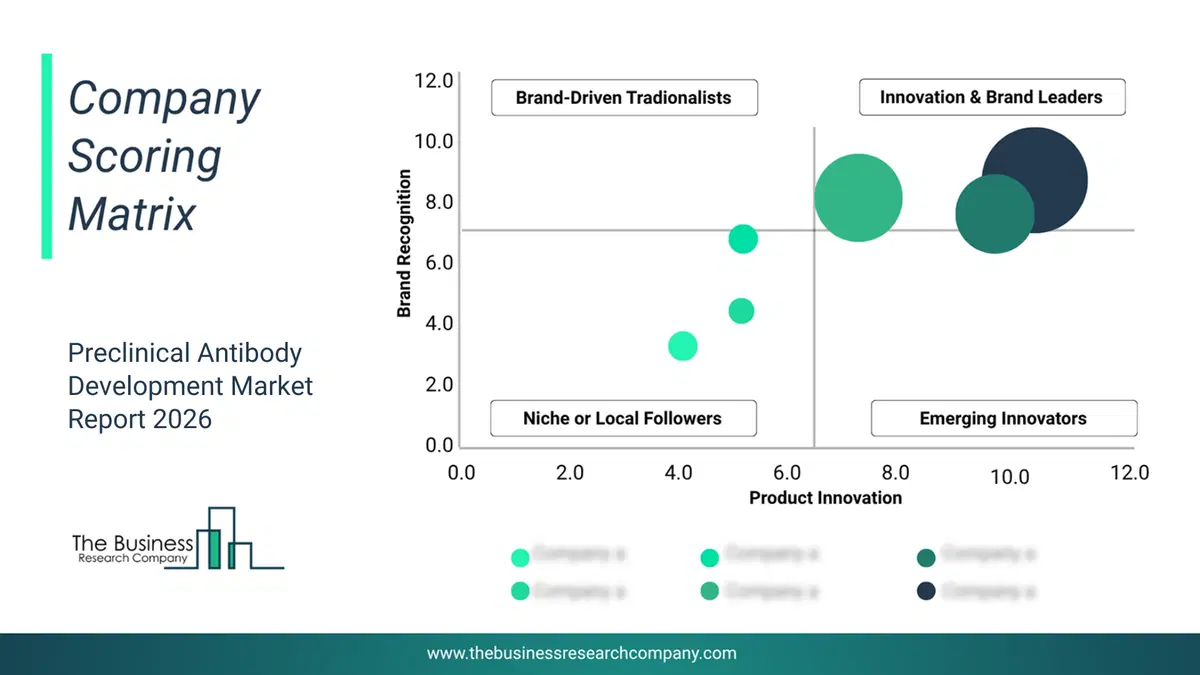
This chart maps companies by product innovation and brand strength, with bubble size indicating relative revenue, helping identify market leaders, challengers, and niche players. This is an illustrative chart; the full report provides a complete and accurate competitive analysis.
Global Preclinical Antibody Development Market Trends and Insights
Major companies operating in the preclinical antibody development market are increasingly focusing on the development of innovative modalities such as antibody–drug conjugates (ADCs) to enhance targeted cancer therapies and improve treatment efficacy. ADCs are a class of targeted therapeutics that combine the specificity of monoclonal antibodies with the potent cytotoxic activity of small-molecule drugs, enabling selective delivery of toxic payloads to cancer cells while minimizing damage to healthy tissues. For instance, in November 2024, Celltrion Inc., a South Korea–based biopharmaceutical company, announced the development of CT-P70 and CT-P71, two novel preclinical ADC candidates targeting solid tumors, including non-small cell lung cancer and bladder cancer, respectively. Both ADCs consist of tumor-targeting antibodies conjugated to cytotoxic payloads, designed to achieve precise tumor targeting with reduced off-target toxicity, potentially improving therapeutic indices compared to conventional monoclonal antibodies or chemotherapies. Such next-generation ADC programs reflect a broader industry shift from biosimilar manufacturing toward the development of novel, differentiated biologic therapies.What Are Latest Mergers And Acquisitions In The Preclinical Antibody Development Market?
In May 2024, Genmab A/S, a Denmark-based biopharmaceutical company, acquired ProfoundBio for an undisclosed amount. With this acquisition, Genmab aims to strengthen its preclinical antibody development capabilities and accelerate its pipeline of innovative therapeutics. ProfoundBio Inc. is a China-based biotechnology company that specializes in preclinical antibody discovery and development services for next-generation biologics.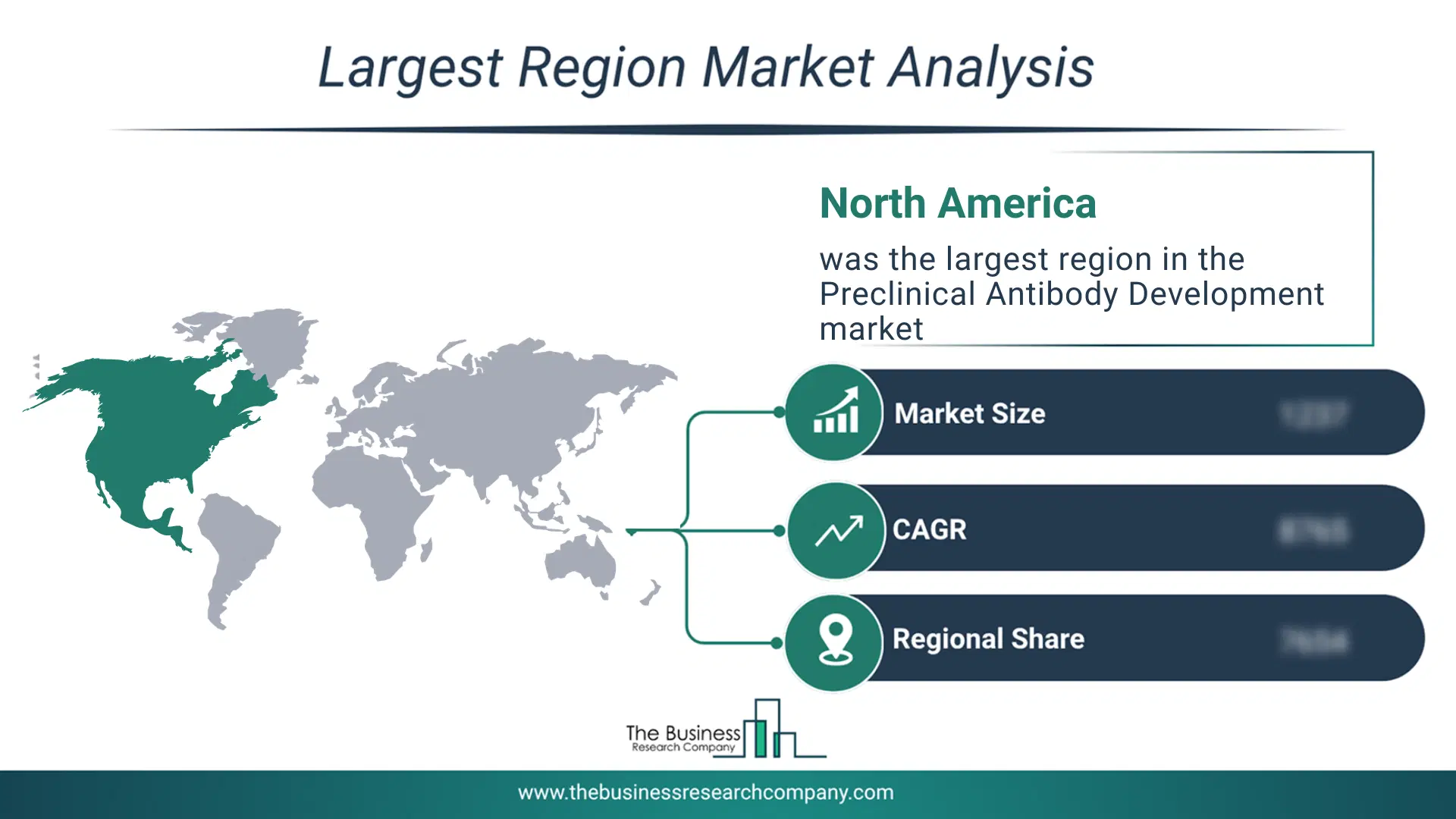
Regional Insights
North America was the largest region in the preclinical antibody development market in 2025. Asia-Pacific is expected to be the fastest-growing region in the forecast period. The regions covered in this market report are Asia-Pacific, South East Asia, Western Europe, Eastern Europe, North America, South America, Middle East, Africa. The countries covered in this market report are Australia, Brazil, China, France, Germany, India, Indonesia, Japan, Taiwan, Russia, South Korea, UK, USA, Canada, Italy, Spain.What Defines the Preclinical Antibody Development Market?
The preclinical antibody development market includes revenues earned by entities through monoclonal antibody discovery services, antibody engineering and optimization, preclinical testing and validation, contract research services, and licensing and royalties. The market value includes the value of related goods sold by the service provider or included within the service offering. Only goods and services traded between entities or sold to end consumers are included.How is Market Value Defined and Measured?
The market value is defined as the revenues that enterprises gain from the sale of goods and/or services within the specified market and geography through sales, grants, or donations in terms of the currency (in USD unless otherwise specified). The revenues for a specified geography are consumption values that are revenues generated by organizations in the specified geography within the market, irrespective of where they are produced. It does not include revenues from resales along the supply chain, either further along the supply chain or as part of other products.
This chart presents market attractiveness based on a quantitative evaluation of growth, competition, strategic alignment, and risk, offering a clear view of opportunity areas for decision-making. This chart is for illustrative purposes; the full report contains the complete analysis.

This chart highlights the Total Addressable Market (TAM) by estimating the maximum revenue opportunity using an assumption-driven approach, supporting strategic planning and opportunity sizing across markets. The chart is illustrative; the full report provides a more comprehensive analysis.
What Key Data And Analysis Are Included In The Preclinical Antibody Development Market Report 2026?
The preclinical antibody development market research report is one of a series of new reports from The Business Research Company that provides market statistics, including industry global market size, regional shares, competitors with the market share, detailed market segments, market trends and opportunities, and any further data you may need to thrive in the preclinical antibody development industry. The market research report delivers a complete perspective of everything you need, with an in-depth analysis of the current and future state of the industry.Preclinical Antibody Development Market Report Forecast Analysis
| Report Attribute | Details |
|---|---|
| Market Size Value In 2026 | $5.27 billion |
| Revenue Forecast In 2030 | $7.93 billion |
| Growth Rate | CAGR of 10.5% from 2026 to 2030 |
| Base Year For Estimation | 2025 |
| Actual Estimates/Historical Data | 2020-2025 |
| Forecast Period | 2026 - 2030 |
| Market Representation | Revenue in USD Billion and CAGR from 2026 to 2030 |
| Segments Covered | Type, Service Type, Application, End-User |
| Regional Scope | Asia-Pacific, Western Europe, Eastern Europe, North America, South America, Middle East, Africa |
| Country Scope | The countries covered in the report are Australia, Brazil, China, France, Germany, India, Indonesia, Japan, Taiwan, Russia, South Korea, UK, USA, Canada, Italy, Spain. |
| Key Companies Profiled | Thermo Fisher Scientific Inc., WuXi AppTec Co Ltd., Charles River Laboratories International Inc., Sartorius Aktiengesellschaft, Samsung Biologics Co. Ltd., Evotec SE, KBI Biopharma Inc., GenScript Biotech Corporation, Abzena plc, Crown Bioscience Inc., AbCellera Biologics Inc., Adimab LLC, Creative Biolabs Inc., Boehringer Ingelheim BioXcellence GmbH, Integral Molecular Inc., ProMab Biotechnologies Inc., Eurofins Scientific SE, Ablexis Inc., Mabsilico Inc., Fujifilm Diosynth Biotechnologies Inc., Recipharm AB. |
| Customization Scope | Request for Customization |
| Pricing And Purchase Options | Explore Purchase Options |