

Precocious Puberty Treatment Market Report 2026
Global Outlook – By Drug Class (Leuprorelin, Histrelin, Triptorelin, Nafarelin), By Application (Hospitals, Clinics, Other Applications), By End-User (Pediatric Patients, Adolescent Patients, Other End-Users) - Market Size, Trends, Strategies, and Forecast to 2030
Precocious Puberty Treatment Market Overview
• Precocious Puberty Treatment market size has reached to $1.85 billion in 2025 • Expected to grow to $2.56 billion in 2030 at a compound annual growth rate (CAGR) of 6.7% • Growth Driver: Growing Prevalence Of Hormonal Disorders And Its Impact On The Precocious Puberty Treatment Market • Market Trend: FDA Label Update for Long‑Acting Leuprolide Acetate Depot Enhances Treatment Regimens • North America was the largest region in 2025 and Asia-Pacific is the fastest growing region.What Is Covered Under Precocious Puberty Treatment Market?
Precocious puberty treatment refers to medical interventions and therapies aimed at managing and addressing the early onset of puberty in children. The goal of treatment is to slow down or halt the progression of puberty, reduce the impact on the child's growth potential, and address any underlying causes or associated health concerns. The main drug classes of precocious puberty treatment are leuprorelin, histrelin, triptorelin, and nafarelin. Leuprorelin also known as leuprolide acetate refers to a synthetic medication used in the field of reproductive medicine and endocrinology and belongs to a class of drugs known as gonadotropin-releasing hormone (GnRH) agonists. These are used for various applications such as hospitals, clinics, and other applications by pediatric patients, adults, and others.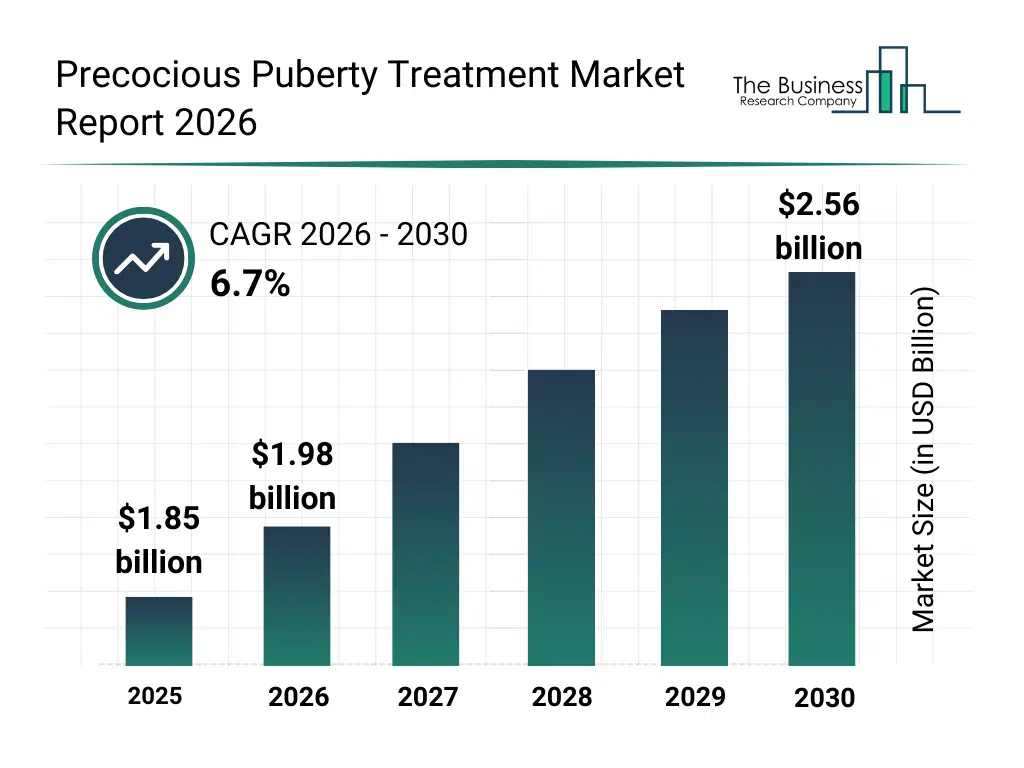
What Is The Precocious Puberty Treatment Market Size and Share 2026?
The precocious puberty treatment market size has grown strongly in recent years. It will grow from $1.85 billion in 2025 to $1.98 billion in 2026 at a compound annual growth rate (CAGR) of 6.8%. The growth in the historic period can be attributed to improved diagnostic capabilities for hormonal disorders, increased awareness of early puberty conditions, availability of gonadotropin-releasing hormone analogs, expansion of pediatric healthcare services, rising physician education initiatives.What Is The Precocious Puberty Treatment Market Growth Forecast?
The precocious puberty treatment market size is expected to see strong growth in the next few years. It will grow to $2.56 billion in 2030 at a compound annual growth rate (CAGR) of 6.7%. The growth in the forecast period can be attributed to increasing focus on personalized endocrine care, rising investments in pediatric rare disease treatments, expansion of long-acting injectable formulations, growing use of digital patient monitoring tools, increasing access to specialty healthcare services. Major trends in the forecast period include increasing adoption of long-acting hormonal therapies, rising focus on early diagnosis and intervention, growing use of personalized treatment protocols, expansion of pediatric endocrinology services, enhanced awareness of growth preservation outcomes.
Global Precocious Puberty Treatment Market Segmentation
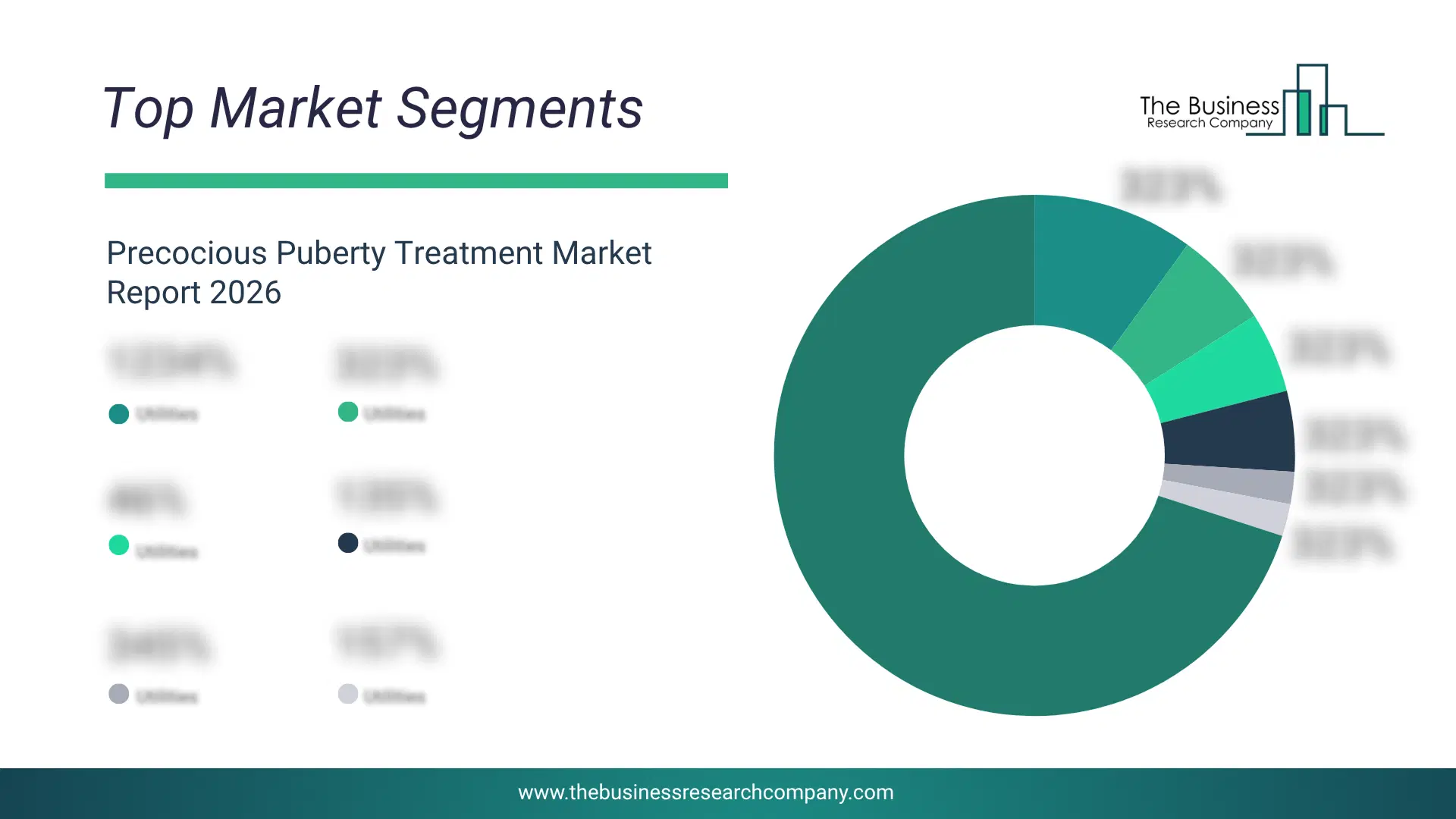
1) By Drug Class: Leuprorelin, Histrelin, Triptorelin, Nafarelin 2) By Application: Hospitals, Clinics, Other Applications 3) By End-User: Pediatric Patients, Adolescent Patients, Other End-Users Subsegments: 1) By Leuprorelin: Leuprorelin Acetate Injection, Leuprorelin For Depot Administration, Leuprorelin For Subcutaneous Administration 2) By Histrelin: Histrelin Acetate Implant, Histrelin For Depot Injection, Histrelin For Subcutaneous Administration 3) By Triptorelin: Triptorelin Acetate Injection, Triptorelin For Long-Acting Depot Injection, Triptorelin For Subcutaneous Implantation 4) By Nafarelin: Nafarelin Acetate Nasal Spray, Nafarelin For Injectable AdministrationWhat Is The Driver Of The Precocious Puberty Treatment Market?
The rising prevalence of hormonal disorders is expected to propel the growth of the precocious puberty treatment market going forward. Hormonal disorders refer to medical conditions involving dysfunction or abnormalities in the endocrine system, which produces and regulates hormones. Hormonal disorders can cause precocious puberty when there is a disruption in the normal regulation of sex hormones, leading to the early activation of the hypothalamic-pituitary-gonadal (HPG) axis, which controls the onset of puberty. For instance, in May 2023, according to a report shared by the National Library of Medicine, a US-based medical library, around 13 million people in the U.S., or 4.78% of the population, have undiagnosed endocrine disorders. Thyroid disease is one of the most common, representing 30-40% of cases seen in endocrine practices about half of all endocrine patients. Additionally, nearly half (48.8%) of patients with metabolic disorders have rare types, with a general prevalence of rare metabolic disorders at 10.96 per 10,000 individuals. Therefore, the rising prevalence of hormonal disorders is driving the growth of the precocious puberty treatment industry.Key Players In The Global Precocious Puberty Treatment Market
Major companies operating in the precocious puberty treatment market are Pfizer Inc., AbbVie Inc., Sanofi SA, Abbott Laboratories, Eli Lilly And Company, Glenmark Pharmaceuticals Ltd, Sun Pharmaceutical Industries Ltd, Ipsen Ltd, Ferring Pharmaceuticals Private Limited, Endo Pharmaceuticals Inc, Livzon Pharmaceutical Group Inc, Actiza Pharmaceutical Private Limited, Biocon Limited, Mallinckrodt plc, Arbor Pharmaceuticals LLC, Tolmar Pharmaceuticals Inc, Debiopharm Group, Emcure Pharmaceuticals Ltd, Cadila Pharmaceuticals Limited, Sandoz International GmbH, Foresee Pharmaceuticals Co Ltd, Verity Pharmaceuticals Inc, Aurobindo Pharma Ltd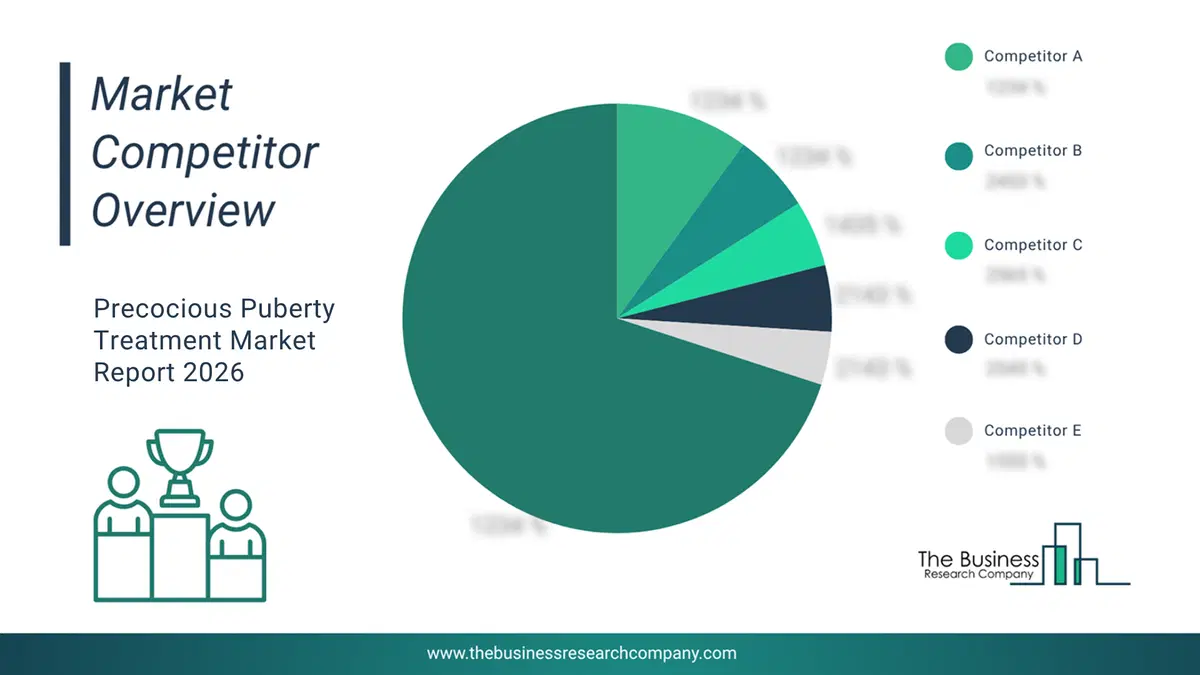
This chart is for illustrative purposes; the full report includes a detailed competitor analysis and comprehensive overview of the top 10 companies in the market.
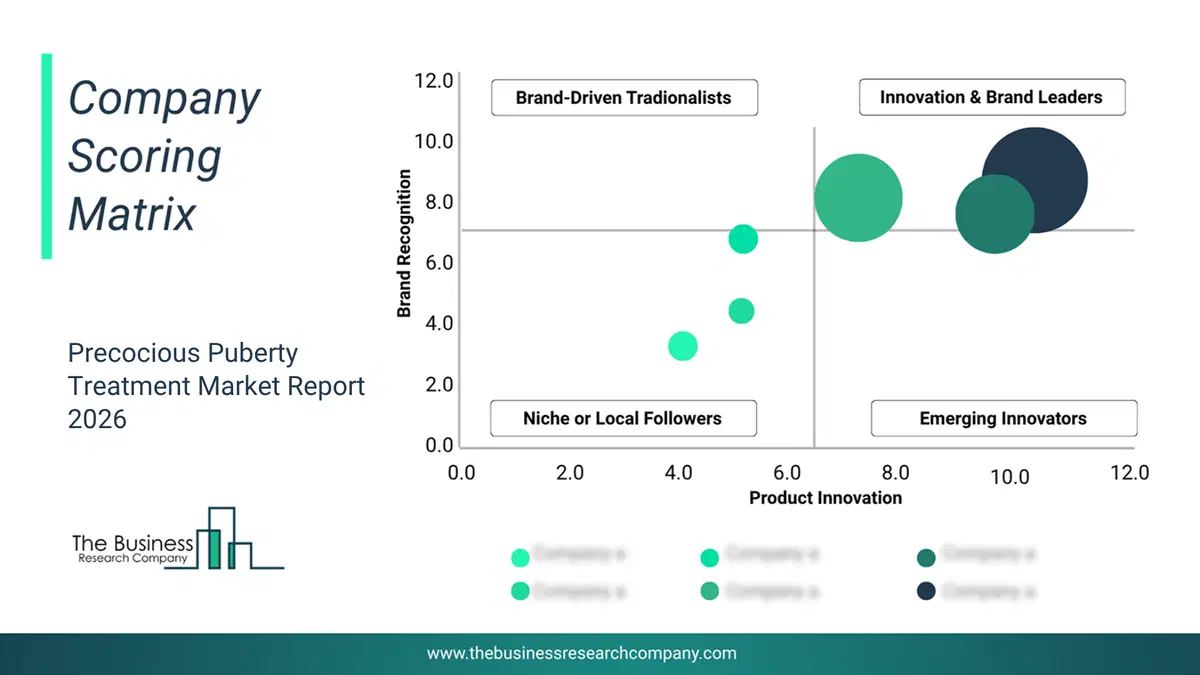
This chart maps companies by product innovation and brand strength, with bubble size indicating relative revenue, helping identify market leaders, challengers, and niche players. This is an illustrative chart; the full report provides a complete and accurate competitive analysis.
Global Precocious Puberty Treatment Market Trends and Insights
Major companies operating in the precocious puberty treatment market are focusing on optimizing drug formulations, such as extended-duration leuprolide acetate depot therapies, to enhance treatment convenience, safety, and clinical outcomes. Long-acting leuprolide acetate therapies are designed to provide sustained suppression of gonadotropin-releasing hormone (GnRH), thereby delaying premature sexual development and reducing the burden of frequent dosing. For instance, in April 2023, the U.S. Food and Drug Administration (FDA), a US-based federal agency, issued a label update for Lupron Depot-Ped (6-month intramuscular) to include refined dosage administration guidelines. This therapy is a synthetic form of GnRH that helps delay the onset of secondary sexual characteristics such as breast or testicular growth and menstruation, offering a more effective and streamlined treatment option for children with central precocious puberty.What Are Latest Mergers And Acquisitions In The Precocious Puberty Treatment Market?
In December 2023, Zydus Worldwide DMCC, an India-based consumer wellness company, partnered with Daewoong Pharmaceutical Co., Ltd. to co-develop and commercialize Leuprolide Acetate for Depot Suspension in six dosage strengths for the U.S. market. Through this partnership, the companies aim to expand access to a proven long-acting injectable therapy for patients with central precocious puberty, helping delay sexual development, such as the growth of breasts or testicles and the onset of menstruation. Daewoong Pharmaceutical Co., Ltd. is a South Korea-based pharmaceutical company that provides treatment for precocious puberty.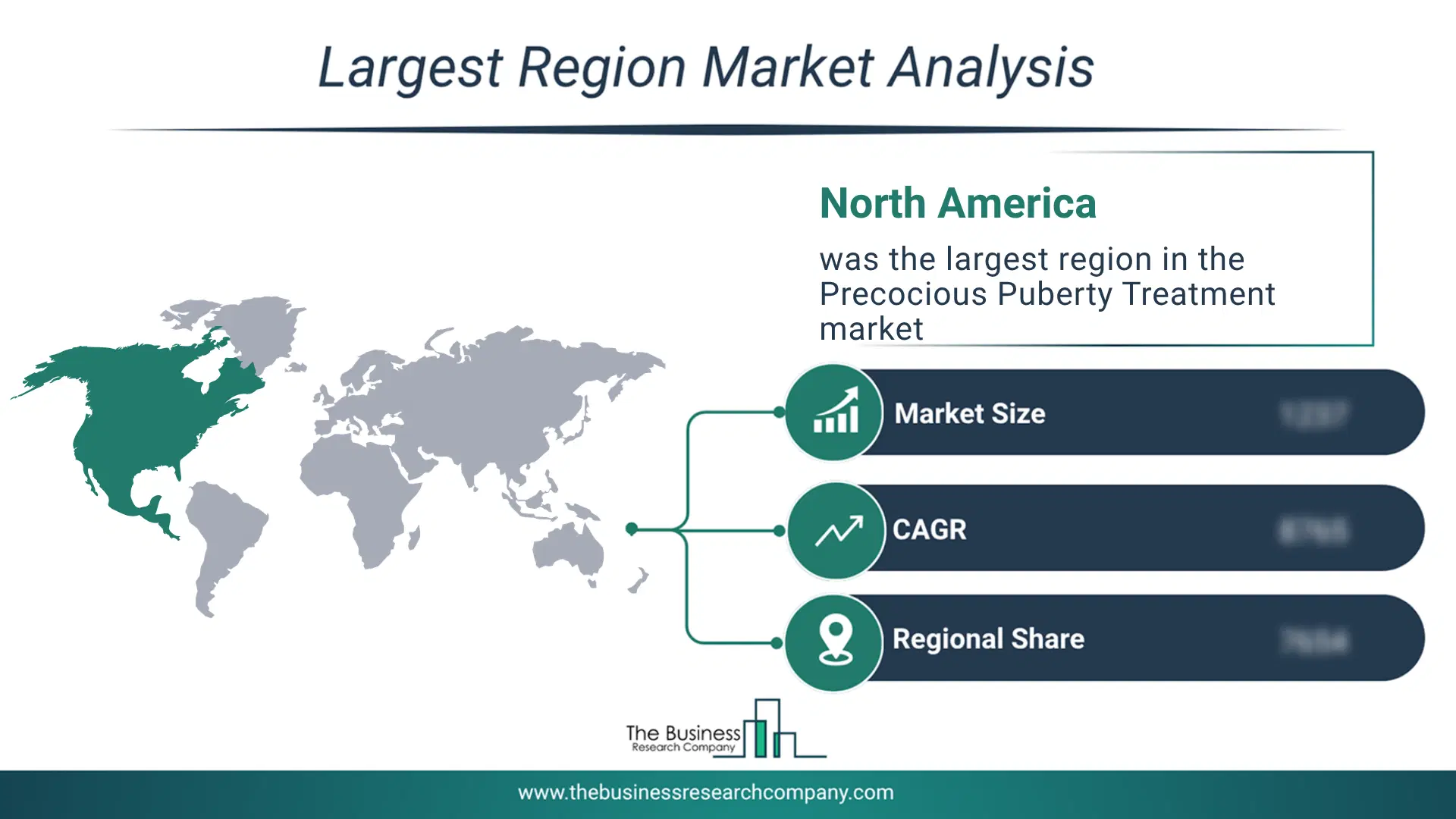
Regional Outlook
North America was the largest region in the precocious puberty treatment market in 2025. Asia-Pacific is expected to be the fastest-growing region in the forecast period. The regions covered in this market report are Asia-Pacific, South East Asia, Western Europe, Eastern Europe, North America, South America, Middle East, Africa. The countries covered in this market report are Australia, Brazil, China, France, Germany, India, Indonesia, Japan, Taiwan, Russia, South Korea, UK, USA, Canada, Italy, Spain.What Defines the Precocious Puberty Treatment Market?
The precocious puberty treatment market consists of revenues earned by entities by providing services such as medical evaluation, hormone therapy, monitoring and follow-up, psychological and emotional support, nutritional guidance, parent and caregiver education, and social and school support. The market value includes the value of related goods sold by the service provider or included within the service offering. The precocious puberty treatment market also includes sales of gonadotropin hormone-releasing hormone (GnRH), triptorelin, and leuprolide acetate. Values in this market are ‘factory gate’ values, that is the value of goods sold by the manufacturers or creators of the goods, whether to other entities (including downstream manufacturers, wholesalers, distributors and retailers) or directly to end customers. The value of goods in this market includes related services sold by the creators of the goods.How is Market Value Defined and Measured?
The market value is defined as the revenues that enterprises gain from the sale of goods and/or services within the specified market and geography through sales, grants, or donations in terms of the currency (in USD unless otherwise specified). The revenues for a specified geography are consumption values that are revenues generated by organizations in the specified geography within the market, irrespective of where they are produced. It does not include revenues from resales along the supply chain, either further along the supply chain or as part of other products.
This chart presents market attractiveness based on a quantitative evaluation of growth, competition, strategic alignment, and risk, offering a clear view of opportunity areas for decision-making. This chart is for illustrative purposes; the full report contains the complete analysis.

This chart highlights the Total Addressable Market (TAM) by estimating the maximum revenue opportunity using an assumption-driven approach, supporting strategic planning and opportunity sizing across markets. The chart is illustrative; the full report provides a more comprehensive analysis.
What Key Data and Analysis Are Included in the Precocious Puberty Treatment Market Report 2026?
The precocious puberty treatment market research report is one of a series of new reports from The Business Research Company that provides market statistics, including industry global market size, regional shares, competitors with the market share, detailed market segments, market trends and opportunities, and any further data you may need to thrive in the precocious puberty treatment industry. The market research report delivers a complete perspective of everything you need, with an in-depth analysis of the current and future state of the industry.Precocious Puberty Treatment Market Report Forecast Analysis
| Report Attribute | Details |
|---|---|
| Market Size Value In 2026 | $1.98 billion |
| Revenue Forecast In 2030 | $2.56 billion |
| Growth Rate | CAGR of 6.7% from 2026 to 2030 |
| Base Year For Estimation | 2025 |
| Actual Estimates/Historical Data | 2020-2025 |
| Forecast Period | 2026 - 2030 |
| Market Representation | Revenue in USD Billion and CAGR from 2026 to 2030 |
| Segments Covered | Drug Class, Application, End-User |
| Regional Scope | Asia-Pacific, Western Europe, Eastern Europe, North America, South America, Middle East, Africa |
| Country Scope | The countries covered in the report are Australia, Brazil, China, France, Germany, India, Indonesia, Japan, Taiwan, Russia, South Korea, UK, USA, Canada, Italy, Spain |
| Key Companies Profiled | Pfizer Inc., AbbVie Inc., Sanofi SA, Abbott Laboratories, Eli Lilly And Company, Glenmark Pharmaceuticals Ltd, Sun Pharmaceutical Industries Ltd, Ipsen Ltd, Ferring Pharmaceuticals Private Limited, Endo Pharmaceuticals Inc, Livzon Pharmaceutical Group Inc, Actiza Pharmaceutical Private Limited, Biocon Limited, Mallinckrodt plc, Arbor Pharmaceuticals LLC, Tolmar Pharmaceuticals Inc, Debiopharm Group, Emcure Pharmaceuticals Ltd, Cadila Pharmaceuticals Limited, Sandoz International GmbH, Foresee Pharmaceuticals Co Ltd, Verity Pharmaceuticals Inc, Aurobindo Pharma Ltd |
| Customization Scope | Request for Customization |
| Pricing And Purchase Options | Explore Purchase Options |