
Prefabricated Building Sealant Market Report 2026
Global Outlook – By Type (Silicone Sealants, Polyurethane Sealants, Acrylic Sealants, Polysulfide Sealants, Hybrid Sealants), By Properties (Temperature Resistance, Water Resistance, Ultraviolet (UV) Resistance, Fire Resistance, Soundproofing Capability), By Distribution Channel (Direct Sales, Online Sales, Retail Sales, Wholesale Distribution, Distributor Network), By Application (Residential Prefabricated Buildings, Commercial Prefabricated Buildings, Industrial Prefabricated Buildings, Institutional Prefabricated Buildings, Temporary Prefabricated Structures), By End-Use Industry (Construction Industry, Infrastructure Development, Energy Sector, Transportation, Healthcare ) – Market Size, Trends, Strategies, and Forecast to 2030
Prefabricated Building Sealant Market Overview
• Prefabricated Building Sealant market size has reached to $2.25 billion in 2025 • Expected to grow to $3.06 billion in 2030 at a compound annual growth rate (CAGR) of 6.3% • Growth Driver: Rising Construction Sector Spending Driving Demand In The Market Due To Infrastructure Investments And Project Scale • Market Trend: Advancements In Hybrid Adhesive Technologies Enhancing Durability And Environmental Compatibility • North America was the largest region and fastest growing region.What Is Covered Under Prefabricated Building Sealant Market?
Prefabricated building sealant refers to a specially formulated material used to seal joints, seams, and gaps in prefabricated building components. It ensures airtightness, watertightness, and flexibility between pre-made panels or modules, enhancing the building's durability and energy efficiency. These sealants are essential in maintaining structural integrity and preventing moisture or air infiltration in modular construction. The main types of prefabricated building sealants are silicone sealants, polyurethane sealants, acrylic sealants, polysulfide sealants, and hybrid sealants. Silicone sealants are flexible, durable adhesives commonly used for sealing joints and gaps in construction, automotive, and industrial applications due to their excellent resistance to weather, moisture, and temperature extremes. These sealants possess various properties such as temperature resistance, water resistance, ultraviolet (UV) resistance, fire resistance, and soundproofing capability, and are distributed through various channels, including direct sales, online sales, retail sales, wholesale distribution, and distributor networks. It is applied for residential, commercial, industrial, and institutional prefabricated buildings, as well as temporary prefabricated structures, serving key end-use industries such as construction, infrastructure development, the energy sector, transportation, and healthcare facilities.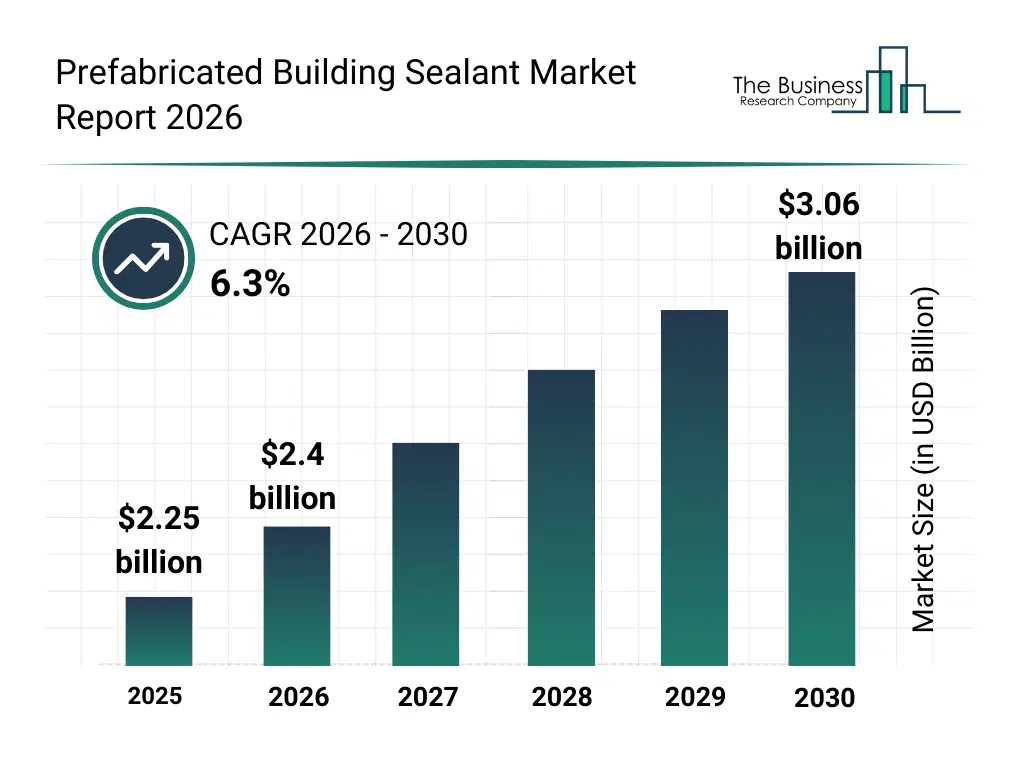
What Is The Prefabricated Building Sealant Market Size and Share 2026?
The prefabricated building sealant market size has grown strongly in recent years. It will grow from $2.25 billion in 2025 to $2.4 billion in 2026 at a compound annual growth rate (CAGR) of 6.7%. The growth in the historic period can be attributed to rising adoption of prefabricated sealants, increasing use in modular construction, growing demand for weatherproof and fire-resistant materials, expansion of construction and infrastructure projects, focus on high-performance sealant formulations.What Is The Prefabricated Building Sealant Market Growth Forecast?
The prefabricated building sealant market size is expected to see strong growth in the next few years. It will grow to $3.06 billion in 2030 at a compound annual growth rate (CAGR) of 6.3%. The growth in the forecast period can be attributed to increasing use of AI-monitored sealant applications, expansion of IoT-enabled monitoring, growing adoption of sustainable sealant solutions, development of multi-component sealant systems, innovation in temperature and UV-resistant formulations. Major trends in the forecast period include adoption of high-performance silicone and polyurethane sealants, integration of AI-based sealant application monitoring, development of weatherproof and fire-resistant sealants, expansion of IOT-connected prefabricated sealant solutions, advancement of sustainable sealant materials.
Global Prefabricated Building Sealant Market Segmentation
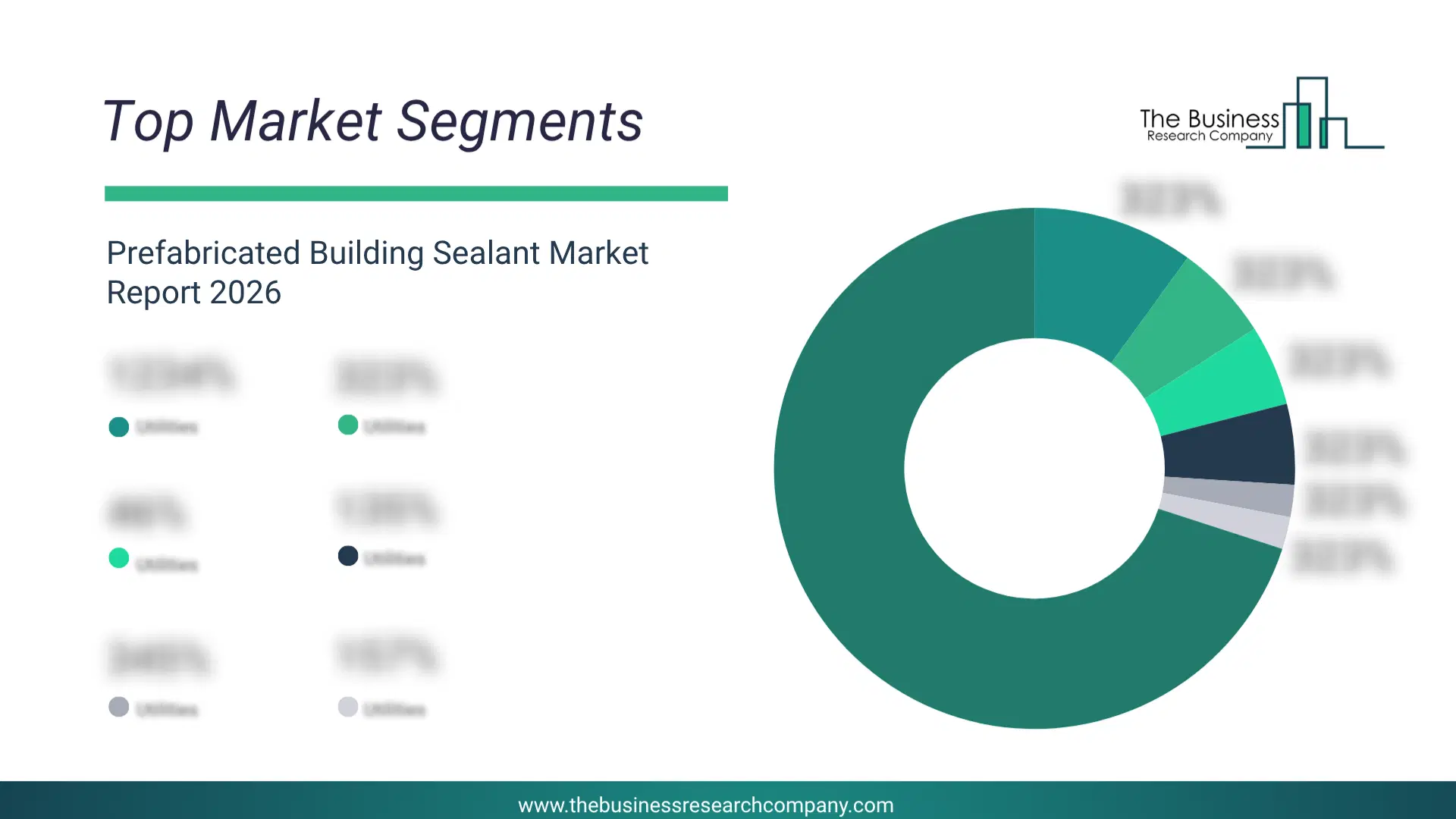
1) By Type: Silicone Sealants, Polyurethane Sealants, Acrylic Sealants, Polysulfide Sealants, Hybrid Sealants 2) By Properties: Temperature Resistance, Water Resistance, Ultraviolet (UV) Resistance, Fire Resistance, Soundproofing Capability 3) By Distribution Channel: Direct Sales, Online Sales, Retail Sales, Wholesale Distribution, Distributor Network 4) By Application: Residential Prefabricated Buildings, Commercial Prefabricated Buildings, Industrial Prefabricated Buildings, Institutional Prefabricated Buildings, Temporary Prefabricated Structures 5) By End-Use Industry: Construction Industry, Infrastructure Development, Energy Sector, Transportation, Healthcare Subsegments: 1) By Silicone Sealants: Neutral Cure Silicone Sealants, Acetoxy Cure Silicone Sealants, High Temperature Silicone Sealants 2) By Polyurethane Sealants: One Component Polyurethane Sealants, Two Component Polyurethane Sealants, Fast Curing Polyurethane Sealants 3) By Acrylic Sealants: Water-Based Acrylic Sealants, Solvent-Based Acrylic Sealants, Paintable Acrylic Sealants 4) By Polysulfide Sealants: Single Component Polysulfide Sealants, Two Component Polysulfide Sealants, Fuel Resistant Polysulfide Sealants 5) By Hybrid Sealants: Silane Modified Polymer Sealants, Polyether Based Hybrid Sealants, Polyurethane Hybrid SealantsWhat Is The Driver Of The Prefabricated Building Sealant Market?
The increasing construction sector spending is expected to propel growth in the prefabricated building sealant market going forward. Construction sector spending refers to the total investment made in residential, commercial, industrial, and infrastructure building projects over a specific period. The construction sector's spending is increasing due to substantial government investments in infrastructure projects, which are driving demand for civil engineering and public works. Construction sector spending supports the growth of prefabricated building sealant use by funding large-scale projects that require efficient, durable, and quick-application sealing solutions to ensure structural integrity and energy efficiency. For instance, in January 2025, according to the American Institute of Architects (AIA), a US-based professional organization for architects, commercial construction spending is projected to grow modestly by 1.7% this year, with a stronger acceleration anticipated, reaching 4.2% growth by 2026. Therefore, the increasing construction sector spending is driving the growth of the prefabricated building sealant industry.Key Players In The Global Prefabricated Building Sealant Market
Major companies operating in the prefabricated building sealant market are BASF SE, Dow Inc., 3M Company, Henkel AG & Co. KGaA, Sika Aktiengesellschaft, DuPont de Nemours Inc., Wacker Chemie AG, Mapei S.p.A., H.B. Fuller Company, Arkema S.A., Elkem ASA, Pidilite Industries Limited, Soudal N.V., Tremco Incorporated, Ardex GmbH, Guangzhou Baiyun Chemical Industry Co. Ltd., Nan Pao Resins Chemical Co. Ltd., Akfix, Supex Co. Ltd., Shandong Tengyu Chemical Co. Ltd., Conrepair Co. Ltd.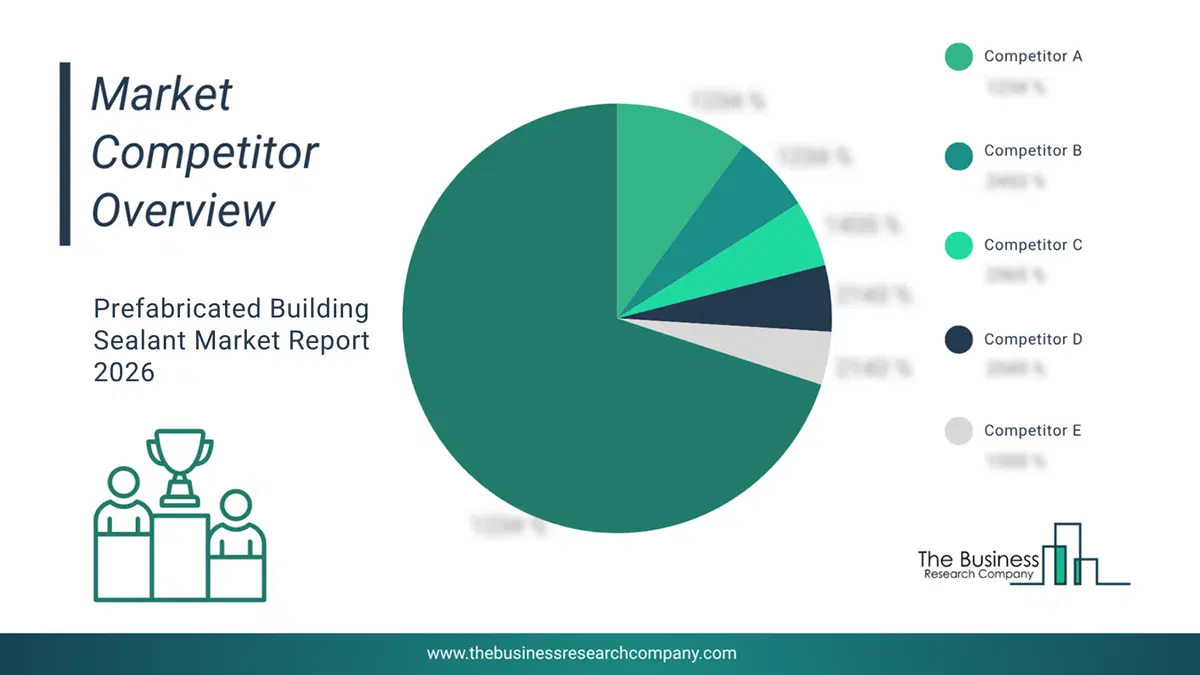
This chart is for illustrative purposes; the full report includes a detailed competitor analysis and comprehensive overview of the top 10 companies in the market.
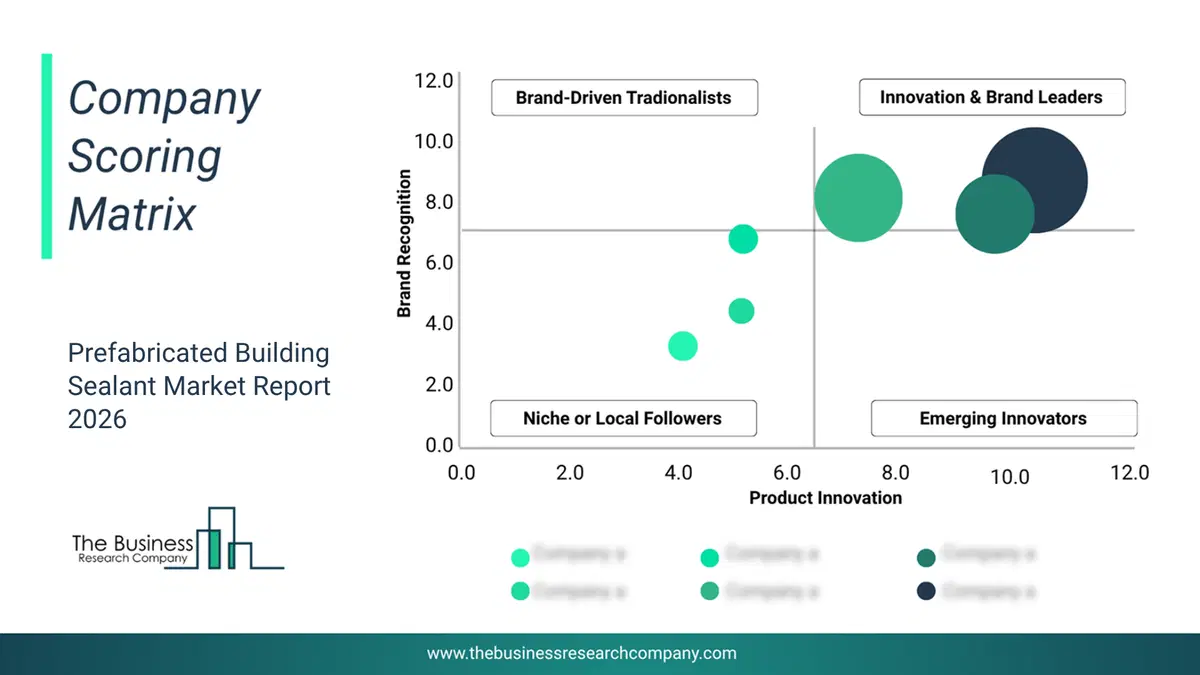
This chart maps companies by product innovation and brand strength, with bubble size indicating relative revenue, helping identify market leaders, challengers, and niche players. This is an illustrative chart; the full report provides a complete and accurate competitive analysis.
Global Prefabricated Building Sealant Market Trends and Insights
Major companies operating in the prefabricated building sealant market are focusing on developing innovative solutions, such as hybrid adhesives and sealants, to enhance bonding strength and sealing performance across diverse materials and conditions, offering durability, flexibility, and resistance to weather, moisture, and chemicals. Hybrid adhesive and sealant refers to a single-component material that combines strong bonding and flexible sealing properties, often using silane-modified polymers, for versatile and durable performance across various surfaces. For instance, in April 2024, MAPEI S.p.A., an Italy-based manufacturer specializing in chemical products for the building industry, launched Mapeflex MS 55. It is a quick-hardening, hybrid adhesive and sealant characterized by high initial tack and high modulus of elasticity, suitable for both flexible bonding and sealing of expansion and fillet joints in construction and industrial applications. The product has versatility for use on multiple substrates, including damp surfaces, and is free from silicones and isocyanates, making it eco-friendly and appropriate for contact with potable water.What Are Latest Mergers And Acquisitions In The Prefabricated Building Sealant Market?
In December 2023, Arkema S.A., a France-based chemical manufacturing company, acquired Arc Building Products for an undisclosed amount. With this acquisition, Arkema aims to strengthen its presence in the Irish construction market and expand its portfolio of high-performance adhesives and sealants through Arc Building Products’ local expertise and distribution network. Arc Building Products is an Ireland-based manufacturer of building sealants.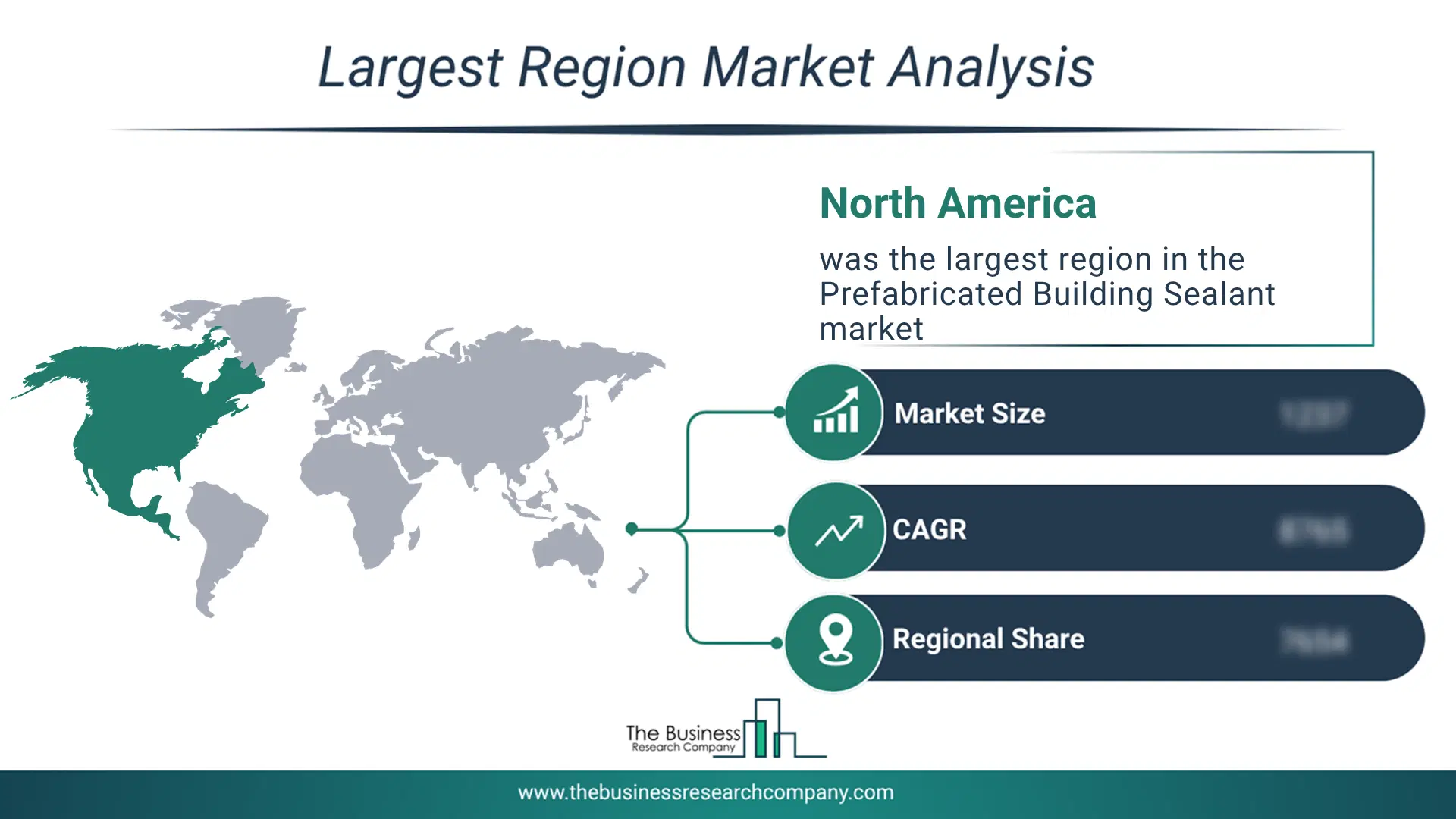
Regional Insights
North America was the largest region in the prefabricated building sealant market in 2025. Asia-Pacific is expected to be the fastest-growing region in the forecast period. The regions covered in this market report are Asia-Pacific, South East Asia, Western Europe, Eastern Europe, North America, South America, Middle East, Africa. The countries covered in this market report are Australia, Brazil, China, France, Germany, India, Indonesia, Japan, Taiwan, Russia, South Korea, UK, USA, Canada, Italy, Spain.What Defines the Prefabricated Building Sealant Market?
The prefabricated building sealant market consists of sales of butyl rubber sealant tape, two-part epoxy sealant, fire-resistant sealant, and weatherproof silicone joint sealant. Values in this market are ‘factory gate’ values, that is, the value of goods sold by the manufacturers or creators of the goods, whether to other entities (including downstream manufacturers, wholesalers, distributors, and retailers) or directly to end customers. The value of goods in this market includes related services sold by the creators of the goods.How is Market Value Defined and Measured?
The market value is defined as the revenues that enterprises gain from the sale of goods and/or services within the specified market and geography through sales, grants, or donations in terms of the currency (in USD unless otherwise specified). The revenues for a specified geography are consumption values that are revenues generated by organizations in the specified geography within the market, irrespective of where they are produced. It does not include revenues from resales along the supply chain, either further along the supply chain or as part of other products.
This chart presents market attractiveness based on a quantitative evaluation of growth, competition, strategic alignment, and risk, offering a clear view of opportunity areas for decision-making. This chart is for illustrative purposes; the full report contains the complete analysis.

This chart highlights the Total Addressable Market (TAM) by estimating the maximum revenue opportunity using an assumption-driven approach, supporting strategic planning and opportunity sizing across markets. The chart is illustrative; the full report provides a more comprehensive analysis.
What Key Data and Analysis Are Included in thePrefabricated Building Sealant Market Report 2026?
The prefabricated building sealant market research report is one of a series of new reports from The Business Research Company that provides market statistics, including industry global market size, regional shares, competitors with the market share, detailed market segments, market trends and opportunities, and any further data you may need to thrive in the prefabricated building sealant industry. The market research report delivers a complete perspective of everything you need, with an in-depth analysis of the current and future state of the industry.Prefabricated Building Sealant Market Report Forecast Analysis
| Report Attribute | Details |
|---|---|
| Market Size Value In 2026 | $2.4 billion |
| Revenue Forecast In 2030 | $3.06 billion |
| Growth Rate | CAGR of 6.7% from 2026 to 2030 |
| Base Year For Estimation | 2025 |
| Actual Estimates/Historical Data | 2020-2025 |
| Forecast Period | 2026 - 2030 |
| Market Representation | Revenue in USD Billion and CAGR from 2026 to 2030 |
| Segments Covered | Type, Properties, Distribution Channel, Application, End-Use Industry |
| Regional Scope | Asia-Pacific, Western Europe, Eastern Europe, North America, South America, Middle East, Africa |
| Country Scope | The countries covered in this market report are Australia, Brazil, China, France, Germany, India, Indonesia, Japan, Taiwan, Russia, South Korea, UK, USA, Canada, Italy, Spain |
| Key Companies Profiled | BASF SE, Dow Inc., 3M Company, Henkel AG & Co. KGaA, Sika Aktiengesellschaft, DuPont de Nemours Inc., Wacker Chemie AG, Mapei S.p.A., H.B. Fuller Company, Arkema S.A., Elkem ASA, Pidilite Industries Limited, Soudal N.V., Tremco Incorporated, Ardex GmbH, Guangzhou Baiyun Chemical Industry Co. Ltd., Nan Pao Resins Chemical Co. Ltd., Akfix, Supex Co. Ltd., Shandong Tengyu Chemical Co. Ltd., Conrepair Co. Ltd. |
| Customization Scope | Request for Customization |
| Pricing And Purchase Options | Explore Purchase Options |