
Preimplantation Genetic Testing Market Report 2026
Global Outlook – By Procedure (Preimplantation Genetic Screening, Preimplantation Genetic Diagnosis), By Product (Reagents And Consumables, Instruments, Software), By Technology (Next Generation Sequencing (NGS), Polymerase Chain Reaction (PCR), Fluorescent In Situ Hybridization (FISH), Other Technologies), By Application (Chromosomal Abnormalities, Aneuploidy Screening, X-Linked Diseases, Embryo Testing, Human Leukocyte Antigen (HLA) Typing, Other Applications), By End User (Hospitals, Fertility Centers, Diagnostic Centers, Research Centers And Academic Labs) - Market Size, Trends, Strategies, and Forecast to 2030
Preimplantation Genetic Testing Market Overview
• Preimplantation Genetic Testing market size has reached to $0.92 billion in 2025 • Expected to grow to $1.57 billion in 2030 at a compound annual growth rate (CAGR) of 11.1% • Growth Driver: Growth In IVF Procedures Driving Preimplantation Genetic Testing Market Expansion • Market Trend: Advanced NGS Tools Enhance Accuracy And Efficiency In Preimplantation Genetic Testing • North America was the largest region in 2025 and Asia-Pacific is the fastest growing region.What Is Covered Under Preimplantation Genetic Testing Market?
Preimplantation genetic testing (PGT) is a procedure that examines embryos for genetic issues before they are implanted during in vitro fertilization (IVF). It helps identify genetic abnormalities to avoid certain inherited conditions, improving the odds of a successful pregnancy. PGT enhances the likelihood of successful implantation, lowers the risk of miscarriage, and prevents genetic diseases. The main procedures for preimplantation genetic testing are preimplantation genetic screening and preimplantation genetic diagnosis. Preimplantation genetic screening (PGS) is a process used in assisted reproduction to analyze embryos for chromosomal abnormalities before implantation. The various products include reagents and consumables, instruments, and software used in different technologies such as next-generation sequencing (NGS), polymerase chain reaction (PCR), fluorescent in situ hybridization (FISH), and others. It is used for a variety of applications, such as chromosomal abnormalities, aneuploidy screening, X-linked diseases, embryo testing, human leukocyte antigen (HLA) typing, and others, in a variety of end users such as hospitals, fertility centers, diagnostic centers, research centers, and academic labs.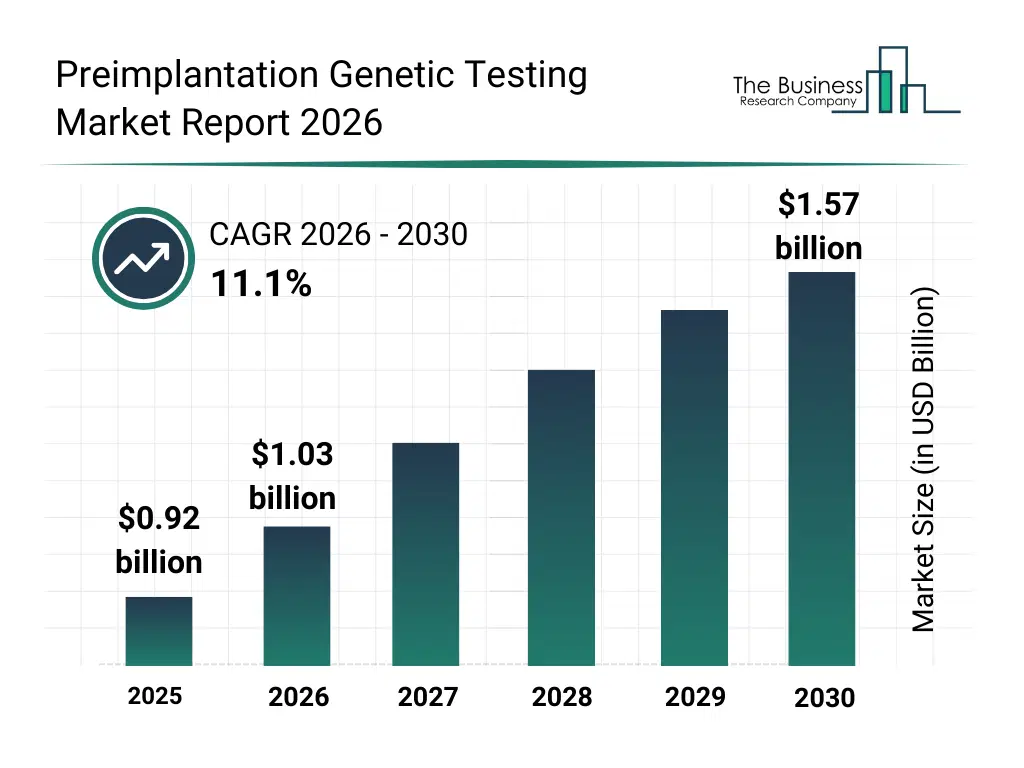
What Is The Preimplantation Genetic Testing Market Size and Share 2026?
The preimplantation genetic testing market size has grown rapidly in recent years. It will grow from $0.92 billion in 2025 to $1.03 billion in 2026 at a compound annual growth rate (CAGR) of 11.4%. The growth in the historic period can be attributed to increasing utilization of assisted reproductive technologies, advancements in embryo biopsy techniques, growing awareness of genetic disease prevention, expansion of fertility clinics, improving IVF success outcomes.What Is The Preimplantation Genetic Testing Market Growth Forecast?
The preimplantation genetic testing market size is expected to see rapid growth in the next few years. It will grow to $1.57 billion in 2030 at a compound annual growth rate (CAGR) of 11.1%. The growth in the forecast period can be attributed to increasing demand for personalized reproductive medicine, rising adoption of advanced genomic technologies, expansion of fertility preservation services, growing investment in reproductive health infrastructure, increasing regulatory acceptance of genetic screening. Major trends in the forecast period include increasing adoption of embryo screening procedures, rising use of next generation sequencing in ivf, expansion of genetic testing in fertility treatments, growing demand for improved implantation success rates, enhanced focus on reducing genetic disorders.
Global Preimplantation Genetic Testing Market Segmentation
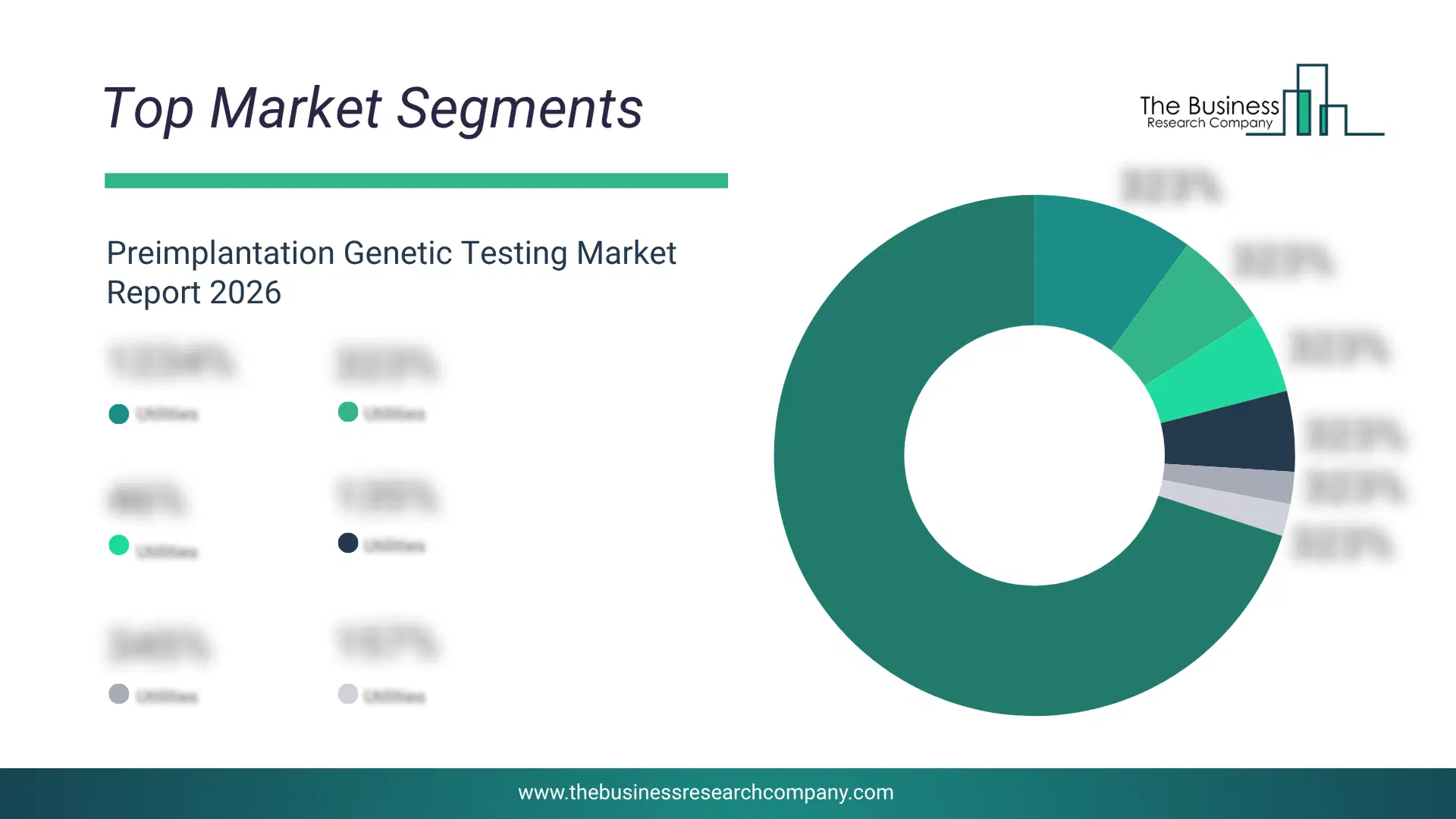
1) By Procedure: Preimplantation Genetic Screening, Preimplantation Genetic Diagnosis 2) By Product: Reagents And Consumables, Instruments, Software 3) By Technology: Next Generation Sequencing (NGS), Polymerase Chain Reaction (PCR), Fluorescent In Situ Hybridization (FISH), Other Technologies 4) By Application: Chromosomal Abnormalities, Aneuploidy Screening, X-Linked Diseases, Embryo Testing, Human Leukocyte Antigen (HLA) Typing, Other Applications 5) By End User: Hospitals, Fertility Centers, Diagnostic Centers, Research Centers And Academic Labs Subsegments: 1) By Preimplantation Genetic Screening (PGS): Array Comparative Genomic Hybridization (aCGH), Next-Generation Sequencing (NGS), Fluorescence In Situ Hybridization (FISH) 2) By Preimplantation Genetic Diagnosis (PGD): Monogenic Disorders Testing, Chromosomal Abnormalities Testing, HLA Typing for Stem Cell TransplantationWhat Is The Driver Of The Preimplantation Genetic Testing Market?
The increase in in vitro fertilization (IVF) procedures is expected to propel the growth of the preimplantation genetic testing market going forward. IVF procedures consist of fertilizing an egg with sperm outside the body to form an embryo, which is subsequently placed in the uterus. The growth in IVF procedures is driven by improvements in reproductive technology, increasing infertility rates, and heightened public awareness. The rise in in vitro fertilization (IVF) procedures is boosting the preimplantation genetic testing market by increasing the demand for genetic screening of embryos before implantation. For instance, in June 2025, the Human Fertilisation & Embryology Authority, a UK-based independent regulator of fertility treatment, reported that, in 2023, 52,400 patients had over 77,500 in vitro fertilization (IVF) cycles at licensed fertility clinics in the UK. Egg freezing cycles increased from 4,700 in 2022 to 6,900 in 2023, accounting for 7% of all cycles. Therefore, the increase in in vitro fertilization (IVF) procedures is driving the preimplantation genetic testing industry.Key Players In The Global Preimplantation Genetic Testing Market
Major companies operating in the preimplantation genetic testing market are Thermo Fisher Scientific, Abbott Laboratories, Laboratory Corporation of America Holdings, Agilent Technologies Inc., Illumina Inc., Revvity Health Science Inc., CooperSurgical Inc., Natera Inc., Myriad Genetics Inc., Fulgent Genetics Inc., Invitae Corporation, Takara Bio Inc., MedGenome Labs Ltd., Genea Limited, Ovation Fertility, Juno Genetics Ltd, Invicta Genetics, Progenesis, Bioarray SL, PacGenomics, Reproductive Genetic Innovations LLC, SEQUENCE46 LLC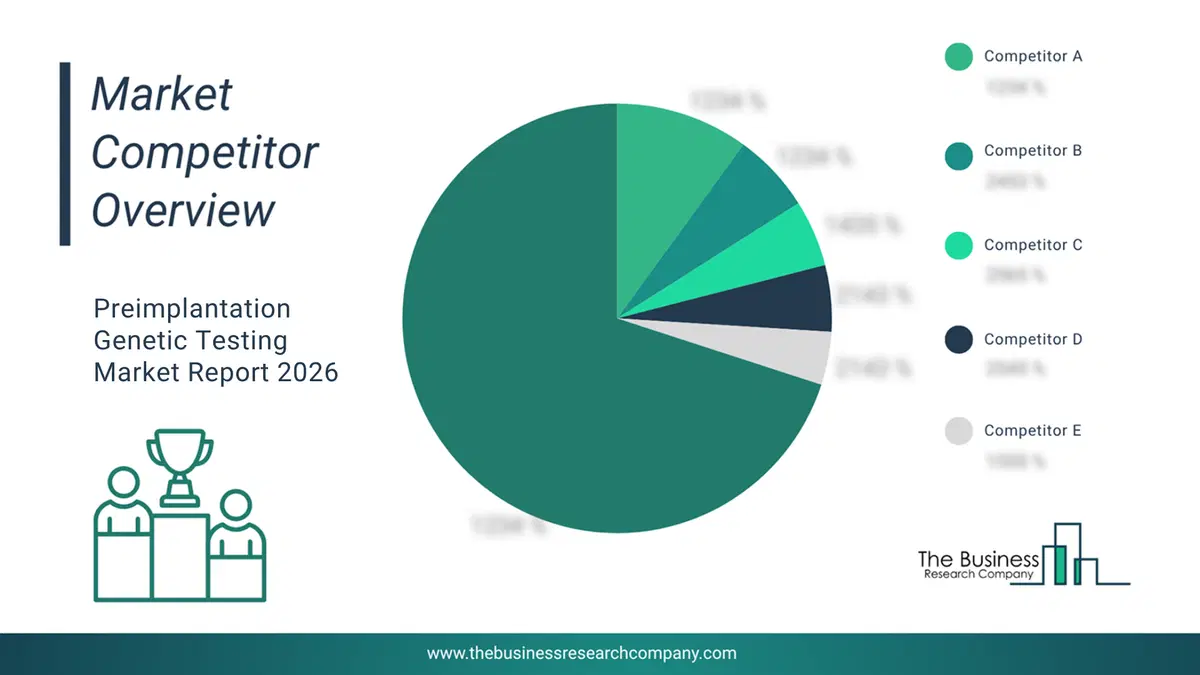
This chart is for illustrative purposes; the full report includes a detailed competitor analysis and comprehensive overview of the top 10 companies in the market.
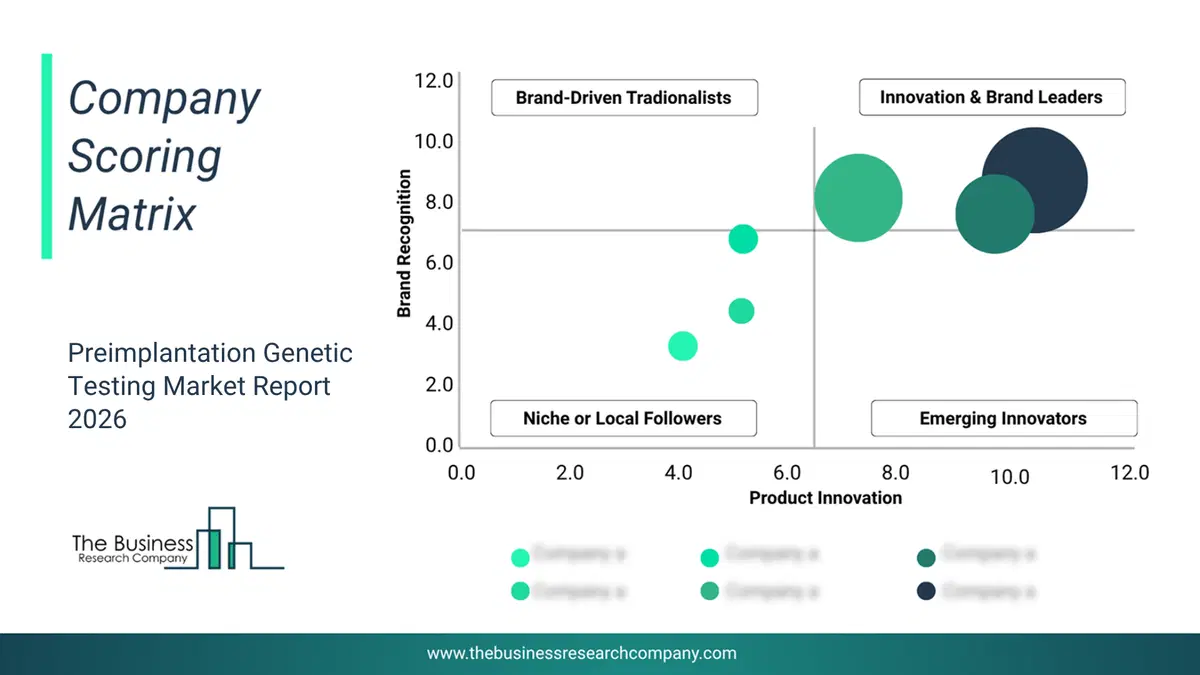
This chart maps companies by product innovation and brand strength, with bubble size indicating relative revenue, helping identify market leaders, challengers, and niche players. This is an illustrative chart; the full report provides a complete and accurate competitive analysis.
Global Preimplantation Genetic Testing Market Trends and Insights
Major companies operating in the preimplantation genetic testing market are developing advanced next-generation sequencing (NGS) tools to enhance accuracy, efficiency, and speed in genetic screening, enabling more comprehensive analysis and better-informed decisions for prospective parents. Next-generation sequencing (NGS) tools accelerate genetic research with rapid, high-throughput analysis of deoxyribonucleic acid (DNA) and ribonucleic acid (RNA). They provide detailed insights into genetic variations and gene expression, improving accuracy and enabling personalized medicine. For instance, in July 2023, Thermo Fisher Scientific, a US-based biotechnology company, launched the Ion ReproSeq PGT-A Kit and the Ion AmpliSeq Polyploidy Kit, advanced next-generation sequencing tools designed to enhance IVF and ICSI research. These assays streamline workflows from sample processing to aneuploidy analysis with cutting-edge technology on the Ion Torrent Genexus integrated sequencer, marking a significant advancement in the preimplantation genetic testing market by enhancing embryo screening and improving success rates in assisted reproductive technologies.What Are Latest Mergers And Acquisitions In The Preimplantation Genetic Testing Market?
In April 2024, GenEmbryomics, an Australia-based provider of embryo genetic testing services, partnered with Progenesis Inc. to offer comprehensive preimplantation genetic testing (PGT) services, including PGT-A, PGT-M, PGT-SR, and PGT-WGS. Through this collaboration, the companies aim to make advanced embryo genetic testing more widely available to IVF clinics and patients, enhancing accuracy in embryo selection and supporting informed reproductive decisions. This partnership highlights the preimplantation genetic testing market’s growing emphasis on genome-wide screening and advanced reproductive genomics solutions. Progenesis Inc., a U.S.-based IVF and PGT service laboratory.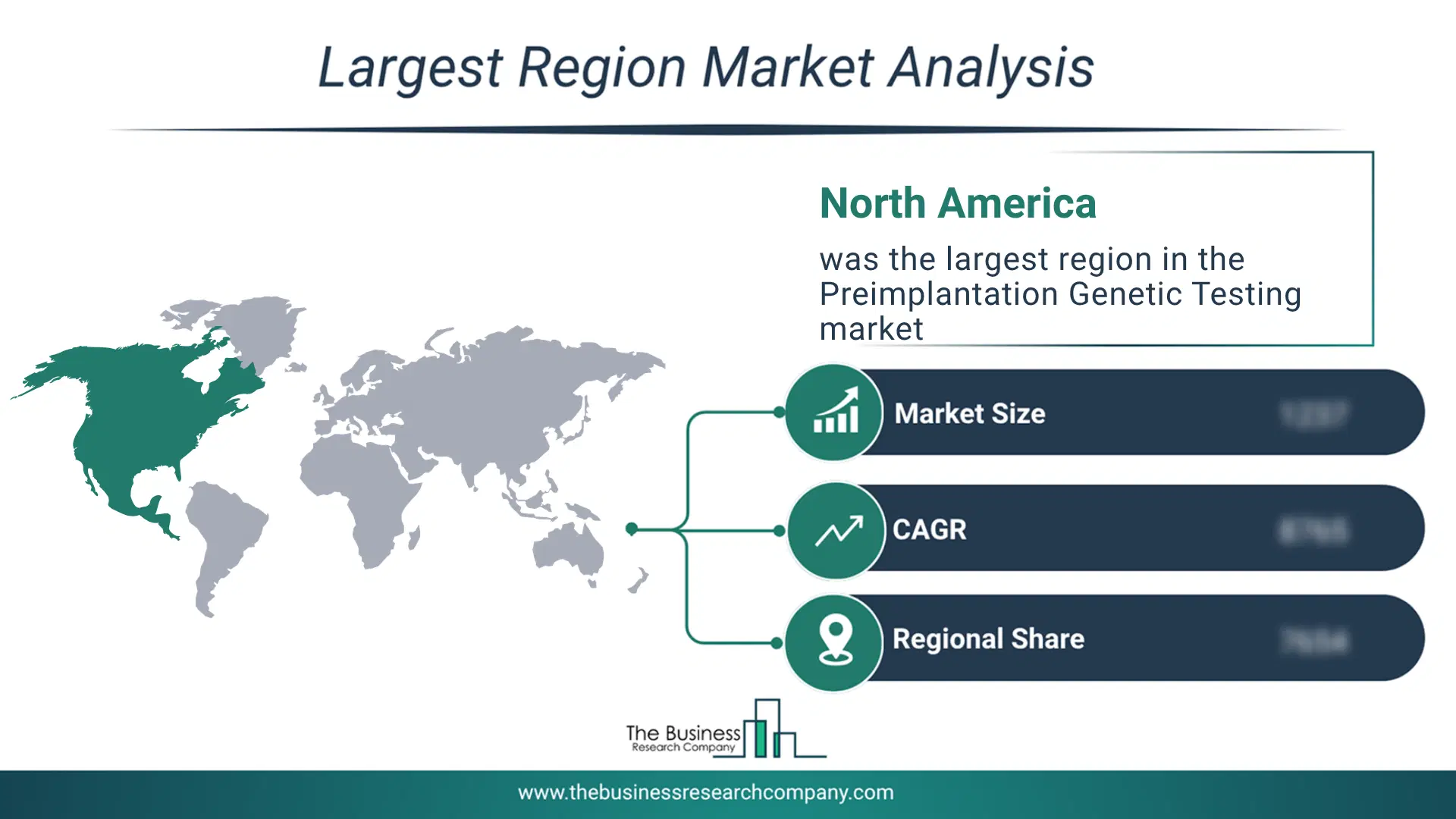
Regional Outlook
North America was the largest region in the preimplantation genetic testing market in 2025. Asia-Pacific is expected to be the fastest-growing region in the forecast period. The regions covered in this market report are Asia-Pacific, South East Asia, Western Europe, Eastern Europe, North America, South America, Middle East, Africa. The countries covered in this market report are Australia, Brazil, China, France, Germany, India, Indonesia, Japan, Taiwan, Russia, South Korea, UK, USA, Canada, Italy, Spain.What Defines the Preimplantation Genetic Testing Market?
The preimplantation genetic testing (PGT) market consists of revenues earned by entities by providing services such as data analysis tools, genetic counseling, cloud-based platforms, and embryo selection algorithms. The market value includes the value of related goods sold by the service provider or included within the service offering. The preimplantation genetic testing (PGT) market also includes sales of genetic testing (PGT) kits, next-generation sequencers, and polymerase chain reaction (PCR) machines. Values in this market are ‘factory gate’ values, that is, the value of goods sold by the manufacturers or creators of the goods, whether to other entities (including downstream manufacturers, wholesalers, distributors, and retailers) or directly to end customers. The value of goods in this market includes related services sold by the creators of the goods.How is Market Value Defined and Measured?
The market value is defined as the revenues that enterprises gain from the sale of goods and/or services within the specified market and geography through sales, grants, or donations in terms of the currency (in USD unless otherwise specified). The revenues for a specified geography are consumption values that are revenues generated by organizations in the specified geography within the market, irrespective of where they are produced. It does not include revenues from resales along the supply chain, either further along the supply chain or as part of other products.
This chart presents market attractiveness based on a quantitative evaluation of growth, competition, strategic alignment, and risk, offering a clear view of opportunity areas for decision-making. This chart is for illustrative purposes; the full report contains the complete analysis.

This chart highlights the Total Addressable Market (TAM) by estimating the maximum revenue opportunity using an assumption-driven approach, supporting strategic planning and opportunity sizing across markets. The chart is illustrative; the full report provides a more comprehensive analysis.
What Key Data and Analysis Are Included in the Preimplantation Genetic Testing Market Report 2026?
The preimplantation genetic testing market research report is one of a series of new reports from The Business Research Company that provides market statistics, including industry global market size, regional shares, competitors with the market share, detailed market segments, market trends and opportunities, and any further data you may need to thrive in the preimplantation genetic testing industry. The market research report delivers a complete perspective of everything you need, with an in-depth analysis of the current and future state of the industry.Preimplantation Genetic Testing Market Report Forecast Analysis
| Report Attribute | Details |
|---|---|
| Market Size Value In 2026 | $1.03 billion |
| Revenue Forecast In 2030 | $1.57 billion |
| Growth Rate | CAGR of 11.1% from 2026 to 2030 |
| Base Year For Estimation | 2025 |
| Actual Estimates/Historical Data | 2020-2025 |
| Forecast Period | 2026 - 2030 |
| Market Representation | Revenue in USD Billion and CAGR from 2026 to 2030 |
| Segments Covered | Procedure, Product, Technology, Application, End User |
| Regional Scope | Asia-Pacific, Western Europe, Eastern Europe, North America, South America, Middle East, Africa |
| Country Scope | The countries covered in the report are Australia, Brazil, China, France, Germany, India, Indonesia, Japan, Taiwan, Russia, South Korea, UK, USA, Canada, Italy, Spain |
| Key Companies Profiled | Thermo Fisher Scientific, Abbott Laboratories, Laboratory Corporation of America Holdings, Agilent Technologies Inc., Illumina Inc., Revvity Health Science Inc., CooperSurgical Inc., Natera Inc., Myriad Genetics Inc., Fulgent Genetics Inc., Invitae Corporation, Takara Bio Inc., MedGenome Labs Ltd., Genea Limited, Ovation Fertility, Juno Genetics Ltd, Invicta Genetics, Progenesis, Bioarray SL, PacGenomics, Reproductive Genetic Innovations LLC, SEQUENCE46 LLC |
| Customization Scope | Request for Customization |
| Pricing And Purchase Options | Explore Purchase Options |