

Prescription Pain Medication Market Report 2026
Global Outlook – By Type (Prescription Non-Steroidal Anti-Inflammatory Drugs, Opioids, Anti-Epileptic Medicines, Antidepressants, Other Types), By Route Of Administration (Oral, Injectable, Transdermal, Other Route Of Administrations), By Application (Neuropathic Pain, Cancer Pain, Post-Operative Pain, Other Applications), By Distribution Channel (Hospital Pharmacies, Retail Pharmacies, Online Pharmacies) – Market Size, Trends, Strategies, and Forecast to 2030
Prescription Pain Medication Market Overview
• Prescription Pain Medication market size has reached to $77.22 billion in 2025 • Expected to grow to $100.16 billion in 2030 at a compound annual growth rate (CAGR) of 5.3% • Growth Driver: The Rise In Arthritis Prevalence The Growth Of The Prescription Pain Medication Market Due To Increasing Obesity And Inflammation • Market Trend: Breakthrough Non-Opioid Therapy Gains FDA Approval For Safer Acute Pain Relief • North America was the largest region in 2025 and Asia-Pacific is the fastest growing region.What Is Covered Under Prescription Pain Medication Market?
Prescription pain medication refers to drugs that are legally prescribed by a licensed healthcare provider to help manage moderate to severe pain. These medications are stronger than over-the-counter (OTC) pain relievers and are used when pain cannot be adequately controlled with non-prescription options. The main types of prescription pain medications are prescription non-steroidal anti-inflammatory drugs, opioids, anti-epileptic medicines, antidepressants, and other types. Prescription non-steroidal anti-inflammatory drugs (NSAIDs) are medications prescribed by healthcare professionals to reduce inflammation, relieve pain, and lower fever by inhibiting cyclooxygenase (COX) enzymes. These medications can be administered through various routes, including oral, injectable, transdermal, and others. They are used to treat a range of conditions such as neuropathic pain, cancer pain, post-operative pain, and more. These drugs are distributed through multiple channels, including hospital pharmacies, retail pharmacies, and online pharmacies.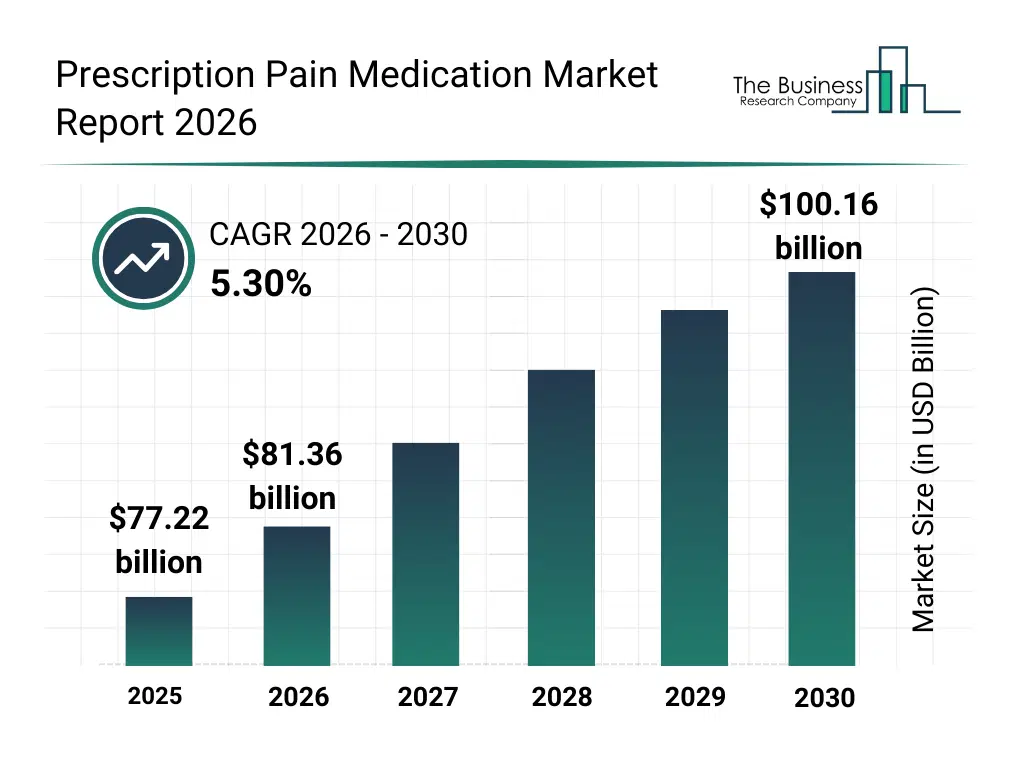
What Is The Prescription Pain Medication Market Size and Share 2026?
The prescription pain medication market size has grown strongly in recent years. It will grow from $77.22 billion in 2025 to $81.36 billion in 2026 at a compound annual growth rate (CAGR) of 5.4%. The growth in the historic period can be attributed to high prevalence of chronic pain, widespread opioid prescriptions, increasing surgical procedures, aging population, growth in cancer pain cases.What Is The Prescription Pain Medication Market Growth Forecast?
The prescription pain medication market size is expected to see strong growth in the next few years. It will grow to $100.16 billion in 2030 at a compound annual growth rate (CAGR) of 5.3%. The growth in the forecast period can be attributed to development of safer pain therapies, rising neuropathic pain incidence, expansion of outpatient care, digital prescription platforms, stricter opioid regulations. Major trends in the forecast period include shift toward non-opioid pain management, rising demand for chronic pain therapies, growth of transdermal and long-acting drugs, expansion of digital and online pharmacies, increased regulatory scrutiny on opioids.
Global Prescription Pain Medication Market Segmentation
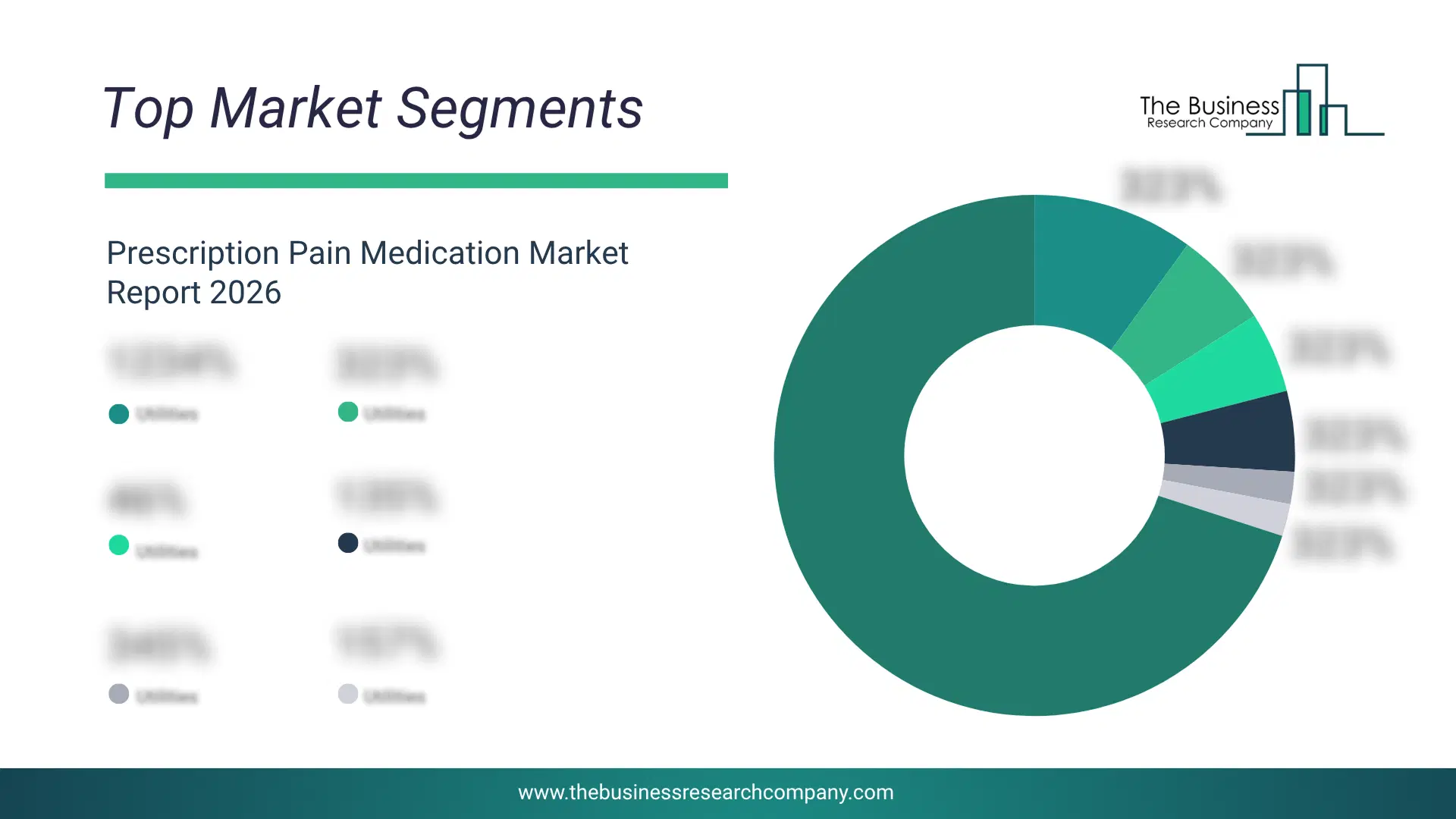
1) By Type: Prescription Non-Steroidal Anti-Inflammatory Drugs, Opioids, Anti-Epileptic Medicines, Antidepressants, Other Types 2) By Route Of Administration: Oral, Injectable, Transdermal, Other Route Of Administrations 3) By Application: Neuropathic Pain, Cancer Pain, Post-Operative Pain, Other Applications 4) By Distribution Channel: Hospital Pharmacies, Retail Pharmacies, Online Pharmacies Subsegments: 1) By Prescription Non-Steroidal Anti-Inflammatory Drugs: COX-2 Inhibitors, Traditional Non-Steroidal Anti-Inflammatory Drugs, Combination Non-Steroidal Anti-Inflammatory Drugs 2) By Opioids: Strong Opioids, Mild Opioids, Opioid Combination Medications 3) By Anti-Epileptic Medicines: Sodium Channel Blockers, Gamma-Aminobutyric Acid Modulators, Glutamate Inhibitors 4) By Antidepressants: Selective Serotonin Reuptake Inhibitors, Tricyclic Antidepressants, Serotonin-Norepinephrine Reuptake Inhibitors, Other Antidepressants 5) By Other Types: Muscle Relaxants, Topical Pain Medications, CorticosteroidsWhat Is The Driver Of The Prescription Pain Medication Market?
The increasing prevalence of arthritis is expected to propel the growth of the prescription pain medication market going forward. Arthritis is inflammation of one or more joints, causing pain, swelling, stiffness, and reduced range of motion. The increasing prevalence of arthritis is primarily due to obesity, as excess body weight places additional stress on joints, particularly the knees, and promotes inflammation. Prescription pain medication helps arthritis management by alleviating inflammation and pain, enabling better joint function, and improving the overall quality of life for those affected. For instance, in January 2024, according to the Office for Health Improvement and Disparities, a UK-based government department, in 2023, 18.4% of people aged 16 and over reported having a long-term MSK condition, up from 17.6% in 2022. Therefore, the increasing prevalence of autoimmune disorders is driving the growth of the prescription pain medications industry.Key Players In The Global Prescription Pain Medication Market
Major companies operating in the prescription pain medication market are Mallinckrodt Public Limited Company, Pfizer Inc., Johnson And Johnson, Merck And Co. Inc., AbbVie Inc., Bayer AG, Sanofi S.A., Bristol-Myers Squibb Company, AstraZeneca plc, Novartis International AG, GlaxoSmithKline Public Limited Company, Takeda Pharmaceutical Company Limited, Eli Lilly And Company, Teva Pharmaceutical Industries Ltd., Boehringer Ingelheim GmbH, Mylan N.V., Sandoz Inc, Bausch Health Companies Inc., Purdue Pharma L.P., Endo International Plc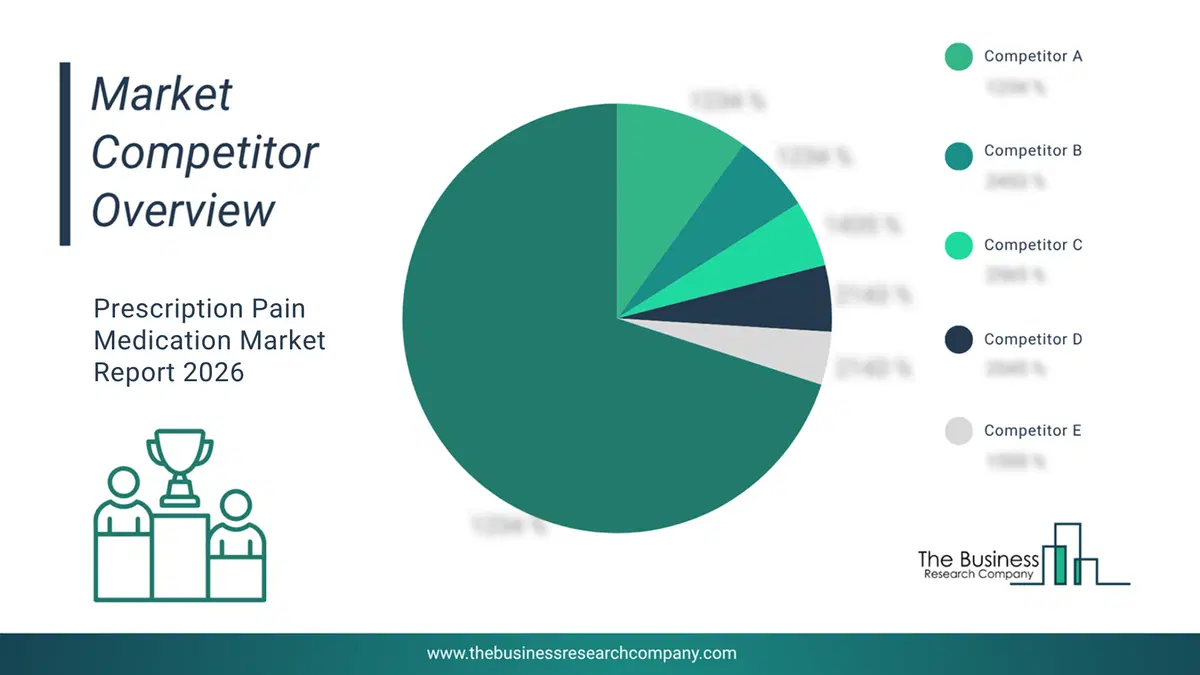
This chart is for illustrative purposes; the full report includes a detailed competitor analysis and comprehensive overview of the top 10 companies in the market.
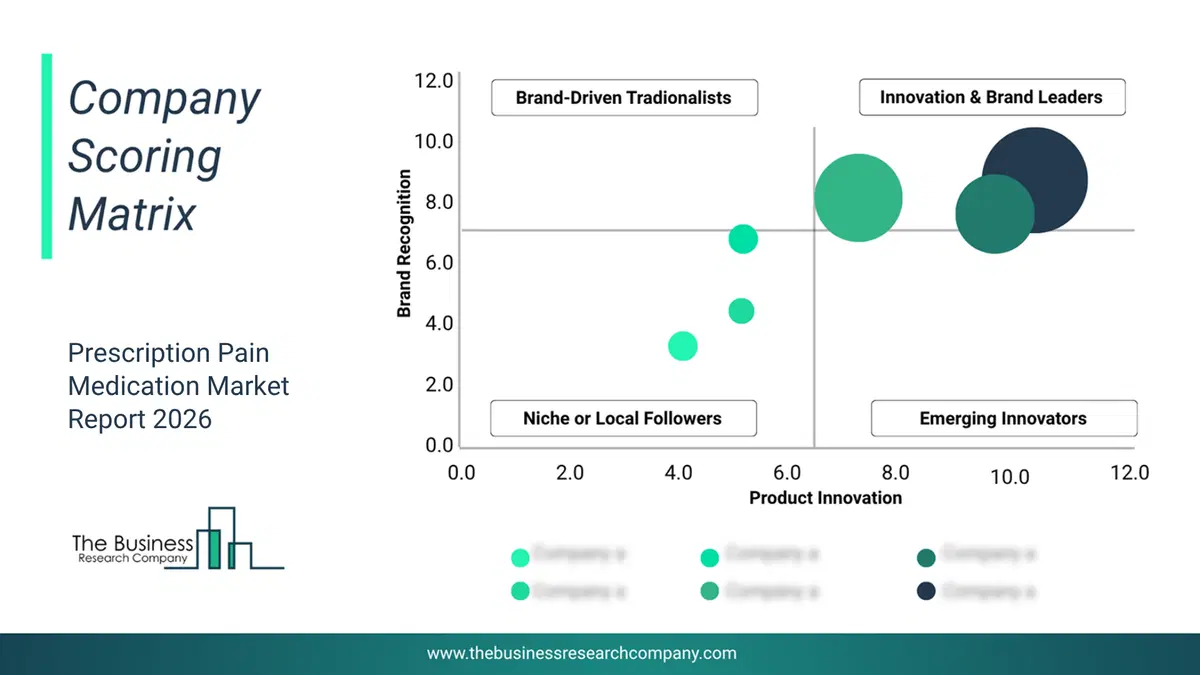
This chart maps companies by product innovation and brand strength, with bubble size indicating relative revenue, helping identify market leaders, challengers, and niche players. This is an illustrative chart; the full report provides a complete and accurate competitive analysis.
Global Prescription Pain Medication Market Trends and Insights
Major companies operating in the prescription pain medication market are focusing on developing alternative therapies such as non-opioid painkillers to address the growing concerns over opioid addiction and improve patient safety. Non-opioid painkillers are medications that manage pain without the addictive risks of opioids, offering safer, effective alternatives for long-term pain management and reducing the potential for addiction and overdose. For instance, in January 2025, Vertex Pharmaceuticals Incorporated, a US-based biotechnology company, received approval from the U.S. Food and Drug Administration (FDA), a US-based government agency for JOURNAVX, a first-in-class non-opioid oral medication. This medication selectively blocks NaV1.8 sodium channels in peripheral nerves to inhibit pain signals without central nervous system involvement, offering effective acute pain relief without addictive potential. It provides clinically meaningful pain reduction evidenced by Phase 3 trials in abdominoplasty and bunionectomy with a twice-daily dosing regimen and is not a controlled substance, addressing a critical need for safer acute pain management.What Are Latest Mergers And Acquisitions In The Prescription Pain Medication Market?
In January 2024, Heron Therapeutics Inc., a US-based biotechnology company, partnered with CrossLink Life Sciences, LLC to expand the sales network for its extended-release local anesthetic ZYNRELEF. With this partnership, Heron and CrossLink aim to add around 650 sales representatives and drive broader adoption of ZYNRELEF, particularly in orthopedic surgery for post-operative pain management. CrossLink Life Sciences LLC is a US-based company that specializes in providing orthopaedic, spine, and sports medicine device.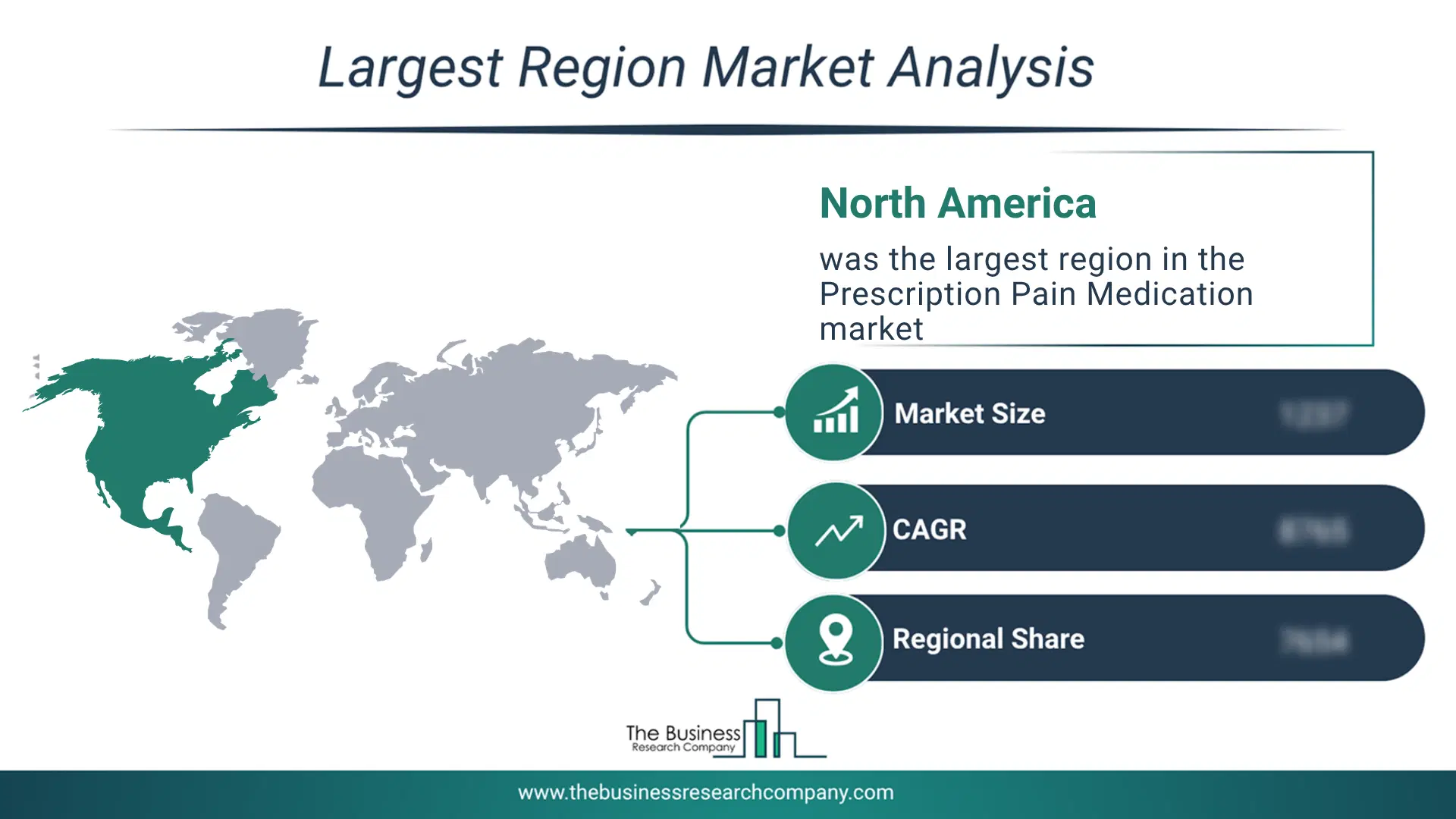
Regional Insights
North America was the largest region in the prescription pain medication market in 2025. Asia-Pacific is expected to be the fastest-growing region in the forecast period. The regions covered in this market report are Asia-Pacific, South East Asia, Western Europe, Eastern Europe, North America, South America, Middle East, Africa. The countries covered in this market report are Australia, Brazil, China, France, Germany, India, Indonesia, Japan, Taiwan, Russia, South Korea, UK, USA, Canada, Italy, Spain.What Defines the Prescription Pain Medication Market?
The prescription pain medication market consists of sales of acetaminophen, antidepressants, anticonvulsants, muscle relaxants, and biologic pain medications. Values in this market are ‘factory gate’ values, that is, the value of goods sold by the manufacturers or creators of the goods, whether to other entities (including downstream manufacturers, wholesalers, distributors, and retailers) or directly to end customers. The value of goods in this market includes related services sold by the creators of the goods.How is Market Value Defined and Measured?
The market value is defined as the revenues that enterprises gain from the sale of goods and/or services within the specified market and geography through sales, grants, or donations in terms of the currency (in USD unless otherwise specified). The revenues for a specified geography are consumption values that are revenues generated by organizations in the specified geography within the market, irrespective of where they are produced. It does not include revenues from resales along the supply chain, either further along the supply chain or as part of other products.
This chart presents market attractiveness based on a quantitative evaluation of growth, competition, strategic alignment, and risk, offering a clear view of opportunity areas for decision-making. This chart is for illustrative purposes; the full report contains the complete analysis.

This chart highlights the Total Addressable Market (TAM) by estimating the maximum revenue opportunity using an assumption-driven approach, supporting strategic planning and opportunity sizing across markets. The chart is illustrative; the full report provides a more comprehensive analysis.
What Key Data and Analysis Are Included in the Prescription Pain Medication Market Report 2026?
The prescription pain medication market research report is one of a series of new reports from The Business Research Company that provides market statistics, including industry global market size, regional shares, competitors with the market share, detailed market segments, market trends and opportunities, and any further data you may need to thrive in the prescription pain medication industry. The market research report delivers a complete perspective of everything you need, with an in-depth analysis of the current and future state of the industry.Prescription Pain Medication Market Report Forecast Analysis
| Report Attribute | Details |
|---|---|
| Market Size Value In 2026 | $81.36 billion |
| Revenue Forecast In 2030 | $100.16 billion |
| Growth Rate | CAGR of 5.4% from 2026 to 2030 |
| Base Year For Estimation | 2025 |
| Actual Estimates/Historical Data | 2020-2025 |
| Forecast Period | 2026 - 2030 |
| Market Representation | Revenue in USD Billion and CAGR from 2026 to 2030 |
| Segments Covered | Type, Route Of Administration, Application, Distribution Channel |
| Regional Scope | Asia-Pacific, Western Europe, Eastern Europe, North America, South America, Middle East, Africa |
| Country Scope | The countries covered in the report are Australia, Brazil, China, France, Germany, India, Indonesia, Japan, Taiwan, Russia, South Korea, UK, USA, Canada, Italy, Spain. |
| Key Companies Profiled | Mallinckrodt Public Limited Company, Pfizer Inc., Johnson And Johnson, Merck And Co. Inc., AbbVie Inc., Bayer AG, Sanofi S.A., Bristol-Myers Squibb Company, AstraZeneca plc, Novartis International AG, GlaxoSmithKline Public Limited Company, Takeda Pharmaceutical Company Limited, Eli Lilly And Company, Teva Pharmaceutical Industries Ltd., Boehringer Ingelheim GmbH, Mylan N.V., Sandoz Inc, Bausch Health Companies Inc., Purdue Pharma L.P., Endo International Plc |
| Customization Scope | Request for Customization |
| Pricing And Purchase Options | Explore Purchase Options |