

Primary Cell Culture Market Report 2026
Global Outlook – By Product (Primary Cell, Reagents, Supplements, Media), By Cell Type (Animal Cells, Human Cells), By Separation And Culture Techniques (Explant Method, Enzymatic Disaggregation, Mechanical Separation, Other Separation), By Application (Tissue Culture and Tissue Engineering, Vaccine Production, Gene Therapy And Regenerative Medicine, Drug Screening And Toxicity Testing, Cancer Research, Virology, Stem Cell Therapy, Other Applications), By End User (Pharmaceutical And Biotechnology Company And Contract Research Organizations, Academic And Research Institutes, Other End Users) – Market Size, Trends, Strategies, and Forecast to 2030
Primary Cell Culture Market Overview
• Primary Cell Culture market size has reached to $7.76 billion in 2025 • Expected to grow to $14.54 billion in 2030 at a compound annual growth rate (CAGR) of 13.1% • Growth Driver: Rising Prevalence Of Chronic Diseases Fuels Growth In Primary Cell Culture Market • Market Trend: Development Of Cost-Effective Cell Banks To Boost Cultivated Meat Research And Innovation • North America was the largest region in 2025 and Asia-Pacific is the fastest growing region.What Is Covered Under Primary Cell Culture Market?
Primary cell culture refers to the process of isolating cells directly from a tissue or organism and growing them in a controlled laboratory environment. The process involves obtaining tissues from a human or animal, disaggregating them using various methods, and inducing the viable cells to grow in culture vessels with specialized media. The main primary cell culture products are primary cells, reagents, supplements, and media. Primary cells are valued for their original phenotype and functions, making them more representative of natural cells and providing more reliable results that can be translated into in vivo applications with greater confidence. It is used for both animal cells and human cells. The various separation and culture techniques include the explant method, enzymatic disaggregation, mechanical separation, and others. These are used for various applications such as tissue culture and tissue engineering, vaccine production, gene therapy and regenerative medicine, drug screening and toxicity testing, cancer research, virology, stem cell therapy, other applications, and also by several end users, including pharmaceutical and biotechnology companies, and cross and academic and research institutes, and others.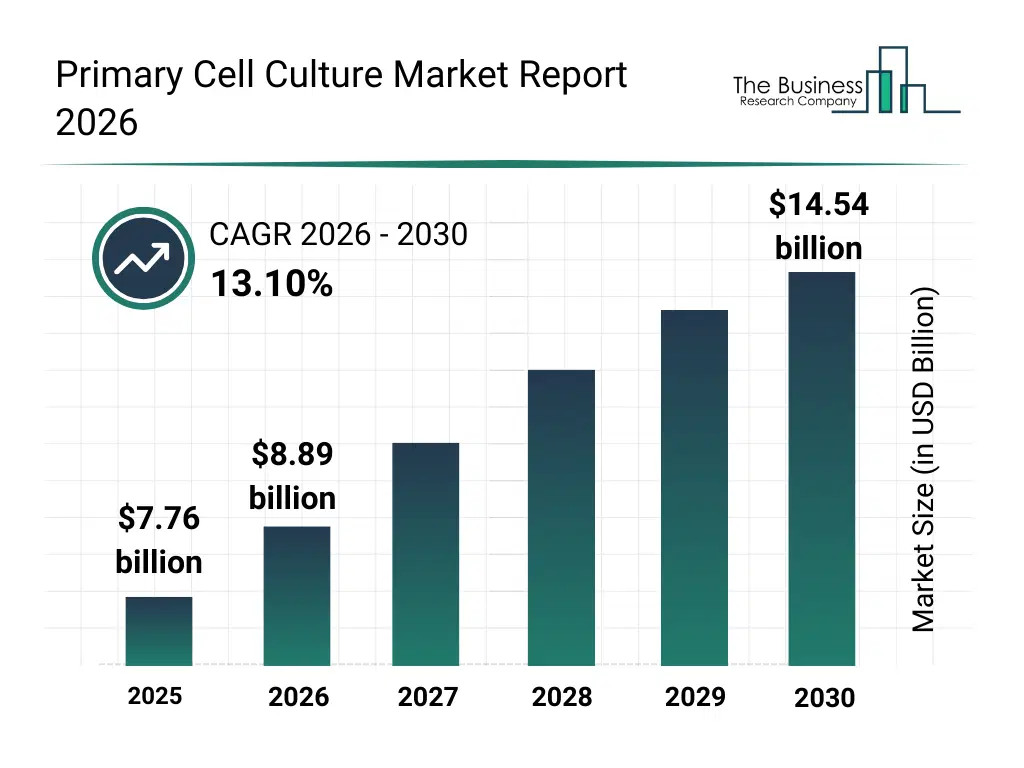
What Is The Primary Cell Culture Market Size and Share 2026?
The primary cell culture market size has grown rapidly in recent years. It will grow from $7.76 billion in 2025 to $8.89 billion in 2026 at a compound annual growth rate (CAGR) of 14.6%. The growth in the historic period can be attributed to advancement of in vitro research methods, early adoption of tissue culture techniques, increasing use of animal models in research, expansion of academic life sciences research, rising need for biologically relevant cell models.What Is The Primary Cell Culture Market Growth Forecast?
The primary cell culture market size is expected to see rapid growth in the next few years. It will grow to $14.54 billion in 2030 at a compound annual growth rate (CAGR) of 13.1%. The growth in the forecast period can be attributed to growth of gene therapy and regenerative medicine research, increasing pharmaceutical R&D investments, rising demand for personalized medicine research tools, expansion of vaccine development activities, growing focus on reducing animal testing. Major trends in the forecast period include rising adoption of primary cells for physiologically relevant research, growing use of primary cell culture in regenerative medicine applications, increasing demand for human primary cells in drug discovery, expansion of serum-free and specialized culture media, higher utilization of primary cells in cancer and virology research.
Global Primary Cell Culture Market Segmentation
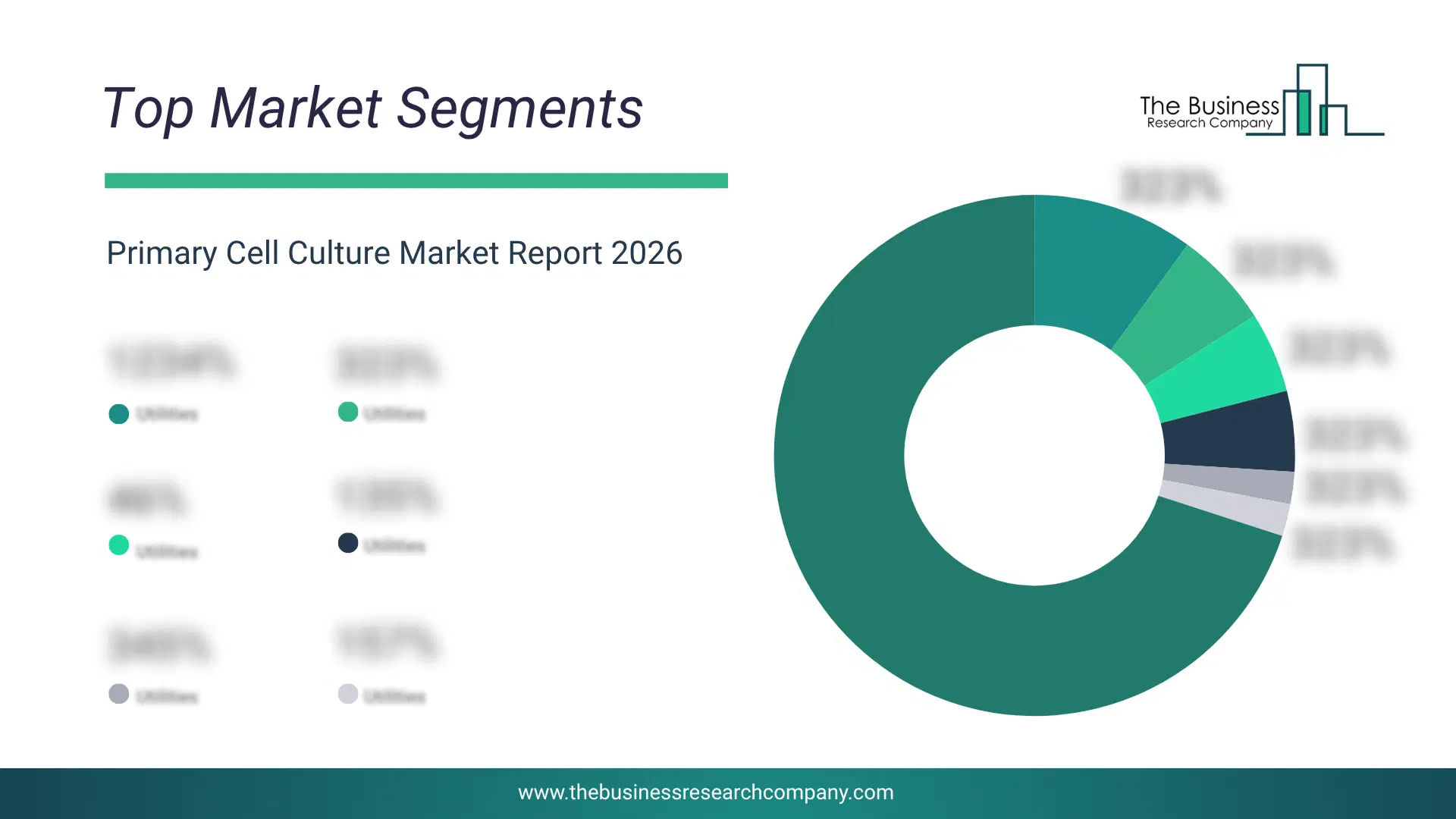
1) By Product: Primary Cell, Reagents, Supplements, Media 2) By Cell Type: Animal Cells, Human Cells 3) By Separation And Culture Techniques: Explant Method, Enzymatic Disaggregation, Mechanical Separation, Other Separation 4) By Application: Tissue Culture and Tissue Engineering, Vaccine Production, Gene Therapy And Regenerative Medicine, Drug Screening And Toxicity Testing, Cancer Research, Virology, Stem Cell Therapy, Other Applications 5) By End User: Pharmaceutical And Biotechnology Company And Contract Research Organizations, Academic And Research Institutes, Other End Users Subsegments: 1) By Primary Cell: Human Primary Cells, Animal Primary Cells 2) By Reagents: Enzymes, Buffers And Salts, Antibodies 3) By Supplements: Growth Factors, Serum Supplements, Hormones 4) By Media: Basal Media, Serum-Free Media, Specialty MediaWhat Is The Driver Of The Primary Cell Culture Market?
The increasing prevalence of chronic diseases is expected to propel the growth of the primary cell culture market going forward. Chronic diseases are long-lasting conditions that typically progress slowly and persist for long, often for the remainder of an individual's life. The rise in chronic diseases can be attributed to various factors, including lifestyle changes, environmental influences, physical inactivity, dietary shifts, and demographic shifts. Primary cell cultures significantly advance knowledge and treatment strategies for chronic diseases, ultimately improving patient outcomes. For instance, in January 2023, according to the National Center For Biotechnology Information, a US-based government agency, the number with at least one chronic disease is estimated to increase by 99.5% from 71.522 million in 2020 to 142.66 million by 2050. Therefore, the increasing prevalence of chronic diseases drives the primary cell culture industry.Key Players In The Global Primary Cell Culture Market
Major companies operating in the primary cell culture market are Thermo Fisher Scientific Inc., Merck KGaA, FUJIFILM Holdings Corporation, GE HealthCare Technologies Inc., Corning Incorporated, Lonza Group Ltd., Sartorius AG, Miltenyi Biotec and CO.KG, STEMCELL Technologies Inc., Cyagen Biosciences Inc., Hi Media Laboratories Pvt. Ltd., PromoCell GmbH, AllCells LLC, BPS Bioscience Inc., MatTek Ltd., Axol Bioscience Ltd., Lifeline Cell Technology Corp., Neuromics Inc., Cell Biologics Inc., ZenBio Inc., Epithelix Sàrl, ReachBio LLC, AcceGen Biotechnology, Biopredic International, ixCells Biotechnologies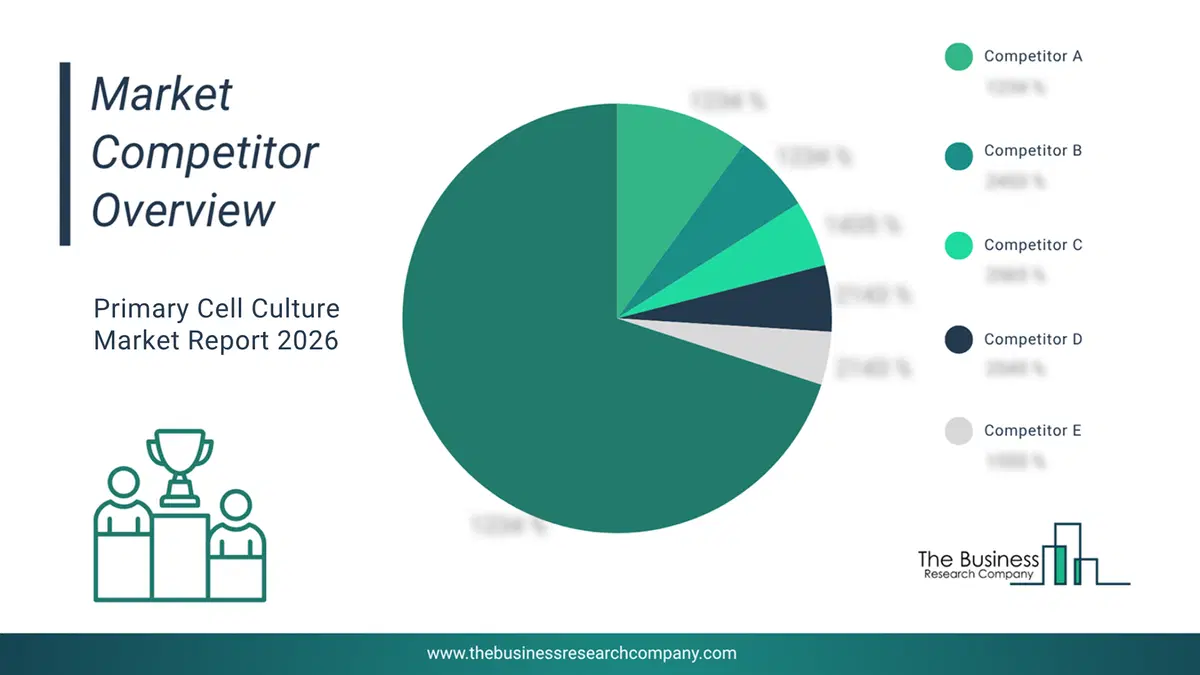
This chart is for illustrative purposes; the full report includes a detailed competitor analysis and comprehensive overview of the top 10 companies in the market.
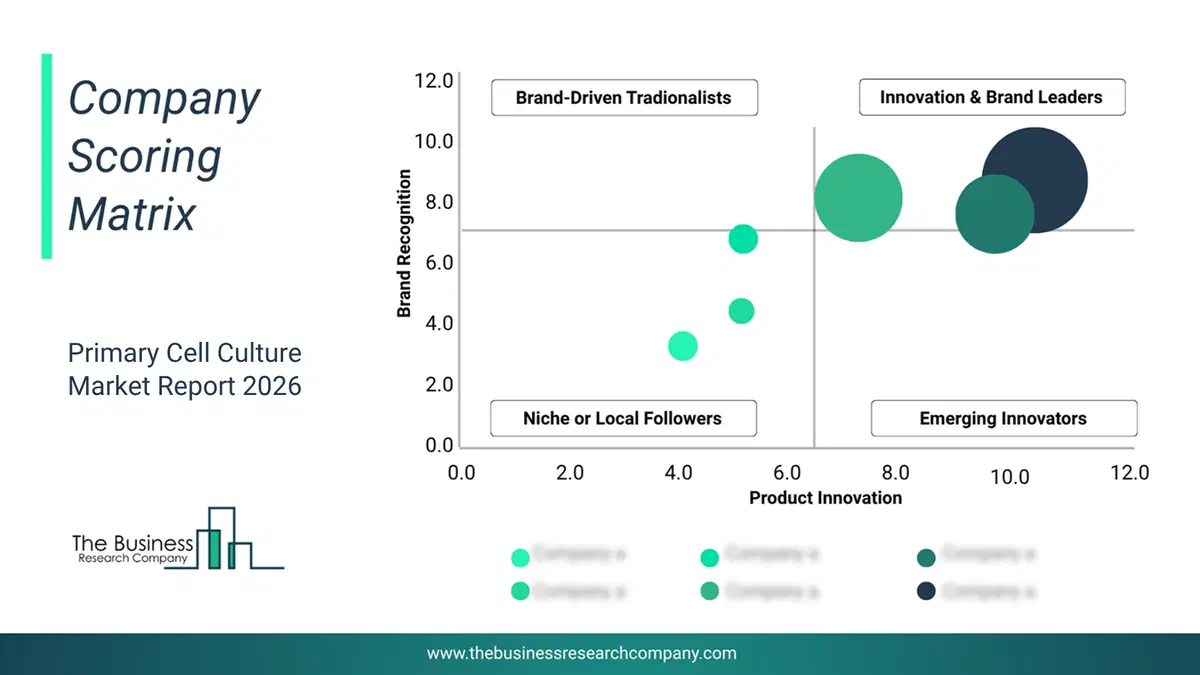
This chart maps companies by product innovation and brand strength, with bubble size indicating relative revenue, helping identify market leaders, challengers, and niche players. This is an illustrative chart; the full report provides a complete and accurate competitive analysis.
Global Primary Cell Culture Market Trends and Insights
Major companies operating in the primary cell culture market are developing cell banks that contain primary cells specifically for cultivated meat research, aiming to advance sustainable and ethical meat production technologies. The Cell Bank initiative aims to support early-stage companies and researchers by providing high-quality animal primary cells suitable for cultivated meat research and development, up to 90% cheaper than other cell line providers, and free from licensing restrictions. For instance, in June 2023, Extracellular, a UK-based CDMO (contract development and manufacturing organization), launched low-cost, license-free cell banks to support the cultivated meat sector. The cell banks initially offer cells isolated from cows, pigs, and lambs' fat, muscle, and bone marrow tissues. This project demonstrates a collaborative approach to accelerate the growth of the cultivated meat industry in the UK by increasing the availability of cell lines and enabling researchers and companies to develop innovative technologies without restrictions from licensing or commercial agreements.What Are Latest Mergers And Acquisitions In The Primary Cell Culture Market?
In April 2023, AnaBios Corporation, a US-based biotechnology company, acquired Cell Systems for an undisclosed amount. The acquisition of Cell Systems would further enhance AnaBios' portfolio of human tissue and cells, providing researchers with an expansive array of biologically relevant tools to expedite drug discovery and further their understanding of cell biology. Cell Systems is a US-based company that offers primary cell and cell culture.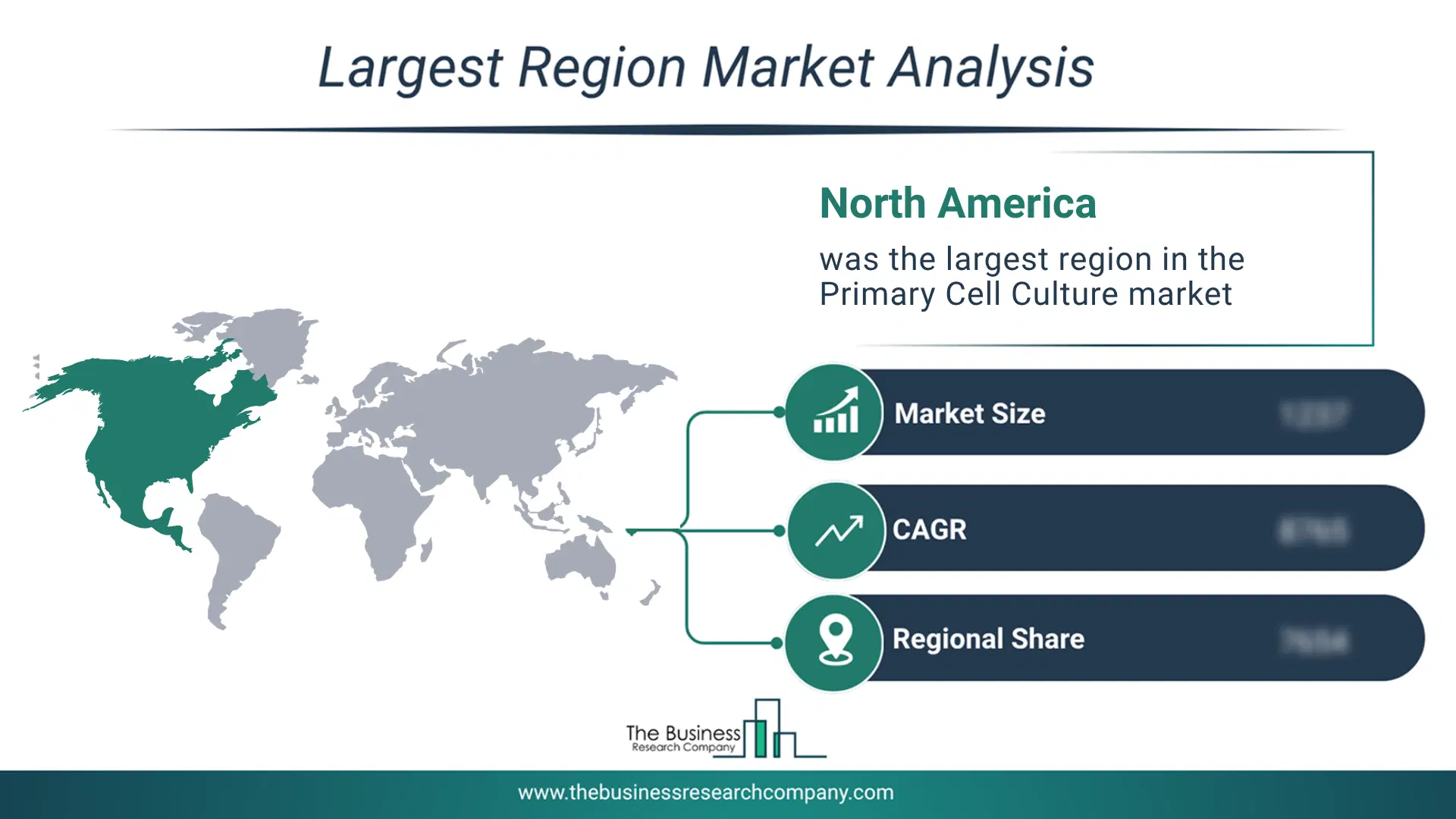
Regional Insights
North America was the largest region in the primary cell culture market in 2025. Asia-Pacific is expected to be the fastest-growing region in the forecast period. The regions covered in this market report are Asia-Pacific, South East Asia, Western Europe, Eastern Europe, North America, South America, Middle East, Africa. The countries covered in this market report are Australia, Brazil, China, France, Germany, India, Indonesia, Japan, Taiwan, Russia, South Korea, UK, USA, Canada, Italy, Spain.What Defines the Primary Cell Culture Market?
The primary cell culture market consists of revenues earned by entities by provide services such as adherent cell culture service, suspension cell culture service, cell purification, and analytics. The market value includes the value of related goods sold by the service provider or included within the service offering. The primary cell culture market also includes sales of cell culture vessels, human platelet lysate, and cell culture plastics. Values in this market are ‘factory gate’ values, that is the value of goods sold by the manufacturers or creators of the goods, whether to other entities (including downstream manufacturers, wholesalers, distributors, and retailers) or directly to end customers. The value of goods in this market includes related services sold by the creators of the goods.How is Market Value Defined and Measured?
The market value is defined as the revenues that enterprises gain from the sale of goods and/or services within the specified market and geography through sales, grants, or donations in terms of the currency (in USD unless otherwise specified). The revenues for a specified geography are consumption values that are revenues generated by organizations in the specified geography within the market, irrespective of where they are produced. It does not include revenues from resales along the supply chain, either further along the supply chain or as part of other products.
This chart presents market attractiveness based on a quantitative evaluation of growth, competition, strategic alignment, and risk, offering a clear view of opportunity areas for decision-making. This chart is for illustrative purposes; the full report contains the complete analysis.

This chart highlights the Total Addressable Market (TAM) by estimating the maximum revenue opportunity using an assumption-driven approach, supporting strategic planning and opportunity sizing across markets. The chart is illustrative; the full report provides a more comprehensive analysis.
What Key Data and Analysis Are Included in the Primary Cell Culture Market Report 2026?
The primary cell culture market research report is one of a series of new reports from The Business Research Company that provides market statistics, including industry global market size, regional shares, competitors with the market share, detailed market segments, market trends and opportunities, and any further data you may need to thrive in the primary cell culture industry. The market research report delivers a complete perspective of everything you need, with an in-depth analysis of the current and future state of the industry.Primary Cell Culture Market Report Forecast Analysis
| Report Attribute | Details |
|---|---|
| Market Size Value In 2026 | $8.89 billion |
| Revenue Forecast In 2030 | $14.54 billion |
| Growth Rate | CAGR of 14.6% from 2026 to 2030 |
| Base Year For Estimation | 2025 |
| Actual Estimates/Historical Data | 2020-2025 |
| Forecast Period | 2026 - 2030 |
| Market Representation | Revenue in USD Billion and CAGR from 2026 to 2030 |
| Segments Covered | Product, Cell Type, Separation And Culture Techniques, Application, End User |
| Regional Scope | Asia-Pacific, Western Europe, Eastern Europe, North America, South America, Middle East, Africa |
| Country Scope | The countries covered in the report are Australia, Brazil, China, France, Germany, India, Indonesia, Japan, Taiwan, Russia, South Korea, UK, USA, Canada, Italy, Spain. |
| Key Companies Profiled | Thermo Fisher Scientific Inc., Merck KGaA, FUJIFILM Holdings Corporation, GE HealthCare Technologies Inc., Corning Incorporated, Lonza Group Ltd., Sartorius AG, Miltenyi Biotec and CO.KG, STEMCELL Technologies Inc., Cyagen Biosciences Inc., Hi Media Laboratories Pvt. Ltd., PromoCell GmbH, AllCells LLC, BPS Bioscience Inc., MatTek Ltd., Axol Bioscience Ltd., Lifeline Cell Technology Corp., Neuromics Inc., Cell Biologics Inc., ZenBio Inc., Epithelix Sàrl, ReachBio LLC, AcceGen Biotechnology, Biopredic International, ixCells Biotechnologies |
| Customization Scope | Request for Customization |
| Pricing And Purchase Options | Explore Purchase Options |