
Primary Ovarian Insufficiency Market Report 2026
Global Outlook – By Type (Hormone Replacement Therapy (HRT), Calcium and Vitamin D Supplements, In Vitro Fertilization (IVF), Stem Cell Therapy, Other Types), By Diagnosis Method (Blood Tests, Ultrasound Imaging, Genetic Testing), By Application (Less Than 20 Years Old, 20 To 30 Years Old, 30 To 45 Years Old, Perimenopausal Age Group Exclusion As POI Occurs Before 40), By End-Users (Hospitals And Clinics, Specialty Fertility Centers) - Market Size, Trends, And Global Forecast 2026-2030
Primary Ovarian Insufficiency Market Overview
• Primary Ovarian Insufficiency market size has reached to $1.18 billion in 2025 • Expected to grow to $1.88 billion in 2030 at a compound annual growth rate (CAGR) of 9.8% • Growth Driver: The Increasing Prevalence Of Autoimmune Disorders Driving The Growth Of The Primary Ovarian Insufficiency Market Due To Higher Susceptibility To Immune Dysregulation • North America was the largest region in 2025.Market Gains By 2030 – Top Opportunities By Segment
Market Gain identifies the most promising market opportunities by highlighting the segments or products expected to generate the highest incremental revenue growth over the next five years.
What Is Covered Under Primary Ovarian Insufficiency Market?
Primary ovarian insufficiency (POI) is a condition where the ovaries stop functioning normally before the age of 40, leading to reduced estrogen production and irregular or absent menstrual periods. It can result in infertility and is often associated with hormonal imbalances despite the presence of some ovarian activity. The main types of primary ovarian insufficiency are hormone replacement therapy (HRT), calcium and vitamin D supplements, in vitro fertilization (IVF), stem cell therapy, and other types. Hormone replacement therapy (HRT) refers to the medical treatment in which hormones, typically estrogen and progesterone, are supplemented to alleviate symptoms caused by hormonal imbalances or deficiencies, especially during menopause. The various diagnostic methods include blood tests, ultrasound imaging, and genetic testing. This condition can affect individuals across different age groups, including those under 20, 20 to 30 years old, 30 to 45 years old, and those over 45. These are used for various end users such as hospitals, clinics, and specialty fertility centers.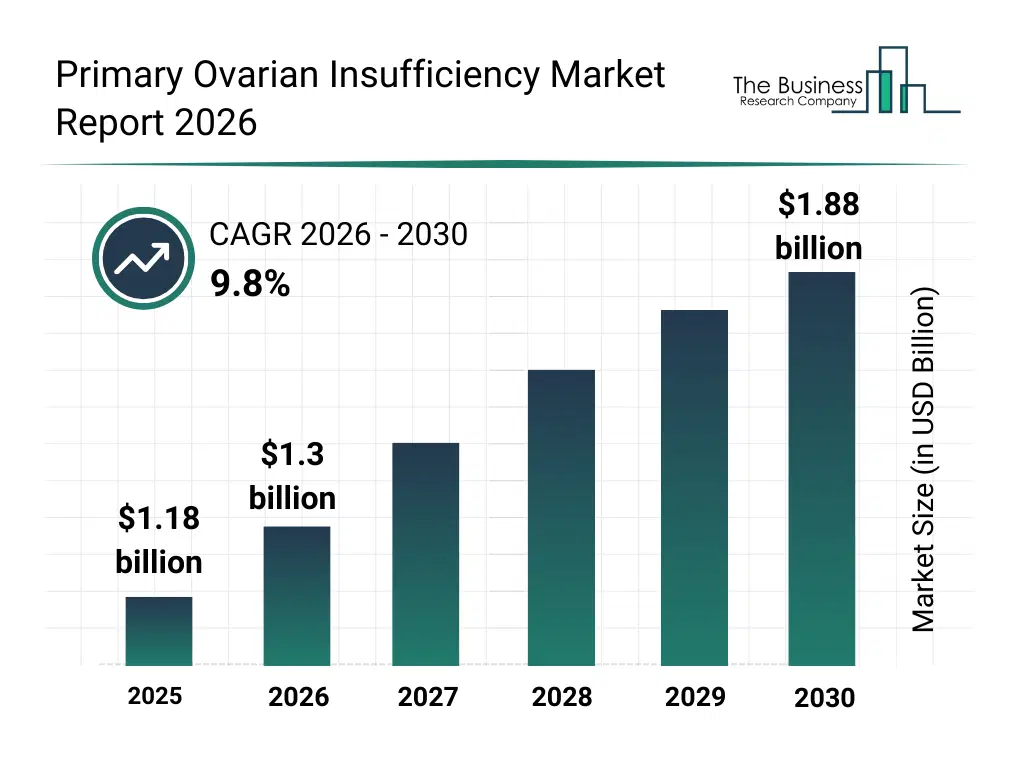
What Is The Primary Ovarian Insufficiency Market Size and Share 2026?
The primary ovarian insufficiency market size has grown strongly in recent years. It will grow from $1.18 billion in 2025 to $1.3 billion in 2026 at a compound annual growth rate (CAGR) of 10.0%. The growth in the historic period can be attributed to increasing awareness of female reproductive health, wider use of hormone replacement therapy, growth in infertility treatment demand, improved diagnostic capabilities for hormonal disorders, expansion of specialty fertility clinics.What Is The Primary Ovarian Insufficiency Market Growth Forecast?
The primary ovarian insufficiency market size is expected to see strong growth in the next few years. It will grow to $1.88 billion in 2030 at a compound annual growth rate (CAGR) of 9.8%. The growth in the forecast period can be attributed to increasing investment in regenerative medicine research, rising demand for early diagnosis solutions, expansion of precision medicine approaches, growing focus on non-invasive fertility treatments, increasing availability of advanced reproductive technologies. Major trends in the forecast period include increasing adoption of personalized hormone therapies, rising use of advanced diagnostic testing, growing focus on fertility preservation solutions, expansion of regenerative and stem cell-based treatments, enhanced integration of multidisciplinary care models.
Global Primary Ovarian Insufficiency Market Segmentation
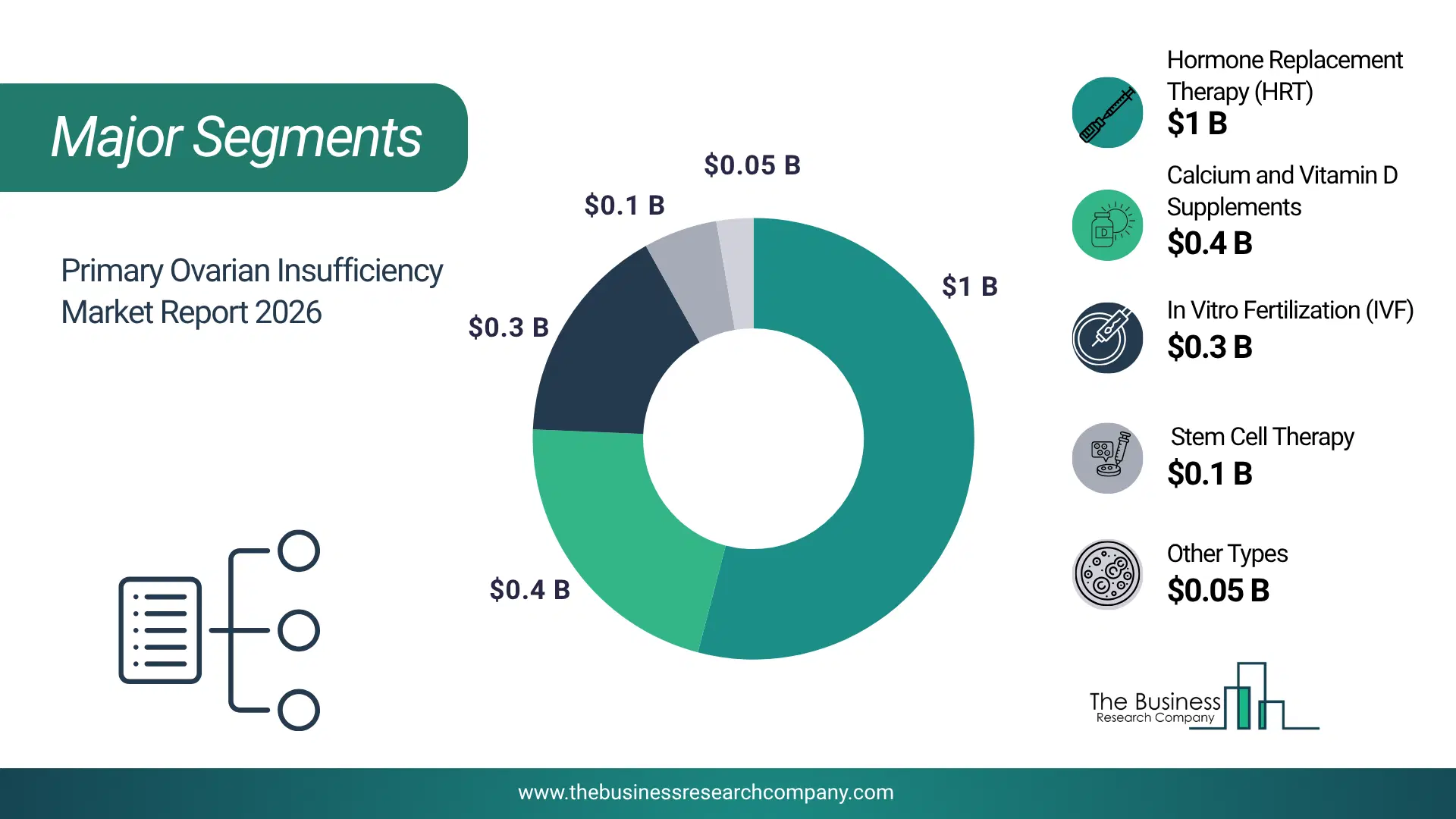
1) By Type: Hormone Replacement Therapy (HRT), Calcium and Vitamin D Supplements, In Vitro Fertilization (IVF), Stem Cell Therapy, Other Types 2) By Diagnosis Method: Blood Tests, Ultrasound Imaging, Genetic Testing 3) By Application: Less Than 20 Years Old, 20 To 30 Years Old, 30 To 45 Years Old, Perimenopausal Age Group Exclusion As POI Occurs Before 40 4) By End-Users: Hospitals And Clinics, Specialty Fertility Centers Subsegments: 1) By Hormone Replacement Therapy: Estrogen Therapy, Estrogen-Progestin Therapy, Transdermal Patches, Vaginal Estrogen Products, Oral Hormone Therapy 2) By Calcium And Vitamin D Supplements: Calcium Carbonate, Calcium Citrate, Vitamin D2 (Ergocalciferol), Vitamin D3 (Cholecalciferol), Combined Calcium + Vitamin D Formulations 3) By In Vitro Fertilization: Conventional In Vitro Fertilization, Intracytoplasmic Sperm Injection (ICSI), Egg Donation In Vitro Fertilization, Embryo Freezing And Transfer, Preimplantation Genetic Testing (PGT) 4) By Stem Cell Therapy: Autologous Stem Cell Therapy, Allogeneic Stem Cell Therapy, Mesenchymal Stem Cell (MSC) Therapy, Ovarian Stem Cell Transplantation 5) By Other Types: Psychological Counseling And Support Therapies, Assisted Reproductive Technologies (other than IVF), Immunomodulatory Therapies, Lifestyle And Dietary Interventions The top segments in the primary ovarian insufficiency market will be: • Hospitals And Clinics will reach $1330.94 Million by 2030. • Blood Tests will reach $1088.5 Million by 2030. • 30 To 45 Years Old will reach $1051.66 Million by 2030. • Hormone Replacement Therapy (HRT) will reach $965.13 Million by 2030. • Specialty Fertility Centers will reach $488.63 Million by 2030.What Are The Drivers Of The Primary Ovarian Insufficiency Market?
The increasing prevalence of autoimmune disorders is expected to propel the growth of the primary ovarian insufficiency market going forward. Autoimmune disorders refer to a group of diseases where the immune system mistakenly attacks and damages the body's own healthy cells and tissues. The increasing prevalence of autoimmune disorders is primarily due to genetic predisposition, where individuals inherit specific genes that make them more susceptible to immune system malfunctions. Primary ovarian insufficiency (POI) can help in understanding autoimmune disorders by revealing how hormonal imbalances and immune system dysregulation interact, leading to a heightened risk of autoimmune diseases in affected individuals. For instance, in 2025, according to the WeCovr is an UK-based embedded insurance platform, It's estimated that over 3.5 million people in the UK will be living with an autoimmune disease by the end of 2025, a figure that has risen by nearly 40% since the early 2000s This is higher than earlier estimates of 3% to 9%. Therefore, the increasing prevalence of autoimmune disorders is driving the growth of the primary ovarian insufficiency industry. The rising emphasis on preventive care is expected to propel the growth of the primary ovarian insufficiency market going forward. Preventive care encompasses healthcare services and interventions aimed at preventing disease, detecting health conditions early, and promoting overall health and well-being. Preventive care is rising due to increasing awareness of early disease detection, which helps reduce severe health complications and lowers long-term healthcare costs. Primary ovarian insufficiency (POI) contributes to the rising emphasis on preventive care by highlighting the need for early screening, timely interventions, and fertility preservation to reduce long-term health risks in affected women. For instance, in March 2024, according to a report by the Government of the United Kingdom, a UK-based information website, in March 2023, the percentage of people with type 1 diabetes in England receiving 8 care processes at GP practices participating in the NDA rose to 43.8%, up from 35.2% the previous year. Therefore, the rising emphasis on preventive care is driving the growth of the primary ovarian insufficiency industry.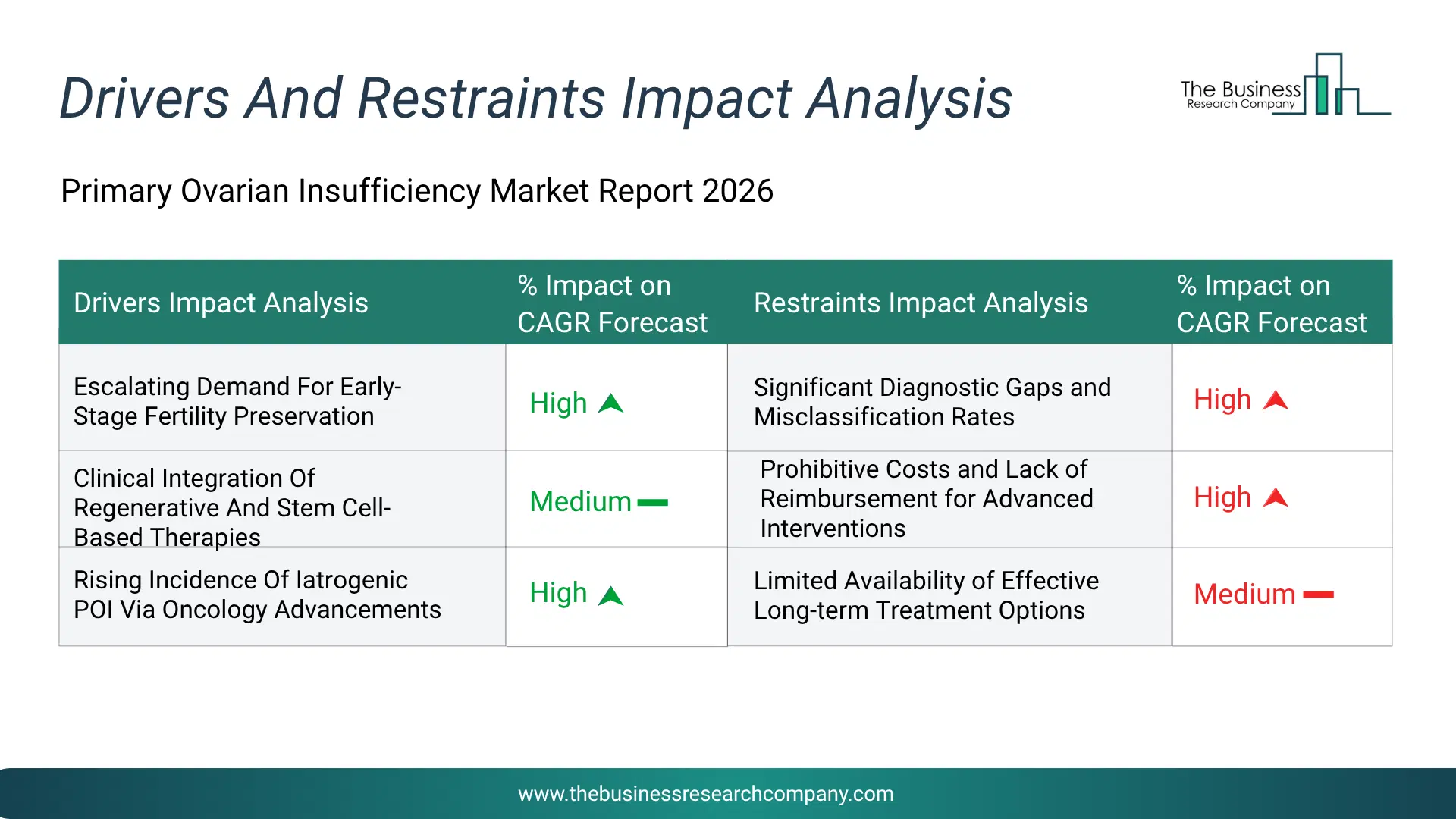
Infographic Chart Showing Key Market Drivers Analysis And Restraints For Primary Ovarian Insufficiency Market
The chart presents an impact analysis of key drivers and restraints, quantifying their relative influence on the market's growth rate and helping assess the balance between growth enablers and limiting factors. This chart offers a high-level perspective; the full report contains more detailed insights.
How Will The Drivers Impact Growth In The Global Primary Ovarian Insufficiency Market?
• Growing Healthcare Expenditure on Women’s Health (Medium) – During the forecast period, the growing healthcare expenditure on women’s health will become a key driver of growth in the primary ovarian insufficiency market by 2030. as governments, insurers, and private healthcare providers channel greater funding toward women’s health priorities, access to early diagnosis, advanced testing, long-term hormone therapy, fertility preservation, and comprehensive reproductive care expands. increased investment enhances availability of specialized endocrinology and reproductive services, allowing more women to receive timely and accurate evaluation for poi and related ovarian disorders. additionally, higher spending accelerates the adoption of modern technologies, including advanced hormone assays, genetic screening tools, and personalized treatment-planning solutions. as a result, the growing healthcare expenditure on women’s health is anticipated to contributing to a 1.5% annual growth in the market. • Increasing Incidence of Lifestyle-Related Disorders (Medium) – During the forecast period, the rising prevalence of lifestyle-related disorders is expected to significantly drive the growth of the primary ovarian insufficiency market. These conditions can impair hormonal balance, accelerate reproductive aging, and increase vulnerability to early ovarian dysfunction. As more women experience menstrual irregularities, reduced ovarian reserve, and broader reproductive challenges linked to lifestyle factors, demand for medical assessment and treatment will grow. This will boost the market for ovarian-reserve testing, hormonal evaluations, fertility counseling, and targeted therapeutic interventions aimed at maintaining hormonal health and supporting fertility potential. Moreover, increasing clinical awareness of lifestyle influences on ovarian insufficiency will encourage healthcare providers to adopt more holistic care approaches, stimulating growth across diagnostic, treatment, and preventive segments of the POI market. The increasing incidence of lifestyle-related disorders growth contribution during the forecast period in 2025 is 1.3%. • Improved Access to Specialized Women’s Healthcare Services (Low) – During the forecast period, the improved access to specialized women’s healthcare services as a major factor driving the expansion of the primary ovarian insufficiency market by 2030. with more clinics offering advanced diagnostics and skilled specialists, women benefit from reduced wait times, streamlined referrals, and consistent, high-quality care. this greater accessibility encourages earlier evaluation for menstrual disturbances, fertility issues, and premature menopausal symptoms, increasing poi detection rates and enabling timely treatment. enhanced access also supports wider use of fertility-preservation techniques, hormone-replacement therapies, and personalized long-term management strategies for poi patients. therefore, improved access to specialized women’s healthcare is projected to contributing to a 1.0% annual growth in the market. • Expansion of Awareness and Education Campaigns (Low) – During the forecast period, expanding awareness and education campaigns are expected to significantly drive the growth of the primary ovarian insufficiency market. As public understanding improves, more women will recognize early signs such as irregular menstruation, premature menopausal symptoms, and fertility difficulties, leading them to seek medical evaluation sooner. Targeted educational initiatives for both patients and healthcare professionals will help shorten diagnostic timelines, promote routine ovarian-reserve testing, and increase referrals to reproductive endocrinology specialists. Greater awareness also reduces stigma around early ovarian decline and encourages earlier adoption of fertility counseling, hormone therapy, and genetic screening. As knowledge of POI becomes more widespread, demand for advanced diagnostics, individualized treatment pathways, and ongoing hormonal support will rise, boosting market expansion. The expansion of awareness and education campaigns growth contribution during the forecast period in 2025 is 0.8%.How Will The Restraints Impact Growth In The Global Primary Ovarian Insufficiency Market?
• Limited Awareness and Delayed Diagnosis (Medium) – During the forecast period, limited awareness and delayed diagnosis are expected to restrain the growth of the primary ovarian insufficiency market during the forecast period. when women and healthcare providers fail to recognize early symptoms, fewer patients undergo timely ovarian-reserve testing, hormonal assessments, or fertility-preservation consultations, reducing entry into structured poi care pathways. these delays also contribute to poorer clinical outcomes, diminishing the effectiveness of hormone replacement therapy, fertility interventions, and long-term management strategies. as long as awareness remains low and diagnosis occurs later than optimal, the demand for poi-related diagnostics, therapeutics, and comprehensive care solutions will remain substantially under-realized. growth affected by limited awareness and delayed diagnosis during the forecast period in 2025 is -1.3%. • Lack of Standardized Clinical Guidelines (Medium) – During the forecast period, lack of standardized clinical guidelines is expected to limit the growth of the primary ovarian insufficiency market during the forecast period. without consistent protocols, care quality varies widely, resulting in fragmented treatment pathways and uneven uptake of advanced diagnostics or emerging therapies. the absence of clear guidance also slows the integration of innovations such as genetic testing, novel biomarkers, and regenerative treatment options, as clinicians may be reluctant to adopt them without formal recommendations. this uncertainty reduces investment incentives for poi-focused advancements and hinders broad implementation of evidence-based care. ultimately, inconsistent clinical practices weaken patient trust, delay accurate diagnosis, and constrain growth across diagnostic, therapeutic, and fertility-related segments of the poi market. growth affected by lack of standardized clinical guidelines during the forecast period in 2025 is -0.6% • Impact of Trade War and Tariff (Low) – During the forecast period, the impact of trade wars and tariffs is expected to restrain the growth of the primary ovarian insufficiency market during the forecast period. tariffs on pharmaceuticals, medical devices, laboratory reagents, and biotech inputs increase production expenses and drive up costs for both healthcare providers and patients. these added financial burdens may compel clinics to postpone equipment upgrades, reduce purchases of advanced diagnostic technologies, or transfer higher treatment costs to patients, further limiting access. trade-related supply chain disruptions can also create shortages of hormone-replacement therapies, diagnostic kits, and fertility medications. this instability erodes patient confidence, disrupts treatment continuity, and challenges healthcare providers’ ability to maintain reliable, high-quality poi care. growth affected by trade war and tariffs across regions during the forecast period in 2025 is -0.2%.Key Players In The Global Primary Ovarian Insufficiency Market
Major companies operating in the primary ovarian insufficiency market are Mayo Clinic, Johns Hopkins Medicine, Baptist Health, Ferring Pharmaceuticals AS, PreventionGenetics LLC, The Fertility Partnership UK, Celmatix Inc, IVIRMA Global, Bioscience Institute SpA, Sparsh Diagnostics Pvt Ltd, Bristol Menopause Clinic, Indira IVF Hospital Private Limited, Lawley Pharmaceuticals Pty Ltd, OvaScience Inc, Merck KGaA, Roche Holding AG, Pfizer Inc, Novartis AG, AbbVie Inc, Eli Lilly And Company, Bayer AG, Takeda Pharmaceutical Company Limited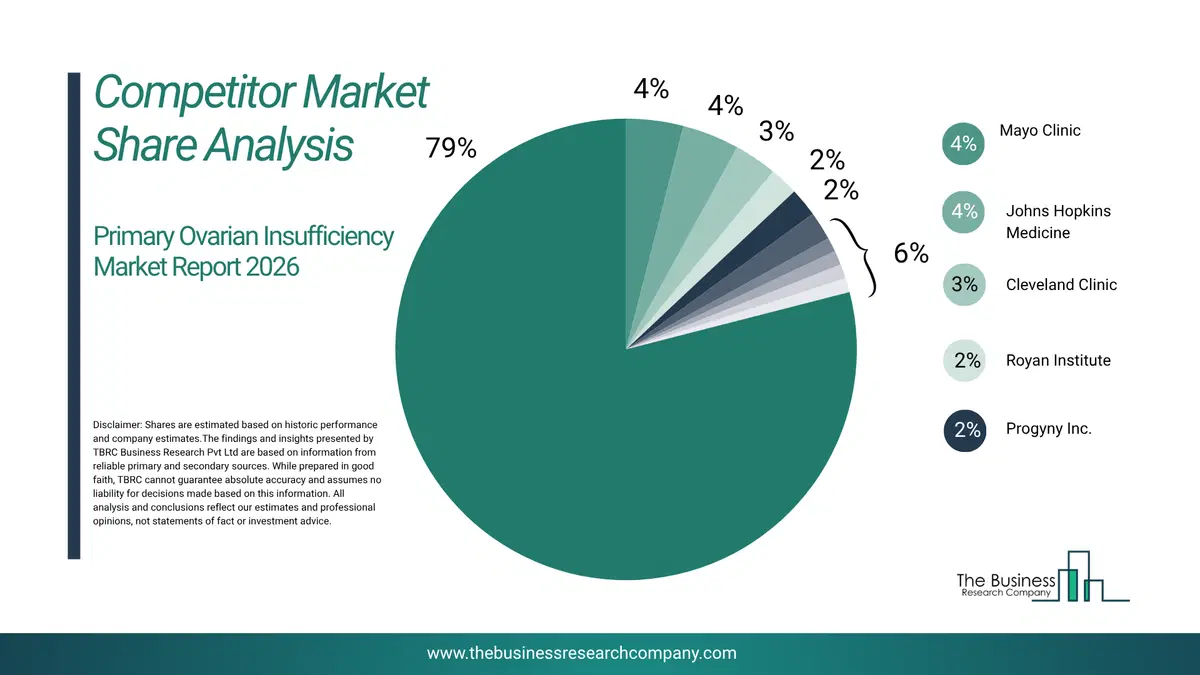
This chart is for illustrative purposes; the full report includes a detailed competitor analysis and comprehensive overview of the top 10 companies in the market.
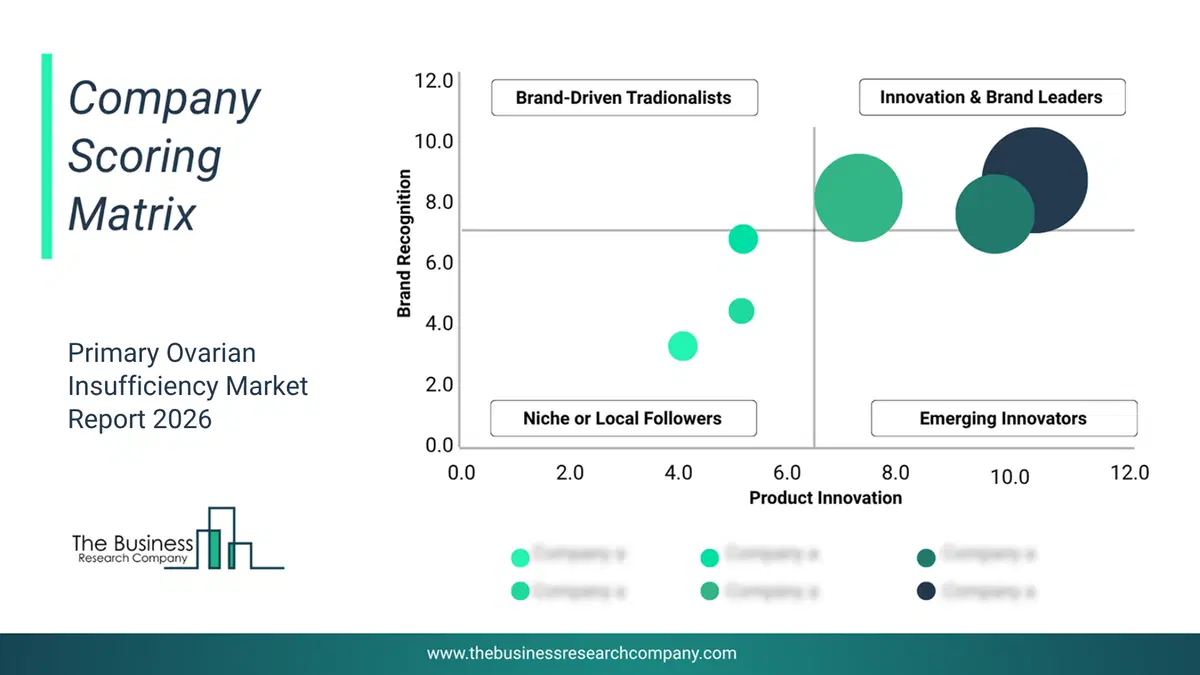
This chart maps companies by product innovation and brand strength, with bubble size indicating relative revenue, helping identify market leaders, challengers, and niche players. This is an illustrative chart; the full report provides a complete and accurate competitive analysis.
What Are Latest Mergers And Acquisitions In The Primary Ovarian Insufficiency Market?
In July 2023, EQT Private Capital Asia, a China-based investment company, acquired a 60% stake in Indira IVF Hospital Pvt. Ltd. for $1.1 billion. With this acquisition, EQT Private Capital Asia aims to expand Indira IVF’s market leadership across India and Asia, enhance its technological capabilities, and scale operations to capitalize on the rapidly growing fertility services market. Indira IVF Hospital Pvt. Ltd. is an India-based fertility clinic that provides specialized diagnosis and treatment for primary ovarian insufficiency (POI), also known as premature ovarian failure (POF).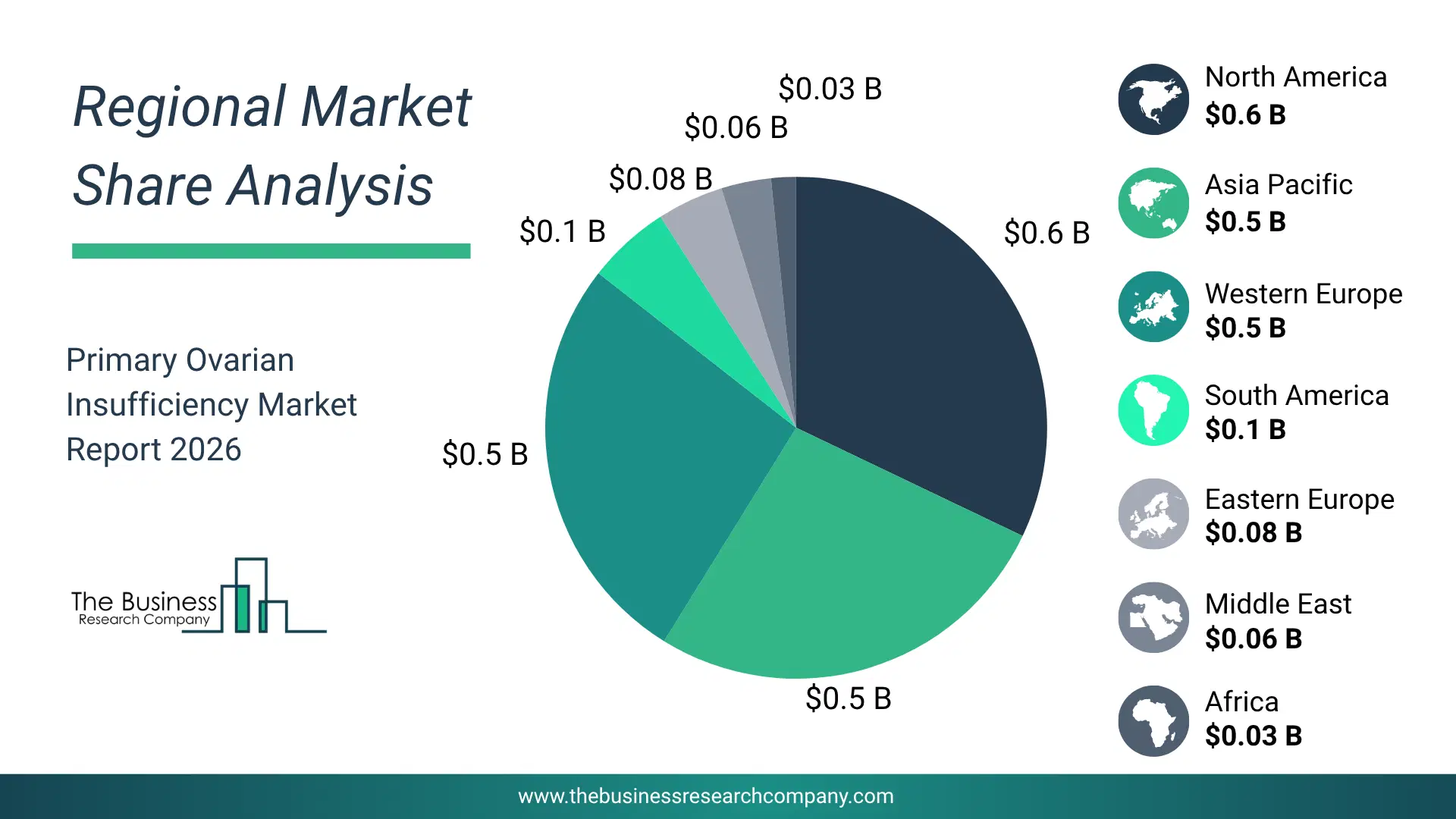
Regional Outlook
North America was the largest region in the primary ovarian insufficiency market in 2025. The regions covered in this market report are Asia-Pacific, South East Asia, Western Europe, Eastern Europe, North America, South America, Middle East, Africa. The countries covered in this market report are Australia, Brazil, China, France, Germany, India, Indonesia, Japan, Taiwan, Russia, South Korea, UK, USA, Canada, Italy, Spain.What Defines the Primary Ovarian Insufficiency Market?
The primary ovarian insufficiency market consists of revenues earned by entities by providing services such as fertility treatments, diagnostic and genetic testing services, osteoporosis management services, and endocrinology consultation services. The market value includes the value of related goods sold by the service provider or included within the service offering. The primary ovarian insufficiency market also consists of sales of products including genetic testing kits, bone health supplements, psychological and supportive care products, testosterone therapy, and antioxidant supplements. Values in this market are ‘factory gate’ values, that is, the value of goods sold by the manufacturers or creators of the goods, whether to other entities (including downstream manufacturers, wholesalers, distributors, and retailers) or directly to end customers. The value of goods in this market includes related services sold by the creators of the goods.How is Market Value Defined and Measured?
The market value is defined as the revenues that enterprises gain from the sale of goods and/or services within the specified market and geography through sales, grants, or donations in terms of the currency (in USD unless otherwise specified). The revenues for a specified geography are consumption values that are revenues generated by organizations in the specified geography within the market, irrespective of where they are produced. It does not include revenues from resales along the supply chain, either further along the supply chain or as part of other products.
This chart presents market attractiveness based on a quantitative evaluation of growth, competition, strategic alignment, and risk, offering a clear view of opportunity areas for decision-making. This chart is for illustrative purposes; the full report contains the complete analysis.

This chart highlights the Total Addressable Market (TAM) by estimating the maximum revenue opportunity using an assumption-driven approach, supporting strategic planning and opportunity sizing across markets. The chart is illustrative; the full report provides a more comprehensive analysis.
What Key Data and Analysis Are Included in the Primary Ovarian Insufficiency Market Report 2026?
The primary ovarian insufficiency market research report is one of a series of new reports from The Business Research Company that provides market statistics, including industry global market size, regional shares, competitors with the market share, detailed market segments, market trends and opportunities, and any further data you may need to thrive in the primary ovarian insufficiency industry. The market research report delivers a complete perspective of everything you need, with an in-depth analysis of the current and future state of the industry.Primary Ovarian Insufficiency Market Report Forecast Analysis
| Report Attribute | Details |
|---|---|
| Market Size Value In 2026 | $1.3 billion |
| Revenue Forecast In 2030 | $1.88 billion |
| Growth Rate | CAGR of 10.0% from 2026 to 2030 |
| Base Year For Estimation | 2025 |
| Actual Estimates/Historical Data | 2020-2025 |
| Forecast Period | 2026 - 2030 - 2035 |
| Market Representation | Revenue in USD Billion and CAGR from 2026 to 2030 |
| Segments Covered | Type, Diagnosis Method, Application, End-Users |
| Regional Scope | Asia-Pacific, Western Europe, Eastern Europe, North America, South America, Middle East, Africa |
| Country Scope | The countries covered in the report are Australia, Brazil, China, France, Germany, India, Indonesia, Japan, Taiwan, Russia, South Korea, UK, USA, Canada, Italy, Spain. |
| Key Companies Profiled | Mayo Clinic, Johns Hopkins Medicine, Baptist Health, Ferring Pharmaceuticals AS, PreventionGenetics LLC, The Fertility Partnership UK, Celmatix Inc, IVIRMA Global, Bioscience Institute SpA, Sparsh Diagnostics Pvt Ltd, Bristol Menopause Clinic, Indira IVF Hospital Private Limited, Lawley Pharmaceuticals Pty Ltd, OvaScience Inc, Merck KGaA, Roche Holding AG, Pfizer Inc, Novartis AG, AbbVie Inc, Eli Lilly And Company, Bayer AG, Takeda Pharmaceutical Company Limited |
| Customization Scope | Request for Customization |
| Pricing And Purchase Options | Explore Purchase Options |