
Proanthocyanidins Market Report 2026
Global Outlook – By Type (Type A, Type B), By Source (Grape Seed, Pine Bark, Bilberry, Cranberry, Horse Chestnut, Blueberry), By Application (Dietary Supplement, Functional Food And Beverage, Personal Care And Cosmetics, Pharmaceutical, Animal Feed, Other Applications), By Distribution Channel (Drug And Pharmacy Stores, Convenience Stores, Modern Trade, Online Retail), By End User (Adults, Children, Seniors) – Market Size, Trends, Strategies, and Forecast to 2030
Proanthocyanidins Market Overview
• Proanthocyanidins market size has reached to $2.85 billion in 2025 • Expected to grow to $4.66 billion in 2030 at a compound annual growth rate (CAGR) of 10.6% • Growth Driver: Proanthocyanidin Market Surge Fueled By Rising Prevalence Of Lifestyle-Related Diseases • Market Trend: Innovative Launches Redefines Proanthocyanidins Market • North America was the largest region in 2025 and Asia-Pacific is the fastest growing region.What Is Covered Under Proanthocyanidins Market?
Proanthocyanidin is a group of polyphenols present in different types of plants. It helps prevent sun damage to the body, enhancing vision, enhancing flexibility in joints, arteries, and bodily tissues such as the heart, and enhancing blood circulation by fortifying capillaries, routes, and veins. The main types of proanthocyanidins are type A and type B. Type A proanthocyanidin refers to the type that has a greater percentage of A-type connections and also contains B-type bonds. The various sources include grape seed, pine bark, bilberry, cranberry, horse chestnut, and blueberry which are used in various applications such as dietary supplements, functional food and beverage, personal care and cosmetics, pharmaceutical, animal feed, others and are distributed through various distribution channels such as drug and pharmacy stores, convenience stores, modern trade, online retail. These are also used by various end users such as adults, children, and seniors.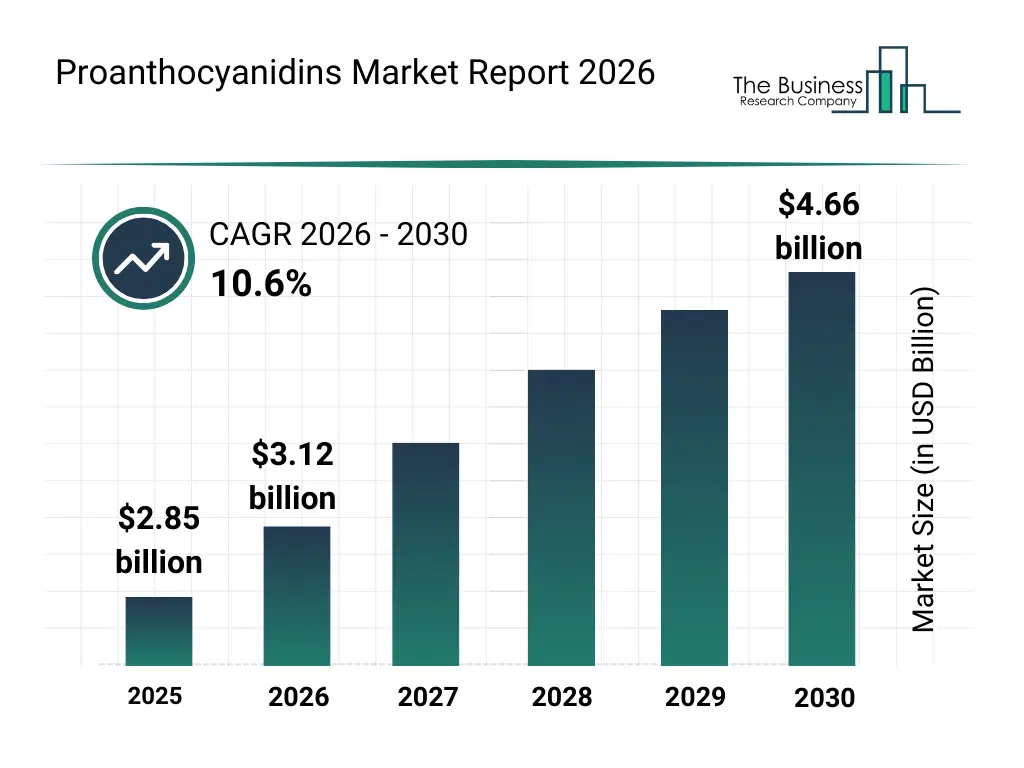
What Is The Proanthocyanidins Market Size and Share 2026?
The proanthocyanidins market size has grown strongly in recent years. It will grow from $2.85 billion in 2025 to $3.12 billion in 2026 at a compound annual growth rate (CAGR) of 9.4%. The growth in the historic period can be attributed to rising consumer awareness of antioxidant benefits, increased use in cardiovascular health products, expansion of herbal supplement markets, availability of diverse botanical sources, growing use in nutraceutical formulations.What Is The Proanthocyanidins Market Growth Forecast?
The proanthocyanidins market size is expected to see rapid growth in the next few years. It will grow to $4.66 billion in 2030 at a compound annual growth rate (CAGR) of 10.6%. The growth in the forecast period can be attributed to increasing demand for plant-based health supplements, rising integration into functional beverages, expansion of anti-aging personal care products, growing investments in natural ingredient extraction, increasing scientific validation of polyphenol benefits. Major trends in the forecast period include growing demand for natural antioxidant ingredients, rising use in dietary supplements, expansion of functional food applications, increasing adoption in personal care products, enhanced focus on plant-based bioactives.
Global Proanthocyanidins Market Segmentation
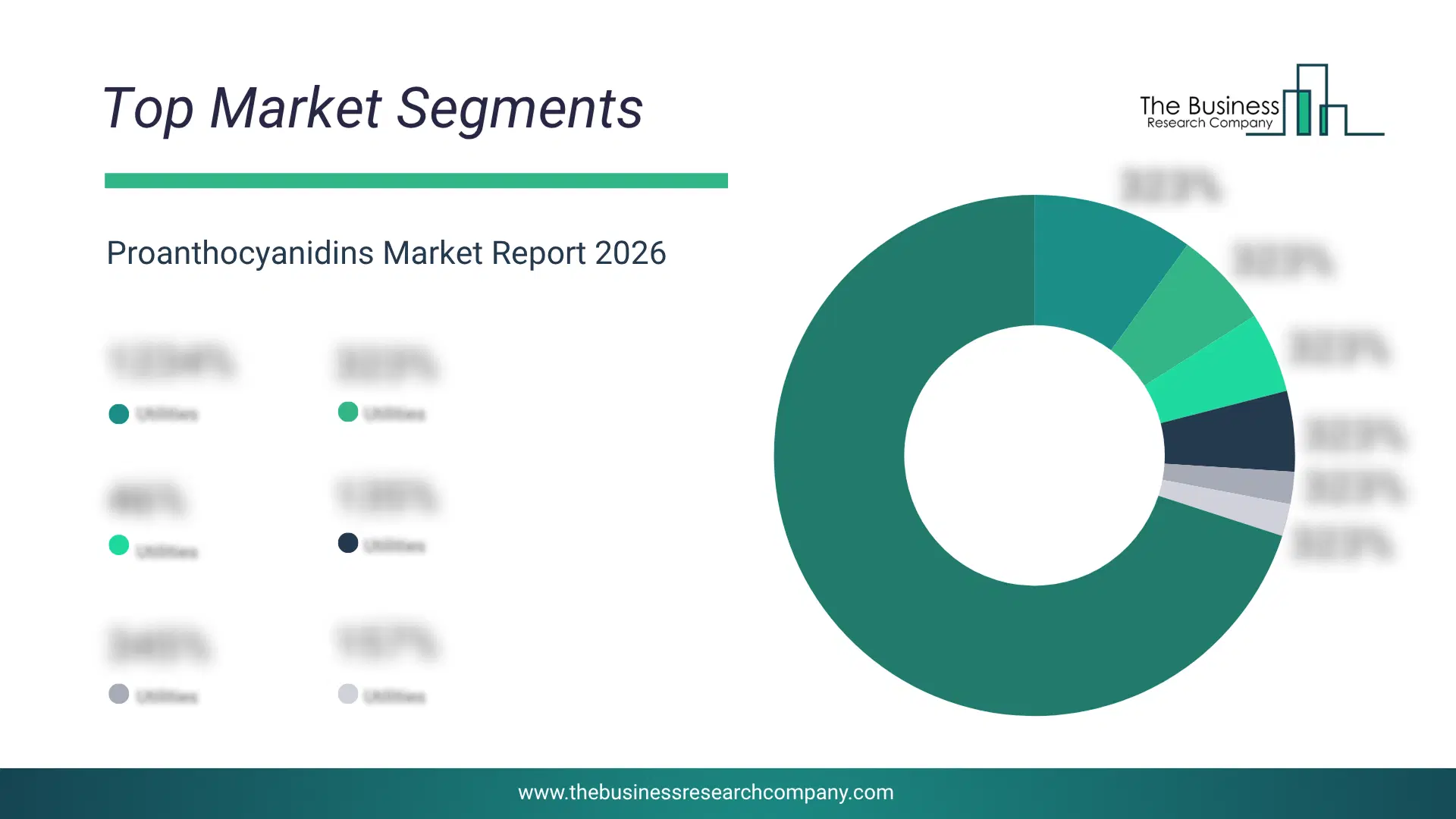
1) By Type: Type A, Type B 2) By Source: Grape Seed, Pine Bark, Bilberry, Cranberry, Horse Chestnut, Blueberry 3) By Application: Dietary Supplement, Functional Food And Beverage, Personal Care And Cosmetics, Pharmaceutical, Animal Feed, Other Applications 4) By Distribution Channel: Drug And Pharmacy Stores, Convenience Stores, Modern Trade, Online Retail 5) By End User: Adults, Children, Seniors Subsegments: 1) By Type A: Found Primarily In Cranberries, Known For Stronger Anti-Adhesive Properties Against Bacteria 2) By Type B: Found In Foods Like Grapes, Apples, And Cocoa, More Commonly Available And Known For Antioxidant And Cardiovascular BenefitsWhat Is The Driver Of The Proanthocyanidins Market?
The increase in the prevalence of lifestyle-related diseases is expected to propel the growth of the proanthocyanidin market going forward. Lifestyle diseases refer to conditions including cardiovascular disease (CVD), stroke, diabetes, and cancer types strongly correlated with lifestyle decisions. Proanthocyanidin safeguards the heart and circulatory system by acting as an antioxidant to prevent nitrosamines from developing. Hence, the prevalence of lifestyle-related diseases increases the demand for proanthocyanidin market. For instance, in March 2024, according to the National Library of Medicine, a US-based medical library, projections suggest that the number of diabetes cases will rise to 783 million by 2045. Therefore, the increase in the prevalence of lifestyle-related diseases is driving the growth of the proanthocyanidin industry.Key Players In The Global Proanthocyanidins Market
Major companies operating in the proanthocyanidins market are Amway Corp., Herbalife Nutrition Ltd., Ocean Spray Cranberries Inc., Nature's Way Limited, Naturex SA, NOW Foods Private Limited, Swanson Group, Nexira SAS, Natrol LLC, Life Extension, Indena S.p.A., Nutramax Laboratories Private Limited, Jarrow Formulas Inc., Gaia Herbs Inc., Fruit d'Or Inc., Solgar Vitamin & Herb Company Inc., Bluebonnet Nutrition Corporation, Doctor's Best Inc., Reserveage Organics, Eevia Health Oy, Natac Group, Himalaya Food International Ltd., Douglas Laboratories Corp., Biotivia LLC, Puritan's Pride Inc., Skin Actives Scientific LLC, Source Naturals Inc., Terry Naturally, Advanced Functional Nutrition Inc., Xian Yuensun Biological Technology Co. Ltd.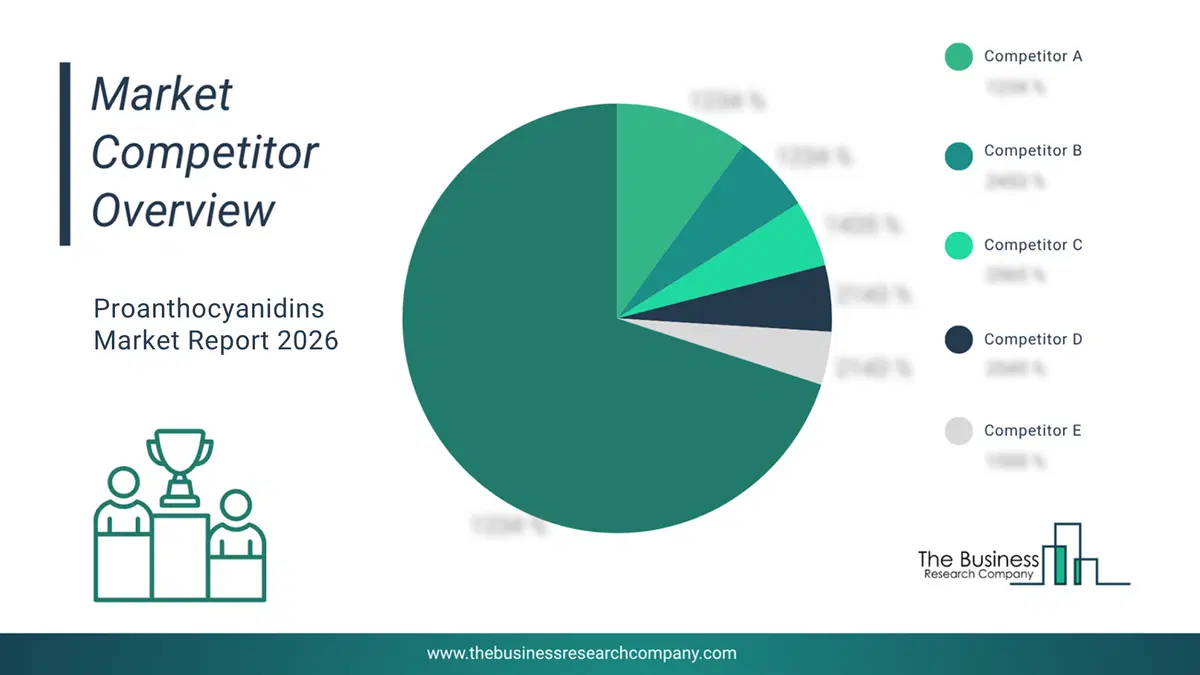
This chart is for illustrative purposes; the full report includes a detailed competitor analysis and comprehensive overview of the top 10 companies in the market.
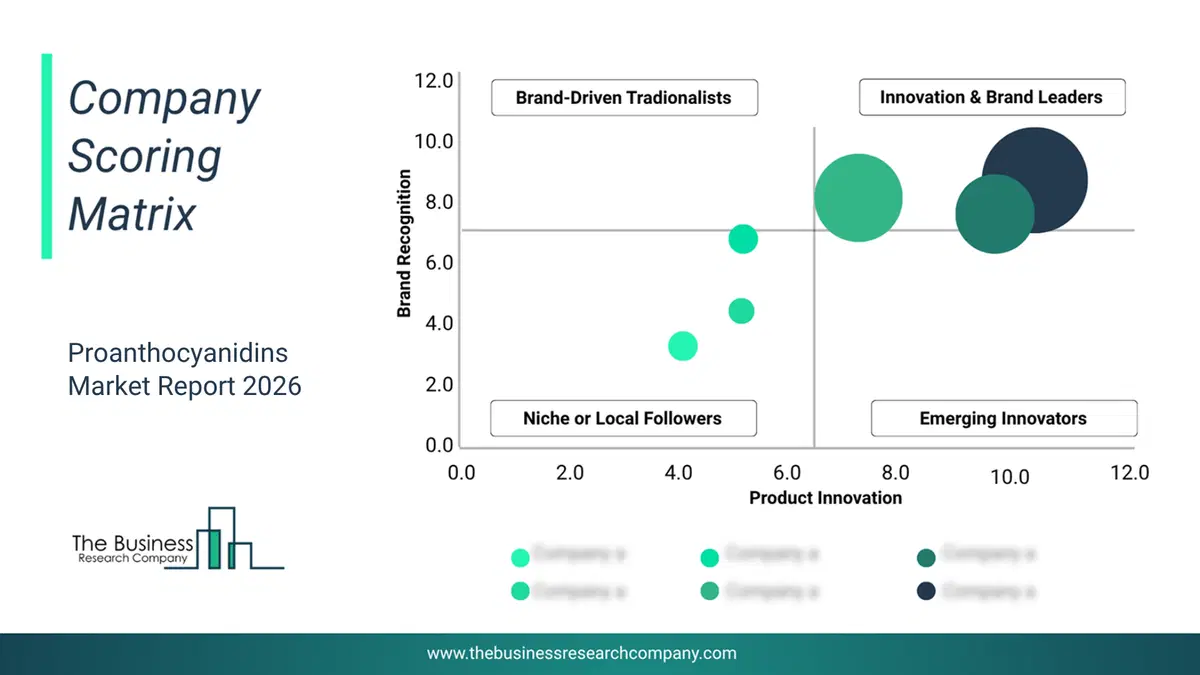
This chart maps companies by product innovation and brand strength, with bubble size indicating relative revenue, helping identify market leaders, challengers, and niche players. This is an illustrative chart; the full report provides a complete and accurate competitive analysis.
Global Proanthocyanidins Market Trends and Insights
Major companies operating in the proanthocyanidins market are focusing on developing product innovations to enhance health benefits and meet growing consumer demand for functional supplements. For instance, in January 2024, Theralogix, a Maryland-based nutritional supplements provider, launched Mannose One, a dietary supplement designed to support urinary tract health and prevent UTIs. Mannose One delivers 2,000 mg of d-mannose per serving, a research-backed dosage that helps inhibit bacterial adhesion and flush bacteria from the urinary tract. By introducing this scientifically formulated supplement, Theralogix aims to strengthen its product portfolio, address specific health needs, and maintain its competitive position in the proanthocyanidins market.What Are Latest Mergers And Acquisitions In The Proanthocyanidins Market?
In February 2023, Groupe Berkem., a France-based company that focuses on integrating plant-based chemistry into various sectors, including health, beauty, and nutrition, acquired i.Bioceuticals for an undisclosed amount. This strategic move is designed to accelerate Groupe Berkem's internationalization efforts while remaining aligned with its core mission of offering sustainable, bio-based solutions. i.Bioceuticals. is a US-based company that serves as the exclusive North American distributor of nutritional supplements from the Dutch company INC (International Nutrition Company) and focuses on providing antioxidant active ingredients to the market.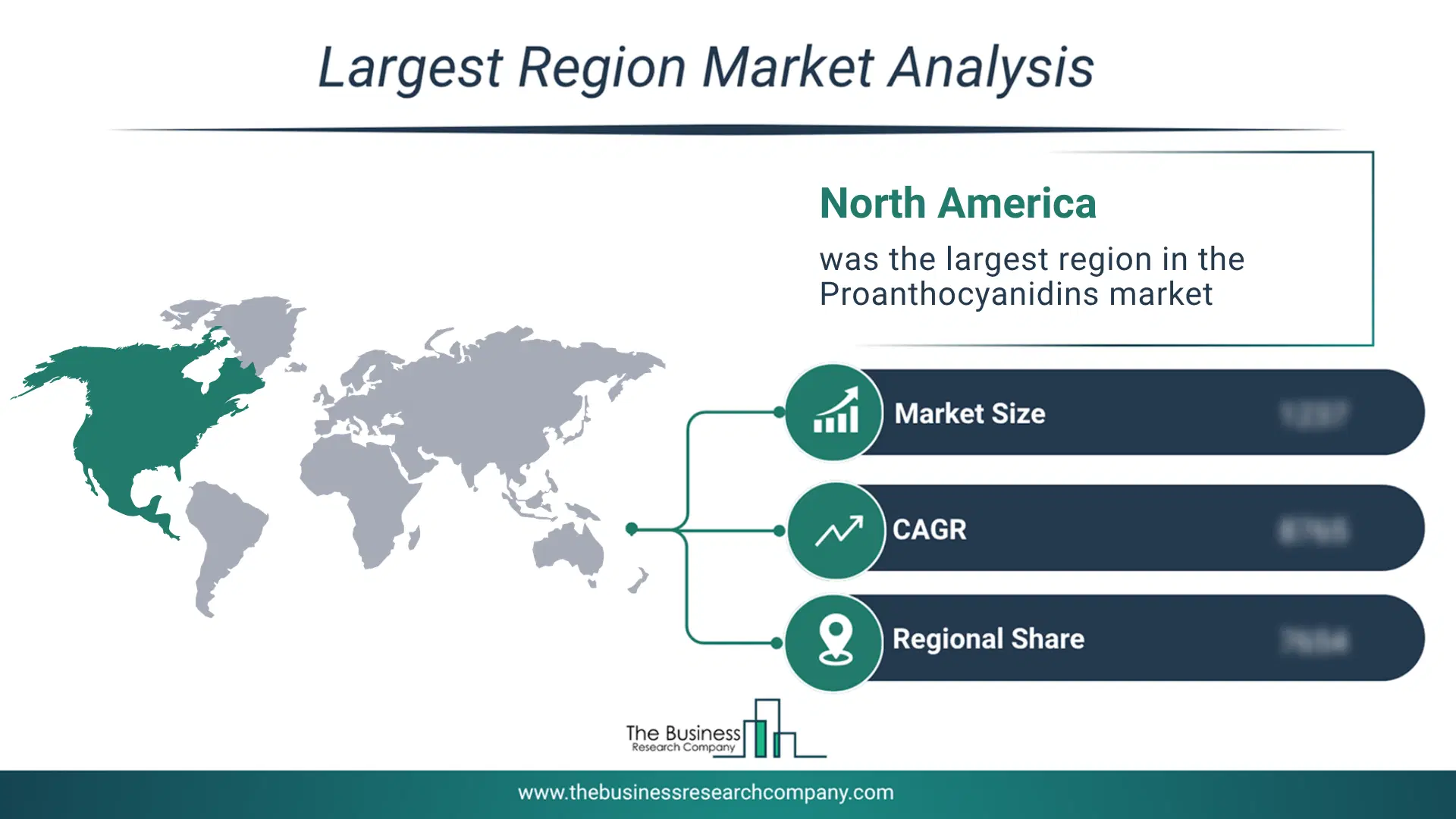
Regional Outlook
North America was the largest region in the proanthocyanidins market in 2025. Asia Pacific is expected to be the fastest-growing region in the forecast period. The regions covered in this market report are Asia-Pacific, South East Asia, Western Europe, Eastern Europe, North America, South America, Middle East and Africa. The countries covered in this market report are Australia, Brazil, China, France, Germany, India, Indonesia, Japan, Taiwan, Russia, South Korea, UK, USA, Italy, Spain, CanadaWhat Defines the Proanthocyanidins Market?
The proanthocyanidin market consists of sales of oligomeric proanthocyanidins, flavonoids, polyphenols, condensed tannins. Values in this market are ‘factory gate’ values, that is the value of goods sold by the manufacturers or creators of the goods, whether to other entities (including downstream manufacturers, wholesalers, distributors, and retailers) or directly to end customers. The value of goods in this market includes related services sold by the creators of the goods.How is Market Value Defined and Measured?
The market value is defined as the revenues that enterprises gain from the sale of goods and/or services within the specified market and geography through sales, grants, or donations in terms of the currency (in USD unless otherwise specified). The revenues for a specified geography are consumption values that are revenues generated by organizations in the specified geography within the market, irrespective of where they are produced. It does not include revenues from resales along the supply chain, either further along the supply chain or as part of other products.
This chart presents market attractiveness based on a quantitative evaluation of growth, competition, strategic alignment, and risk, offering a clear view of opportunity areas for decision-making. This chart is for illustrative purposes; the full report contains the complete analysis.

This chart highlights the Total Addressable Market (TAM) by estimating the maximum revenue opportunity using an assumption-driven approach, supporting strategic planning and opportunity sizing across markets. The chart is illustrative; the full report provides a more comprehensive analysis.
What Key Data and Analysis Are Included in the Proanthocyanidins Market Report 2026?
The proanthocyanidins market research report is one of a series of new reports from The Business Research Company that provides market statistics, including industry global market size, regional shares, competitors with the market share, detailed market segments, market trends and opportunities, and any further data you may need to thrive in the proanthocyanidins industry. The market research report delivers a complete perspective of everything you need, with an in-depth analysis of the current and future state of the industry.Proanthocyanidins Market Report Forecast Analysis
| Report Attribute | Details |
|---|---|
| Market Size Value In 2026 | $3.12 billion |
| Revenue Forecast In 2030 | $4.66 billion |
| Growth Rate | CAGR of 9.4% from 2026 to 2030 |
| Base Year For Estimation | 2025 |
| Actual Estimates/Historical Data | 2020-2025 |
| Forecast Period | 2026 - 2030 |
| Market Representation | Revenue in USD Billion and CAGR from 2026 to 2030 |
| Segments Covered | Type, Source, Application, Distribution Channel, End User |
| Regional Scope | Asia-Pacific, Western Europe, Eastern Europe, North America, South America, Middle East, Africa |
| Country Scope | The countries covered in the report are Australia, Brazil, China, France, Germany, India, Indonesia, Japan, Taiwan, Russia, South Korea, UK, USA, Canada, Italy, Spain. |
| Key Companies Profiled | Amway Corp., Herbalife Nutrition Ltd., Ocean Spray Cranberries Inc., Nature's Way Limited, Naturex SA, NOW Foods Private Limited, Swanson Group, Nexira SAS, Natrol LLC, Life Extension, Indena S.p.A., Nutramax Laboratories Private Limited, Jarrow Formulas Inc., Gaia Herbs Inc., Fruit d'Or Inc., Solgar Vitamin & Herb Company Inc., Bluebonnet Nutrition Corporation, Doctor's Best Inc., Reserveage Organics, Eevia Health Oy, Natac Group, Himalaya Food International Ltd., Douglas Laboratories Corp., Biotivia LLC, Puritan's Pride Inc., Skin Actives Scientific LLC, Source Naturals Inc., Terry Naturally, Advanced Functional Nutrition Inc., Xian Yuensun Biological Technology Co. Ltd. |
| Customization Scope | Request for Customization |
| Pricing And Purchase Options | Explore Purchase Options |