
Propylene Glycol Market Report 2026
Global Outlook – By Source (Petroleum-Based, Bio-Based), By Grade (Industrial Grade, Pharmaceutical Grade), By Application (Animal Feed, Inks, Lacquers, Tobacco Humectants, Varnishes), By End User (Building And Construction, Consumer Goods, Cosmetics And Personal Care, Food And Beverages, Paint And Coatings, Pharmaceuticals, Textile Industries, Tobacco, Transportation) – Market Size, Trends, Strategies, and Forecast to 2030
Propylene Glycol Market Overview
• Propylene Glycol market size has reached to $4.94 billion in 2025 • Expected to grow to $6.9 billion in 2030 at a compound annual growth rate (CAGR) of 6.8% • Growth Driver: Propylene Glycol Market Surges As Cosmetic And Personal Care Industries Drive Demand • Market Trend: Hydrogen Peroxide Sector Forge Partnerships For Propylene Glycol Synthesis • Asia-Pacific was the largest region and fastest growing region.Market Gains By 2030 – Top Opportunities By Segment
Market Gain identifies the most promising market opportunities by highlighting the segments or products expected to generate the highest incremental revenue growth over the next five years.
What Is Covered Under Propylene Glycol Market?
Propylene glycol is a water-absorbing synthetic liquid. Propylene glycol is typically used in the production of polyester compounds and as a base in deicing solutions. It works as an antifreeze in various sectors to avoid leakage that may result in propylene glycol getting in contact with food. The main sources of propylene glycol are petroleum-based and bio-based. Bio-based polypropylene is a polymer created from natural resources such as corn, sugar cane, vegetable oil, and other biomass. The various grades include industrial grade and pharmaceutical grade that are applied in animal feed, inks, lacquers, tobacco humectants, and varnishes. These are used by various end users, such as building and construction, consumer goods (cosmetics and personal care), electronics, food and beverages, paint and coatings, pharmaceuticals, the textile industry, tobacco, and transportation.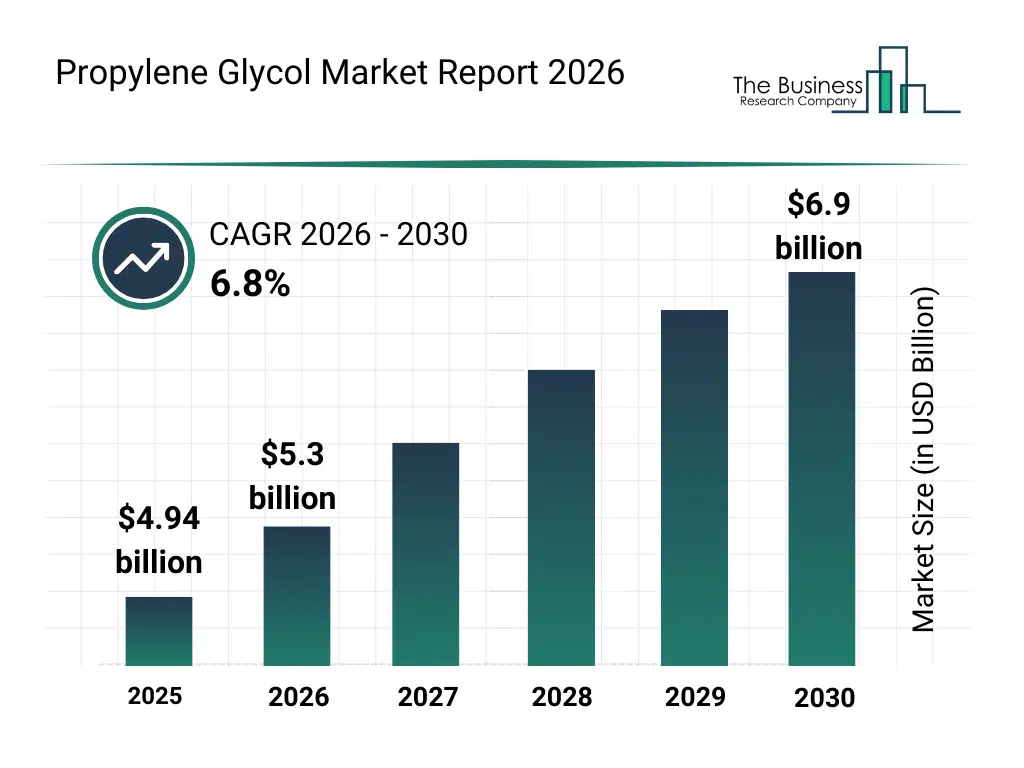
What Is The Propylene Glycol Market Size and Share 2026?
The propylene glycol market size has grown strongly in recent years. It will grow from $4.94 billion in 2025 to $5.3 billion in 2026 at a compound annual growth rate (CAGR) of 7.3%. The growth in the historic period can be attributed to expansion of polyester resin production, growth in food and beverage processing, increasing use in antifreeze formulations, rising demand from personal care products, availability of petroleum-based feedstocks.What Is The Propylene Glycol Market Growth Forecast?
The propylene glycol market size is expected to see strong growth in the next few years. It will grow to $6.9 billion in 2030 at a compound annual growth rate (CAGR) of 6.8%. The growth in the forecast period can be attributed to increasing shift toward bio-based chemicals, rising pharmaceutical manufacturing volumes, expansion of cold-chain logistics, growing demand for eco-friendly deicing solutions, increasing applications in electronics cooling fluids. Major trends in the forecast period include rising adoption of bio-based propylene glycol, increasing use in food-safe antifreeze applications, growing demand from pharmaceutical and cosmetic formulations, expansion of deicing applications in transportation, enhanced focus on low-toxicity chemical solutions.
Global Propylene Glycol Market Segmentation
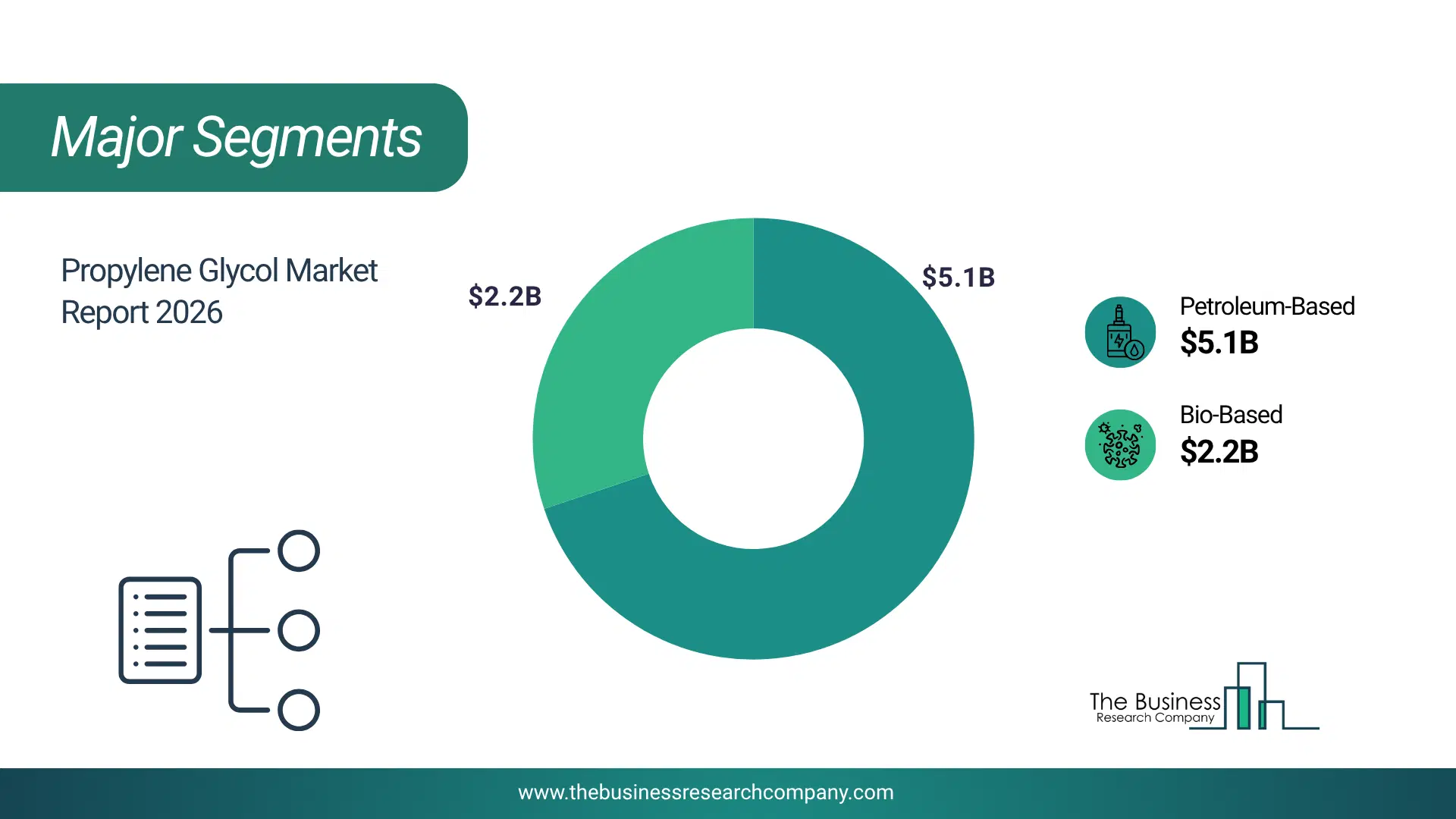
1) By Source: Petroleum-Based, Bio-Based 2) By Grade: Industrial Grade, Pharmaceutical Grade 3) By Application: Animal Feed, Inks, Lacquers, Tobacco Humectants, Varnishes 4) By End User: Building And Construction, Consumer Goods, Cosmetics And Personal Care, Food And Beverages, Paint And Coatings, Pharmaceuticals, Textile Industries, Tobacco, Transportation Subsegments: 1) By Petroleum-Based: Conventional Propylene Glycol, High Purity Propylene Glycol 2) By Bio-Based: Glycerol-Based Propylene Glycol, Fermentation-Based Propylene Glycol The top segments in the propylene glycol market will be: • Petroleum-Based will reach $5.01 billion by 2030. • Bio-Based will reach $2.1 billion by 2030.What Is The Driver Of The Propylene Glycol Market?
The expansion of the cosmetic and personal care industries is expected to propel the growth of the propylene glycol market going forward. The cosmetic and personal care industry refers to businesses that manufacture skincare, hair care, makeup, fragrances, toiletries, and personal hygiene products with the intention of improving appearance and preserving human health. Propylene glycol is used as a humectant and solvent in various cosmetic and personal care products, including skin care, hair care, and body care products due to its ability to retain moisture, improve texture, and enhance the stability of formulations. For instance, in August 2023, according to Circana, Inc., a US-based media company, sales of prestige beauty products in the US reached $14 billion in the first half of 2023, a 15% rise over the same period in 2022. On the other hand, the mass beauty market generated $28 billion and saw 9% growth. Therefore, the expansion of the cosmetic and personal care industries is driving the growth of the propylene glycol industry.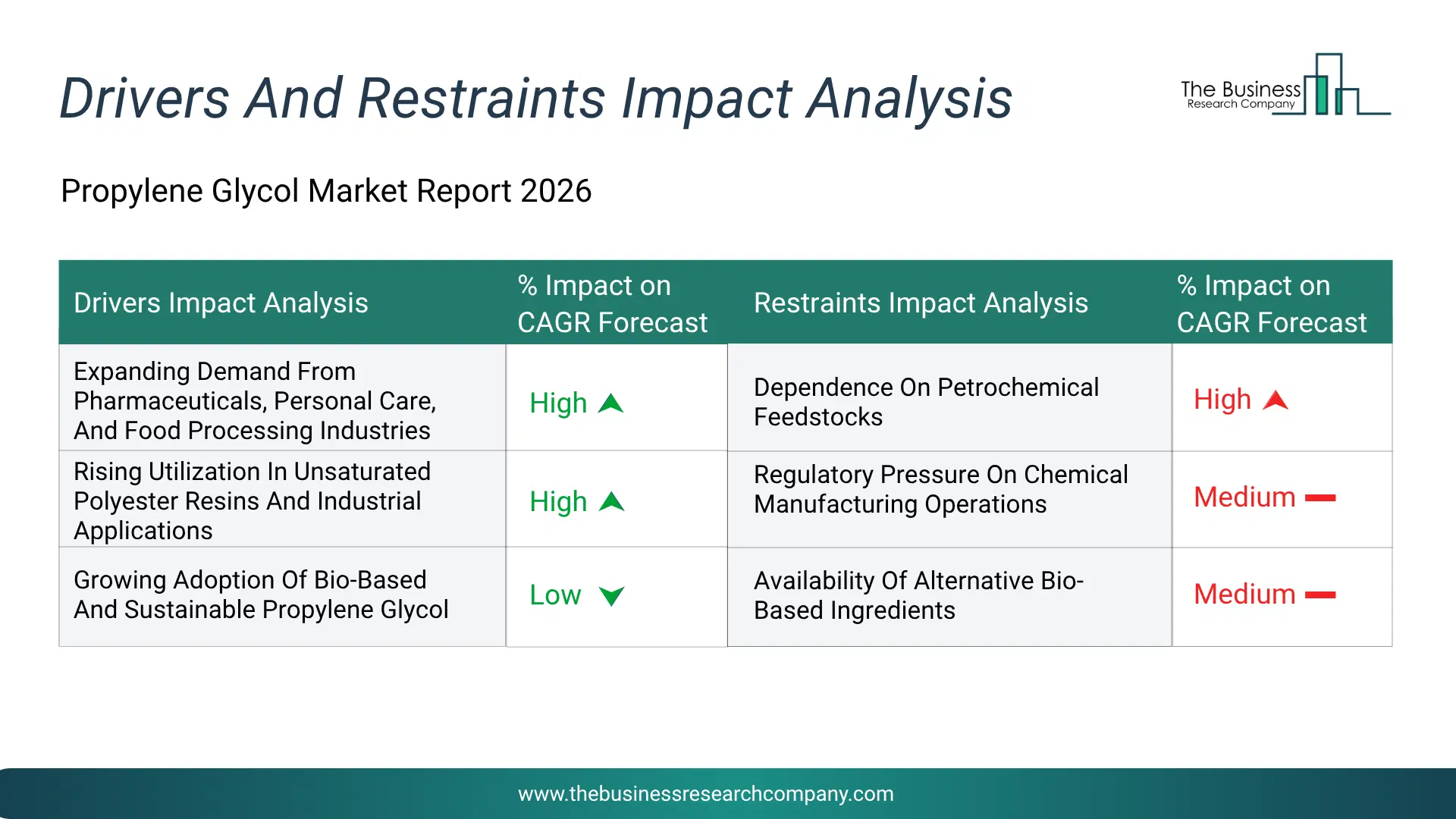
Infographic Chart Showing Key Market Drivers Analysis And Restraints For Propylene Glycol Market
The chart presents an impact analysis of key drivers and restraints, quantifying their relative influence on the market's growth rate and helping assess the balance between growth enablers and limiting factors. This chart offers a high-level perspective; the full report contains more detailed insights.
How Will The Drivers Impact Growth In The Global Propylene Glycol Market?
• Expanding Demand From Pharmaceuticals, Personal Care, And Food Processing Industries (High) – During the forecast period, the expanding demand from pharmaceuticals, personal care, and food processing industries is expected to become a major growth driver for the propylene glycol market by 2030. Propylene glycol is widely used as a solvent, humectant, and stabilizing agent in pharmaceutical formulations, cosmetic products, and processed food applications. Increasing global consumption of packaged foods, rising demand for skincare and hygiene products, and the growing pharmaceutical manufacturing sector are strengthening product demand. Manufacturers are therefore focusing on producing high -purity pharmaceutical - and food -grade propylene glycol to meet strict quality standards and regulatory requirements. • Rising Utilization In Unsaturated Polyester Resins And Industrial Applications (High) – During the forecast period, the rising utilization in unsaturated polyester resins (upr) and industrial applications is expected to drive strong growth in the propylene glycol market by 2030. Propylene glycol is a key intermediate in the production of upr used in fiberglass-reinforced plastics, construction panels, marine components, and automotive composite materials. Increasing infrastructure development, growing use of durable composite materials, and expanding industrial manufacturing activities are driving demand for upr production. Additionally, propylene glycol is widely used in antifreeze formulations, heat transfer fluids, and industrial coolants, further expanding its application base. • Growing Adoption Of Bio-Based And Sustainable Propylene Glycol (Low) – During the forecast period, the growing adoption of bio-based and sustainable propylene glycol is expected to play an important role in the market’s expansion by 2030. Increasing environmental regulations and corporate sustainability commitments are encouraging manufacturers to develop propylene glycol derived from renewable feedstocks such as glycerin and plant-based sugars. Bio-based propylene glycol offers lower carbon emissions and improved environmental compatibility compared to petroleum-derived alternatives. Industries such as cosmetics, food processing, and pharmaceuticals are increasingly adopting sustainable ingredients to meet consumer preferences and regulatory standards.How Will The Restraints Impact Growth In The Global Propylene Glycol Market?
• Dependence On Petrochemical Feedstocks (High) – During the forecast period, the propylene glycol production is largely dependent on petroleum-derived feedstocks, making the market vulnerable to fluctuations in crude oil and petrochemical prices. Changes in energy markets can significantly impact manufacturing costs and profit margins. Supply disruptions in feedstock availability may also affect production stability. This dependence creates uncertainty throughout the supply chain. • Regulatory Pressure On Chemical Manufacturing Operations (Medium) – During the forecast period, the chemical manufacturers face increasingly stringent regulations related to emissions, waste management, workplace safety, and environmental compliance. Meeting these requirements often requires investments in advanced processing technologies and monitoring systems. Compliance costs can place additional financial burdens on producers. These regulatory challenges may limit production expansion and increase operating expenses. • Availability Of Alternative Bio-Based Ingredients (Medium) – During the forecast period, the growing sustainability initiatives are encouraging the development and adoption of bio-based chemicals and renewable alternatives to conventional petrochemical products. End-use industries are increasingly evaluating environmentally friendly substitutes that align with corporate sustainability goals. As alternative materials gain commercial acceptance, demand growth for conventional propylene glycol may face pressure. This competitive threat could restrain long-term market expansion.Key Players In The Global Propylene Glycol Market
Major companies operating in the propylene glycol market are Dow Inc., LyondellBasell Industries, BASF SE, Shell plc, Exxon Mobil Corporation, Huntsman Corporation, SKC Co. Ltd., Asahi Kasei Corporation, LG Chem Ltd., Repsol S.A., PCC Group, Manali Petrochemicals Ltd., Reliance Industries Limited, PetroChina Company Limited, Shandong Shida Shenghua Chemical, Archer Daniels Midland Company, Cargill Incorporated, Oleon NV, Mitsui Chemicals, Inc., Formosa Plastics Corporation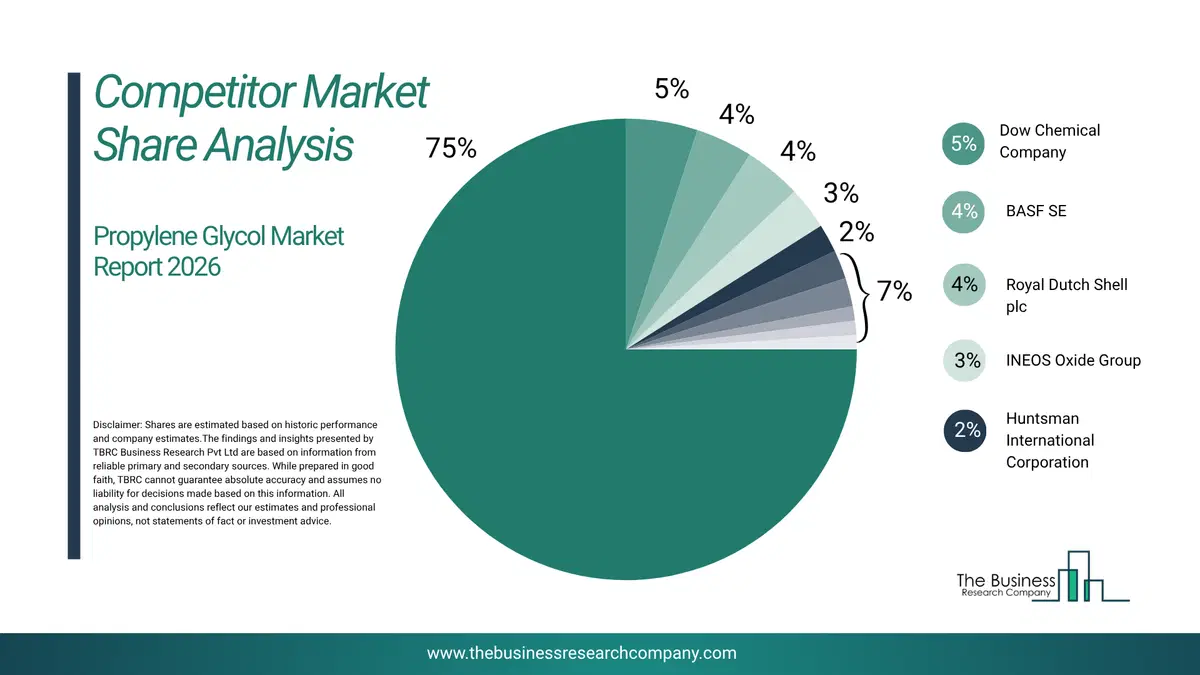
This chart is for illustrative purposes; the full report includes a detailed competitor analysis and comprehensive overview of the top 10 companies in the market.
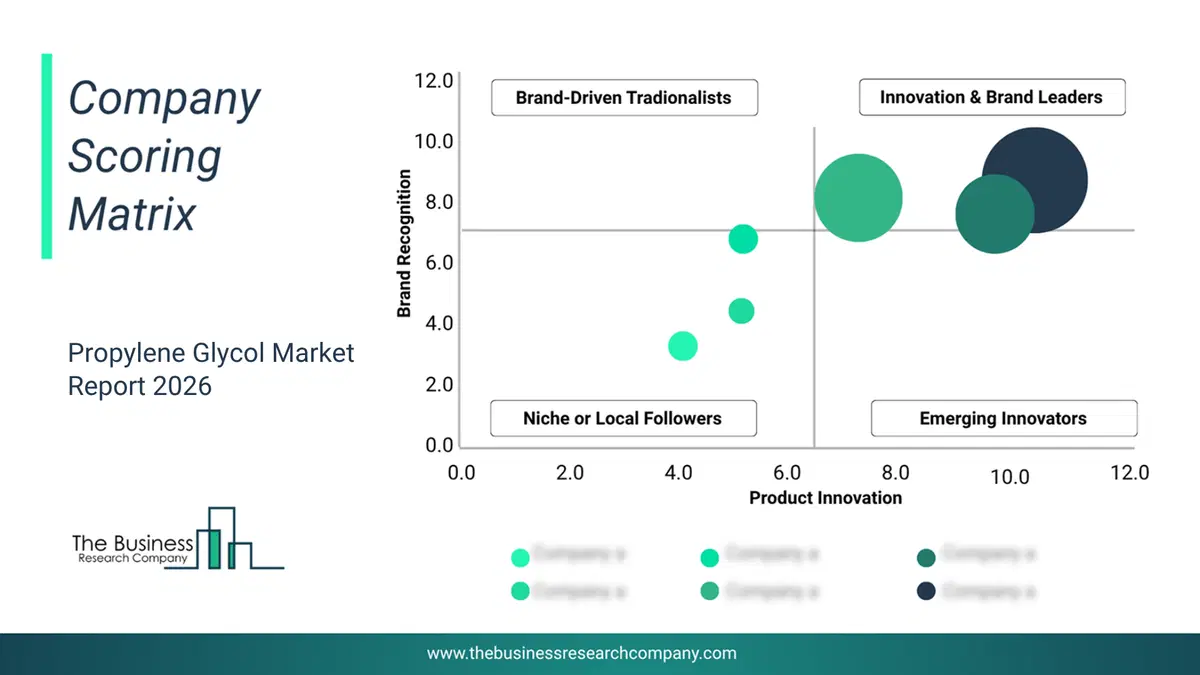
This chart maps companies by product innovation and brand strength, with bubble size indicating relative revenue, helping identify market leaders, challengers, and niche players. This is an illustrative chart; the full report provides a complete and accurate competitive analysis.
Global Propylene Glycol Market Trends and Insights
Major companies operating in the propylene glycol market are focusing on developing innovative solutions, such as hydrogen-peroxide-to-propylene-glycol (HPPG) production technology, to meet the rising demand for more sustainable and cost-efficient PG manufacturing. The HPPG technology, branded as HYPROSYN, enables the direct synthesis of propylene glycol from hydrogen peroxide and propylene in a single reactor, bypassing the traditional intermediate propylene oxide. Unlike conventional processes, which involve multiple steps and higher water and energy consumption, HYPROSYN reduces operational costs, improves yield, and can be integrated into existing PG plants. The technology offers environmental benefits, operational flexibility, and scalability for industrial applications such as food additives, pharmaceuticals, and personal care products. For instance, in October 2023, Dow, a US-based chemical company and the world’s largest producer of propylene glycol, partnered with Evonik Industries, a Germany-based specialty chemicals company and hydrogen peroxide manufacturer, to launch a pilot HPPG plant at Evonik’s Hanau site. The plant demonstrates the direct synthesis route, highlighting lower water usage, reduced energy consumption, and the elimination of propylene oxide, making the process more sustainable and efficient.What Are Latest Mergers And Acquisitions In The Propylene Glycol Market?
In October 2023, Dow Inc., a US-based provider of specialty chemicals and advanced materials, partnered with Evonik Industries AG to enhance its specialty additives portfolio. With this partnership, Dow aimed to enhance its propylene glycol production capabilities and strengthen technological innovation in sustainable, bio-based chemical processes. Evonik Industries AG is a Germany-based provider of specialty chemicals, focusing on high-purity propylene glycol and catalytic process technologies for industrial, cosmetic, and personal care applications.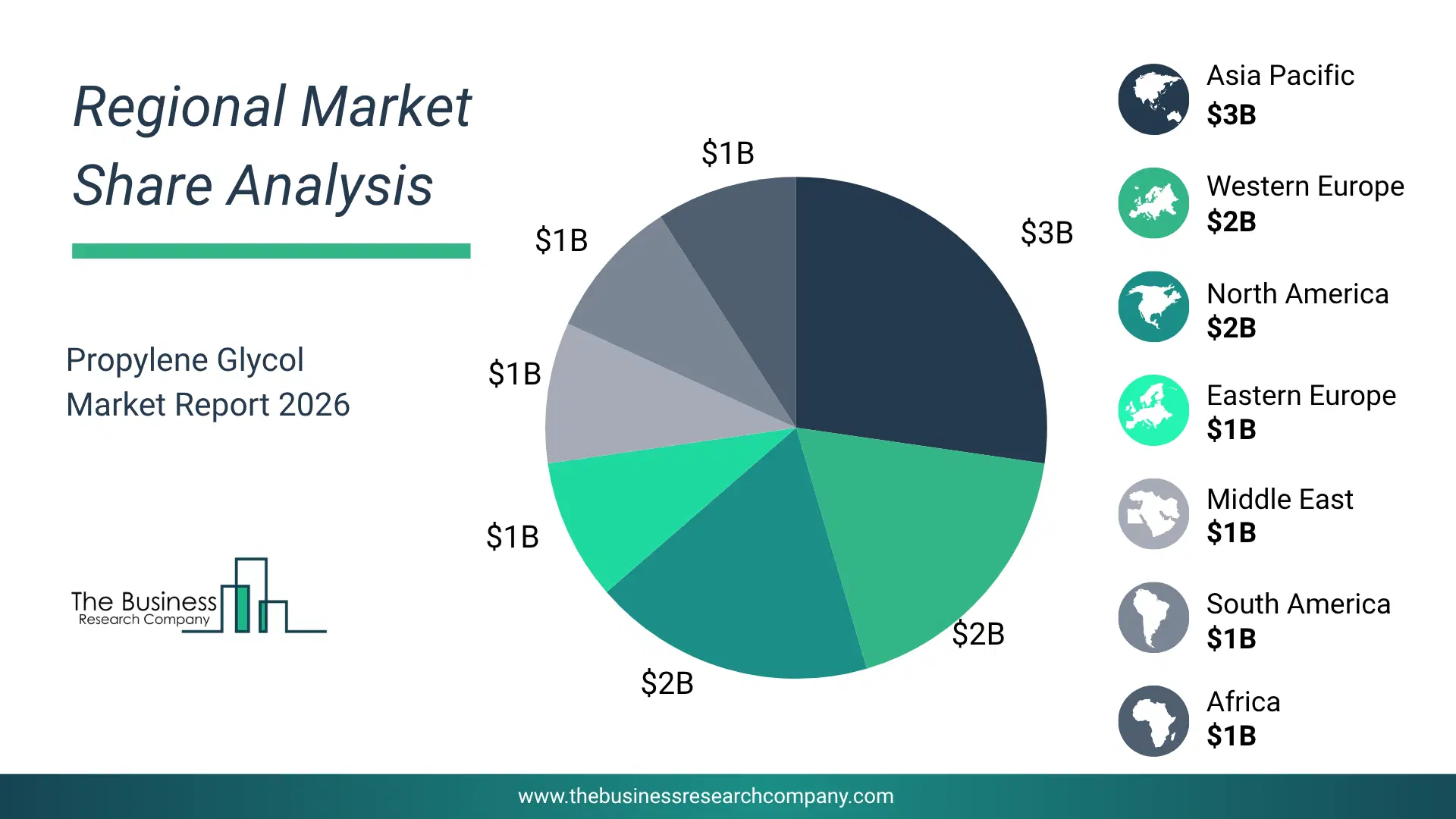
Regional Insights
Asia-Pacific was the largest region in the propylene glycol market in 2025 and is expected to be the fastest-growing region in the forecast period. The regions covered in this market report are Asia-Pacific, South East Asia, Western Europe, Eastern Europe, North America, South America, Middle East, Africa The countries covered in this market report are Australia, Brazil, China, France, Germany, India, Indonesia, Japan, Taiwan, Russia, South Korea, UK, USA, Canada, Italy, SpainWhat Defines the Propylene Glycol Market?
The propylene glycol market consists of sales of propylene glycol USP, inhibited propylene glycol, reclaimed propylene glycol, and dowfrost glycol. Values in this market are ‘factory gate’ values, that is, the value of goods sold by the manufacturers or creators of the goods, whether to other entities (including downstream manufacturers, wholesalers, distributors, and retailers) or directly to end customers. The value of goods in this market includes related services sold by the creators of the goods.How is Market Value Defined and Measured?
The market value is defined as the revenues that enterprises gain from the sale of goods and/or services within the specified market and geography through sales, grants, or donations in terms of the currency (in USD unless otherwise specified). The revenues for a specified geography are consumption values that are revenues generated by organizations in the specified geography within the market, irrespective of where they are produced. It does not include revenues from resales along the supply chain, either further along the supply chain or as part of other products.
This chart presents market attractiveness based on a quantitative evaluation of growth, competition, strategic alignment, and risk, offering a clear view of opportunity areas for decision-making. This chart is for illustrative purposes; the full report contains the complete analysis.

This chart highlights the Total Addressable Market (TAM) by estimating the maximum revenue opportunity using an assumption-driven approach, supporting strategic planning and opportunity sizing across markets. The chart is illustrative; the full report provides a more comprehensive analysis.
What Key Data and Analysis Are Included in the Propylene Glycol Market Report 2026?
The propylene glycol market research report is one of a series of new reports from The Business Research Company that provides market statistics, including industry global market size, regional shares, competitors with the market share, detailed market segments, market trends and opportunities, and any further data you may need to thrive in the propylene glycol industry. The market research report delivers a complete perspective of everything you need, with an in-depth analysis of the current and future state of the industry.Propylene Glycol Market Report Forecast Analysis
| Report Attribute | Details |
|---|---|
| Market Size Value In 2026 | $5.3 billion |
| Revenue Forecast In 2030 | $6.9 billion |
| Growth Rate | CAGR of 6.8% from 2026 to 2030 |
| Base Year For Estimation | 2025 |
| Actual Estimates/Historical Data | 2020-2025 |
| Forecast Period | 2026 - 2030 |
| Market Representation | Revenue in USD Billion and CAGR from 2026 to 2030 |
| Segments Covered | Source, Grade, Application, End User |
| Regional Scope | Asia-Pacific, Western Europe, Eastern Europe, North America, South America, Middle East, Africa |
| Country Scope | The countries covered in the report are Australia, Brazil, China, France, Germany, India, ... |
| Key Companies Profiled | Dow Inc., LyondellBasell Industries, BASF SE, Shell plc, Exxon Mobil Corporation, Huntsman Corporation, SKC Co. Ltd., Asahi Kasei Corporation, LG Chem Ltd., Repsol S.A., PCC Group, Manali Petrochemicals Ltd., Reliance Industries Limited, PetroChina Company Limited, Shandong Shida Shenghua Chemical, Archer Daniels Midland Company, Cargill Incorporated, Oleon NV, Mitsui Chemicals, Inc., Formosa Plastics Corporation |
| Customization Scope | Request for Customization |
| Pricing And Purchase Options | Explore Purchase Options |