

Proteasome Inhibitors Market Report 2026
Global Outlook – By Product (Velcade, Kyprolis, Ninlaro, Other Products), By Drugs (Bortezomib, Carfilzomib, Ixazomib), By Indication (Lymphoma, Mantle Cell Lymphoma, Multiple Myeloma), By Distribution Channel (Hospital Pharmacy, Online Pharmacy, Retail Pharmacy), By End-User (Hospital, Specialty Clinics, Other End-Users) – Market Size, Trends, Strategies, and Forecast to 2030
Proteasome Inhibitors Market Overview
• Proteasome Inhibitors market size has reached to $2.17 billion in 2025 • Expected to grow to $3.49 billion in 2030 at a compound annual growth rate (CAGR) of 10.2% • Growth Driver: Proteasome Inhibitors Market Fuels With Focus On Pancreatic Cancer • Market Trend: Advancements In Ready-To-Use Formulations Improve Safety And Streamline Clinical Administration In Proteasome Inhibitor Therapy • North America was the largest region in 2025.What Is Covered Under Proteasome Inhibitors Market?
Proteasome inhibitors refer to a class of drugs that interfere with the activity of proteasomes, which are cellular complexes responsible for degrading proteins in a controlled manner. Proteasome inhibitors are primarily used to treat certain types of cancer, particularly multiple myeloma, and some forms of lymphoma, demonstrating significant efficacy in targeting cancer cells and inducing cell death. The main types of products in proteasome inhibitors are velcade, kyprolis, ninlaro, and others. Velcade refers to the brand name for the prescription drug bortezomib. Bortezomib is a proteasome inhibitor that is used in the treatment of multiple myeloma cancer. It includes various drugs such as bortezomib, carfilzomib, and ixazomib. It is used to treat a variety of indications, including lymphoma, mantle cell lymphoma, and multiple myeloma, and it is distributed through hospital pharmacies, online pharmacies, and retail pharmacies. The main end-users are hospitals, specialty clinics, and others.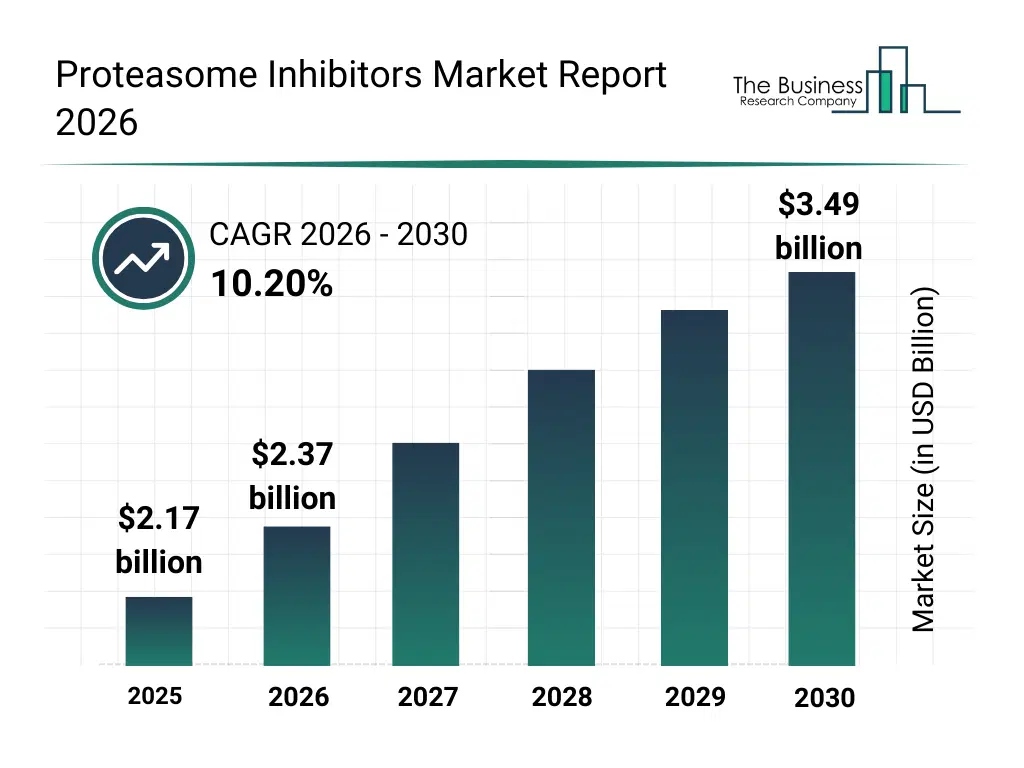
What Is The Proteasome Inhibitors Market Size and Share 2026?
The proteasome inhibitors market size has grown strongly in recent years. It will grow from $2.17 billion in 2025 to $2.37 billion in 2026 at a compound annual growth rate (CAGR) of 9.2%. The growth in the historic period can be attributed to approval of first proteasome inhibitors, increasing prevalence of multiple myeloma, rising investment in oncology research, advancements in cancer diagnostics, growth of hospital oncology departments.What Is The Proteasome Inhibitors Market Growth Forecast?
The proteasome inhibitors market size is expected to see rapid growth in the next few years. It will grow to $3.49 billion in 2030 at a compound annual growth rate (CAGR) of 10.2%. The growth in the forecast period can be attributed to expansion of proteasome inhibitor pipeline, integration of AI in drug discovery, rising demand for combination therapies, development of oral formulations, growth of emerging oncology markets. Major trends in the forecast period include personalized cancer therapies, targeted proteasome inhibition, combination therapy development, improved drug delivery systems, clinical trial expansion.
Global Proteasome Inhibitors Market Segmentation
1) By Product: Velcade, Kyprolis, Ninlaro, Other Products 2) By Drugs: Bortezomib, Carfilzomib, Ixazomib 3) By Indication: Lymphoma, Mantle Cell Lymphoma, Multiple Myeloma 4) By Distribution Channel: Hospital Pharmacy, Online Pharmacy, Retail Pharmacy 5) By End-User: Hospital, Specialty Clinics, Other End-Users Subsegments: 1) By Velcade: Injectable Velcade (Bortezomib), Oral Formulations 2) By Kyprolis: Injectable Kyprolis (Carfilzomib), Combination Therapies With Kyprolis 3) By Ninlaro: Oral Ninlaro (Ixazomib), Combination Therapies With Ninlaro 4) By Other Products: Investigational Proteasome Inhibitors, Combination ProductsWhat Are The Drivers Of The Proteasome Inhibitors Market?
The increasing prevalence of pancreatic cancer is expected to propel the growth of the proteasome inhibitors market going forward. Pancreatic cancer is a type of cancer that develops in the cells of the pancreas, an organ located in the abdomen behind the stomach. Proteasome inhibitors are primarily used to treat pancreatic cancer, where the proteasome plays a critical role in promoting cell survival and growth by degrading proteins that regulate cell cycle progression and cell death. It disrupts cancer cell survival and inhibits tumor growth and metastasis. For instance, in January 2024, according to the reports by the American Cancer Society, a US-based health organization, an estimated 64,050 adults in the US were diagnosed with pancreatic cancer by 2023, and 50,550 people died of pancreatic cancer. Furthermore, the number increased to 66,440, with the number of deaths reaching 51,750. Therefore, the increasing prevalence of pancreatic cancer is driving the growth of the proteasome inhibitors industry. Increasing government funding for research and development is expected to propel the growth of the proteasome inhibitors market going forward. Government funding refers to money provided by a government to pay for a particular purpose. Government funding plays an important role in advancing proteasome inhibitor research by providing financial support for scientific investigations, clinical trials, and drug development. For instance, in September 2023, the National Cancer Institute, a US-based government agency, received a budget from the United States Congress of $7.3 billion in fiscal year 2023, which is a $408 million increase over 2022. Therefore, increasing government funding for research and development is driving the growth of the proteasome inhibitors industry.Key Players In The Global Proteasome Inhibitors Market
Major companies operating in the proteasome inhibitors market are Pfizer Inc., Johnson And Johnson, Onyx Pharmaceuticals Inc., Progenra Inc., Nurix Inc., Cephalon Inc., Cleave Therapeutics, Apotex Inc., Amgen Inc., Takeda Pharmaceutical Company Limited, Millennium Pharmaceuticals, Bristol-Myers Squibb Company, Janssen Pharmaceuticals, AbbVie, Karyopharm Therapeutics, OncoArendi Therapeutics, Novartis AG, GlaxoSmithKline plc, Sanofi S.A., Eli Lilly and Company
This chart is for illustrative purposes; the full report includes a detailed competitor analysis and comprehensive overview of the top 10 companies in the market.
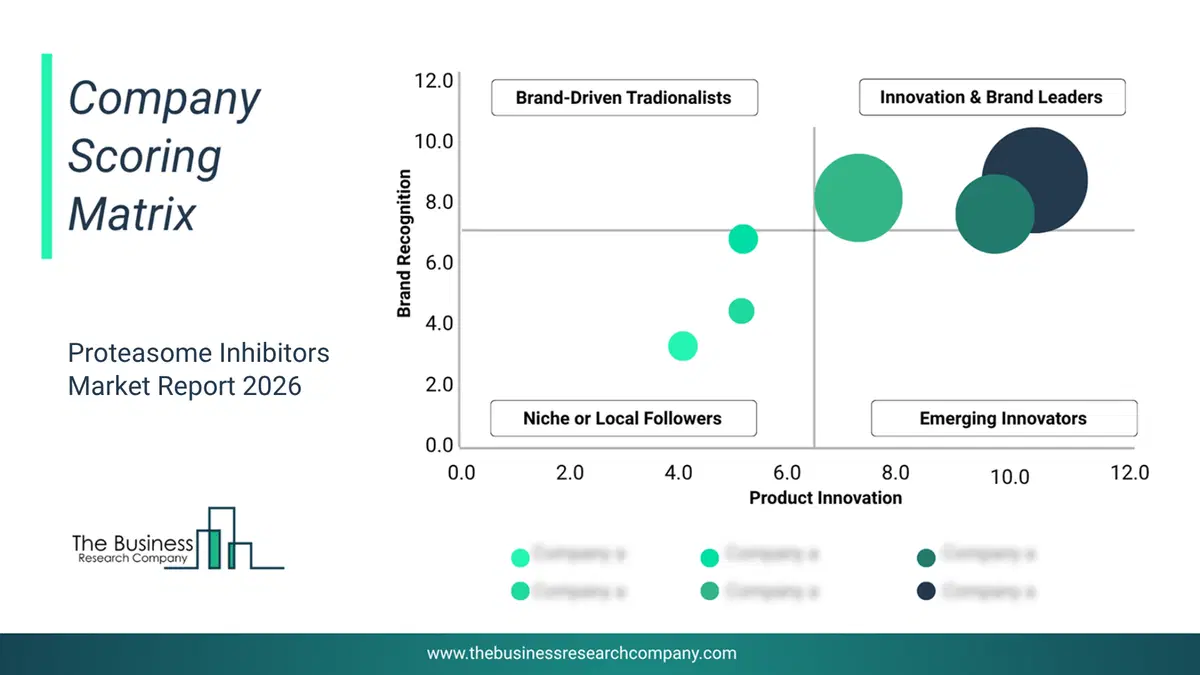
This chart maps companies by product innovation and brand strength, with bubble size indicating relative revenue, helping identify market leaders, challengers, and niche players. This is an illustrative chart; the full report provides a complete and accurate competitive analysis.
Global Proteasome Inhibitors Market Trends and Insights
Major companies operating in the proteasome inhibitors market are focusing on introducing advanced, ready-to-use formulations to improve treatment efficiency, simplify clinical administration, and enhance patient safety. Ready-to-use injectable products eliminate the need for on-site reconstitution, reducing preparation time, minimizing dosing errors, and supporting more streamlined oncology care. For instance, in April 2025, Amneal Pharmaceuticals Inc., a US-based specialty pharmaceutical company, launched BORUZU, the first ready-to-use bortezomib injection indicated for multiple myeloma and mantle cell lymphoma. This formulation is designed to improve clinical workflow by enabling direct administration without reconstitution, helping healthcare providers deliver faster and more reliable proteasome inhibitor therapy in outpatient and hospital settings.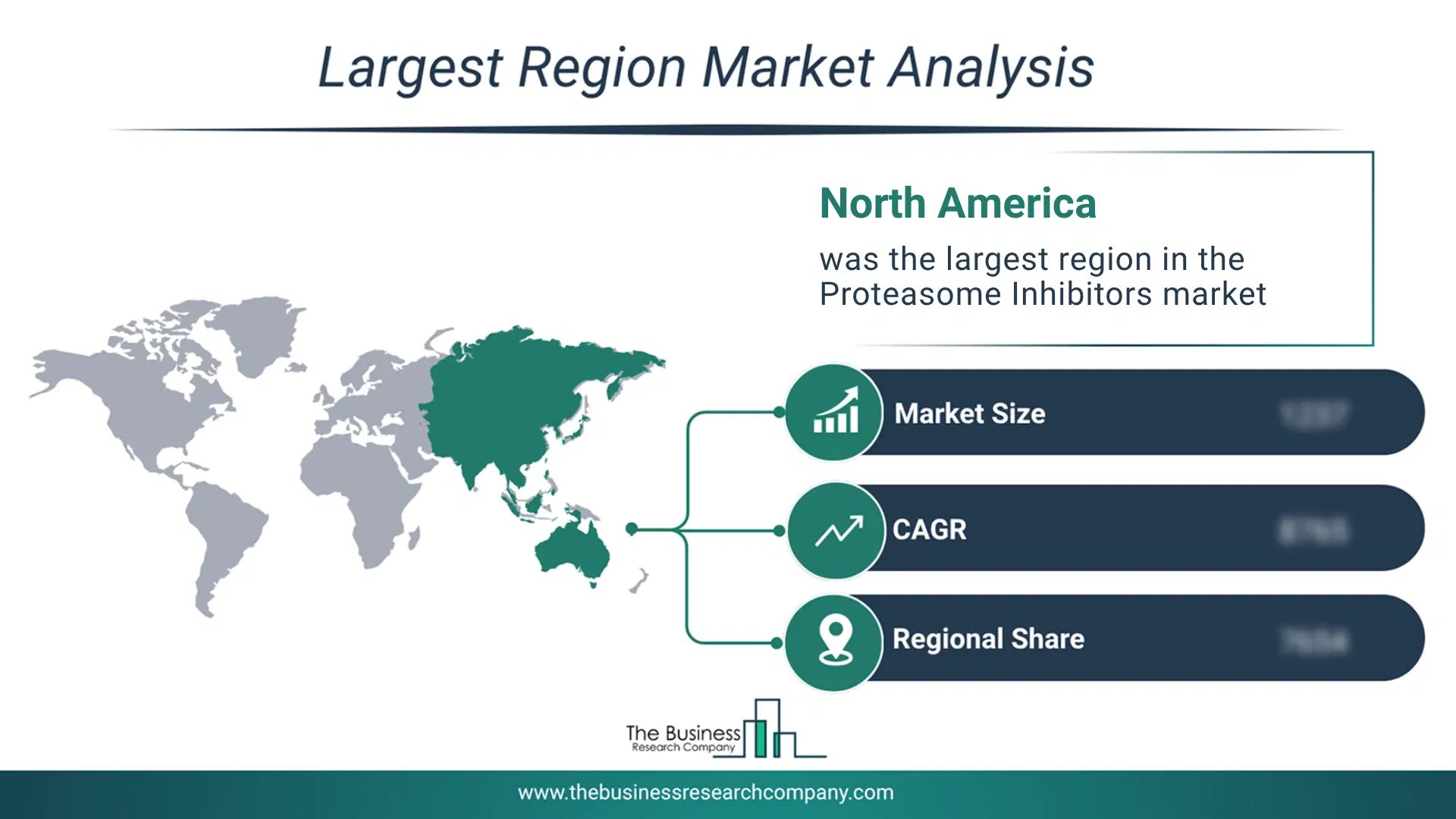
Regional Insights
North America was the largest region in the proteasome inhibitors market in 2025. The regions covered in this market report are Asia-Pacific, South East Asia, Western Europe, Eastern Europe, North America, South America, Middle East, Africa. The countries covered in this market report are Australia, Brazil, China, France, Germany, India, Indonesia, Japan, Taiwan, Russia, South Korea, UK, USA, Canada, Italy, Spain.What Defines the Proteasome Inhibitors Market?
The proteasome inhibitor market consists of sales of marizomib, oprozomib, and delanzomib, epoxyketone proteasome inhibitors, non-peptidic proteasome inhibitors, panobinostat and olaparib. Values in this market are ‘factory gate’ values, that is, the value of goods sold by the manufacturers or creators of the goods, whether to other entities (including downstream manufacturers, wholesalers, distributors, and retailers) or directly to end customers. The value of goods in this market includes related services sold by the creators of the goods.How is Market Value Defined and Measured?
The market value is defined as the revenues that enterprises gain from the sale of goods and/or services within the specified market and geography through sales, grants, or donations in terms of the currency (in USD unless otherwise specified). The revenues for a specified geography are consumption values that are revenues generated by organizations in the specified geography within the market, irrespective of where they are produced. It does not include revenues from resales along the supply chain, either further along the supply chain or as part of other products.
This chart presents market attractiveness based on a quantitative evaluation of growth, competition, strategic alignment, and risk, offering a clear view of opportunity areas for decision-making. This chart is for illustrative purposes; the full report contains the complete analysis.

This chart highlights the Total Addressable Market (TAM) by estimating the maximum revenue opportunity using an assumption-driven approach, supporting strategic planning and opportunity sizing across markets. The chart is illustrative; the full report provides a more comprehensive analysis.
What Key Data and Analysis Are Included in the Proteasome Inhibitors Market Report 2026?
The proteasome inhibitors market research report is one of a series of new reports from The Business Research Company that provides market statistics, including industry global market size, regional shares, competitors with the market share, detailed market segments, market trends and opportunities, and any further data you may need to thrive in the proteasome inhibitors industry. The market research report delivers a complete perspective of everything you need, with an in-depth analysis of the current and future state of the industry.Proteasome Inhibitors Market Report Forecast Analysis
| Report Attribute | Details |
|---|---|
| Market Size Value In 2026 | $2.37 billion |
| Revenue Forecast In 2030 | $3.49 billion |
| Growth Rate | CAGR of 9.2% from 2026 to 2030 |
| Base Year For Estimation | 2025 |
| Actual Estimates/Historical Data | 2020-2025 |
| Forecast Period | 2026 - 2030 |
| Market Representation | Revenue in USD Billion and CAGR from 2026 to 2030 |
| Segments Covered | Product, Drugs, Indication, Distribution Channel, End-User |
| Regional Scope | Asia-Pacific, Western Europe, Eastern Europe, North America, South America, Middle East, Africa |
| Country Scope | The countries covered in the report are Australia, Brazil, China, France, Germany, India, Indonesia, Japan, Taiwan, Russia, South Korea, UK, USA, Canada, Italy, Spain. |
| Key Companies Profiled | Pfizer Inc., Johnson And Johnson, Onyx Pharmaceuticals Inc., Progenra Inc., Nurix Inc., Cephalon Inc., Cleave Therapeutics, Apotex Inc., Amgen Inc., Takeda Pharmaceutical Company Limited, Millennium Pharmaceuticals, Bristol-Myers Squibb Company, Janssen Pharmaceuticals, AbbVie, Karyopharm Therapeutics, OncoArendi Therapeutics, Novartis AG, GlaxoSmithKline plc, Sanofi S.A., Eli Lilly and Company |
| Customization Scope | Request for Customization |
| Pricing And Purchase Options | Explore Purchase Options |