
Protein Crystallization Market Report 2026
Global Outlook – By Product (Instruments, Consumables, Software And Services), By Technology (X-Ray Crystallography, Cryo-electron Microscopy, NMR Spectroscopy, Other Technologies), By End-User (Pharmaceutical And Biotechnology Companies, Academic And Research Institutes) - Market Size, Trends, Strategies, and Forecast to 2030
Protein Crystallization Market Overview
• Protein Crystallization market size has reached to $1.81 billion in 2025 • Expected to grow to $3.08 billion in 2030 at a compound annual growth rate (CAGR) of 11.1% • Growth Driver: The Rising Demand For Biopharmaceuticals Fueling Market Growth Due To The Need For Targeted Treatments And Enhanced Drug Development • Market Trend: Advancements in Microgravity-Based Crystallization Technology • North America was the largest region in 2025 and Asia-Pacific is the fastest growing region.What Is Covered Under Protein Crystallization Market?
Protein crystallization refers to the process in which proteins are induced to form well-ordered, three-dimensional crystals through a controlled environment, typically by altering conditions such as temperature, pH, and the presence of specific solvents or salts. This method plays a critical role in structural biology by enabling researchers to study the atomic structure of proteins in detail, most commonly through techniques like X-ray diffraction, which can provide insights into protein functions and interactions. The main product types of protein crystallization are instruments, consumables, software and services. Instruments are devices or equipment used in scientific research to facilitate the measurement, analysis, and manipulation of materials, such as those used in protein structure determination. The various technologies include x-ray crystallography, cryo-electron microscopy, nmr spectroscopy, others. These are used by various end-users such as pharmaceutical and biotechnology companies, academic and research institutes.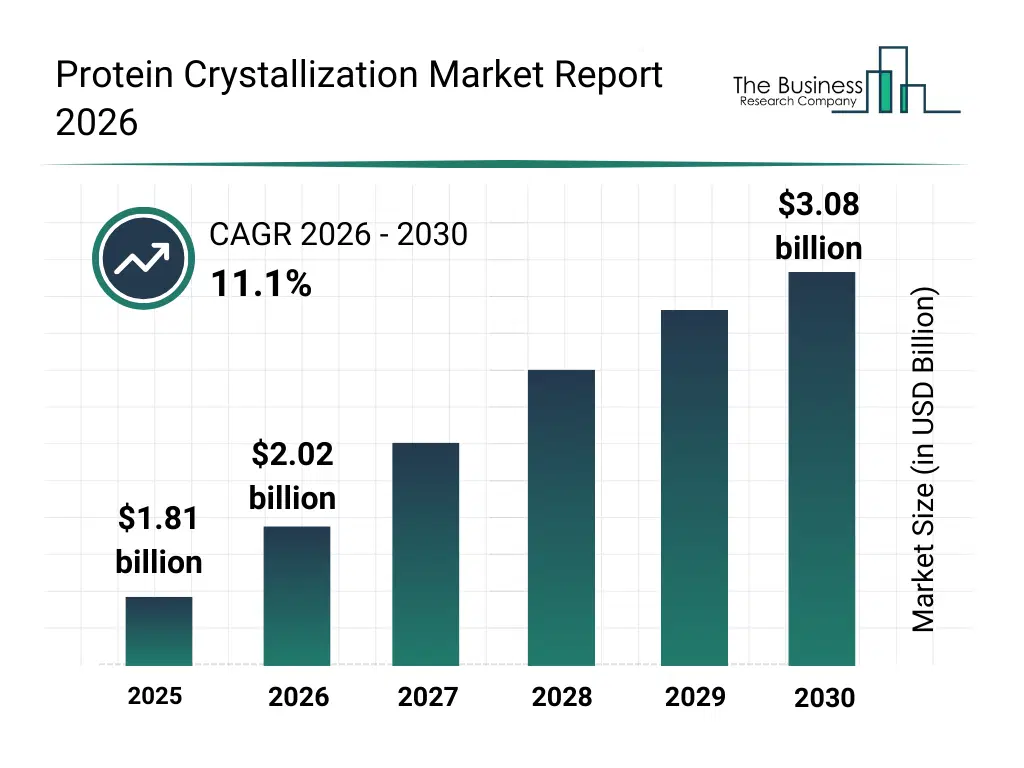
What Is The Protein Crystallization Market Size and Share 2026?
The protein crystallization market size has grown rapidly in recent years. It will grow from $1.81 billion in 2025 to $2.02 billion in 2026 at a compound annual growth rate (CAGR) of 11.4%. The growth in the historic period can be attributed to expansion of structural biology research, rising demand for protein structure determination, growth in pharmaceutical drug discovery programs, increased use of x-ray crystallography, availability of advanced laboratory instrumentation.What Is The Protein Crystallization Market Growth Forecast?
The protein crystallization market size is expected to see rapid growth in the next few years. It will grow to $3.08 billion in 2030 at a compound annual growth rate (CAGR) of 11.1%. The growth in the forecast period can be attributed to increasing adoption of cryo-electron microscopy workflows, rising investment in protein structure-based drug design, expansion of AI-assisted crystallography, growing focus on complex protein analysis, increasing collaboration between academia and industry. Major trends in the forecast period include increasing use of automated crystallization systems, rising adoption of microfluidic crystallization techniques, growing integration of AI-based structure prediction tools, expansion of high-resolution structural analysis, enhanced focus on reproducible crystal formation.
Global Protein Crystallization Market Segmentation
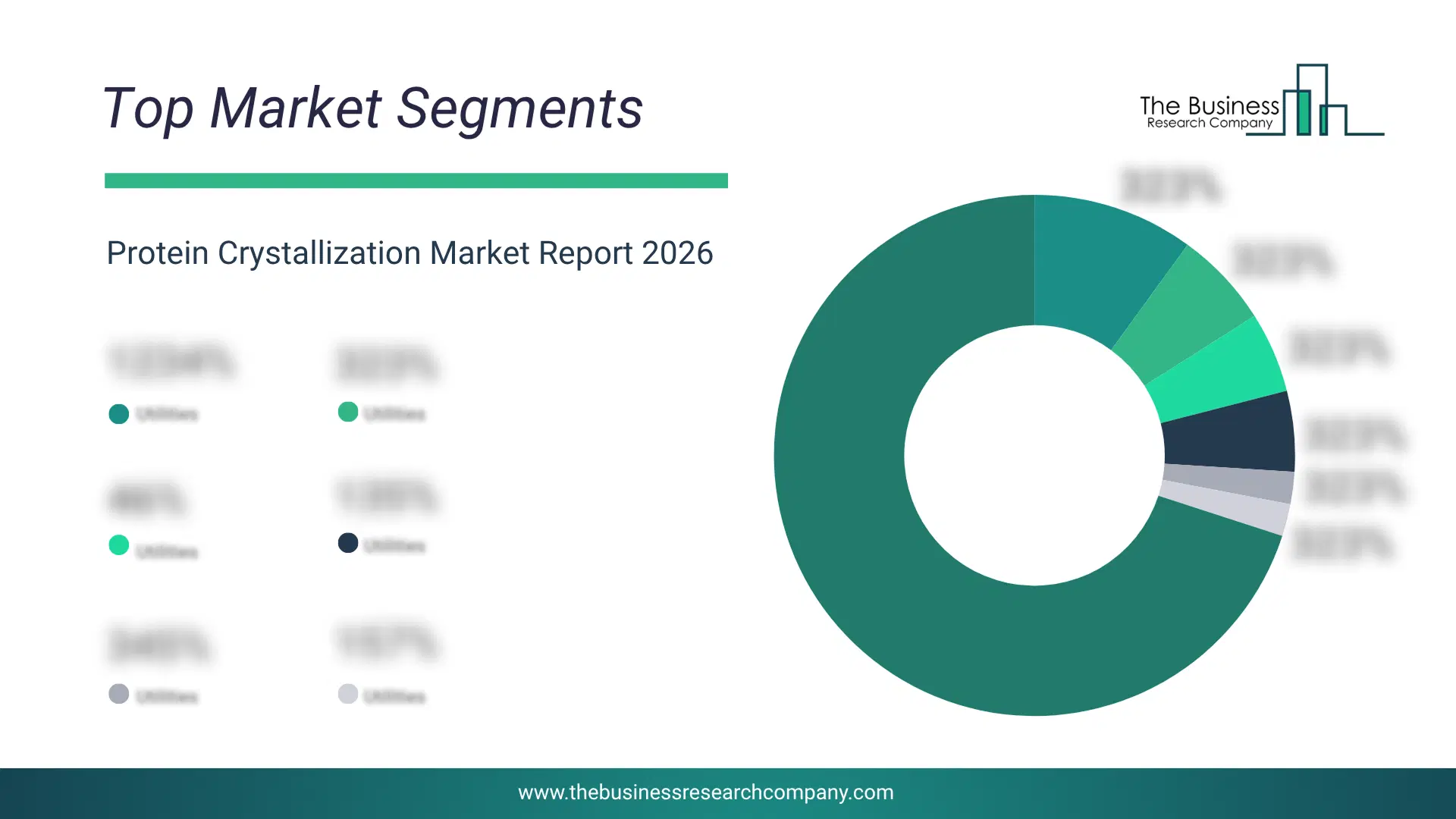
1) By Product: Instruments, Consumables, Software And Services 2) By Technology: X-Ray Crystallography, Cryo-electron Microscopy, NMR Spectroscopy, Other Technologies 3) By End-User: Pharmaceutical And Biotechnology Companies, Academic And Research Institutes Subsegments: 1) By Instruments Type: X-ray Diffractometers, Liquid Handling Systems, Crystallization Imaging Systems, Microfluidic Systems, Incubators & Temperature Control Devices 2) By Consumables Type: Crystallization Reagents, Microplates & Crystallization Plates, Screens & Buffers, Cryoprotectants, Protein Purification Kits 3) By Software and Services Type: Crystallography Data Analysis Software, Molecular Modeling Software, AI-Based Structure Prediction Tools, Custom Crystallization Services, Training & Consulting ServicesWhat Is The Driver Of The Protein Crystallization Market?
The rising demand for biopharmaceuticals is expected to propel the growth of the protein crystallization market going forward. Biopharmaceuticals are medical drugs produced using biological sources or techniques, such as proteins, vaccines, and gene therapies, to treat various diseases and conditions. The rising demand for biopharmaceuticals is increasing due to their ability to provide targeted treatments, enhance patient outcomes, and address a wide range of chronic and complex diseases, offering personalized solutions that are more effective than traditional therapies. Protein crystallization enhances biopharmaceuticals by enabling the precise determination of protein structures that improve the development of targeted therapies, ensuring better efficacy and stability in biopharmaceutical products. For instance, in January 2023, according to Cardinal Health Inc., a US-based healthcare company, as of January 2022, the U.S. had 33 biosimilar products approved by the FDA, with 21 of them available on the market. by 2023, the number of FDA-approved biosimilars had risen to 40, with 25 commercially available. Therefore, the rising demand for biopharmaceuticals is driving the growth of the protein crystallization industry.Key Players In The Global Protein Crystallization Market
Major companies operating in the protein crystallization market are Thermo Fisher Scientific, Corning Incorporated, Charles River Laboratories, Mettler-Toledo International Inc., Douglas Instruments Limited, Bruker Corporation, Tecan Group, Greiner Bio-One International GmbH, Rigaku Corporation, Viva Biotech, Formulatrix Inc., Creative Biostructure, Calibre Scientific Inc., Creative Biolabs, Molecular Dimensions, Creative Proteomics, Jena Bioscience GmbH, Saromics Biostructures, Art Robbins Instruments, Mitegen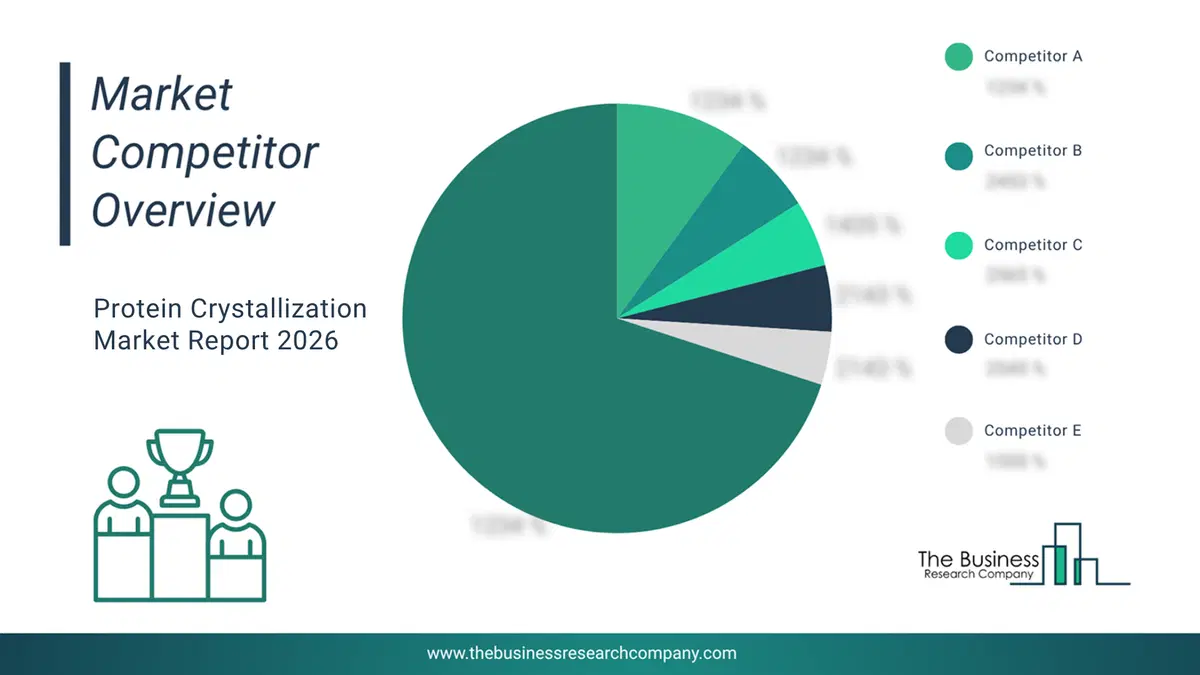
This chart is for illustrative purposes; the full report includes a detailed competitor analysis and comprehensive overview of the top 10 companies in the market.
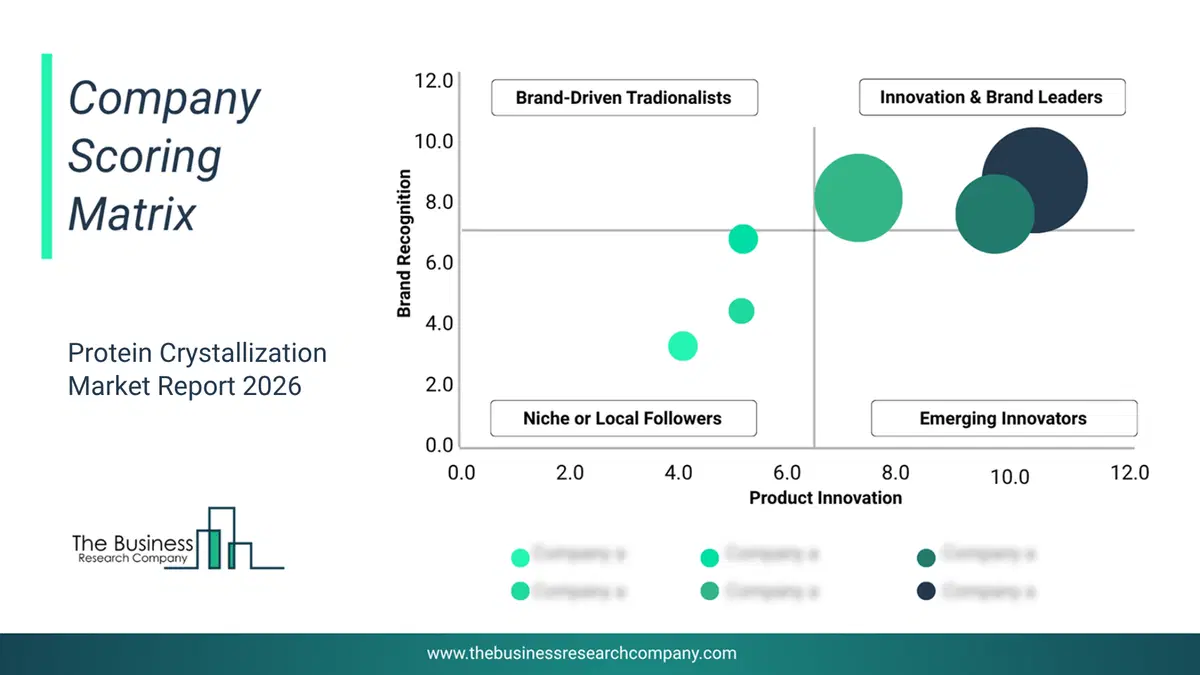
This chart maps companies by product innovation and brand strength, with bubble size indicating relative revenue, helping identify market leaders, challengers, and niche players. This is an illustrative chart; the full report provides a complete and accurate competitive analysis.
Global Protein Crystallization Market Trends and Insights
Major companies operating in the protein crystallization market are focusing on developing advanced solutions such as microfluidic platforms to enhance crystal quality and throughput. Microfluidic platforms are specialized devices that allow precise control of protein crystallization in small volumes and under controlled conditions, which improves the likelihood of forming high-quality crystals suitable for X-ray crystallography. For instance, in April 2024, Arizona State University (ASU), a US-based research team, successfully launched microfluidic protein crystallization devices into space via SpaceX’s Cargo Dragon Capsule, designed to operate in microgravity conditions. The platform enables multiple proteins to be screened simultaneously and supports high-throughput crystallization experiments. It allows crystals to grow under reduced gravitational forces, which enhances structural quality and enables crystallization of proteins that are difficult to crystallize on Earth. The devices are compatible with X-ray diffraction analysis, allowing researchers to obtain three-dimensional protein structures directly from the crystallization hardware.What Are Latest Mergers And Acquisitions In The Protein Crystallization Market?
In October 2025, Pharmaron Beijing Co. Ltd., a China-based provider of integrated pharmaceutical R&D services, acquired Biortus Biosciences Co. Ltd. for an undisclosed amount. With this acquisition, Pharmaron aims to significantly enhance its structure-based drug discovery and protein science capabilities, especially in complex protein production, X-ray crystallography, cryo-EM, and AI/ML-driven structure analysis. Biortus Biosciences Co., Ltd. is a China-based CRO specializing in structural biology, offering end-to-end services from gene to protein to 3D structure, and leveraging a proprietary AI/ML computational platform for protein complex design and verification.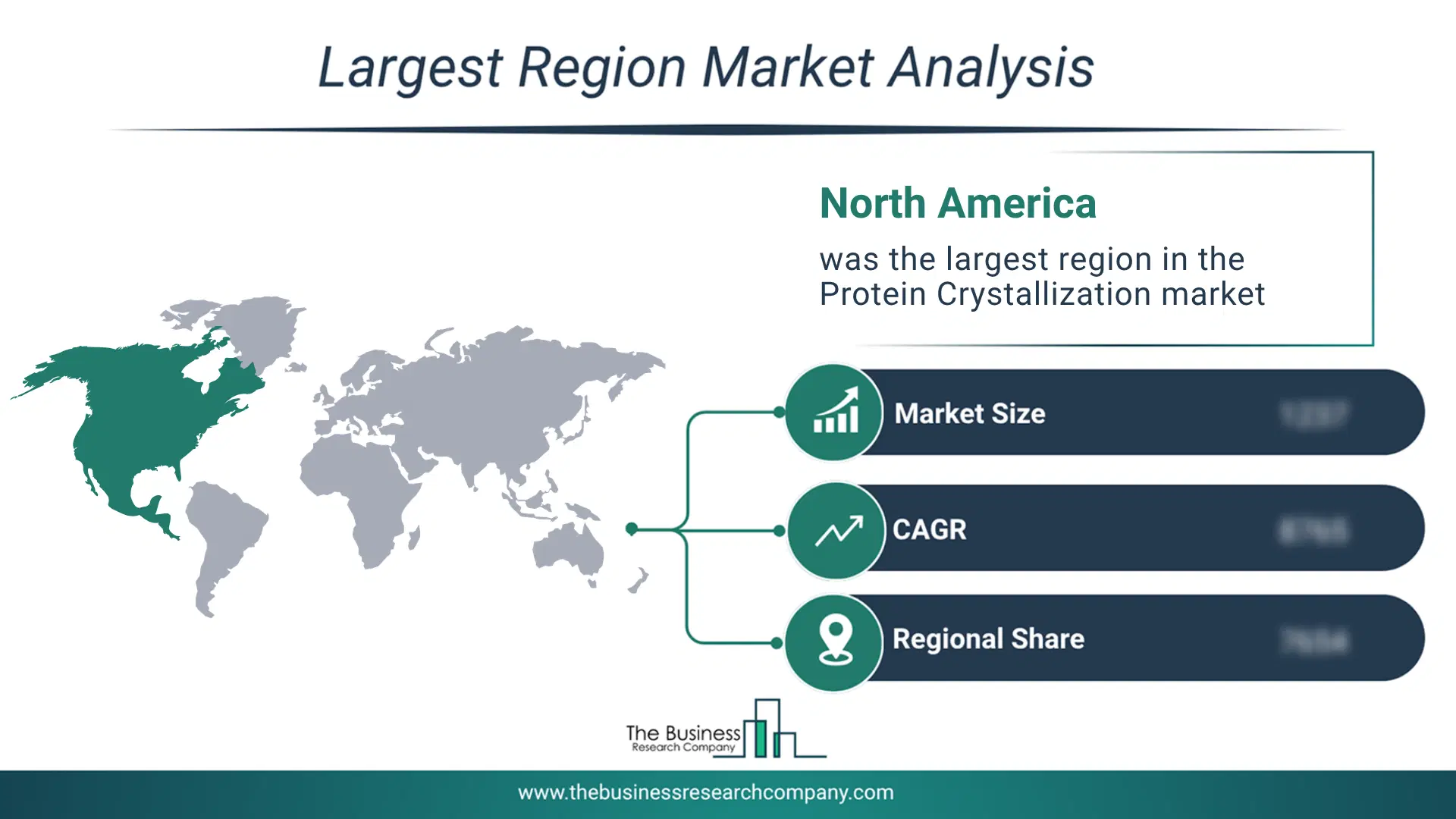
Regional Outlook
North America was the largest region in the protein crystallization market in 2025. Asia-Pacific is expected to be the fastest-growing region in the forecast period. The regions covered in this market report are Asia-Pacific, South East Asia, Western Europe, Eastern Europe, North America, South America, Middle East, Africa. The countries covered in this market report are Australia, Brazil, China, France, Germany, India, Indonesia, Japan, Taiwan, Russia, South Korea, UK, USA, Canada, Italy, Spain.What Defines the Protein Crystallization Market?
The protein crystallization market consists of revenues earned by entities by providing services such as custom crystallization assay development, cryogenic storage of protein crystals, x-ray diffraction data collection, automated crystallization platforms, and microgravity crystallization services. The market value includes the value of related goods sold by the service provider or included within the service offering. The protein crystallization market includes sales of protein crystallization screening kits, crystallization optimization reagents, crystallization equipment, cryo-electron microscopy (cryo-EM) systems for protein analysis, and crystallization software licenses. Values in this market are ‘factory gate’ values, that is, the value of goods sold by the manufacturers or creators of the goods, whether to other entities (including downstream manufacturers, wholesalers, distributors, and retailers) or directly to end customers. The value of goods in this market includes related services sold by the creators of the goods.How is Market Value Defined and Measured?
The market value is defined as the revenues that enterprises gain from the sale of goods and/or services within the specified market and geography through sales, grants, or donations in terms of the currency (in USD unless otherwise specified). The revenues for a specified geography are consumption values that are revenues generated by organizations in the specified geography within the market, irrespective of where they are produced. It does not include revenues from resales along the supply chain, either further along the supply chain or as part of other products.
This chart presents market attractiveness based on a quantitative evaluation of growth, competition, strategic alignment, and risk, offering a clear view of opportunity areas for decision-making. This chart is for illustrative purposes; the full report contains the complete analysis.

This chart highlights the Total Addressable Market (TAM) by estimating the maximum revenue opportunity using an assumption-driven approach, supporting strategic planning and opportunity sizing across markets. The chart is illustrative; the full report provides a more comprehensive analysis.
What Key Data and Analysis Are Included in the Protein Crystallization Market Report 2026?
The protein crystallization market research report is one of a series of new reports from The Business Research Company that provides market statistics, including industry global market size, regional shares, competitors with the market share, detailed market segments, market trends and opportunities, and any further data you may need to thrive in the protein crystallization industry. The market research report delivers a complete perspective of everything you need, with an in-depth analysis of the current and future state of the industry.Protein Crystallization Market Report Forecast Analysis
| Report Attribute | Details |
|---|---|
| Market Size Value In 2026 | $2.02 billion |
| Revenue Forecast In 2030 | $3.08 billion |
| Growth Rate | CAGR of 11.1% from 2026 to 2030 |
| Base Year For Estimation | 2025 |
| Actual Estimates/Historical Data | 2020-2025 |
| Forecast Period | 2026 - 2030 |
| Market Representation | Revenue in USD Billion and CAGR from 2026 to 2030 |
| Segments Covered | Product, Technology, End-User |
| Regional Scope | Asia-Pacific, Western Europe, Eastern Europe, North America, South America, Middle East, Africa |
| Country Scope | The countries covered in the report are Australia, Brazil, China, France, Germany, India, Indonesia, Japan, Taiwan, Russia, South Korea, UK, USA, Canada, Italy, Spain |
| Key Companies Profiled | Thermo Fisher Scientific, Corning Incorporated, Charles River Laboratories, Mettler-Toledo International Inc., Douglas Instruments Limited, Bruker Corporation, Tecan Group, Greiner Bio-One International GmbH, Rigaku Corporation, Viva Biotech, Formulatrix Inc., Creative Biostructure, Calibre Scientific Inc., Creative Biolabs, Molecular Dimensions, Creative Proteomics, Jena Bioscience GmbH, Saromics Biostructures, Art Robbins Instruments, Mitegen |
| Customization Scope | Request for Customization |
| Pricing And Purchase Options | Explore Purchase Options |