
Protein Ingredients In Infant Nutrition Market Report 2026
Global Outlook – By Product Type (Animal, Plant), By Form (Isolate, Concentrate, Other Forms), By Source (Cow Milk, Soy, Protein Hydrolysates), By Application (Growing-Up Milk, Standard Infant Formula, Follow-On Formula, Specialty) – Market Size, Trends, Strategies, and Forecast to 2030
Protein Ingredients In Infant Nutrition Market Overview
• Protein Ingredients In Infant Nutrition market size has reached to $9.34 billion in 2025 • Expected to grow to $14.67 billion in 2030 at a compound annual growth rate (CAGR) of 9.5% • Growth Driver: Global Population Surge Fuels Demand For Protein Ingredients In Infant Nutrition • Market Trend: Revolutionizing Infant Nutrition With Plant-based Formulas • Asia-Pacific was the largest region in 2025.What Is Covered Under Protein Ingredients In Infant Nutrition Market?
The protein ingredients in infant nutrition refer to nutrition given to infants that contains protein ingredients that are necessary for development and growth, is used in tissue healing, and aids in preserving the pH and appropriate balance of bodily fluids. Enzymes are proteins that are necessary for the body's vital metabolic processes, including blood coagulation, digestion, muscular contraction, and energy production. The main products of protein ingredients in infant nutrition are animal and plant. Animal protein refers to complete proteins found in animals. The various forms involved are isolated, concentrate, and others that are sourced from cow, milk, soy, protein hydrolysates, and others. They are used for various applications such as growing-up milk, standard infant formula, follow-on formula, and specialty and distributed by hypermarkets, supermarkets, pharmacy or medical store, specialty stores, hard discounter stores, and others.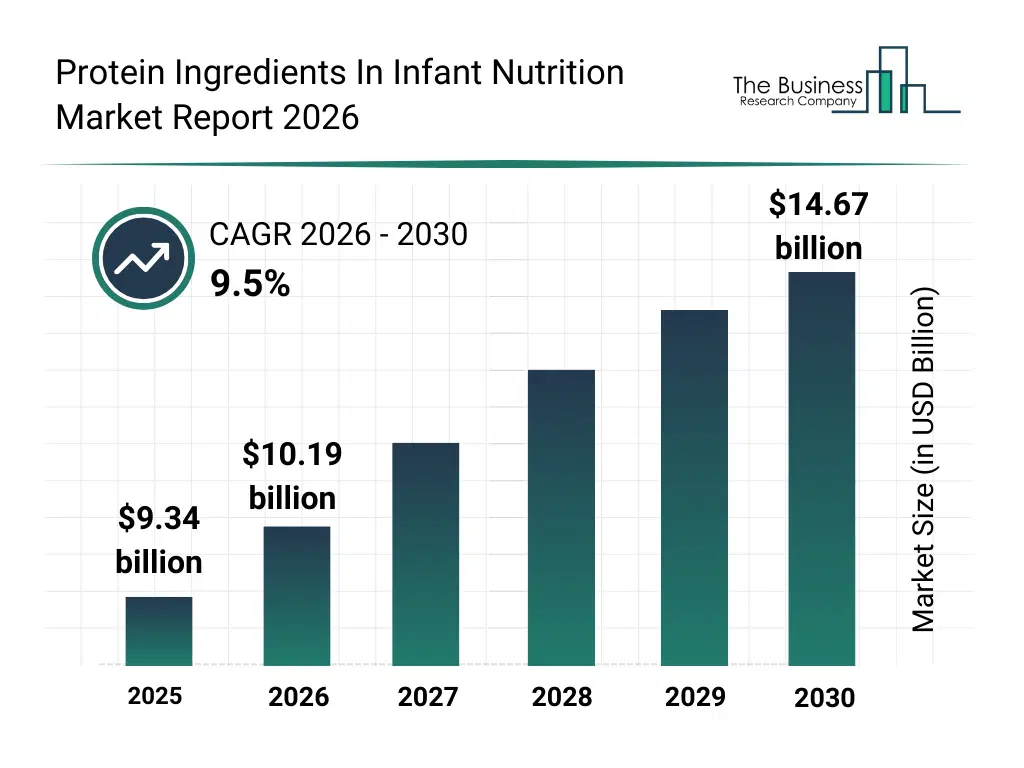
What Is The Protein Ingredients In Infant Nutrition Market Size and Share 2026?
The protein ingredients in infant nutrition market size has grown strongly in recent years. It will grow from $9.34 billion in 2025 to $10.19 billion in 2026 at a compound annual growth rate (CAGR) of 9.1%. The growth in the historic period can be attributed to increasing infant formula consumption, rising awareness of infant nutrition needs, growth in urban birth rates, expansion of dairy protein processing capabilities, increasing pediatric nutritional research.What Is The Protein Ingredients In Infant Nutrition Market Growth Forecast?
The protein ingredients in infant nutrition market size is expected to see strong growth in the next few years. It will grow to $14.67 billion in 2030 at a compound annual growth rate (CAGR) of 9.5%. The growth in the forecast period can be attributed to increasing demand for premium infant nutrition products, rising focus on allergy-friendly formulations, expansion of plant-based infant nutrition, growing investments in clinical nutrition research, increasing regulatory emphasis on infant food safety. Major trends in the forecast period include increasing demand for specialized infant protein formulations, rising adoption of hydrolyzed and easily digestible proteins, growing focus on nutritional balance and bioavailability, expansion of plant-based infant protein alternatives, enhanced quality and safety standards.
Global Protein Ingredients In Infant Nutrition Market Segmentation
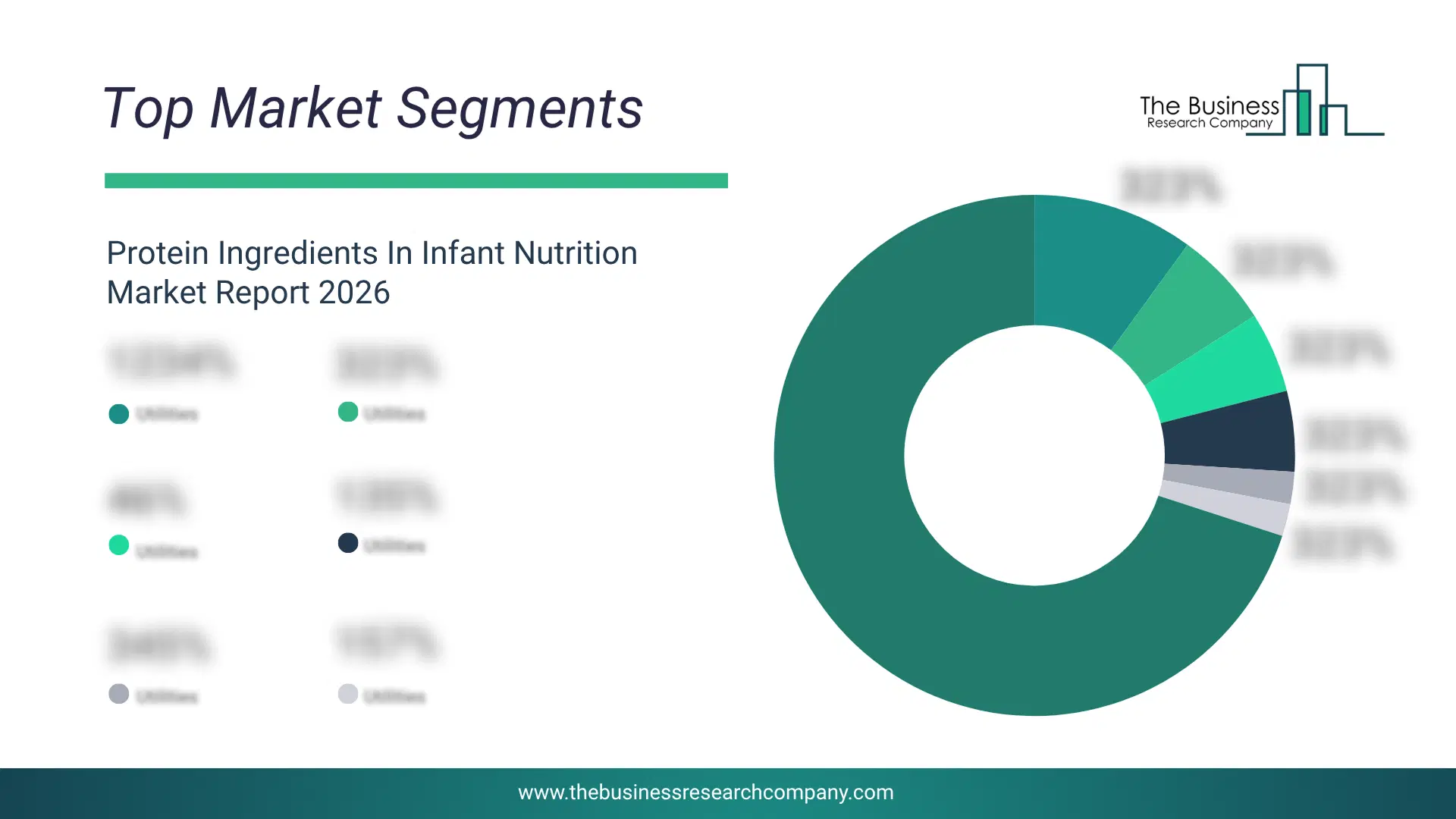
1) By Product Type: Animal, Plant 2) By Form: Isolate, Concentrate, Other Forms 3) By Source: Cow Milk, Soy, Protein Hydrolysates 4) By Application: Growing-Up Milk, Standard Infant Formula, Follow-On Formula, Specialty Subsegments: 1) By Animal: Whey Protein, Casein Protein, Hydrolyzed Animal Proteins 2) By Plant: Soy Protein Isolates, Rice Protein Ingredients, Pea Protein IngredientsWhat Is The Driver Of The Protein Ingredients In Infant Nutrition Market?
The rising population growth rate around the world is expected to drive the protein ingredients in the infant nutrition market going forward. The world population is growing mainly due to a reduction in poverty and advancements in modern medicines. With the rise in growth of population, there is an increase in the requirement for growth and development in the newborn that comes from protein ingredients. For instance, in July 2025, according to the U.S. Census Bureau, a United States-based government agency, the world population is estimated to reach 8.1 billion this year, up from 8 billion in 2023, and is projected to reach 9 billion in 2038 and 10 billion in 2057, reflecting ongoing global population growth trends. Therefore, the rising population growth rate around the world is driving the growth of protein ingredients in the infant nutrition market.Key Players In The Global Protein Ingredients In Infant Nutrition Market
Major companies operating in the protein ingredients in infant nutrition market are Nestlé SA, Danone SA, Abbott Laboratories, Mead Johnson Nutrition Company, FrieslandCampina NV, Fonterra Cooperative Group Ltd., Arla Foods Ingredients Group P S, Inner Mongolia Yili Industrial Group Company Limited, Beingmate Baby And Child Food Co Ltd, Meiji Holdings Co Ltd, Ausnutria Dairy Corporation Ltd, China Feihe Limited, Synutra International Inc, Perrigo Company plc, HiPP GmbH And Co Vertrieb KG, Hain Celestial Group, Bellamy’s Organic, Holle Baby Food AG, Biostime Group, Royal DSM, Glanbia plc, Lactalis Group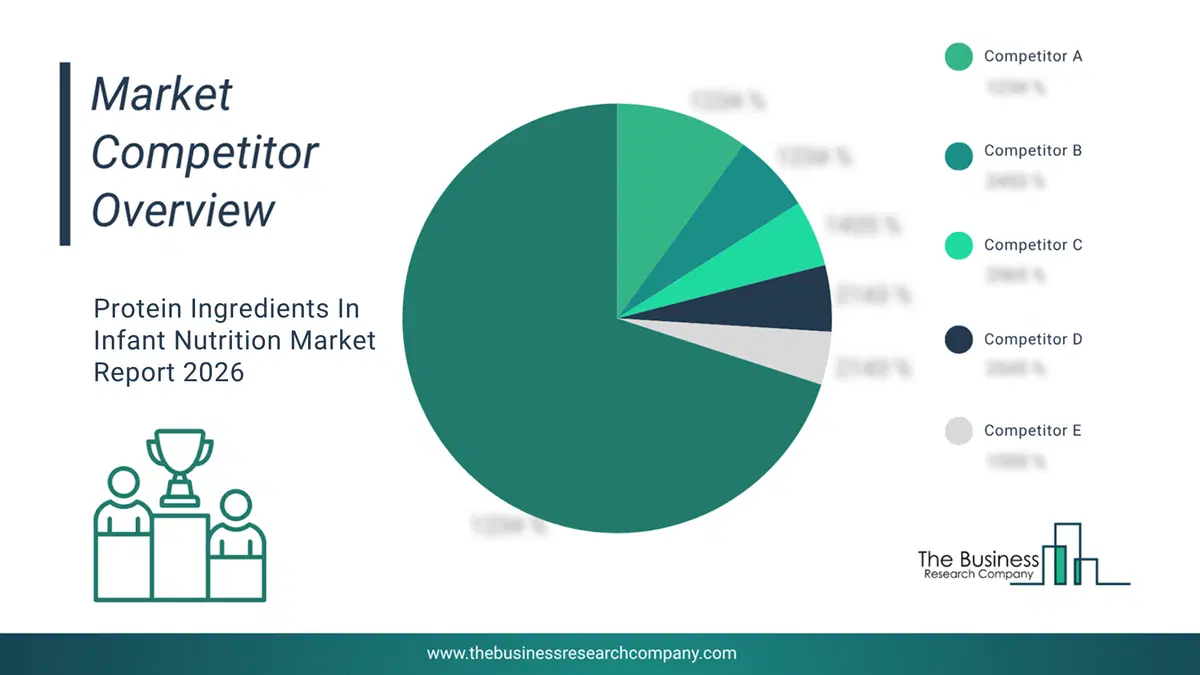
This chart is for illustrative purposes; the full report includes a detailed competitor analysis and comprehensive overview of the top 10 companies in the market.
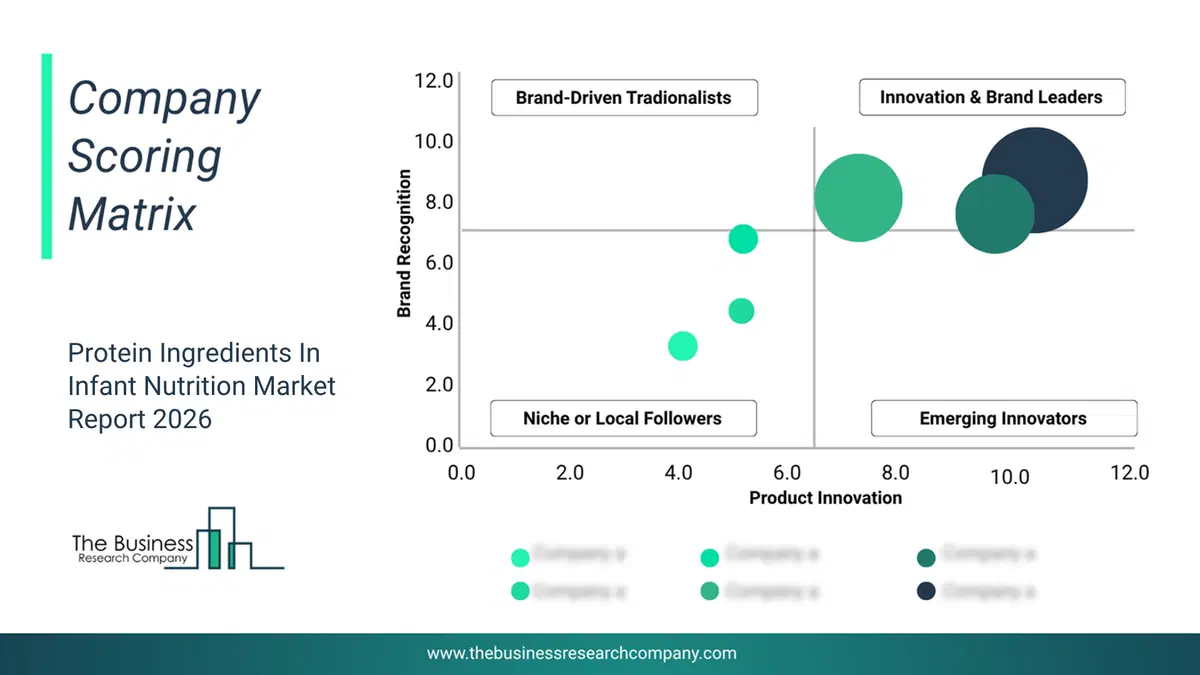
This chart maps companies by product innovation and brand strength, with bubble size indicating relative revenue, helping identify market leaders, challengers, and niche players. This is an illustrative chart; the full report provides a complete and accurate competitive analysis.
Global Protein Ingredients In Infant Nutrition Market Trends and Insights
Major companies operating in the protein ingredients in the infant nutrition market are focusing on product innovation such as plant-based formulas to meet the growing consumer demand for healthier and more sustainable nutrition options for children. Plant-based formulas are nutritious beverages designed specifically for infants, made from whole, plant-based ingredients without dairy or soy, and provide a convenient and healthy option. For instance, in April 2024, Else Nutrition Holdings Inc., a Canada-based manufacturer of plant-based nutrition products, launched its plant-based ‘Follow-On’ formula for infants (6–12 months) and Toddler Drink (12–36 months) in Australia, marking its first commercial entry into the region. Both products are available on Amazon Australia, with plans for wider distribution through other retailers. Produced in Europe, these formulas meet strict quality standards. The formula is free from antibiotics, hormones, pesticides, GMOs, and heavy metals addressing growing parental concerns. Made from almonds, buckwheat, and tapioca, the formula has a carbon footprint that is ~65% lower and requires no chemical processing, preserving the integrity of the proteins.What Are Latest Mergers And Acquisitions In The Protein Ingredients In Infant Nutrition Market?
In May 2024, Danone S.A., a France-based food and beverage company, acquired Functional Formularies Inc. for an undisclosed amount. Through this acquisition, Danone aims to strengthen its U.S. Specialized Nutrition portfolio by expanding its enteral tube-feeding offerings, integrating Functional Formularies’ differentiated organic, whole-food feeding formulas into its existing product range, and enhancing its ability to support the nutritional needs of tube-fed patients and families globally. Functional Formularies Inc. is a US-based manufacturing company that specializes in providing protein ingredients in infant nutrition.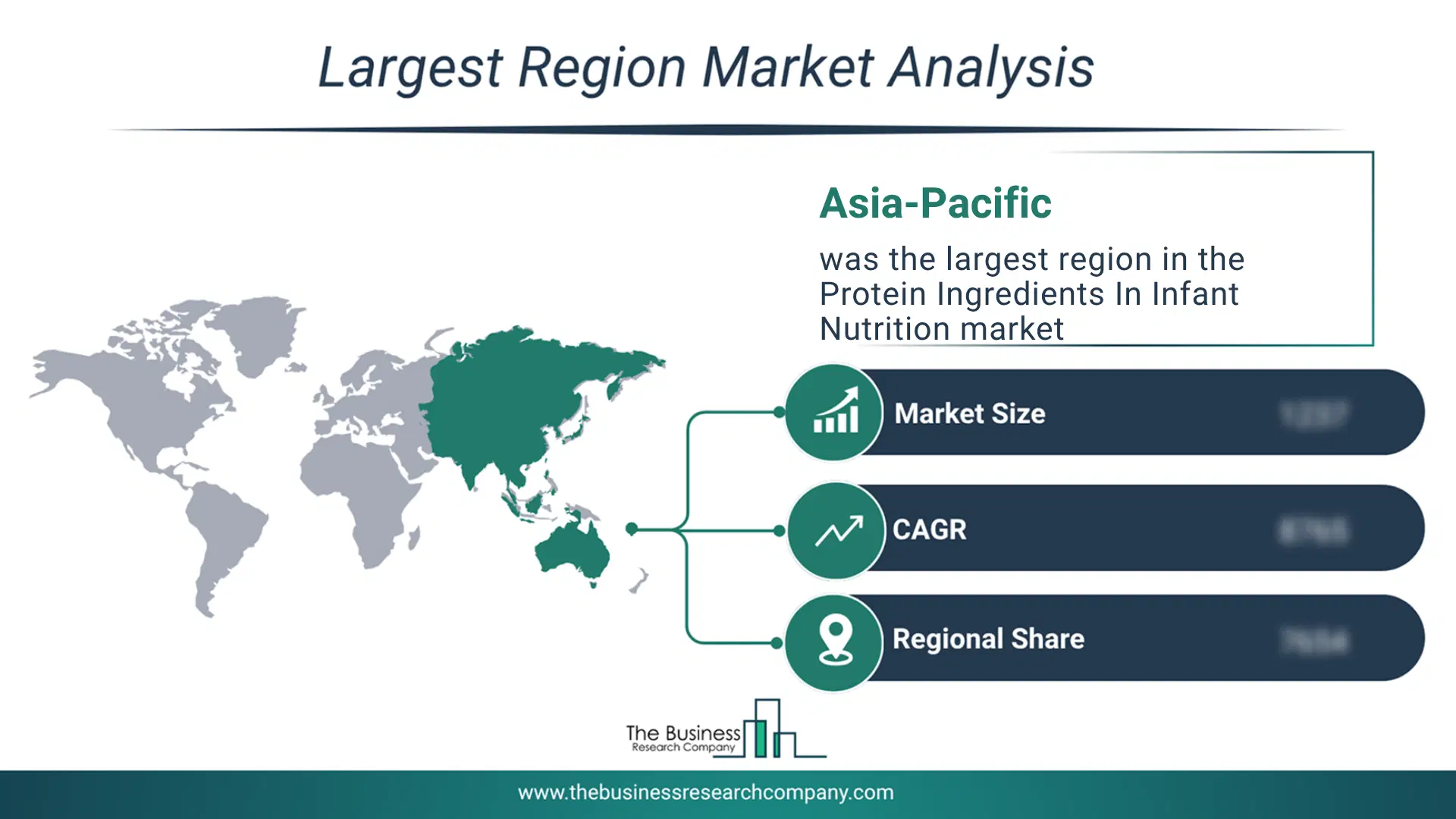
Regional Outlook
Asia-Pacific was the largest region in the protein ingredients in infant nutrition market in 2025. The regions covered in this market report are Asia-Pacific, South East Asia, Western Europe, Eastern Europe, North America, South America, Middle East and Africa. The countries covered in this market report are Australia, Brazil, China, France, Germany, India, Indonesia, Japan, Taiwan, Russia, South Korea, UK, USA, Italy, Spain, CanadaWhat Defines the Protein Ingredients In Infant Nutrition Market?
The protein ingredients in infant nutrition market consists of sales of protein ingredients used for the development and growth, as well as tissue healing, and aid in preserving the pH and appropriate balance of bodily fluids in infants. Values in this market are ‘factory gate’ values, that is the value of goods sold by the manufacturers or creators of the goods, whether to other entities (including downstream manufacturers, wholesalers, distributors and retailers) or directly to end customers. The value of goods in this market includes related services sold by the creators of the goods.How is Market Value Defined and Measured?
The market value is defined as the revenues that enterprises gain from the sale of goods and/or services within the specified market and geography through sales, grants, or donations in terms of the currency (in USD unless otherwise specified). The revenues for a specified geography are consumption values that are revenues generated by organizations in the specified geography within the market, irrespective of where they are produced. It does not include revenues from resales along the supply chain, either further along the supply chain or as part of other products.
This chart presents market attractiveness based on a quantitative evaluation of growth, competition, strategic alignment, and risk, offering a clear view of opportunity areas for decision-making. This chart is for illustrative purposes; the full report contains the complete analysis.

This chart highlights the Total Addressable Market (TAM) by estimating the maximum revenue opportunity using an assumption-driven approach, supporting strategic planning and opportunity sizing across markets. The chart is illustrative; the full report provides a more comprehensive analysis.
What Key Data and Analysis Are Included in the Protein Ingredients In Infant Nutrition Market Report 2026?
The protein ingredients in infant nutrition market research report is one of a series of new reports from The Business Research Company that provides market statistics, including industry global market size, regional shares, competitors with the market share, detailed market segments, market trends and opportunities, and any further data you may need to thrive in the protein ingredients in infant nutrition industry. The market research report delivers a complete perspective of everything you need, with an in-depth analysis of the current and future state of the industry.Protein Ingredients In Infant Nutrition Market Report Forecast Analysis
| Report Attribute | Details |
|---|---|
| Market Size Value In 2026 | $10.19 billion |
| Revenue Forecast In 2030 | $14.67 billion |
| Growth Rate | CAGR of 9.1% from 2026 to 2030 |
| Base Year For Estimation | 2025 |
| Actual Estimates/Historical Data | 2020-2025 |
| Forecast Period | 2026 - 2030 |
| Market Representation | Revenue in USD Billion and CAGR from 2026 to 2030 |
| Segments Covered | Product Type, Form, Source, Application |
| Regional Scope | Asia-Pacific, Western Europe, Eastern Europe, North America, South America, Middle East, Africa |
| Country Scope | The countries covered in the report are Australia, Brazil, China, France, Germany, India, Indonesia, Japan, Taiwan, Russia, South Korea, UK, USA, Canada, Italy, Spain. |
| Key Companies Profiled | Nestlé SA, Danone SA, Abbott Laboratories, Mead Johnson Nutrition Company, FrieslandCampina NV, Fonterra Cooperative Group Ltd., Arla Foods Ingredients Group P S, Inner Mongolia Yili Industrial Group Company Limited, Beingmate Baby And Child Food Co Ltd, Meiji Holdings Co Ltd, Ausnutria Dairy Corporation Ltd, China Feihe Limited, Synutra International Inc, Perrigo Company plc, HiPP GmbH And Co Vertrieb KG, Hain Celestial Group, Bellamy’s Organic, Holle Baby Food AG, Biostime Group, Royal DSM, Glanbia plc, Lactalis Group |
| Customization Scope | Request for Customization |
| Pricing And Purchase Options | Explore Purchase Options |