
Protein–Ligand Binding Prediction Artificial Intelligence (AI) Market Report 2026
Global Outlook – By Component (Software, Hardware, Services), By Technology (Machine Learning Algorithms, Deep Learning Models, Graph Neural Networks, Molecular Docking Tools, Quantitative Structure Activity Relationship Models), By Deployment Mode (On-Premises, Cloud), By Application (Drug Discovery, Molecular Docking, Virtual Screening, Structure-Based Drug Design, Other Applications), By End-User (Pharmaceutical And Biotechnology Companies, Academic And Research Institutes, Contract Research Organizations, Other End-Users) – Market Size, Trends, Strategies, and Forecast to 2030
Protein–Ligand Binding Prediction Artificial Intelligence (AI) Market Overview
• Protein–Ligand Binding Prediction Artificial Intelligence (AI) market size has reached to $1.5 billion in 2025 • Expected to grow to $4.63 billion in 2030 at a compound annual growth rate (CAGR) of 25.3% • Growth Driver: Surge In Adoption Of Precision Medicine Fueling The Growth Of The Market Due To Increasing Demand For Targeted And Genetically Tailored Therapies • Market Trend: Innovations In Artificial Intelligence (AI) Technology Enhance Accuracy And Efficiency In Protein–Ligand Binding Prediction • North America was the largest region in 2025 and Asia-Pacific is the fastest growing region.What Is Covered Under Protein–Ligand Binding Prediction Artificial Intelligence (AI) Market?
Protein–ligand binding prediction artificial intelligence (AI) is an advanced computational model that applies machine learning and deep learning techniques to estimate how strongly a small molecule binds to a target protein. These systems evaluate structural features, biochemical properties, and physicochemical characteristics to simulate molecular interactions, binding orientations, and complex stability. Protein–ligand binding prediction artificial intelligence (AI) enables faster and more precise in-silico analysis that streamlines molecular design and significantly supports drug discovery and therapeutic development. The main components of protein–ligand binding prediction artificial intelligence include software, hardware, and services. Software refers to platforms that use AI to predict interactions between proteins and ligands, enabling faster and more accurate drug discovery. These solutions leverage technologies such as machine learning algorithms, deep learning models, graph neural networks, molecular docking tools, and quantitative structure activity relationship models and are deployed through on-premises and cloud models. The various applications involved are drug discovery, molecular docking, virtual screening, structure-based drug design, and other applications, and they are used by several end users such as pharmaceutical and biotechnology companies, academic and research institutes, contract research organizations, and other end-users.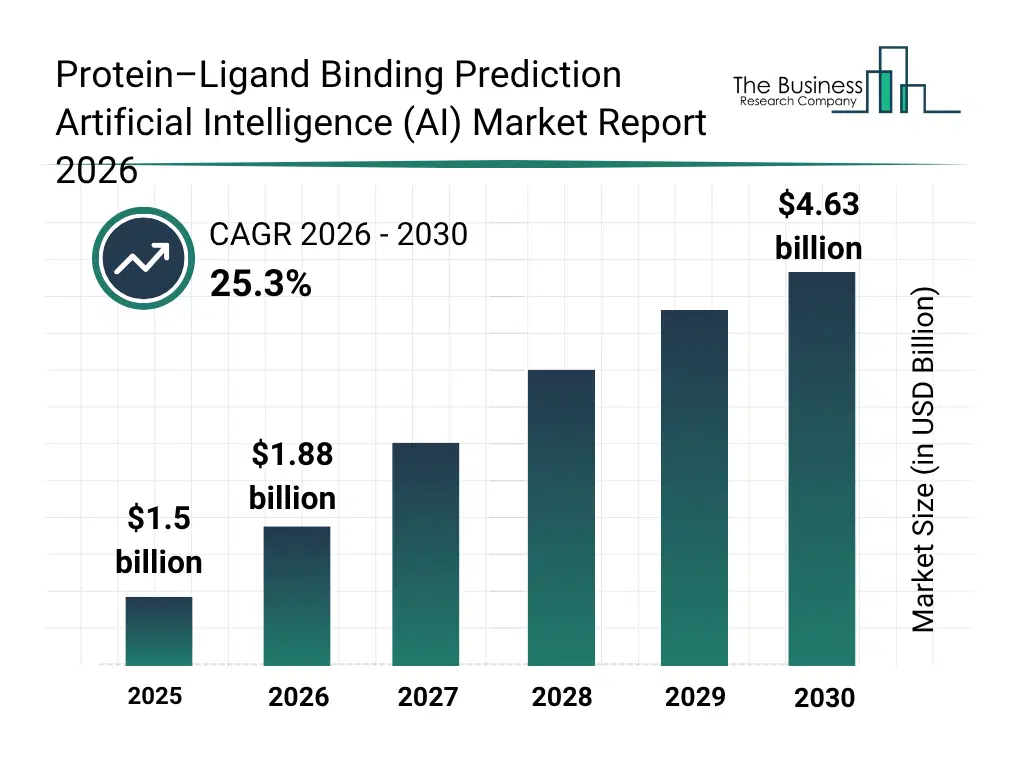
What Is The Protein–Ligand Binding Prediction Artificial Intelligence (AI) Market Size and Share 2026?
The protein–ligand binding prediction artificial intelligence (AI) market size has grown exponentially in recent years. It will grow from $1.5 billion in 2025 to $1.88 billion in 2026 at a compound annual growth rate (CAGR) of 25.1%. The growth in the historic period can be attributed to rise of computational chemistry, adoption of traditional molecular docking tools, increasing pharmaceutical R&D investment, growth of academic research in bioinformatics, availability of high-performance computing systems.What Is The Protein–Ligand Binding Prediction Artificial Intelligence (AI) Market Growth Forecast?
The protein–ligand binding prediction artificial intelligence (AI) market size is expected to see exponential growth in the next few years. It will grow to $4.63 billion in 2030 at a compound annual growth rate (CAGR) of 25.3%. The growth in the forecast period can be attributed to adoption of ai-powered protein-ligand prediction models, expansion of cloud-based computational platforms, integration of deep learning and graph neural networks, growing demand for faster drug discovery, investment in predictive modeling and simulation software. Major trends in the forecast period include integration of graph neural networks, ai-driven molecular docking optimization, cloud-based drug discovery platforms, automated virtual screening pipelines, predictive structure-activity relationship modeling.
Global Protein–Ligand Binding Prediction Artificial Intelligence (AI) Market Segmentation
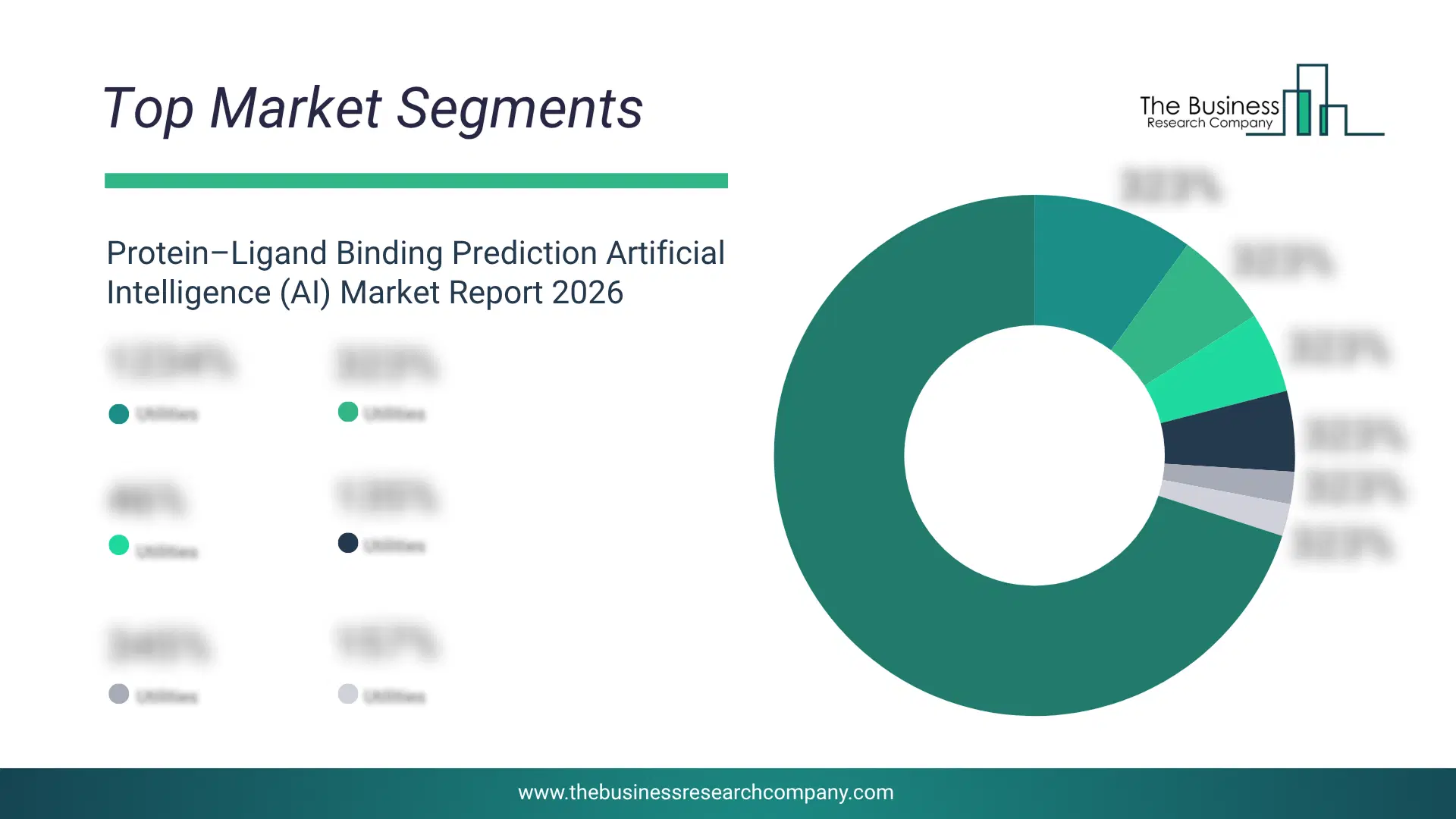
1) By Component: Software, Hardware, Services 2) By Technology: Machine Learning Algorithms, Deep Learning Models, Graph Neural Networks, Molecular Docking Tools, Quantitative Structure Activity Relationship Models 3) By Deployment Mode: On-Premises, Cloud 4) By Application: Drug Discovery, Molecular Docking, Virtual Screening, Structure-Based Drug Design, Other Applications 5) By End-User: Pharmaceutical And Biotechnology Companies, Academic And Research Institutes, Contract Research Organizations, Other End-Users Subsegments: 1) By Software: Molecular Docking Software, Machine Learning Prediction Software, Data Analysis Software, Visualization Software, Simulation Software 2) By Hardware: High Performance Computing Systems, Graphics Processing Units, Cloud Computing Infrastructure, Workstations, Storage Systems 3) By Services: Model Development Services, Data Curation Services, Consulting Services, Integration Services, Support and Maintenance ServicesWhat Is The Driver Of The Protein–Ligand Binding Prediction Artificial Intelligence (AI) Market?
The rising adoption of precision medicine is expected to propel the growth of the protein–ligand binding prediction artificial intelligence market going forward. Precision medicine refers to a medical approach that customizes disease prevention, diagnosis, and treatment based on an individual’s genetic profile, environmental factors, and lifestyle characteristics. The rising adoption of precision medicine is driven by improved treatment effectiveness, as therapies tailored to an individual’s genetic profile enhance clinical outcomes and reduce adverse effects. Protein–ligand binding prediction artificial intelligence supports precision medicine by accurately modeling patient-specific molecular interactions, enabling the design of highly targeted therapies that align with individual genetic and proteomic profiles. For instance, in February 2024, according to the Personalized Medicine Coalition, a US-based nonprofit advocacy organization, 16 new personalized treatments for rare diseases were approved, up from six in 2022. Therefore, the rising adoption of precision medicine is driving the growth of the protein–ligand binding prediction artificial intelligence market.Key Players In The Global Protein–Ligand Binding Prediction Artificial Intelligence (AI) Market
Major companies operating in the protein–ligand binding prediction artificial intelligence (AI) market are AstraZeneca plc, Evotec SE, Schrödinger Inc, XtalPi Holdings Limited, Insilico Medicine Inc, Ardigen Spółka Akcyjna, AI-Driven Therapeutics GmbH, Relay Therapeutics Inc, BenevolentAI SA, Deep Genomics Inc, Anima Biotech Inc, Atomwise Inc, Arzeda Corp, Aqemia Ltd, Envisagenics Inc, PostEra Ltd, Genesis Therapeutics Inc, Cradle Bio B V, Cloud Pharmaceuticals Inc, BioSymetrics Inc, Peptone Ltd, PharmAI Ltd, Aigenpulse Limited, Molecular Forecaster Inc, and Menten AI Inc.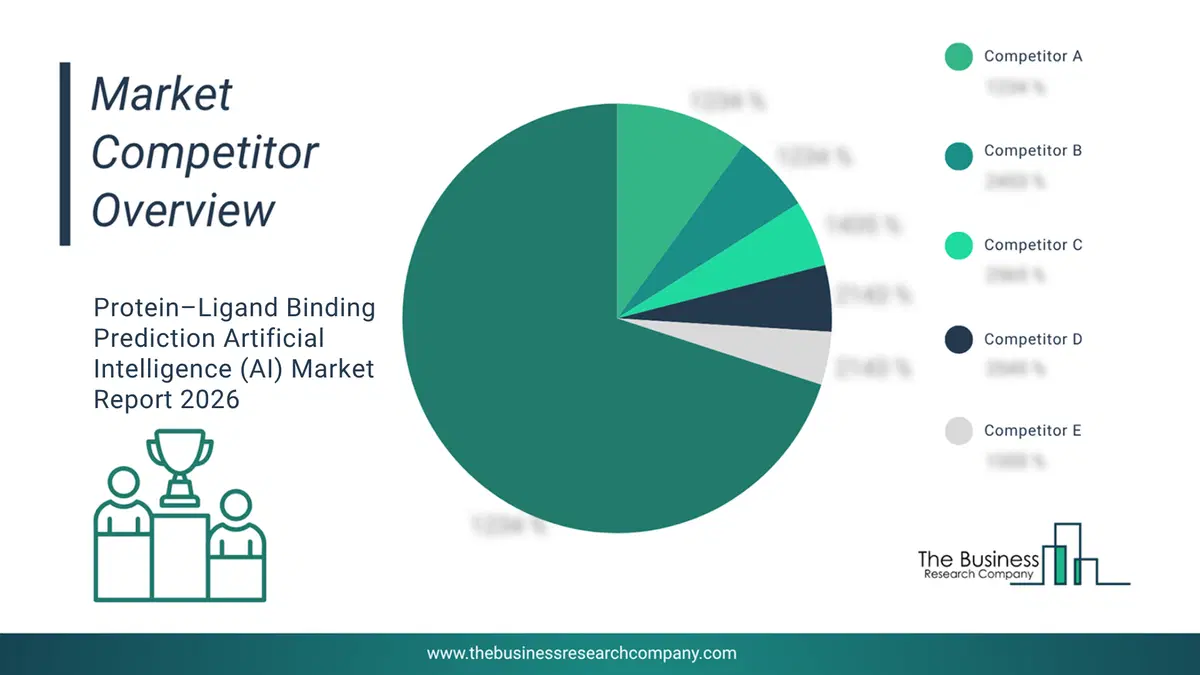
This chart is for illustrative purposes; the full report includes a detailed competitor analysis and comprehensive overview of the top 10 companies in the market.
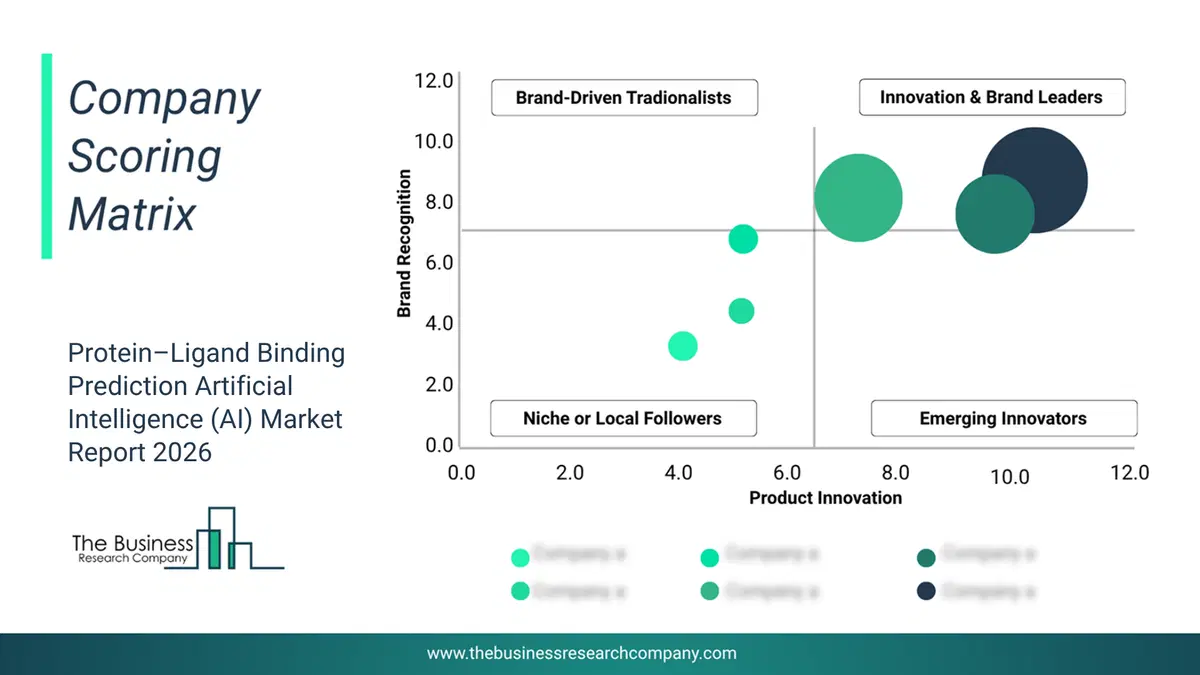
This chart maps companies by product innovation and brand strength, with bubble size indicating relative revenue, helping identify market leaders, challengers, and niche players. This is an illustrative chart; the full report provides a complete and accurate competitive analysis.
Global Protein–Ligand Binding Prediction Artificial Intelligence (AI) Market Trends and Insights
Major companies operating in the protein–ligand binding prediction artificial intelligence (AI) market are focusing on developing advanced solutions, such as structurally augmented AI datasets and predictive modeling platforms, to accelerate drug discovery and enhance pharmaceutical R&D efficiency. Structurally augmented protein–ligand binding AI platforms refer to machine learning systems trained on high-quality, experimentally validated structural and binding affinity data to accurately predict molecular interactions and therapeutic efficacy. For instance, in June 2025, SandboxAQ, a US-based enterprise SaaS company, unveiled its Structurally Augmented IC50 Repository (SAIR), a novel open dataset of protein–ligand structures labeled with experimentally derived binding affinities. This new solution focuses on providing a comprehensive, AI-ready dataset that integrates structural biology data with IC50 measurements, which helps researchers develop more accurate predictive models for drug-target interactions. It leverages large-scale curated structural datasets and advanced AI modeling techniques. The platform enables improved generalization, reduced experimental costs, and faster identification of promising drug candidates. It is engineered to support demanding pharmaceutical and biotechnology environments, ensuring scalable, data-driven, and high-precision performance for mission-critical drug discovery, molecular optimization, and therapeutic development initiatives.What Are Latest Mergers And Acquisitions In The Protein–Ligand Binding Prediction Artificial Intelligence (AI) Market?
In July 2023, BioNTech SE, a Germany‑based biotechnology company specializing in mRNA therapeutics and AI‑enabled drug discovery platforms, acquired InstaDeep Ltd. for an undisclosed amount. Through this acquisition, BioNTech aims to accelerate its AI‑driven protein and sequence analysis capabilities by integrating InstaDeep’s advanced machine learning and decision‑making systems, enhancing its ability to predict and optimize protein–ligand interactions and other computational drug discovery targets. InstaDeep Ltd. is a UK‑based provider of AI methods that can support protein‑ligand binding prediction.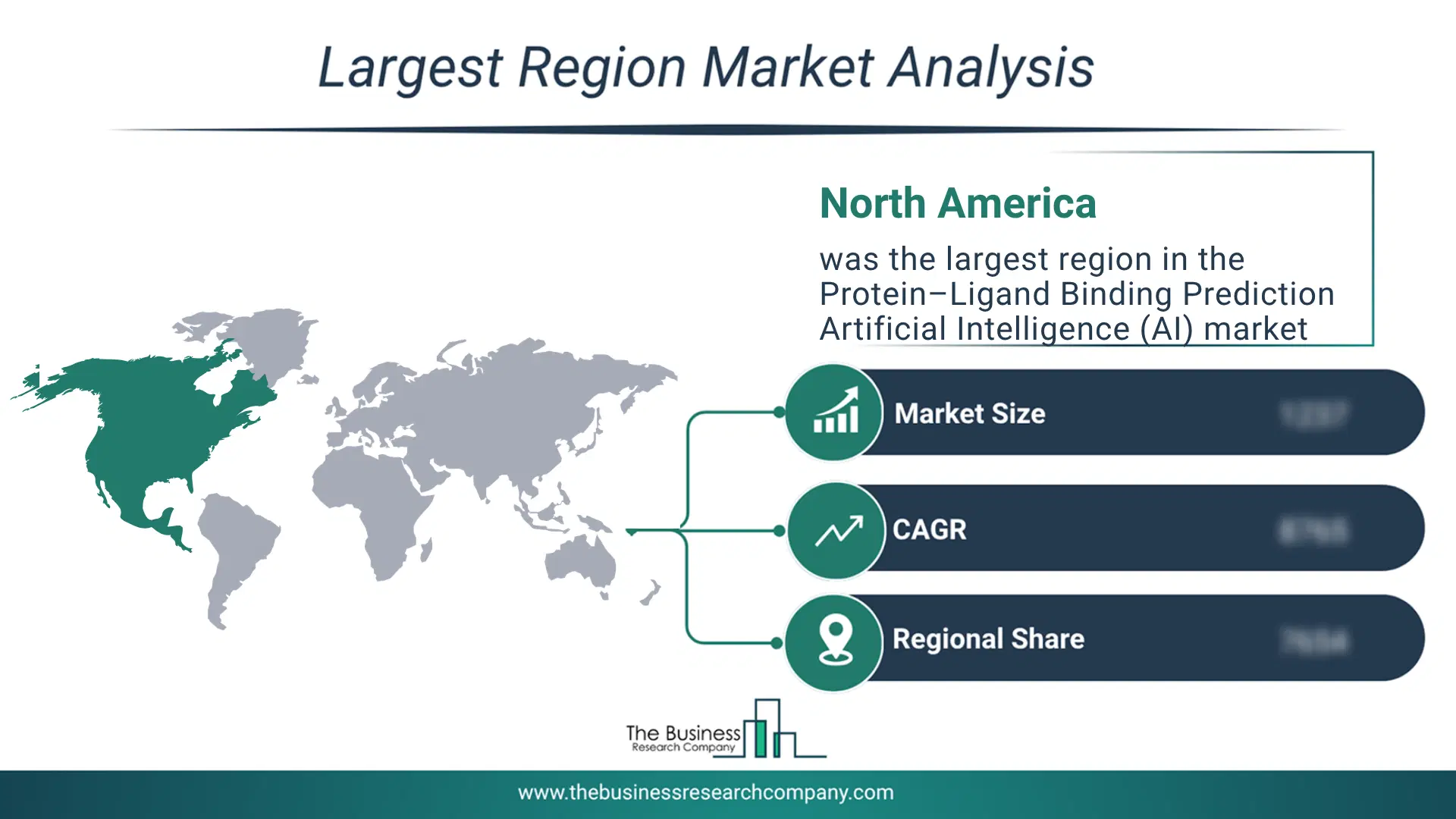
Regional Insights
North America was the largest region in the protein–ligand binding prediction artificial intelligence (AI) market in 2025. Asia-Pacific is expected to be the fastest-growing region in the forecast period. The regions covered in this market report are Asia-Pacific, South East Asia, Western Europe, Eastern Europe, North America, South America, Middle East, Africa. The countries covered in this market report are Australia, Brazil, China, France, Germany, India, Indonesia, Japan, Taiwan, Russia, South Korea, UK, USA, Canada, Italy, Spain.What Defines the Protein–Ligand Binding Prediction Artificial Intelligence (AI) Market?
The protein-ligand binding prediction artificial intelligence (AI) market consists of revenues earned by entities by providing services such as cloud-based computational modeling services, algorithm optimization services, and predictive analytics services. The market value includes the value of related goods sold by the service provider or included within the service offering. The protein–ligand binding prediction artificial intelligence (AI) market also includes sales of protein crystallization kits, assay plates, compound libraries, edge computing devices, and networking hardware. Values in this market are ‘factory gate’ values, that is, the value of goods sold by the manufacturers or creators of the goods, whether to other entities (including downstream manufacturers, wholesalers, distributors, and retailers) or directly to end customers. The value of goods in this market includes related services sold by the creators of the goods.How is Market Value Defined and Measured?
The market value is defined as the revenues that enterprises gain from the sale of goods and/or services within the specified market and geography through sales, grants, or donations in terms of the currency (in USD unless otherwise specified). The revenues for a specified geography are consumption values that are revenues generated by organizations in the specified geography within the market, irrespective of where they are produced. It does not include revenues from resales along the supply chain, either further along the supply chain or as part of other products.
This chart presents market attractiveness based on a quantitative evaluation of growth, competition, strategic alignment, and risk, offering a clear view of opportunity areas for decision-making. This chart is for illustrative purposes; the full report contains the complete analysis.

This chart highlights the Total Addressable Market (TAM) by estimating the maximum revenue opportunity using an assumption-driven approach, supporting strategic planning and opportunity sizing across markets. The chart is illustrative; the full report provides a more comprehensive analysis.
What Key Data And Analysis Are Included In The Protein–Ligand Binding Prediction Artificial Intelligence (AI) Market Report 2026?
The protein–ligand binding prediction artificial intelligence (ai) market research report is one of a series of new reports from The Business Research Company that provides market statistics, including industry global market size, regional shares, competitors with the market share, detailed market segments, market trends and opportunities, and any further data you may need to thrive in the protein–ligand binding prediction artificial intelligence (ai) industry. The market research report delivers a complete perspective of everything you need, with an in-depth analysis of the current and future state of the industry.Protein–Ligand Binding Prediction Artificial Intelligence (AI) Market Report Forecast Analysis
| Report Attribute | Details |
|---|---|
| Market Size Value In 2026 | $1.88 billion |
| Revenue Forecast In 2030 | $4.63 billion |
| Growth Rate | CAGR of 25.3% from 2026 to 2030 |
| Base Year For Estimation | 2025 |
| Actual Estimates/Historical Data | 2020-2025 |
| Forecast Period | 2026 - 2030 |
| Market Representation | Revenue in USD Billion and CAGR from 2026 to 2030 |
| Segments Covered | Component, Technology, Deployment Mode, Application, End-User |
| Regional Scope | Asia-Pacific, Western Europe, Eastern Europe, North America, South America, Middle East, Africa |
| Country Scope | The Countries Covered In This Market Report Are Australia, Brazil, China, France, Germany, India, Indonesia, Japan, Taiwan, Russia, South Korea, Uk, Usa, Canada, Italy, Spain. |
| Key Companies Profiled | AstraZeneca plc, Evotec SE, Schrödinger Inc, XtalPi Holdings Limited, Insilico Medicine Inc, Ardigen Spółka Akcyjna, AI-Driven Therapeutics GmbH, Relay Therapeutics Inc, BenevolentAI SA, Deep Genomics Inc, Anima Biotech Inc, Atomwise Inc, Arzeda Corp, Aqemia Ltd, Envisagenics Inc, PostEra Ltd, Genesis Therapeutics Inc, Cradle Bio B V, Cloud Pharmaceuticals Inc, BioSymetrics Inc, Peptone Ltd, PharmAI Ltd, Aigenpulse Limited, Molecular Forecaster Inc, and Menten AI Inc. |
| Customization Scope | Request for Customization |
| Pricing And Purchase Options | Explore Purchase Options |