
Protein Stability Analysis Market Report 2026
Global Outlook – By Product (Reagents And Assay Kits, Instruments, Consumable And Accessories, Software, Other Products), By Technique (Chromatography, Spectroscopy, Surface Plasma Resonance Imaging (SPRI), Differential Scanning Calorimetry (DSC), Differential Scanning Fluorimetry (DSF), Others Techniques), By End-User (Pharmaceutical And Biotechnology Companies, Contract Research Organizations, Academic And Research Institutes, Other End-Users) - Market Size, Trends, Strategies, and Forecast to 2030
Protein Stability Analysis Market Overview
• Protein Stability Analysis market size has reached to $2.62 billion in 2025 • Expected to grow to $4.7 billion in 2030 at a compound annual growth rate (CAGR) of 12.4% • Growth Driver: Increasing Demand For Biologics And Biosimilars Driving Market Growth Due To Advanced Targeted Therapies And Cost-Effective Treatment Options • Market Trend: Technological Advancements Driving Innovation In Biopharmaceutical Research • North America was the largest region in 2025 and Asia-Pacific is the fastest growing region.What Is Covered Under Protein Stability Analysis Market?
Protein stability analysis refers to the evaluation of how stable a protein is under various conditions, such as temperature, pH, solvent composition, or over time. This analysis helps determine the ability of a protein to maintain its structure (folded conformation) and function without aggregating or degrading. The main product types of protein stability analysis include reagents and assay kits, instruments, consumables and accessories, software, and other products. Reagents and assay kits are chemical substances and pre-packaged tools used in laboratories to detect, measure, or analyze biological or chemical reactions in research, diagnostics, or drug development. It is categorized by technique into chromatography, spectroscopy, surface plasma resonance imaging (SPRI), differential scanning calorimetry (DSC), differential scanning fluorimetry (DSF), and others and is used by several end users such as pharmaceutical and biotechnology companies, contract research organizations, academic and research institutes, and others.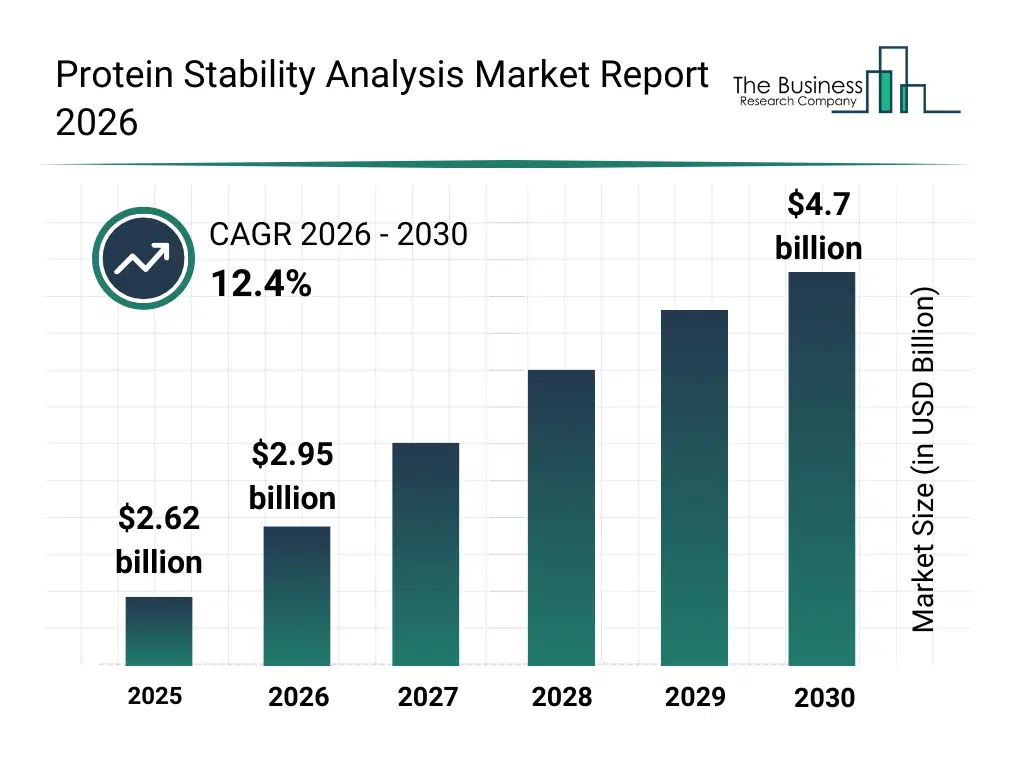
What Is The Protein Stability Analysis Market Size and Share 2026?
The protein stability analysis market size has grown rapidly in recent years. It will grow from $2.62 billion in 2025 to $2.95 billion in 2026 at a compound annual growth rate (CAGR) of 12.7%. The growth in the historic period can be attributed to expansion of biologics and biosimilar development, availability of advanced analytical instruments, increased focus on formulation optimization, growth in pharmaceutical R&D spending, wider adoption of stability testing protocols.What Is The Protein Stability Analysis Market Growth Forecast?
The protein stability analysis market size is expected to see rapid growth in the next few years. It will grow to $4.7 billion in 2030 at a compound annual growth rate (CAGR) of 12.4%. The growth in the forecast period can be attributed to increasing demand for accelerated stability studies, rising integration of ai-driven data analysis, expansion of contract research services, growing complexity of protein therapeutics, increasing regulatory emphasis on product stability. Major trends in the forecast period include increasing adoption of high-throughput stability testing, rising use of advanced spectroscopy techniques, growing integration of automation in protein analysis, expansion of data-driven stability modeling, enhanced focus on biologic drug development.
Global Protein Stability Analysis Market Segmentation
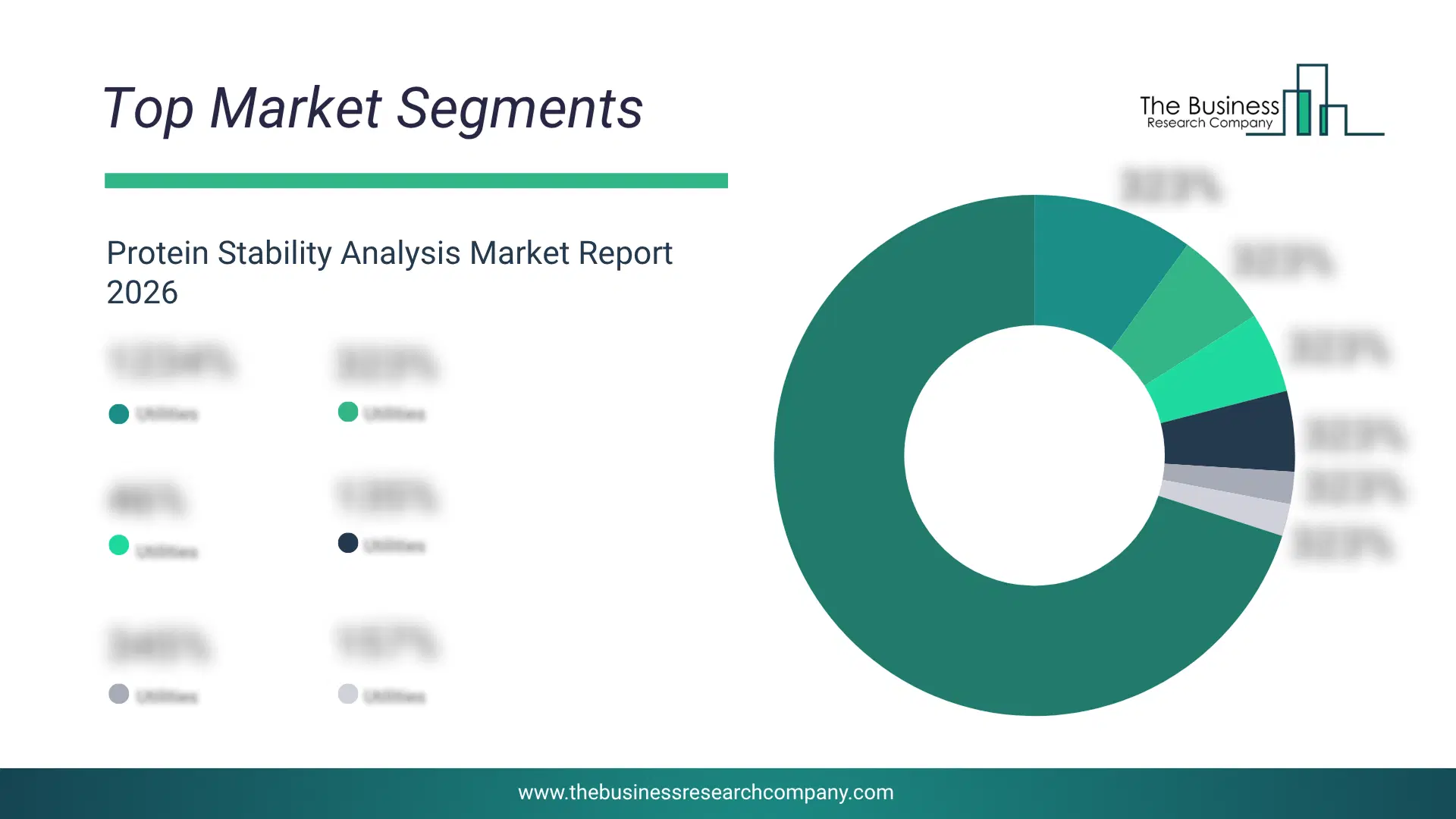
1) By Product: Reagents And Assay Kits, Instruments, Consumable And Accessories, Software, Other Products 2) By Technique: Chromatography, Spectroscopy, Surface Plasma Resonance Imaging (SPRI), Differential Scanning Calorimetry (DSC), Differential Scanning Fluorimetry (DSF), Others Techniques 3) By End-User: Pharmaceutical And Biotechnology Companies, Contract Research Organizations, Academic And Research Institutes, Other End-Users Subsegments: 1) By Reagents And Assay Kits: Thermal Shift Assay Kits, Fluorescence-Based Assay Kits, Colorimetric Assay Kits, Binding Assay Kits, Aggregation Detection Kits 2) By Instruments: Differential Scanning Calorimeters, Fluorescence Spectrometers, Chromatography Systems, Mass Spectrometers, Circular Dichroism Spectrometers, Surface Plasmon Resonance Instruments 3) By Consumable And Accessories: Microplates And Cuvettes, Pipette Tips, Filters And Membranes, Sample Tubes And Vials, Calibration Standards 4) By Software: Data Analysis Software, Protein Modeling Software, Thermal Stability Analysis Software, Chromatography Data Systems, Mass Spectrometry Data Software 5) By Other Products: Calibration Kits, Sample Preparation Devices, Automation Systems, Maintenance Kits, Laboratory Storage SolutionsWhat Is The Driver Of The Protein Stability Analysis Market?
Increasing demand for biologics and biosimilars is expected to propel the growth of the protein stability analysis market going forward. Biologics are complex, large-molecule drugs derived from living organisms used to treat various diseases, while biosimilars are highly similar, lower-cost versions of approved biologics with no meaningful clinical differences. The growing demand for biologics and biosimilars is due to patients and healthcare providers seeking advanced, targeted therapies that offer improved treatment outcomes, greater accessibility, and reduced costs for chronic and complex diseases. Protein stability analysis is helpful for biologics and biosimilars to ensure their safety, effectiveness, and shelf life by monitoring structural integrity and preventing degradation. For instance, according to Samsung Bioepis Co. Ltd., a South Korea-based biopharmaceutical company, in 2024, the Food and Drug Administration (FDA), a US-based federal agency, approved 45 biosimilars, with 38 of them launched in the US, highlighting strong market uptake compared to total approvals. Therefore, the increasing demand for biologics and biosimilars methods is driving growth in the protein stability analysis industry.Key Players In The Global Protein Stability Analysis Market
Major companies operating in the protein stability analysis market are Roche Diagnostics GmbH, Thermo Fisher Scientific Inc, General Electric Healthcare Inc, Agilent Technologies Inc, Charles River Laboratories International Inc, PerkinElmer Inc, Shimadzu Corporation, Sartorius AG, Waters Corporation, Bruker Corporation, HORIBA Ltd, Spectris plc, Unchained Labs Inc, NanoTemper Technologies GmbH, Enzo Life Sciences Inc, Jasco Inc, Setaram Instrumentation SAS, Luminex Corporation, Malvern Panalytical Ltd, BioRad Laboratories Inc, Danaher Corporation, Merck KGaA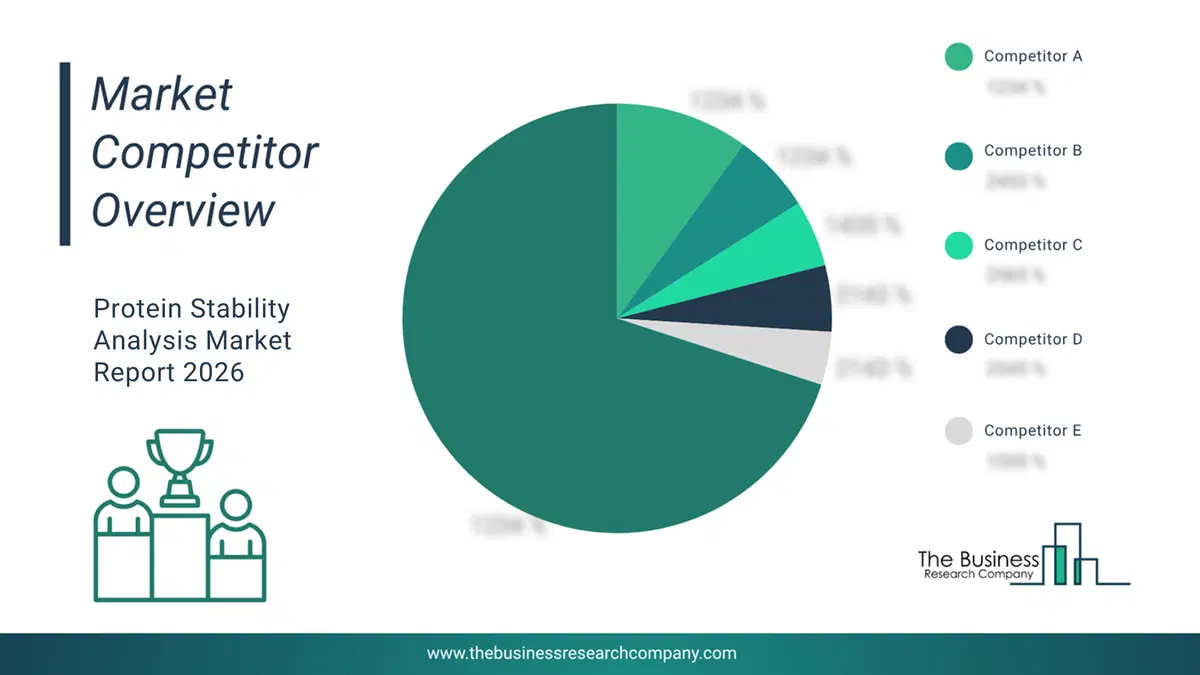
This chart is for illustrative purposes; the full report includes a detailed competitor analysis and comprehensive overview of the top 10 companies in the market.
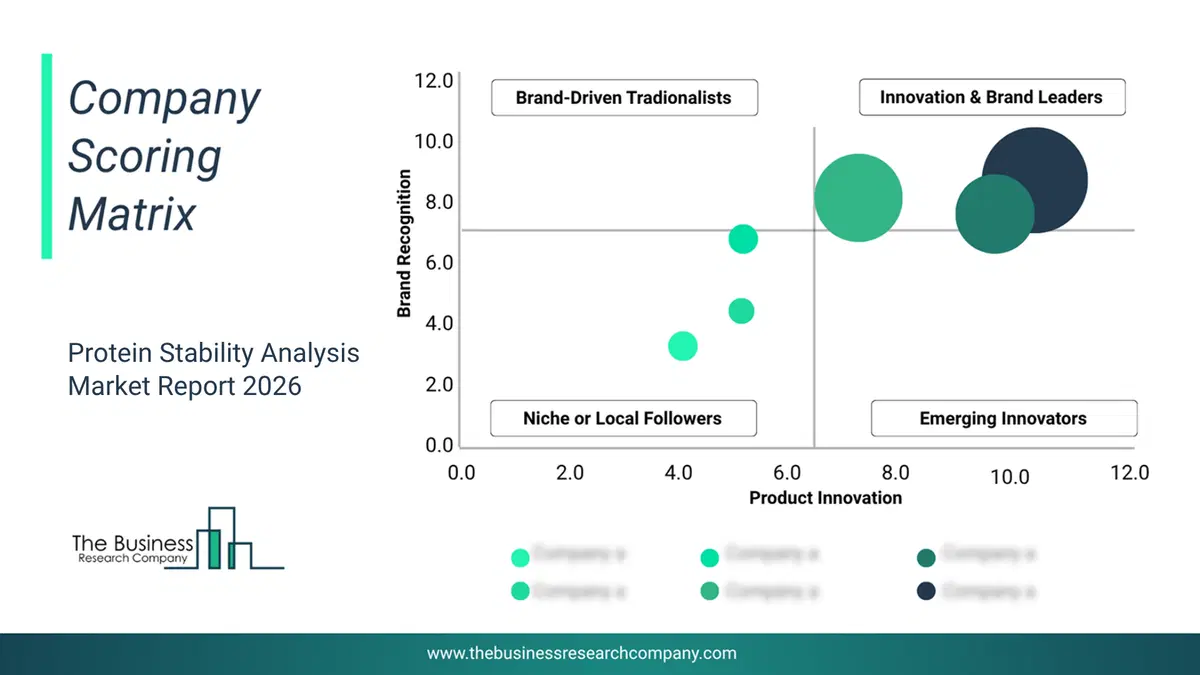
This chart maps companies by product innovation and brand strength, with bubble size indicating relative revenue, helping identify market leaders, challengers, and niche players. This is an illustrative chart; the full report provides a complete and accurate competitive analysis.
Global Protein Stability Analysis Market Trends and Insights
Major companies operating in the protein stability analysis market are focusing on technological innovations, such as the Veloci biopharma analyzer, to offer advanced molecular fingerprinting tools that enhance accuracy, speed, and efficiency in protein characterization and quality assessment. The Veloci biopharma analyzer is an advanced instrument using A-TEEM technology to provide rapid, label-free molecular fingerprinting for life science applications such as protein stability analysis and vaccine characterization. For instance, in March 2025, Horiba Advanced Techno Co. Ltd., a Japan-based analytical solutions and measurement equipment company, launched four new analytical instruments, including a biopharma analyzer with A-TEEM technology, a high-throughput Raman plate reader, and an advanced atomic force microscopy system, designed to enhance molecular fingerprinting, real-time reaction monitoring, and multimodal material analysis. These innovations aim to support critical applications in biopharmaceutical research, such as cell culture media analysis, vaccine development, and protein characterization.What Are Latest Mergers And Acquisitions In The Protein Stability Analysis Market?
In February 2023, Yokogawa Electric Corporation, a Japan-based industrial automation and instrumentation company, acquired Fluence Analytics Inc. for an undisclosed amount. With this acquisition, Yokogawa sought to strengthen its real-time analytics and process-monitoring capabilities to accelerate digital transformation and enable more autonomous operations for polymer and biopharmaceutical customers. Fluence Analytics Inc. is a US-based technology company that specializes in real-time polymerization and bioprocess analytics through its Automatic Continuous Online Monitoring of Polymerizations (ACOMP) system, which measures and analyzes multiple polymer properties continuously.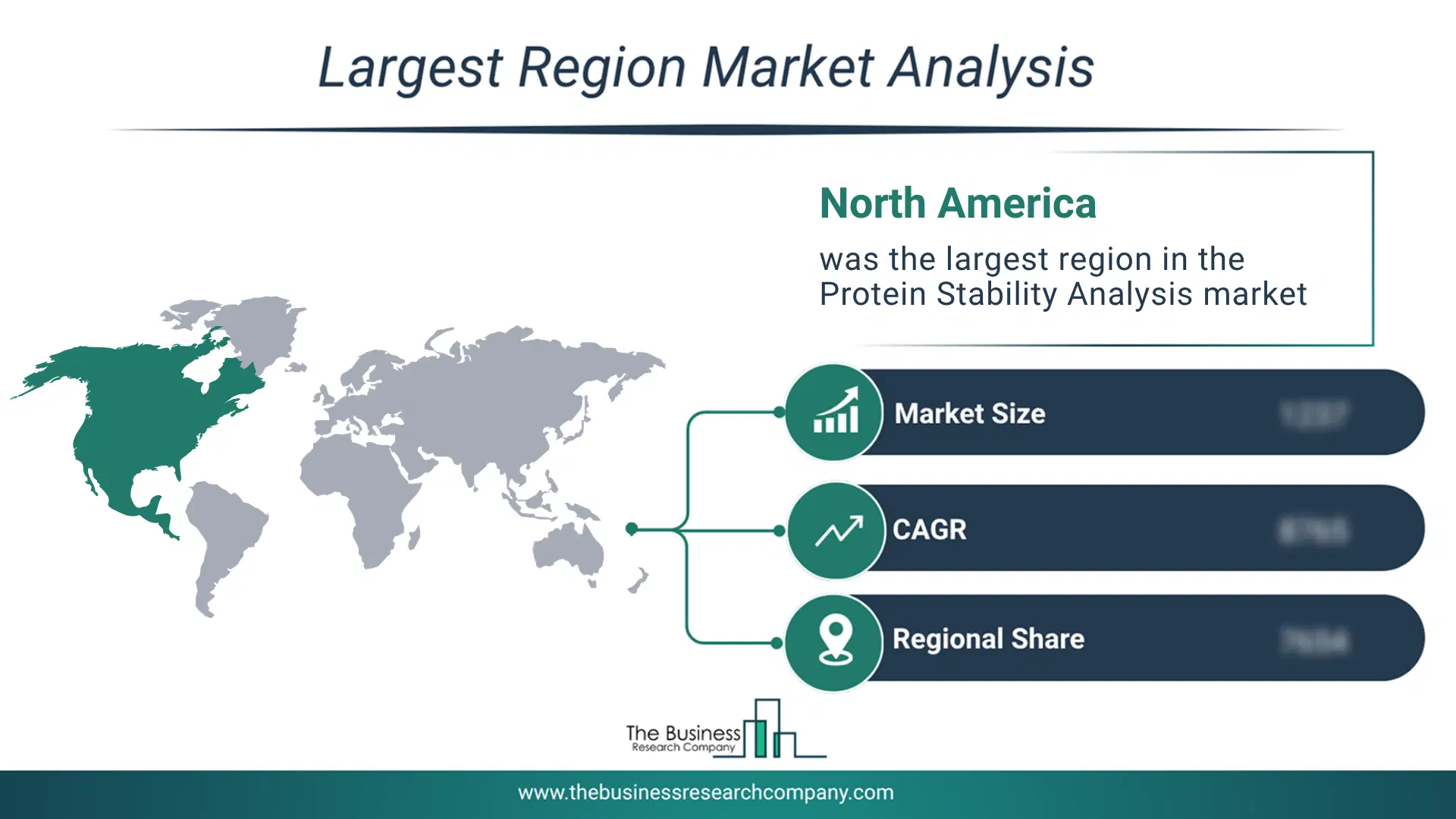
Regional Outlook
North America was the largest region in the protein stability analysis market in 2025. Asia-Pacific is expected to be the fastest-growing region in the forecast period. The regions covered in this market report are Asia-Pacific, South East Asia, Western Europe, Eastern Europe, North America, South America, Middle East, Africa. The countries covered in this market report are Australia, Brazil, China, France, Germany, India, Indonesia, Japan, Taiwan, Russia, South Korea, UK, USA, Canada, Italy, Spain.What Defines the Protein Stability Analysis Market?
The protein stability analysis market consists of revenues earned by entities providing services such as thermal stability testing, structural analysis, and protein stability screening. The market value includes the value of related goods sold by the service provider or included within the service offering. The protein stability analysis market also includes sales of thermal shift assays, circular dichroism spectrometers, and differential scanning calorimetry instruments. Values in this market are 'factory gate' values, meaning the value of goods sold by manufacturers or creators of the products, whether to other entities (including downstream manufacturers, wholesalers, distributors, and retailers) or directly to end customers. The value of goods in this market also includes related services sold by the creators of the goods, such as installation, software updates, training, and maintenance support.How is Market Value Defined and Measured?
The market value is defined as the revenues that enterprises gain from the sale of goods and/or services within the specified market and geography through sales, grants, or donations in terms of the currency (in USD unless otherwise specified). The revenues for a specified geography are consumption values that are revenues generated by organizations in the specified geography within the market, irrespective of where they are produced. It does not include revenues from resales along the supply chain, either further along the supply chain or as part of other products.
This chart presents market attractiveness based on a quantitative evaluation of growth, competition, strategic alignment, and risk, offering a clear view of opportunity areas for decision-making. This chart is for illustrative purposes; the full report contains the complete analysis.

This chart highlights the Total Addressable Market (TAM) by estimating the maximum revenue opportunity using an assumption-driven approach, supporting strategic planning and opportunity sizing across markets. The chart is illustrative; the full report provides a more comprehensive analysis.
What Key Data and Analysis Are Included in the Protein Stability Analysis Market Report 2026?
The protein stability analysis market research report is one of a series of new reports from The Business Research Company that provides market statistics, including industry global market size, regional shares, competitors with the market share, detailed market segments, market trends and opportunities, and any further data you may need to thrive in the protein stability analysis industry. The market research report delivers a complete perspective of everything you need, with an in-depth analysis of the current and future state of the industry.Protein Stability Analysis Market Report Forecast Analysis
| Report Attribute | Details |
|---|---|
| Market Size Value In 2026 | $2.95 billion |
| Revenue Forecast In 2030 | $4.7 billion |
| Growth Rate | CAGR of 12.4% from 2026 to 2030 |
| Base Year For Estimation | 2025 |
| Actual Estimates/Historical Data | 2020-2025 |
| Forecast Period | 2026 - 2030 |
| Market Representation | Revenue in USD Billion and CAGR from 2026 to 2030 |
| Segments Covered | Product, Technique, End-User |
| Regional Scope | Asia-Pacific, Western Europe, Eastern Europe, North America, South America, Middle East, Africa |
| Country Scope | The countries covered in the report are Australia, Brazil, China, France, Germany, India, Indonesia, Japan, Taiwan, Russia, South Korea, UK, USA, Canada, Italy, Spain |
| Key Companies Profiled | Roche Diagnostics GmbH, Thermo Fisher Scientific Inc, General Electric Healthcare Inc, Agilent Technologies Inc, Charles River Laboratories International Inc, PerkinElmer Inc, Shimadzu Corporation, Sartorius AG, Waters Corporation, Bruker Corporation, HORIBA Ltd, Spectris plc, Unchained Labs Inc, NanoTemper Technologies GmbH, Enzo Life Sciences Inc, Jasco Inc, Setaram Instrumentation SAS, Luminex Corporation, Malvern Panalytical Ltd, BioRad Laboratories Inc, Danaher Corporation, Merck KGaA |
| Customization Scope | Request for Customization |
| Pricing And Purchase Options | Explore Purchase Options |