
PROteolysis TArgeting Chimera (PROTAC) Protein Degrader Cancer Therapeutics Market Report 2026
Global Outlook – By Therapy Line ( First Line Therapy, Second Line And Beyond, Combination Regimens), By Technology Platform ( Heterobifunctional Proteolysis Targeting Chimera, Molecular Glue Degraders, Lysosome Targeting, Autophagy Tethering Compounds Platform), By Cancer Indication ( Estrogen Receptor Positive Or Human Epidermal Growth Factor Receptor Two Negative Breast Cancer, Prostate Cancer, Hematologic Malignancies, Lung Cancer, Other Cancer Indications), By End User ( Pharmaceutical Companies, Biotechnology Companies, Academic And Research Institutes, Contract Development And Manufacturing Organizations) – Market Size, Trends, Strategies, and Forecast to 2030
PROteolysis TArgeting Chimera (PROTAC) Protein Degrader Cancer Therapeutics Market Report 2026 Market Overview
• PROteolysis TArgeting Chimera (PROTAC) Protein Degrader Cancer Therapeutics Market Report 2026 market size has reached to $1.48 billion in 2025 • Expected to grow to $4.24 billion in 2030 at a compound annual growth rate (CAGR) of 23.4% • Growth Driver: Surge In Cancer Prevalence Fueling The Growth Of The Market Due To Ageing Population And Rising Cancer Burden • Market Trend: Advancements In PROTAC Technology Drive Development Of Targeted Protein Degrader Cancer Therapies • North America was the largest region in 2025 and Asia-Pacific is the fastest growing region.What Is Covered Under PROteolysis TArgeting Chimera (PROTAC) Protein Degrader Cancer Therapeutics Market?
Proteolysis targeting chimera (PROTAC) protein degrader cancer therapeutics refers to a class of targeted therapies that use bifunctional molecules to selectively bind disease-causing proteins and mark them for destruction within the cell. These therapeutics work by recruiting the cell’s ubiquitin–proteasome system to degrade specific oncogenic proteins rather than merely inhibiting their activity. The proteolysis targeting chimera (PROTAC) protein degrader cancer therapeutics approach enables sustained suppression of cancer-driving proteins, even those considered difficult to target with conventional small-molecule drugs. The main therapy lines of PROteolysis TArgeting Chimera (PROTAC) protein degrader cancer therapeutics include first line therapy, second line and beyond, and combination regimens. First line therapy refers to the initial treatment approach used to manage cancer conditions with targeted protein degradation strategies. These therapeutics use technology platforms such as heterobifunctional proteolysis targeting chimera, molecular glue degraders, lysosome targeting, and autophagy tethering compounds platform. They are applied in cancer indications including estrogen receptor positive or human epidermal growth factor receptor two negative breast cancer, prostate cancer, hematologic malignancies, lung cancer, and others and are utilized by end users including pharmaceutical companies, biotechnology companies, academic and research institutes, and contract development and manufacturing organizations.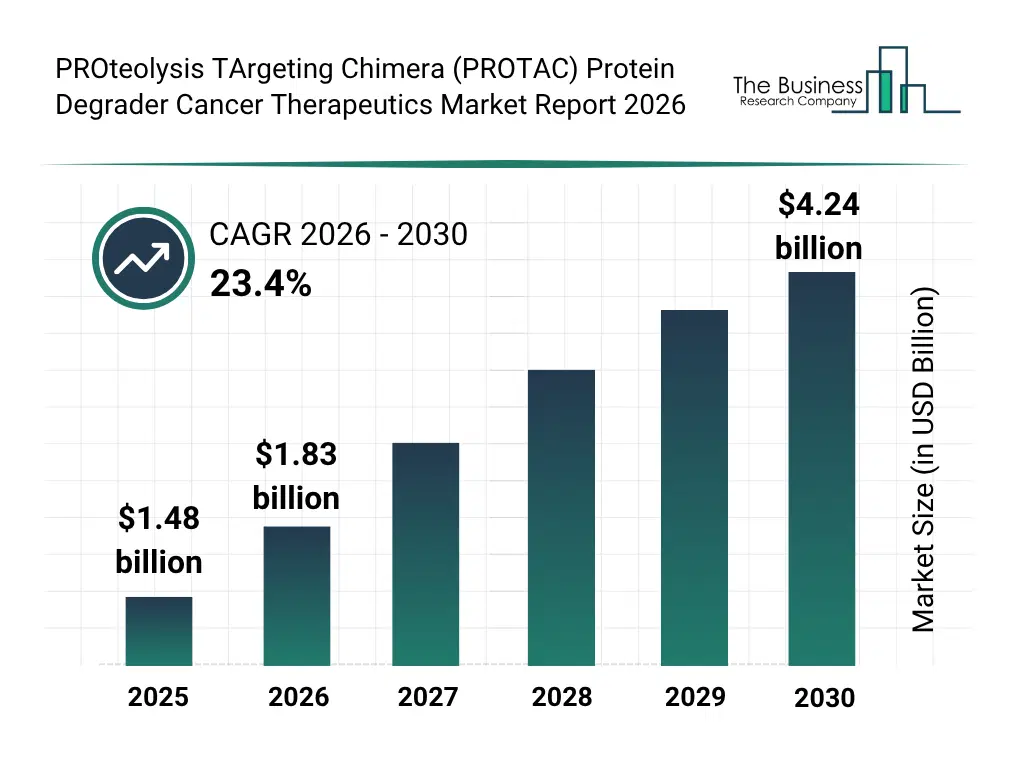
What Is The PROteolysis TArgeting Chimera (PROTAC) Protein Degrader Cancer Therapeutics Market Size and Share 2026?
The proteolysis targeting chimera (PROTAC) protein degrader cancer therapeutics market size has grown exponentially in recent years. It will grow from $1.48 billion in 2025 to $1.83 billion in 2026 at a compound annual growth rate (CAGR) of 23.8%. The growth in the historic period can be attributed to rise of targeted cancer therapy demand, limitations of conventional small molecule inhibitors for undruggable proteins, advances in ubiquitin–proteasome system understanding, increasing investment in oncology drug discovery, growth of precision oncology biomarker development.What Is The PROteolysis TArgeting Chimera (PROTAC) Protein Degrader Cancer Therapeutics Market Growth Forecast?
The proteolysis targeting chimera (PROTAC) protein degrader cancer therapeutics market size is expected to see exponential growth in the next few years. It will grow to $4.24 billion in 2030 at a compound annual growth rate (CAGR) of 23.4%. The growth in the forecast period can be attributed to rising clinical trials for next generation protein degraders, expansion of applications into solid tumors beyond hematologic cancers, improved safety and pharmacokinetic optimization of degrader drugs, increasing regulatory approvals for novel degradation platforms, growing demand for personalized oncology therapeutics. Major trends in the forecast period include expansion of heterobifunctional protein degrader molecules targeting undruggable oncogenic proteins, development of molecular glue degraders as an alternative targeted protein degradation strategy, optimization of linker chemistry to improve cell permeability and oral bioavailability of degraders, diversification of e3 ligase ligand discovery to overcome resistance and expand target coverage, increasing use of combination regimens integrating protein degradation with existing oncology therapies.
Global PROteolysis TArgeting Chimera (PROTAC) Protein Degrader Cancer Therapeutics Market Segmentation
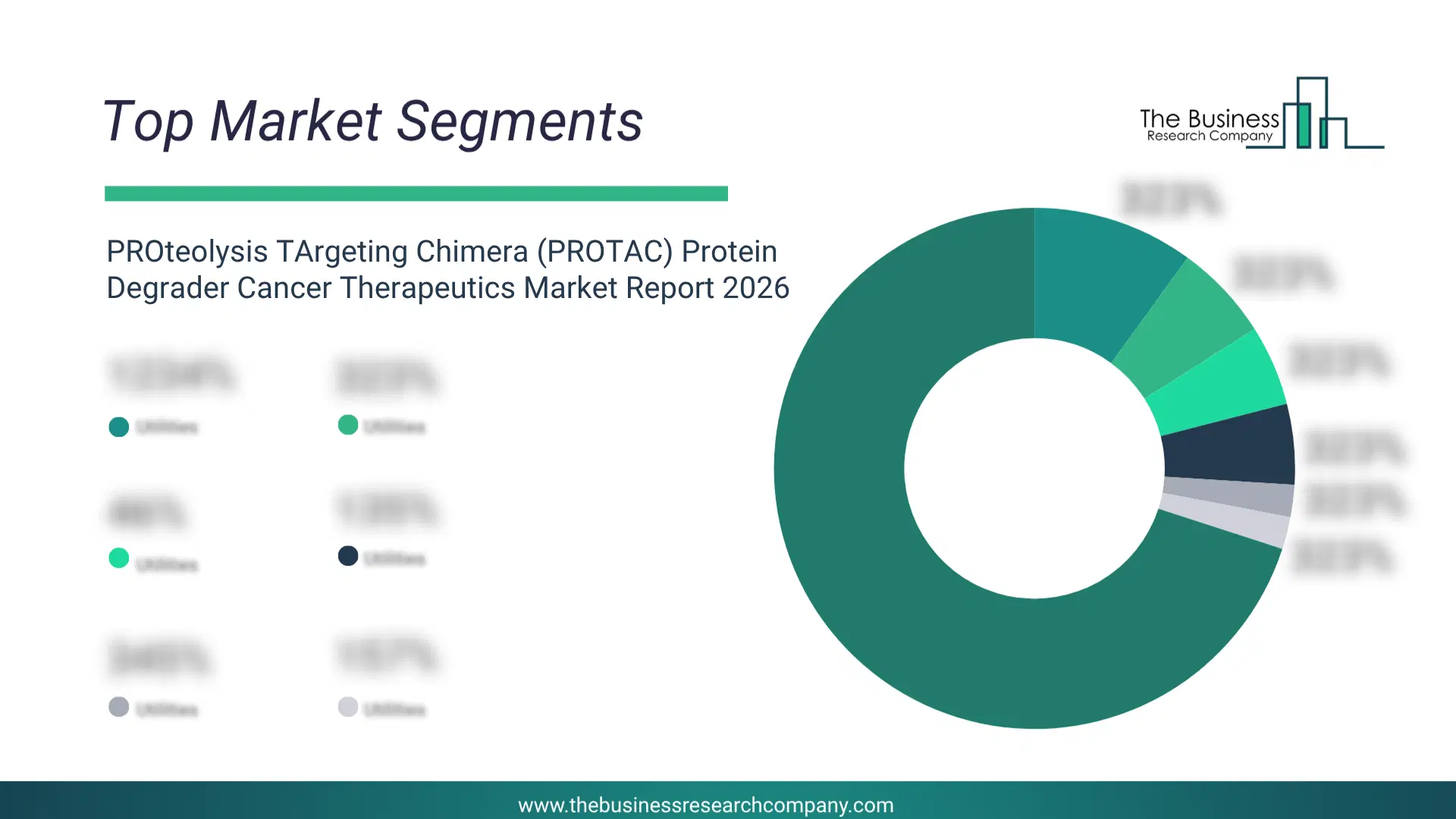
1) By Therapy Line: First Line Therapy, Second Line And Beyond, Combination Regimens 2) By Technology Platform: Heterobifunctional Proteolysis Targeting Chimera, Molecular Glue Degraders, Lysosome Targeting, Autophagy Tethering Compounds Platform 3) By Cancer Indication: Estrogen Receptor Positive Or Human Epidermal Growth Factor Receptor Two Negative Breast Cancer, Prostate Cancer, Hematologic Malignancies, Lung Cancer, Other Cancer Indications 4) By End User: Pharmaceutical Companies, Biotechnology Companies, Academic And Research Institutes, Contract Development And Manufacturing Organizations Subsegments: 1) By First Line Therapy: Targeted Therapy, Chemotherapy, Immunotherapy, Hormonal Therapy, Radiotherapy 2) By Second Line And Beyond: Salvage Therapy, Palliative Therapy, Maintenance Therapy, Rechallenge Therapy, Experimental Therapy 3) By Combination Regimens: Targeted Therapy Plus Chemotherapy, Immunotherapy Plus Chemotherapy, Targeted Therapy Plus Immunotherapy, Chemotherapy Plus Radiotherapy, Multimodal TherapyWhat Are The Drivers Of The PROteolysis TArgeting Chimera (PROTAC) Protein Degrader Cancer Therapeutics Market?
The increasing cancer prevalence is expected to propel the growth of the proteolysis targeting chimera (PROTAC) protein degrader cancer therapeutics market going forward. Cancer refers to a group of diseases characterized by the uncontrolled growth and spread of abnormal cells in the body. The increasing prevalence of cancer is driven by an aging population, as cancer risk rises significantly with age due to the accumulation of genetic mutations over time. PROTAC protein degrader cancer therapeutics help in cancer treatment by selectively targeting and degrading disease-causing proteins within cancer cells, thereby blocking tumor growth and overcoming resistance to conventional therapies. For instance, in May 2025, according to the National Cancer Institute, a US-based government department, approximately 2,041,910 new cancer cases would be diagnosed in the United States, alongside about 618,120 deaths from the disease. Therefore, the increasing cancer prevalence is driving the growth of the PROTAC protein degrader cancer therapeutics market. The expanding biotechnology and pharmaceutical research and development spending is expected to propel the growth of the proteolysis targeting chimera (PROTAC) protein degrader cancer therapeutics market going forward. Biotechnology and pharmaceutical research and development spending refers to the funds allocated for the discovery, development, and testing of new drugs, biologics, and medical technologies to improve healthcare outcomes. The expansion in biotechnology and pharmaceutical research and development spending is driven by increasing demand for advanced therapeutics, as higher investment supports faster innovation and the development of more effective and targeted treatment solutions. Proteolysis targeting chimera (PROTAC) protein degrader cancer therapeutics support biotechnology and pharmaceutical research and development spending by accelerating investment in innovative targeted therapies that improve drug discovery efficiency and treatment effectiveness. For instance, in February 2025, according to the National Center for Science and Engineering Statistics (NCSES), a U.S.-based government statistical agency, U.S. research and development expenditures rose from $892 billion in 2022 to $940 billion in 2023, reflecting an increase of $48 billion. Therefore, the expanding biotechnology and pharmaceutical research and development spending is driving the growth of the proteolysis targeting chimera (PROTAC) protein degrader cancer therapeutics industry.Key Players In The Global PROteolysis TArgeting Chimera (PROTAC) Protein Degrader Cancer Therapeutics Market
Major companies operating in the proteolysis targeting chimera (protac) protein degrader cancer therapeutics market report are Bayer AG, AstraZeneca PLC, Bristol Myers Squibb Company, BeiGene Ltd., SK Life Science Labs, PeptiDream Inc., Kymera Therapeutics Inc., Arvinas Inc., Nurix Therapeutics Inc., Monte Rosa Therapeutics Inc., Ascentage Pharma Group International, Cullgen Inc., C4 Therapeutics Inc., Ambagon Therapeutics Inc., Kintor Pharmaceutical Limited, Seed Therapeutics Inc., BioTheryX Inc., FIMECS Inc., Beactica Therapeutics AB, Captor Therapeutics S.A., Alivexis Inc., Gluetacs Therapeutics Inc., Roche Holding AG, Merck KGaA, Novartis AG, GlaxoSmithKline PLC, Sanofi SA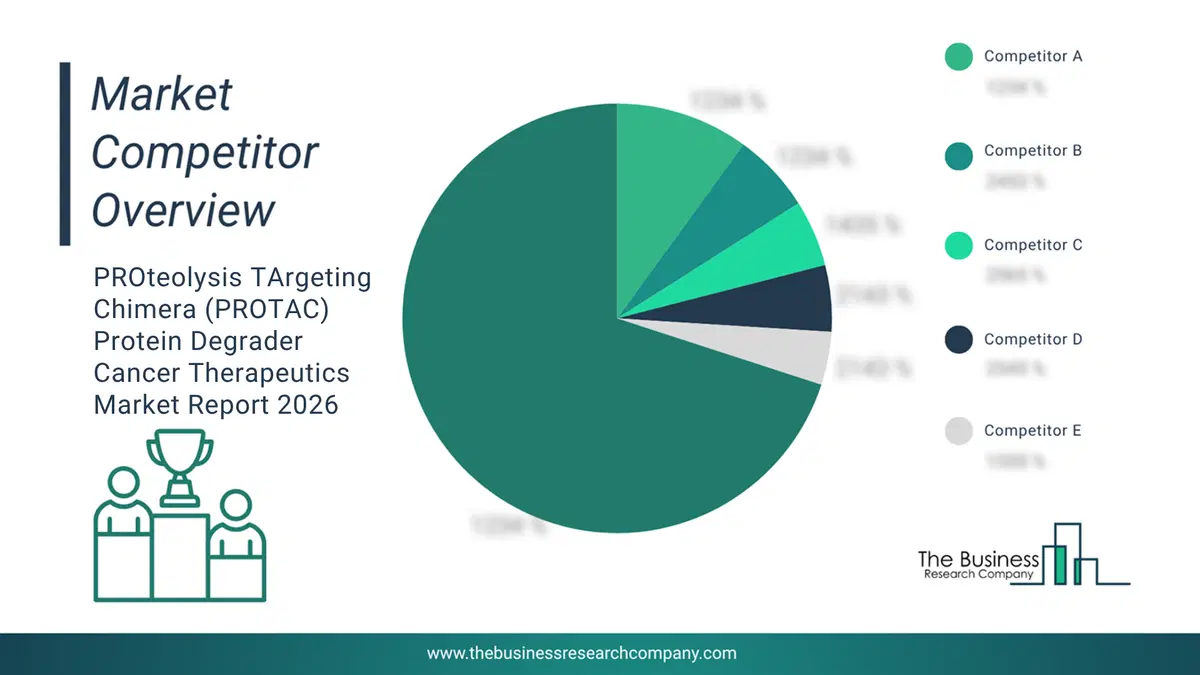
This chart is for illustrative purposes; the full report includes a detailed competitor analysis and comprehensive overview of the top 10 companies in the market.
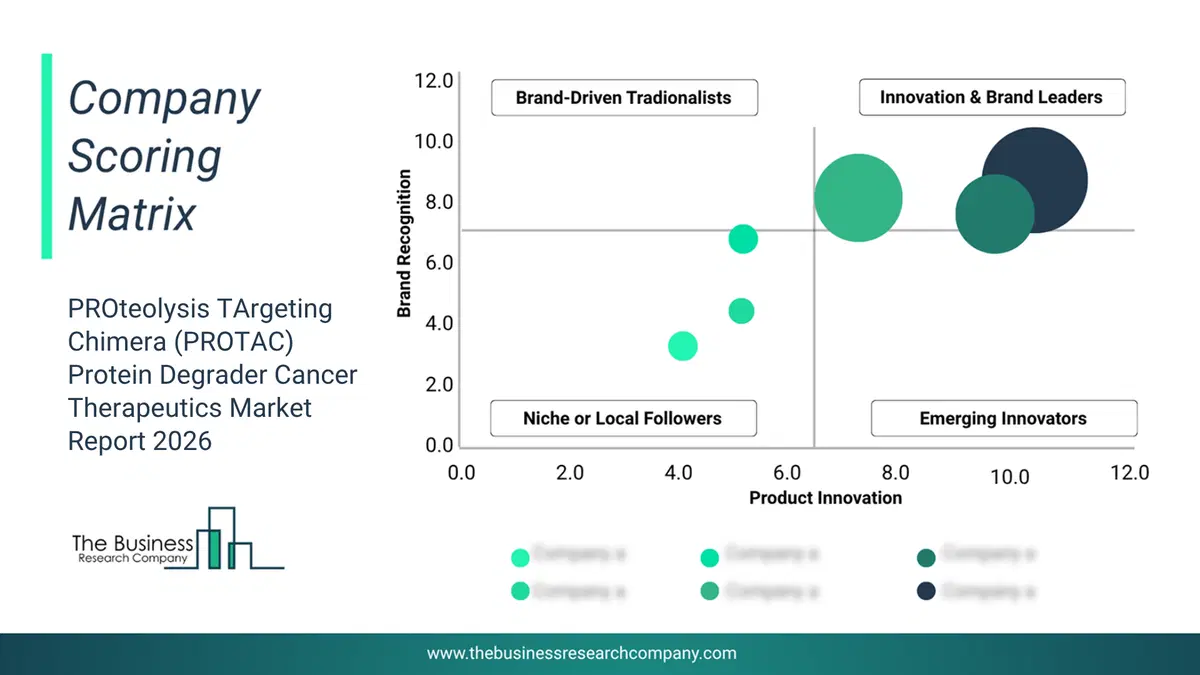
This chart maps companies by product innovation and brand strength, with bubble size indicating relative revenue, helping identify market leaders, challengers, and niche players. This is an illustrative chart; the full report provides a complete and accurate competitive analysis.
Global PROteolysis TArgeting Chimera (PROTAC) Protein Degrader Cancer Therapeutics Market Trends and Insights
Major companies operating in the PROTAC protein degrader cancer therapeutics market are focusing on developing innovative targeted protein degradation therapies, such as CDK2 PROTAC degraders, to improve treatment efficacy, overcome resistance mechanisms, and enable selective elimination of cancer-driving proteins. A CDK2 PROTAC degrader is a targeted therapeutic molecule designed to induce the degradation of cyclin-dependent kinase 2 (CDK2), a key regulator of cell-cycle progression that is frequently implicated in tumor growth and treatment resistance. For instance, in October 2024, NiKang Therapeutics, a US-based biotechnology company, presented the discovery of NKT3964 at the EORTC-NCI-AACR Symposium 2024. NKT3964 is a first-in-class, highly potent, selective, and orally bioavailable CDK2 PROTAC degrader developed for cancer therapy. Preclinical studies demonstrated robust and selective CDK2 degradation, significant antitumor activity across multiple cancer models, and favorable pharmacokinetic properties, highlighting its potential as a next-generation targeted protein degradation therapy for oncology applications.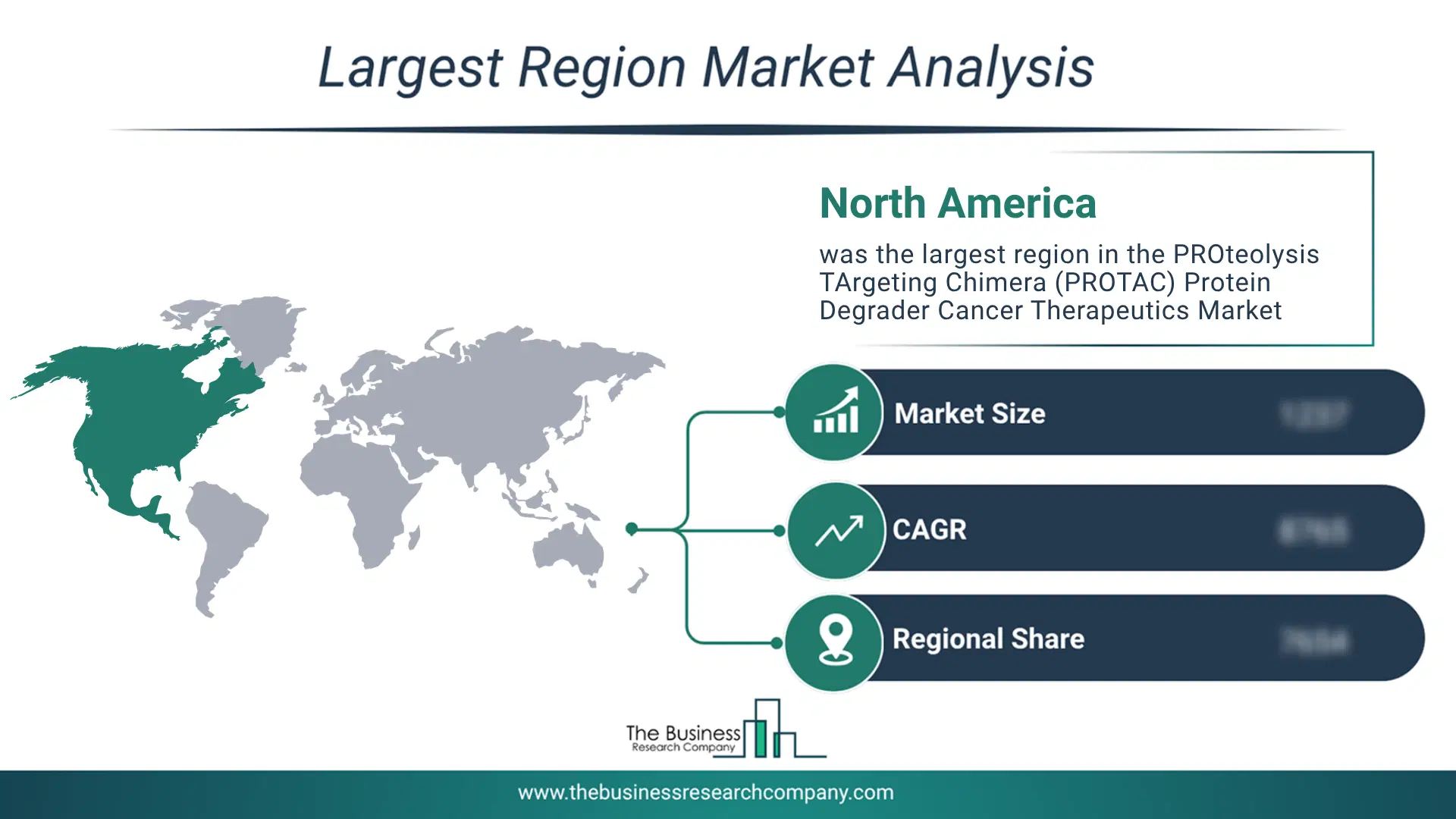
Regional Outlook
North America was the largest region in the proteolysis targeting chimera (PROTAC) protein degrader cancer therapeutics market in 2025. Asia-Pacific is expected to be the fastest-growing region in the forecast period. The regions covered in this market report are Asia-Pacific, South East Asia, Western Europe, Eastern Europe, North America, South America, Middle East, Africa. The countries covered in this market report are Australia, Brazil, China, France, Germany, India, Indonesia, Japan, Taiwan, Russia, South Korea, UK, USA, Canada, Italy, Spain.What Defines the PROteolysis TArgeting Chimera (PROTAC) Protein Degrader Cancer Therapeutics Market?
The proteolysis targeting chimera (PROTAC) protein degrader cancer therapeutics market consists of revenues earned by entities by providing services such as regulatory affairs services, bioanalytical and pharmacokinetic services, and translational research services. The market value includes the value of related goods sold by the service provider or included within the service offering. The proteolysis targeting chimera (PROTAC) protein degrader cancer therapeutics market also includes sales of proteasome activity assay kits, compound screening libraries, and ubiquitin pathway reagents. Values in this market are ‘factory gate’ values, that is, the value of goods sold by the manufacturers or creators of the goods, whether to other entities (including downstream manufacturers, wholesalers, distributors, and retailers) or directly to end customers. The value of goods in this market includes related services sold by the creators of the goods.How is Market Value Defined and Measured?
The market value is defined as the revenues that enterprises gain from the sale of goods and/or services within the specified market and geography through sales, grants, or donations in terms of the currency (in USD unless otherwise specified). The revenues for a specified geography are consumption values that are revenues generated by organizations in the specified geography within the market, irrespective of where they are produced. It does not include revenues from resales along the supply chain, either further along the supply chain or as part of other products.
This chart presents market attractiveness based on a quantitative evaluation of growth, competition, strategic alignment, and risk, offering a clear view of opportunity areas for decision-making. This chart is for illustrative purposes; the full report contains the complete analysis.

This chart highlights the Total Addressable Market (TAM) by estimating the maximum revenue opportunity using an assumption-driven approach, supporting strategic planning and opportunity sizing across markets. The chart is illustrative; the full report provides a more comprehensive analysis.
What Key Data and Analysis Are Included in the PROteolysis TArgeting Chimera (PROTAC) Protein Degrader Cancer Therapeutics Market Report 2026?
The proteolysis targeting chimera (protac) protein degrader cancer therapeutics market research report is one of a series of new reports from The Business Research Company that provides market statistics, including industry global market size, regional shares, competitors with the market share, detailed market segments, market trends and opportunities, and any further data you may need to thrive in the proteolysis targeting chimera (protac) protein degrader cancer therapeutics industry. The market research report delivers a complete perspective of everything you need, with an in-depth analysis of the current and future state of the industry.PROteolysis TArgeting Chimera (PROTAC) Protein Degrader Cancer Therapeutics Market Report Forecast Analysis
| Report Attribute | Details |
|---|---|
| Market Size Value In 2026 | $1.83 billion |
| Revenue Forecast In 2030 | $4.24 billion |
| Growth Rate | CAGR of 23.4% from 2026 to 2030 |
| Base Year For Estimation | 2025 |
| Actual Estimates/Historical Data | 2020-2025 |
| Forecast Period | 2026 - 2030 |
| Market Representation | Revenue in USD Billion and CAGR from 2026 to 2030 |
| Segments Covered | Therapy Line, Technology Platform, Cancer Indication, End User |
| Regional Scope | Asia-Pacific, Western Europe, Eastern Europe, North America, South America, Middle East, Africa |
| Country Scope | The countries covered in the report are Australia, Brazil, China, France, Germany, India, Indonesia, Japan, Taiwan, Russia, South Korea, UK, USA, Canada, Italy, Spain. |
| Key Companies Profiled | Bayer AG, AstraZeneca PLC, Bristol Myers Squibb Company, BeiGene Ltd., SK Life Science Labs, PeptiDream Inc., Kymera Therapeutics Inc., Arvinas Inc., Nurix Therapeutics Inc., Monte Rosa Therapeutics Inc., Ascentage Pharma Group International, Cullgen Inc., C4 Therapeutics Inc., Ambagon Therapeutics Inc., Kintor Pharmaceutical Limited, Seed Therapeutics Inc., BioTheryX Inc., FIMECS Inc., Beactica Therapeutics AB, Captor Therapeutics S.A., Alivexis Inc., Gluetacs Therapeutics Inc., Roche Holding AG, Merck KGaA, Novartis AG, GlaxoSmithKline PLC, Sanofi SA |
| Customization Scope | Request for Customization |
| Pricing And Purchase Options | Explore Purchase Options |