
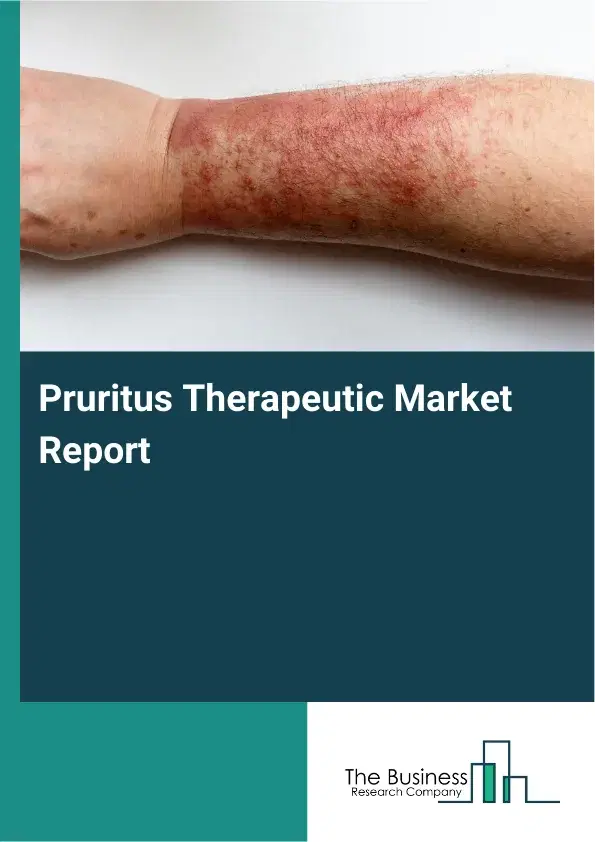
Pruritus Therapeutic Market Report 2026
Global Outlook – By Type (Corticosteroids, Antihistamines, Local Anesthetics, Counterirritants, Immunosuppressant, Calcineurin Inhibitors, Others Types), By Disease Type (Atopic Dermatitis Or Eczema, Allergic Contact Dermatitis, Urticaria, Cutaneous T-Cell, Other Disease Types), By Application (External Use, Oral, Injection), By End Use (Hospitals, Clinics, Other Uses) - Market Size, Trends, Strategies, and Forecast to 2030
Pruritus Therapeutic Market Overview
• Pruritus Therapeutic market size has reached to $15.38 billion in 2025 • Expected to grow to $24.04 billion in 2030 at a compound annual growth rate (CAGR) of 9.4% • Growth Driver: Surging Chronic Kidney Disease Cases Fuel Growth In The Pruritus Therapeutic Market • Market Trend: Amgen And Kyowa Kirin Collaborate On Rocatinlimab For Moderate-To-Severe Atopic Dermatitis Treatment • North America was the largest region in 2025.What Is Covered Under Pruritus Therapeutic Market?
Pruritus therapeutic refers to the treatment of pruritus which refer to the uncomfortable feeling that makes a person want to scratch. It can be caused by a variety of factors, which include contact with an allergen, dry skin, pregnancy, and the body's reaction to a medicine. The main pruritus therapeutic types are corticosteroids, antihistamines, local anesthetics, counterirritants, immunosuppressants, calcineurin inhibitors, and others. Corticosteroids refer to a kind of anti-inflammatory medication that closely matches the hormone cortisol, which the adrenal glands naturally generate. The various disease types are atopic dermatitis or eczema, allergic contact dermatitis, urticaria, cutaneous t-cell, and others, which include using application procedures with external use, oral, and injection. These are used by hospitals, clinics, and others.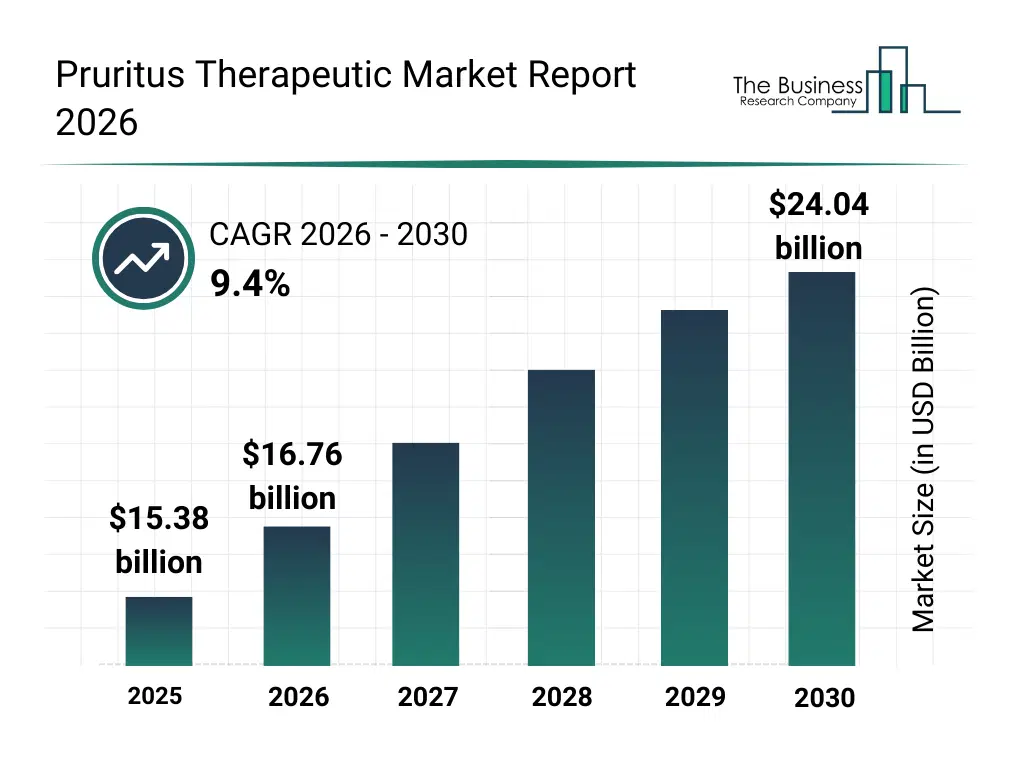
What Is The Pruritus Therapeutic Market Size and Share 2026?
The pruritus therapeutic market size has grown strongly in recent years. It will grow from $15.38 billion in 2025 to $16.76 billion in 2026 at a compound annual growth rate (CAGR) of 9.0%. The growth in the historic period can be attributed to increasing prevalence of dermatological and systemic conditions, wider use of antihistamines and corticosteroids, expansion of outpatient dermatology services, growing patient awareness of itch-related disorders, availability of diverse therapeutic options.What Is The Pruritus Therapeutic Market Growth Forecast?
The pruritus therapeutic market size is expected to see strong growth in the next few years. It will grow to $24.04 billion in 2030 at a compound annual growth rate (CAGR) of 9.4%. The growth in the forecast period can be attributed to increasing investment in novel itch-modulating therapies, rising focus on personalized pruritus treatment, expansion of biologic and immunomodulatory drug pipelines, growing demand for non-steroidal therapies, increasing clinical research activity. Major trends in the forecast period include increasing development of targeted antipruritic drugs, rising adoption of combination drug therapies, growing focus on disease-specific pruritus management, expansion of advanced topical formulations, enhanced emphasis on long-term symptom relief.
Global Pruritus Therapeutic Market Segmentation
1) By Type: Corticosteroids, Antihistamines, Local Anesthetics, Counterirritants, Immunosuppressant, Calcineurin Inhibitors, Others Types 2) By Disease Type: Atopic Dermatitis Or Eczema, Allergic Contact Dermatitis, Urticaria, Cutaneous T-Cell, Other Disease Types 3) By Application: External Use, Oral, Injection 4) By End Use: Hospitals, Clinics, Other Uses Subsegments: 1) By Corticosteroids: Topical Corticosteroids, Systemic Corticosteroids 2) By Antihistamines: First-Generation Antihistamines, Second-Generation Antihistamines 3) By Local Anesthetics: Topical Local Anesthetics, Injectable Local Anesthetics 4) By Counterirritants: Menthol-Based Products, Camphor-Based Products 5) By Immunosuppressants: Systemic Immunosuppressants, Topical Immunosuppressants 6) By Calcineurin Inhibitors: Tacrolimus, Pimecrolimus 7) By Other Types: Antidepressants, Phototherapy Treatments, Biologic And Targeted TherapiesWhat Is The Driver Of The Pruritus Therapeutic Market?
The increasing incidence of chronic kidney disease is expected to propel the growth of the pruritus therapeutic market in the coming years. Chronic Kidney Disease (CKD) is a long-term disorder in which the kidneys gradually decrease their capacity to function correctly and is classified into five severity levels. Pruritus, often known as itching, is a frequent symptom of chronic kidney disease (CKD). Pruritus in CKD can have a variety of reasons, although the specific processes are unknown. For instance, in June 2023, according to Kidney Research UK, a UK-based charitable organization that conducts research and advocacy efforts to improve understanding, prevention, and treatment of kidney diseases, an estimated 7.19 million people in the UK were affected by chronic kidney disease in 2023, representing more than 10% of the UK population and projected to increase to 7.61 million people by 2033. Therefore, the increasing incidence of chronic kidney disease is driving the pruritus therapeutic industry.Key Players In The Global Pruritus Therapeutic Market
Major companies operating in the pruritus therapeutic market are Astellas Pharma Inc., Bristol Myers Squibb Company, Cipla Inc., Eli Lilly And Company, Galderma Laboratories LP, GlaxoSmithKline plc, Merck And Co. Inc., Novartis AG, Pfizer Inc., Sanofi SA, Abbott Laboratories, Almirall SA, Eisai Co. Ltd., Glenmark Pharmaceuticals Ltd., Ipca Laboratories Ltd., Lupin Chemicals Ltd., Cara Therapeutics Inc., EPI Health LLC, AbbVie Inc., Bayer AG, Bausch Health Companies Inc., Regeneron Pharmaceuticals Inc., Huapont Life Sciences Co. Ltd., LEO Pharma AS, MC2 Therapeutics Ltd., Novan Inc., Trevi Therapeutics Inc., UCB SA, Viatris Inc., Teva Pharmaceutical Industries Ltd.
This chart is for illustrative purposes; the full report includes a detailed competitor analysis and comprehensive overview of the top 10 companies in the market.
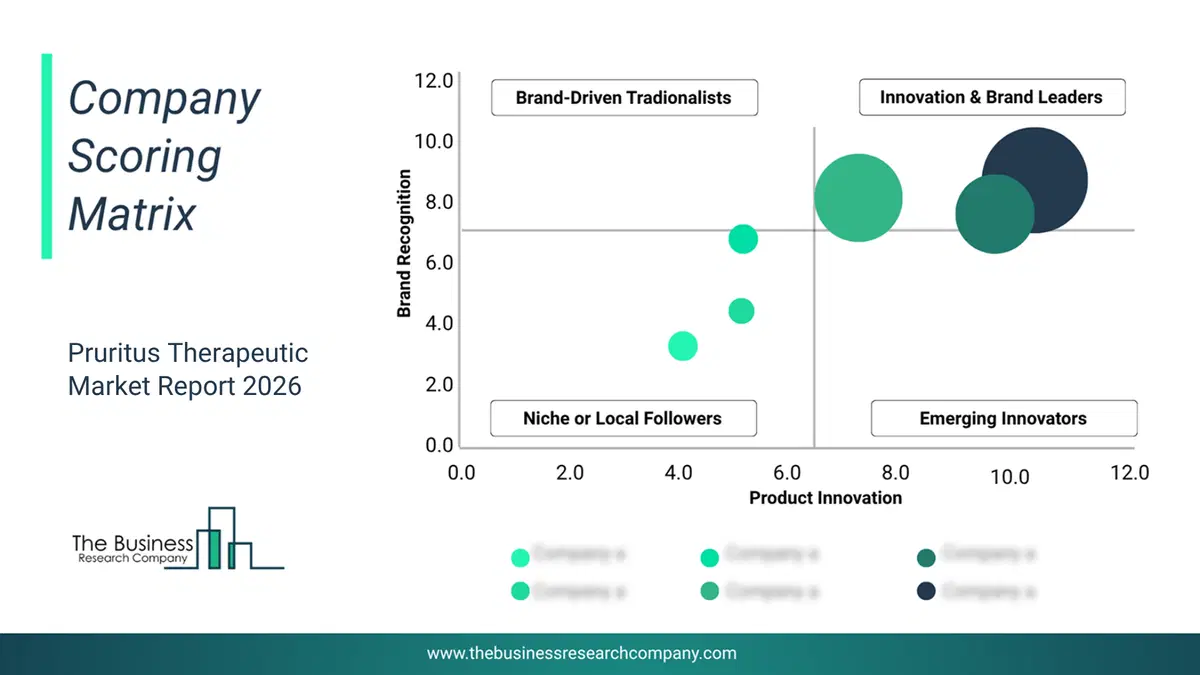
This chart maps companies by product innovation and brand strength, with bubble size indicating relative revenue, helping identify market leaders, challengers, and niche players. This is an illustrative chart; the full report provides a complete and accurate competitive analysis.
Global Pruritus Therapeutic Market Trends and Insights
Major companies operating in the pruritus therapeutic market are adopting a strategic partnership approach aiming to treat moderate-to-severe atopic dermatitis. Strategic partnerships refer to a process in which companies leverage each other's strengths and resources to achieve mutual benefits and success. For instance, in January 2023, Amgen Inc., a US-based biopharmaceutical company, in collaboration with Kyowa Kirin, is investigating rocatinlimab (AMG 451/KHK4083), a possible first-in-class anti-OX40 monoclonal antibody that is being studied for people with moderate to severe atopic dermatitis. Amgen and Kyowa Kirin have just begun enrolling participants in a worldwide Phase 3 trial (ROCKET) to examine the safety and effectiveness of rocatinlimab in heterogeneous moderate-to-severe atopic dermatitis patients with a high disease burden. The ROCKET Phase 3 program consists of seven worldwide investigations. Kyowa Kirin Co., Ltd. is a Japan-based pharmaceutical and biotechnology company.What Are Latest Mergers And Acquisitions In The Pruritus Therapeutic Market?
In March 2023, Ipsen, a France-based biopharmaceutical company, acquired Albireo Pharma, Inc. for an undisclosed amount. The acquisition adds promising therapies for uncommon cholestatic liver disorders in children and adults, novel pipeline prospects, and technical and financial strength to Ipsen’s portfolio. Albireo Pharma, Inc. is a US-based biopharmaceutical company focused on developing and commercializing novel bile acid modulators to treat orphan pediatric liver diseases, gastrointestinal disorders, and pruritus diseases related drug development.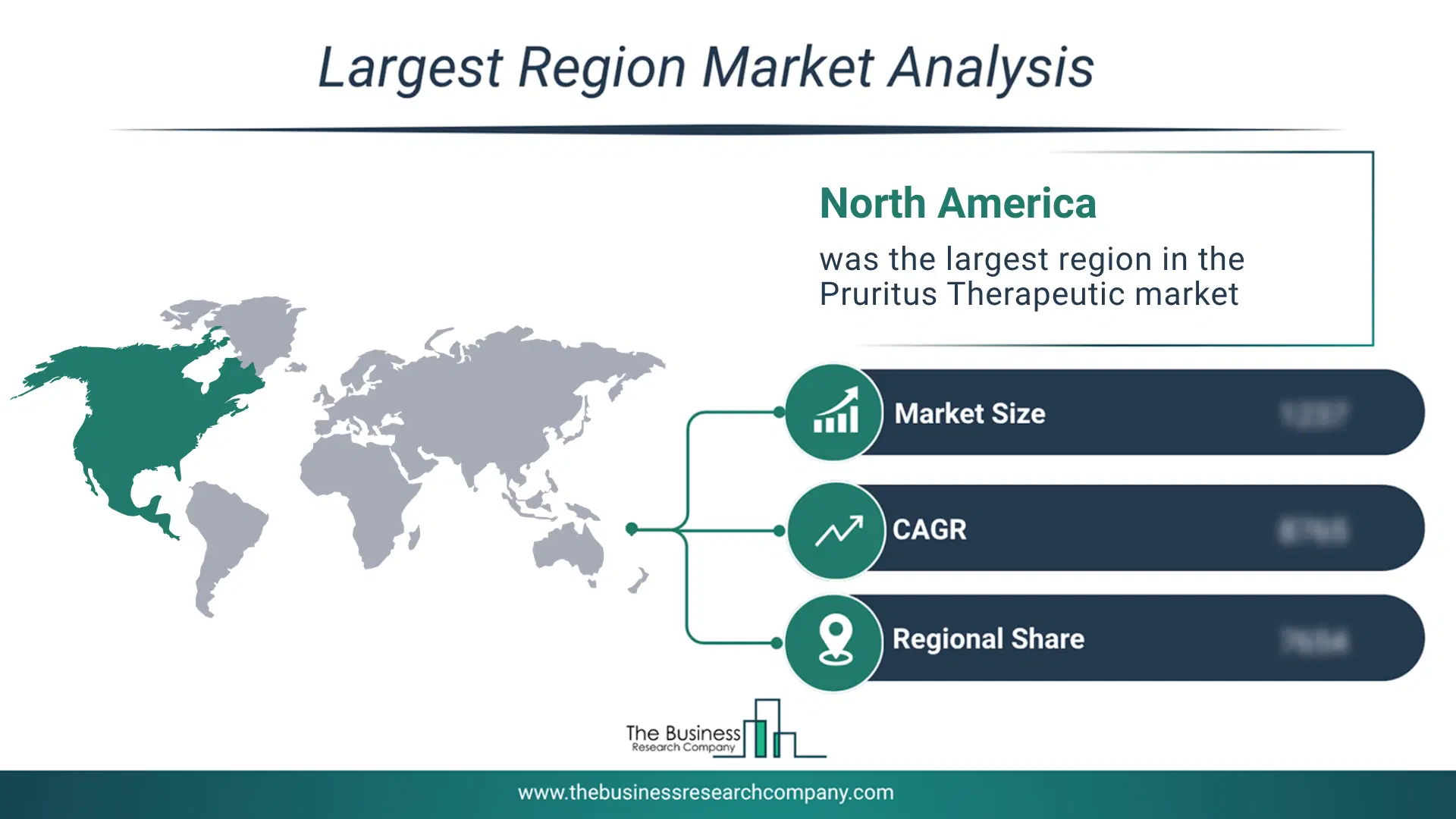
Regional Outlook
North America was the largest region in the pruritus therapeutic market in 2025. The regions covered in this market report are Asia-Pacific, South East Asia, Western Europe, Eastern Europe, North America, South America, Middle East, Africa. The countries covered in this market report are Australia, Brazil, China, France, Germany, India, Indonesia, Japan, Taiwan, Russia, South Korea, UK, USA, Canada, Italy, Spain.What Defines the Pruritus Therapeutic Market?
The pruritus therapeutic market includes revenues earned by entities by treating pruritus conditions with medicines such as aloe vera, menthol and petroleum jelly. The market value includes the value of related goods sold by the service provider or included within the service offering. Only goods and services traded between entities or sold to end consumers are included.How is Market Value Defined and Measured?
The market value is defined as the revenues that enterprises gain from the sale of goods and/or services within the specified market and geography through sales, grants, or donations in terms of the currency (in USD unless otherwise specified). The revenues for a specified geography are consumption values that are revenues generated by organizations in the specified geography within the market, irrespective of where they are produced. It does not include revenues from resales along the supply chain, either further along the supply chain or as part of other products.
This chart presents market attractiveness based on a quantitative evaluation of growth, competition, strategic alignment, and risk, offering a clear view of opportunity areas for decision-making. This chart is for illustrative purposes; the full report contains the complete analysis.

This chart highlights the Total Addressable Market (TAM) by estimating the maximum revenue opportunity using an assumption-driven approach, supporting strategic planning and opportunity sizing across markets. The chart is illustrative; the full report provides a more comprehensive analysis.
What Key Data and Analysis Are Included in the Pruritus Therapeutic Market Report 2026?
The pruritus therapeutic market research report is one of a series of new reports from The Business Research Company that provides market statistics, including industry global market size, regional shares, competitors with the market share, detailed market segments, market trends and opportunities, and any further data you may need to thrive in the pruritus therapeutic industry. The market research report delivers a complete perspective of everything you need, with an in-depth analysis of the current and future state of the industry.Pruritus Therapeutic Market Report Forecast Analysis
| Report Attribute | Details |
|---|---|
| Market Size Value In 2026 | $16.76 billion |
| Revenue Forecast In 2030 | $24.04 billion |
| Growth Rate | CAGR of 9.4% from 2026 to 2030 |
| Base Year For Estimation | 2025 |
| Actual Estimates/Historical Data | 2020-2025 |
| Forecast Period | 2026 - 2030 |
| Market Representation | Revenue in USD Billion and CAGR from 2026 to 2030 |
| Segments Covered | Type, Disease Type, Application, End Use |
| Regional Scope | Asia-Pacific, Western Europe, Eastern Europe, North America, South America, Middle East, Africa |
| Country Scope | The countries covered in the report are Australia, Brazil, China, France, Germany, India, Indonesia, Japan, Taiwan, Russia, South Korea, UK, USA, Canada, Italy, Spain |
| Key Companies Profiled | Astellas Pharma Inc., Bristol Myers Squibb Company, Cipla Inc., Eli Lilly And Company, Galderma Laboratories LP, GlaxoSmithKline plc, Merck And Co. Inc., Novartis AG, Pfizer Inc., Sanofi SA, Abbott Laboratories, Almirall SA, Eisai Co. Ltd., Glenmark Pharmaceuticals Ltd., Ipca Laboratories Ltd., Lupin Chemicals Ltd., Cara Therapeutics Inc., EPI Health LLC, AbbVie Inc., Bayer AG, Bausch Health Companies Inc., Regeneron Pharmaceuticals Inc., Huapont Life Sciences Co. Ltd., LEO Pharma AS, MC2 Therapeutics Ltd., Novan Inc., Trevi Therapeutics Inc., UCB SA, Viatris Inc., Teva Pharmaceutical Industries Ltd. |
| Customization Scope | Request for Customization |
| Pricing And Purchase Options | Explore Purchase Options |