
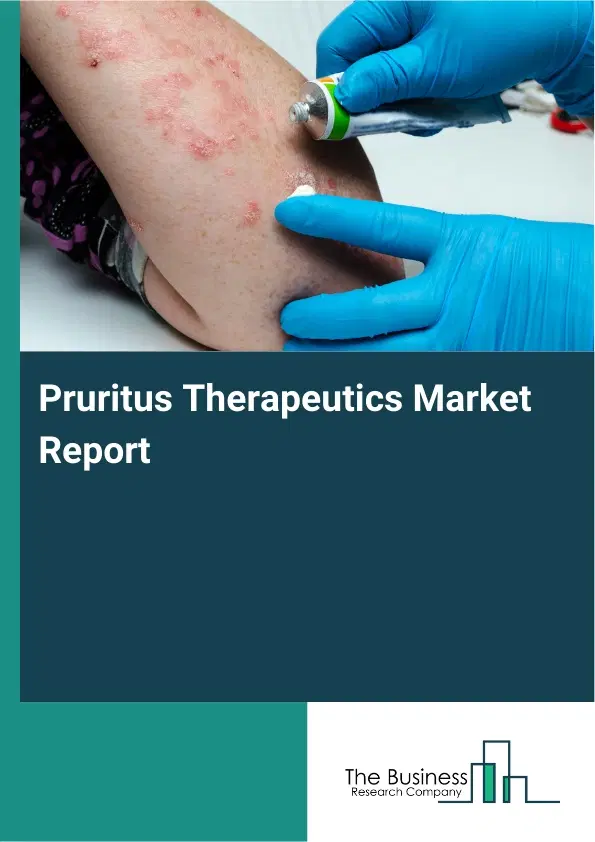
Pruritus Therapeutics Market Report 2026
Global Outlook – By Product (Corticosteroids, Antihistamines, Local Anesthetics, Counterirritants, Immunosuppressants, Calcineurin Inhibitors, Other Products), By Route Of Administration (Oral, Parenteral, Topical), By Disease Type (Atopic Dermatitis, Allergic Contact Dermatitis, Urticaria, Cutaneous T-Cell, Other Disease Types), By End-User (Hospitals, Clinics, Other End Users) – Market Size, Trends, Strategies, and Forecast to 2030
Pruritus Therapeutics Market Overview
• Pruritus Therapeutics market size has reached to $12.38 billion in 2025 • Expected to grow to $16.88 billion in 2030 at a compound annual growth rate (CAGR) of 6.6% • Growth Driver: Surge In Dermatological Disorders Fuels Pruritus Therapeutics Market Growth • Market Trend: Role Of Monoclonal Antibody Treatments And Recent Innovations In The Market • North America was the largest region in 2025 and Asia-Pacific is the fastest growing region.What Is Covered Under Pruritus Therapeutics Market?
Pruritus therapeutics refers to the treatments used to address an unpleasant skin sensation that causes an urge to scratch. This treatment is commonly used to stop swelling and inflammation in moderate-to-severe inflammatory skin diseases. The main product types of pruritus therapeutics are corticosteroids, antihistamines, local anesthetics, counterirritants, immunosuppressants, calcineurin inhibitors, and others. Corticosteroids refer to synthetic anti-inflammatory drugs that are used to treat itching and inflammation caused by pruritus. The various routes of administration include oral, parenteral, and topical, and they help in curing various disease types including atopic dermatitis, allergic contact dermatitis, urticaria, cutaneous t-cell, and others. It is used in hospitals, clinics, and others.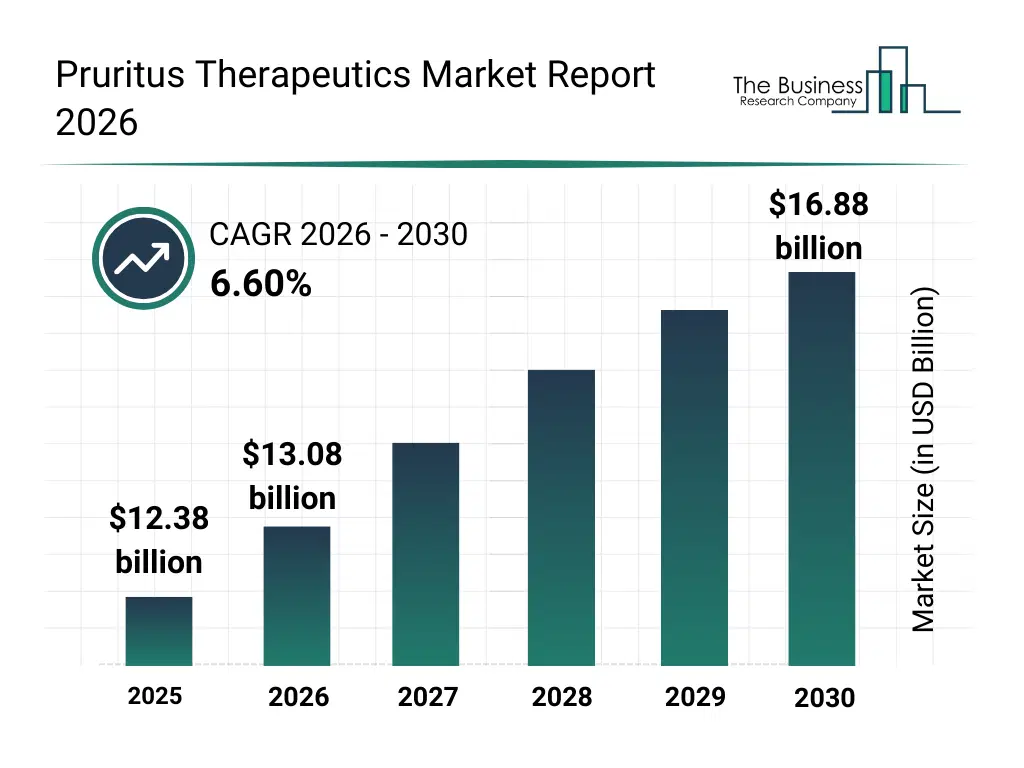
What Is The Pruritus Therapeutics Market Size and Share 2026?
The pruritus therapeutics market size has grown strongly in recent years. It will grow from $12.38 billion in 2025 to $13.08 billion in 2026 at a compound annual growth rate (CAGR) of 5.6%. The growth in the historic period can be attributed to growing prevalence of inflammatory skin diseases, increased use of corticosteroids and antihistamines, rising dermatology research funding, expansion of hospital and clinic networks, early adoption of topical therapies.What Is The Pruritus Therapeutics Market Growth Forecast?
The pruritus therapeutics market size is expected to see strong growth in the next few years. It will grow to $16.88 billion in 2030 at a compound annual growth rate (CAGR) of 6.6%. The growth in the forecast period can be attributed to advancements in genomics and precision medicine, introduction of novel immunosuppressants, rise in digital health and remote dermatology solutions, growth of otc pruritus products, increasing focus on chronic skin disease management. Major trends in the forecast period include personalized pruritus treatment approaches, increased focus on anti-inflammatory therapies, growth of topical formulations and delivery systems, expansion of over-the-counter (otc) pruritus products, rising awareness of chronic skin conditions.
Global Pruritus Therapeutics Market Segmentation
1) By Product: Corticosteroids, Antihistamines, Local Anesthetics, Counterirritants, Immunosuppressants, Calcineurin Inhibitors, Other Products 2) By Route Of Administration: Oral, Parenteral, Topical 3) By Disease Type: Atopic Dermatitis, Allergic Contact Dermatitis, Urticaria, Cutaneous T-Cell, Other Disease Types 4) By End-User: Hospitals, Clinics, Other End Users Subsegments: 1) By Corticosteroids: Topical Corticosteroids, Systemic Corticosteroids 2) By Antihistamines: First-Generation Antihistamines, Second-Generation Antihistamines 3) By Local Anesthetics: Topical Local Anesthetics 4) By Counterirritants: Menthol-Based Products, Camphor-Based Products 5) By Immunosuppressants: Topical Immunosuppressants, Systemic Immunosuppressants 6) By Calcineurin Inhibitors: Tacrolimus Ointment, Pimecrolimus Cream 7) By Other Products: Moisturizers And Emollients, Antipruritic Herbal Remedies, Combination TherapiesWhat Is The Driver Of The Pruritus Therapeutics Market?
The rise in the incidence of dermatological disorders is expected to propel the growth of the pruritus therapeutics market going forward. Dermatological disorders refer to skin, hair, nail, and mucous membrane disorders ranging from acne and eczema to skin cancer and fungal infections. The underlying cause of itching often determines the use of pruritus treatments for dermatological illnesses. This condition uses topical treatments, emollients and moisturizers, immunosuppressant medications, and itching medications. For instance, in January 2024, according to the American Cancer Society, a US-based non-profit organization dedicated to eliminating cancer, there will be 108,270 reported cases of skin cancer, reflecting a 3.2% increase from the 104,930 cases reported in 2023. Therefore, the rise in the incidence of dermatological disorders is driving the growth of the pruritus therapeutics industry.Key Players In The Global Pruritus Therapeutics Market
Major companies operating in the pruritus therapeutics market are Pfizer Inc., Johnson & Johnson, AbbVie Inc., Sanofi S.A., Bristol-Myers Squibb Company, Eli Lilly and Company, Regeneron Pharmaceuticals Inc., Bausch Health Companies Inc., Galderma Laboratories LP, Cipla Limited, LEO Pharma AS, Cara Therapeutics Inc., GlaxoSmithKline Plc, Novan Inc., Trevi Therapeutics Inc., AbbVie Biopharmaceuticals, Amgen Inc., Allergan plc, Horizon Therapeutics plc, Kyowa Kirin Co. Ltd., Dermira Inc., Pfizer Consumer Healthcare
This chart is for illustrative purposes; the full report includes a detailed competitor analysis and comprehensive overview of the top 10 companies in the market.
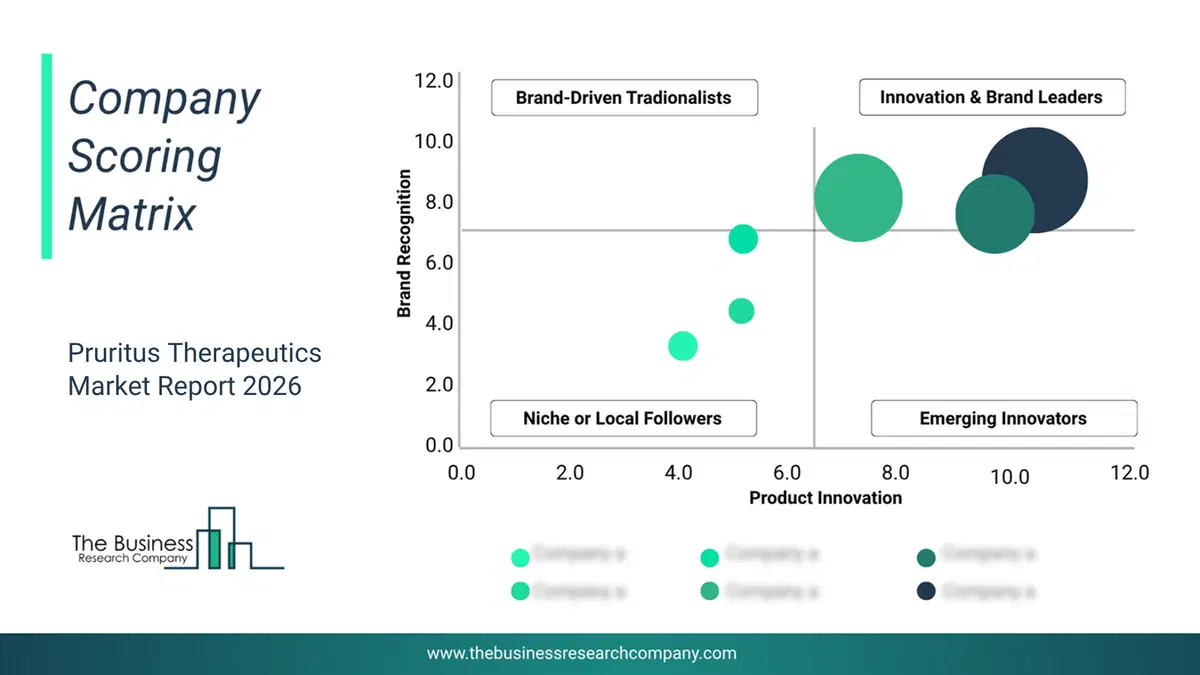
This chart maps companies by product innovation and brand strength, with bubble size indicating relative revenue, helping identify market leaders, challengers, and niche players. This is an illustrative chart; the full report provides a complete and accurate competitive analysis.
Global Pruritus Therapeutics Market Trends and Insights
Major companies operating in the pruritus therapeutics market are focusing on developing innovative biologic therapies such as monoclonal antibody treatment to effectively target and alleviate itch associated with conditions such as atopic dermatitis and prurigo nodularis. Monoclonal antibody treatment involves the use of laboratory-produced molecules engineered to target specific proteins in the body, typically involved in disease processes. For instance, in June 2024, Maruho Co., Ltd., a Japan-based pharmaceutical company, launched Mitchga Subcutaneous Injection (30mg vials) in Japan for treating pruritus related to atopic dermatitis in children (ages 6-13) and prurigo nodularis in adults and adolescents (ages ≥13) when other treatments are ineffective. The product contains nemolizumab, a humanized monoclonal antibody targeting the interleukin-31 (IL-31) receptor, and inhibiting IL-31, the drug aims to alleviate itching and improve quality of life for patients suffering from these conditions.What Are Latest Mergers And Acquisitions In The Pruritus Therapeutics Market?
In March 2023, Ipsen, a France-based biopharmaceutical company, acquired Albireo Pharma Inc., for an undisclosed sum. This acquisition broadens, diversifies, and enriches Ipsen's portfolio by adding promising medicines for pediatric and adult uncommon cholestatic liver disorders, unique pipeline potential, and scientific and commercial skills. Albireo Pharma, Inc. is a US-based clinical-stage biopharmaceutical company that offers oral drugs, the first treatment for pruritus in patients with progressive familial intrahepatic cholestasis (PFIC).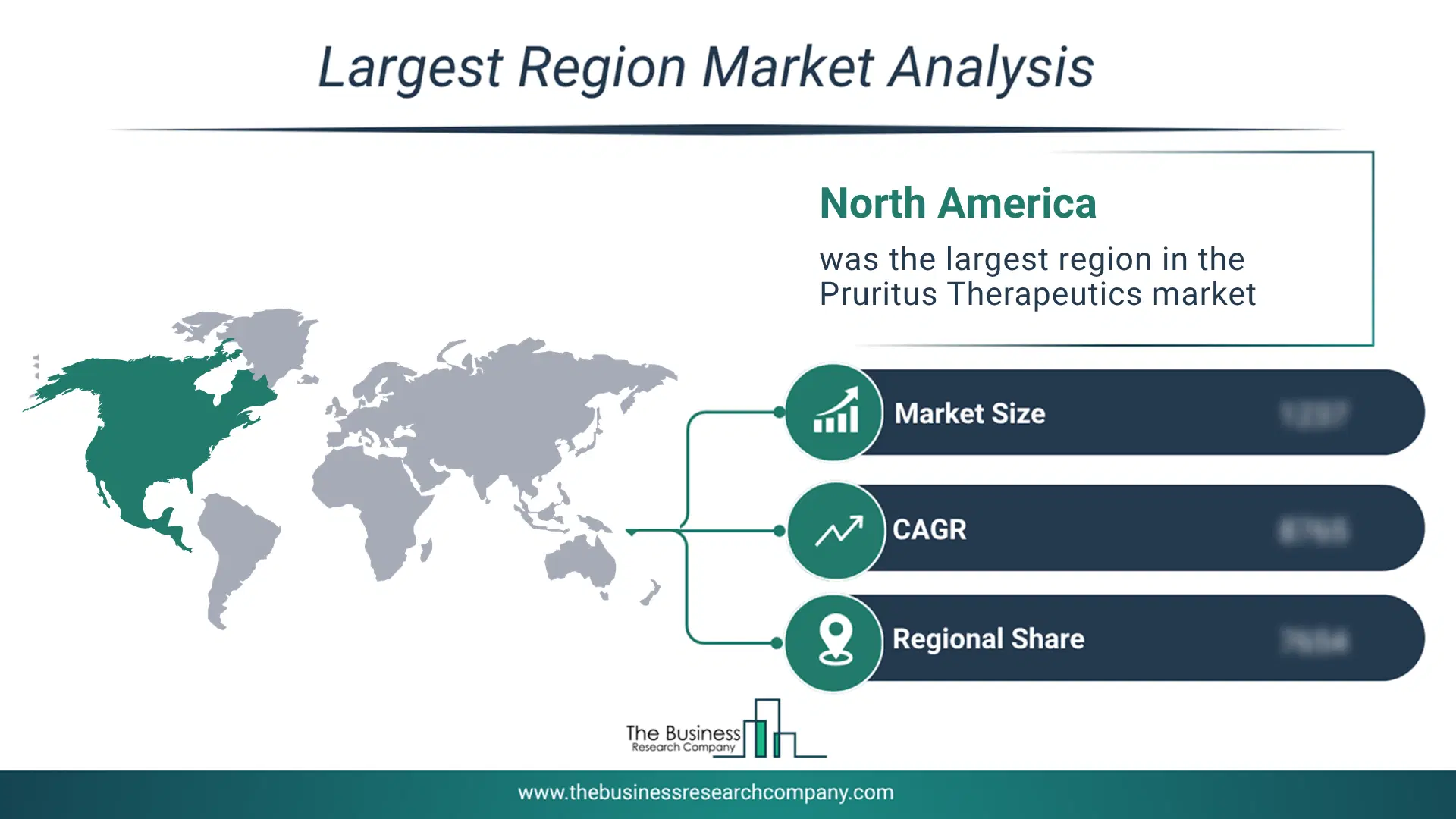
Regional Insights
North America was the largest region in the pruritus treatment market in 2025. Asia-Pacific is expected to be the fastest-growing region in the forecast period. The regions covered in this market report are Asia-Pacific, South East Asia, Western Europe, Eastern Europe, North America, South America, Middle East, Africa. The countries covered in this market report are Australia, Brazil, China, France, Germany, India, Indonesia, Japan, Taiwan, Russia, South Korea, UK, USA, Canada, Italy, Spain.What Defines the Pruritus Therapeutics Market?
The pruritus therapeutics market consists of revenues earned by entities by providing topical therapy, phototherapy, and systemic therapy. The market value includes the value of related goods sold by the service provider or included within the service offering. The pruritus therapeutics market also include sales of hydroxyzine, benadryl, banophen, diphedryl, and allermax. Values in this market are ‘factory gate’ values, that is the value of goods sold by the manufacturers or creators of the goods, whether to other entities (including downstream manufacturers, wholesalers, distributors, and retailers) or directly to end customers. The value of goods in this market includes related services sold by the creators of the goods.How is Market Value Defined and Measured?
The market value is defined as the revenues that enterprises gain from the sale of goods and/or services within the specified market and geography through sales, grants, or donations in terms of the currency (in USD unless otherwise specified). The revenues for a specified geography are consumption values that are revenues generated by organizations in the specified geography within the market, irrespective of where they are produced. It does not include revenues from resales along the supply chain, either further along the supply chain or as part of other products.
This chart presents market attractiveness based on a quantitative evaluation of growth, competition, strategic alignment, and risk, offering a clear view of opportunity areas for decision-making. This chart is for illustrative purposes; the full report contains the complete analysis.

This chart highlights the Total Addressable Market (TAM) by estimating the maximum revenue opportunity using an assumption-driven approach, supporting strategic planning and opportunity sizing across markets. The chart is illustrative; the full report provides a more comprehensive analysis.
What Key Data and Analysis Are Included in the Pruritus Therapeutics Market Report 2026?
The pruritus therapeutics market research report is one of a series of new reports from The Business Research Company that provides market statistics, including industry global market size, regional shares, competitors with the market share, detailed market segments, market trends and opportunities, and any further data you may need to thrive in the pruritus therapeutics industry. The market research report delivers a complete perspective of everything you need, with an in-depth analysis of the current and future state of the industry.Pruritus Therapeutics Market Report Forecast Analysis
| Report Attribute | Details |
|---|---|
| Market Size Value In 2026 | $13.08 billion |
| Revenue Forecast In 2030 | $16.88 billion |
| Growth Rate | CAGR of 5.6% from 2026 to 2030 |
| Base Year For Estimation | 2025 |
| Actual Estimates/Historical Data | 2020-2025 |
| Forecast Period | 2026 - 2030 |
| Market Representation | Revenue in USD Billion and CAGR from 2026 to 2030 |
| Segments Covered | Product, Route Of Administration, Disease Type, End-User |
| Regional Scope | Asia-Pacific, Western Europe, Eastern Europe, North America, South America, Middle East, Africa |
| Country Scope | The countries covered in the report are Australia, Brazil, China, France, Germany, India, Indonesia, Japan, Taiwan, Russia, South Korea, UK, USA, Canada, Italy, Spain. |
| Key Companies Profiled | Pfizer Inc., Johnson & Johnson, AbbVie Inc., Sanofi S.A., Bristol-Myers Squibb Company, Eli Lilly and Company, Regeneron Pharmaceuticals Inc., Bausch Health Companies Inc., Galderma Laboratories LP, Cipla Limited, LEO Pharma AS, Cara Therapeutics Inc., GlaxoSmithKline Plc, Novan Inc., Trevi Therapeutics Inc., AbbVie Biopharmaceuticals, Amgen Inc., Allergan plc, Horizon Therapeutics plc, Kyowa Kirin Co. Ltd., Dermira Inc., Pfizer Consumer Healthcare |
| Customization Scope | Request for Customization |
| Pricing And Purchase Options | Explore Purchase Options |