

Pulmonary Hypertension Market Report 2026
Global Outlook – By Therapy Type (Monotherapy, Combination Therapy), By Disease Type (Pulmonary Arterial Hypertension, Pulmonary Hypertension Due To Left Heart Disease, Pulmonary Hypertension Due To Lung Diseases And Or Hypoxia, Chronic Thromboembolic Pulmonary Hypertension, Pulmonary Hypertension With Unclear Or Multifactorial Mechanisms), By Drug Class (Endothelin Receptor Antagonists, Prostacyclin And Prostacyclin Analogs, Phosphodiesterase Type 5 Inhibitors, Smad Signaling Modulators Or Activin Signaling Inhibitors, Calcium Channel Blockers), By Distribution Channel (Hospital Pharmacies, Retail Pharmacies, Online Pharmacies), By End User (Hospitals, Specialty Clinics, Ambulatory Surgical Centers, Home Care Settings) – Market Size, Trends, Strategies, and Forecast to 2035
Pulmonary Hypertension Market Overview
• Pulmonary Hypertension market size has reached to $1.42 billion in 2025 • Expected to grow to $2.18 billion in 2030 at a compound annual growth rate (CAGR) of 8.9% • Growth Driver: Growing Adoption Of Targeted Therapies Driving The Market Growth Due To Improving Treatment Outcomes In Pulmonary Arterial Hypertension • Market Trend: Innovations In Inhaled Therapies Enhance Treatment Options For Pulmonary Hypertension • North America was the largest region in 2025 and Asia-Pacific is the fastest growing region.What Is Covered Under Pulmonary Hypertension Market?
Pulmonary hypertension is a progressive cardiovascular disorder characterized by abnormally high blood pressure in the pulmonary arteries, which carry blood from the heart to the lungs. The increased pressure forces the right side of the heart to work harder, potentially leading to right heart failure if left untreated. The condition may arise from various underlying causes and is associated with symptoms such as shortness of breath, fatigue, chest pain, and reduced exercise capacity. The main therapy types of pulmonary hypertension include monotherapy and combination therapy. Monotherapy refers to the use of a single therapeutic approach or medication to manage pulmonary hypertension and its associated symptoms. These approaches are used for pulmonary arterial hypertension, pulmonary hypertension due to left heart disease, pulmonary hypertension due to lung diseases and or hypoxia, chronic thromboembolic pulmonary hypertension, and pulmonary hypertension with unclear or multifactorial mechanisms and include endothelin receptor antagonists, prostacyclin and prostacyclin analogs, phosphodiesterase type 5 inhibitors, soluble guanylate cyclase stimulators, Smad signaling modulators or activin signaling inhibitors, and calcium channel blockers. These therapies are distributed through hospital pharmacies, retail pharmacies, and online pharmacies, and are used by several end users such as hospitals, specialty clinics, ambulatory surgical centers, and home care settings.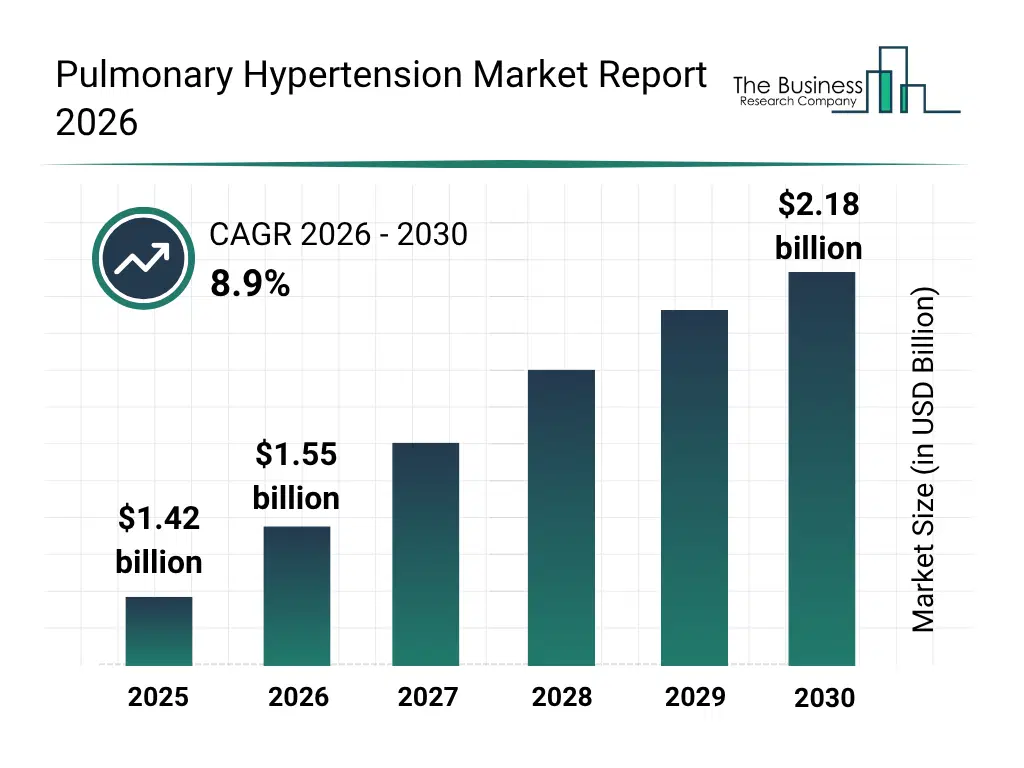
What Is The Pulmonary Hypertension Market Size and Share 2026?
The pulmonary hypertension market size has grown strongly in recent years. It will grow from $1.42 billion in 2025 to $1.55 billion in 2026 at a compound annual growth rate (CAGR) of 9.3%. The growth in the historic period can be attributed to rising prevalence of pulmonary hypertension, increasing awareness of pulmonary vascular diseases, growing availability of targeted therapies, improvements in diagnostic testing, increasing adoption of combination treatment approaches.What Is The Pulmonary Hypertension Market Growth Forecast?
The pulmonary hypertension market size is expected to see strong growth in the next few years. It will grow to $2.18 billion in 2030 at a compound annual growth rate (CAGR) of 8.9%. The growth in the forecast period can be attributed to expanding pipeline of novel pulmonary hypertension therapies, increasing use of early disease detection strategies, rising demand for personalized treatment approaches, growing adoption of remote patient monitoring, increasing investment in rare disease drug development. Major trends in the forecast period include targeted pulmonary vasodilator therapies, earlier diagnosis of pulmonary hypertension, combination therapy for disease management, personalized treatment based on disease etiology, long-term disease monitoring and risk stratification.Tariff Impact On Pulmonary Hypertension Market
Tariffs are impacting the pulmonary hypertension market by increasing the cost of imported active pharmaceutical ingredients, drug manufacturing equipment, medical devices, and pharmaceutical packaging used across the treatment supply chain. Drug manufacturers, hospital pharmacies, and specialty clinics may experience greater cost pressures, particularly in North America, Europe, and Asia-Pacific where pharmaceutical production and supply chains span multiple countries. These higher costs can affect drug pricing and supply availability, while tariffs may also encourage pharmaceutical companies to diversify suppliers, localize manufacturing, and strengthen regional production capabilities.
Global Pulmonary Hypertension Market Segmentation
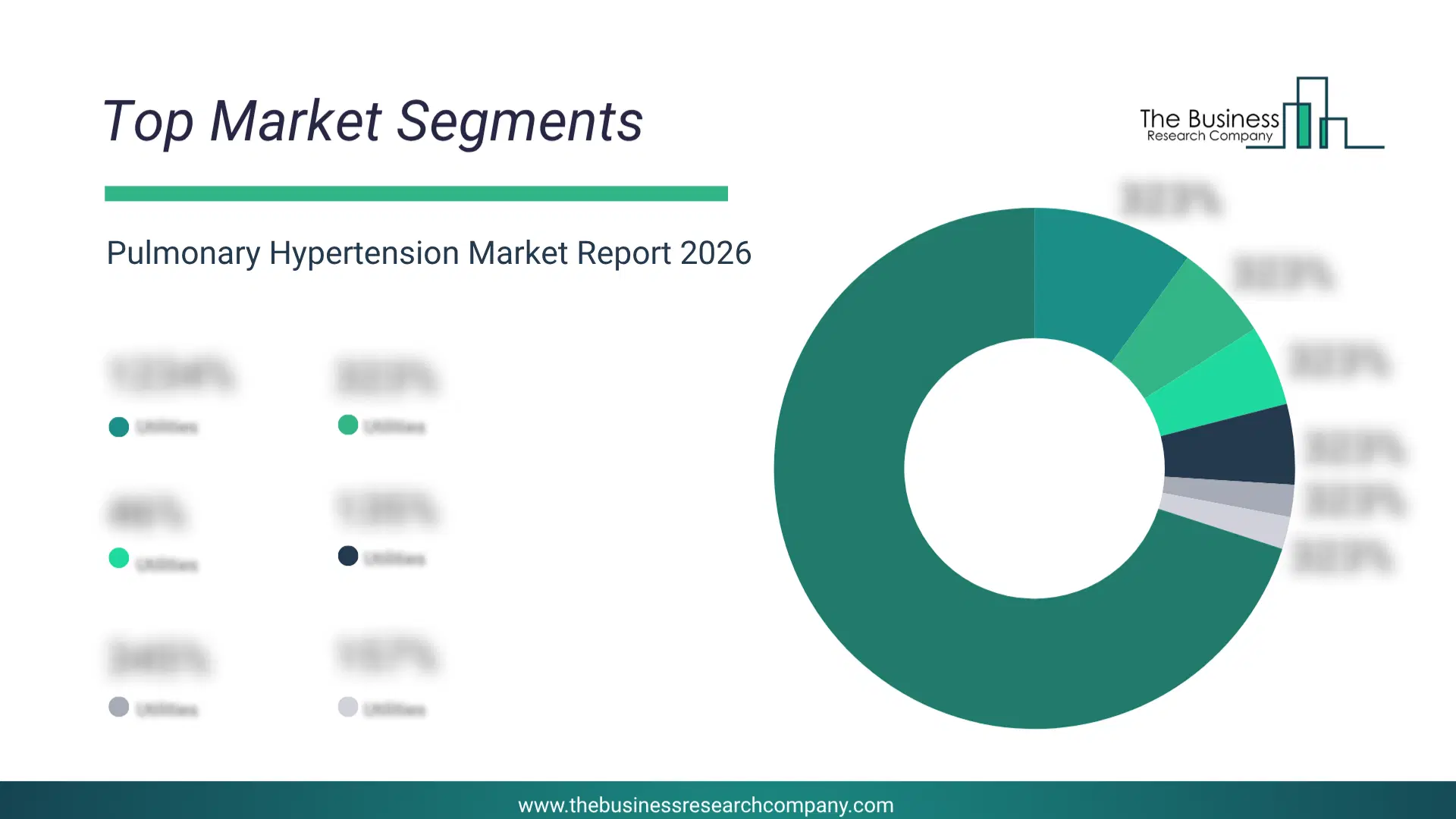
2) By Disease Type: Pulmonary Arterial Hypertension, Pulmonary Hypertension Due To Left Heart Disease, Pulmonary Hypertension Due To Lung Diseases And Or Hypoxia, Chronic Thromboembolic Pulmonary Hypertension, Pulmonary Hypertension With Unclear Or Multifactorial Mechanisms 3) By Drug Class: Endothelin Receptor Antagonists, Prostacyclin And Prostacyclin Analogs, Phosphodiesterase Type 5 Inhibitors, Smad Signaling Modulators Or Activin Signaling Inhibitors, Calcium Channel Blockers 4) By Distribution Channel: Hospital Pharmacies, Retail Pharmacies, Online Pharmacies 5) By End User: Hospitals, Specialty Clinics, Ambulatory Surgical Centers, Home Care Settings Subsegments: 1) By Monotherapy: Soluble Guanylate Cyclase Stimulators, Prostacyclin Analogues, Prostacyclin Receptor Agonists 2) By Combination Therapy: Dual Combination Therapy, Triple Combination TherapyWhat Is The Driver Of The Pulmonary Hypertension Market?
The growing adoption of targeted therapies is expected to propel the growth of the pulmonary hypertension market going forward. Targeted therapies are advanced medical treatments that selectively target specific biological pathways or molecular mechanisms involved in disease progression, providing more precise and effective therapeutic outcomes. Growing adoption of targeted therapies is rising due to the increasing availability of biomarker-based diagnostics, enabling more accurate patient selection and improving treatment effectiveness. The growing adoption of targeted therapies supports pulmonary hypertension by improving treatment precision, slowing disease progression, and enhancing patient outcomes through personalized therapeutic approaches. For instance, in April 2025, according to the American Society of Gene & Cell Therapy (ASGCT), a US-based professional membership organization, the number of gene therapies in Phase II increased to 306 in the first quarter of 2024. Therefore, the growing adoption of targeted therapies is driving the growth of the pulmonary hypertension industry.Key Players In The Global Pulmonary Hypertension Market
Major companies operating in the pulmonary hypertension market are Pfizer Inc., Johnson & Johnson, Bayer Aktiengesellschaft, Merck & Co. Inc., Novartis AG, GSK plc, Viatris Inc., Gilead Sciences Inc., Teva Pharmaceutical Industries Ltd., Zydus Lifesciences Limited, Lupin Limited, United Therapeutics Corporation, Chiesi Farmaceutici S.p.A., Insmed Incorporated, Liquidia Corporation, AOP Orphan Pharmaceuticals GmbH, Gossamer Bio, MannKind Corporation, Aerami Therapeutics Holdings Inc., Respira Therapeutics Inc., Cereno Scientific AB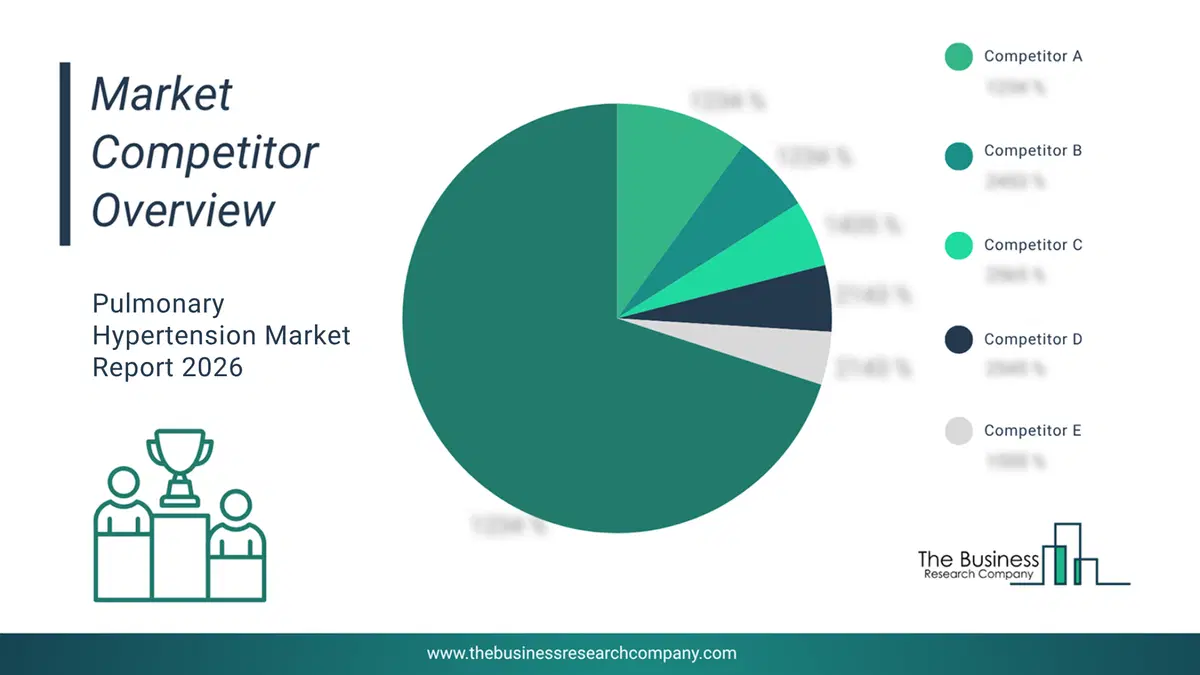
This chart is for illustrative purposes; the full report includes a detailed competitor analysis and comprehensive overview of the top 10 companies in the market.
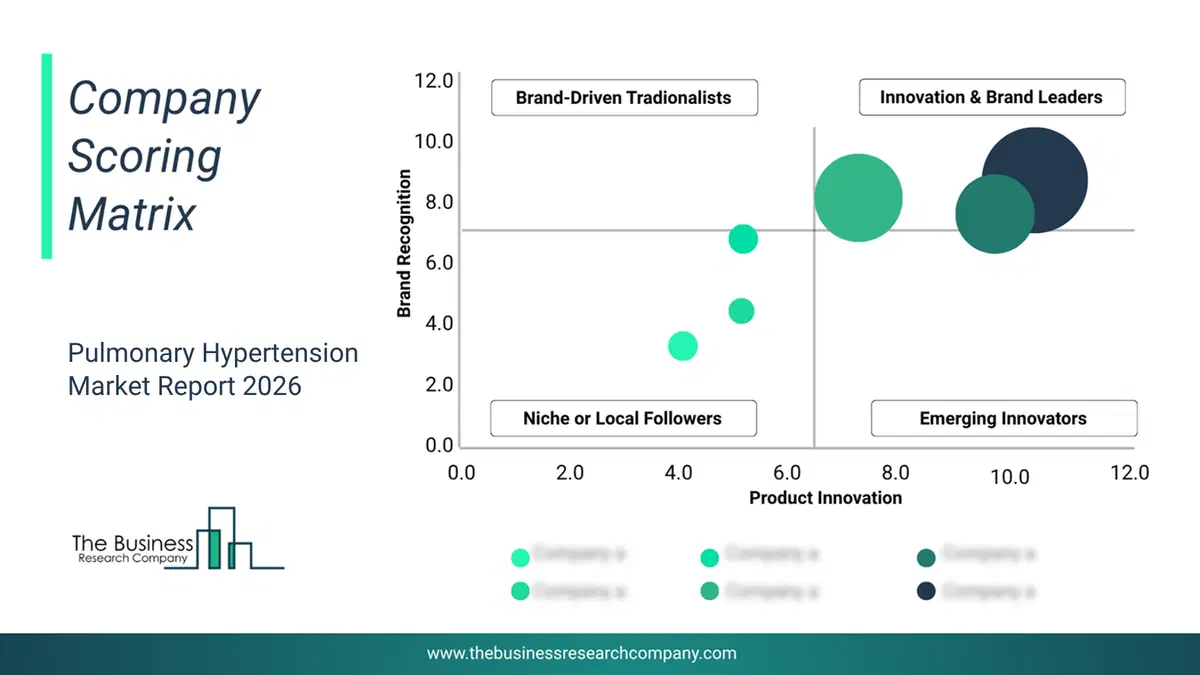
This chart maps companies by product innovation and brand strength, with bubble size indicating relative revenue, helping identify market leaders, challengers, and niche players. This is an illustrative chart; the full report provides a complete and accurate competitive analysis.
Global Pulmonary Hypertension Market Trends and Insights
Major companies operating in the pulmonary hypertension market are focusing on developing advanced therapies, such as inhaled dry-powder formulations, to improve treatment accessibility, delivery convenience, and exercise ability for patients. Inhaled dry-powder formulations are pulmonary hypertension therapies designed to deliver medication directly to the lungs through a compact inhalation device, offering a convenient alternative to conventional delivery methods. For instance, in June 2025, Liquidia Corporation, a US-based biopharmaceutical company, announced the first commercial shipment of YUTREPIA (treprostinil) inhalation powder, following its FDA approval in May 2025 for the treatment of pulmonary arterial hypertension (PAH) and pulmonary hypertension associated with interstitial lung disease (PH-ILD). The inhaled dry-powder formulation uses Liquidia’s PRINT technology to produce precise and uniform drug particles engineered for enhanced deposition in the lungs, while its palm-sized, low-effort delivery device provides patients with a convenient treatment option.What Are Latest Mergers And Acquisitions In The Pulmonary Hypertension Market?
In April 2026, GlaxoSmithKline plc (GSK), a UK-based pharmaceutical company, acquired 35Pharma Inc. for $950 million. Through this acquisition, GSK aims to strengthen its pulmonary hypertension portfolio by adding HS235, a potential best-in-class investigational therapy targeting the activin receptor signaling pathway for the treatment of pulmonary hypertension, including pulmonary arterial hypertension (PAH). 35Pharma Inc. is a Canada-based clinical-stage biopharmaceutical company specializing in the development of HS235, an investigational activin receptor signaling pathway inhibitor for pulmonary hypertension.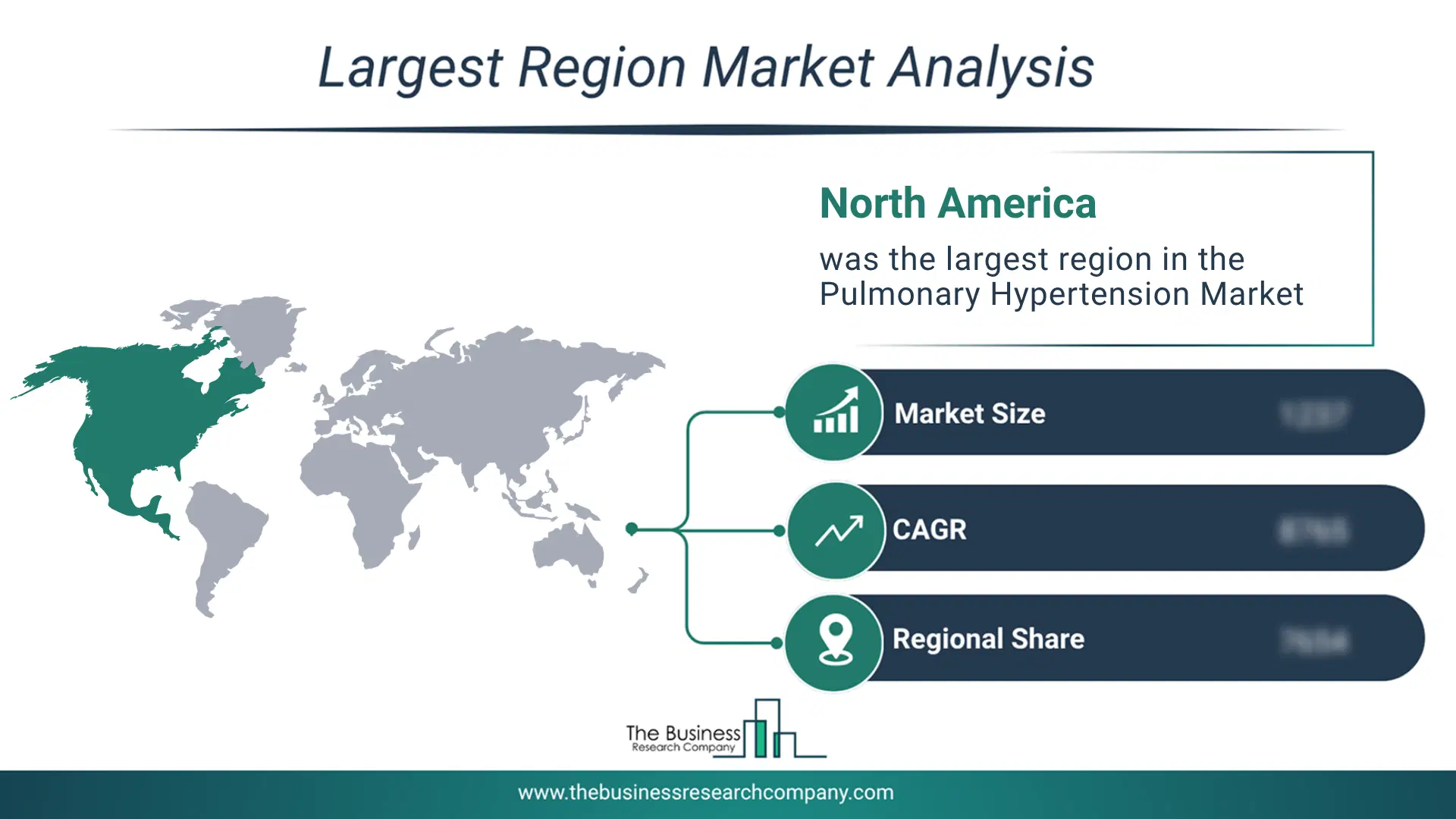
Regional Outlook/Insights
North America was the largest region in the pulmonary hypertension market in 2025. Asia-Pacific is expected to be the fastest-growing region in the forecast period. The regions covered in this market report are Asia-Pacific, South East Asia, Western Europe, Eastern Europe, North America, South America, Middle East, Africa. The countries covered in this market report are Australia, Brazil, China, France, Germany, India, Indonesia, Japan, Taiwan, Russia, South Korea, UK, USA, Canada, Italy, Spain.What Defines the Pulmonary Hypertension Market?
The pulmonary hypertension market consists of revenues earned by entities by providing services such as pulmonary hypertension screening services, right heart catheterization services, pulmonary rehabilitation programs, specialty pulmonary hypertension disease management services, and telemedicine and remote patient monitoring services. The market value includes the value of related goods sold by the service provider or included within the service offering. The pulmonary hypertension market also includes sales of implantable hemodynamic monitoring devices, portable oxygen concentrators, nitric oxide delivery systems, pulmonary artery catheters, and remote patient monitoring devices. Values in this market are ‘factory gate’ values, that is, the value of goods sold by the manufacturers or creators of the goods, whether to other entities (including downstream manufacturers, wholesalers, distributors, and retailers) or directly to end customers. The value of goods in this market includes related services sold by the creators of the goods.How is Market Value Defined and Measured?
The market value is defined as the revenues that enterprises gain from the sale of goods and/or services within the specified market and geography through sales, grants, or donations in terms of the currency (in USD unless otherwise specified). The revenues for a specified geography are consumption values that are revenues generated by organizations in the specified geography within the market, irrespective of where they are produced. It does not include revenues from resales along the supply chain, either further along the supply chain or as part of other products.
This chart presents market attractiveness based on a quantitative evaluation of growth, competition, strategic alignment, and risk, offering a clear view of opportunity areas for decision-making. This chart is for illustrative purposes; the full report contains the complete analysis.

This chart highlights the Total Addressable Market (TAM) by estimating the maximum revenue opportunity using an assumption-driven approach, supporting strategic planning and opportunity sizing across markets. The chart is illustrative; the full report provides a more comprehensive analysis.
What Key Data and Analysis Are Included in the Pulmonary Hypertension Market Report 2026?
The pulmonary hypertension market research report is one of a series of new reports from The Business Research Company that provides market statistics, including industry global market size, regional shares, competitors with the market share, detailed market segments, market trends and opportunities, and any further data you may need to thrive in the pulmonary hypertension industry. The market research report delivers a complete perspective of everything you need, with an in-depth analysis of the current and future state of the industry.Pulmonary Hypertension Market Report Forecast Analysis
| Report Attribute | Details |
|---|---|
| Market Size Value In 2026 | $1.55 billion |
| Revenue Forecast In 2030 | $2.18 billion |
| Growth Rate | CAGR of 8.9% from 2026 to 2035 |
| Base Year For Estimation | 2025 |
| Actual Estimates/Historical Data | 2020-2025 |
| Forecast Period | 2026 - 2030 |
| Market Representation | Revenue in USD Billion and CAGR from 2026 to 2030 |
| Segments Covered | Therapy Type, Disease Type, Drug Class, Distribution Channel, End User |
| Regional Scope | Asia-Pacific, Western Europe, Eastern Europe, North America, South America, Middle East, Africa |
| Country Scope | The countries covered in the report are Australia, Brazil, China, France, Germany, India, Indonesia, Japan, Taiwan, Russia, South Korea, UK, USA, Canada, Italy, Spain. |
| Customization Scope | Request for Customization |
| Pricing And Purchase Options | Explore Purchase Options |