
Purine Analogues Drugs Market Report 2026
Global Outlook – By Drug Type (Cladribine, Tioguanine, Clofarabine, Mercaptopurine, Fludarabine, Nelarabine, Other Types), By Distribution Channel (Hospital Pharmacy, Retail Pharmacy, Online Pharmacy), By End-User (Hospitals, Homecare, Specialty Clinics, Other End-Users) – Market Size, Trends, Strategies, and Forecast to 2030
Purine Analogues Drugs Market Overview
• Purine Analogues Drugs market size has reached to $16.34 billion in 2025 • Expected to grow to $27.44 billion in 2030 at a compound annual growth rate (CAGR) of 11% • Growth Driver: Surge In Hematologic Malignancies Fueling The Growth Of The Market Due To Increasing Environmental Carcinogen Exposure • Market Trend: Technology Integration Strengthened Through Strategic Alliances • North America was the largest region in 2025.What Is Covered Under Purine Analogues Drugs Market?
Purine analogues drugs refer to a class of antimetabolite chemotherapy agents that structurally resemble purine nucleotides (adenine and guanine), essential components of cells' genetic material. These drugs interfere with the synthesis of nucleic acids by mimicking natural purines, thereby disrupting the replication and function of cancerous or rapidly dividing cells. The main types of drugs in purine analogues drugs are cladribine, tioguanine, clofarabine, mercaptopurine, fludarabine, nelarabine, and others. Cladribine is a chemotherapy drug that mimics purine nucleotides and is mainly used to treat blood cancers like hairy cell leukemia and multiple sclerosis. These drugs are distributed through hospital pharmacies, retail pharmacies, and online pharmacies and serve a range of end users, including hospitals, home care, specialty clinics, ambulatory surgical centers, and others.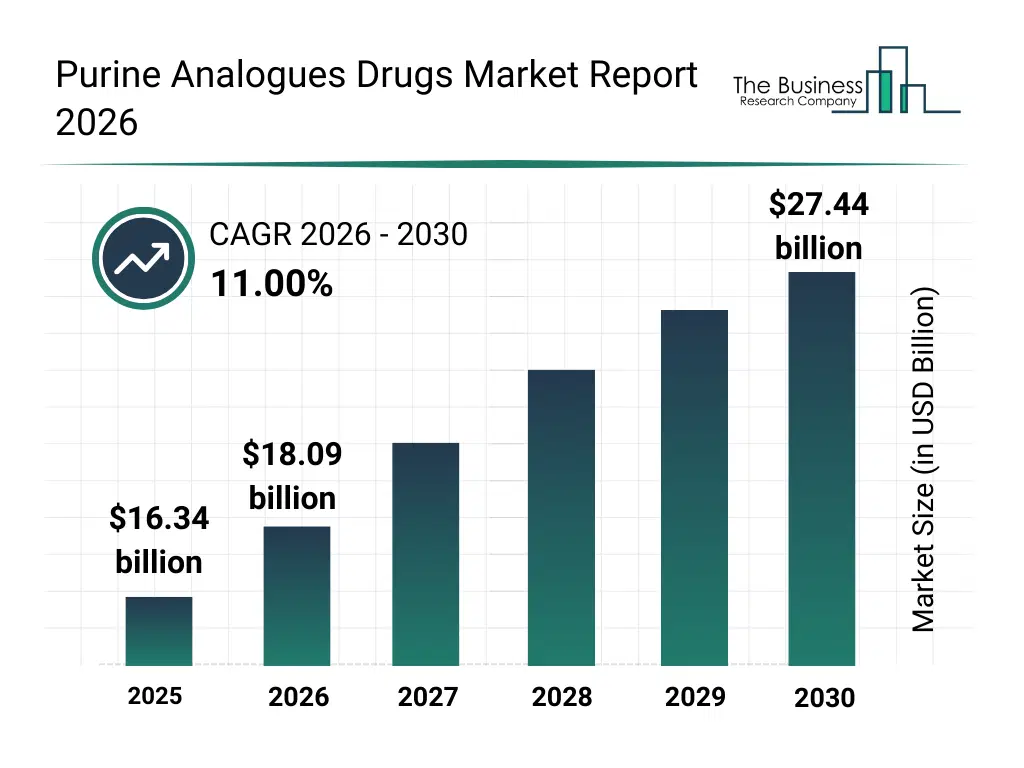
What Is The Purine Analogues Drugs Market Size and Share 2026?
The purine analogues drugs market size has grown rapidly in recent years. It will grow from $16.34 billion in 2025 to $18.09 billion in 2026 at a compound annual growth rate (CAGR) of 10.7%. The growth in the historic period can be attributed to limited availability of purine analogue drugs, reliance on hospital-based chemotherapy, high prevalence of hematologic malignancies, conventional oral and injectable formulations, lack of targeted treatment options.What Is The Purine Analogues Drugs Market Growth Forecast?
The purine analogues drugs market size is expected to see rapid growth in the next few years. It will grow to $27.44 billion in 2030 at a compound annual growth rate (CAGR) of 11.0%. The growth in the forecast period can be attributed to development of novel purine analogues, expansion of homecare chemotherapy services, increasing clinical trials for experimental drugs, integration with personalized medicine and targeted therapies, rising adoption of oral formulations and patient-friendly delivery systems. Major trends in the forecast period include rising adoption of purine analogues in hematologic cancers, development of oral and injectable formulations, expansion of hospital and homecare chemotherapy services, increasing clinical trials and experimental drug research, focus on personalized treatment regimens and targeted therapy.
Global Purine Analogues Drugs Market Segmentation
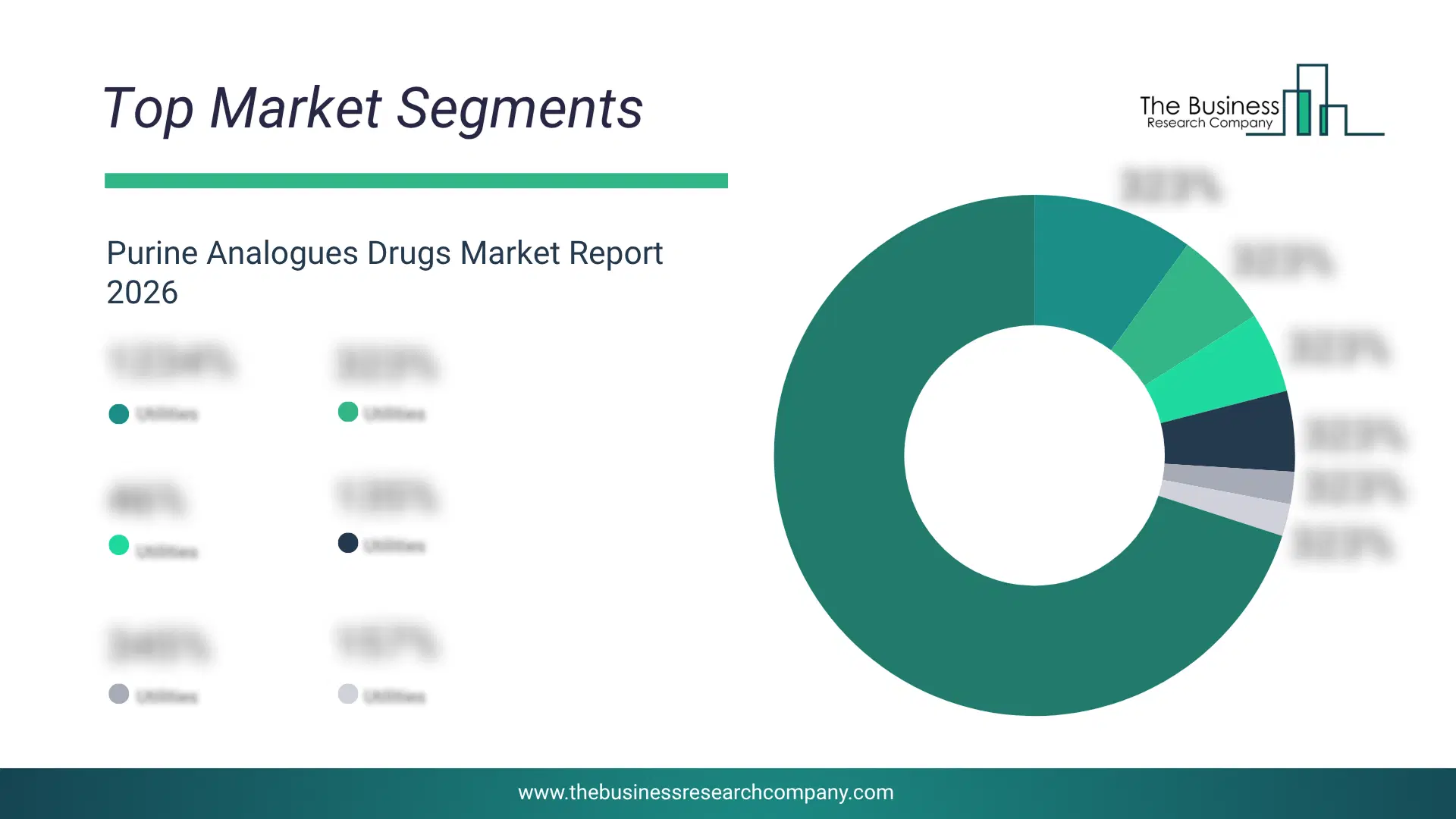
1) By Drug Type: Cladribine, Tioguanine, Clofarabine, Mercaptopurine, Fludarabine, Nelarabine, Other Types 2) By Distribution Channel: Hospital Pharmacy, Retail Pharmacy, Online Pharmacy 3) By End-User: Hospitals, Homecare, Specialty Clinics, Other End-Users Subsegments: 1) By Cladribine: Injectable Cladribine, Oral Cladribine 2) By Tioguanine: Tablet Formulation, Parenteral Formulation 3) By Clofarabine: Clofarabine Injection, Lyophilized Powder 4) By Mercaptopurine: 6-Mercaptopurine Tablets, 6-Mercaptopurine Suspension 5) By Fludarabine: Fludarabine Phosphate Injection, Oral Fludarabine 6) By Nelarabine: Nelarabine Intravenous Solution, Nelarabine Concentrate 7) By Other Types: Azathioprine, Pentostatin, Experimental Purine AnaloguesWhat Are The Drivers Of The Purine Analogues Drugs Market?
The rising prevalence of hematologic malignancies is expected to propel the growth of the purine analogues drugs market going forward. Hematologic malignancies refer to cancers that begin in the body's blood-forming tissues, such as the bone marrow, or in the cells of the immune system. The rising prevalence of hematologic malignancies is largely attributed to the aging population, as the risk of developing blood cancers such as leukemia, lymphoma, and myeloma increases significantly with age due to cumulative genetic mutations and weakened immune surveillance in older adults. Purine analogue drugs help manage hematologic malignancies by disrupting the deoxyribonucleic acid (DNA) synthesis of abnormal blood cells and slowing or stopping their uncontrolled growth. For instance, in May 2024, according to the City of Hope, a US-based non-profit clinical research center, in the United States, approximately 1.6 million people are currently living with leukemia, myeloma, Hodgkin lymphoma, or non-Hodgkin lymphoma, and over 192,000 new cases of blood cancer are expected to be diagnosed in 2025. Therefore, the rising prevalence of hematologic malignancies is driving the growth of the purine analogues drugs industry. A rise in healthcare expenditure is expected to propel the growth of the purine analogues drugs market going forward. Healthcare expenditure refers to the total amount of money individuals, governments, and organizations spend on medical services, treatments, and healthcare infrastructure to maintain and improve public health. Healthcare expenditure is rising as the aging population leads to a higher incidence of chronic diseases, which require long-term and often expensive medical care. Healthcare expenditure enables the research, development, and availability of purine analogue drugs, ensuring patients have access to advanced treatments for diseases like cancer and autoimmune disorders. For instance, in April 2025, according to the Office for National Statistics, a UK-based government department, total healthcare expenditure increased by 6.5% in nominal terms from 2023 to 2024, up slightly from a 6.3% growth rate in 2023. Therefore, the rise in healthcare expenditure is driving the growth of the purine analogues drugs industry.Key Players In The Global Purine Analogues Drugs Market
Major companies operating in the purine analogues drugs market are Pfizer Inc., Sanofi S.A., Novartis AG, Merck KGaA, Viatris Inc. (Mylan), Fresenius Kabi AG, Dr. Reddy’s Laboratories Limited, Cipla Limited, Sagent Pharmaceuticals Incorporated, Taj Pharmaceuticals Limited, ScinoPharm Taiwan Limited, Zhejiang Cheng Yi Pharmaceutical Company Limited, Fermion Oy, Aetos Pharma Private Limited, Aark Pharmaceuticals, Aarti Pharmalabs Limited, Teva Pharmaceutical Industries Ltd., Hikma Pharmaceuticals PLC, Accord Healthcare Ltd., Sun Pharmaceutical Industries Ltd., Intas Pharmaceuticals Ltd., Lupin Limited, Zydus Lifesciences Ltd., Apotex Inc., Baxter International Inc., Piramal Pharma Limited, Natco Pharma Limited, Gland Pharma Limited, MSN Laboratories Pvt. Ltd., Alembic Pharmaceuticals Ltd.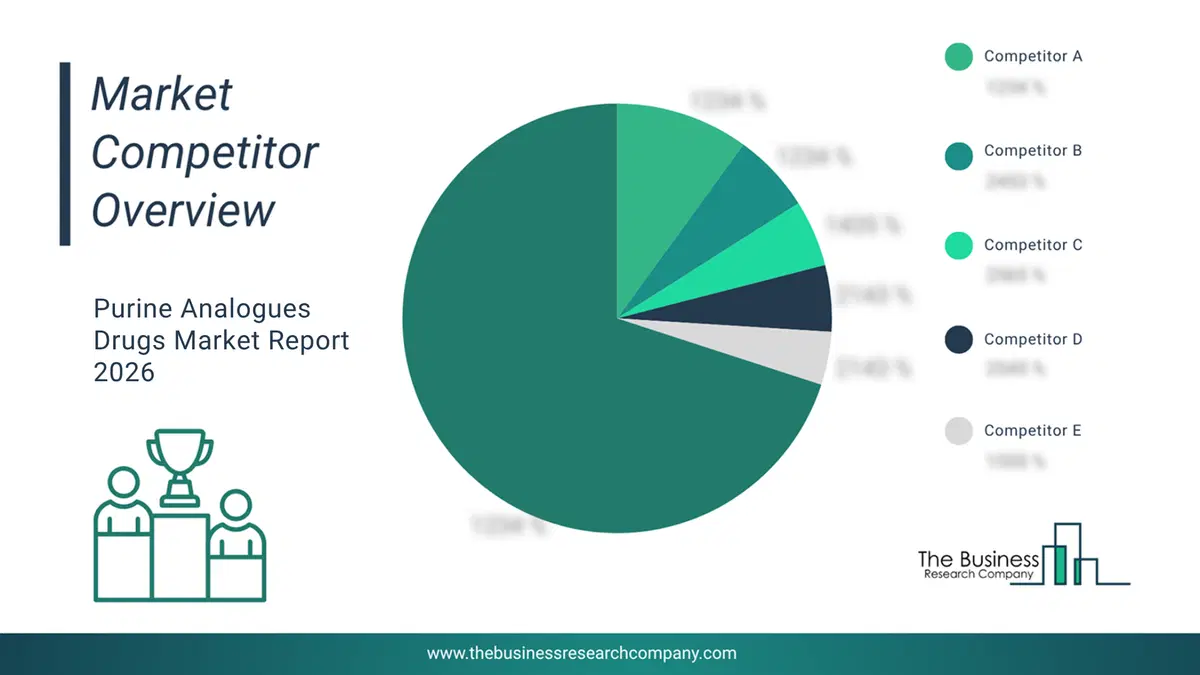
This chart is for illustrative purposes; the full report includes a detailed competitor analysis and comprehensive overview of the top 10 companies in the market.
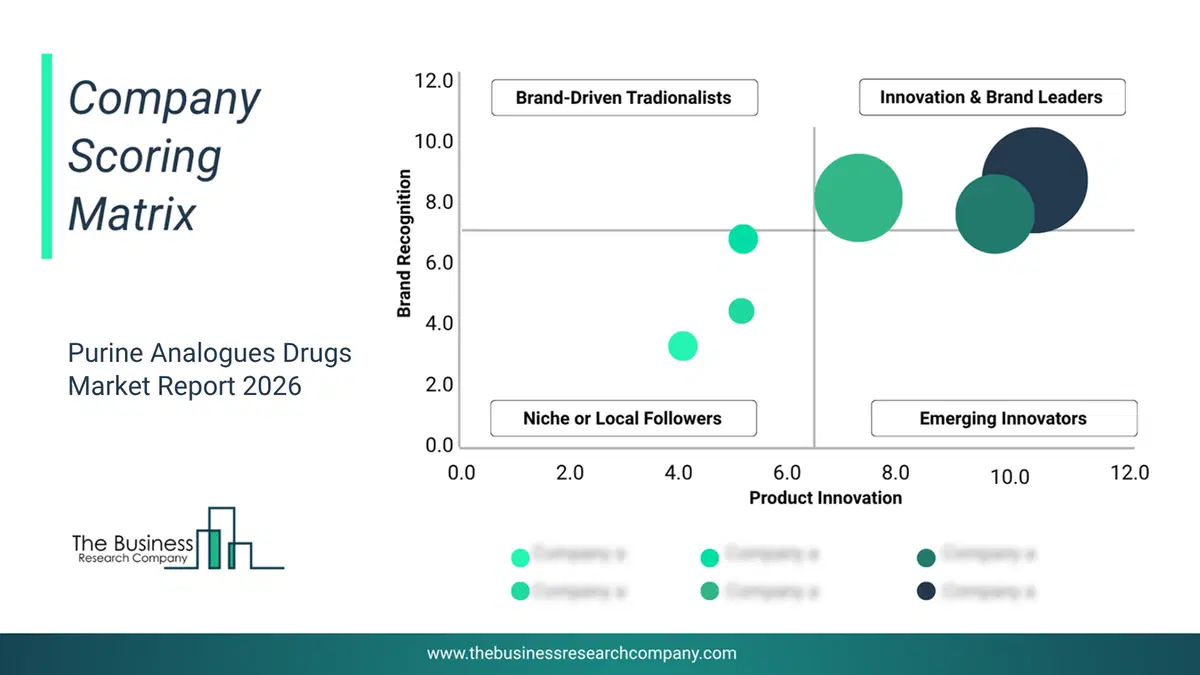
This chart maps companies by product innovation and brand strength, with bubble size indicating relative revenue, helping identify market leaders, challengers, and niche players. This is an illustrative chart; the full report provides a complete and accurate competitive analysis.
Global Purine Analogues Drugs Market Trends and Insights
Major companies operating in the purine analogues drugs market are focusing on adopting a strategic partnership approach to enhance technology integration and expand market reach. A strategic partnership typically refers to a collaborative relationship between two or more organizations where they combine their resources, expertise, and efforts to achieve common goals or objectives. For instance, in November 2023, BioNxt Solutions Inc., a Canada-based life sciences company specializing in advanced drug reformulation and delivery technologies, signed the definitive agreement for 100% acquisition of intellectual property and co-development of its proprietary Cladribine orally dissolvable film (ODF) drug reformulation for multiple sclerosis. This agreement allows BioNxt to fully control the development and advancement of an innovative treatment designed to improve dosing efficiency and patient adherence for multiple sclerosis. By leveraging its new ODF formulation, BioNxt aims to offer a more convenient alternative to conventional tablets, especially benefiting those with swallowing difficulties, and is currently accelerating comparative preclinical and clinical studies across Europe and North America.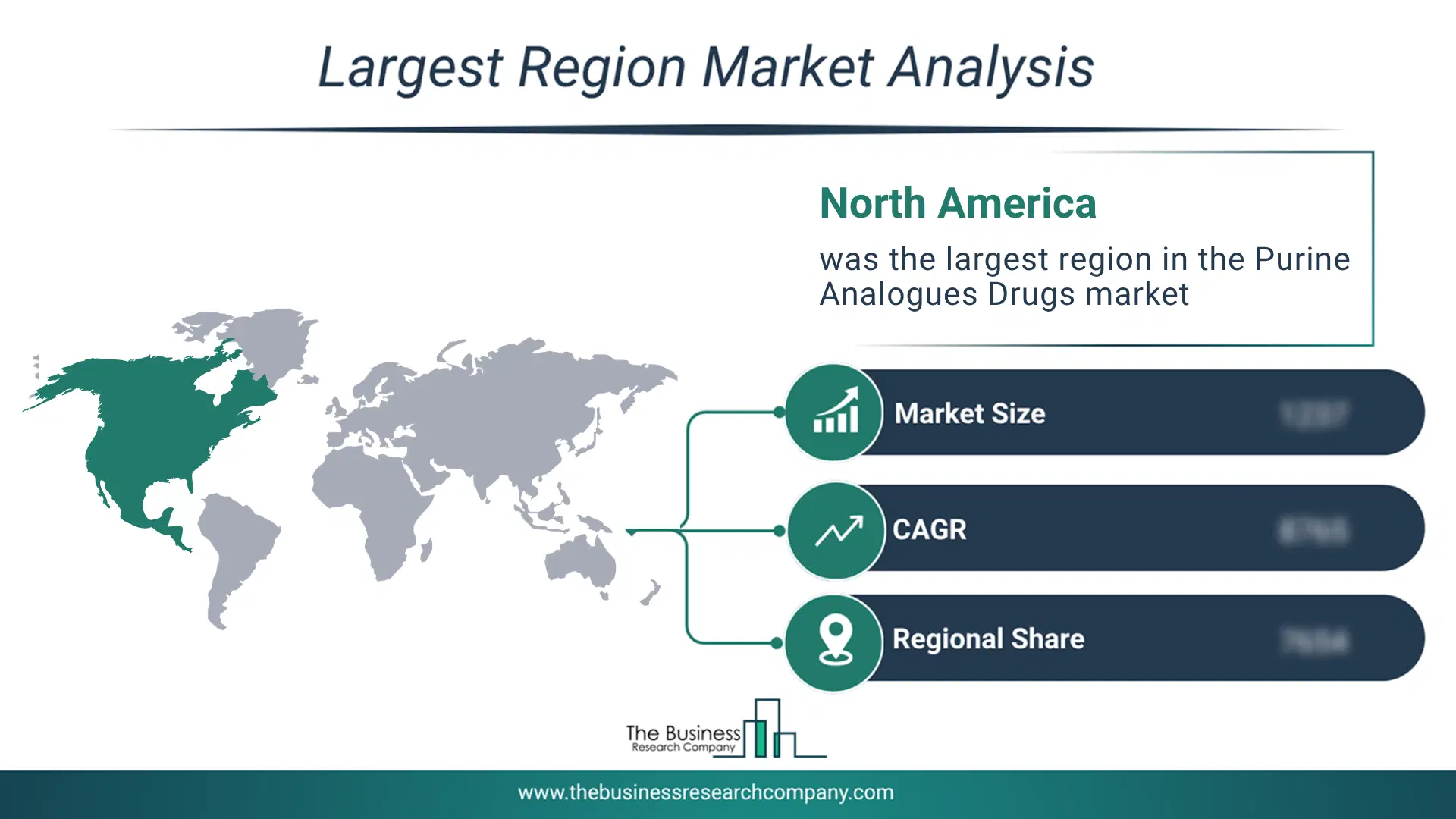
Regional Insights
North America was the largest region in the purine analogues market in 2025. The regions covered in this market report are Asia-Pacific, South East Asia, Western Europe, Eastern Europe, North America, South America, Middle East, Africa. The countries covered in this market report are Australia, Brazil, China, France, Germany, India, Indonesia, Japan, Taiwan, Russia, South Korea, UK, USA, Canada, Italy, Spain.What Defines the Purine Analogues Drugs Market?
The purine analogues drugs market consists of sales of tablets, oral solids, oral suspensions, intravenous (IV) solutions, lyophilized powder for injection, and ophthalmic ointment. Values in this market are ‘factory gate’ values, that is, the value of goods sold by the manufacturers or creators of the goods, whether to other entities (including downstream manufacturers, wholesalers, distributors, and retailers) or directly to end customers. The value of goods in this market includes related services sold by the creators of the goods.How is Market Value Defined and Measured?
The market value is defined as the revenues that enterprises gain from the sale of goods and/or services within the specified market and geography through sales, grants, or donations in terms of the currency (in USD unless otherwise specified). The revenues for a specified geography are consumption values that are revenues generated by organizations in the specified geography within the market, irrespective of where they are produced. It does not include revenues from resales along the supply chain, either further along the supply chain or as part of other products.
This chart presents market attractiveness based on a quantitative evaluation of growth, competition, strategic alignment, and risk, offering a clear view of opportunity areas for decision-making. This chart is for illustrative purposes; the full report contains the complete analysis.

This chart highlights the Total Addressable Market (TAM) by estimating the maximum revenue opportunity using an assumption-driven approach, supporting strategic planning and opportunity sizing across markets. The chart is illustrative; the full report provides a more comprehensive analysis.
What Key Data and Analysis Are Included in the Purine Analogues Drugs Market Report 2026?
The purine analogues drugs market research report is one of a series of new reports from The Business Research Company that provides market statistics, including industry global market size, regional shares, competitors with the market share, detailed market segments, market trends and opportunities, and any further data you may need to thrive in the purine analogues drugs industry. The market research report delivers a complete perspective of everything you need, with an in-depth analysis of the current and future state of the industry.Purine Analogues Drugs Market Report Forecast Analysis
| Report Attribute | Details |
|---|---|
| Market Size Value In 2026 | $18.09 billion |
| Revenue Forecast In 2030 | $27.44 billion |
| Growth Rate | CAGR of 10.7% from 2026 to 2030 |
| Base Year For Estimation | 2025 |
| Actual Estimates/Historical Data | 2020-2025 |
| Forecast Period | 2026 - 2030 |
| Market Representation | Revenue in USD Billion and CAGR from 2026 to 2030 |
| Segments Covered | Drug Type, Distribution Channel, End-User |
| Regional Scope | Asia-Pacific, Western Europe, Eastern Europe, North America, South America, Middle East, Africa |
| Country Scope | The countries covered in the report are Australia, Brazil, China, France, Germany, India, Indonesia, Japan, Taiwan, Russia, South Korea, UK, USA, Canada, Italy, Spain. |
| Key Companies Profiled | Pfizer Inc., Sanofi S.A., Novartis AG, Merck KGaA, Viatris Inc. (Mylan), Fresenius Kabi AG, Dr. Reddy’s Laboratories Limited, Cipla Limited, Sagent Pharmaceuticals Incorporated, Taj Pharmaceuticals Limited, ScinoPharm Taiwan Limited, Zhejiang Cheng Yi Pharmaceutical Company Limited, Fermion Oy, Aetos Pharma Private Limited, Aark Pharmaceuticals, Aarti Pharmalabs Limited, Teva Pharmaceutical Industries Ltd., Hikma Pharmaceuticals PLC, Accord Healthcare Ltd., Sun Pharmaceutical Industries Ltd., Intas Pharmaceuticals Ltd., Lupin Limited, Zydus Lifesciences Ltd., Apotex Inc., Baxter International Inc., Piramal Pharma Limited, Natco Pharma Limited, Gland Pharma Limited, MSN Laboratories Pvt. Ltd., Alembic Pharmaceuticals Ltd. |
| Customization Scope | Request for Customization |
| Pricing And Purchase Options | Explore Purchase Options |