

Purlins And Side Rails Global Market Opportunities And Strategies To 2035
By Product Type (Sleeved, Butted, Heavy End Bay, Double Span, Other Product Types), By Material (Steel, Aluminum, Other Materials), By Distribution Channel (Direct Sales, Distributors, Online Retail, Wholesale Suppliers), By End User (Automotive, Manufacturing, Energy And Power, Warehouse And Logistics, Commercial), And By Region, Opportunities And Strategies – Global Forecast To 2035
Purlins And Side Rails Market Definition
Purlins and side rails are secondary structural steel members used in metal and pre-engineered buildings to support roof and wall cladding. Purlins are installed horizontally along the roof structure, while side rails (also called wall girts) are fixed along the walls. They are typically manufactured from cold-formed steel in C or Z profiles for strength and lightweight performance. The primary purpose of purlins and side rails is to provide structural support for roofing and wall panels while transferring loads to the main frame. The purlins and side rails market consists of revenues generated by entities (organizations, sole traders and partnerships) from the manufacture and sale of secondary structural framing components used to support roofing and wall systems in steel and pre-engineered buildings.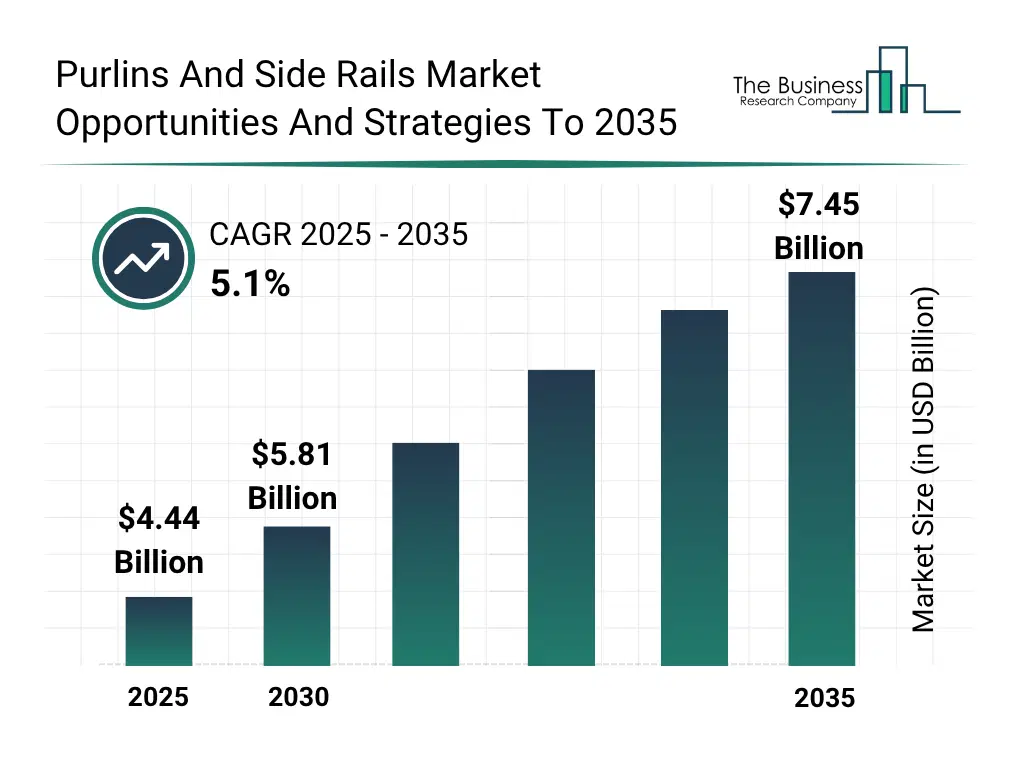
Purlins And Side Rails Market Size
The global purlins and side rails market reached a value of nearly $4,435.9 million in 2025, having grown at a compound annual growth rate (CAGR) of 7.0% since 2020. The market is expected to grow from $4,435.9 million in 2025 to $5,810.5 million in 2030 at a rate of 5.5%. The market is then expected to grow at a CAGR of 5.1% from 2030 and reach $7,449.6 million in 2035. Growth in the historic period resulted from rising demand for industrial retrofitting and expansion, increasing demand for warehouses and logistics facilities, development of special economic zones (SEZs) and industrial corridors and industrial shift towards modern pre-engineered steel buildings (PEBs) construction. Factors that negatively affected growth in the historic period were steel price volatility and high energy and production costs. Going forward, rise in demand for lightweight structural components, rising investments in industrial buildings (aligned with factory construction), rising construction of aviation and aerospace hanger facilities and growth in inland container depots (ICDs) and freight stations will drive the growth. Factors that could hinder the growth of the purlins and side rails market in the future include rising labor shortages and installation productivity constraints in structural framing, substitution pressure from optimized trusses, engineered wood, and alternative framing systems in select applications and impact of trade and tariff.
Purlins And Side Rails Market Segmentation
The purlins and side rails market is segmented by product, by material, by distribution channel and by end-user industry.By Product –
The purlins and side rails market is segmented by product into:
- a) Sleeved
- b) Butted
- c) Heavy End Bay
- d) Double Span
- e) Other Product Types
By Material –
The purlins and side rails market is segmented by material into:
- a) Steel
- b) Aluminum
- c) Other Materials
By Distribution Channel –
The purlins and side rails market is segmented by distribution channel into:
- a) Direct Sales
- b) Distributors
- c) Online Retail
- d) Wholesale Suppliers
By End-User Industry –
The purlins and side rails market is segmented by end-user industry into:
- a) Automotive
- b) Manufacturing
- c) Energy And Power
- d) Warehouse And Logistics
- e) Commercial
By Geography - The purlins and side rails market is segmented by geography into:
- China
- India
- Japan
- Australia
- Taiwan
- South Korea
- Indonesia
- USA
- Canada
- Brazil
- France
- Germany
- UK
- Italy
- Spain
- Russia
-
o Asia Pacific
o Africa