
Purpura Treatment Market Report 2026
Global Outlook – By Type (Non-Thrombocytopenic Purpura, Thrombocytopenic Purpura, Allergic Purpura), By Treatment Type (Topical Treatments, Oral Medications, Injectable Systemic Therapies, Immunoglobulin Therapy, Plasma-Derived Therapies), By Cases (Acute, Chronic), By Distribution Channel (Hospital Pharmacy, Online Pharmacy, Retail Pharmacy), By End-User (Hospitals, Clinics, Other End-Users) - Market Size, Trends, Strategies, and Forecast to 2030
Purpura Treatment Market Overview
• Purpura Treatment market size has reached to $1.51 billion in 2025 • Expected to grow to $2.3 billion in 2030 at a compound annual growth rate (CAGR) of 8.6% • Growth Driver: Rise In Autoimmune Diseases Fueling The Growth Of The Purpura Treatment Market Due To Increased Immune Dysregulation Cases • Market Trend: Innovation In Purpura Treatment Focuses On Oral Spleen Tyrosine Kinase (SYK) Inhibitors • North America was the largest region in 2025 and Asia-Pacific is the fastest growing region.What Is Covered Under Purpura Treatment Market?
Purpura treatment refers to the medical care and management of purpura, which are purple-colored spots or patches on the skin caused by small blood vessels leaking under the skin. Purpura treatment is utilized by healthcare providers to manage symptoms and address underlying conditions such as platelet disorders, infections, or autoimmune diseases that cause bleeding under the skin The main types of purpura treatment are non-thrombocytopenic purpura, thrombocytopenic purpura and allergic purpura. Non-thrombocytopenic purpura refers to a condition where there is bleeding under the skin, causing purple or red spots (purpura). These are used for various treatment type, including topical treatments, oral medications, intravitreal injections, laser therapy and photodynamic therapy. The various cases include acute and chronic that are distributed through various distribution channels such as hospital pharmacy, online pharmacy and retail pharmacy and are used by various end users such as hospitals, clinics and other end users.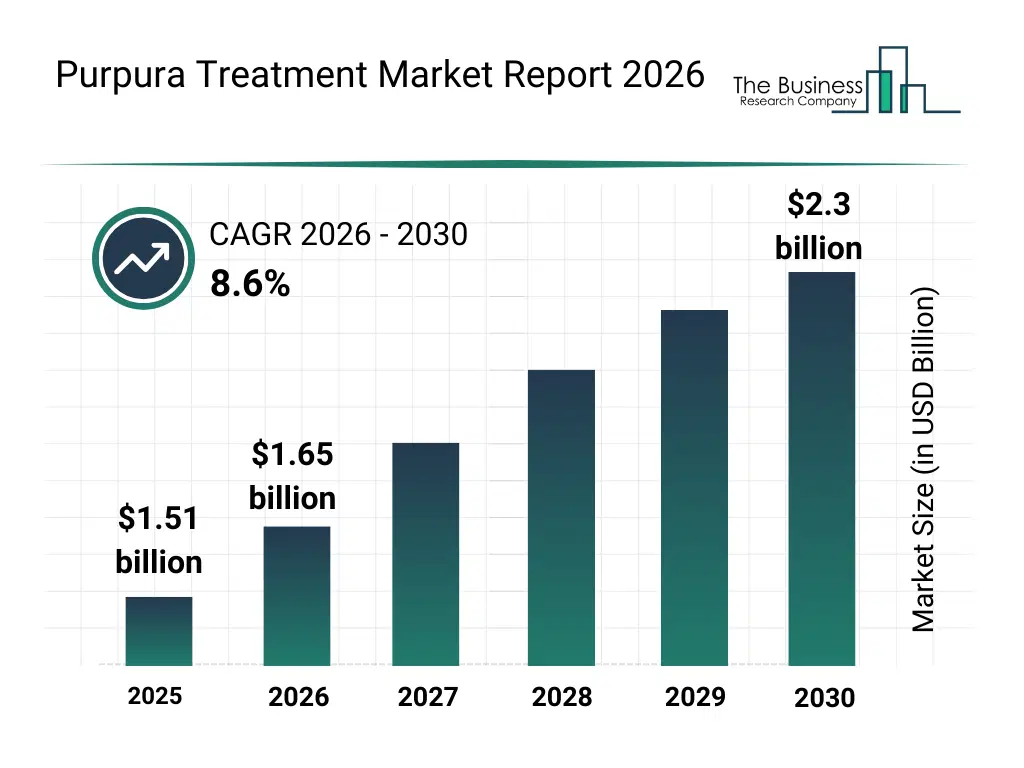
What Is The Purpura Treatment Market Size and Share 2026?
The purpura treatment market size has grown strongly in recent years. It will grow from $1.51 billion in 2025 to $1.65 billion in 2026 at a compound annual growth rate (CAGR) of 8.9%. The growth in the historic period can be attributed to increasing prevalence of autoimmune and platelet disorders, rising awareness of rare bleeding conditions, expansion of hospital-based dermatology services, improved diagnostic capabilities for vascular disorders, availability of corticosteroid and immunosuppressive treatments.What Is The Purpura Treatment Market Growth Forecast?
The purpura treatment market size is expected to see strong growth in the next few years. It will grow to $2.3 billion in 2030 at a compound annual growth rate (CAGR) of 8.6%. The growth in the forecast period can be attributed to increasing research in immune-mediated diseases, rising adoption of biologics and targeted therapies, expansion of specialty clinics for hematological disorders, growing focus on chronic disease management, increasing investment in precision medicine approaches. Major trends in the forecast period include increasing adoption of targeted immunomodulatory therapies, growing use of personalized treatment protocols, rising focus on early diagnosis and disease stratification, expansion of combination drug therapies, enhanced monitoring of chronic purpura cases.
Global Purpura Treatment Market Segmentation
1) By Type: Non-Thrombocytopenic Purpura, Thrombocytopenic Purpura, Allergic Purpura 2) By Treatment Type: Topical Treatments, Oral Medications, Injectable Systemic Therapies, Immunoglobulin Therapy, Plasma-Derived Therapies 3) By Cases: Acute, Chronic 4) By Distribution Channel: Hospital Pharmacy, Online Pharmacy, Retail Pharmacy 5) By End-User: Hospitals, Clinics, Other End-Users Subsegments: 1) By Non-Thrombocytopenic Purpura: Idiopathic Purpura, Senile Purpura, Vascular Abnormalities 2) By Thrombocytopenic Purpura: Immune Thrombocytopenic Purpura (ITP), Drug-induced Thrombocytopenic Purpura, Secondary Thrombocytopenic Purpura 3) By Allergic Purpura: Drug-induced Allergic Purpura, Food-induced Allergic Purpura, Infectious-related Allergic PurpuraWhat Are The Drivers Of The Purpura Treatment Market?
The increasing prevalence of autoimmune diseases is expected to propel the growth of the purpura treatment market going forward. Autoimmune diseases refer to conditions in which the body’s immune system mistakenly attacks its own healthy cells and tissues, thinking they are harmful invaders such as viruses or bacteria. The increasing prevalence of autoimmune diseases is due to environmental triggers, by promoting inflammation or molecular mimicry, leading the body to mistakenly attack its own tissues, thereby increasing the risk of autoimmune diseases. Purpura treatment helps manage autoimmune diseases by suppressing the overactive immune response, increasing platelet production, and reducing blood vessel inflammation, thereby controlling symptoms such as bruising, bleeding, and low platelet count common in autoimmune-related purpura such as immune thrombocytopenic purpura (ITP). For instance, in February 2024, according to the Arthritis Australia, an Australia-based non-profit organization, it is estimated that 562,378 Australians will be living with RA in 2025, accounting for 14% of all arthritis cases that year. By 2040, this number is projected to rise by 33% to 748,721 people. This represents an increase of 186,343 Australians with RA compared with 2025. Therefore, the increasing prevalence of autoimmune diseases is driving growth in the purpura treatment industry. Growing demand for personalized medicine is expected to propel the growth of the purpura treatment market going forward. Personalized medicine refers to a medical model that tailors healthcare treatments and practices to individual patients based on their genetic makeup, environment, and lifestyle. The growing demand for personalized medicine is due to advancements in genomics and biotechnology, which enable more precise, effective treatments tailored to individual genetic profiles, leading to better patient outcomes and fewer side effects. Purpura treatment helps personalized medicine by utilizing genetic and immune system insights to customize therapies, improving effectiveness and reducing adverse effects for individuals based on their unique biological responses. For instance, in February 2024, Personalized Medicine Coalition, a US-based non-profit organization, in 2023, the FDA approved 16 new personalized treatments for patients with rare diseases, a significant increase from the six approvals in 2022. Among these newly approved treatments, seven are cancer drugs, while three address other diseases and conditions. Therefore, the growing demand for personalized medicine is driving growth in the purpura treatment industry.Key Players In The Global Purpura Treatment Market
Major companies operating in the purpura treatment market are Merck & Co Inc., Sanofi S.A., GlaxoSmithKline plc, Takeda Pharmaceutical Company Limited, Amgen Inc., CSL Limited, Intas Pharmaceuticals Ltd., Biogen Inc., Chugai Pharmaceutical Co Ltd., Sun Pharmaceutical Industries Limited, Octapharma AG, Grifols S.A., GC Pharma, Emergent BioSolutions Inc., Kissei Pharmaceutical Co Ltd., Ablynx N.V. , Shire plc , Lee's Pharmaceutical Holdings Limited, Omeros Corporation, KM Biologics Co Ltd.
This chart is for illustrative purposes; the full report includes a detailed competitor analysis and comprehensive overview of the top 10 companies in the market.
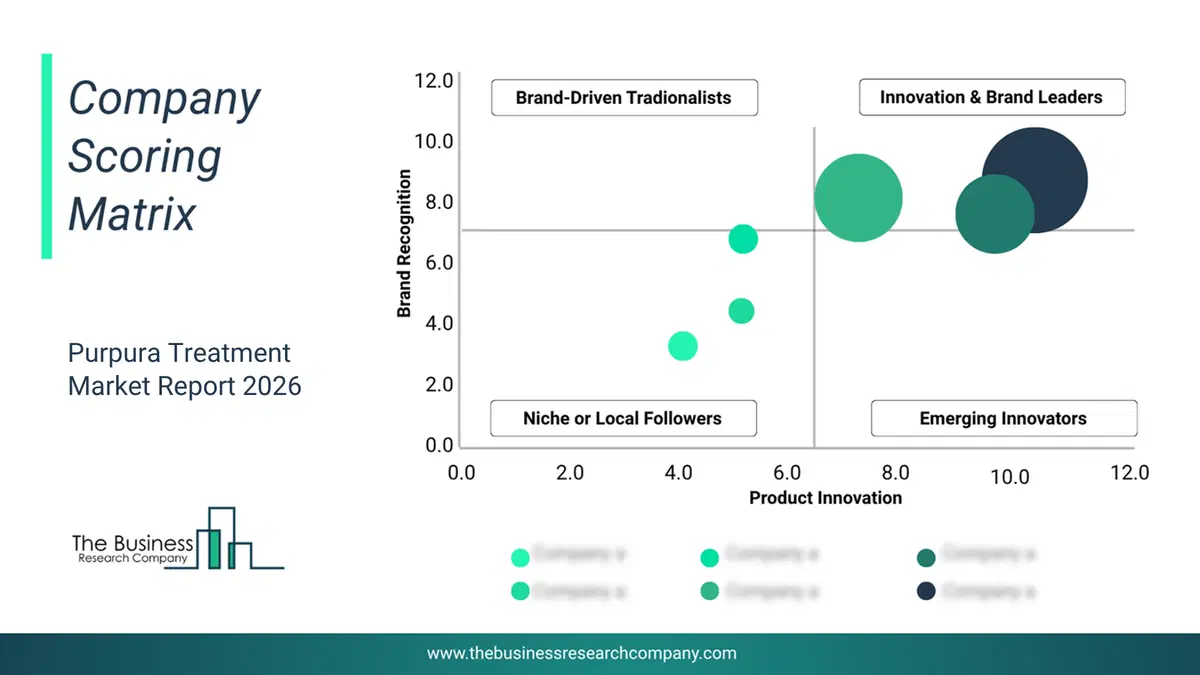
This chart maps companies by product innovation and brand strength, with bubble size indicating relative revenue, helping identify market leaders, challengers, and niche players. This is an illustrative chart; the full report provides a complete and accurate competitive analysis.
Global Purpura Treatment Market Trends and Insights
Major companies operating in the purpura treatment market are focusing on advancements in diagnostic tools such as oral spleen tyrosine kinase (SYK) inhibitors to enhance treatment efficacy and improve patient outcomes. An oral spleen tyrosine kinase (SYK) inhibitor is a type of medication taken by mouth that blocks the activity of the SYK enzyme, which plays a key role in the immune system’s signaling pathways. For instance, in April 2023, Kissei Pharmaceutical Co., Ltd., a Japan-based pharmaceutical company, launched TAVALISSE tablets (100 mg and 150 mg) in Japan as an oral treatment for adult patients with chronic idiopathic thrombocytopenic purpura (ITP). TAVALISSE (fostamatinib sodium hydrate) is an oral SYK inhibitor that reduces platelet destruction by macrophages, helping to improve bleeding symptoms in chronic ITP. Approved in Japan following a Phase 3 trial (R788-1301), it showed a stable platelet response in 36% of patients versus 0% with placebo, highlighting its efficacy as a novel treatment option.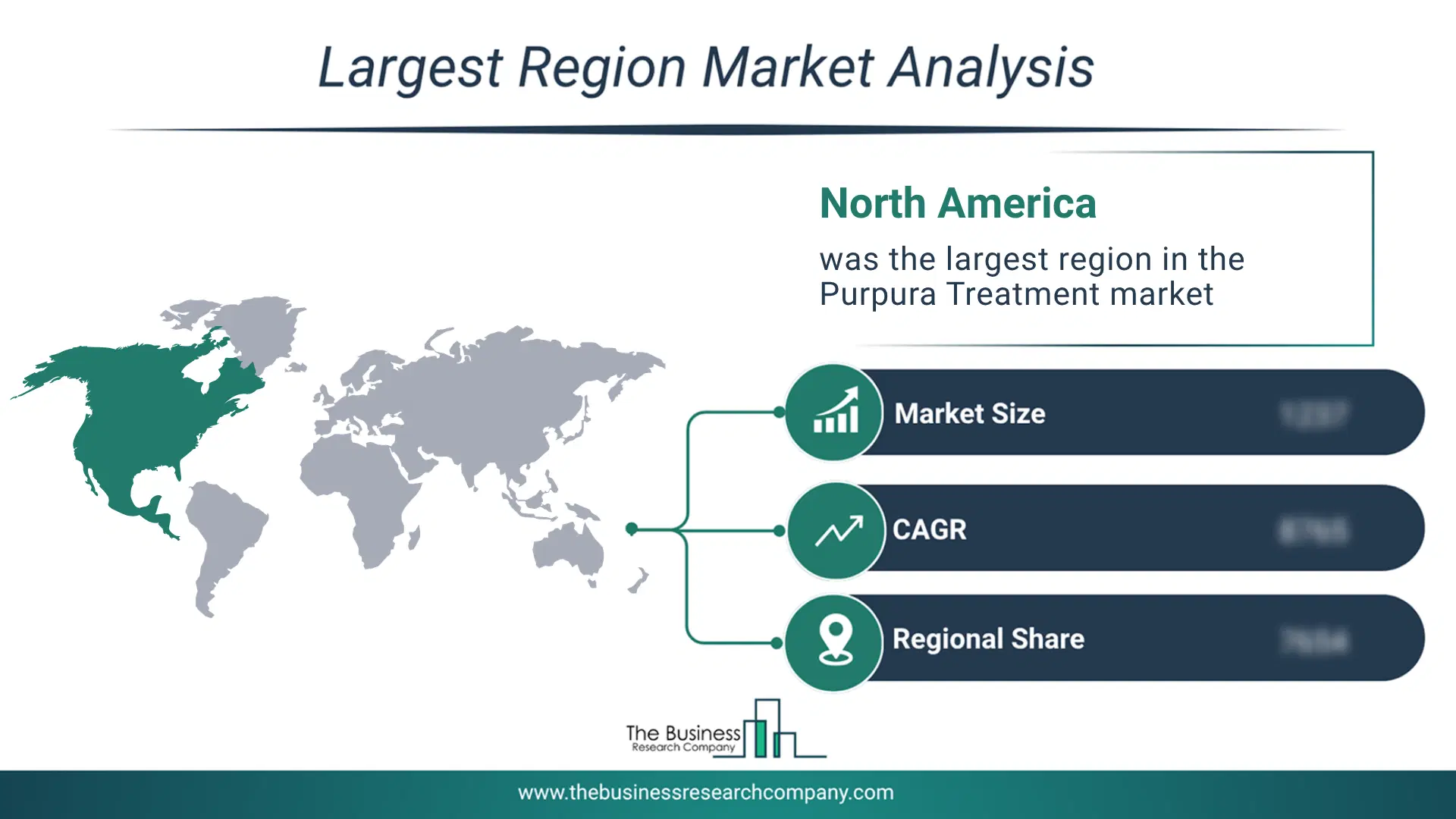
Regional Outlook
North America was the largest region in the purpura treatment market in 2025. Asia-Pacific is expected to be the fastest-growing region in the forecast period. The regions covered in this market report are Asia-Pacific, South East Asia, Western Europe, Eastern Europe, North America, South America, Middle East, Africa. The countries covered in this market report are Australia, Brazil, China, France, Germany, India, Indonesia, Japan, Taiwan, Russia, South Korea, UK, USA, Canada, Italy, Spain.What Defines the Purpura Treatment Market?
The purpura treatment market consists of revenues earned by entities by providing services such as diagnostic evaluations, immunosuppressive therapy, intravenous immunoglobulin (IVIG) infusions, platelet transfusions, and supportive care. The market value includes the value of related goods sold by the service provider or included within the service offering. The purpura treatment market also includes sales of products including corticosteroids, immunoglobulins (IVIG), biologics, immunosuppressants, and diagnostic kits. Values in this market are ‘factory gate’ values, that is, the value of goods sold by the manufacturers or creators of the goods, whether to other entities (including downstream manufacturers, wholesalers, distributors, and retailers) or directly to end customers. The value of goods in this market includes related services sold by the creators of the goods.How is Market Value Defined and Measured?
The market value is defined as the revenues that enterprises gain from the sale of goods and/or services within the specified market and geography through sales, grants, or donations in terms of the currency (in USD unless otherwise specified). The revenues for a specified geography are consumption values that are revenues generated by organizations in the specified geography within the market, irrespective of where they are produced. It does not include revenues from resales along the supply chain, either further along the supply chain or as part of other products.
This chart presents market attractiveness based on a quantitative evaluation of growth, competition, strategic alignment, and risk, offering a clear view of opportunity areas for decision-making. This chart is for illustrative purposes; the full report contains the complete analysis.

This chart highlights the Total Addressable Market (TAM) by estimating the maximum revenue opportunity using an assumption-driven approach, supporting strategic planning and opportunity sizing across markets. The chart is illustrative; the full report provides a more comprehensive analysis.
What Key Data and Analysis Are Included in the Purpura Treatment Market Report 2026?
The purpura treatment market research report is one of a series of new reports from The Business Research Company that provides market statistics, including industry global market size, regional shares, competitors with the market share, detailed market segments, market trends and opportunities, and any further data you may need to thrive in the purpura treatment industry. The market research report delivers a complete perspective of everything you need, with an in-depth analysis of the current and future state of the industry.Purpura Treatment Market Report Forecast Analysis
| Report Attribute | Details |
|---|---|
| Market Size Value In 2026 | $1.65 billion |
| Revenue Forecast In 2030 | $2.3 billion |
| Growth Rate | CAGR of 8.6% from 2026 to 2030 |
| Base Year For Estimation | 2025 |
| Actual Estimates/Historical Data | 2020-2025 |
| Forecast Period | 2026 - 2030 |
| Market Representation | Revenue in USD Billion and CAGR from 2026 to 2030 |
| Segments Covered | Type, Treatment Type, Cases, Distribution Channel, End-User |
| Regional Scope | Asia-Pacific, Western Europe, Eastern Europe, North America, South America, Middle East, Africa |
| Country Scope | The countries covered in the report are Australia, Brazil, China, France, Germany, India, Indonesia, Japan, Taiwan, Russia, South Korea, UK, USA, Canada, Italy, Spain |
| Key Companies Profiled | Merck & Co Inc., Sanofi S.A., GlaxoSmithKline plc, Takeda Pharmaceutical Company Limited, Amgen Inc., CSL Limited, Intas Pharmaceuticals Ltd., Biogen Inc., Chugai Pharmaceutical Co Ltd., Sun Pharmaceutical Industries Limited, Octapharma AG, Grifols S.A., GC Pharma, Emergent BioSolutions Inc., Kissei Pharmaceutical Co Ltd., Ablynx N.V. , Shire plc , Lee's Pharmaceutical Holdings Limited, Omeros Corporation, KM Biologics Co Ltd. |
| Customization Scope | Request for Customization |
| Pricing And Purchase Options | Explore Purchase Options |