

Quantum-Dot Neuroscience Probe Market Report 2026
Global Outlook – By Product Type (Optical Probes, Electrical Probes, Multifunctional Probes), By Material Type (Cadmium-Based Quantum Dots, Indium-Based Quantum Dots, Carbon Quantum Dots, Other Material Types), By Application (Brain Imaging, Neural Activity Monitoring, Other Applications), By End-User (Academic And Research Institutes, Pharmaceutical And Biotechnology Companies, Other End-Users) – Market Size, Trends, Strategies, and Forecast to 2030
Quantum-Dot Neuroscience Probe Market Overview
• Quantum-Dot Neuroscience Probe market size has reached to $0.94 billion in 2025 • Expected to grow to $2.05 billion in 2030 at a compound annual growth rate (CAGR) of 16.8% • Growth Driver: Surge In Neurological Disorders Fueling The Growth Of The Market Due To Aging Populations And Rising Disease Prevalence • North America was the largest region in 2025 and Asia-Pacific is the fastest growing region.What Is Covered Under Quantum-Dot Neuroscience Probe Market?
A quantum dot neuroscience probe is a nanoscale tool that uses semiconductor quantum dots which are tiny fluorescent particles with unique optical and electronic properties to study and monitor neural activity. These probes enable high resolution imaging tracking of neurotransmitters and visualization of neuronal processes at the molecular and cellular level providing precise insights into brain function and neural communication. The main product types of the quantum-dot neuroscience probes include optical probes, electrical probes, multifunctional probes, and others. Optical probes refer to quantum-dot-based devices designed for high-resolution imaging and monitoring of neural activity in research and clinical settings. It uses various material types such as cadmium-based quantum dots, indium-based quantum dots, carbon quantum dots, and others. The application areas include brain imaging, neural activity monitoring, drug delivery, and others, and key end-users include academic and research institutes, hospitals and clinics, pharmaceutical and biotechnology companies, and others.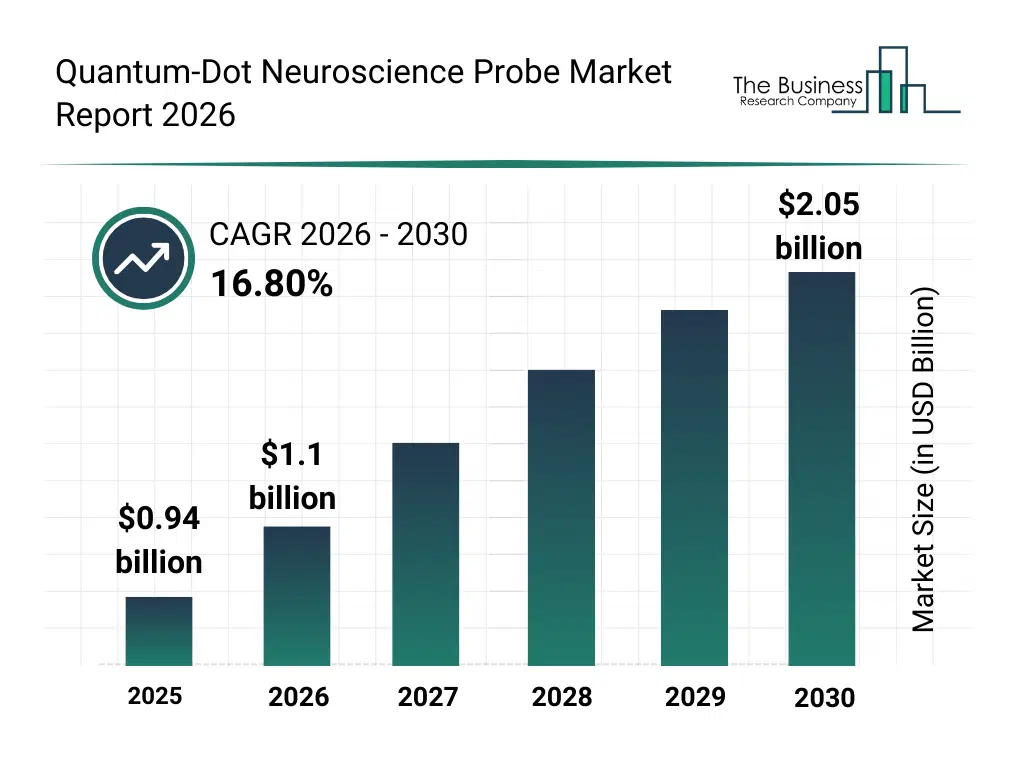
What Is The Quantum-Dot Neuroscience Probe Market Size and Share 2026?
The quantum-dot neuroscience probe market size has grown rapidly in recent years. It will grow from $0.94 billion in 2025 to $1.1 billion in 2026 at a compound annual growth rate (CAGR) of 17.0%. The growth in the historic period can be attributed to advances in nanotechnology research, growth in neuroscience studies, demand for precise neural imaging, increased academic funding, expansion of brain research programs.What Is The Quantum-Dot Neuroscience Probe Market Growth Forecast?
The quantum-dot neuroscience probe market size is expected to see rapid growth in the next few years. It will grow to $2.05 billion in 2030 at a compound annual growth rate (CAGR) of 16.8%. The growth in the forecast period can be attributed to integration with ai-based neural analysis, growth in neurodegenerative disease research, expansion of brain mapping initiatives, demand for real-time neural monitoring, commercialization of nano-probes. Major trends in the forecast period include high-resolution neural imaging, fluorescent quantum dot probes, nanoscale neuro monitoring, molecular level brain analysis, advanced neuro research tools.
Global Quantum-Dot Neuroscience Probe Market Segmentation
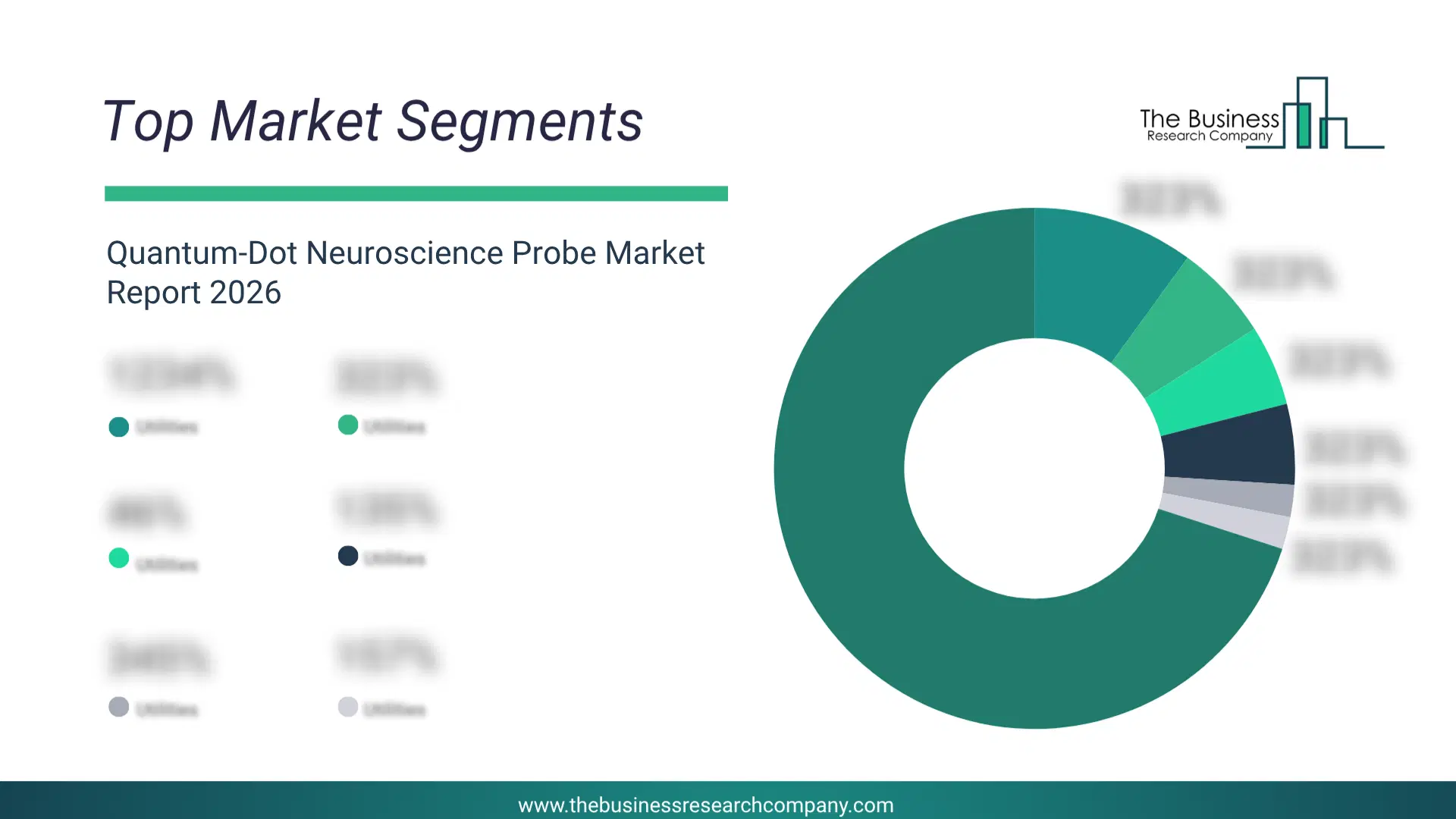
1) By Product Type: Optical Probes, Electrical Probes, Multifunctional Probes 2) By Material Type: Cadmium-Based Quantum Dots, Indium-Based Quantum Dots, Carbon Quantum Dots, Other Material Types 3) By Application: Brain Imaging, Neural Activity Monitoring, Other Applications 4) By End-User: Academic And Research Institutes, Pharmaceutical And Biotechnology Companies, Other End-Users Subsegments: 1) By Optical Probes: Fluorescent Quantum Dot Probes, Near-Infrared Quantum Dot Probes, Photoactivated Quantum Dot Probes, Voltage-Sensitive Quantum Dot Probes 2) By Electrical Probes: Quantum Dot Field Effect Transistor Probes, Quantum Dot Nanowire Probes, Quantum Dot Microelectrode Probes, Quantum Dot Conductive Polymer Probes 3) By Multifunctional Probes: Quantum Dot Magnetic Probes, Quantum Dot Photoelectric Probes, Quantum Dot Biosensing Probes, Quantum Dot Theranostic ProbesWhat Are The Drivers Of The Quantum-Dot Neuroscience Probe Market?
The rising prevalence of neurological disorders is expected to propel the growth of the quantum-dot neuroscience probe market going forward. Neurological disorders refer to medical conditions that affect the brain, spinal cord, and nerves, impacting movement, cognition, and overall nervous system function. The rise in neurological disorders is driven by increasing aging populations, lifestyle-related risk factors, and higher prevalence of chronic diseases, leading to greater incidence and burden of conditions affecting the nervous system. Quantum-dot neuroscience probes help neurological disorders by enabling highly precise imaging and monitoring of neural activity, allowing early diagnosis, targeted treatment, and a better understanding of brain function and disease progression. For instance, in April 2025, the National Library of Medicine, a US-based federal government, reported that approximately 7.2 million Americans aged 65 and older currently live with Alzheimer’s dementia, a figure projected to rise to 13.8 million by 2060. Therefore, the rising prevalence of neurological disorders is driving the growth of the quantum-dot neuroscience probe industry. The rising investments in neuroscience research are expected to propel the growth of the quantum-dot neuroscience probe market going forward. Neuroscience research refers to the scientific study of the structure, function, development, genetics, and biochemistry of the nervous system, including the brain, spinal cord, and peripheral nerves. Neuroscience research is rising due to the growing prevalence of neurological disorders and efforts to better understand the nervous system and develop more effective diagnostics and treatments. Quantum-dot neuroscience probes enhance neuroscience research by enabling high-resolution, real-time imaging of neural structures and activity, allowing researchers to study brain function and disease mechanisms with unprecedented precision. For instance, in January 2023, according to the National Institutes of Health, a US-based government agency, the NIH BRAIN Initiative received an additional $60 million in funding for fiscal year 2023. The total appropriation of $680 million includes $450 million authorized under the 21st Century Cures Act. Therefore, the rising investments in neuroscience research are driving the growth of the quantum-dot neuroscience probe industry. The increasing demand for personalized medicine is expected to propel the growth of the quantum-dot neuroscience probe market going forward. Personalized medicine refers to a medical approach that tailors treatment and healthcare decisions to the individual characteristics of each patient, such as their genetic makeup, lifestyle, environment, and specific disease profile. The increasing demand for personalized medicine is due to the advancements in genomics and molecular diagnostics, as they enable tailored treatment plans based on an individual’s genetic profile, leading to improved therapeutic outcomes and reduced adverse effects. Quantum-dot neuroscience probe helps personalized medicine by enabling highly precise, real-time imaging of neural processes, allowing treatments to be tailored to an individual’s unique brain activity and disease profile. For instance, in February 2024, the Personalized Medicine Coalition, a US-based non-profit organization, reported that in 2023, the FDA approved 16 new personalized treatments for patients with rare diseases, a significant increase from the six approved in 2022. Therefore, the increasing demand for personalized medicine is driving the growth of the quantum-dot neuroscience probe industry.Key Players In The Global Quantum-Dot Neuroscience Probe Market
Major companies operating in the quantum-dot neuroscience probe market are Thermo Fisher Scientific Inc., Merck Group, ams-OSRAM AG, Nanosys Inc., American Elements Inc., QUANDELA Inc., Nanoco Technologies Ltd., UbiQD Inc., NN-Labs GmbH, Plasmachem GmbH, Avantama AG, Mesolight Inc., Quantum Solutions LLC, Cytodiagnostics Inc., Ocean NanoTech LLC, CD Bioparticles Inc., QD Laser Inc., QDI Systems Inc., Radetec Diagnostics Inc., QustomDot Inc.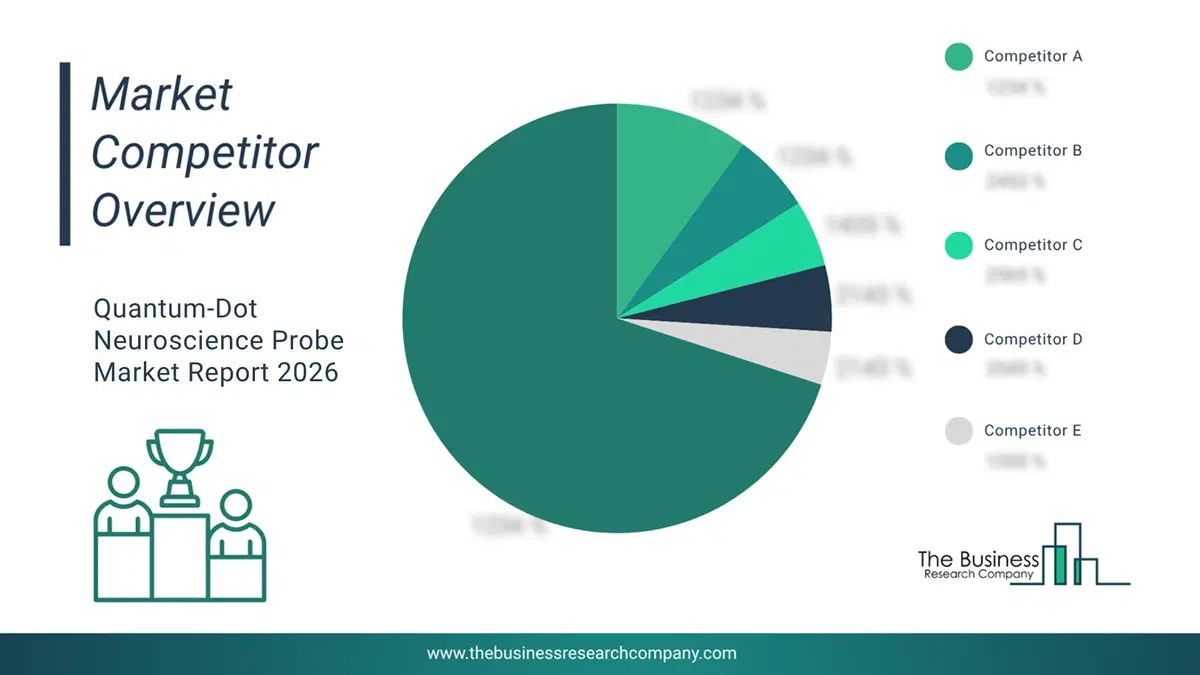
This chart is for illustrative purposes; the full report includes a detailed competitor analysis and comprehensive overview of the top 10 companies in the market.
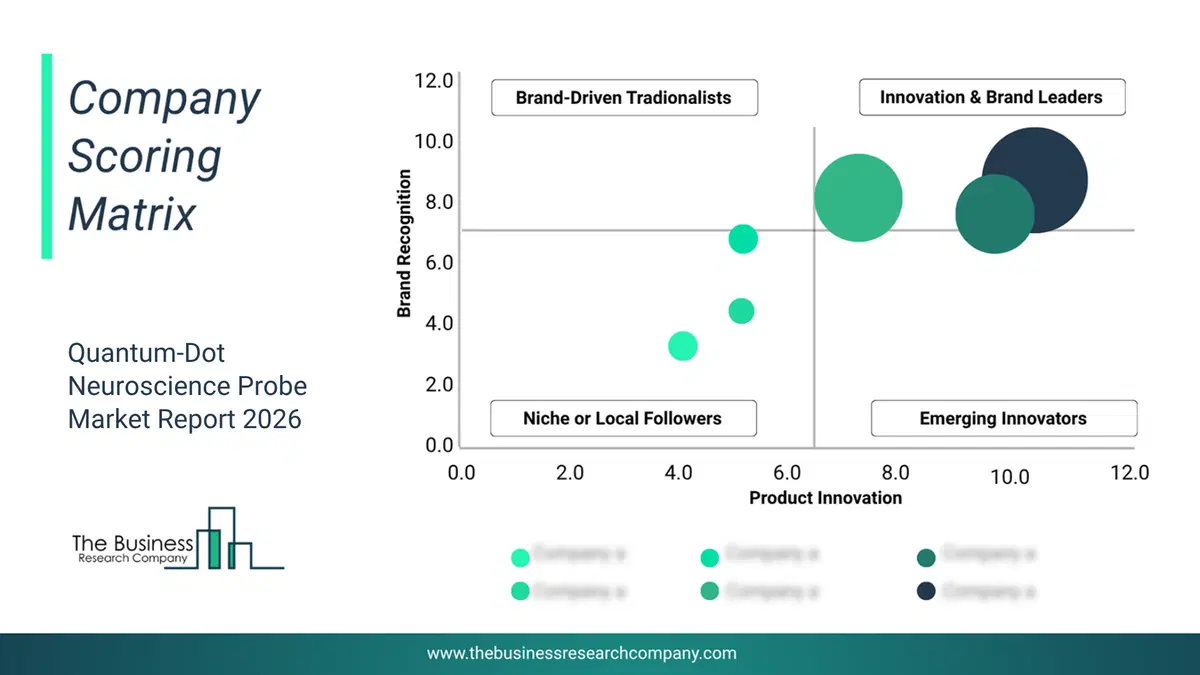
This chart maps companies by product innovation and brand strength, with bubble size indicating relative revenue, helping identify market leaders, challengers, and niche players. This is an illustrative chart; the full report provides a complete and accurate competitive analysis.
Regional Outlook
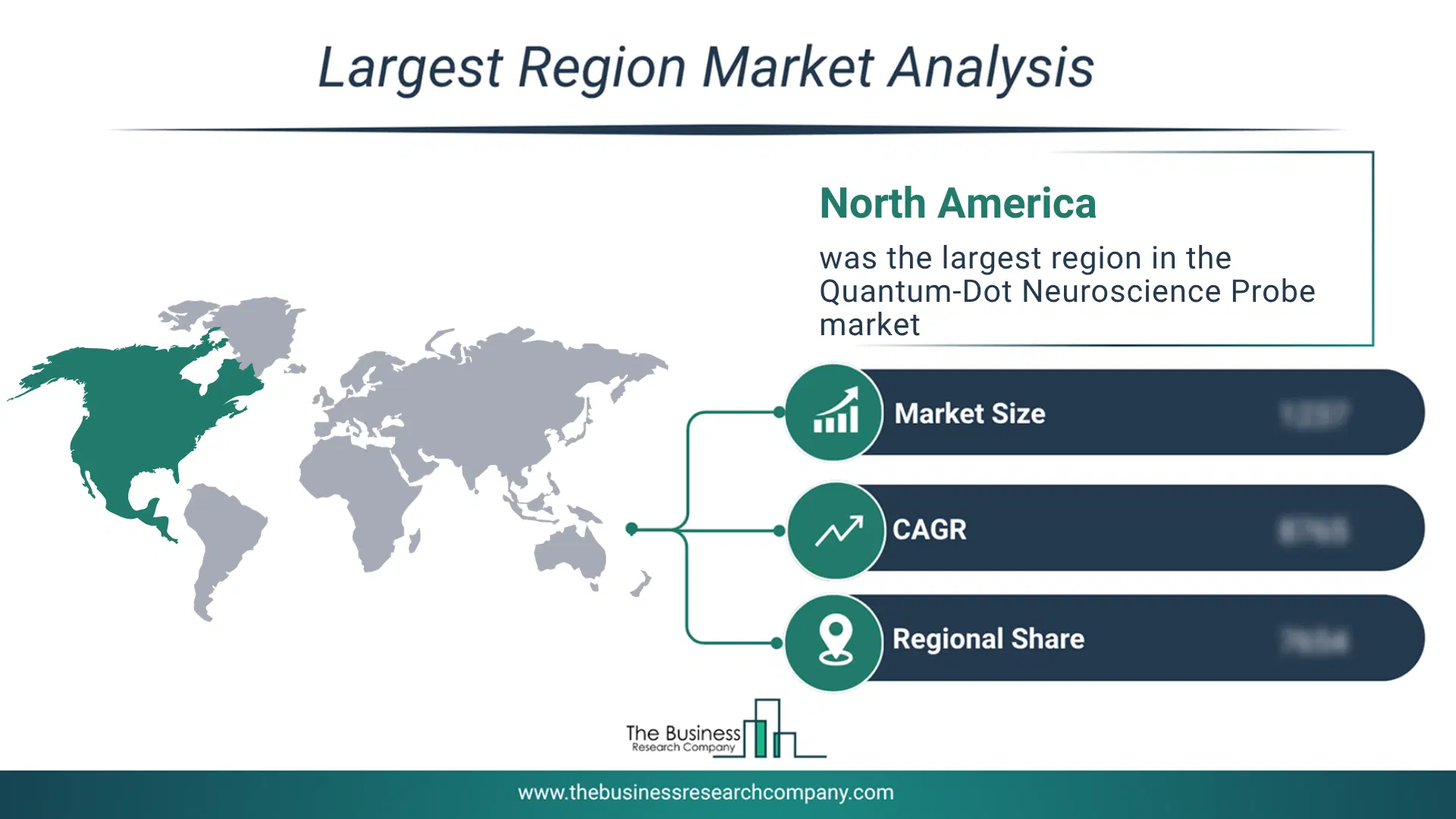
North America was the largest region in the quantum-dot neuroscience probe market in 2025. Asia-Pacific is expected to be the fastest-growing region in the forecast period. The regions covered in this market report are Asia-Pacific, South East Asia, Western Europe, Eastern Europe, North America, South America, Middle East, Africa. The countries covered in this market report are Australia, Brazil, China, France, Germany, India, Indonesia, Japan, Taiwan, Russia, South Korea, UK, USA, Canada, Italy, SpainWhat Defines the Quantum-Dot Neuroscience Probe Market?
The quantum-dot neuroscience probe market consists of quantum dot-labeled antibodies, quantum dot-conjugated nanocarriers, fluorescence microscopy accessories, quantum dot-based biosensors, and customized quantum dot reagents. Values in this market are ‘factory gate’ values, that is the value of goods sold by the manufacturers or creators of the goods, whether to other entities (including downstream manufacturers, wholesalers, distributors and retailers) or directly to end customers. The value of goods in this market includes related services sold by the creators of the goods.How is Market Value Defined and Measured?
The market value is defined as the revenues that enterprises gain from the sale of goods and/or services within the specified market and geography through sales, grants, or donations in terms of the currency (in USD unless otherwise specified). The revenues for a specified geography are consumption values that are revenues generated by organizations in the specified geography within the market, irrespective of where they are produced. It does not include revenues from resales along the supply chain, either further along the supply chain or as part of other products.
This chart presents market attractiveness based on a quantitative evaluation of growth, competition, strategic alignment, and risk, offering a clear view of opportunity areas for decision-making. This chart is for illustrative purposes; the full report contains the complete analysis.

This chart highlights the Total Addressable Market (TAM) by estimating the maximum revenue opportunity using an assumption-driven approach, supporting strategic planning and opportunity sizing across markets. The chart is illustrative; the full report provides a more comprehensive analysis.
What Key Data and Analysis Are Included in the Quantum-Dot Neuroscience Probe Market Report 2026?
The quantum-dot neuroscience probe market research report is one of a series of new reports from The Business Research Company that provides market statistics, including industry global market size, regional shares, competitors with the market share, detailed market segments, market trends and opportunities, and any further data you may need to thrive in the quantum-dot neuroscience probe industry. The market research report delivers a complete perspective of everything you need, with an in-depth analysis of the current and future state of the industry.Quantum-Dot Neuroscience Probe Market Report Forecast Analysis
| Report Attribute | Details |
|---|---|
| Market Size Value In 2026 | $1.1 billion |
| Revenue Forecast In 2030 | $2.05 billion |
| Growth Rate | CAGR of 16.8% from 2026 to 2030 |
| Base Year For Estimation | 2025 |
| Actual Estimates/Historical Data | 2020-2025 |
| Forecast Period | 2026 - 2030 |
| Market Representation | Revenue in USD Billion and CAGR from 2026 to 2030 |
| Segments Covered | Product Type, Material Type, Application, End-User |
| Regional Scope | Asia-Pacific, Western Europe, Eastern Europe, North America, South America, Middle East, Africa |
| Country Scope | The countries covered in the report are Australia, Brazil, China, France, Germany, India, Indonesia, Japan, Taiwan, Russia, South Korea, UK, USA, Canada, Italy, Spain. |
| Key Companies Profiled | Thermo Fisher Scientific Inc., Merck Group, ams-OSRAM AG, Nanosys Inc., American Elements Inc., QUANDELA Inc., Nanoco Technologies Ltd., UbiQD Inc., NN-Labs GmbH, Plasmachem GmbH, Avantama AG, Mesolight Inc., Quantum Solutions LLC, Cytodiagnostics Inc., Ocean NanoTech LLC, CD Bioparticles Inc., QD Laser Inc., QDI Systems Inc., Radetec Diagnostics Inc., QustomDot Inc. |
| Customization Scope | Request for Customization |
| Pricing And Purchase Options | Explore Purchase Options |