
Quantum-Safe Software-Defined Perimeter Market Report 2026
Global Outlook – By Component (Solutions, Services), By Deployment Mode (On-Premises, Cloud), By Organization Size (Small And Medium Enterprises, Large Enterprises), By Application (Network Security, Data Protection, Access Control, Compliance Management, Other Applications), By End-User (Banking, Financial Services And Insurance, Healthcare, Government, Information Technology And Telecommunications, Retail, Manufacturing, Other End-Users) – Market Size, Trends, Strategies, and Forecast to 2030
Quantum-Safe Software-Defined Perimeter Market Overview
• Quantum-Safe Software-Defined Perimeter market size has reached to $1.78 billion in 2025 • Expected to grow to $7.64 billion in 2030 at a compound annual growth rate (CAGR) of 33.9% • Growth Driver: Rising Frequency Of Targeted Cyberattacks Driving The Growth Of The Market Due To Expansion Of Digital Attack Surfaces • Market Trend: Advancements In Next-Generation Firewall Security Against Quantum Threats • North America was the largest region in 2025 and Asia-Pacific is the fastest growing region.What Is Covered Under Quantum-Safe Software-Defined Perimeter Market?
A quantum-safe software-defined perimeter is a security architecture that enforces strict, identity-driven access controls to safeguard network resources. It operates on a zero-trust model, allowing connections only after verifying and authenticating users or devices, and creating secure, temporary communication channels. The main components of quantum-safe software-defined perimeters are solutions and services. Solutions are security frameworks that combine software-defined perimeter architecture with post-quantum cryptography to protect networks and data against both current and future quantum-enabled cyber threats. They can be deployed in different modes, including on-premises and cloud, and are used by organizations of various sizes, such as small and medium enterprises (SMEs) and large enterprises. Applications include network security, data protection, access control, compliance management, and others, while the key end-users are banking, financial services, and insurance (BFSI), healthcare, government, information technology and telecommunications, retail, manufacturing, and others.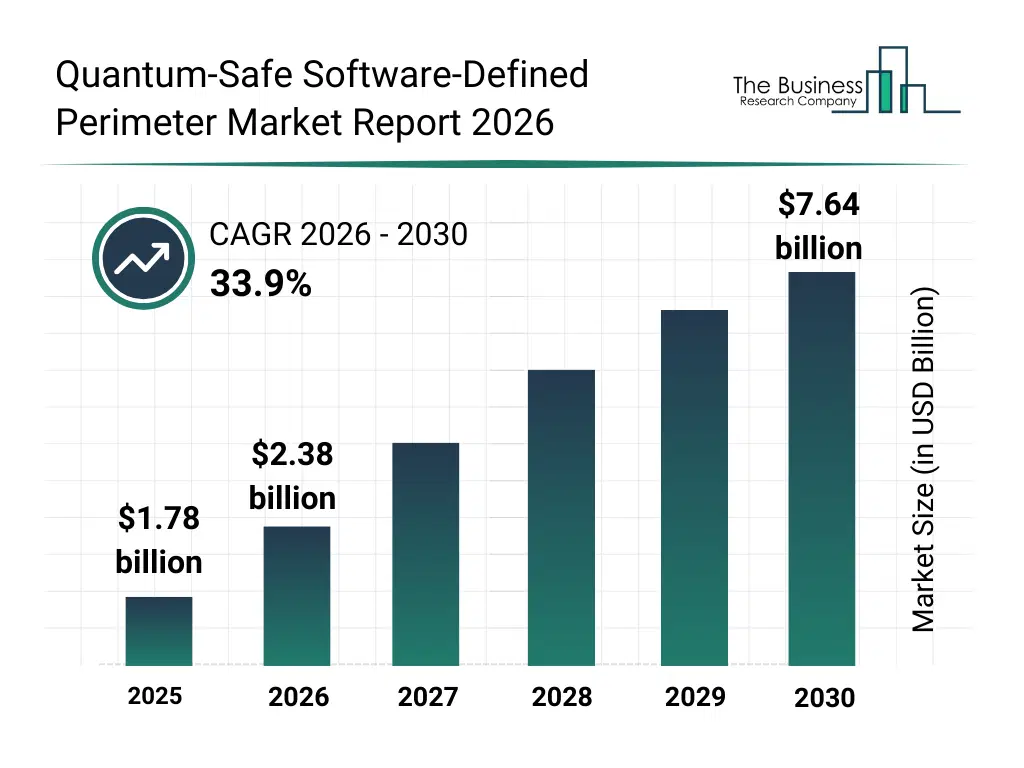
What Is The Quantum-Safe Software-Defined Perimeter Market Size and Share 2026?
The quantum-safe software-defined perimeter market size has grown exponentially in recent years. It will grow from $1.78 billion in 2025 to $2.38 billion in 2026 at a compound annual growth rate (CAGR) of 33.7%. The growth in the historic period can be attributed to enterprise network security modernization, rise in insider threat incidents, cloud access security adoption, regulatory compliance expansion, digital transformation initiatives.What Is The Quantum-Safe Software-Defined Perimeter Market Growth Forecast?
The quantum-safe software-defined perimeter market size is expected to see exponential growth in the next few years. It will grow to $7.64 billion in 2030 at a compound annual growth rate (CAGR) of 33.9%. The growth in the forecast period can be attributed to quantum safe access framework adoption, secure remote workforce expansion, zero trust enterprise deployment growth, cloud security investment expansion, advanced identity protection demand. Major trends in the forecast period include zero trust network access control, post quantum identity authentication, dynamic access policy enforcement, cloud based perimeter security, secure microsegmentation architecture.
Global Quantum-Safe Software-Defined Perimeter Market Segmentation
1) By Component: Solutions, Services 2) By Deployment Mode: On-Premises, Cloud 3) By Organization Size: Small And Medium Enterprises, Large Enterprises 4) By Application: Network Security, Data Protection, Access Control, Compliance Management, Other Applications 5) By End-User: Banking, Financial Services And Insurance, Healthcare, Government, Information Technology And Telecommunications, Retail, Manufacturing, Other End-Users Subsegments: 1) By Solutions: Identity And Access Management, Risk Analytics And Visualization, Secure Communication Gateways, Endpoint Protection, Network Security Control, Policy Enforcement And Management 2) By Services: Professional Services, Consulting Services, Deployment And Integration, Training And Education, Support And Maintenance, Managed ServicesWhat Is The Driver Of The Quantum-Safe Software-Defined Perimeter Market?
The increasing frequency of targeted cyberattacks is expected to propel the growth of the quantum-safe software-defined perimeter market going forward. Targeted cyberattacks refer to deliberate and focused hacking attempts aimed at specific individuals, organizations, or systems. The frequency of targeted cyberattacks is rising due to the expansion of digital attack surfaces, as the rapid growth of connected devices and cloud platforms creates more entry points for malicious actors. Quantum-safe software-defined perimeter (SDP) protects against targeted cyberattacks by using quantum-resistant encryption to secure network access and prevent unauthorized intrusion. For instance, in October 2024, according to Check Point Software Technologies, an Israel-based cybersecurity vendor, organizations faced an average of 1,876 cyberattacks per week, up 75% from the same period in 2023. Therefore, the increasing frequency of targeted cyberattacks is driving the growth of the quantum-safe software-defined perimeter industry.Key Players In The Global Quantum-Safe Software-Defined Perimeter Market
Major companies operating in the quantum-safe software-defined perimeter market are Microsoft Corporation, International Business Machines Corporation, Broadcom Inc., Palo Alto Networks Inc., Fortinet Inc., Thales Group, Check Point Software Technologies Ltd., Unisys Corporation, Zscaler Inc., Cloudflare Inc., Entrust Corporation, BlackBerry Limited, Cato Networks Ltd., Versa Networks Inc., SP Telecommunications Pte Ltd., ISARA Corporation, Arqit Quantum Inc., Quantum Xchange, PQShield Ltd., evolutionQ Inc.
This chart is for illustrative purposes; the full report includes a detailed competitor analysis and comprehensive overview of the top 10 companies in the market.
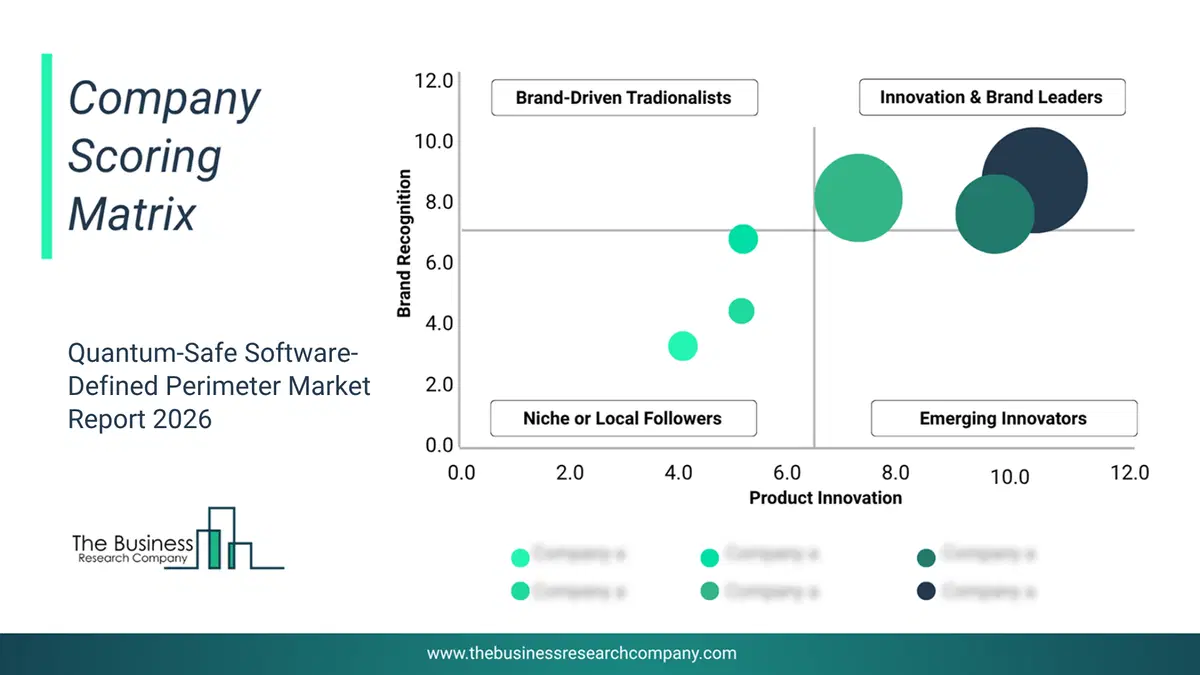
This chart maps companies by product innovation and brand strength, with bubble size indicating relative revenue, helping identify market leaders, challengers, and niche players. This is an illustrative chart; the full report provides a complete and accurate competitive analysis.
Global Quantum-Safe Software-Defined Perimeter Market Trends and Insights
Major companies operating in the quantum-safe software-defined perimeter market are focusing on developing advanced solutions, such as next-generation firewalls, to enhance network security, prevent unauthorized access, and protect sensitive data against emerging quantum computing threats. Next-generation firewalls (NGFWs) refer to advanced security devices that combine traditional firewall functions with features such as deep packet inspection, intrusion prevention, application awareness, and threat intelligence to protect networks from sophisticated cyberattacks. For instance, in July 2025, Fortinet Inc., a US-based cybersecurity company, launched FortiOS 7.6 with advanced quantum-safe capabilities to protect sensitive data against emerging quantum computing threats. The platform enables organizations to deploy robust encryption algorithms and secure key distribution methods, safeguard FortiGate next-generation firewalls (NGFWs) and Fortinet Secure SD-WAN solutions, and transition seamlessly to post-quantum security. These features specifically address risks such as harvest-now, decrypt-later (HNDL) attacks, ensuring data remains protected even as quantum computing evolves.What Are Latest Mergers And Acquisitions In The Quantum-Safe Software-Defined Perimeter Market?
In May 2025, Keyfactor Inc., a U.S.-based provider of digital trust, identity management, and cryptographic lifecycle management solutions, acquired InfoSec Global Ltd. for an undisclosed amount. With this acquisition, Keyfactor aims to strengthen its quantum-safe security capabilities by integrating advanced cryptographic asset discovery, real-time risk monitoring, and automated remediation to accelerate enterprise adoption of post-quantum cryptography. InfoSec Global Ltd. is a Canada-based provider of cryptographic agility management solutions that help organizations inventory, manage, and secure their cryptographic assets across complex IT environments.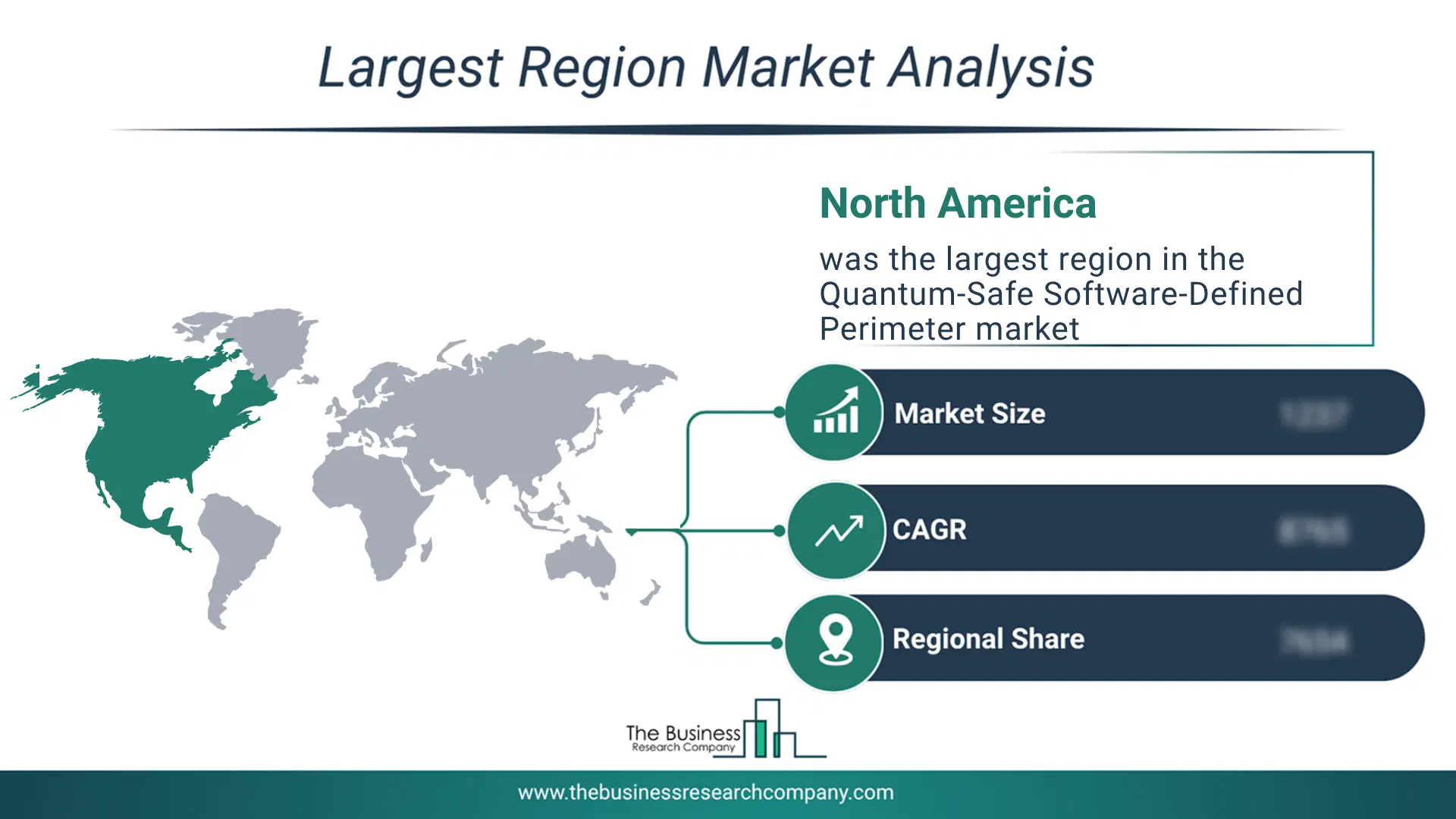
Regional Insights
North America was the largest region in the quantum-safe software-defined perimeter market in 2025. Asia-Pacific is expected to be the fastest-growing region in the forecast period. The regions covered in this market report are Asia-Pacific, South East Asia, Western Europe, Eastern Europe, North America, South America, Middle East, Africa. The countries covered in this market report are Australia, Brazil, China, France, Germany, India, Indonesia, Japan, Taiwan, Russia, South Korea, UK, USA, Canada, Italy, Spain.What Defines the Quantum-Safe Software-Defined Perimeter Market?
The quantum-safe software-defined perimeter market consists of revenues earned by entities by providing services such as quantum-resistant encryption integration, zero-trust network access, access management, and secure application access. The market value includes the value of related goods sold by the service provider or included within the service offering. The quantum-safe software-defined perimeter market also includes sales of cryptographic hardware modules, secure remote access devices, quantum-safe network switches, and secure application delivery controllers. Values in this market are ‘factory gate’ values, that is the value of goods sold by the manufacturers or creators of the goods, whether to other entities (including downstream manufacturers, wholesalers, distributors and retailers) or directly to end customers. The value of goods in this market includes related services sold by the creators of the goods.How is Market Value Defined and Measured?
The market value is defined as the revenues that enterprises gain from the sale of goods and/or services within the specified market and geography through sales, grants, or donations in terms of the currency (in USD unless otherwise specified). The revenues for a specified geography are consumption values that are revenues generated by organizations in the specified geography within the market, irrespective of where they are produced. It does not include revenues from resales along the supply chain, either further along the supply chain or as part of other products.
This chart presents market attractiveness based on a quantitative evaluation of growth, competition, strategic alignment, and risk, offering a clear view of opportunity areas for decision-making. This chart is for illustrative purposes; the full report contains the complete analysis.

This chart highlights the Total Addressable Market (TAM) by estimating the maximum revenue opportunity using an assumption-driven approach, supporting strategic planning and opportunity sizing across markets. The chart is illustrative; the full report provides a more comprehensive analysis.
What Key Data and Analysis Are Included in the Quantum-Safe Software-Defined Perimeter Market Report 2026?
The quantum-safe software-defined perimeter market research report is one of a series of new reports from The Business Research Company that provides market statistics, including industry global market size, regional shares, competitors with the market share, detailed market segments, market trends and opportunities, and any further data you may need to thrive in the quantum-safe software-defined perimeter industry. The market research report delivers a complete perspective of everything you need, with an in-depth analysis of the current and future state of the industry.Quantum-Safe Software-Defined Perimeter Market Report Forecast Analysis
| Report Attribute | Details |
|---|---|
| Market Size Value In 2026 | $2.38 billion |
| Revenue Forecast In 2030 | $7.64 billion |
| Growth Rate | CAGR of 33.9% from 2026 to 2030 |
| Base Year For Estimation | 2025 |
| Actual Estimates/Historical Data | 2020-2025 |
| Forecast Period | 2026 - 2030 |
| Market Representation | Revenue in USD Billion and CAGR from 2026 to 2030 |
| Segments Covered | Component, Deployment Mode, Organization Size, Application, End-User |
| Regional Scope | Asia-Pacific, Western Europe, Eastern Europe, North America, South America, Middle East, Africa |
| Country Scope | The Countries Covered In This Market Report Are Australia, Brazil, China, France, Germany, India, Indonesia, Japan, Taiwan, Russia, South Korea, Uk, Usa, Canada, Italy, Spain. |
| Key Companies Profiled | Microsoft Corporation, International Business Machines Corporation, Broadcom Inc., Palo Alto Networks Inc., Fortinet Inc., Thales Group, Check Point Software Technologies Ltd., Unisys Corporation, Zscaler Inc., Cloudflare Inc., Entrust Corporation, BlackBerry Limited, Cato Networks Ltd., Versa Networks Inc., SP Telecommunications Pte Ltd., ISARA Corporation, Arqit Quantum Inc., Quantum Xchange, PQShield Ltd., evolutionQ Inc. |
| Customization Scope | Request for Customization |
| Pricing And Purchase Options | Explore Purchase Options |