
Quantum Simulator Market Report 2026
Global Outlook – By Component (Software, Hardware, Services), By Deployment Mode (On-Premises, Cloud-Based), By Application (Algorithm Development, Education And Training, Research And Development, Optimization Problems, Drug Discovery), By End User (Academic And Research Institutes, Government And Defense, Healthcare And Pharmaceuticals, Automotive, Chemical, Finance And Banking, Information Technology) – Market Size, Trends, Strategies, and Forecast to 2030
Quantum Simulator Market Overview
• Quantum Simulator market size has reached to $11.74 billion in 2025 • Expected to grow to $28.84 billion in 2030 at a compound annual growth rate (CAGR) of 19.7% • Growth Driver: The Growing Demand For High-Performance Computing Drives The Growth Of The Market Due To Increasing Data Volumes And The Need For Faster Complex Computations • Market Trend: Advancements In Cloud-Based Microservice Platforms Enabling Scalable High-Performance Quantum Algorithm Simulation • North America was the largest region in 2025 and Asia-Pacific is the fastest growing region.What Is Covered Under Quantum Simulator Market?
A quantum simulator is a specialized computational system designed to model and study the behavior of complex quantum systems that are difficult or impossible to analyze using classical computers. It uses controllable quantum devices such as trapped ions, superconducting circuits, or ultracold atoms to replicate quantum interactions and help researchers explore phenomena in physics, chemistry, and materials science. The main types of components in quantum simulator include software, hardware, and services. Software refers to platforms and tools used for simulating, developing, programming, visualizing, and optimizing quantum algorithms and systems. The various applications involved are algorithm development, education and training, research and development, optimization problems, and drug discovery and are deployed through on-premises and cloud-based modes for several end users such as academic and research institutes, government and defense, healthcare and pharmaceuticals, automotive, chemical, finance and banking, and information technology.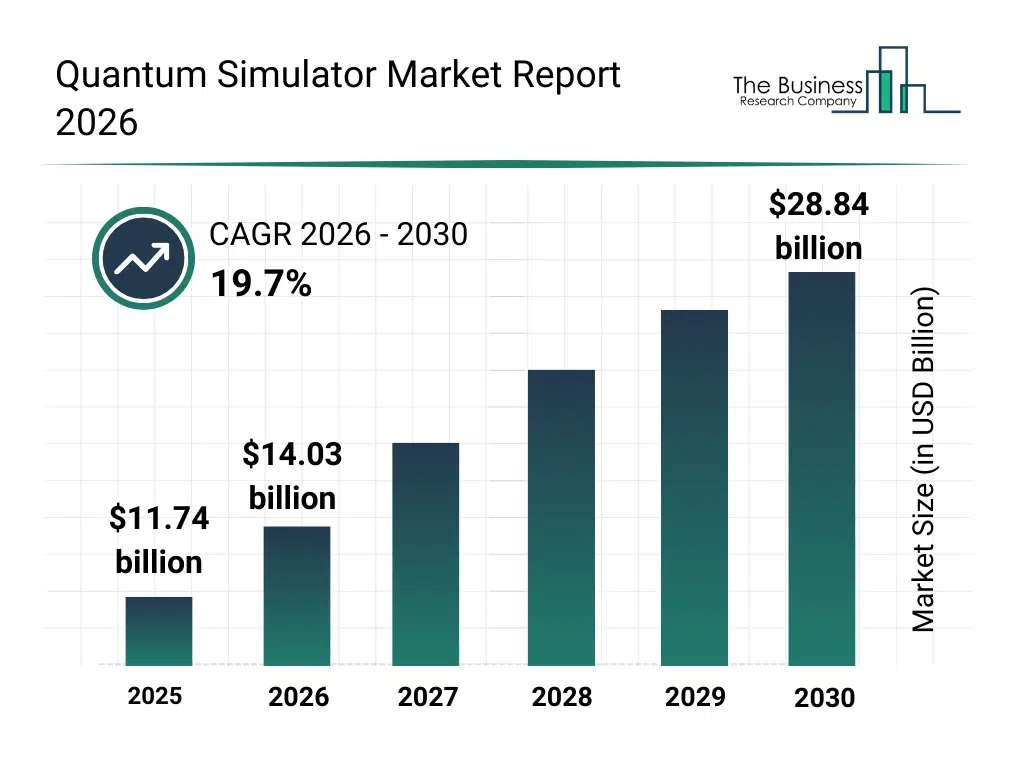
What Is The Quantum Simulator Market Size and Share 2026?
The quantum simulator market size has grown rapidly in recent years. It will grow from $11.74 billion in 2025 to $14.03 billion in 2026 at a compound annual growth rate (CAGR) of 19.5%. The growth in the historic period can be attributed to growing research in quantum physics and chemistry, increasing demand for high-performance computing, adoption of classical simulation tools, rising government and academic funding, development of superconducting and trapped ion technologies.What Is The Quantum Simulator Market Growth Forecast?
The quantum simulator market size is expected to see rapid growth in the next few years. It will grow to $28.84 billion in 2030 at a compound annual growth rate (CAGR) of 19.7%. The growth in the forecast period can be attributed to increasing adoption of cloud-based quantum Simulators, growing investment in quantum algorithm development, rising demand from drug discovery and materials science, expansion of academic and industrial quantum research collaborations, integration of AI and machine learning for quantum system modeling. Major trends in the forecast period include increasing adoption of quantum simulation platforms, rising demand for quantum algorithm validation services, growing integration of nanoscale materials simulation tools, expansion of custom simulation development services, rising focus on training and consulting services.
Global Quantum Simulator Market Segmentation
1) By Component: Software, Hardware, Services 2) By Deployment Mode: On-Premises, Cloud-Based 3) By Application: Algorithm Development, Education And Training, Research And Development, Optimization Problems, Drug Discovery 4) By End User: Academic And Research Institutes, Government And Defense, Healthcare And Pharmaceuticals, Automotive, Chemical, Finance And Banking, Information Technology Subsegments: 1) By Software: Simulation Platforms, Algorithm Development Tools, Programming Interfaces, Visualization And Analytics Tools, Modeling And Optimization Tools 2) By Hardware: Quantum Processing Units, Control And Measurement Systems, Cryogenic Infrastructure, Classical Computing Integration Systems, Networking And Interconnect Components 3) By Services: Consulting And Advisory Services, System Integration Services, Training And Education Services, Maintenance And Support Services, Custom Simulation Development ServicesWhat Is The Driver Of The Quantum Simulator Market?
The growing high-performance computing demand is expected to propel growth of the quantum simulator market going forward. High-performance computing (HPC) refers to the use of powerful supercomputers and parallel processing techniques to perform complex calculations and process large datasets at extremely high speeds. Growing demand for high-performance computing is due to rising data volumes, as organizations require faster and more powerful computational systems to process, analyze, and extract insights from massive and complex datasets efficiently. Quantum simulators enhance high-performance computing by enabling efficient modeling of complex quantum systems and algorithms that are computationally infeasible for classical supercomputers, accelerating scientific discovery and advanced optimization tasks. For instance, according to the 2024 ABA Legal Technology Survey Report to analyzes technology trends among attorneys in private practice, by the Legal Technology Resource Center of American Bar Association, a US-based voluntary association of lawyers in the world, approximately 75% of attorneys reported using cloud computing for work-related tasks, up from 69% in 2023 and about 70% in 2022. Therefore, the growing high-performance computing demand is driving the growth of the quantum simulator industry.Key Players In The Global Quantum Simulator Market
Major companies operating in the quantum simulator market are Amazon Web Services Inc., Google LLC, Microsoft Corporation, International Business Machines Corporation, NVIDIA Corporation, Honeywell International Inc., IonQ Inc., Quantinuum Ltd., D-Wave Quantum Inc., Xanadu Quantum Technologies Inc., 1QBit Information Technologies Inc., Planqc GmbH, Q-CTRL Pty Ltd, Terra Quantum AG, Rigetti Computing Inc., Classiq Technologies Ltd., HQS Quantum Simulations GmbH, Aliro Quantum Inc., BosonQ Psi Pvt. Ltd., Strangeworks Inc., and Quantum Elements GmbH.
This chart is for illustrative purposes; the full report includes a detailed competitor analysis and comprehensive overview of the top 10 companies in the market.
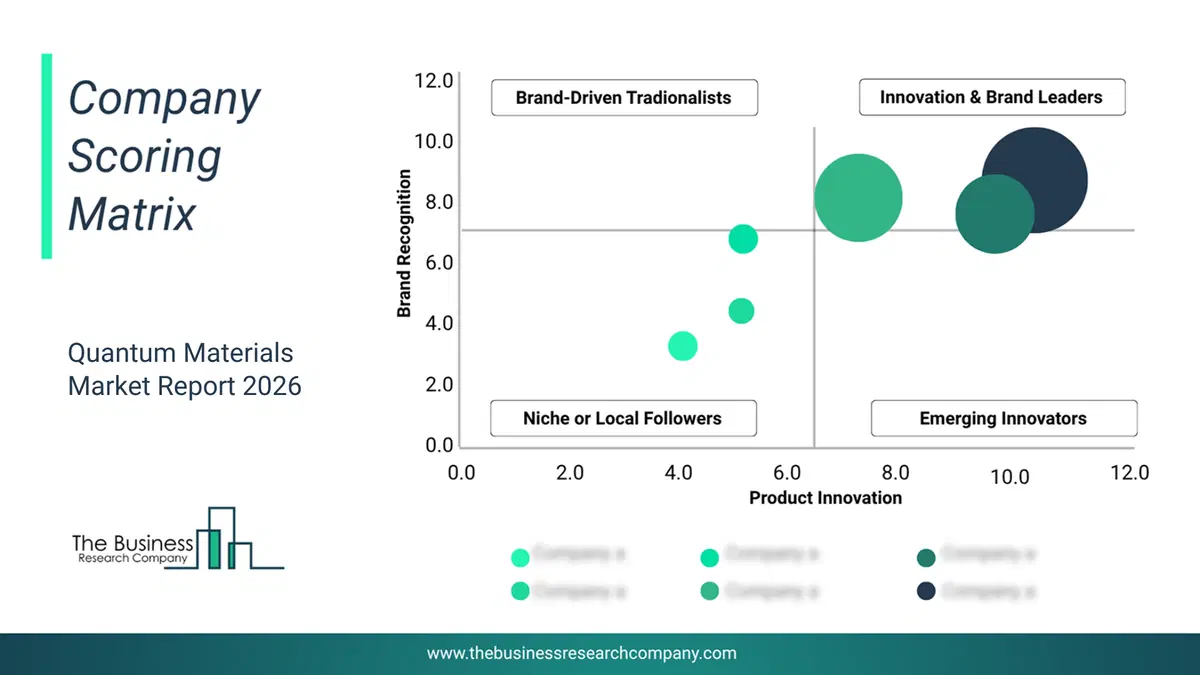
This chart maps companies by product innovation and brand strength, with bubble size indicating relative revenue, helping identify market leaders, challengers, and niche players. This is an illustrative chart; the full report provides a complete and accurate competitive analysis.
Global Quantum Simulator Market Trends and Insights
Major companies operating in the quantum simulator market are focusing on developing innovative platforms, such as microservice-based platforms, to enable scalable, cloud-accessible, and high-performance simulation of complex quantum algorithms for research and commercial applications. A microservice-based platform is a software architecture where applications are built as a collection of small, independent services that communicate with each other, enabling scalable, flexible, and easily deployable functionality. For instance, in March 2024, NVIDIA Corporation, a US based technology company, launched NVIDIA Quantum Cloud’s quantum-computer simulation microservices, an advanced cloud-based platform offered through leading cloud providers. The platform enables researchers and developers to design, test, and validate quantum algorithms and applications using the CUDA-Q quantum computing framework, providing on-demand simulation, seamless integration with classical high-performance computing (HPC) resources, and support for hybrid quantum-classical workflows that enhance research efficiency and reduce reliance on local simulators. Powered by GPU acceleration, the microservices deliver high-performance simulation capabilities, scalable cloud deployment for wider accessibility, compatibility with multiple programming frameworks, and collaboration features that support globally distributed teams. These capabilities are applied across areas such as quantum chemistry, materials science, and algorithm development, helping accelerate the transition from theoretical exploration to practical quantum computing applications.What Are Latest Mergers And Acquisitions In The Quantum Simulator Market?
In January 2026, D-Wave Quantum Inc., a US-based technology company, acquired Quantum Circuits Inc. for an undisclosed amount. With this acquisition, D-Wave aims to accelerate its development of a dual-platform quantum computing strategy, enhancing its technological capabilities by integrating Quantum Circuits’ error-corrected superconducting gate-model technology alongside its existing annealing systems to expand its product offerings and address a broader range of computational problems. Quantum Circuits Inc. is a US-based company that provides a quantum simulator called AquSim as part of their full-stack quantum computing platform.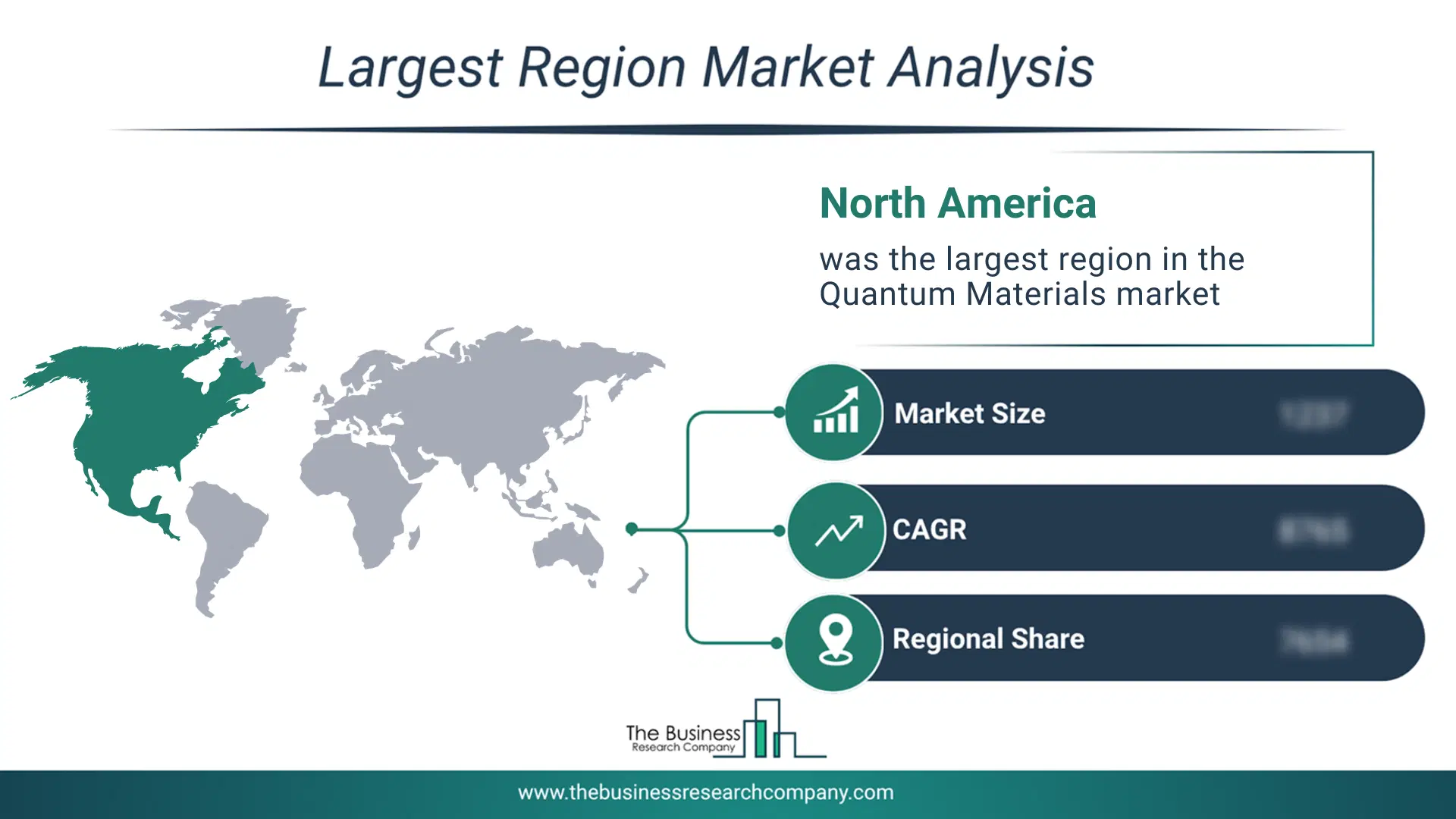
Regional Insights
North America was the largest region in the quantum simulator market in 2025. Asia-Pacific is expected to be the fastest-growing region in the forecast period. The regions covered in this market report are Asia-Pacific, South East Asia, Western Europe, Eastern Europe, North America, South America, Middle East, Africa. The countries covered in this market report are Australia, Brazil, China, France, Germany, India, Indonesia, Japan, Taiwan, Russia, South Korea, UK, USA, Canada, Italy, Spain.What Defines the Quantum Simulator Market?
The quantum simulator market consists revenues earned by entities by providing services such as quantum algorithm testing and validation services, quantum system modeling and design services, training and consulting services, quantum hardware emulation services, and performance benchmarking and optimization services. The market value includes the value of related goods sold by the service provider or included within the service offering. The quantum simulator market also includes sales of quantum circuit simulation software platforms, quantum simulation development toolkits, quantum error model and noise simulation platforms, nanoscale and materials quantum simulation software, and density-matrix quantum simulators. Values in this market are ‘factory gate’ values; that is, the value of goods sold by the manufacturers or creators of the goods, whether to other entities (including downstream manufacturers, wholesalers, distributors, and retailers) or directly to end customers. The value of goods in this market includes related services sold by the creators of the goods.How is Market Value Defined and Measured?
The market value is defined as the revenues that enterprises gain from the sale of goods and/or services within the specified market and geography through sales, grants, or donations in terms of the currency (in USD unless otherwise specified). The revenues for a specified geography are consumption values that are revenues generated by organizations in the specified geography within the market, irrespective of where they are produced. It does not include revenues from resales along the supply chain, either further along the supply chain or as part of other products.
This chart presents market attractiveness based on a quantitative evaluation of growth, competition, strategic alignment, and risk, offering a clear view of opportunity areas for decision-making. This chart is for illustrative purposes; the full report contains the complete analysis.

This chart highlights the Total Addressable Market (TAM) by estimating the maximum revenue opportunity using an assumption-driven approach, supporting strategic planning and opportunity sizing across markets. The chart is illustrative; the full report provides a more comprehensive analysis.
What Key Data and Analysis Are Included in the Quantum Simulator Market Report 2026?
The quantum simulator market research report is one of a series of new reports from The Business Research Company that provides quantum simulator market statistics, including quantum simulator industry global market size, regional shares, competitors with a quantum simulator market share, detailed quantum simulator market segments, market trends and opportunities, and any further data you may need to thrive in the quantum simulator industry. This quantum simulator market research report delivers a complete perspective of everything you need, with an in-depth analysis of the current and future scenario of the industry.Quantum Simulator Market Report Forecast Analysis
| Report Attribute | Details |
|---|---|
| Market Size Value In 2026 | $14.03 billion |
| Revenue Forecast In 2030 | $28.84 billion |
| Growth Rate | CAGR of 19.7% from 2026 to 2030 |
| Base Year For Estimation | 2025 |
| Actual Estimates/Historical Data | 2020-2025 |
| Forecast Period | 2026 - 2030 |
| Market Representation | Revenue in USD Billion and CAGR from 2026 to 2030 |
| Segments Covered | Component, Deployment Mode, Application, End User |
| Regional Scope | Asia-Pacific, Western Europe, Eastern Europe, North America, South America, Middle East, Africa |
| Country Scope | The Countries Covered In This Market Report Are Australia, Brazil, China, France, Germany, India, Indonesia, Japan, Taiwan, Russia, South Korea, Uk, Usa, Canada, Italy, Spain. |
| Key Companies Profiled | Amazon Web Services Inc., Google LLC, Microsoft Corporation, International Business Machines Corporation, NVIDIA Corporation, Honeywell International Inc., IonQ Inc., Quantinuum Ltd., D-Wave Quantum Inc., Xanadu Quantum Technologies Inc., 1QBit Information Technologies Inc., Planqc GmbH, Q-CTRL Pty Ltd, Terra Quantum AG, Rigetti Computing Inc., Classiq Technologies Ltd., HQS Quantum Simulations GmbH, Aliro Quantum Inc., BosonQ Psi Pvt. Ltd., Strangeworks Inc., and Quantum Elements GmbH. |
| Customization Scope | Request for Customization |
| Pricing And Purchase Options | Explore Purchase Options |