
Radiofrequency Eye Device Market Report 2026
Global Outlook – By Product Type (Monopolar Radiofrequency Devices, Bipolar Radiofrequency Devices, Multipolar Radiofrequency Devices, Other Product Types), By Application (Wrinkle Reduction, Skin Tightening, Other Applications), By End-User (Hospitals, Ophthalmic Clinics, Ambulatory Surgical Centers, Other End-Users) – Market Size, Trends, Strategies, and Forecast to 2030
Radiofrequency Eye Device Market Overview
• Radiofrequency Eye Device market size has reached to $1.01 billion in 2025 • Expected to grow to $2.12 billion in 2030 at a compound annual growth rate (CAGR) of 16% • Growth Driver: Growing Adoption Of Minimally Invasive Cosmetic Procedures Fueling The Growth Of The Market Due To Rising Patient Preference For Safe And Efficient Non-Surgical Treatments • Market Trend: Advances In Artificial Intelligence-Assisted Meibography Analysis For Eye DIagnostics • North America was the largest region in 2025 and Asia-Pacific is the fastest growing region.What Is Covered Under Radiofrequency Eye Device Market?
A radiofrequency eye device is a medical technology that uses controlled radiofrequency energy to stimulate collagen production and improve skin elasticity around the eyes. It delivers targeted heat to underlying tissues, promoting tightening and reducing signs of aging such as fine lines and wrinkles. These devices are designed to provide nonsurgical, minimally invasive eye rejuvenation solutions with minimal recovery time. The main product types in the radiofrequency eye device are monopolar radiofrequency devices, bipolar radiofrequency devices, multipolar radiofrequency devices, and other types. Monopolar RF devices operate with a single active electrode along with a grounding plate, enabling energy to penetrate deeper into tissues. The various distribution channels comprise direct sales, online retail, and others, with applications such as dry eye treatment, wrinkle reduction, skin tightening, and more. These devices are utilized by multiple end-users, including hospitals, ophthalmic clinics, ambulatory surgical centers, and others.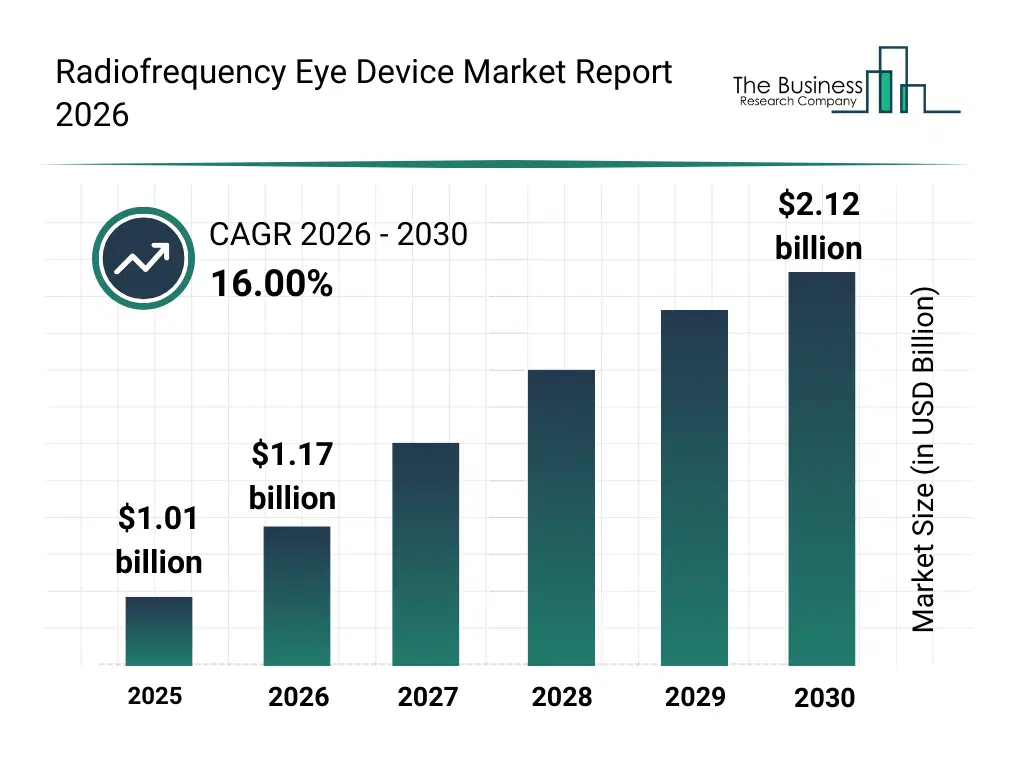
What Is The Radiofrequency Eye Device Market Size and Share 2026?
The radiofrequency eye device market size has grown rapidly in recent years. It will grow from $1.01 billion in 2025 to $1.17 billion in 2026 at a compound annual growth rate (CAGR) of 16.3%. The growth in the historic period can be attributed to rising demand for nonsurgical eye rejuvenation, technological advancements in radiofrequency devices, growing cosmetic awareness, availability of minimally invasive treatments, increasing disposable income.What Is The Radiofrequency Eye Device Market Growth Forecast?
The radiofrequency eye device market size is expected to see rapid growth in the next few years. It will grow to $2.12 billion in 2030 at a compound annual growth rate (CAGR) of 16.0%. The growth in the forecast period can be attributed to multipurpose RF devices, integration with skincare and monitoring apps, expansion in ophthalmic and cosmetic clinics, AI-assisted procedure guidance, innovation in device portability and precision. Major trends in the forecast period include monopolar radiofrequency devices, bipolar radiofrequency devices, multipolar radiofrequency devices, fractional radiofrequency devices, microneedling radiofrequency devices.
Global Radiofrequency Eye Device Market Segmentation
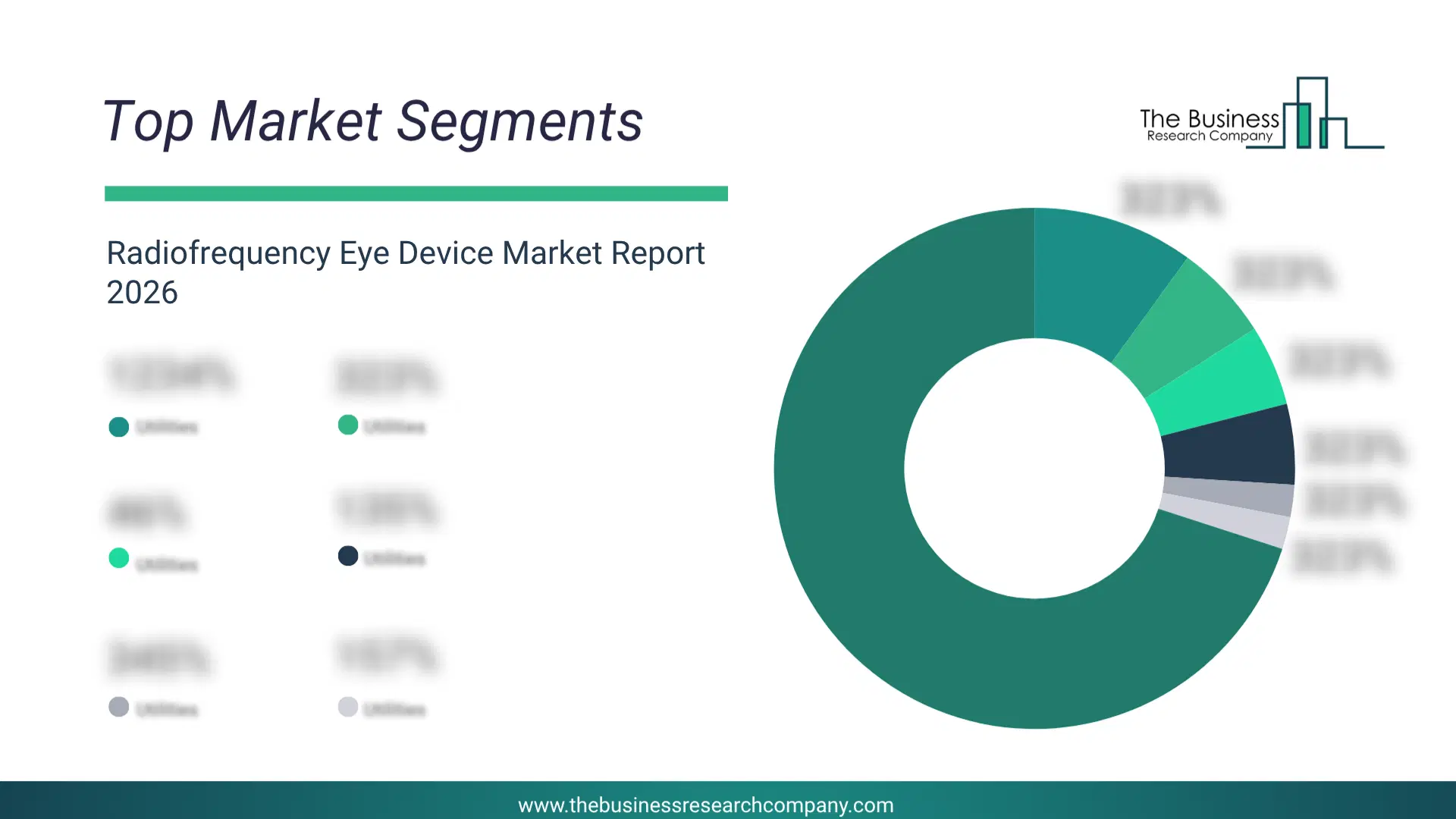
1) By Product Type: Monopolar Radiofrequency Devices, Bipolar Radiofrequency Devices, Multipolar Radiofrequency Devices, Other Product Types 2) By Application: Wrinkle Reduction, Skin Tightening, Other Applications 3) By End-User: Hospitals, Ophthalmic Clinics, Ambulatory Surgical Centers, Other End-Users Subsegments: 1) By Monopolar Radiofrequency Devices: Handheld Monopolar RF Eye Devices, Console-Based / Stationary Monopolar RF Systems, Temperature-Controlled Monopolar RF Eye Devices 2) By Bipolar Radiofrequency Devices: Handheld Bipolar RF Eye Devices, Tabletop / Console-Based Bipolar RF Systems, Eye-Dedicated Bipolar RF Devices for Periocular Skin Tightening, Bipolar RF Devices for Eyelid / Meibomian Gland Therapy 3) By Multipolar Radiofrequency Devices: Handheld Multipolar RF Eye Devices, Stationary Multipolar RF Platforms, Multi-Functional Multipolar RF Eye Rejuvenation Systems 4) By Other Product Types: Fractional Radiofrequency Eye Devices, Non-Ablative Radiofrequency Eye Devices, Hybrid Radiofrequency Eye Devices, Radiofrequency Devices for Dry Eye ManagementWhat Is The Driver Of The Radiofrequency Eye Device Market?
The growing adoption of minimally invasive cosmetic procedures is expected to propel the growth of the radiofrequency eye device market going forward. Minimally invasive cosmetic procedures are treatments performed with little to no incision or downtime that provide aesthetic improvements with faster recovery and reduced risk. The adoption of minimally invasive procedures is rising due to increasing patient preference for safe, efficient treatments with minimal recovery time. Radiofrequency eye devices support minimally invasive cosmetic procedures by delivering controlled RF energy to the delicate skin around the eyes, stimulating collagen production, tightening tissues, reducing fine lines and wrinkles, and improving skin texture with precision and minimal downtime, thereby offering an effective alternative to surgical interventions. For instance, in June 2023, according to the American Society of Plastic Surgeons, a US-based professional medical association, minimally invasive cosmetic procedures increased from 14.7 million in 13.7 million procedures in 2023 with an increase of 7%, while overall cosmetic surgical procedures increased by 5% during the same period. Therefore, a growing adoption of minimally invasive cosmetic procedures is expected to drive the growth of the radiofrequency eye device industry.Key Players In The Global Radiofrequency Eye Device Market
Major companies operating in the radiofrequency eye device market are InMode Ltd, Lumenis Ltd, Venus Concept, YA-MAN Ltd, MiBo Medical Group, Alma Lasers, EndyMed Medical, Pollogen Ltd, BTL Industries, Candela Medical, Silk'n International, Guangzhou Beautylife Tech, Norlanya, AMIRO, Zemits LLC, Lutronic Corporation, Jeisys Medical, RejuvaMedica Ltd, HABI Medical, ThermoLift Technologies Ltd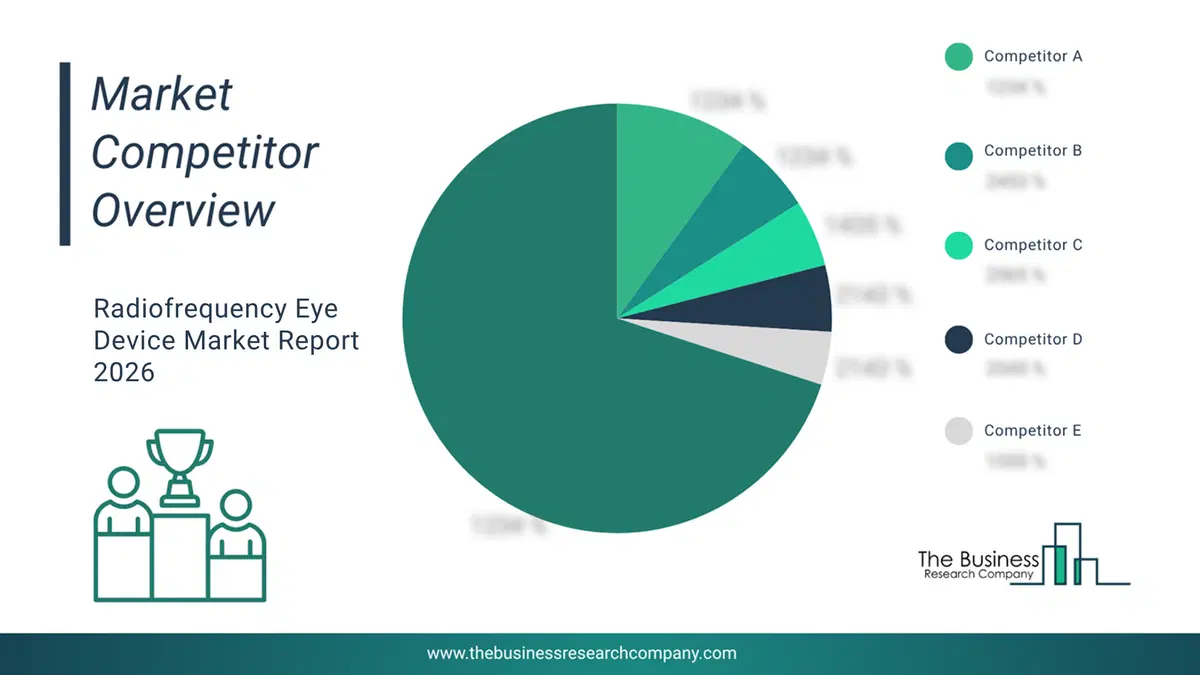
This chart is for illustrative purposes; the full report includes a detailed competitor analysis and comprehensive overview of the top 10 companies in the market.
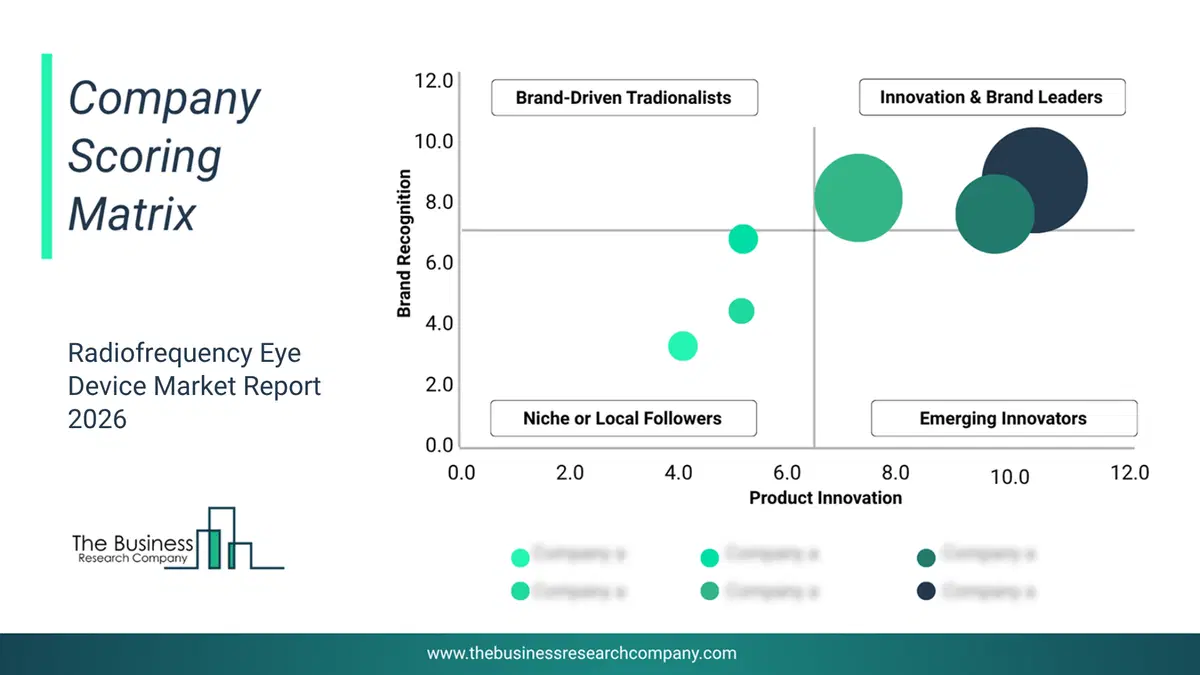
This chart maps companies by product innovation and brand strength, with bubble size indicating relative revenue, helping identify market leaders, challengers, and niche players. This is an illustrative chart; the full report provides a complete and accurate competitive analysis.
Global Radiofrequency Eye Device Market Trends and Insights
Major companies operating in the radiofrequency eye device market are focusing on advances in artificial intelligence for eye diagnostics, such as AI-assisted meibography analysis, to enhance the accuracy and improve patient outcomes in managing dry eye and other ocular surface disorders. AI-assisted meibography analysis refers to the use of deep learning algorithms to automatically evaluate meibomian gland structure and function from infrared eyelid images, enabling early detection of meibomian gland dysfunction (MGD) and supporting more precise treatment decisions. For instance, in November 2023, Lumenis Ltd., an Israel-based ophthalmic technology company, introduced OptiPLUS, a dual-frequency radiofrequency device for dry-eye care, which features automatic electrode detection, treatment presets, and closed-loop temperature control designed to target the meibomian glands while enhancing periorbital collagen. This integration enables clinics to pair AI diagnostic findings with tailored radiofrequency treatment protocols, improving outcomes for patients with ocular surface disorders.What Are Latest Mergers And Acquisitions In The Radiofrequency Eye Device Market?
In September 2023, OCULUS Inc., a US-based provider of ophthalmic diagnostic equipment, partnered with LUVO to introduce new IPL and RF devices for the American ophthalmic market. With this partnership, OCULUS Inc., aims to enhance its product portfolio, expand treatment capabilities for eye care professionals, and strengthen its presence in the US specialty care market. LUVO is a Canada-based provider of intense pulse light (IPL) and radio frequency (RF) therapy devices, offering advanced technology for safe, effective, and comfortable ophthalmic treatments in clinical settings.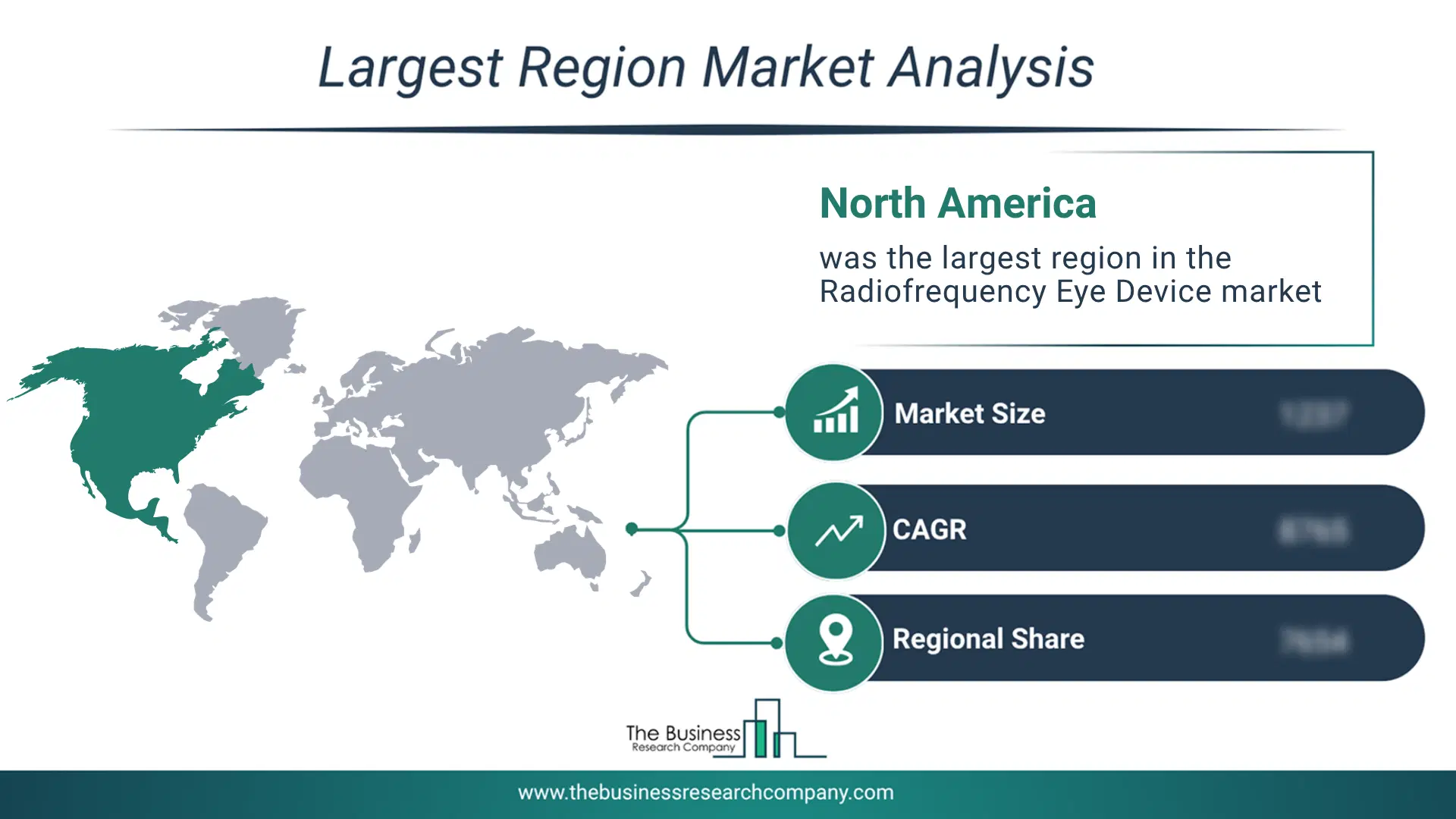
Regional Outlook
North America was the largest region in the radiofrequency eye device market in 2025. Asia-Pacific is expected to be the fastest-growing region in the forecast period. The regions covered in this market report are Asia-Pacific, South East Asia, Western Europe, Eastern Europe, North America, South America, Middle East, Africa. The countries covered in this market report are Australia, Brazil, China, France, Germany, India, Indonesia, Japan, Taiwan, Russia, South Korea, UK, USA, Canada, Italy, SpainWhat Defines the Radiofrequency Eye Device Market?
The radiofrequency eye device market consists of revenues earned by entities by providing services such as non-surgical eye rejuvenation, wrinkle reduction, skin tightening, and overall improvement of skin appearance. The market value includes the value of related goods sold by the service provider or included within the service offering. The radiofrequency eye device market also includes sales of handheld radiofrequency eye treatment devices, tabletop radiofrequency systems, and multi-functional radiofrequency platforms. Values in this market are ‘factory gate’ values; that is, the value of goods sold by the manufacturers or creators of the goods, whether to other entities (including downstream manufacturers, wholesalers, distributors, and retailers) or directly to end customers. The value of goods in this market includes related services sold by the creators of the goods.How is Market Value Defined and Measured?
The market value is defined as the revenues that enterprises gain from the sale of goods and/or services within the specified market and geography through sales, grants, or donations in terms of the currency (in USD unless otherwise specified). The revenues for a specified geography are consumption values that are revenues generated by organizations in the specified geography within the market, irrespective of where they are produced. It does not include revenues from resales along the supply chain, either further along the supply chain or as part of other products.
This chart presents market attractiveness based on a quantitative evaluation of growth, competition, strategic alignment, and risk, offering a clear view of opportunity areas for decision-making. This chart is for illustrative purposes; the full report contains the complete analysis.

This chart highlights the Total Addressable Market (TAM) by estimating the maximum revenue opportunity using an assumption-driven approach, supporting strategic planning and opportunity sizing across markets. The chart is illustrative; the full report provides a more comprehensive analysis.
What Key Data and Analysis Are Included in the Radiofrequency Eye Device Market Report 2026?
The radiofrequency eye device market research report is one of a series of new reports from The Business Research Company that provides market statistics, including industry global market size, regional shares, competitors with the market share, detailed market segments, market trends and opportunities, and any further data you may need to thrive in the radiofrequency eye device industry. The market research report delivers a complete perspective of everything you need, with an in-depth analysis of the current and future state of the industry.Radiofrequency Eye Device Market Report Forecast Analysis
| Report Attribute | Details |
|---|---|
| Market Size Value In 2026 | $1.17 billion |
| Revenue Forecast In 2030 | $2.12 billion |
| Growth Rate | CAGR of 16% from 2026 to 2030 |
| Base Year For Estimation | 2025 |
| Actual Estimates/Historical Data | 2020-2025 |
| Forecast Period | 2026 - 2030 |
| Market Representation | Revenue in USD Billion and CAGR from 2026 to 2030 |
| Segments Covered | Product Type, Application, End-User |
| Regional Scope | Asia-Pacific, Western Europe, Eastern Europe, North America, South America, Middle East, Africa |
| Country Scope | The countries covered in the report are Australia, Brazil, China, France, Germany, India, Indonesia, Japan, Taiwan, Russia, South Korea, UK, USA, Canada, Italy, Spain. |
| Key Companies Profiled | InMode Ltd, Lumenis Ltd, Venus Concept, YA-MAN Ltd, MiBo Medical Group, Alma Lasers, EndyMed Medical, Pollogen Ltd, BTL Industries, Candela Medical, Silk'n International, Guangzhou Beautylife Tech, Norlanya, AMIRO, Zemits LLC, Lutronic Corporation, Jeisys Medical, RejuvaMedica Ltd, HABI Medical, ThermoLift Technologies Ltd |
| Customization Scope | Request for Customization |
| Pricing And Purchase Options | Explore Purchase Options |