
Rail Logistics Market Report 2026
Global Outlook – By Type (Intermodals, Tank Wagons, Freight Cars), By Operational Area (Domestic, International), By End User (Automotive, Manufacturing, Telecommunication, Retail, Technology) – Market Size, Trends, Strategies, and Forecast to 2030
Rail Logistics Market Overview
• Rail Logistics market size has reached to $265.53 billion in 2025 • Expected to grow to $304.64 billion in 2030 at a compound annual growth rate (CAGR) of 2.8% • Growth Driver: Global Trade Surge Fuels Expansion In Rail Logistics Market • Market Trend: Alstom's Launch Of India's Largest Digital Experience Centre For Next-Generation Signaling Solutions • Asia-Pacific was the largest region in 2025.Market Gains By 2030 – Top Opportunities By Segment
Market Gain identifies the most promising market opportunities by highlighting the segments or products expected to generate the highest incremental revenue growth over the next five years.
What Is Covered Under Rail Logistics Market?
Rail logistics refers to the planning, coordinating, and executing transportation activities involving the movement of goods via rail networks. It encompasses a wide range of activities, including the scheduling of train services, the management of freight operations, the tracking of shipments, and the optimization of routes and resources. The main types of rail logistics market covered are intermodals, tank wagons and freight cars. Intermodal transportation allows for the integration of various transportation modes to create a more efficient and flexible logistics network. It is commonly used for transporting goods over long distances, particularly in international trade where goods often need to traverse multiple countries and regions. The operational area involved are domestic and international which are used by various end user industries including automotive, manufacturing, telecommunication, retail, and technology.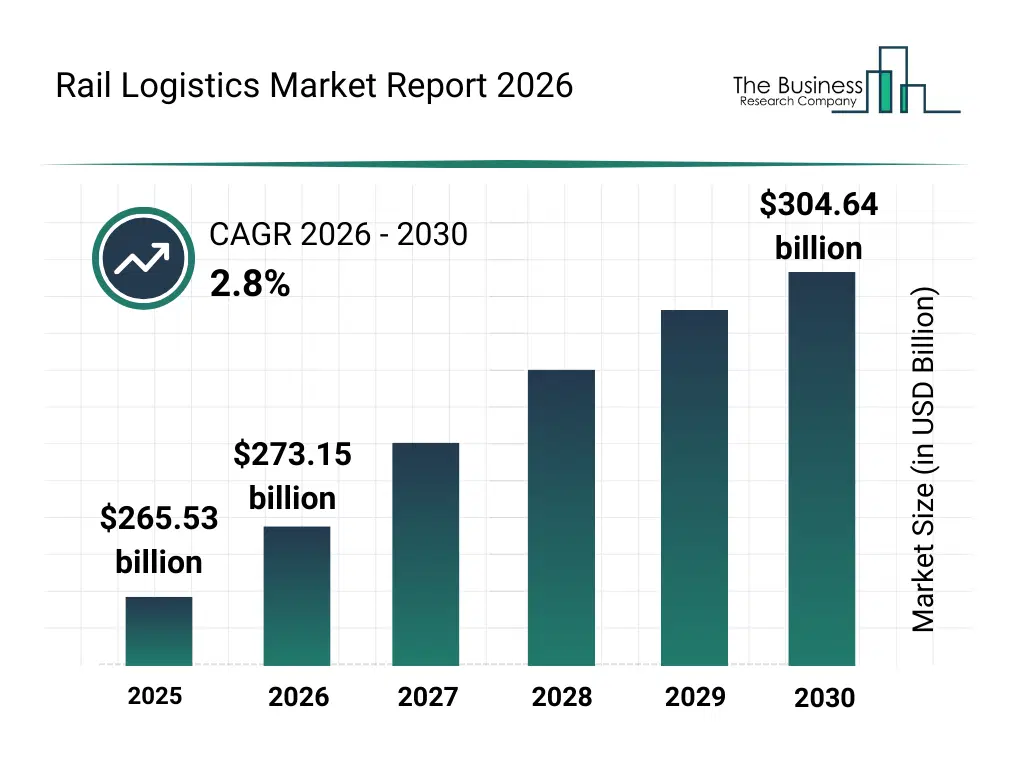
What Is The Rail Logistics Market Size and Share 2026?
The rail logistics market size has grown steadily in recent years. It will grow from $265.53 billion in 2025 to $273.15 billion in 2026 at a compound annual growth rate (CAGR) of 2.9%. The growth in the historic period can be attributed to growth in industrial freight volumes, expansion of national rail infrastructure, increasing demand for bulk commodity transport, rising fuel cost pressures, availability of dedicated freight corridors.What Is The Rail Logistics Market Growth Forecast?
The rail logistics market size is expected to see steady growth in the next few years. It will grow to $304.64 billion in 2030 at a compound annual growth rate (CAGR) of 2.8%. The growth in the forecast period can be attributed to increasing investments in sustainable logistics, rising adoption of smart rail freight management platforms, expansion of international trade routes, growing focus on reducing carbon emissions in freight transport, increasing integration of multimodal logistics networks. Major trends in the forecast period include increasing adoption of intermodal rail freight solutions, rising focus on route and capacity optimization, growing integration of digital freight tracking systems, expansion of cross-border rail connectivity, enhanced focus on cost-efficient bulk transportation.
Global Rail Logistics Market Segmentation
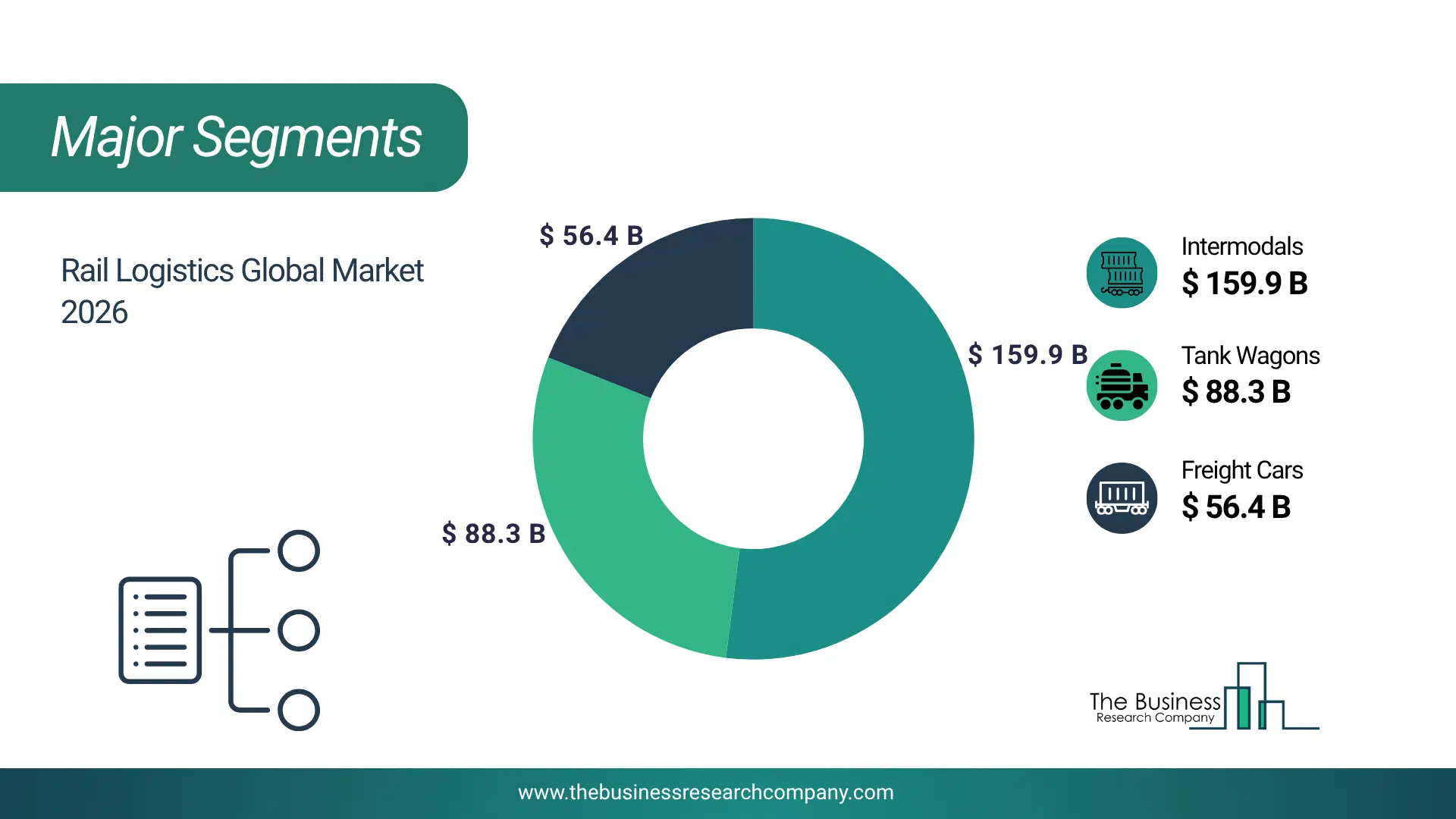
1) By Type: Intermodals, Tank Wagons, Freight Cars 2) By Operational Area: Domestic, International 3) By End User: Automotive, Manufacturing, Telecommunication, Retail, Technology Subsegments: 1) By Intermodals: Container On Flat Car (COFC), Trailer On Flat Car (TOFC), Double Stack Containers 2) By Tank Wagons: Chemical Tankers, Food And Beverage Tankers, Oil And Gas Tankers, Agricultural Product Tankers 3) By Freight Cars: Boxcars, Flatcars, Hopper Cars, Gondola Cars, Refrigerated Cars The top segments in the rail logistics market will be: • Intermodals will reach $159.92 billion by 2030. • Tank Wagons will reach $88.31 billion by 2030. • Freight Cars will reach $56.41 billion by 2030.What Is The Driver Of The Rail Logistics Market?
A rise in global trade is expected to propel the growth of the rail logistics market going forward. Global trade, or international trade, refers to exchanging goods and services across international borders. Global trade is rising due to several factors. The rise in global trade is propelled by increasing globalization, driving demand for efficient cross-border transportation services. The increasing volume of commodities being moved internationally has made the demand for effective and affordable transportation methods even more pressing. For instance, in February 2024, according to the Bureau of Economic Analysis, a US-based government agency that provides official macroeconomic and industry statistics, exports of goods and services increased by $35.0 billion, or 1.2%, in 2023 to $3,053.5 billion as compared to 2022. Therefore, a rise in global trade is expected to propel the growth of the rail logistics industry.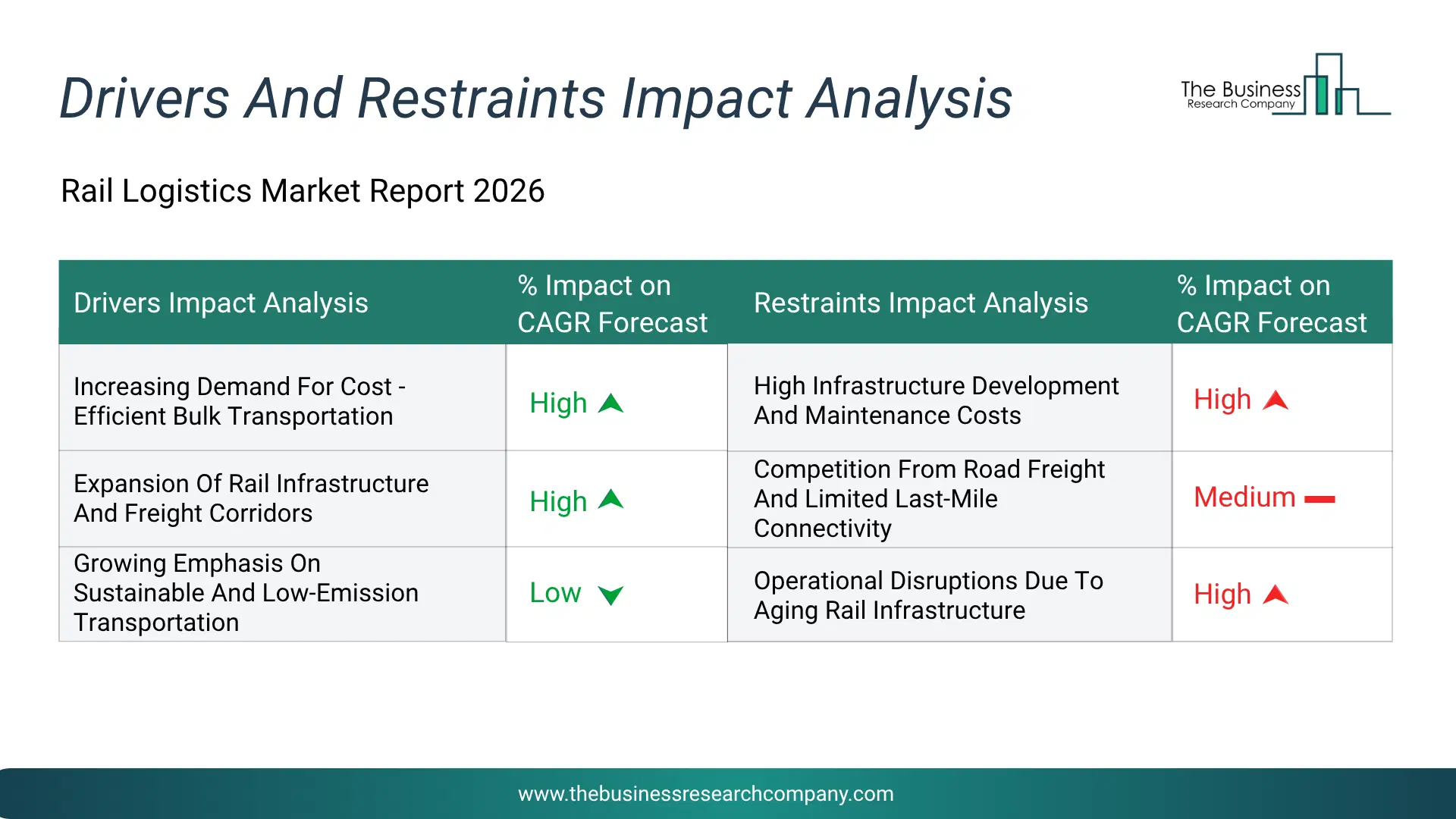
Infographic Chart Showing Key Market Drivers Analysis And Restraints For Rail Logistics Market
The chart presents an impact analysis of key drivers and restraints, quantifying their relative influence on the market's growth rate and helping assess the balance between growth enablers and limiting factors. This chart offers a high-level perspective; the full report contains more detailed insights.
How Will The Drivers Impact Growth In The Global Rail Logistics Market?
• Increasing Demand For Cost -Efficient Bulk Transportation (High) – During the forecast period, the increasing demand for cost -efficient bulk transportation is expected to become a major growth driver for the rail logistics market by 2030. The rising need for economical and high -capacity freight transportation is significantly supporting the expansion of the rail logistics market. Rail transport provides a cost -effective solution for moving bulk commodities such as coal, minerals, agricultural products, and industrial goods across long distances. Compared with road transport, rail freight consumes less fuel and can carry larger cargo volumes, improving overall logistics efficiency. As industries require scalable transportation solutions for large -volume cargo movement, rail logistics is becoming increasingly important in global supply chains. • Expansion Of Rail Infrastructure And Freight Corridors (High) – During the forecast period, the expansion of rail infrastructure and freight corridors is expected to emerge as a major factor driving the growth of the rail logistics market by 2030. Government investments in modernizing railway infrastructure are significantly supporting market expansion. Many countries are extending rail networks, upgrading freight corridors, and establishing dedicated freight railway lines to improve logistics performance. Developments such as high-capacity freight corridors, intermodal logistics terminals, and advanced digital rail management systems help improve cargo handling efficiency and transportation speed. These infrastructure advancements strengthen the importance of railways in both domestic and international trade logistics. • Growing Emphasis On Sustainable And Low-Emission Transportation (Low) – During the forecast period, the growing emphasis on sustainable and low-emission transportation is expected to act as a key growth catalyst for the rail logistics market by 2030. Increasing attention to environmentally sustainable transportation and carbon emission reduction is further supporting market growth. Rail transport generates significantly lower greenhouse gas emissions compared to road and air freight, making it an attractive option for environmentally responsible logistics operations. Governments and businesses are increasingly adopting rail-based freight solutions to achieve sustainability objectives and comply with emission reduction regulations. This shift toward greener logistics systems is accelerating the adoption of rail freight worldwide.How Will The Restraints Impact Growth In The Global Rail Logistics Market?
• High Infrastructure Development And Maintenance Costs (High) – During the forecast period, the high infrastructure development and maintenance costs act as a major restraint for the rail logistics market. Building and upgrading rail networks require substantial investment in tracks, signaling systems, terminals, and rolling stock. Continuous maintenance and modernization efforts further increase operational expenses for railway authorities and logistics providers. These high capital requirements may limit rapid expansion in developing regions with constrained budgets. • Competition From Road Freight And Limited Last-Mile Connectivity (Medium) – During the forecast period, the competition from road transportation and logistical flexibility challenges also restrain market growth. Road transport offers greater flexibility in last-mile delivery and route customization compared to rail networks. In many regions, well-developed road infrastructure allows faster short-distance freight movement. This competitive advantage can limit the adoption of rail logistics for certain cargo types and supply chain operations. • Operational Disruptions Due To Aging Rail Infrastructure (High) – During the forecast period, the aging railway networks in several regions require significant upgrades and maintenance to support growing freight volumes. Infrastructure failures, congestion, and service interruptions can affect delivery schedules and reliability. Freight customers may shift to alternative transportation modes when disruptions occur frequently. These factors reduce operational efficiency and constrain market expansion.Key Players In The Global Rail Logistics Market
Major companies operating in the rail logistics market report include United Parcel Service Inc., FedEx Corporation, Mærsk A/S, Deutsche Bahn AG, Schenker Deutschland AG, Deutsche Bahn International Operations GmbH, Kuehne Nagel International AG, Union Pacific Corp., C.H. Robinson Worldwide Inc., Canadian National Railway Co., Nippon Express Holdings Inc., CEVA Logistics Inc., Geodis SA, Gebrüder Weiss GmbH, Trinity Industries Inc., Japan Freight Railway Co., Brookfield Business Partners LP, SBB Cargo International AG, VTG AG, Russian Railways OJSC, BLR Logistiks Ltd., Tschudi Logistics Holding AS, GeoMetrix Rail Logistics Inc., CTL Logistics Sp. z o.o, Rail Cargo Group, Interport Global Logistics Private Limited, Dan Transport Group A/S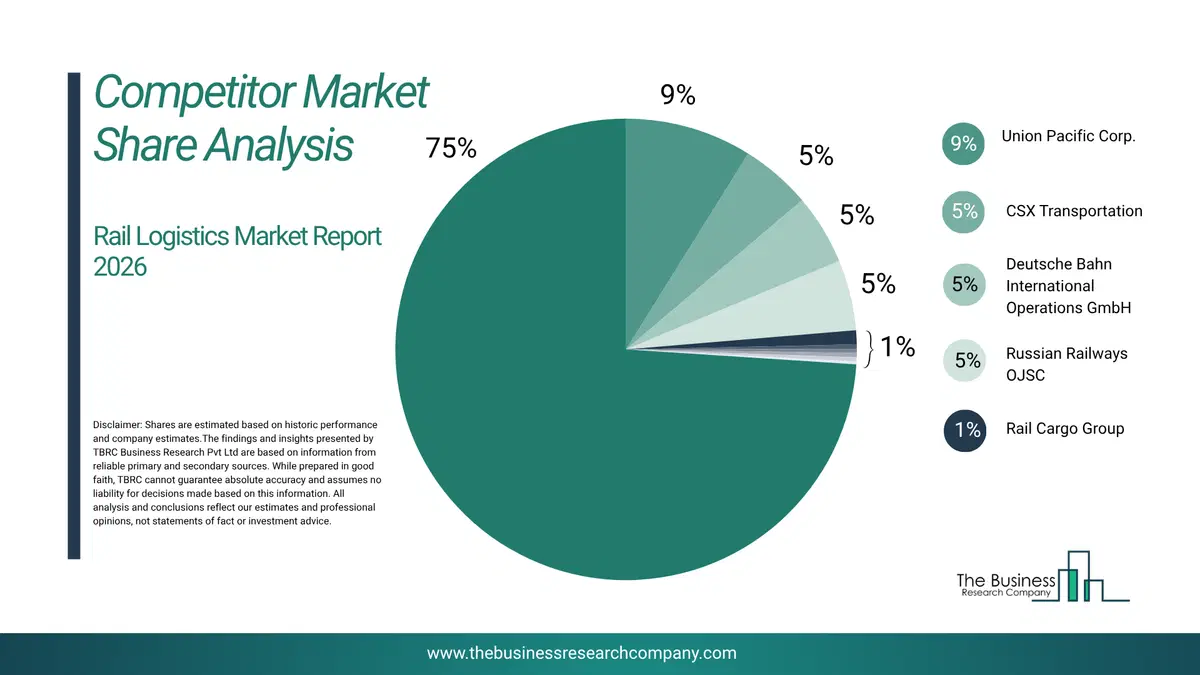
This chart is for illustrative purposes; the full report includes a detailed competitor analysis and comprehensive overview of the top 10 companies in the market.
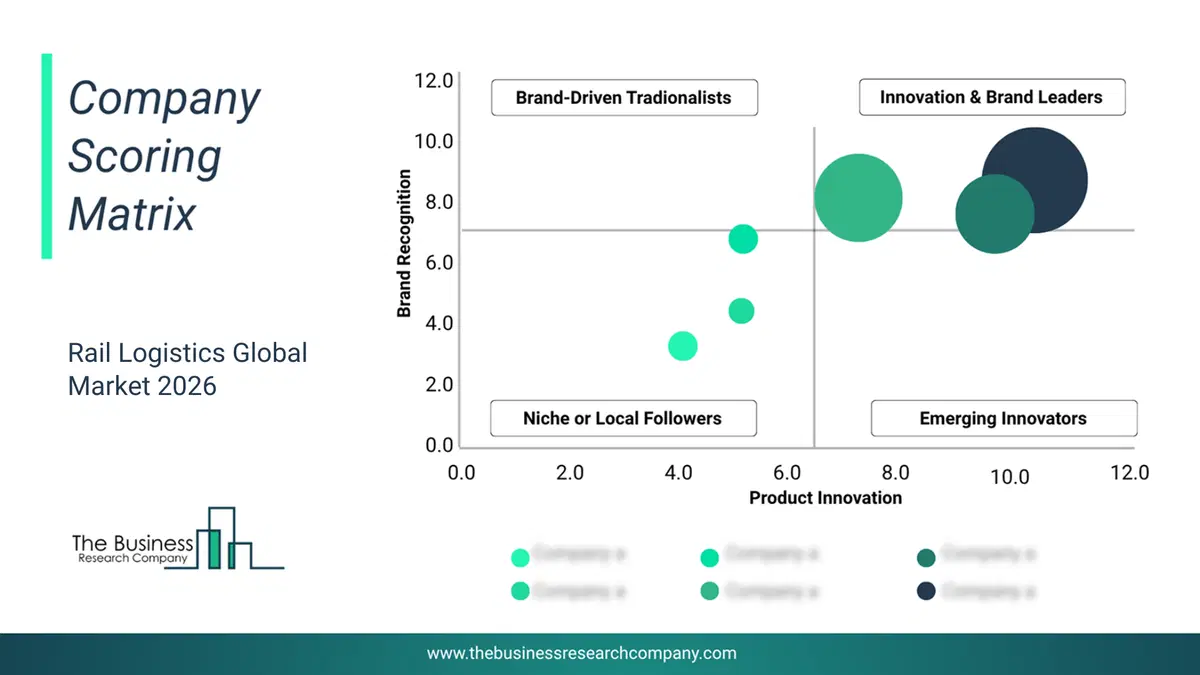
This chart maps companies by product innovation and brand strength, with bubble size indicating relative revenue, helping identify market leaders, challengers, and niche players. This is an illustrative chart; the full report provides a complete and accurate competitive analysis.
Global Rail Logistics Market Trends and Insights
Major companies operating in the rail logistics market are developing innovative technology, such as the multipurpose digital experience center, to serve customers better in this market. The digital experience center is a hub for developing and executing cutting-edge signaling solutions across urban, mainline, and freight operations. For instance, in December 2023, Alstom SA, a France-based manufacturing company, launched the technologically advanced digital experience center. The center's programs are designed to improve rail logistics efficiency, and the purpose is to implement integrated cybersecurity, end-to-end project testing, urban, mainline, freight, and mining projects, as well as to develop innovations in remote system monitoring and troubleshooting. Additionally, the center's design can support over 7 million hours of engineering work for projects.What Are Latest Mergers And Acquisitions In The Rail Logistics Market?
In March 2023, Trinity Industries Inc., a US-based industrial corporation, acquired RSI Logistics Inc. for approximately $70 million. With this acquisition, Trinity will expand its service offerings and make rail transportation a more compelling mode. Further, the acquisition added logistics services, terminal operations, and intermodal transportation to Trinity's existing portfolio, including railcar leasing and management services, manufacturing, maintenance, and modifications. RSI Logistics Inc. is a US-based rail logistics services company that offers railcar tracking software and logistics solutions to improve rail transportation.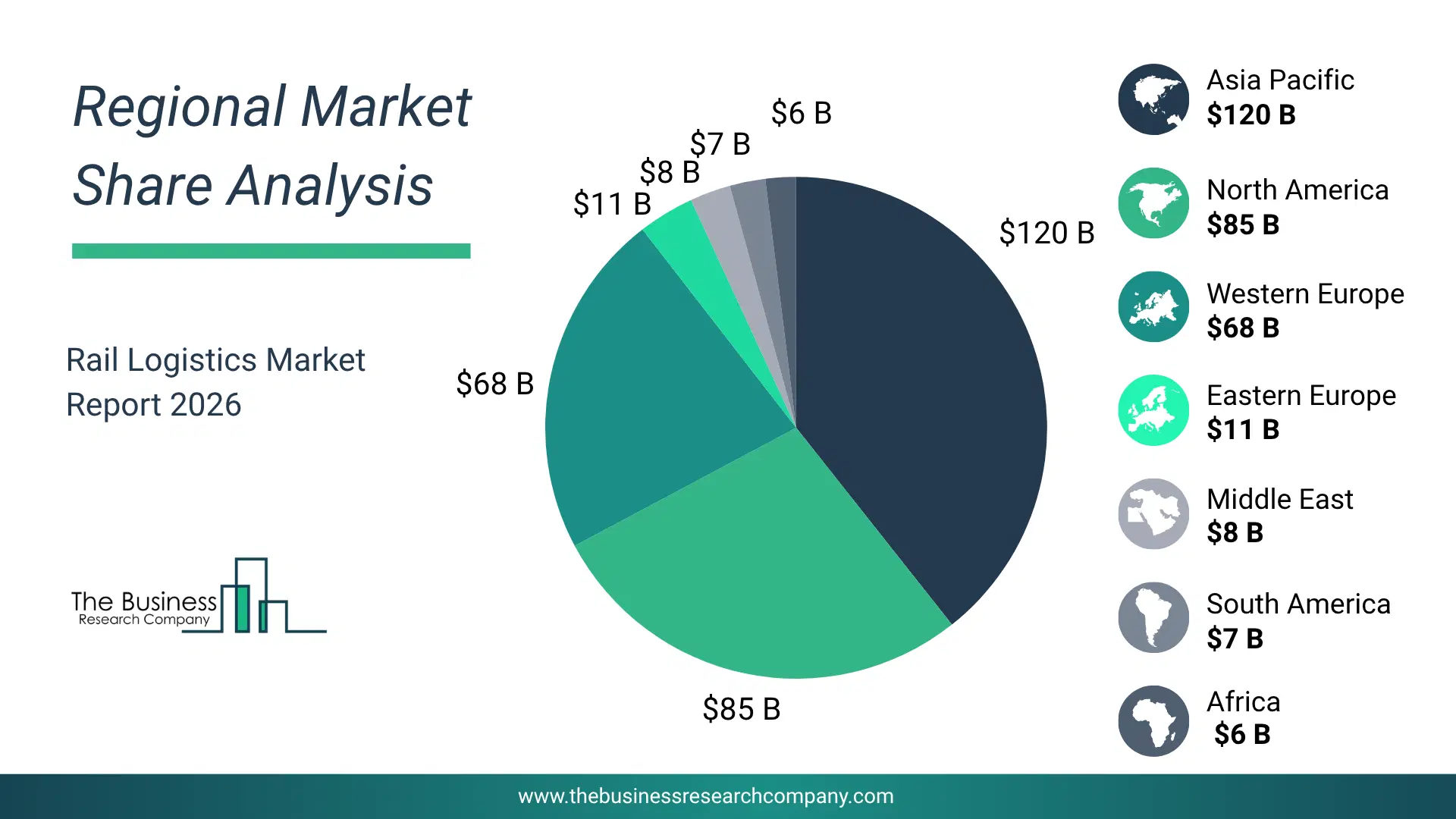
Regional Outlook
Asia-Pacific was the largest region in the rail logistics market in 2025. The regions covered in this market report include Asia-Pacific, South East Asia, Western Europe, Eastern Europe, North America, South America, Middle East, Africa. The countries covered in this market report include Australia, Brazil, China, France, Germany, India, Indonesia, Japan, Taiwan, Russia, South Korea, UK, USA, Canada, Italy, SpainWhat Defines the Rail Logistics Market?
The rail logistics market includes revenues earned by entities by railway signaling and control systems services, rail freight management software and related transloading services, railway safety and security, customer support and logistics management, rail freight services. The market value includes the value of related goods sold by the service provider or included within the service offering. Only goods and services traded between entities or sold to end consumers are included.How is Market Value Defined and Measured?
The market value is defined as the revenues that enterprises gain from the sale of goods and/or services within the specified market and geography through sales, grants, or donations in terms of the currency (in USD unless otherwise specified). The revenues for a specified geography are consumption values that are revenues generated by organizations in the specified geography within the market, irrespective of where they are produced. It does not include revenues from resales along the supply chain, either further along the supply chain or as part of other products.
This chart presents market attractiveness based on a quantitative evaluation of growth, competition, strategic alignment, and risk, offering a clear view of opportunity areas for decision-making. This chart is for illustrative purposes; the full report contains the complete analysis.

This chart highlights the Total Addressable Market (TAM) by estimating the maximum revenue opportunity using an assumption-driven approach, supporting strategic planning and opportunity sizing across markets. The chart is illustrative; the full report provides a more comprehensive analysis.
What Key Data and Analysis Are Included in the Rail Logistics Market Report 2026?
The rail logistics market research report is one of a series of new reports from The Business Research Company that provides market statistics, including industry global market size, regional shares, competitors with the market share, detailed market segments, market trends and opportunities, and any further data you may need to thrive in the rail logistics industry. The market research report delivers a complete perspective of everything you need, with an in-depth analysis of the current and future state of the industry.Rail Logistics Market Report Forecast Analysis
| Report Attribute | Details |
|---|---|
| Market Size Value In 2026 | $273.15 billion |
| Revenue Forecast In 2030 | $304.64 billion |
| Growth Rate | CAGR of 2.9% from 2026 to 2030 |
| Base Year For Estimation | 2025 |
| Actual Estimates/Historical Data | 2020-2025 |
| Forecast Period | 2026 - 2030 |
| Market Representation | Revenue in USD Billion and CAGR from 2026 to 2030 |
| Segments Covered | Type, Operational Area, End User |
| Regional Scope | Asia-Pacific, Western Europe, Eastern Europe, North America, South America, Middle East, Africa |
| Country Scope | The countries covered in the report are Australia, Brazil, China, France, Germany, India, Indonesia, Japan, Taiwan, Russia, South Korea, UK, USA, Canada, Italy, Spain. |
| Key Companies Profiled | United Parcel Service Inc., FedEx Corporation, Mærsk A/S, Deutsche Bahn AG, Schenker Deutschland AG, Deutsche Bahn International Operations GmbH, Kuehne Nagel International AG, Union Pacific Corp., C.H. Robinson Worldwide Inc., Canadian National Railway Co., Nippon Express Holdings Inc., CEVA Logistics Inc., Geodis SA, Gebrüder Weiss GmbH, Trinity Industries Inc., Japan Freight Railway Co., Brookfield Business Partners LP, SBB Cargo International AG, VTG AG, Russian Railways OJSC, BLR Logistiks Ltd., Tschudi Logistics Holding AS, GeoMetrix Rail Logistics Inc., CTL Logistics Sp. z o.o, Rail Cargo Group, Interport Global Logistics Private Limited, Dan Transport Group A/S |
| Customization Scope | Request for Customization |
| Pricing And Purchase Options | Explore Purchase Options |