
Railway Artificial Intelligence (AI) Market Report 2026
Global Outlook – By Component (Hardware, Software), By Technology (Machine Learning, Computer Vision, Natural Language Processing), By Deployment (Cloud-Based, On-Premise), By Application (Predictive Maintenance, Security And Surveillance, Operational Management), By End-User (Railway Operator, Infrastructure Provider) – Market Size, Trends, Strategies, and Forecast to 2030
Railway Artificial Intelligence (AI) Market Overview
• Railway Artificial Intelligence (AI) market size has reached to $3 billion in 2025 • Expected to grow to $6.21 billion in 2030 at a compound annual growth rate (CAGR) of 15.1% • Growth Driver: Railway Infrastructure Expansion Fuels Growth In The Railway AI Market • Market Trend: AI Train Inspection Technology Is Transforming The Railway AI Market • North America was the largest region in 2025.Market Gains By 2030 – Top Opportunities By Segment
Market Gain identifies the most promising market opportunities by highlighting the segments or products expected to generate the highest incremental revenue growth over the next five years.
What Is Covered Under Railway Artificial Intelligence (AI) Market?
Railway artificial intelligence (AI) refers to the application of AI technologies within the railway industry to enhance efficiency, safety, and overall operations. AI in railways can help automate processes, detect anomalies or faults in equipment, and enable predictive maintenance to reduce downtime and improve service reliability. Railway AI aims to transform the railway sector by leveraging advanced technologies to make operations smarter, safer, and more efficient. The main components of railway artificial intelligence are hardware and software. Railway AI hardware refers to the physical components and devices used in artificial intelligence systems deployed within railway networks. The various technologies are used such as machine learning, computer vision, and natural language processing and deployed based on cloud-based and on-premise modes. The different applications include predictive maintenance, security, surveillance, and operational management for a variety of end-users, including railway operators and infrastructure providers.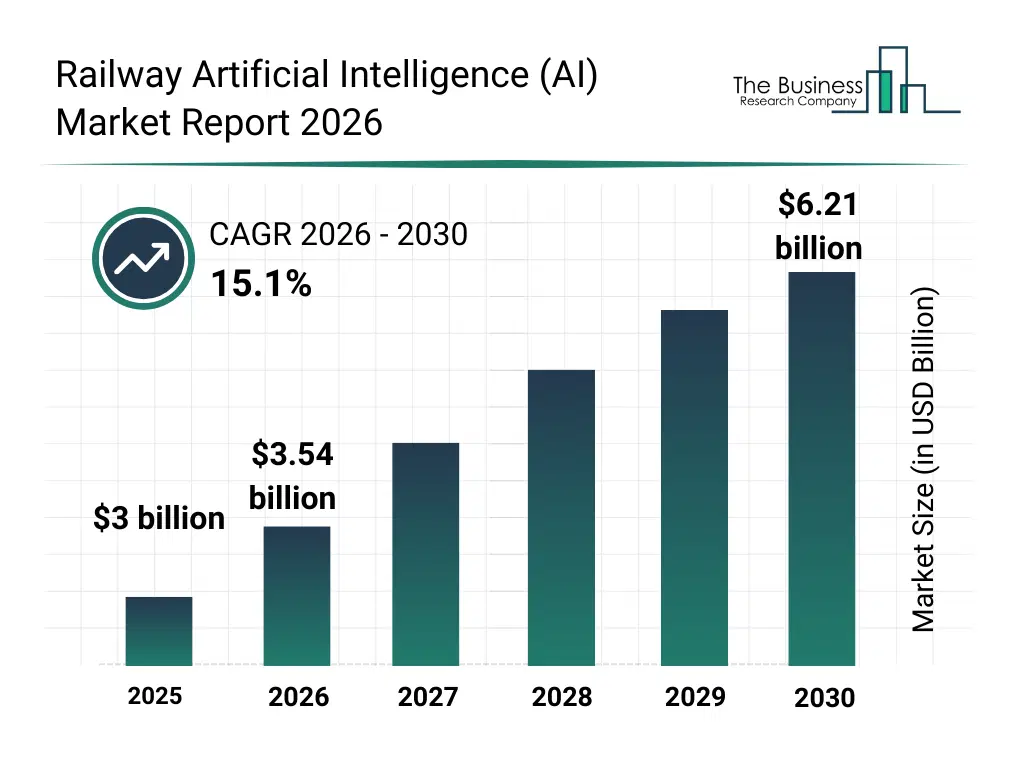
What Is The Railway Artificial Intelligence (AI) Market Size and Share 2026?
The railway artificial intelligence (AI) market size has grown rapidly in recent years. It will grow from $3 billion in 2025 to $3.54 billion in 2026 at a compound annual growth rate (CAGR) of 17.9%. The growth in the historic period can be attributed to expansion of railway network infrastructure, adoption of digital signaling systems, increasing focus on rail safety improvements, availability of large-scale operational data, early implementation of automation technologies.What Is The Railway Artificial Intelligence (AI) Market Growth Forecast?
The railway artificial intelligence (AI) market size is expected to see rapid growth in the next few years. It will grow to $6.21 billion in 2030 at a compound annual growth rate (CAGR) of 15.1%. The growth in the forecast period can be attributed to increasing investments in smart railway projects, rising demand for real-time operational intelligence, expansion of autonomous rail operations, growing integration of AI with iot rail systems, increasing focus on predictive and preventive maintenance. Major trends in the forecast period include increasing adoption of AI-based predictive maintenance systems, rising use of computer vision for safety monitoring, expansion of AI-driven traffic management solutions, growing integration of edge AI in rail operations, enhanced focus on operational automation.
Global Railway Artificial Intelligence (AI) Market Segmentation
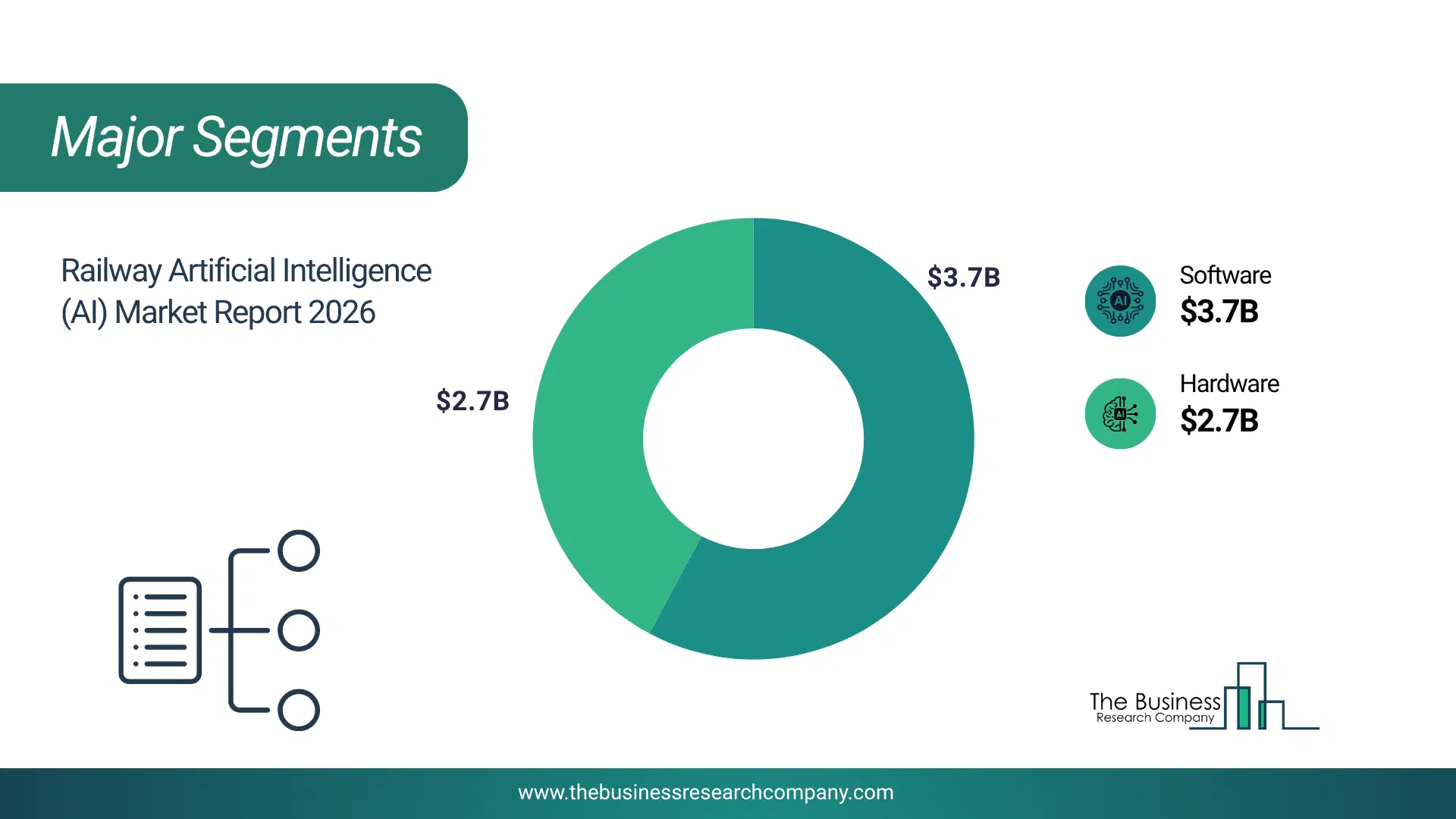
1) By Component: Hardware, Software 2) By Technology: Machine Learning, Computer Vision, Natural Language Processing 3) By Deployment: Cloud-Based, On-Premise 4) By Application: Predictive Maintenance, Security And Surveillance, Operational Management 5) By End-User: Railway Operator, Infrastructure Provider Subsegments: 1) By Hardware: AI-Powered Sensors, AI-Integrated Control Systems, Edge Computing Devices 2) By Software: AI-Based Train Control Systems, Predictive Maintenance Software, Passenger Flow Management Software, Traffic Management And Scheduling Software, AI-Based Safety And Security Software The top segments in the railway artificial intelligence (ai) market will be: • Software will reach $3.62 billion by 2030. • Hardware will reach $2.61 billion by 2030.What Is The Driver Of The Railway Artificial Intelligence (AI) Market?
The expansion of railway networks and infrastructure projects is expected to propel the growth of the railway artificial intelligence (AI) market going forward. Railway networks and infrastructure projects refer to the planning, construction, and maintenance of physical structures such as tracks, stations, and signaling systems, to facilitate the operation of trains and support transportation needs. The expansion of railway networks is due to increasing demand for efficient and sustainable transportation solutions to accommodate growing urbanization, population mobility, and economic development needs. AI can analyze data on passenger demand, traffic patterns, and geographical features to optimize new railway lines and infrastructure planning and design. For instance, in December 2023, according to the U.S. Department of Transportation, a US-based government body, the U.S. Department of Transportation’s Federal Railroad Administration (FRA) awarded $8.2 billion for 10 passenger rail projects across the United States. This remarkable investment in America's intercity passenger rail network follows a $16.4 billion announcement for 25 significant projects along the country's busiest train line. Therefore, the expansion of railway networks and infrastructure projects is driving the growth of the railway AI market.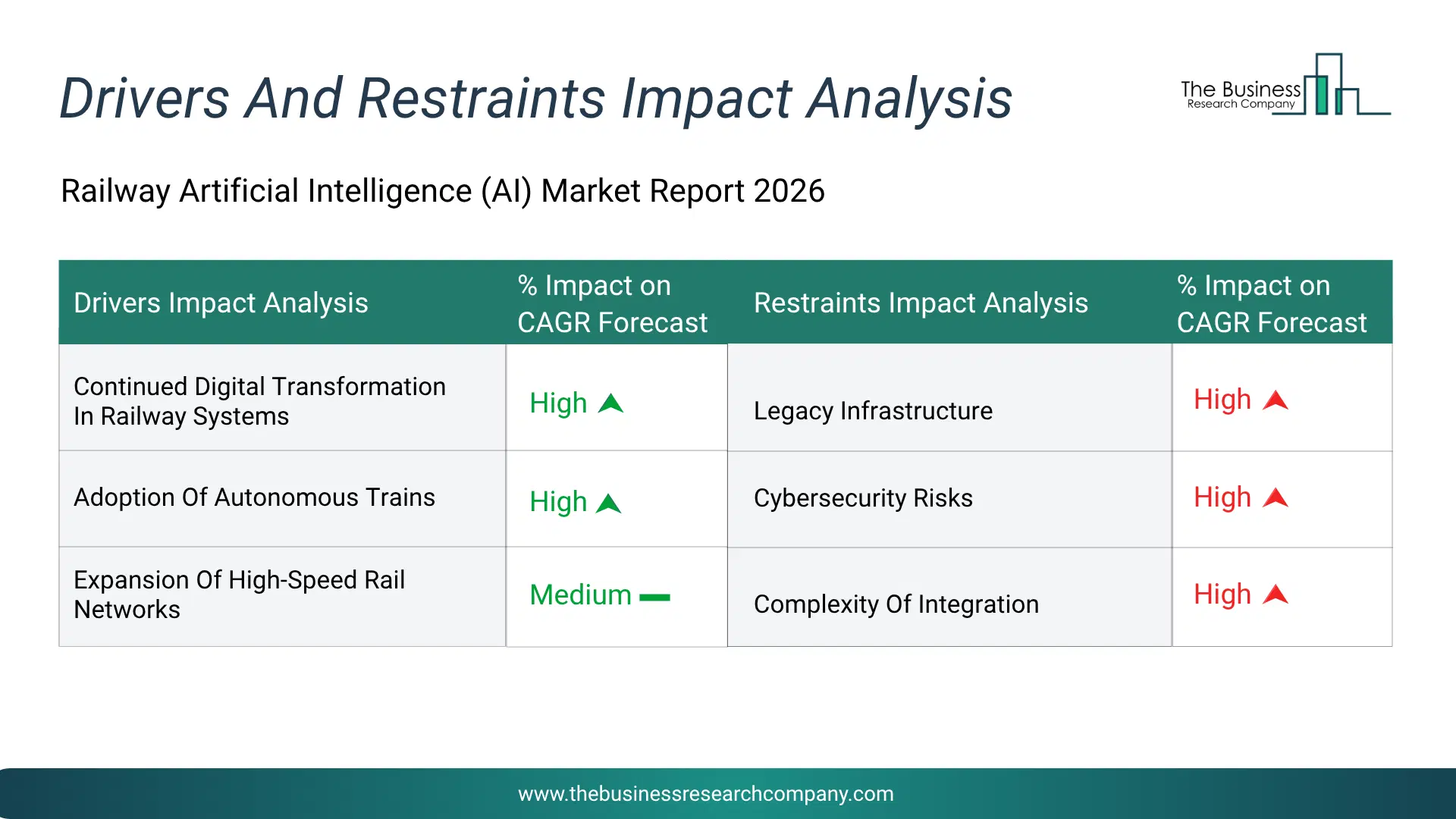
Infographic Chart Showing Key Market Drivers Analysis And Restraints For Railway Artificial Intelligence (Ai) Market
The chart presents an impact analysis of key drivers and restraints, quantifying their relative influence on the market's growth rate and helping assess the balance between growth enablers and limiting factors. This chart offers a high-level perspective; the full report contains more detailed insights.
How Will The Drivers Impact Growth In The Global Railway Artificial Intelligence (AI) Market?
• Continued Digital Transformation In Railway Systems (High) – During the forecast period, the continued digital transformation in railway systems is expected to become a key growth driver for the railway artificial intelligence (ai) market by 2030. Continued digital transformation in railway systems acts as a major driver for the railway artificial intelligence market as railway operators increasingly adopt digital technologies to modernize infrastructure and improve operational efficiency. The integration of ai with digital platforms enables real -time monitoring, predictive maintenance, and automated traffic management across railway networks. These technologies help analyze large volumes of operational data, allowing operators to detect faults early and optimize train scheduling and asset utilization. Digital transformation also supports the development of smart railway systems that enhance safety, reliability, and passenger experience. • Adoption Of Autonomous Trains (High) – During the forecast period, the adoption of autonomous trains is expected to emerge as a major factor driving the expansion of the railway artificial intelligence (ai) market by 2030. Adoption of autonomous trains acts as a significant driver for the railway artificial intelligence market because autonomous train systems rely heavily on advanced ai technologies for safe and efficient operations. Ai enables automated control, real-time decision-making, obstacle detection, and precise train movement management without continuous human intervention. These systems use sensors, cameras, and intelligent algorithms to monitor track conditions, optimize train speed, and enhance overall safety. The adoption of autonomous trains also improves operational efficiency by reducing human errors and increasing service reliability. • Expansion Of High-Speed Rail Networks (Medium) – During the forecast period, the expansion of high-speed rail networks is expected to act as a key growth catalyst for the railway artificial intelligence (ai) market by 2030. Expansion of high-speed rail networks acts as a driver for the railway artificial intelligence market as high-speed rail systems require advanced technologies to ensure safe, efficient, and reliable operations. Ai technologies help manage complex railway networks by enabling real-time monitoring, predictive maintenance, and intelligent traffic management. These capabilities are essential for maintaining safety and optimizing train scheduling in high-speed rail environments where precision and rapid response are critical. Ai-powered systems also assist in detecting equipment faults and improving infrastructure management. As countries continue to invest in expanding high-speed rail networks, the demand for ai-based railway solutions is expected to increase.How Will The Restraints Impact Growth In The Global Railway Artificial Intelligence (AI) Market?
• Legacy Infrastructure (High) – During the forecast period, the legacy infrastructure acts as a restraint for the railway artificial intelligence market because many railway systems still rely on outdated equipment, signaling systems, and operational technologies. These older infrastructures are often not designed to support advanced ai-based solutions, making integration difficult and costly. Upgrading or replacing existing systems requires significant investment, time, and technical expertise. In addition, compatibility issues between legacy systems and modern digital technologies can slow the implementation of ai-driven applications. As a result, the presence of aging railway infrastructure can hinder the widespread adoption of artificial intelligence in railway operations. • Cybersecurity Risks (High) – During the forecast period, the cybersecurity risks act as a restraint for the railway artificial intelligence market because ai-based railway systems rely heavily on connected digital networks, sensors, and data platforms. These interconnected systems can become potential targets for cyberattacks, which may disrupt train operations, compromise sensitive data, or affect passenger safety. As railway infrastructure becomes more digitally integrated, the risk of unauthorized access and system vulnerabilities increases. Addressing these threats requires significant investment in cybersecurity technologies and protective measures. Consequently, concerns about data security and system integrity can slow the adoption of ai solutions in railway networks. • Complexity Of Integration (High) – During the forecast period, the complexity of integration acts as a restraint for the railway artificial intelligence market because implementing ai solutions often requires integration with existing railway infrastructure, control systems, and data platforms. Many railway networks operate with multiple legacy technologies and operational systems that may not be fully compatible with modern ai-based solutions. Integrating these systems requires extensive customization, testing, and technical expertise, which can increase implementation time and costs. In addition, coordination between different technologies and stakeholders can further complicate deployment. As a result, the complexity involved in integrating ai with existing railway systems can slow market adoption.Key Players In The Global Railway Artificial Intelligence (AI) Market
Major companies operating in the railway artificial intelligence (AI) market are Huawei Technologies Co. Ltd., Hitachi Ltd., Siemens AG, International Business Machines Corporation (IBM), Cisco Systems Inc., ABB Group, Fujitsu Limited, Nokia Corporation, Toshiba Corporation, Thales Group, Voestalpine AG, Alstom SA, Wabtec Corporation, Bombardier Inc., Indra Sistemas S.A., CAF (Construcciones y Auxiliar de Ferrocarriles) S.A., HyundAI Rotem Company, Eurotech SpA, CloudMoyo Inc., Cervello Technologies LLC, Cogniac Corporation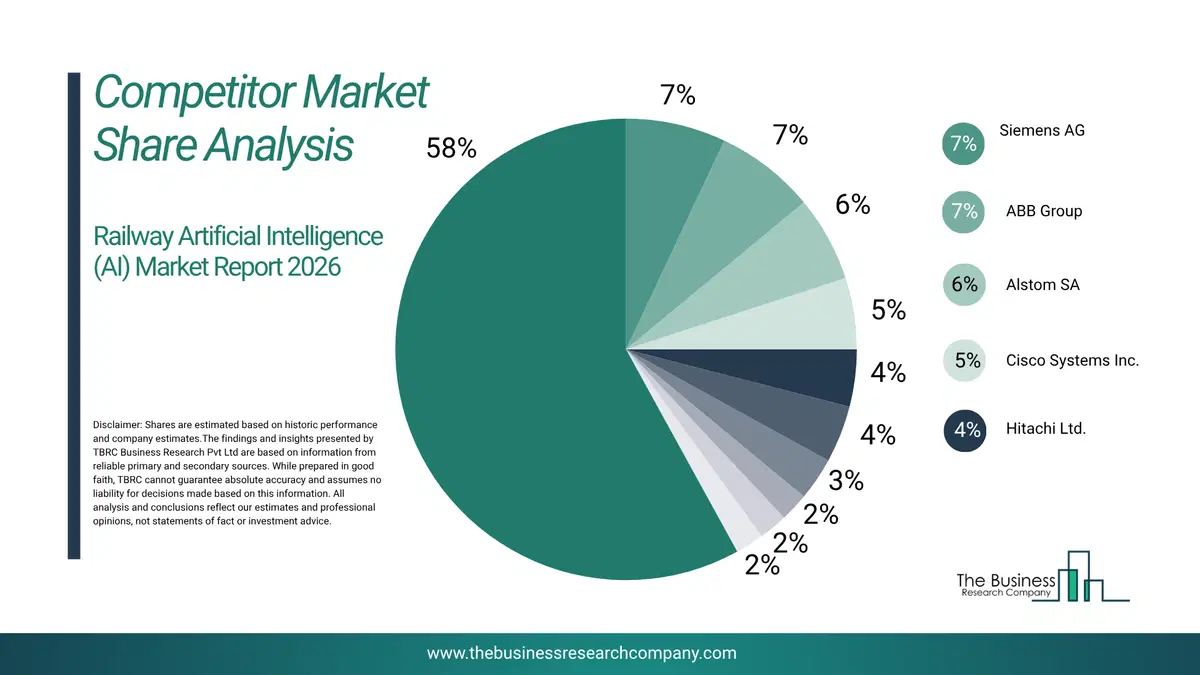
This chart is for illustrative purposes; the full report includes a detailed competitor analysis and comprehensive overview of the top 10 companies in the market.
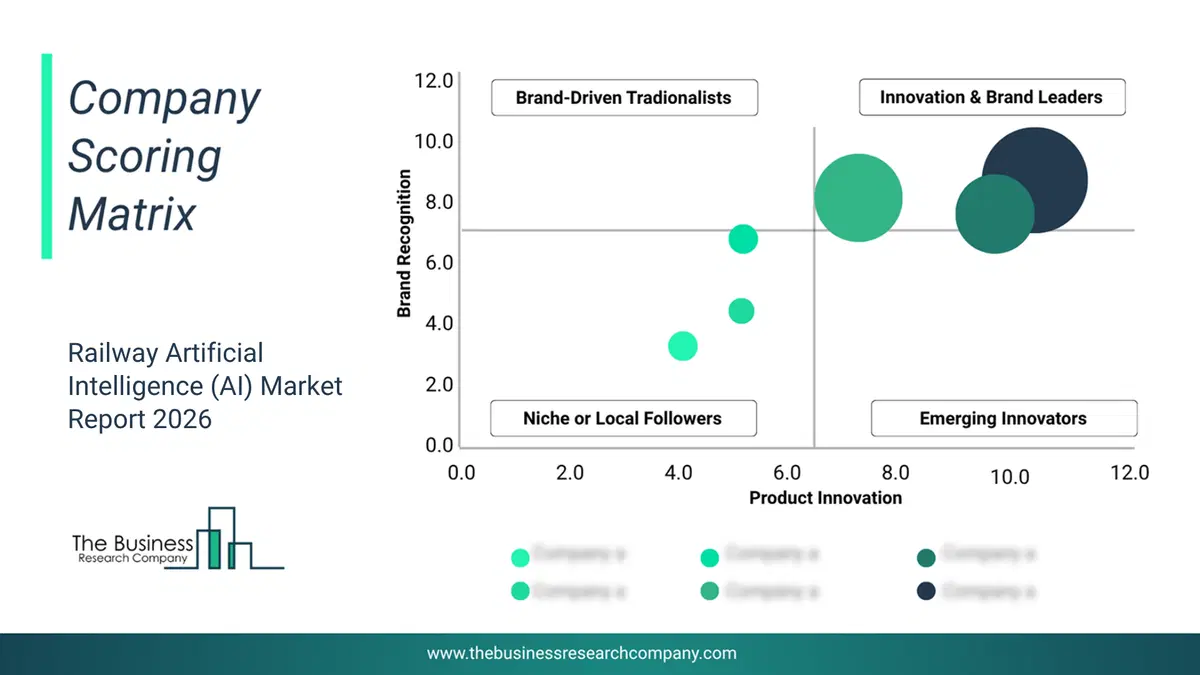
This chart maps companies by product innovation and brand strength, with bubble size indicating relative revenue, helping identify market leaders, challengers, and niche players. This is an illustrative chart; the full report provides a complete and accurate competitive analysis.
Global Railway Artificial Intelligence (AI) Market Trends and Insights
Major companies operating in the railway artificial intelligence (AI) market are developing innovative technologies such as AI train inspection technology to gain a competitive offering and solution. AI train inspection technology is a system that utilizes artificial intelligence (AI) algorithms to analyze images and data captured by cameras and sensors installed along railway tracks. For instance, in October 2023, Norfolk Southern Corporation, a US-based transportation company, launched digital train inspection portals, featuring state-of-the-art machine vision inspection technology developed in collaboration with Georgia Tech Research Institution (GTRI). The portals are equipped with 24-megapixel trackside cameras and stadium lighting, which captures ultra-high-resolution, 360-degree images of passing railcars at speeds up to 70 miles per hour. The AI-powered system analyzes these images for potential defects, including brake, leaks, and bearings, which are difficult to detect with the human eye while the train is stationary. The system has demonstrated high accuracy levels and low false positives, and critical defects are flagged for immediate handling. The project aims to supercharge Norfolk Southern's safety infrastructure and inspection processes with over a dozen portals by 2024.What Are Latest Mergers And Acquisitions In The Railway Artificial Intelligence (AI) Market?
In May 2024, Hitachi Rail, a Japan-based rolling stock and railway signaling manufacturing company acquired Thales' Ground Transportation Systems for $1.79 billion. This strategic move significantly enhances Hitachi Rail's footprint, expanding its operations to 51 countries. Thales S.A. is a France-based provider of railway artificial intelligence (AI).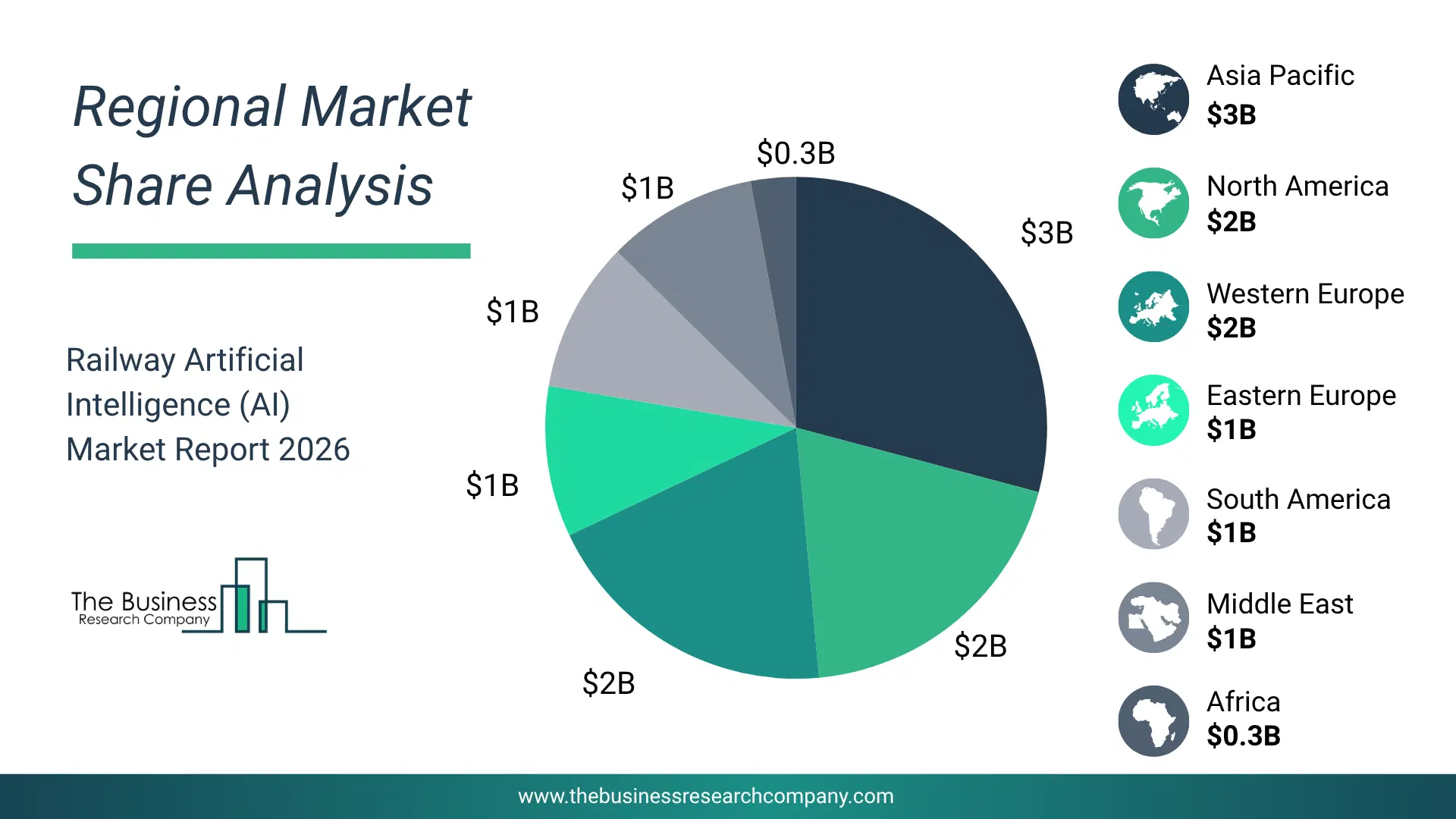
Regional Insights
North America was the largest region in the railway artificial intelligence (AI) market in 2025. The regions covered in this market report are Asia-Pacific, South East Asia, Western Europe, Eastern Europe, North America, South America, Middle East, Africa. The countries covered in this market report are Australia, Brazil, China, France, Germany, India, Indonesia, Japan, Taiwan, Russia, South Korea, UK, USA, Canada, Italy, Spain.What Defines the Railway Artificial Intelligence (AI) Market?
The railway artificial Intelligence (AI) market consists of revenues earned by entities by providing services such as predictive maintenance, traffic management, security services, energy management services, and remote monitoring services. The market value includes the value of related goods sold by the service provider or included within the service offering. The railway artificial intelligence (AI) market also includes sales of sensors and actuators, imaging systems, onboard computers, tracking devices, and control systems. Values in this market are ‘factory gate’ values, that is, the value of goods sold by the manufacturers or creators of the goods, whether to other entities (including downstream manufacturers, wholesalers, distributors, and retailers) or directly to end customers. The value of goods in this market includes related services sold by the creators of the goods.How is Market Value Defined and Measured?
The market value is defined as the revenues that enterprises gain from the sale of goods and/or services within the specified market and geography through sales, grants, or donations in terms of the currency (in USD unless otherwise specified). The revenues for a specified geography are consumption values that are revenues generated by organizations in the specified geography within the market, irrespective of where they are produced. It does not include revenues from resales along the supply chain, either further along the supply chain or as part of other products.
This chart presents market attractiveness based on a quantitative evaluation of growth, competition, strategic alignment, and risk, offering a clear view of opportunity areas for decision-making. This chart is for illustrative purposes; the full report contains the complete analysis.

This chart highlights the Total Addressable Market (TAM) by estimating the maximum revenue opportunity using an assumption-driven approach, supporting strategic planning and opportunity sizing across markets. The chart is illustrative; the full report provides a more comprehensive analysis.
What Key Data and Analysis Are Included in the Railway Artificial Intelligence (AI) Market Report 2026?
The railway artificial intelligence (ai) market research report is one of a series of new reports from The Business Research Company that provides market statistics, including industry global market size, regional shares, competitors with the market share, detailed market segments, market trends and opportunities, and any further data you may need to thrive in the railway artificial intelligence (ai) industry. The market research report delivers a complete perspective of everything you need, with an in-depth analysis of the current and future state of the industry.Railway Artificial Intelligence (AI) Market Report Forecast Analysis
| Report Attribute | Details |
|---|---|
| Market Size Value In 2026 | $3.54 billion |
| Revenue Forecast In 2030 | $6.21 billion |
| Growth Rate | CAGR of 15.1% from 2026 to 2030 |
| Base Year For Estimation | 2025 |
| Actual Estimates/Historical Data | 2020-2025 |
| Forecast Period | 2026 - 2030 |
| Market Representation | Revenue in USD Billion and CAGR from 2026 to 2030 |
| Segments Covered | Component, Technology, Deployment, Application, End-User |
| Regional Scope | Asia-Pacific, Western Europe, Eastern Europe, North America, South America, Middle East, Africa |
| Country Scope | The countries covered in the report are Australia, Brazil, China, France, Germany, India, ... |
| Key Companies Profiled | Huawei Technologies Co. Ltd., Hitachi Ltd., Siemens AG, International Business Machines Corporation (IBM), Cisco Systems Inc., ABB Group, Fujitsu Limited, Nokia Corporation, Toshiba Corporation, Thales Group, Voestalpine AG, Alstom SA, Wabtec Corporation, Bombardier Inc., Indra Sistemas S.A., CAF (Construcciones y Auxiliar de Ferrocarriles) S.A., HyundAI Rotem Company, Eurotech SpA, CloudMoyo Inc., Cervello Technologies LLC, Cogniac Corporation |
| Customization Scope | Request for Customization |
| Pricing And Purchase Options | Explore Purchase Options |