
Railway Fishplate Market Report 2026
Global Outlook – By Rail Joint Type (Common Rail Joint, Compromise Rail Joint, Insulated Rail Joint, Joggled Fish Plate), By Material Type (Steel Fishplates, Cast Iron Fishplates, Other Materials), By Rail Type (Heavy Rail, Light Rail) – Market Size, Trends, Strategies, and Forecast to 2030
Railway Fishplate Market Overview
• Railway Fishplate market size has reached to $4.79 billion in 2025 • Expected to grow to $5.81 billion in 2030 at a compound annual growth rate (CAGR) of 3.8% • Growth Driver: Rising Demand for High-Speed Rail Transport Drives Growth in the Fishplate Market • Market Trend: Expansion Of Insulated Rail Joint Production • North America was the largest region in 2025 and Asia-Pacific is the fastest growing region.What Is Covered Under Railway Fishplate Market?
Railway fishplates, also known as rail joints, are essential components in railway track construction and maintenance. They are used to connect two sections of rail together to ensure a continuous and stable track structure. They are made of steel or other durable metals, bolted to the rails, and serve several critical functions in maintaining the integrity and performance of the rail system. The main types of rail joints in railway fishplate are common rail joint, compromise rail joint, insulated rail joint, and joggled fish plate. Common rail joints are standard connectors used to join two sections of railway track seamlessly, ensuring smooth passage of trains. The various materials include steel fishplates, cast iron fishplates, and others and different types of rail include heavy rail and light rail.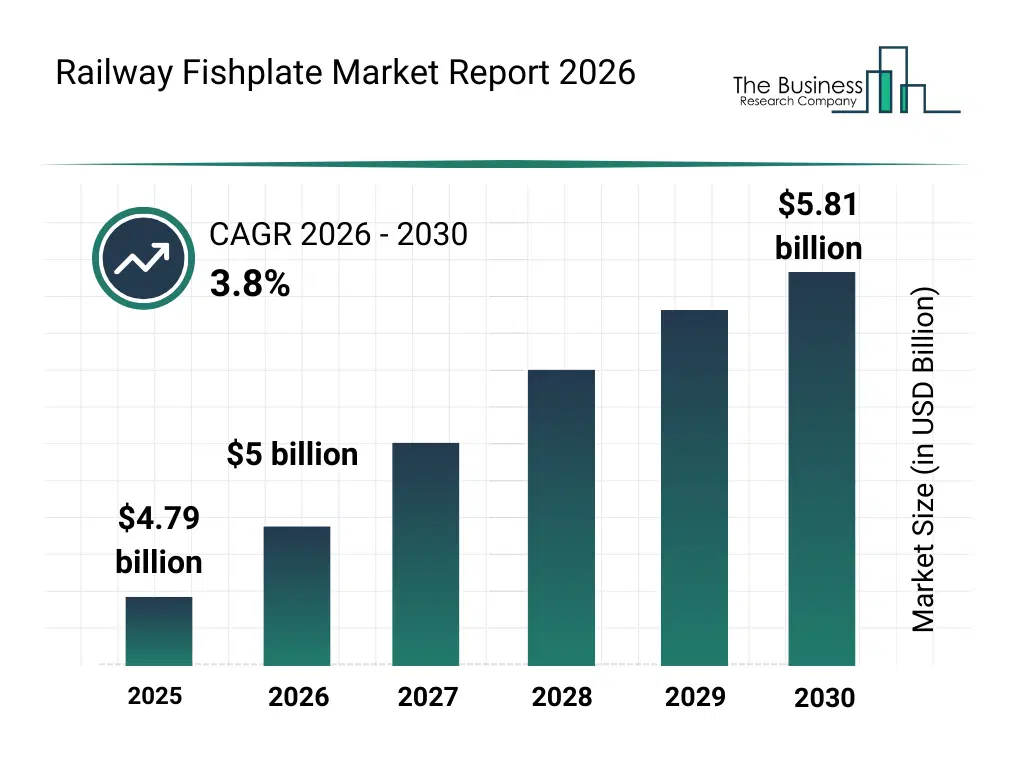
What Is The Railway Fishplate Market Size and Share 2026?
The railway fishplate market size has grown steadily in recent years. It will grow from $4.79 billion in 2025 to $5 billion in 2026 at a compound annual growth rate (CAGR) of 4.3%. The growth in the historic period can be attributed to expansion of railway track networks, increasing rail traffic volumes, growth of electrified rail systems, regular track maintenance requirements, availability of standardized rail joint components.What Is The Railway Fishplate Market Growth Forecast?
The railway fishplate market size is expected to see steady growth in the next few years. It will grow to $5.81 billion in 2030 at a compound annual growth rate (CAGR) of 3.8%. The growth in the forecast period can be attributed to increasing investments in rail infrastructure modernization, rising demand for long-life track components, expansion of high-speed rail networks, growing focus on reducing track maintenance cycles, increasing adoption of advanced rail materials. Major trends in the forecast period include increasing use of high-strength and insulated rail joints, rising demand for heavy-duty track components, growing adoption of insulated fishplates for electrified lines, expansion of rail network maintenance activities, enhanced focus on track stability and safety.
Global Railway Fishplate Market Segmentation
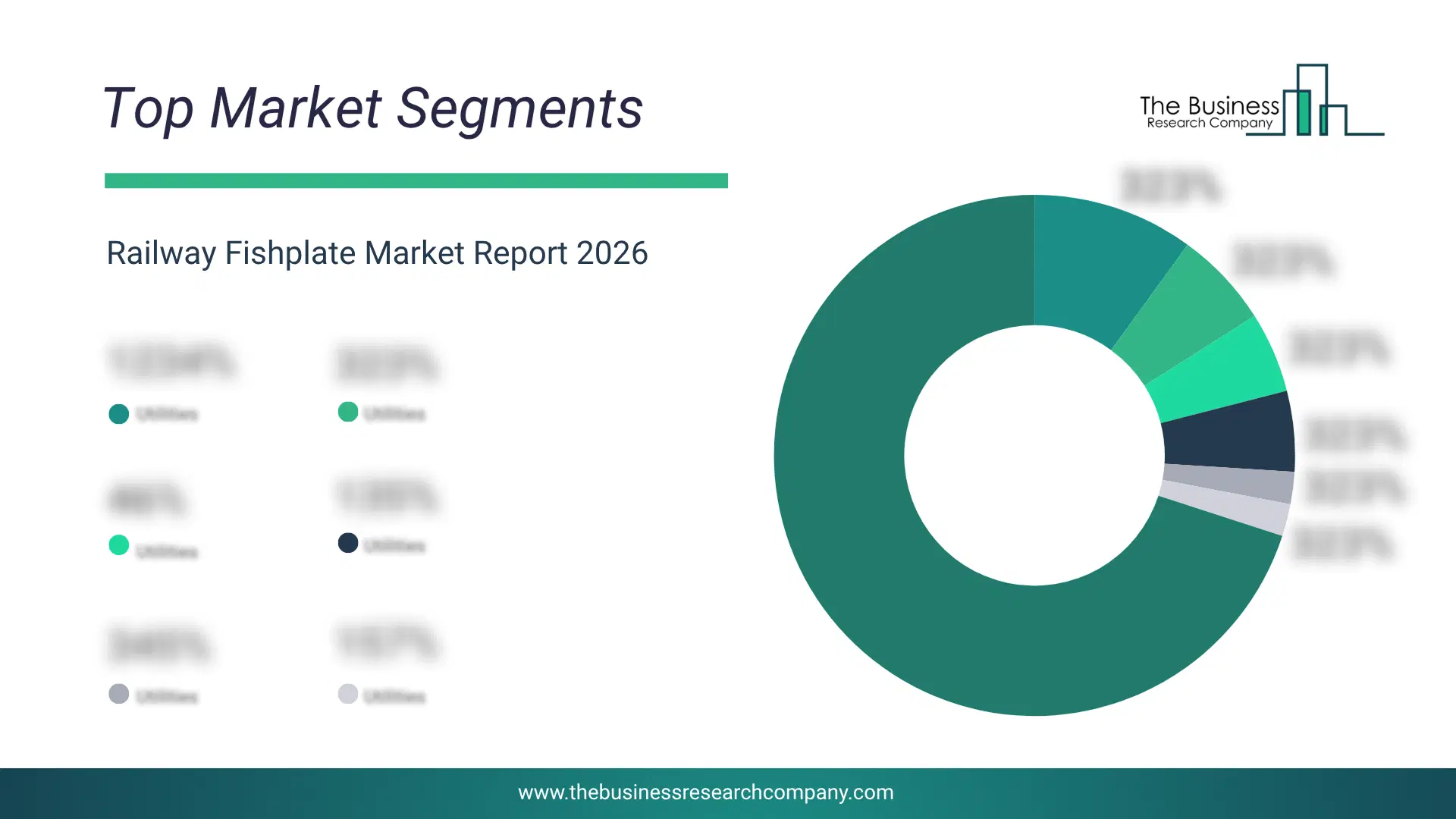
1) By Rail Joint Type: Common Rail Joint, Compromise Rail Joint, Insulated Rail Joint, Joggled Fish Plate 2) By Material Type: Steel Fishplates, Cast Iron Fishplates, Other Materials 3) By Rail Type: Heavy Rail, Light Rail Subsegments: 1) By Common Rail Joint: Standard Fishplate, Heavy-Duty Fishplate, Light Rail Fishplate 2) By Compromise Rail Joint: Tapered Fishplate, Mismatched Rail Size Fishplate 3) By Insulated Rail Joint: Epoxy-Bonded Insulated Joint, Polyurethane-Bonded Insulated Joint, Glass-Reinforced Insulated Joint 4) By Joggled Fish Plate: Standard Joggled Fishplate, Customized Joggled FishplateWhat Is The Driver Of The Railway Fishplate Market?
The increasing high-speed rail transport is expected to propel the growth of the railway fishplate market going forward. High-speed rail transport refers to a type of railway system designed to operate at significantly higher speeds than conventional trains. High-speed trains usually travel at 250 km/h (155 mph) or faster on dedicated rails, with some systems exceeding 300 km/h (186 mph). These trains use advanced propulsion, braking, and stability technologies to maintain high-speed safety. It requires specially designed tracks with minimal curves and grade crossings for high velocities. Fishplates support high-speed rails by securely joining and reinforcing rail segments at junctions, ensuring smooth transitions and stability essential for high-speed travel. For instance, in January 2024, Eurostar International Ltd., a UK-based railway company, reported that Eurostar transported 18.6 million passengers in 2023, marking a 22% increase compared to 2022. Therefore, increasing high-speed rail transport is driving the growth of the railway fishplate industry.Key Players In The Global Railway Fishplate Market
Major companies operating in the railway fishplate market report include L.B. Foster, Jekay International Track Pvt Ltd, Monteferro USA Inc. LLC, Jiangsu Railteco Equipment Co. Ltd., Linzhou Changda Railway Materials Co. Ltd, Taicang Zhongbo Railway Fastening Co. Ltd., Shanghai Suyu Railway Material Co. Ltd., Harmer Steel Products Company, Surya Alloy Industries Limited, Bhaskar Industries Pvt Ltd, N. Mohanlal Railtrack Pvt. Ltd, Anyang General International Co. Ltd, Techma Engineering Enterprise Private Limited, Henry Williams Limited, Royal Infraconstru Ltd, Progress Rail Services Corporation, Voestalpine AG, ArcelorMittal S.A., Pandrol Limited, Schwihag AG, CRRC Corp. Ltd., Koppers Holdings Inc., Unipart Group Limited, Tata Metaliks Limited, Vossloh AG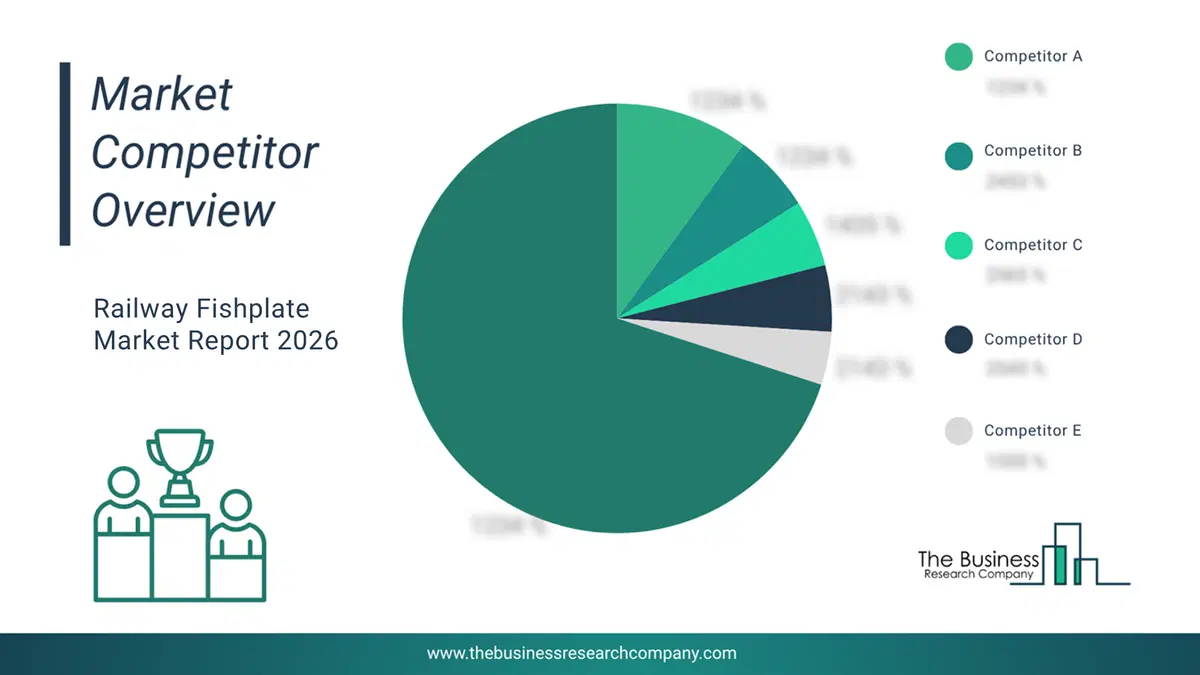
This chart is for illustrative purposes; the full report includes a detailed competitor analysis and comprehensive overview of the top 10 companies in the market.
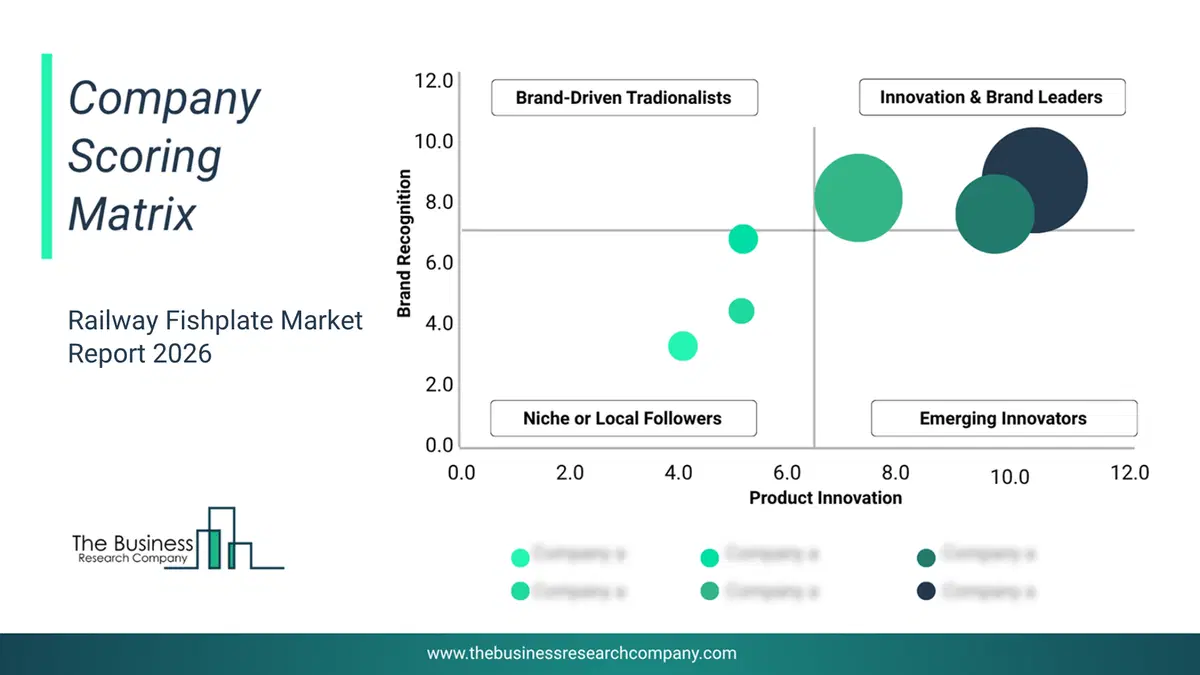
This chart maps companies by product innovation and brand strength, with bubble size indicating relative revenue, helping identify market leaders, challengers, and niche players. This is an illustrative chart; the full report provides a complete and accurate competitive analysis.
Global Railway Fishplate Market Trends and Insights
Major companies operating in the railway fishplate market are developing new facilities for producing insulated rail joints to meet the growing demand for advanced railway infrastructure solutions. These new facilities focus on producing high-quality insulated rail joints essential for electrical isolation between rail segments. For instance, in February 2023, L.B. Foster, a US-based company specializing in rail and infrastructure products and services, opened a new facility in Juiz de Fora, Brazil, to manufacture bonded insulated rail joints. The new facility is dedicated to producing high-performance bonded insulated rail joints essential for rail networks' safe and reliable operation. The manufacturing process involves cutting steel rail into sections, placing an insulating material (Kevlar) between the halves, and bonding the components with high-integrity epoxy.What Are Latest Mergers And Acquisitions In The Railway Fishplate Market?
In January 2024, Pandrol, a France-based provider of rail fastening systems and aluminothermic welding solutions, partnered with Rosenqvist Rail as the exclusive distributor of Rosenqvist Rail equipment for certain markets (including the UK, Ireland, France, and Australia). With this alliance, Pandrol aims to broaden its rail infrastructure offering by combining its global sales and system delivery capabilities with Rosenqvist’s specialized technical equipment, thereby strengthening its track hardware portfolio and market reach. Rosenqvist Rail is a Sweden-based rail equipment provider offering track work machinery and rail infrastructure equipment, which are often used alongside rail fastening components such as fishplates and joint bars.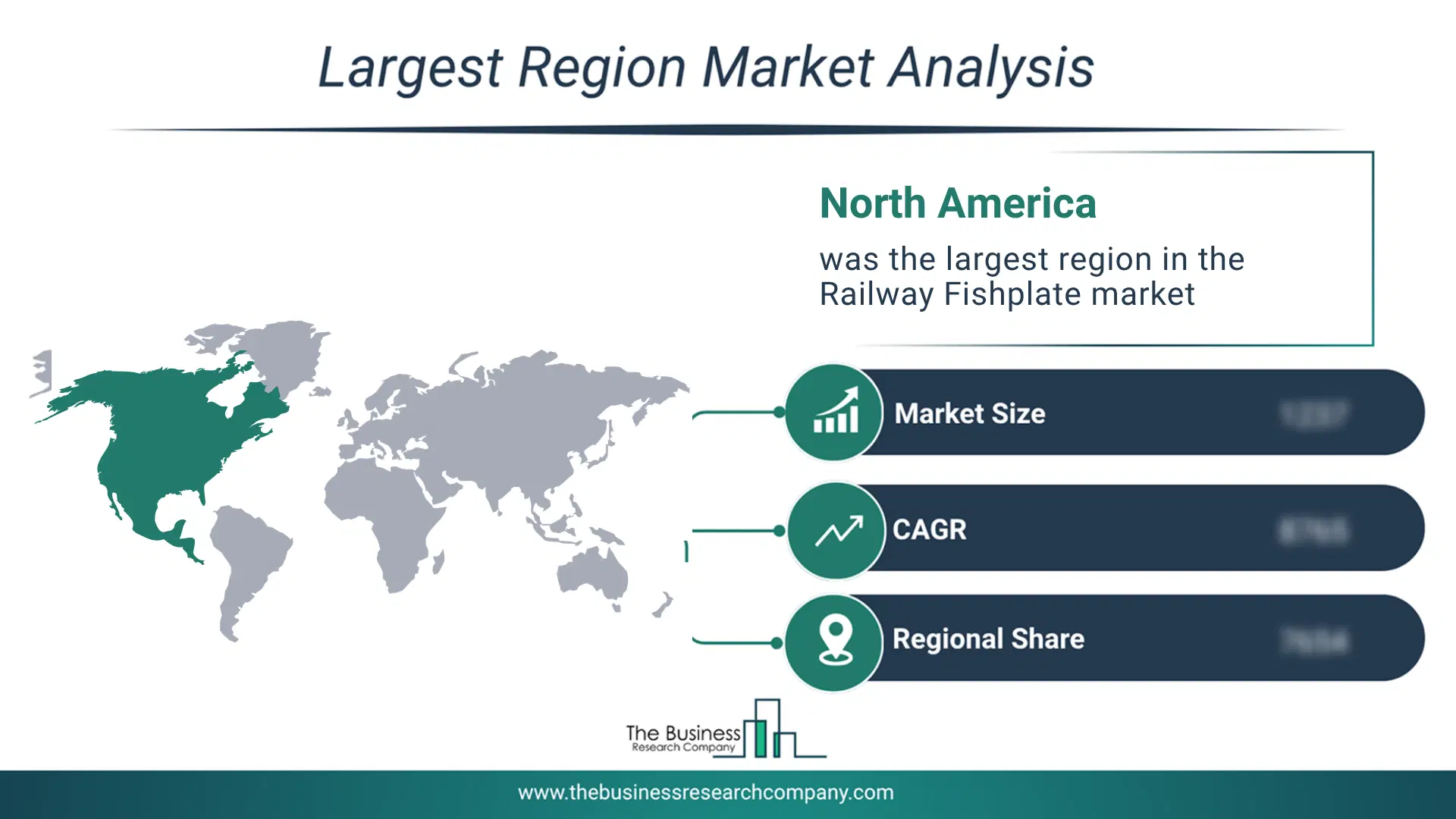
Regional Outlook
North America was the largest region in the railway fishplate market in 2025. Asia-Pacific is expected to be the fastest-growing region in the forecast period. The regions covered in this market report include Asia-Pacific, South East Asia, Western Europe, Eastern Europe, North America, South America, Middle East, Africa. The countries covered in this market report include Australia, Brazil, China, France, Germany, India, Indonesia, Japan, Taiwan, Russia, South Korea, UK, USA, Canada, Italy, SpainWhat Defines the Railway Fishplate Market?
The railway fishplates market consists of sales of joint bars, splice bars, and angle bars. Values in this market are ‘factory gate’ values, that is the value of goods sold by the manufacturers or creators of the goods, whether to other entities (including downstream manufacturers, wholesalers, distributors and retailers) or directly to end customers. The value of goods in this market includes related services sold by the creators of the goods.How is Market Value Defined and Measured?
The market value is defined as the revenues that enterprises gain from the sale of goods and/or services within the specified market and geography through sales, grants, or donations in terms of the currency (in USD unless otherwise specified). The revenues for a specified geography are consumption values that are revenues generated by organizations in the specified geography within the market, irrespective of where they are produced. It does not include revenues from resales along the supply chain, either further along the supply chain or as part of other products.
This chart presents market attractiveness based on a quantitative evaluation of growth, competition, strategic alignment, and risk, offering a clear view of opportunity areas for decision-making. This chart is for illustrative purposes; the full report contains the complete analysis.

This chart highlights the Total Addressable Market (TAM) by estimating the maximum revenue opportunity using an assumption-driven approach, supporting strategic planning and opportunity sizing across markets. The chart is illustrative; the full report provides a more comprehensive analysis.
What Key Data and Analysis Are Included in the Railway Fishplate Market Report 2026?
The railway fishplate market research report is one of a series of new reports from The Business Research Company that provides market statistics, including industry global market size, regional shares, competitors with the market share, detailed market segments, market trends and opportunities, and any further data you may need to thrive in the railway fishplate industry. The market research report delivers a complete perspective of everything you need, with an in-depth analysis of the current and future state of the industry.Railway Fishplate Market Report Forecast Analysis
| Report Attribute | Details |
|---|---|
| Market Size Value In 2026 | $5 billion |
| Revenue Forecast In 2030 | $5.81 billion |
| Growth Rate | CAGR of 4.3% from 2026 to 2030 |
| Base Year For Estimation | 2025 |
| Actual Estimates/Historical Data | 2020-2025 |
| Forecast Period | 2026 - 2030 - 2030 |
| Market Representation | Revenue in USD Billion and CAGR from 2026 to 2030 |
| Segments Covered | Rail Joint Type, Material Type, Rail Type |
| Regional Scope | Asia-Pacific, Western Europe, Eastern Europe, North America, South America, Middle East, Africa |
| Country Scope | The countries covered in the report are Australia, Brazil, China, France, Germany, India, Indonesia, Japan, Taiwan, Russia, South Korea, UK, USA, Canada, Italy, Spain. |
| Key Companies Profiled | L.B. Foster, Jekay International Track Pvt Ltd, Monteferro USA Inc. LLC, Jiangsu Railteco Equipment Co. Ltd., Linzhou Changda Railway Materials Co. Ltd, Taicang Zhongbo Railway Fastening Co. Ltd., Shanghai Suyu Railway Material Co. Ltd., Harmer Steel Products Company, Surya Alloy Industries Limited, Bhaskar Industries Pvt Ltd, N. Mohanlal Railtrack Pvt. Ltd, Anyang General International Co. Ltd, Techma Engineering Enterprise Private Limited, Henry Williams Limited, Royal Infraconstru Ltd, Progress Rail Services Corporation, Voestalpine AG, ArcelorMittal S.A., Pandrol Limited, Schwihag AG, CRRC Corp. Ltd., Koppers Holdings Inc., Unipart Group Limited, Tata Metaliks Limited, Vossloh AG |
| Customization Scope | Request for Customization |
| Pricing And Purchase Options | Explore Purchase Options |