

Railway Infrastructure Maintenance Services Market Report 2026
Global Outlook – By Type (Track Maintenance Services; Signaling Maintenance Services; Railway Civils Maintenance; Other Types), By Deployment Type (On-Premise; Cloud), By Application (Renewal; Maintenance) – Market Size, Trends, Strategies, and Forecast to 2030
Railway Infrastructure Maintenance Services Market Overview
• Railway Infrastructure Maintenance Services market size has reached to $111.92 billion in 2025 • Expected to grow to $127.98 billion in 2030 at a compound annual growth rate (CAGR) of 2.7% • Growth Driver: Rail Network Expansion Fuels Growth Of Railway Infrastructure Maintenance Services Market • Market Trend: Innovative Solutions Driving Evolution In Railway Infrastructure Maintenance Services Market • Asia-Pacific was the largest region in 2025.Market Gains By 2030 – Top Opportunities By Segment
Market Gain identifies the most promising market opportunities by highlighting the segments or products expected to generate the highest incremental revenue growth over the next five years.
What Is Covered Under Railway Infrastructure Maintenance Services Market?
Railway infrastructure maintenance services refer to a range of activities and tasks to ensure the safe, efficient, and reliable operation of railway infrastructure components. These services encompass the inspection, repair, upkeep, and rehabilitation of various railway network elements, including tracks, bridges, tunnels, signaling systems, and overhead lines. Railway infrastructure maintenance services are essential for preserving the integrity and functionality of railway assets, minimizing the risk of accidents, and ensuring the smooth operation of train services. The main railway infrastructure maintenance services are track maintenance services, signaling maintenance services, railway civils maintenance and others. Track maintenance services encompass the practices involved in inspecting, repairing, and maintaining railway tracks to ensure safe and efficient railway operations. It can be deployed both on the premise and cloud for renewal and maintenance applications.
What Is The Railway Infrastructure Maintenance Services Market Size and Share 2026?
The railway infrastructure maintenance services market size has grown steadily in recent years. It will grow from $111.92 billion in 2025 to $114.97 billion in 2026 at a compound annual growth rate (CAGR) of 2.7%. The growth in the historic period can be attributed to expansion of railway network length, aging rail infrastructure assets, rising passenger and freight rail traffic, increased safety compliance requirements, growing investments in rail maintenance programs.What Is The Railway Infrastructure Maintenance Services Market Growth Forecast?
The railway infrastructure maintenance services market size is expected to see steady growth in the next few years. It will grow to $127.98 billion in 2030 at a compound annual growth rate (CAGR) of 2.7%. The growth in the forecast period can be attributed to increasing deployment of smart rail infrastructure, rising demand for real-time infrastructure monitoring, expansion of high-speed rail projects, growing focus on lifecycle cost optimization, increased public investment in rail modernization. Major trends in the forecast period include increasing adoption of predictive maintenance technologies, rising use of automated track inspection systems, growing integration of digital asset management platforms, expansion of condition-based maintenance practices, enhanced focus on rail network reliability.
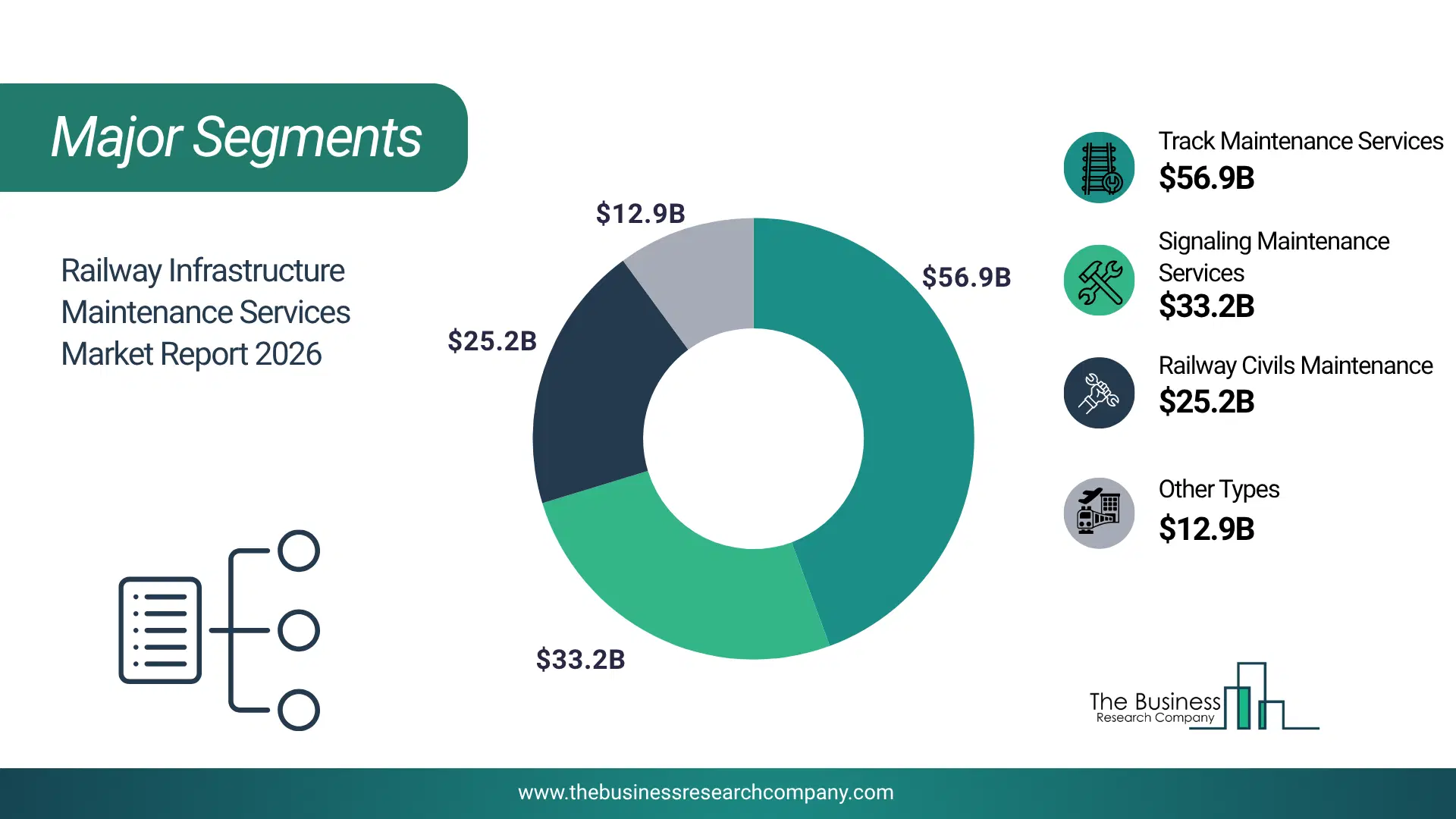
Global Railway Infrastructure Maintenance Services Market Segmentation
1) By Type: Track Maintenance Services, Signaling Maintenance Services, Railway Civils Maintenance, Other Types 2) By Deployment Type: On-Premise, Cloud 3) By Application: Renewal, Maintenance Subsegments: 1) By Track Maintenance Services: Track Inspection, Track Repair And Replacement, Ballast Cleaning And Renewal, Rail Grinding, Switch And Crossing Maintenance 2) By Signaling Maintenance Services: Signal Installation And Testing, Signal Fault Detection And Repair, Signaling System Upgrades, Signal Monitoring And Maintenance 3) By Railway Civils Maintenance: Bridge Maintenance, Tunnel Maintenance, Station And Platform Maintenance, Level Crossing Maintenance, Earthworks And Drainage 4) By Other Types: Overhead Line Maintenance, Electrical Infrastructure Maintenance, Telecommunication Systems Maintenance, Environmental Maintenance The top segments in the railway infrastructure maintenance services market will be: • On-Premise will reach $102432.31 Million by 2025. • Maintenance will reach $66194.79 Million by 2025. • Preventive Maintenance will reach $54699.55 Million by 2025. • Renewal will reach $47344.29 Million by 2025. • Passenger/Freight Railway Operators will reach $47197.31 Million by 2025.What Is The Driver Of The Railway Infrastructure Maintenance Services Market?
The expansion of rail networks is expected to propel the growth of the railway infrastructure maintenance services market going forward. Rail networks refer to the interconnected system of railway tracks, infrastructure, and related services that facilitate the operation of trains, metros, or trams. The expansion of rail networks is due to accommodating growing transportation needs, alleviating traffic congestion, and reducing environmental impact. Railway infrastructure maintenance services are essential to ensure rail networks' safe, efficient, and reliable operation by addressing wear and damage and ensuring compliance with safety standards. For instance, in January 2025, according to Eurostat, a Luxembourg-based statistical office of the European Union, in 2023 there were 8,556 km of dedicated high-speed railway lines in the EU, with Spain and France together accounting for close to three quarters of the dedicated EU high-speed network. Therefore, the expansion of rail networks is driving the growth of the railway infrastructure maintenance services industry.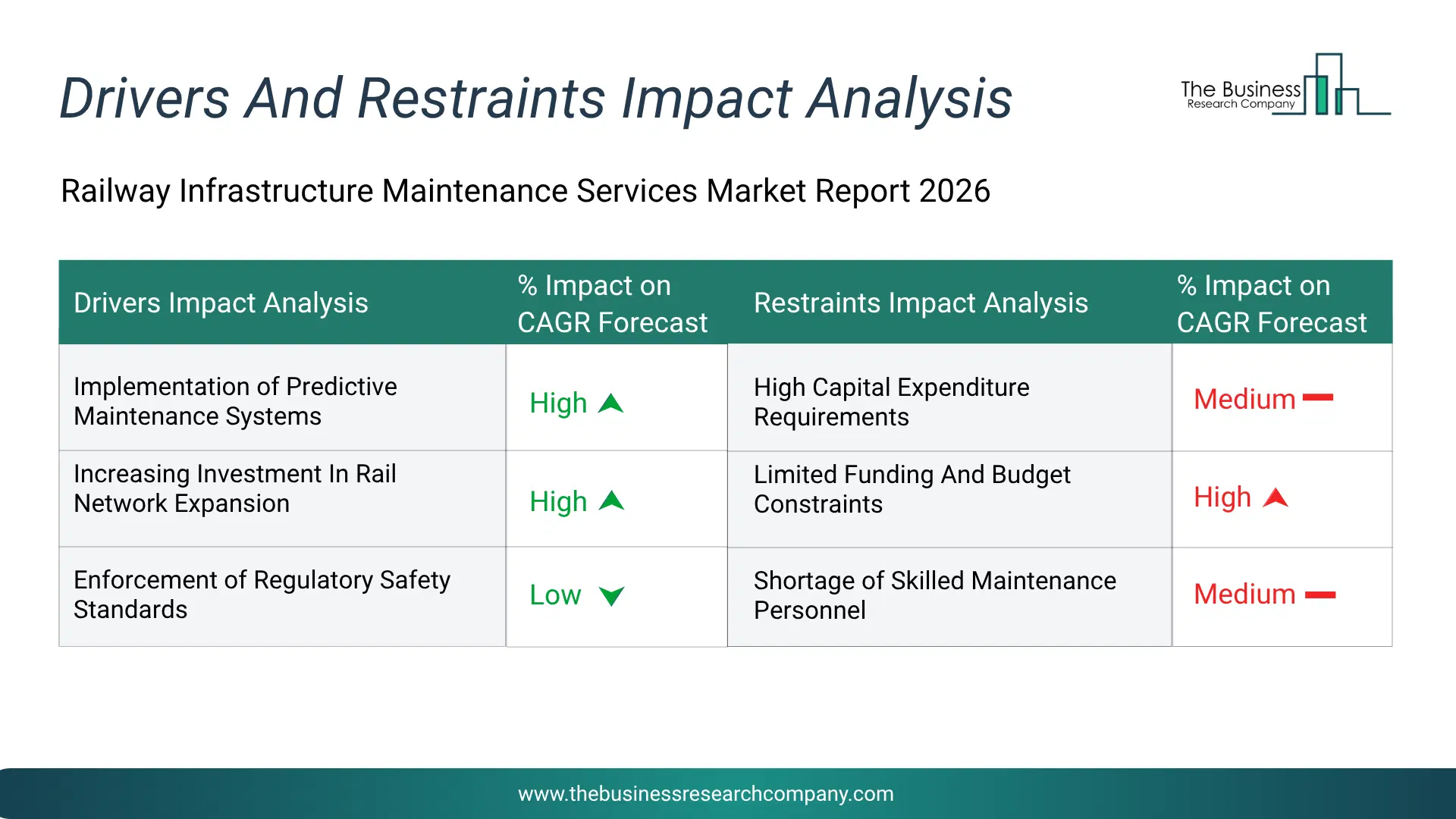
Infographic Chart Showing Key Market Drivers Analysis And Restraints For Railway Infrastructure Maintenance Services Market
The chart presents an impact analysis of key drivers and restraints, quantifying their relative influence on the market's growth rate and helping assess the balance between growth enablers and limiting factors. This chart offers a high-level perspective; the full report contains more detailed insights.
How Will The Drivers Impact Growth In The Global Railway Infrastructure Maintenance Services Market?
• Growing Freight Volumes (Medium) – The growing freight volumes will become a key driver of growth in the railway infrastructure maintenance services market by 2030. As rail becomes an increasingly preferred mode for long-distance and cross-border freight transportation, networks are experiencing heavier loads, higher train frequencies and greater use of intermodal routes. This intensifying demand places significant pressure on tracks, signaling equipment, electrification systems and supporting infrastructure, all of which require consistent and high-quality maintenance to ensure safety, reliability and operational efficiency. Moreover, freight operators are expanding capacity to meet rising demand driven by supply-chain diversification, sustainability targets and shifting trade flows across major corridors such as Europe and Asia–Europe. As these networks grow busier and more strategically important for global logistics, the need for robust and proactive maintenance services, capable of supporting continuous operations and minimizing downtime, will increase substantially, thereby driving the growth of the railway infrastructure maintenance services market. As a result, the growing freight volumes is anticipated to contributing to a 1.5% annual growth in the market. • Rising Demand for Refurbishment and Upgrading of Railway Components (Medium) – The rising demand for refurbishment and upgrading of railway components will emerge as a major factor driving the expansion of the railway infrastructure maintenance services market by 2030. There is increasing emphasis on extending the service life of existing rail assets, such as signalling systems, overhead lines, track components and rolling-stock interface elements, in order to optimize investment, meet stricter safety standards and support sustainability goals. As operators face ageing infrastructure and regulatory pressure to improve performance without large scale new construction, maintenance providers are increasingly called to deliver complex upgrade and retrofit services. Additionally, refurbishment programmes often involve detailed diagnostic assessments, component replacement, condition monitoring and integration of digital technologies, which expands the scope of maintenance engagements. Consequently, the growing market for railway-component upgrades and refurbishment is expected to significantly drive demand for specialized infrastructure maintenance services, particularly among network operators prioritizing lifecycle extension and cost-effective renewal. Consequently, the rising demand for refurbishment and upgrading of railway components capabilities is projected to contributing to a 1.0% annual growth in the market. • Growth in High-Speed Rail Systems (Low) – The growth in high-speed rail systems will serve as a key growth catalyst for the railway infrastructure maintenance services market by 2030. The rollout of next-generation corridors designed for speeds above 300 km/h demands significantly more rigorous standards of track geometry, signalling precision, electrification integrity and structural stability than conventional rail lines. As countries invest in high-speed rail to meet urban congestion challenges and sustainability goals, maintenance programmes must upgrade existing infrastructure and adopt specialized maintenance techniques, predictive analytics and advanced diagnostics. Moreover, high-speed operation puts greater stress on assets, shortening maintenance intervals and increasing the volume of specialist service work. Consequently, the expansion of high-speed rail networks is expected to drive higher spending on maintenance services and support the growth of the railway infrastructure maintenance services market. Therefore, this growth in high-speed rail systems is projected to supporting to a 0.8% annual growth in the market. • Growing Use of PPPs and Alternative Financing (Low) – The growing use of public–private partnerships and alternative financing will become a significant driver contributing to the growth of the railway infrastructure maintenance services market by 2030. As governments increasingly turn to PPP models and innovative funding mechanisms to bridge infrastructure investment gaps, private-sector participation in maintenance contracts and lifecycle service models is rising. These funding structures allow maintenance service providers to secure long-term agreements, access capital for advanced technologies and establish performance-linked maintenance programmes which enhance network reliability. Moreover, alternative financing frameworks enable the rollout of preventive maintenance and renewal works that would otherwise be delayed due to budget constraints, ensuring that infrastructure assets remain operational and safe. Consequently, the expanding role of PPPs and diversified financing arrangements is expected to drive increased demand for comprehensive and specialized railway infrastructure maintenance services, thereby supporting market growth. Consequently, the growing use of public–private partnerships and alternative financing strategies is projected to contributing to a 0.5% annual growth in the market.How Will The Restraints Impact Growth In The Global Railway Infrastructure Maintenance Services Market?
• High Initial Capital Investment (Medium) – High Initial Capital Investment will restrict the growth of the Railway Infrastructure Maintenance Services market during the forecast period. Railway maintenance requires significant capital investment in equipment, technology, and infrastructure upgrades. High upfront costs create barriers for rail operators with limited budgets. Investment requirements can lead to deferred maintenance and reduced service quality, affecting market growth. • Interoperability and Standardization Issues (Low) – Interoperability and Standardization Issues will restrict the growth of the Railway Infrastructure Maintenance Services market during the forecast period. Railway maintenance faces challenges with interoperability between different systems, technologies, and components. Compatibility issues can complicate maintenance and upgrade projects. Standardization gaps can increase costs and project timelines, affecting market growth. • Impact of Trade War and Tariffs (Low) – Impact of Trade War and Tariffs will restrict the growth of the Railway Infrastructure Maintenance Services market during the forecast period. Trade tensions and economic uncertainty can affect railway infrastructure investment and maintenance spending. Reduced government budgets during trade disputes may limit maintenance projects. Trade barriers may also impact the availability and cost of railway maintenance equipment.Key Players In The Global Railway Infrastructure Maintenance Services Market
Major companies operating in the railway infrastructure maintenance services market are China Railway Construction Corp, Siemens AG, Deutsche Bahn AG, Russian Railways, SNCF Voyageurs, Alstom Holdings, FS Group, East Japan Railway Company, Network Rail Limited, Central Japan Railway Company, Bombardier Inc., West Japan Railway Company, Stadler Rail AG, Hyundai Rotem Co, ProRail, Australian Rail Track Corporation, Balfour Beatty, Vossloh, Strukton Rail, SNC‑Lavalin Group, Wabtec Corporation, Thales Group, Colas Rail, VolkerRail, JFE Engineering, Nippon Sharyo Ltd., Kawasaki Heavy Industries, Voestalpine Railway Systems, Jacobs Engineering Group, Progress Rail Services Corporation, Tata Projects Limited.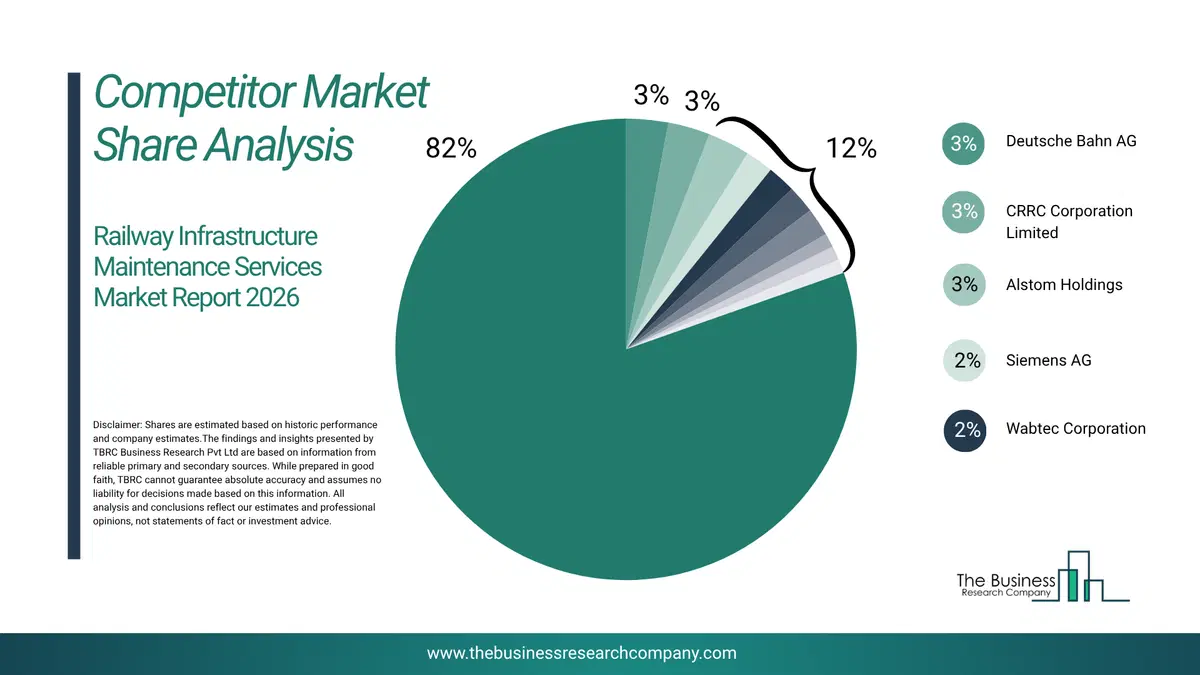
This chart is for illustrative purposes; the full report includes a detailed competitor analysis and comprehensive overview of the top 10 companies in the market.
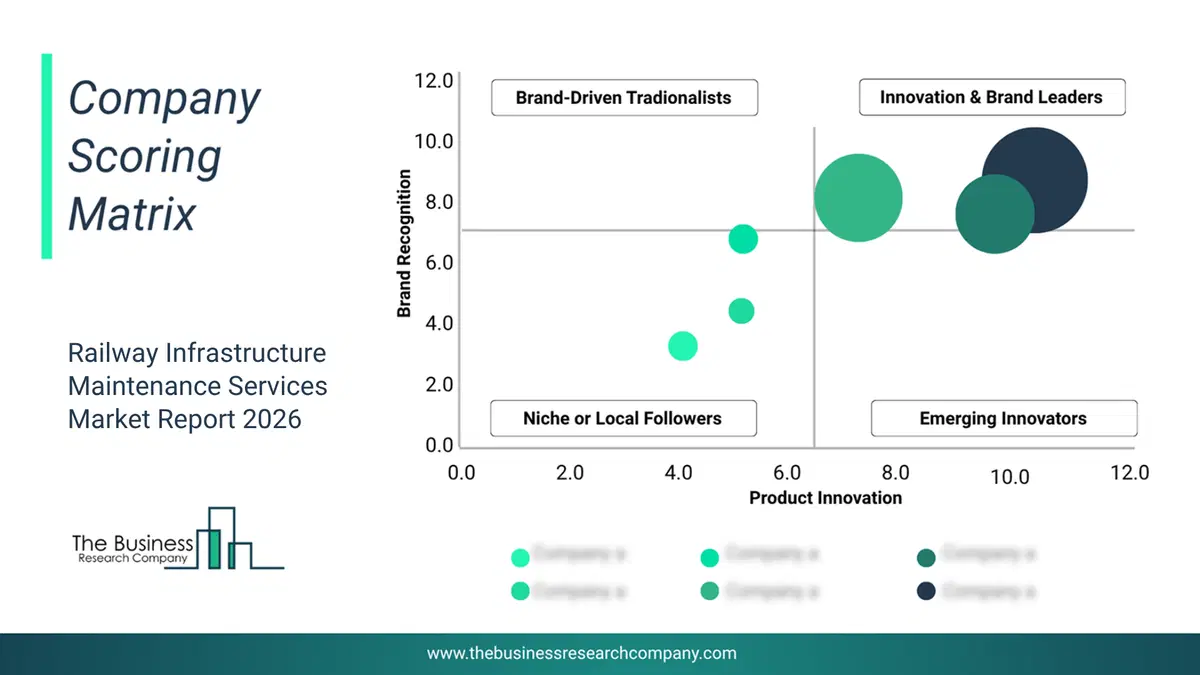
This chart maps companies by product innovation and brand strength, with bubble size indicating relative revenue, helping identify market leaders, challengers, and niche players. This is an illustrative chart; the full report provides a complete and accurate competitive analysis.
Global Railway Infrastructure Maintenance Services Market Trends and Insights
Major companies operating in the railway infrastructure maintenance services market are developing technologically advanced solutions, such as solution as a service (SolaaS), to meet the evolving needs of railway operators. Solution as a Service (SolaaS) is a cloud-based service delivery model where a provider offers an end-to-end solution to meet specific business needs, typically on a subscription basis, encompassing software, hardware, infrastructure, and ongoing support and maintenance. For instance, in March 2024, Hitachi Rail, a UK-based railway infrastructure maintenance company, launched Train Maintenance DX as a Service. It offers a unique digital transformation solution crafted to elevate the efficiency and effectiveness of train maintenance operations. This innovative service seamlessly blends hardware and software expertise. Its primary objective is to modernize train maintenance protocols by transitioning from paper-based management systems to digitized workflows and replacing traditional on-the-job technical training with quickly disseminated digital toolkits. Notably, the service integrates Hitachi Rail's digital proficiency in train manufacturing with advanced IT solutions tailored for team building and production enhancement, amplifying work efficiency, quality, teamwork, and motivation levels at maintenance depots.What Are Latest Mergers And Acquisitions In The Railway Infrastructure Maintenance Services Market?
In August 2023, Auxo Investment Partners, a US-based private equity firm, acquired Cariboo Central Railroad Contracting Ltd. for an undisclosed amount. With this acquisition, Cariboo will function as a gateway for the platform's expansion into the Canadian market and generate numerous synergies for the growing U.S.-based platform and its customers. Cariboo Central Railroad Contracting Ltd. is a Canada-based provider of railway infrastructure maintenance services.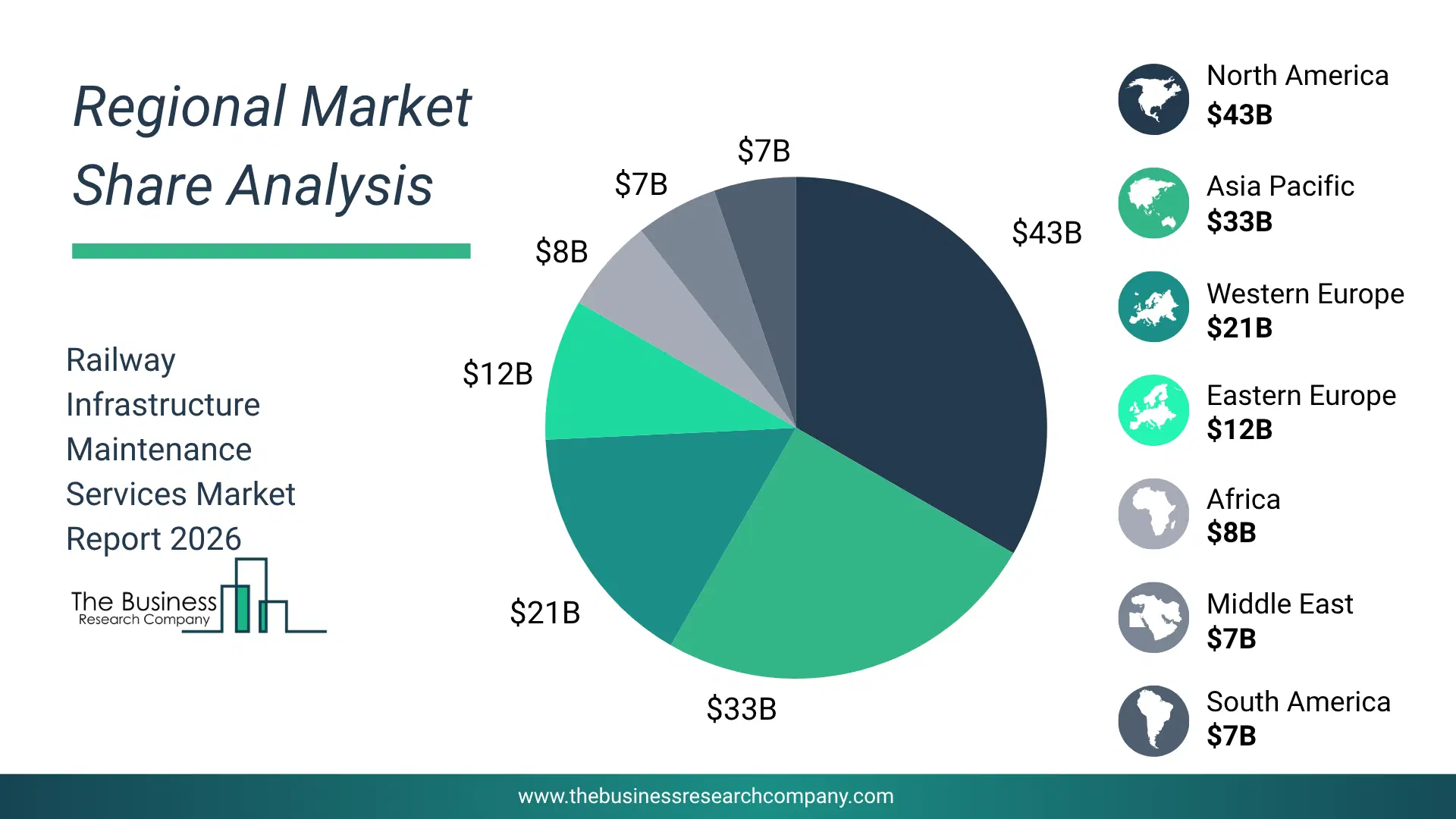
Regional Outlook
Asia-Pacific was the largest region in the railway infrastructure maintenance services market in 2025. The regions covered in this market report are Asia-Pacific, South East Asia, Western Europe, Eastern Europe, North America, South America, Middle East, Africa. The countries covered in this market report are Australia; Brazil; China; France; Germany; India; Indonesia; Japan; Taiwan; Russia; South Korea; UK; USA; Canada; Italy; Spain.What Defines the Railway Infrastructure Maintenance Services Market?
The railway infrastructure maintenance services market includes revenues earned by entities by electrical systems maintenance, communication systems maintenance, vegetation control, drainage and culvert maintenance, overhead line maintenance and predictive maintenance. The market value includes the value of related goods sold by the service provider or included within the service offering. Only goods and services traded between entities or sold to end consumers are included.How is Market Value Defined and Measured?
The market value is defined as the revenues that enterprises gain from the sale of goods and/or services within the specified market and geography through sales, grants, or donations in terms of the currency (in USD unless otherwise specified). The revenues for a specified geography are consumption values that are revenues generated by organizations in the specified geography within the market, irrespective of where they are produced. It does not include revenues from resales along the supply chain, either further along the supply chain or as part of other products.
This chart presents market attractiveness based on a quantitative evaluation of growth, competition, strategic alignment, and risk, offering a clear view of opportunity areas for decision-making. This chart is for illustrative purposes; the full report contains the complete analysis.

This chart highlights the Total Addressable Market (TAM) by estimating the maximum revenue opportunity using an assumption-driven approach, supporting strategic planning and opportunity sizing across markets. The chart is illustrative; the full report provides a more comprehensive analysis.
What Key Data and Analysis Are Included in the Railway Infrastructure Maintenance Services Market Report 2026?
The railway infrastructure maintenance services market research report is one of a series of new reports from The Business Research Company that provides market statistics, including Market Report 2026?global market size, regional shares, competitors with the market share, detailed market segments, market trends and opportunities, and any further data you may need to thrive in the railway infrastructure maintenance services Market Report 2026? The market research report delivers a complete perspective of everything you need, with an in-depth analysis of the current and future state of the Market Report 2026?Railway Infrastructure Maintenance Services Market Report Forecast Analysis
| Report Attribute | Details |
|---|---|
| Market Size Value In 2026 | $114.97 billion |
| Revenue Forecast In 2030 | $127.98 billion |
| Growth Rate | CAGR of 2.7% from 2026 to 2030 |
| Base Year For Estimation | 2025 |
| Actual Estimates/Historical Data | 2020-2025 |
| Forecast Period | 2026 - 2030 |
| Market Representation | Revenue in USD Billion and CAGR from 2026 to 2030 |
| Segments Covered | Type, Deployment Type, Application |
| Regional Scope | Asia-Pacific, Western Europe, Eastern Europe, North America, South America, Middle East, Africa |
| Country Scope | The countries covered in the report are Australia, Brazil, China, France, Germany, India, Indonesia, Japan, Taiwan, Russia, South Korea, UK, USA, Canada, Italy, Spain. |
| Key Companies Profiled | China Railway Construction Corp, Siemens AG, Deutsche Bahn AG, Russian Railways, SNCF Voyageurs, Alstom Holdings, FS Group, East Japan Railway Company, Network Rail Limited, Central Japan Railway Company, Bombardier Inc., West Japan Railway Company, Stadler Rail AG, Hyundai Rotem Co, ProRail, Australian Rail Track Corporation, Balfour Beatty, Vossloh, Strukton Rail, SNC‑Lavalin Group, Wabtec Corporation, Thales Group, Colas Rail, VolkerRail, JFE Engineering, Nippon Sharyo Ltd., Kawasaki Heavy Industries, Voestalpine Railway Systems, Jacobs Engineering Group, Progress Rail Services Corporation, Tata Projects Limited. |
| Customization Scope | Request for Customization |
| Pricing And Purchase Options | Explore Purchase Options |