
Rare Cell Isolation Market Report 2026
Global Outlook – By Product (Reagents And Kits, Instruments), By Technology (Magnetic Bead Separation, Fluorescence-Activated Cell Sorting), By Cell Type (Circulating Tumor Cells, Stem Cells, Fetal Cells) – Market Size, Trends, Strategies, and Forecast to 2030
Rare Cell Isolation Market Overview
• Rare Cell Isolation market size has reached to $2.51 billion in 2025 • Expected to grow to $4.57 billion in 2030 at a compound annual growth rate (CAGR) of 12.7% • Growth Driver: Rise In Personalized Medicine Fueling The Growth Of The Market Due To Advancements In Genomic Technologies • Market Trend: Advancing Rare Cell Detection Bio-Rad Introduces Validated Antibody Slides For Precise Enumeration • North America was the largest region in 2025 and Asia-Pacific is the fastest growing region.What Is Covered Under Rare Cell Isolation Market?
Rare cell isolation refers to the process of separating and enriching specific low-abundance cell populations, such as circulating tumor cells (CTCs) or fetal cells, from a heterogeneous mixture of cells within a sample. This process uses physical, biological, or microfluidic methods to enable the detection, analysis, and characterization of these rare cells for applications in diagnostics, personalized medicine, and research. The main products of rare cell isolation are reagents and kits, and instruments. Reagents and kits refer to the chemical and biological components used during the rare cell isolation process. These use various technologies, including magnetic bead separation, fluorescence-activated cell sorting, and microfluidics-based techniques, and cater to several cell types, including circulating tumor cells, stem cells, and fetal cells.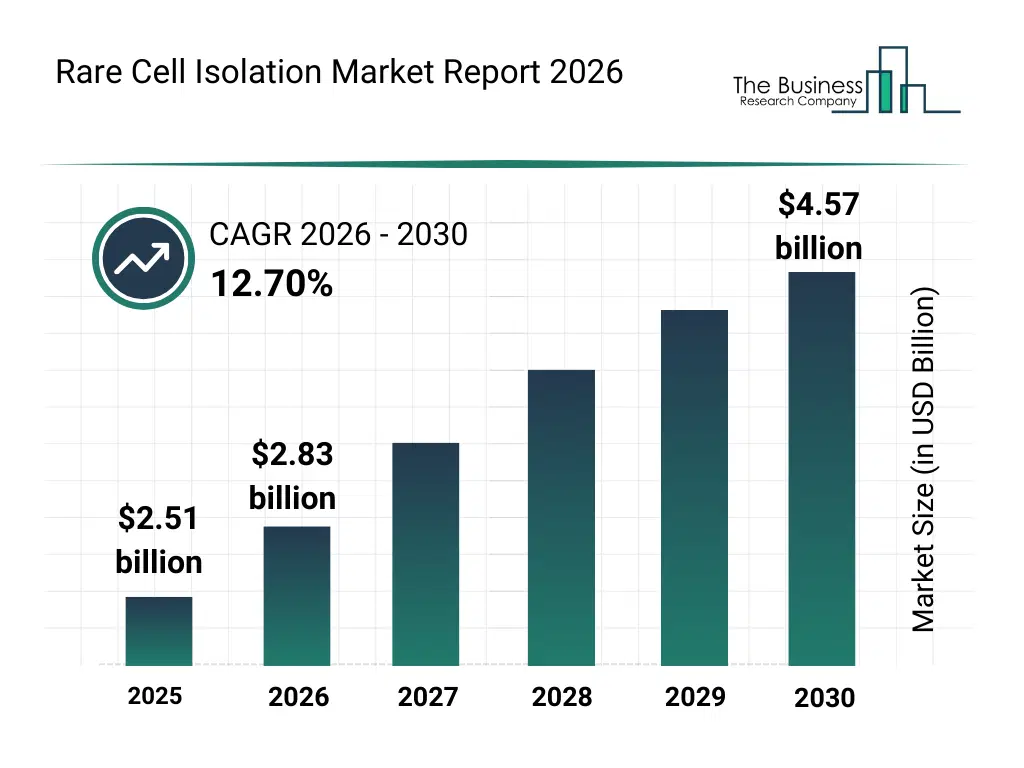
What Is The Rare Cell Isolation Market Size and Share 2026?
The rare cell isolation market size has grown rapidly in recent years. It will grow from $2.51 billion in 2025 to $2.83 billion in 2026 at a compound annual growth rate (CAGR) of 12.7%. The growth in the historic period can be attributed to rising demand for cancer diagnostics, increasing research in stem cell therapies, advancements in fluorescence-activated cell sorting, growth in prenatal testing, adoption of magnetic bead separation.What Is The Rare Cell Isolation Market Growth Forecast?
The rare cell isolation market size is expected to see rapid growth in the next few years. It will grow to $4.57 billion in 2030 at a compound annual growth rate (CAGR) of 12.7%. The growth in the forecast period can be attributed to integration of ai in cell isolation, development of automated cell sorting instruments, expansion of precision medicine applications, increasing funding in genomics research, rise in demand for liquid biopsy solutions. Major trends in the forecast period include microfluidics integration, high-throughput cell analysis, personalized diagnostics applications, automated rare cell detection, single-cell genomics.
Global Rare Cell Isolation Market Segmentation
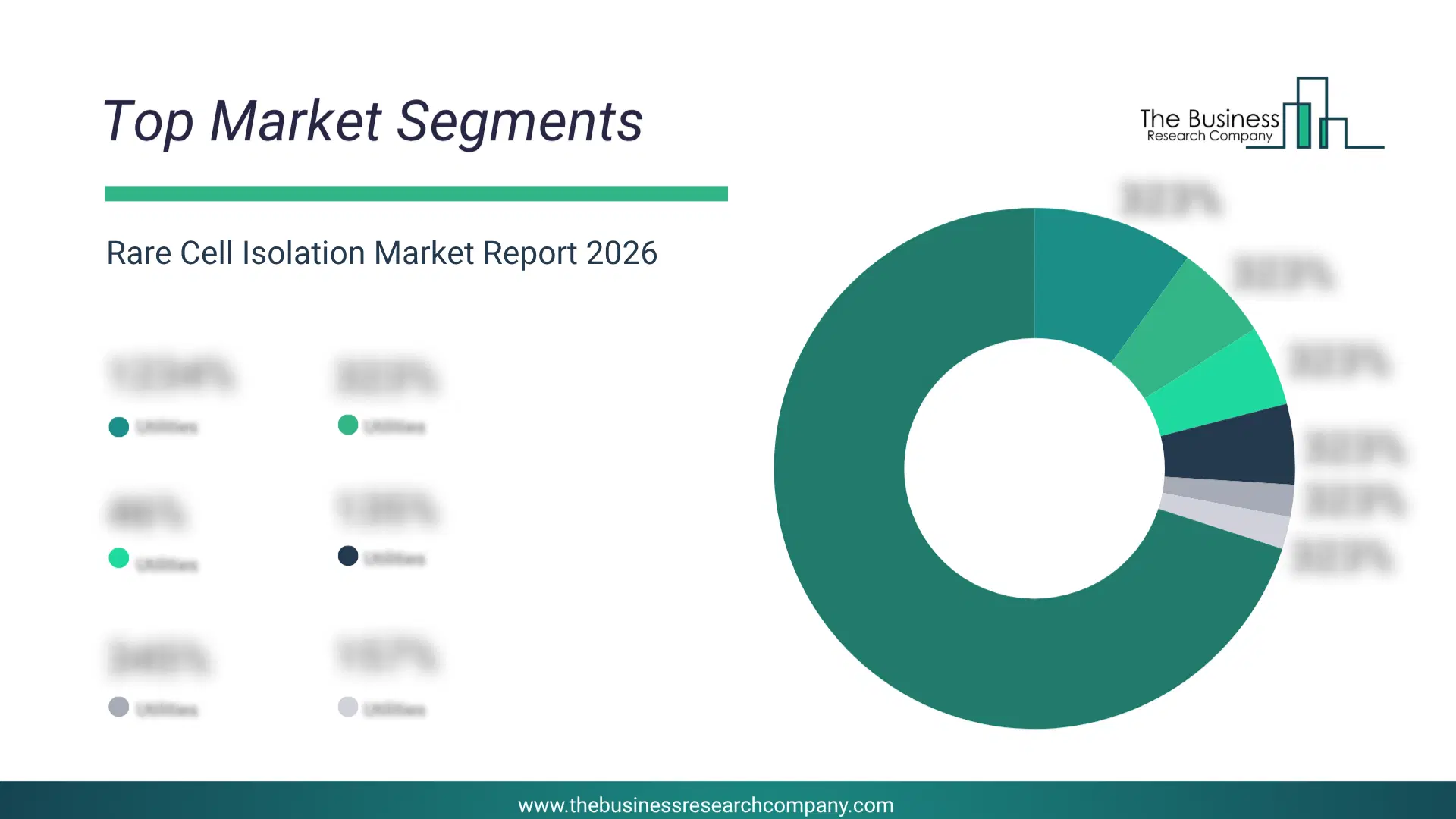
1) By Product: Reagents And Kits, Instruments 2) By Technology: Magnetic Bead Separation, Fluorescence-Activated Cell Sorting 3) By Cell Type: Circulating Tumor Cells, Stem Cells, Fetal Cells Subsegments: 1) By Reagents And Kits: Antibodies And Magnetic Beads, Microfluidic Reagents, Density Gradient Media, Cell Separation Buffers, Staining And Labeling Reagents, Nucleic Acid Isolation Kits, Consumables 2) By Instruments: Magnetic-Activated Cell Sorting (MACS) Systems, Fluorescence-Activated Cell Sorting (FACS) Instruments, Microfluidic-Based Cell Isolation Devices, High-Throughput Cell Sorters, Automated Cell Analyzers, Centrifuges For Cell Isolation, Dielectrophoresis-Based InstrumentsWhat Is The Driver Of The Rare Cell Isolation Market?
The growing demand for personalized medicine is expected to drive the growth of the rare cell isolation market in the future. Personalized medicine refers to a medical approach that tailors treatment and care to an individual’s unique genetic makeup, lifestyle, and environment. The growing prevalence of personalized medicine is due to advancements in genomic technologies, which have made genetic testing faster and more affordable, allowing healthcare providers to identify specific genetic mutations. Rare cell isolation supports personalized medicine by enabling precise analysis of individual patients’ circulating tumor cells, fetal cells, or immune cells, allowing clinicians to tailor treatment strategies based on the unique molecular and genetic profiles of these cells. For instance, in February 2024, according to the Personalized Medicine Coalition, a US-based professional membership organization, the Food and Drug Administration (FDA) approved 16 new personalized medicines in 2023, indicating an increase from 6 in 2022. Therefore, the growing demand for personalized medicine is driving the growth of the rare cell isolation industry.Key Players In The Global Rare Cell Isolation Market
Major companies operating in the rare cell isolation market are Thermo Fisher Scientific Inc, Danaher Corporation, Merck KGaA, GE Healthcare Technologies Inc, Corning Incorporated, Lonza Group AG, Terumo BCT Inc, Bio Rad Laboratories Inc, QIAGEN N V, PerkinElmer Inc, Bio Techne Corporation, STEMCELL Technologies Inc, Miltenyi Biotec B V Co KG, Izon Science Limited, RareCyte Inc, Akadeum Life Sciences Inc, NanoCellect Biomedical Inc, CELLENION SASU, Applied Cells Inc, Menarini Silicon Biosystems, Fluxion Biosciences Inc, Cynvenio Biosystems Inc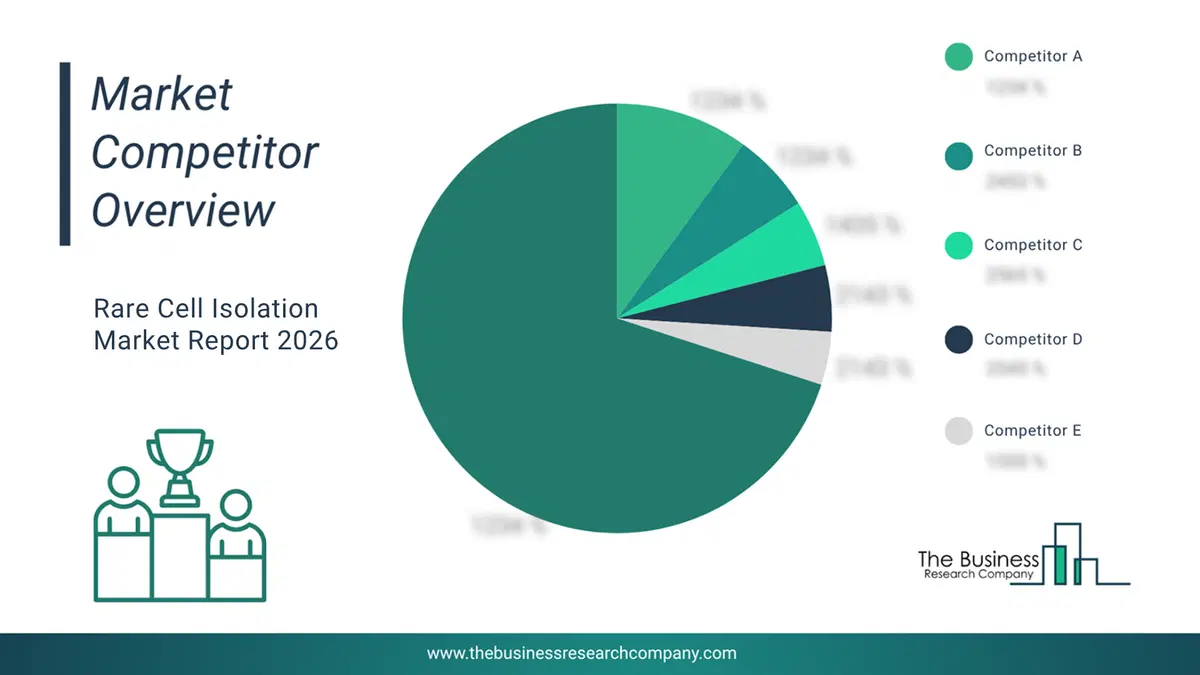
This chart is for illustrative purposes; the full report includes a detailed competitor analysis and comprehensive overview of the top 10 companies in the market.
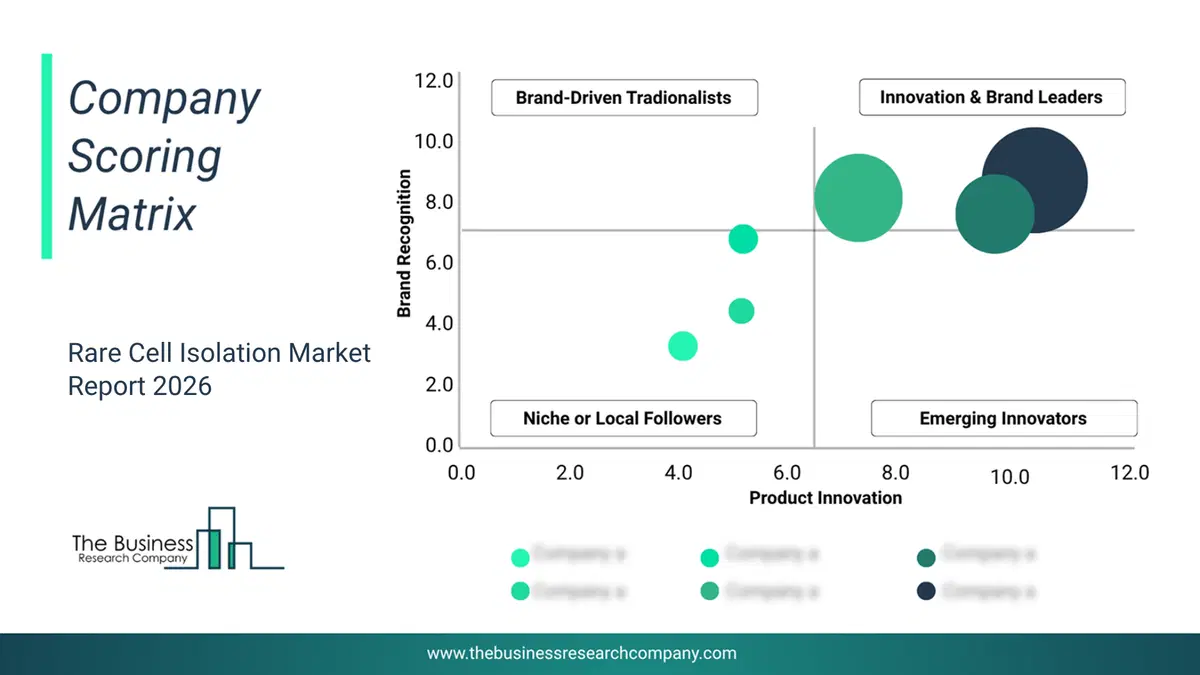
This chart maps companies by product innovation and brand strength, with bubble size indicating relative revenue, helping identify market leaders, challengers, and niche players. This is an illustrative chart; the full report provides a complete and accurate competitive analysis.
Global Rare Cell Isolation Market Trends and Insights
Major companies operating in the rare cell isolation market are focusing on technological advancements such as rare cell and circulating tumor cell enumeration to enhance the precision, efficiency, and scalability of rare cell detection in cancer diagnostics and personalized medicine applications. Rare cell and circulating tumor cell enumeration refers to the process of detecting and counting rare cells, including cancer cells, in blood or other samples to help in disease monitoring and research. For instance, in March 2024, Bio-Rad Laboratories, a US-based life sciences company, launched Celselect Slides Validated Antibodies, an innovative solution for rare cell and circulating tumor cell enumeration. This offers unique features such as pre-validated antibody panels optimized for use with Celselect Slides, ensuring consistent staining quality and compatibility with the Celselect platform for rare cell capture. It offers high-content imaging, standardized enumeration, and flexible panel design, supporting applications in cancer research and liquid biopsy workflows. This innovation streamlines rare cell analysis by reducing assay development time while improving reliability in downstream single-cell analysis workflows.What Are Latest Mergers And Acquisitions In The Rare Cell Isolation Market?
In August 2023, Cell Microsystems Inc., a US-based healthcare technology company, acquired Fluxion Biosciences Inc., for an undisclosed amount. With this acquisition, Cell Microsystems Inc., aimed to broaden its cell-analysis product and services portfolio by combining Fluxion’s automated patch clamp and live-cell assay platforms with Cell Microsystems’ CellRaft single-cell workflows to expand applications, capabilities, and customer reach. Fluxion Biosciences Inc. is a US-based technology company that specializes in providing automated patch clamp (IonFlux), microfluidic live-cell assay (BioFlux) and rare/rare-cell enrichment (IsoFlux) systems for functional cellular analysis and translational research.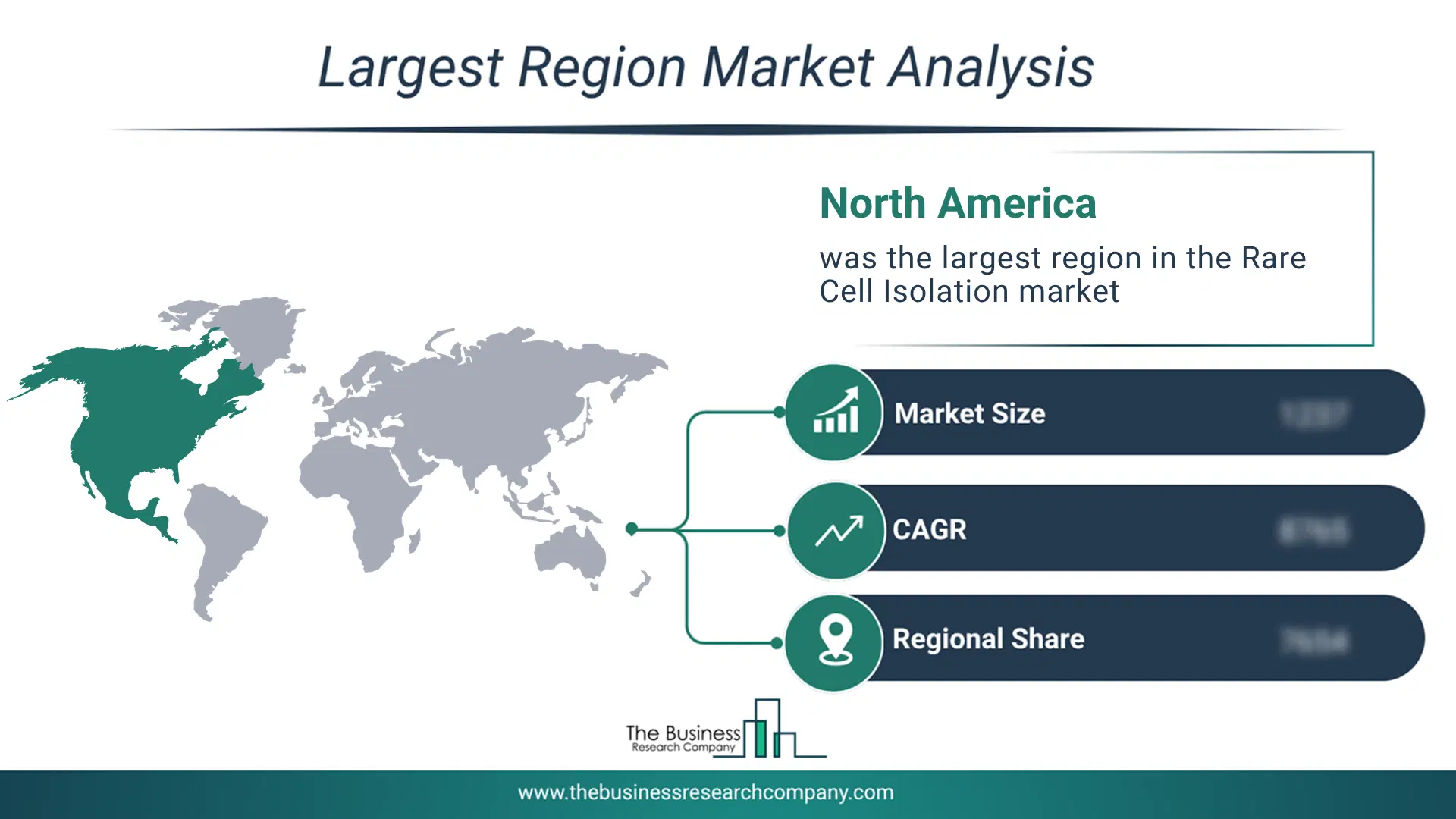
Regional Outlook
North America was the largest region in the rare cell isolation market in 2025. Asia-Pacific is expected to be the fastest-growing region in the forecast period. The regions covered in this market report are Asia-Pacific, South East Asia, Western Europe, Eastern Europe, North America, South America, Middle East, Africa. The countries covered in this market report are Australia, Brazil, China, France, Germany, India, Indonesia, Japan, Taiwan, Russia, South Korea, UK, USA, Canada, Italy, SpainWhat Defines the Rare Cell Isolation Market?
The rare cell isolation market consists of sales of microfluidic devices, immunomagnetic separation kits, dielectrophoretic systems, cell separation reagents and automated rare cell isolation platforms. Values in this market are ‘factory gate’ values, that is, the value of goods sold by the manufacturers or creators of the goods, whether to other entities (including downstream manufacturers, wholesalers, distributors, and retailers) or directly to end customers. The value of goods in this market includes related services sold by the creators of the goods.How is Market Value Defined and Measured?
The market value is defined as the revenues that enterprises gain from the sale of goods and/or services within the specified market and geography through sales, grants, or donations in terms of the currency (in USD unless otherwise specified). The revenues for a specified geography are consumption values that are revenues generated by organizations in the specified geography within the market, irrespective of where they are produced. It does not include revenues from resales along the supply chain, either further along the supply chain or as part of other products.
This chart presents market attractiveness based on a quantitative evaluation of growth, competition, strategic alignment, and risk, offering a clear view of opportunity areas for decision-making. This chart is for illustrative purposes; the full report contains the complete analysis.

This chart highlights the Total Addressable Market (TAM) by estimating the maximum revenue opportunity using an assumption-driven approach, supporting strategic planning and opportunity sizing across markets. The chart is illustrative; the full report provides a more comprehensive analysis.
What Key Data and Analysis Are Included in the Rare Cell Isolation Market Report 2026?
The rare cell isolation market research report is one of a series of new reports from The Business Research Company that provides market statistics, including industry global market size, regional shares, competitors with the market share, detailed market segments, market trends and opportunities, and any further data you may need to thrive in the rare cell isolation industry. The market research report delivers a complete perspective of everything you need, with an in-depth analysis of the current and future state of the industry.Rare Cell Isolation Market Report Forecast Analysis
| Report Attribute | Details |
|---|---|
| Market Size Value In 2026 | $2.83 billion |
| Revenue Forecast In 2030 | $4.57 billion |
| Growth Rate | CAGR of 12.7% from 2026 to 2030 |
| Base Year For Estimation | 2025 |
| Actual Estimates/Historical Data | 2020-2025 |
| Forecast Period | 2026 - 2030 |
| Market Representation | Revenue in USD Billion and CAGR from 2026 to 2030 |
| Segments Covered | Product, Technology, Cell Type |
| Regional Scope | Asia-Pacific, Western Europe, Eastern Europe, North America, South America, Middle East, Africa |
| Country Scope | The countries covered in the report are Australia, Brazil, China, France, Germany, India, Indonesia, Japan, Taiwan, Russia, South Korea, UK, USA, Canada, Italy, Spain. |
| Key Companies Profiled | Thermo Fisher Scientific Inc, Danaher Corporation, Merck KGaA, GE Healthcare Technologies Inc, Corning Incorporated, Lonza Group AG, Terumo BCT Inc, Bio Rad Laboratories Inc, QIAGEN N V, PerkinElmer Inc, Bio Techne Corporation, STEMCELL Technologies Inc, Miltenyi Biotec B V Co KG, Izon Science Limited, RareCyte Inc, Akadeum Life Sciences Inc, NanoCellect Biomedical Inc, CELLENION SASU, Applied Cells Inc, Menarini Silicon Biosystems, Fluxion Biosciences Inc, Cynvenio Biosystems Inc |
| Customization Scope | Request for Customization |
| Pricing And Purchase Options | Explore Purchase Options |