
Rare Diseases Treatment Market Report 2026
Global Outlook – By Drug Type (Originator Drugs (Patented Molecules), Generic Drugs), By Drug Class (Biologics, Organic Compounds), By Mode Of Administration (Injectable, Oral, Other Modes Of Administration), By Therapeutic Area (Cancer, Neurological Conditions, Cardiovascular Conditions, Musculoskeletal Conditions, Hematologic Disorders, Infectious Diseases, Metabolic Disorders, Endocrine Disorders, Other Therapeutic Areas), By Distribution Channel (Hospital Pharmacies, Specialty Pharmacies, Retail Pharmacies) – Market Size, Trends, Strategies, and Forecast to 2030
Rare Diseases Treatment Market Overview
• Rare Diseases Treatment market size has reached to $213.27 billion in 2025 • Expected to grow to $386.69 billion in 2030 at a compound annual growth rate (CAGR) of 12.6% • Growth Driver: Rising Prevalence Of Rare Diseases Fuels Growth Of Rare Disease Treatment Market • Market Trend: Companies Embrace Rare Disease Initiatives To Gain Competitive Edge • North America was the largest region in 2025.What Is Covered Under Rare Diseases Treatment Market?
Rare disease treatment encompasses medical interventions aimed at addressing conditions that affect a small percentage of the population. Its primary purpose is to improve patients' quality of life and health outcomes by alleviating symptoms, slowing disease progression, or providing a cure. This approach focuses on personalized therapies tailored to the unique needs of individuals with rare diseases. The main types of drugs for rare disease treatment are originator drugs (patented molecules) and generic drugs classified as biologics and organic compounds. The originator drugs (patented molecules) are used to treat rare diseases that do not have any previous treatment. Originator drugs (patented molecules) are the first versions of a drug, patented by the founding company and are pretty expensive. The rare diseases treatments are administered through injectable, oral, and other mode of administration. The rare diseases treatments are used in cancer, neurological conditions, cardiovascular conditions, musculoskeletal conditions, hematologic disorders, infectious diseases, metabolic disorders, endocrine disorders, and other therapeutic areas. The distribution channels are hospital pharmacies, specialty pharmacies, and retail pharmacies.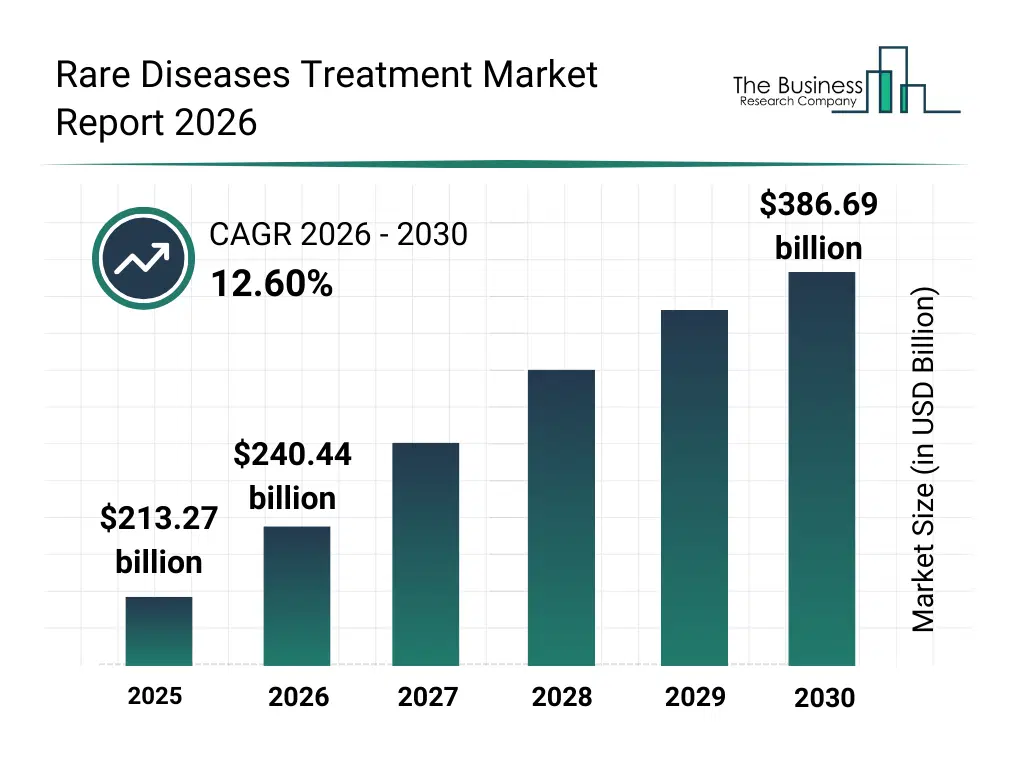
What Is The Rare Diseases Treatment Market Size and Share 2026?
The rare diseases treatment market size has grown rapidly in recent years. It will grow from $213.27 billion in 2025 to $240.44 billion in 2026 at a compound annual growth rate (CAGR) of 12.7%. The growth in the historic period can be attributed to increasing awareness of rare diseases, advancements in biologics and gene therapies, growing prevalence of rare diseases, government incentives for orphan drugs, development of specialized healthcare infrastructure.What Is The Rare Diseases Treatment Market Growth Forecast?
The rare diseases treatment market size is expected to see rapid growth in the next few years. It will grow to $386.69 billion in 2030 at a compound annual growth rate (CAGR) of 12.6%. The growth in the forecast period can be attributed to rise in personalized medicine adoption, growth in orphan drug pipeline, technological innovations in drug delivery, increasing collaborations between pharma and biotech, expansion of global rare disease patient registries. Major trends in the forecast period include personalized treatment approaches, expansion of orphan drug development, advanced drug delivery systems, regulatory harmonization for rare diseases, patient-centric care models.
Global Rare Diseases Treatment Market Segmentation
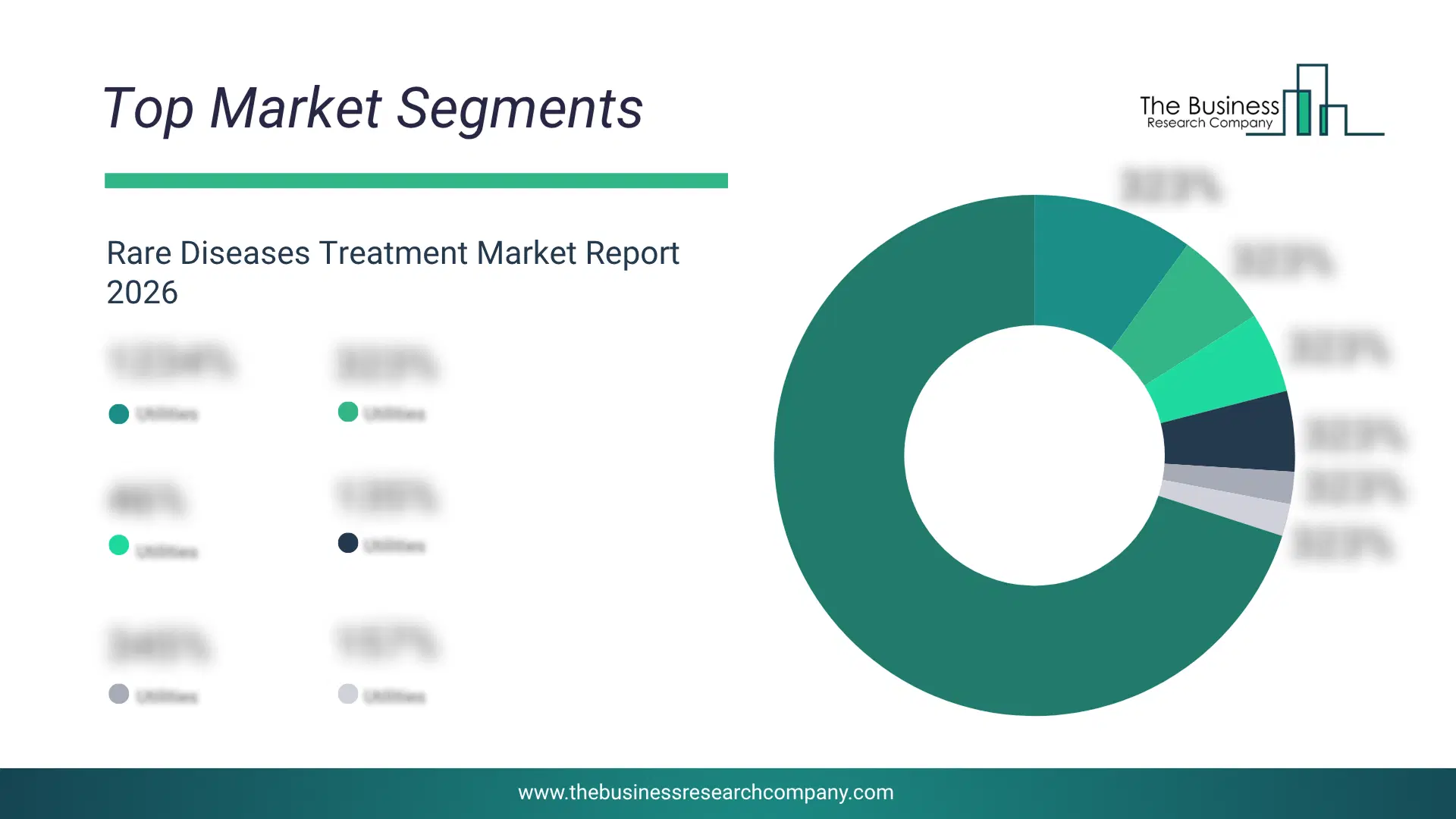
1) By Drug Type: Originator Drugs (Patented Molecules), Generic Drugs 2) By Drug Class: Biologics, Organic Compounds 3) By Mode Of Administration: Injectable, Oral, Other Modes Of Administration 4) By Therapeutic Area: Cancer, Neurological Conditions, Cardiovascular Conditions, Musculoskeletal Conditions, Hematologic Disorders, Infectious Diseases, Metabolic Disorders, Endocrine Disorders, Other Therapeutic Areas 5) By Distribution Channel: Hospital Pharmacies, Specialty Pharmacies, Retail Pharmacies Subsegments: 1) By Originator Drugs: Monoclonal Antibodies, Enzyme Replacement Therapies, Gene Therapies, Small Molecule Drugs 2) By Generic Drugs: Generic Monoclonal Antibodies, Generic Enzyme Replacement Therapies, Generic Small Molecule Drugs, BiosimilarsWhat Is The Driver Of The Rare Diseases Treatment Market?
The increasing burden of rare diseases is driving the rare disease treatment market. Rare diseases are diseases that affect a very small population as compared to general diseases. The increasing incidences and fatalities due to rare diseases are creating a demand for effective rare disease treatment. Rare disease treatments play a crucial role in addressing conditions that often lack standard therapeutic options by improving patient outcomes and reducing disease burden, thereby enhancing quality of life for affected individuals. For instance, in August 2024, according to the International Federation of Medical Students’ Associations (IFMSA), a Denmark-based federation of medical student associations, reported that approximately 300 million people globally (according to the study, estimates range between 263 and 446 million) live with a rare disease, representing between 3.5% and 5.9% of the world's population. (6–9). Therefore, the increasing prevalence of rare diseases propels the rare disease treatment market forward.Key Players In The Global Rare Diseases Treatment Market
Major companies operating in the rare diseases treatment market are AbbVie Inc., Actelion Pharmaceuticals Ltd, Alexion Pharmaceuticals Inc., Celgene Corporation, Johnson & Johnson, Novartis AG, Pfizer Inc, Sanofi S.A., Merck & Co. Inc., Vertex Pharmaceuticals, Takeda Pharmaceutical Company, Abeona Therapeutics Inc., Akcea Therapeutics Inc., Alnylam Pharmaceuticals Inc., Amicus Therapeutics Inc., BioMarin Pharmaceutical Inc., bluebird bio Inc., Catalyst Pharmaceuticals Inc., Cerecor Inc., CSL Behring Ltd., Dicerna Pharmaceuticals Inc., Genzyme Corporation, Horizon Therapeutics plc, Intercept Pharmaceuticals Inc., Ionis Pharmaceuticals Inc.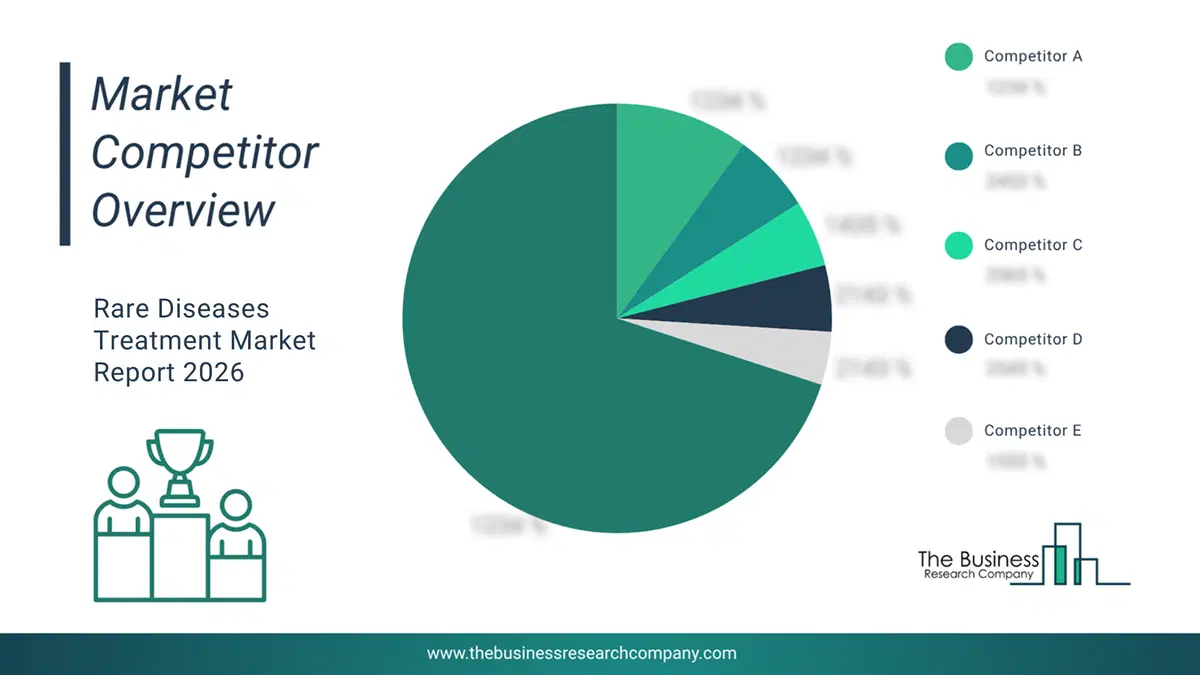
This chart is for illustrative purposes; the full report includes a detailed competitor analysis and comprehensive overview of the top 10 companies in the market.
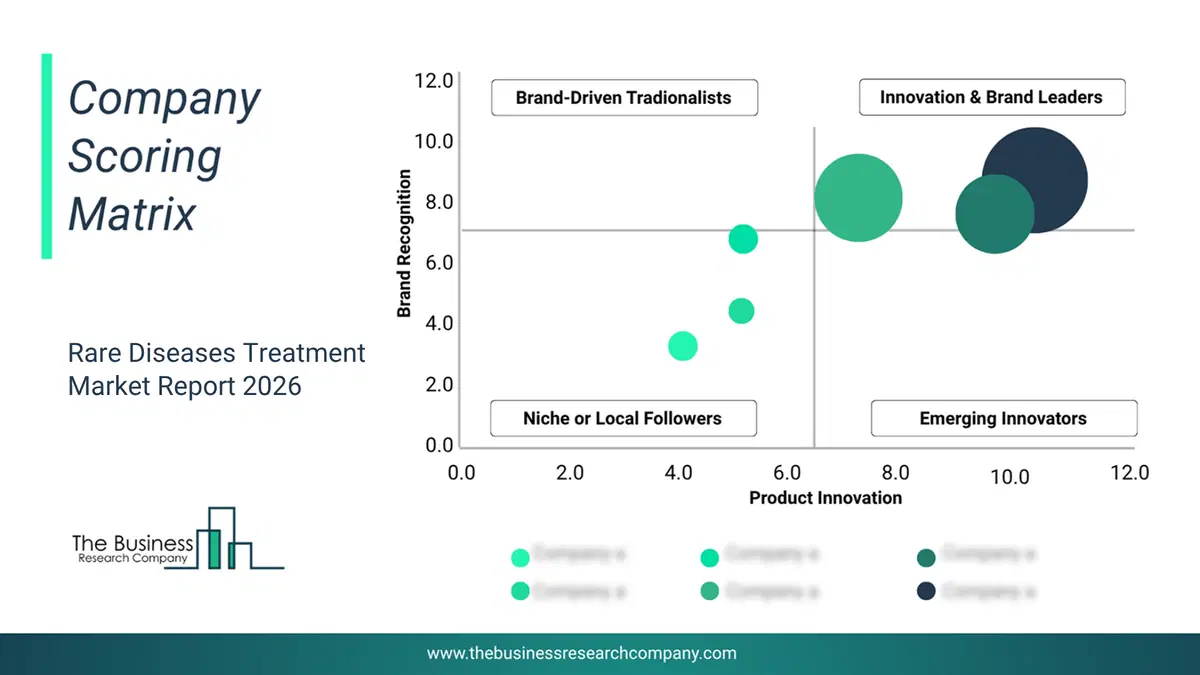
This chart maps companies by product innovation and brand strength, with bubble size indicating relative revenue, helping identify market leaders, challengers, and niche players. This is an illustrative chart; the full report provides a complete and accurate competitive analysis.
Global Rare Diseases Treatment Market Trends and Insights
Major companies operating in the rare disease treatment market are increasing their focus on introducing rare disease initiatives to gain a competitive edge in the market. Rare disease initiatives refer to coordinated efforts, programs, or activities undertaken by various stakeholders, including governments, research institutions, and pharmaceutical companies, to address the unique challenges associated with rare diseases. For instance, in October 2023, the Oxford-Harrington Rare Disease Centre, a UK-based research institution, launched the Therapeutics Accelerator, dedicated to advancing innovative treatments for rare diseases. This unique transatlantic initiative aims to identify, fund, and propel breakthrough academic discoveries to introduce 40 potentially life-changing therapies into clinical trials over the next decade. Operating on a non-profit/for-profit model, the Accelerator plans to allocate funding of up to £200 million to support new projects, targeting regulatory approvals in key markets such as the United States, the United Kingdom, and Europe.What Are Latest Mergers And Acquisitions In The Rare Diseases Treatment Market?
In October 2023, Amgen Inc., a US-based biotechnology company, acquired Horizon Therapeutics for an amount $27.8 billion. This acquisition aims to integrate Horizon's approved treatments, like Tepezza and Krystexxa, into Amgen's portfolio, enhancing its capabilities to address serious health conditions. Horizon Therapeutics is an Ireland-based biotechnology company that develops medicines to treat rare autoimmune and severe inflammatory diseases.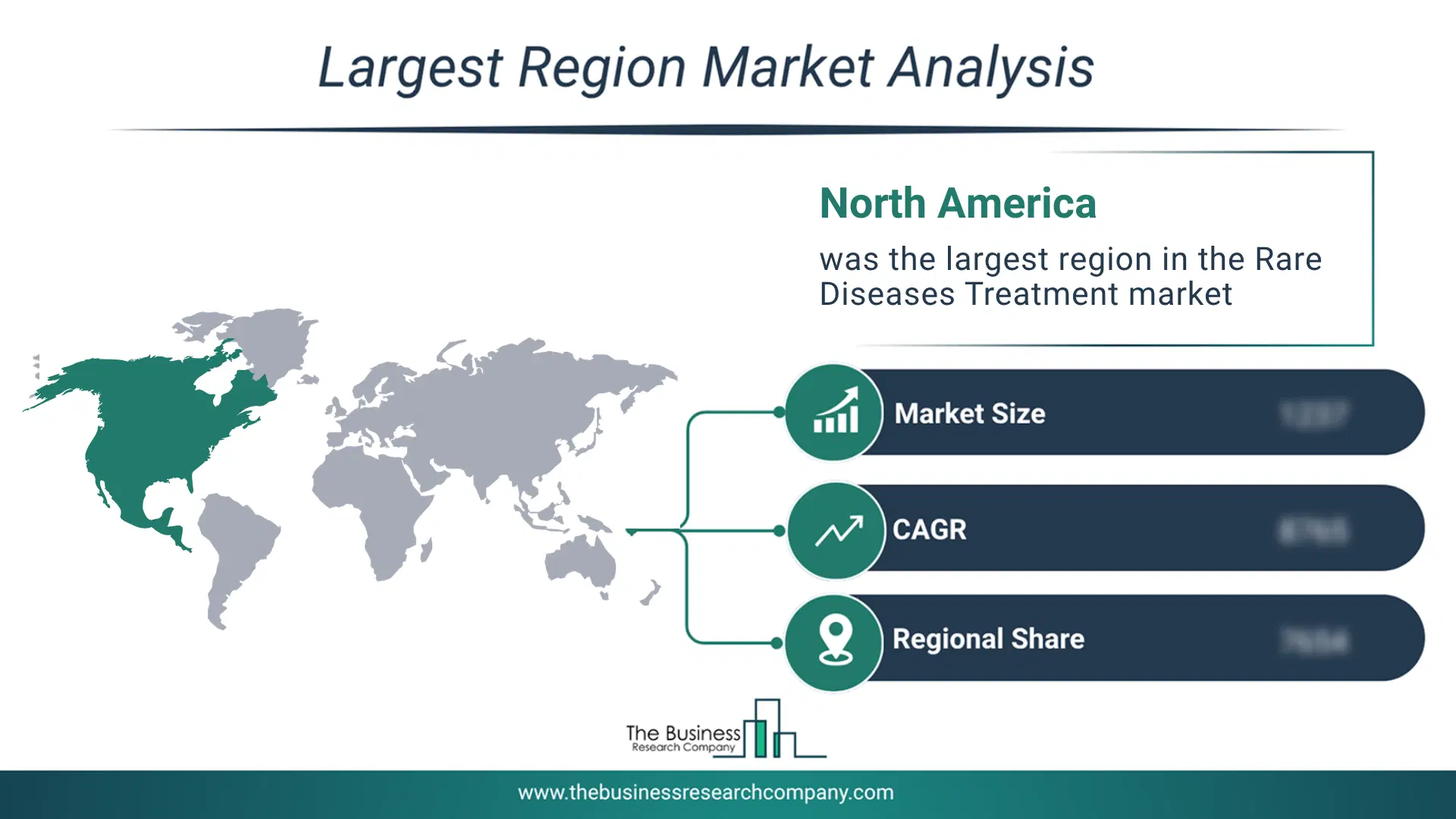
Regional Insights
North America was the largest region in the rare disease treatment market in 2025. The regions covered in this market report are Asia-Pacific, South East Asia, Western Europe, Eastern Europe, North America, South America, Middle East, Africa. The countries covered in this market report are Australia, Brazil, China, France, Germany, India, Indonesia, Japan, Taiwan, Russia, South Korea, UK, USA, Canada, Italy, Spain.What Defines the Rare Diseases Treatment Market?
The rare disease treatment market includes revenues earned by entities by hematology, genetic diseases, neurological diseases and oncology. The market value includes the value of related goods sold by the service provider or included within the service offering. Only goods and services traded between entities or sold to end consumers are included.How is Market Value Defined and Measured?
The market value is defined as the revenues that enterprises gain from the sale of goods and/or services within the specified market and geography through sales, grants, or donations in terms of the currency (in USD unless otherwise specified). The revenues for a specified geography are consumption values that are revenues generated by organizations in the specified geography within the market, irrespective of where they are produced. It does not include revenues from resales along the supply chain, either further along the supply chain or as part of other products.
This chart presents market attractiveness based on a quantitative evaluation of growth, competition, strategic alignment, and risk, offering a clear view of opportunity areas for decision-making. This chart is for illustrative purposes; the full report contains the complete analysis.

This chart highlights the Total Addressable Market (TAM) by estimating the maximum revenue opportunity using an assumption-driven approach, supporting strategic planning and opportunity sizing across markets. The chart is illustrative; the full report provides a more comprehensive analysis.
What Key Data and Analysis Are Included in the Rare Diseases Treatment Market Report 2026?
The rare diseases treatment market research report is one of a series of new reports from The Business Research Company that provides market statistics, including industry global market size, regional shares, competitors with the market share, detailed market segments, market trends and opportunities, and any further data you may need to thrive in the rare diseases treatment industry. The market research report delivers a complete perspective of everything you need, with an in-depth analysis of the current and future state of the industry.Rare Diseases Treatment Market Report Forecast Analysis
| Report Attribute | Details |
|---|---|
| Market Size Value In 2026 | $240.44 billion |
| Revenue Forecast In 2030 | $386.69 billion |
| Growth Rate | CAGR of 12.7% from 2026 to 2030 |
| Base Year For Estimation | 2025 |
| Actual Estimates/Historical Data | 2020-2025 |
| Forecast Period | 2026 - 2030 |
| Market Representation | Revenue in USD Billion and CAGR from 2026 to 2030 |
| Segments Covered | Drug Type, Drug Class, Mode Of Administration, Therapeutic Area, Distribution Channel |
| Regional Scope | Asia-Pacific, Western Europe, Eastern Europe, North America, South America, Middle East, Africa |
| Country Scope | The countries covered in the report are Australia, Brazil, China, France, Germany, India, Indonesia, Japan, Taiwan, Russia, South Korea, UK, USA, Canada, Italy, Spain. |
| Key Companies Profiled | AbbVie Inc., Actelion Pharmaceuticals Ltd, Alexion Pharmaceuticals Inc., Celgene Corporation, Johnson & Johnson, Novartis AG, Pfizer Inc, Sanofi S.A., Merck & Co. Inc., Vertex Pharmaceuticals, Takeda Pharmaceutical Company, Abeona Therapeutics Inc., Akcea Therapeutics Inc., Alnylam Pharmaceuticals Inc., Amicus Therapeutics Inc., BioMarin Pharmaceutical Inc., bluebird bio Inc., Catalyst Pharmaceuticals Inc., Cerecor Inc., CSL Behring Ltd., Dicerna Pharmaceuticals Inc., Genzyme Corporation, Horizon Therapeutics plc, Intercept Pharmaceuticals Inc., Ionis Pharmaceuticals Inc. |
| Customization Scope | Request for Customization |
| Pricing And Purchase Options | Explore Purchase Options |