
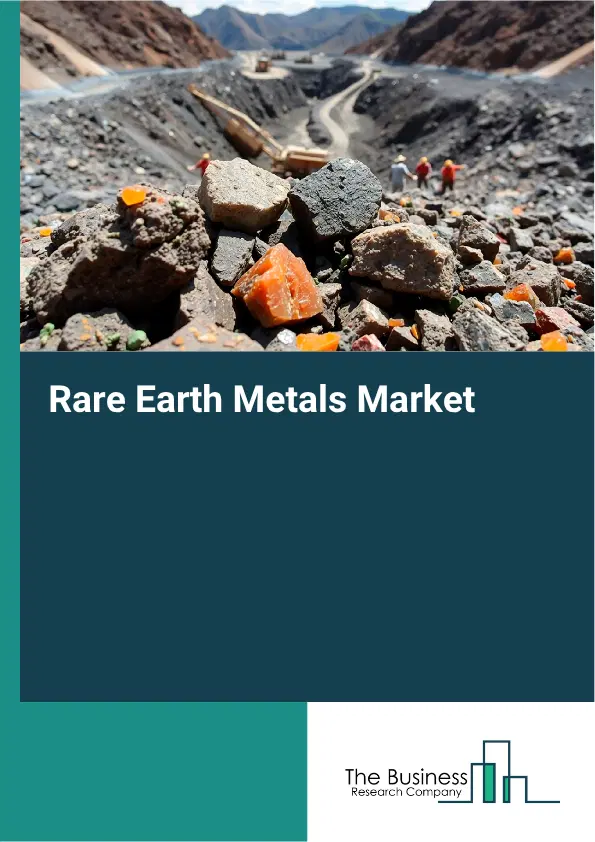
Rare Earth Metals Global Market Opportunities And Strategies To 2035
By Product Type (Light Rare Earth Metals, Heavy Earth Metals, Other Product Types), By Metal Type (Neodymium, Yttrium, Dysprosium, Terbium, Europium, Cerium, Lanthanum, Other Metal Types), By Application (Catalysts, Ceramics Or Glass, Glass Polishing, Metallurgy, Other Applications), And By Region, Opportunities And Strategies – Global Forecast To 2035
Rare Earth Metals Market Definition
Rare earth metals refer to a group of 17 chemically similar metallic elements that include the 15 lanthanides along with scandium and yttrium. These elements possess unique magnetic, luminescent and electrochemical properties that make them essential inputs for a wide range of advanced technologies. The primary purpose of rare earth metals is to enable high-performance components in modern technologies and energy systems. The rare earth metals market consists of sales by entities (organizations, sole traders and partnerships) of rare earth metals are widely used in modern industrial and technological applications, particularly in electronics, renewable energy systems, automotive manufacturing, aerospace, telecommunications and defense technologies. They are used to produce high-performance magnets, phosphors, catalysts, alloys and specialized glass and ceramics. Although these metals are relatively abundant in the Earth’s crust, that are rarely found in economically concentrated deposits, making their extraction and processing complex and resource intensive.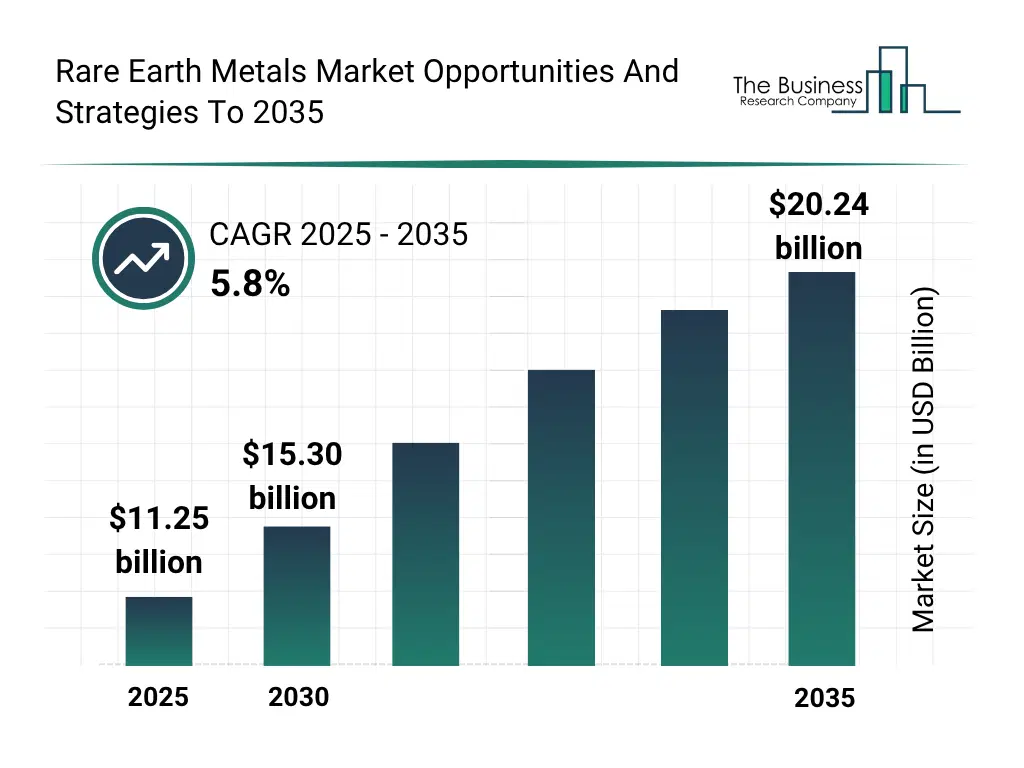
Rare Earth Metals Market Size
The global rare earth metals market reached a value of nearly $11,245.6 million in 2025, having grown at a compound annual growth rate (CAGR) of 7.5% since 2020. The market is expected to grow from $11,245.6 million in 2025 to $15,298.4 million in 2030 at a rate of 6.3%. The market is then expected to grow at a CAGR of 5.8% from 2030 and reach $20,238.0 million in 2035. Growth in the historic period resulted from increasing adoption of electric vehicles, expansion of consumer electronics, increased investment in aerospace and defense and expansion of semiconductor manufacturing. Factors that negatively affected growth in the historic period were price fluctuations of rare-earth metals and heavy-rare‐earth (HRE) element scarcity. Going forward, expansion in renewable energy sectors, rising demand for miniaturized electronic components, growth in advanced battery technologies and increasing demand for high-efficiency lighting systems will drive the growth. Factors that could hinder the growth of the rare earth metals market in the future include high extraction and processing costs, environmental and regulatory restrictions and trade war and tariffs.',
Rare Earth Metals Market Segmentation
The rare earth metals market is segmented by product type, by metal type and by application.
By Product Type –
The rare earth metals market is segmented by product type into:
By Metal Type –
The rare earth metals market is segmented by metal type into:
By Application –
The rare earth metals market is segmented by application into:
By Geography - The rare earth metals market is segmented by geography into:
By Product Type –
The rare earth metals market is segmented by product type into:
- a) Light Rare Earth Metals
- b) Heavy Rare Earth Metals
- c) Other Product Types
By Metal Type –
The rare earth metals market is segmented by metal type into:
- a) Neodymium
- b) Yttrium
- c) Dysprosium
- d) Terbium
- e) Europium
- f) Cerium
- g) Lanthanum
- h) Other Metal Types
By Application –
The rare earth metals market is segmented by application into:
- a) Magnet
- b) Catalysts
- c) Ceramics Or Glass
- d) Glass Polishing
- e) Metallurgy
- f) Other Applications
By Geography - The rare earth metals market is segmented by geography into:
- China
- India
- Japan
- Australia
- Indonesia
- South Korea
- USA
- Canada
- Brazil
- France
- Germany
- UK
- Italy
- Spain
- Russia
-
o Asia Pacific
o Africa