
Reagent Make-Up System Market Report 2026
Global Outlook – By Product Type (Automated Reagent Make Up Systems, Semi Automated Reagent Make Up Systems, Manual Reagent Make Up Systems), By Mode Of Operation (Batch Processing Systems, Continuous Processing Systems), By Distribution Channel (Direct Sales, Distributors And Dealers, Online Sales, Third Party Suppliers, Laboratory Equipment Retailers), By Application Type (Clinical Diagnostics, Pharmaceutical Testing, Biotechnology Research, Environmental Testing, Food And Beverage Testing), By End User (Hospitals, Diagnostic Laboratories, Research Institutes, Pharmaceutical Companies, Academic Laboratories) – Market Size, Trends, Strategies, and Forecast to 2030
Reagent Make-Up System Market Report 2026 Market Overview
• Reagent Make-Up System Market Report 2026 market size has reached to $1.22 billion in 2025 • Expected to grow to $1.81 billion in 2030 at a compound annual growth rate (CAGR) of 8.3% • Growth Driver: Rising Chronic And Infectious Diseases Driving The Market Due To Increasing Diagnostic Demand • North America was the largest region in 2025 and Asia-Pacific is the fastest growing region.What Is Covered Under Reagent Make-Up System Market?
A reagent make-up system is an industrial system used to automatically or semi-automatically prepare chemical reagents by mixing, diluting, and dosing them in precise concentrations. It ensures consistent and accurate reagent preparation for applications such as water treatment, mining, and chemical processing before they are supplied to the main process. The main product types of reagent make-up system include automated reagent make-up systems, semi automated reagent make-up systems, and manual reagent make-up systems. Automated reagent make-up systems refer to fully integrated laboratory systems designed to prepare and standardize reagents with minimal human intervention to ensure high precision and reproducibility. These systems operate in batch processing systems and continuous processing systems and are distributed through direct sales, distributors and dealers, online sales, third party suppliers, and laboratory equipment retailers. The key applications of clinical diagnostics, pharmaceutical testing, biotechnology research, environmental testing, and food and beverage testing, while the end-users hospitals, diagnostic laboratories, research institutes, pharmaceutical companies, and academic laboratories.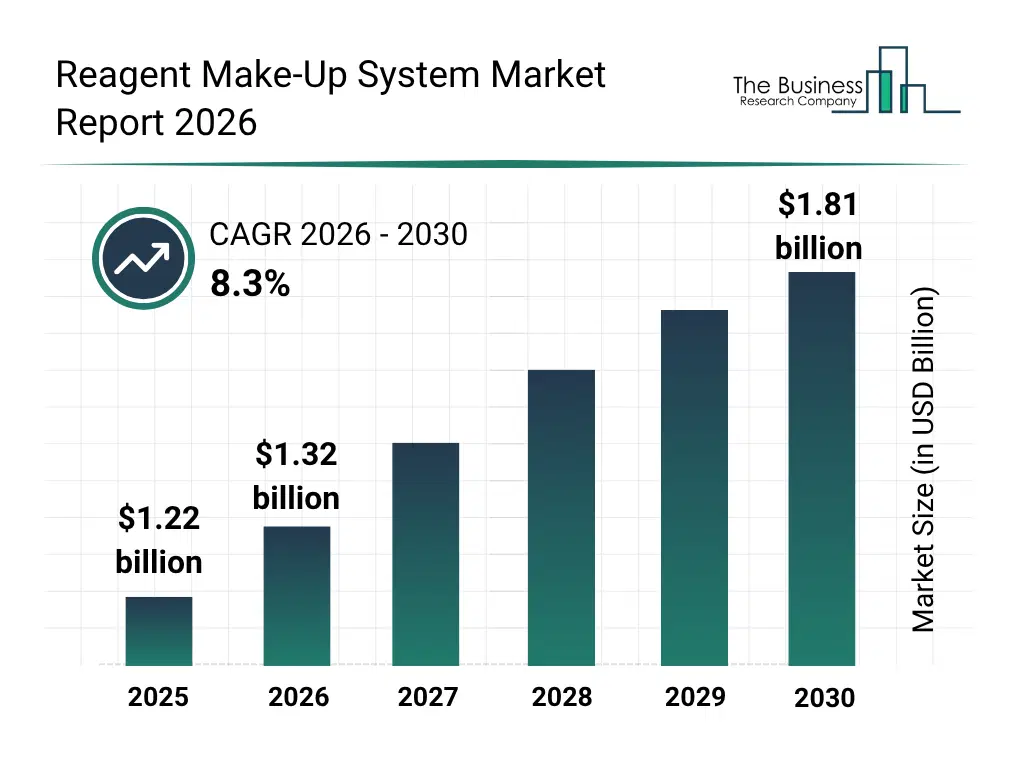
What Is The Reagent Make-Up System Market Size and Share 2026?
The reagent make-up system market size has grown strongly in recent years. It will grow from $1.22 billion in 2025 to $1.32 billion in 2026 at a compound annual growth rate (CAGR) of 8.0%. The growth in the historic period can be attributed to manual reagent preparation inefficiencies, increasing demand for laboratory accuracy and consistency, expansion of water treatment and chemical processing industries, growth in clinical diagnostics testing volumes, rising need for standardized laboratory procedures.What Is The Reagent Make-Up System Market Growth Forecast?
The reagent make-up system market size is expected to see strong growth in the next few years. It will grow to $1.81 billion in 2030 at a compound annual growth rate (CAGR) of 8.3%. The growth in the forecast period can be attributed to increasing adoption of laboratory automation technologies, growth in smart laboratory and industry 4.0 integration, rising demand for high throughput testing environments, expansion of environmental and pharmaceutical testing applications, increasing focus on operational efficiency and error reduction in chemical processing. Major trends in the forecast period include ai enabled precision dosing and automated reagent formulation optimization systems, iot connected reagent make up systems for real time monitoring and remote control, cloud based laboratory reagent management and workflow orchestration platforms, robotic automation in chemical mixing and dilution processes for high accuracy reagent preparation, predictive analytics driven reagent consumption forecasting and inventory optimization systems.
Global Reagent Make-Up System Market Segmentation
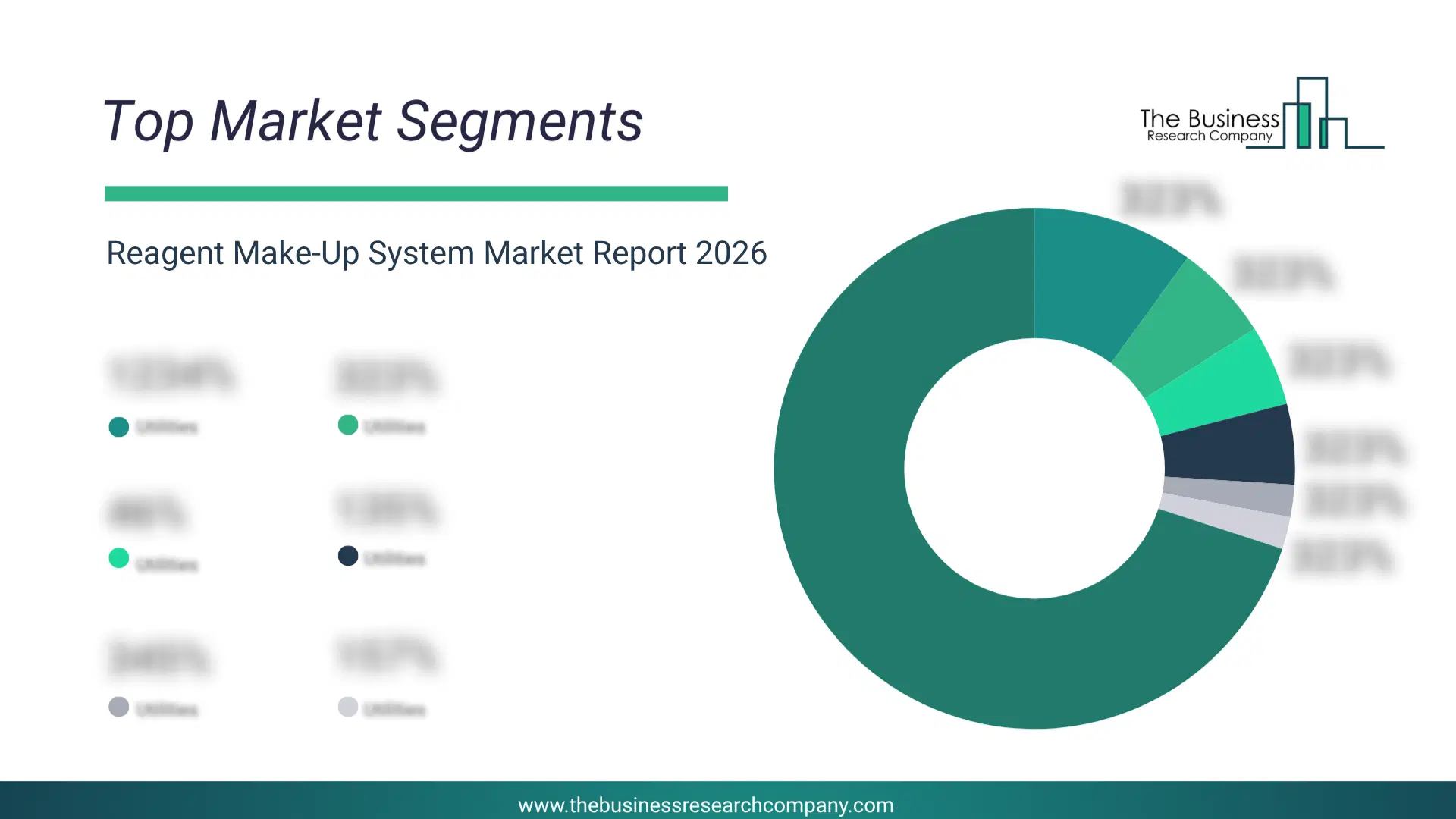
1) By Product Type: Automated Reagent Make Up Systems, Semi Automated Reagent Make Up Systems, Manual Reagent Make Up Systems 2) By Mode Of Operation: Batch Processing Systems, Continuous Processing Systems 3) By Distribution Channel: Direct Sales, Distributors And Dealers, Online Sales, Third Party Suppliers, Laboratory Equipment Retailers 4) By Application Type: Clinical Diagnostics, Pharmaceutical Testing, Biotechnology Research, Environmental Testing, Food And Beverage Testing 5) By End User: Hospitals, Diagnostic Laboratories, Research Institutes, Pharmaceutical Companies, Academic Laboratories Subsegments: 1) By Automated Reagent Make Up Systems: Fully Automated Dispensing Systems, Robotic Reagent Preparation Systems, Programmable Mixing Systems, High Throughput Reagent Preparation Systems, Closed Loop Reagent Handling Systems 2) By Semi Automated Reagent Make Up Systems: Assisted Dispensing Systems, Batch Mixing Systems, Operator Guided Preparation Systems, Semi Programmable Reagent Systems, Hybrid Mixing Systems 3) By Manual Reagent Make Up Systems: Hand Operated Mixing Systems, Gravity Fed Dispensing Systems, Bench Top Reagent Preparation Systems, Laboratory Manual Preparation Kits, Basic Reagent Handling SystemsWhat Are The Drivers Of The Reagent Make-Up System Market?
The increasing prevalence of chronic and infectious diseases is expected to propel the growth of the reagent make-up system market going forward. Chronic diseases are long-lasting health conditions that progress slowly over time, while infectious diseases are caused by pathogens and can spread from one person to another. Chronic and infectious diseases are increasing due to rapid urbanization and lifestyle changes that promote unhealthy living and facilitate the faster spread of infections in dense populations. Reagent make-up systems help in chronic and infectious disease management by ensuring accurate, consistent preparation of diagnostic reagents used in laboratory tests, enabling faster and more reliable disease detection and monitoring. For instance, in March 2024, according to the Centers for Disease Control and Prevention, a US-based government agency, the number of tuberculosis cases increased from 8,320 in 2022 to 9,615 in 2023, representing a rise of 1,295 cases. Therefore, the increasing prevalence of chronic and infectious diseases is driving the growth of the reagent make-up system industry. The growth in personalized medicine is expected to propel the growth of the reagent make-up system market going forward. Personalized medicine is a healthcare approach that uses an individual's genetic, environmental, and lifestyle information to tailor disease prevention, diagnosis, and treatment to their specific needs. Personalized medicine is increasing due to advancements in genetic sequencing technologies, which enable faster and more affordable analysis of individual genetic profiles, helping healthcare providers deliver more precise and effective treatments. Reagent make-up systems help personalized medicine by ensuring the accurate and consistent preparation of diagnostic and testing reagents used in genetic analysis, biomarker detection, and other precision medicine applications, thereby improving the reliability of patient-specific treatment decisions. For instance, in February 2024, according to the Personalized Medicine Coalition, a US-based nonprofit organization, in 2023, the FDA approved 16 new personalized treatments for rare disease patients, up from six in 2022. Therefore, the growth in personalized medicine is driving the growth of the reagent make-up system industry. The increasing healthcare expenditure is expected to propel the growth of the reagent make-up system market going forward. Healthcare expenditure is the total spending on healthcare services, medicines, medical equipment, and related healthcare activities by governments, organizations, and individuals. Healthcare expenditure is increasing due to the growing aging population, as older adults typically require more frequent medical care, chronic disease management, and specialized healthcare services, resulting in higher healthcare spending. Increasing healthcare expenditure supports the growth of the reagent make-up system by enabling healthcare facilities and laboratories to invest in advanced automation technologies that improve the accuracy, efficiency, and consistency of reagent preparation for diagnostic and research applications. For instance, in April 2025, according to the Office for National Statistics, a UK-based independent producer of official statistics, in 2024, the UK’s healthcare spending reached around $370.71 billion (£317 billion), reflecting a 6.5% nominal increase compared with 2023. Therefore, the increasing healthcare expenditure is driving the growth of the reagent make-up system industry.Key Players In The Global Reagent Make-Up System Market
Major companies operating in the reagent make-up system market report are AIC Africa Limited, AllWater Technologies Ltd., AS AutoMech Solutions (PTY) Ltd., Cube Consolidating, Danaher Corporation, Fluence Corporation, Grundfos, Jiangxi Shicheng County JXSC Mining Machinery Manufacturing Co. Ltd., Jiangxi Shicheng Mine Machinery Factory, MechProTech, Metso Corporation, Milton Roy, MIP Process Corporation, ProMinent GmbH, Richard Alan Engineering, Roytec Global, SEKO Group, SNF Group, Sysmex Corporation, Veolia Water Technologies, Xylem Inc.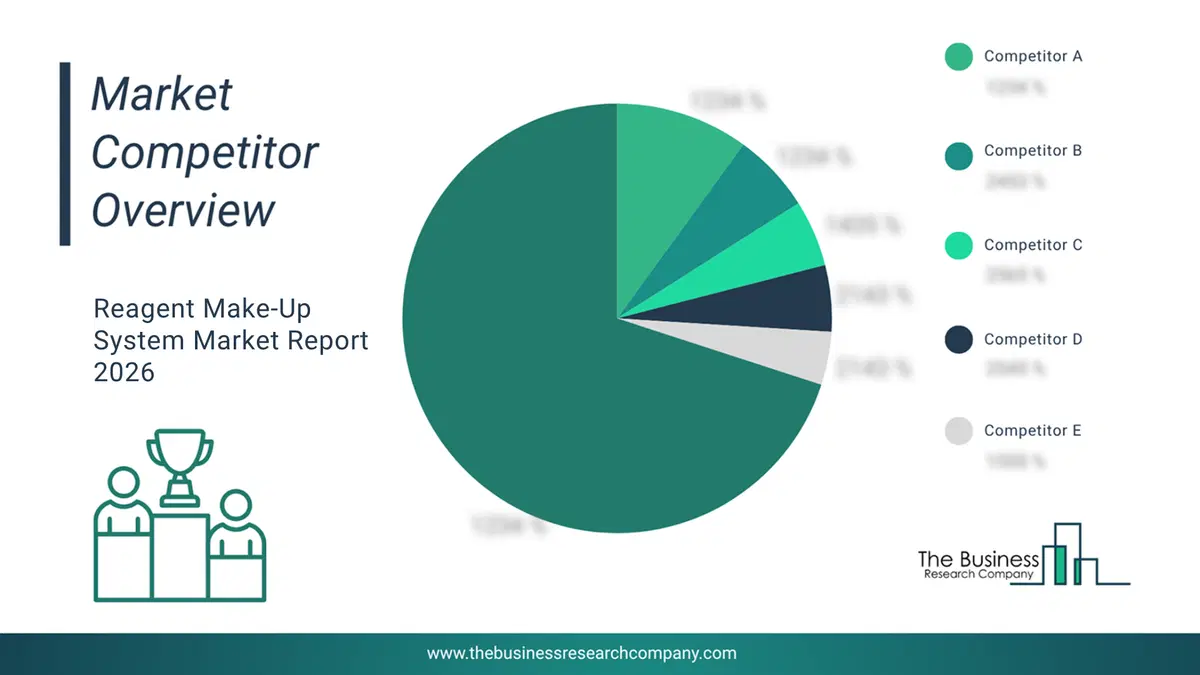
This chart is for illustrative purposes; the full report includes a detailed competitor analysis and comprehensive overview of the top 10 companies in the market.
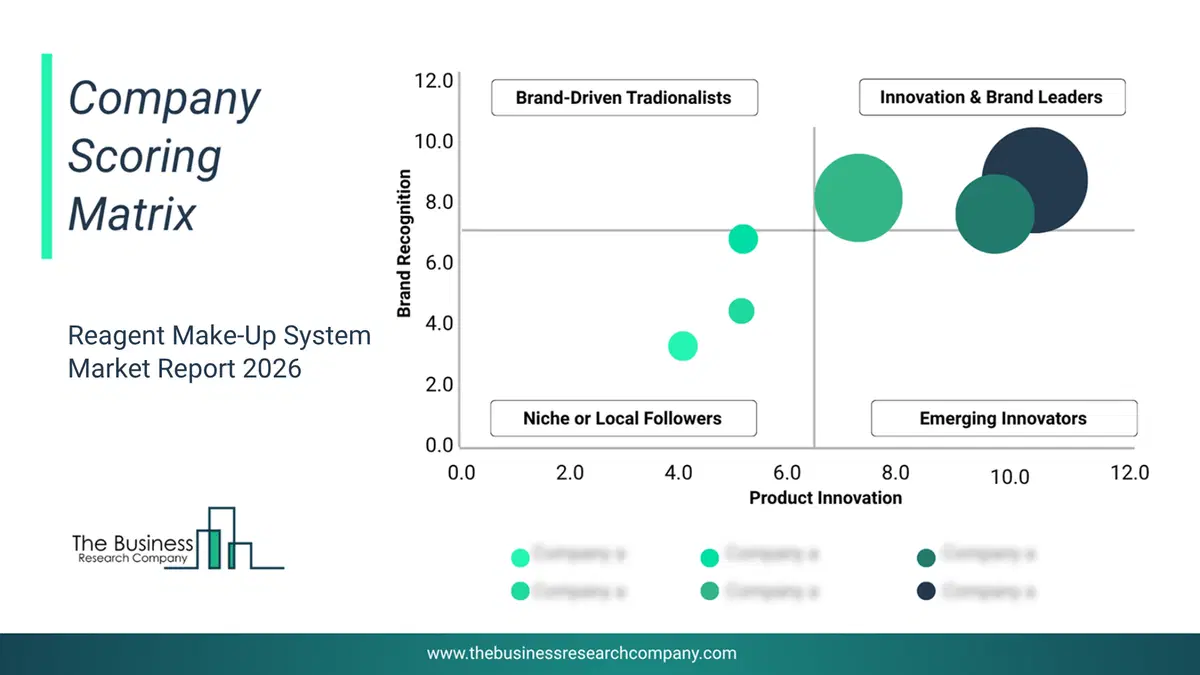
This chart maps companies by product innovation and brand strength, with bubble size indicating relative revenue, helping identify market leaders, challengers, and niche players. This is an illustrative chart; the full report provides a complete and accurate competitive analysis.
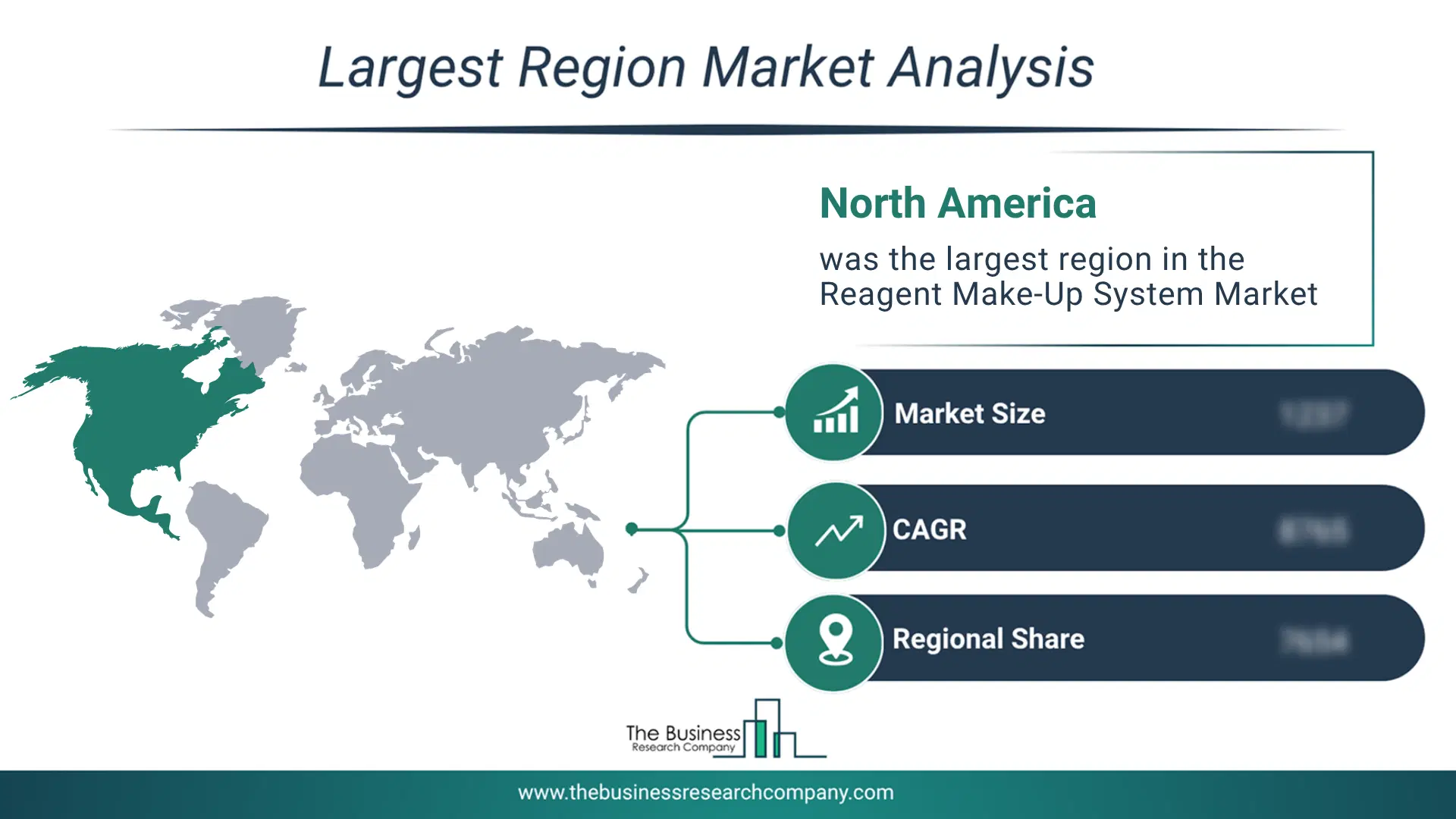
Regional Outlook
North America was the largest region in the reagent make-up system market in 2025. Asia-Pacific is expected to be the fastest-growing region in the forecast period. The regions covered in this market report are Asia-Pacific, South East Asia, Western Europe, Eastern Europe, North America, South America, Middle East, Africa. The countries covered in this market report are Australia, Brazil, China, France, Germany, India, Indonesia, Japan, Taiwan, Russia, South Korea, UK, USA, Canada, Italy, Spain.What Defines the Reagent Make-Up System Market?
The reagent make-up system market consists of sales of chemical dosing and metering pumps, storage and preparation tanks, and dry-powder dissolving systems. Values in this market are ‘factory gate’ values, that is, the value of goods sold by the manufacturers or creators of the goods, whether to other entities (including downstream manufacturers, wholesalers, distributors, and retailers) or directly to end customers. The value of goods in this market includes related services sold by the creators of the goods.How is Market Value Defined and Measured?
The market value is defined as the revenues that enterprises gain from the sale of goods and/or services within the specified market and geography through sales, grants, or donations in terms of the currency (in USD unless otherwise specified). The revenues for a specified geography are consumption values that are revenues generated by organizations in the specified geography within the market, irrespective of where they are produced. It does not include revenues from resales along the supply chain, either further along the supply chain or as part of other products.
This chart presents market attractiveness based on a quantitative evaluation of growth, competition, strategic alignment, and risk, offering a clear view of opportunity areas for decision-making. This chart is for illustrative purposes; the full report contains the complete analysis.

This chart highlights the Total Addressable Market (TAM) by estimating the maximum revenue opportunity using an assumption-driven approach, supporting strategic planning and opportunity sizing across markets. The chart is illustrative; the full report provides a more comprehensive analysis.
What Key Data and Analysis Are Included in the Reagent Make-Up System Market Report 2026?
The reagent make-up system market research report is one of a series of new reports from The Business Research Company that provides market statistics, including industry global market size, regional shares, competitors with the market share, detailed market segments, market trends and opportunities, and any further data you may need to thrive in the reagent make-up system industry. The market research report delivers a complete perspective of everything you need, with an in-depth analysis of the current and future state of the industry.Reagent Make-Up System Market Report Forecast Analysis
| Report Attribute | Details |
|---|---|
| Market Size Value In 2026 | $1.32 billion |
| Revenue Forecast In 2030 | $1.81 billion |
| Growth Rate | CAGR of 8.3% from 2026 to 2030 |
| Base Year For Estimation | 2025 |
| Actual Estimates/Historical Data | 2020-2025 |
| Forecast Period | 2026 - 2030 |
| Market Representation | Revenue in USD Billion and CAGR from 2026 to 2030 |
| Segments Covered | Product Type, Mode Of Operation, Distribution Channel, Application Type, End User |
| Regional Scope | Asia-Pacific, Western Europe, Eastern Europe, North America, South America, Middle East, Africa |
| Country Scope | The countries covered in the report are Australia, Brazil, China, France, Germany, India, Indonesia, Japan, Taiwan, Russia, South Korea, UK, USA, Canada, Italy, Spain. |
| Key Companies Profiled | AIC Africa Limited, AllWater Technologies Ltd., AS AutoMech Solutions (PTY) Ltd., Cube Consolidating, Danaher Corporation, Fluence Corporation, Grundfos, Jiangxi Shicheng County JXSC Mining Machinery Manufacturing Co. Ltd., Jiangxi Shicheng Mine Machinery Factory, MechProTech, Metso Corporation, Milton Roy, MIP Process Corporation, ProMinent GmbH, Richard Alan Engineering, Roytec Global, SEKO Group, SNF Group, Sysmex Corporation, Veolia Water Technologies, Xylem Inc. |
| Customization Scope | Request for Customization |
| Pricing And Purchase Options | Explore Purchase Options |