
Rechargeable Poly Lithium-Ion Battery Market Report 2026
Global Outlook – By Component ( Cathode, Anode, Electrolytic Solution, Other Components), By Structure ( Cylindrical, Prismatic), By Application ( Electric Vehicles, Consumer Electronics, Power, Industrial, Other Applications) – Market Size, Trends, Strategies, and Forecast to 2030
Rechargeable Poly Lithium-Ion Battery Market Overview
• Rechargeable Poly Lithium-Ion Battery market size has reached to $158.65 billion in 2025 • Expected to grow to $216.58 billion in 2030 at a compound annual growth rate (CAGR) of 6.5% • Growth Driver: Rise In The Production Of Electronic Is Anticipated To Fuel The Rechargeable Poly Lithium-Ion Battery Market • Market Trend: Development Of Cobalt-Free 5V High-Potential Poly Lithium-Ion Batteries Boosting Energy Density And Sustainability • Asia-Pacific was the largest region in 2025.Market Gains By 2030 – Top Opportunities By Segment
Market Gain identifies the most promising market opportunities by highlighting the segments or products expected to generate the highest incremental revenue growth over the next five years.
What Is Covered Under Rechargeable Poly Lithium-Ion Battery Market?
The rechargeable poly lithium-ion battery is a rechargeable battery that uses lithium as one of its electrodes and solid polymer as its electrolyte as in lithium-ion batteries. These batteries have a larger energy density and can be charged and discharged several times before losing their ability to hold a charge. It is commonly used in mobile devices, power banks, laptops, small media players, and other wireless gadgets. The main types of rechargeable poly lithium-ion batteries are cylindrical and prismatic. A cylindrical rechargeable poly lithium-ion battery is a form of a lithium-ion battery with a cylindrical shape that is packaged in a metal container. These batteries are used in laptops, power tools, portable electronics, electric vehicles, and others. The major components of these batteries are cathode, anode, electrolytic solution, and others, and are applied in electric vehicles, consumer electronics, power, industrial, and other applications.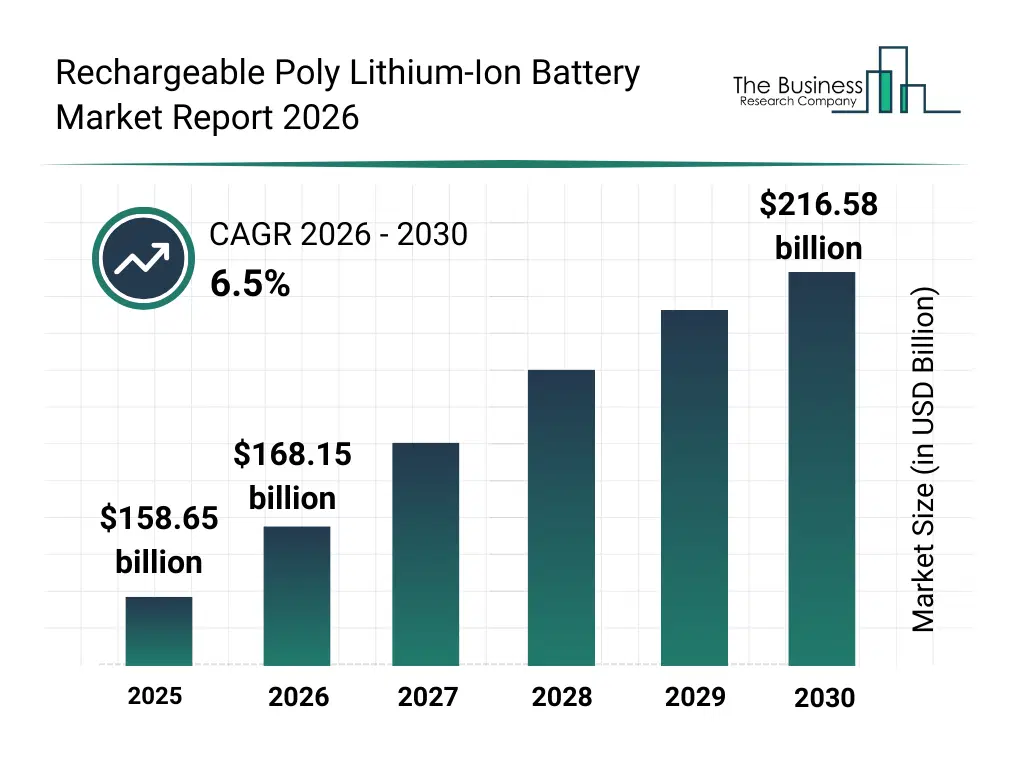
What Is The Rechargeable Poly Lithium-Ion Battery Market Size 2026 And Growth Rate?
The rechargeable poly lithium-ion battery market size has grown strongly in recent years. It will grow from $158.65 billion in 2025 to $168.15 billion in 2026 at a compound annual growth rate (CAGR) of 6.0%. The growth in the historic period can be attributed to early adoption in consumer electronics, increasing use in mobile devices, development of lithium-polymer chemistries, expansion of portable device battery demand, introduction of improved battery safety systems.What Is The Rechargeable Poly Lithium-Ion Battery Market Growth Forecast?
The rechargeable poly lithium-ion battery market size is expected to see strong growth in the next few years. It will grow to $216.58 billion in 2030 at a compound annual growth rate (CAGR) of 6.5%. The growth in the forecast period can be attributed to rising demand for electric vehicle battery packs, increasing adoption of solid and gel electrolytes, development of high-capacity anode materials, expansion of renewable energy storage integration, rising need for lightweight fast-charging batteries. Major trends in the forecast period include adoption of eco-efficient battery manufacturing, expansion of lithium-polymer batteries in electric mobility, integration of smart battery monitoring systems, development of high-density rechargeable cells, growth of digitally connected battery ecosystems.
Global Rechargeable Poly Lithium-Ion Battery Market Segmentation
1) By Component: Cathode, Anode, Electrolytic Solution, Other Components 2) By Structure: Cylindrical, Prismatic 3) By Application: Electric Vehicles, Consumer Electronics, Power, Industrial, Other Applications Subsegments: 1) By Cathode: Lithium Cobalt Oxide (LCO), Lithium Iron Phosphate (LFP), Lithium Nickel Manganese Cobalt (NMC), Lithium Nickel Cobalt Aluminum Oxide (NCA), Other Cathode Materials 2) By Anode: Graphite, Silicon-Based Anodes, Lithium Titanate, Other Anode Materials 3) By Electrolytic Solution: Liquid Electrolytes, Solid Electrolytes, Gel Electrolytes 4) By Other Components: Battery Management System (BMS), Separator, Current Collectors, Other Components The top segments in the rechargeable poly lithium-ion battery market will be: • Cathode will reach $88.64 Billion by 2030. • Anode will reach $58.7 Billion by 2030. • Electrolytic Solution will reach $42.76 Billion by 2030. • Other Components will reach $24.2 Billion by 2030.What Is The Driver Of The Rechargeable Poly Lithium-Ion Battery Market?
The rise in the production of electronics is expected to propel the growth of the rechargeable poly lithium-ion battery market going forward. Electronics is the branch of physics and engineering that involves the study and application of devices and systems using the flow of electrons to process and transmit information. Rechargeable poly lithium-ion batteries power a wide range of electronic devices, providing a portable and efficient energy storage solution. For instance, in October 2023, according to the Samena Telecommunications Council FZ LLC, a UAE-based Telecommunications service provider, in the last three quarters, mobile phone production totalled 1.09 billion units, marking a year-on-year growth of 0.8 percent. Notably, in September, the country's mobile phone output surged by 11.8 percent compared to the same month last year. Therefore, the rise in the production of electronics is driving the rechargeable poly lithium-ion battery industry.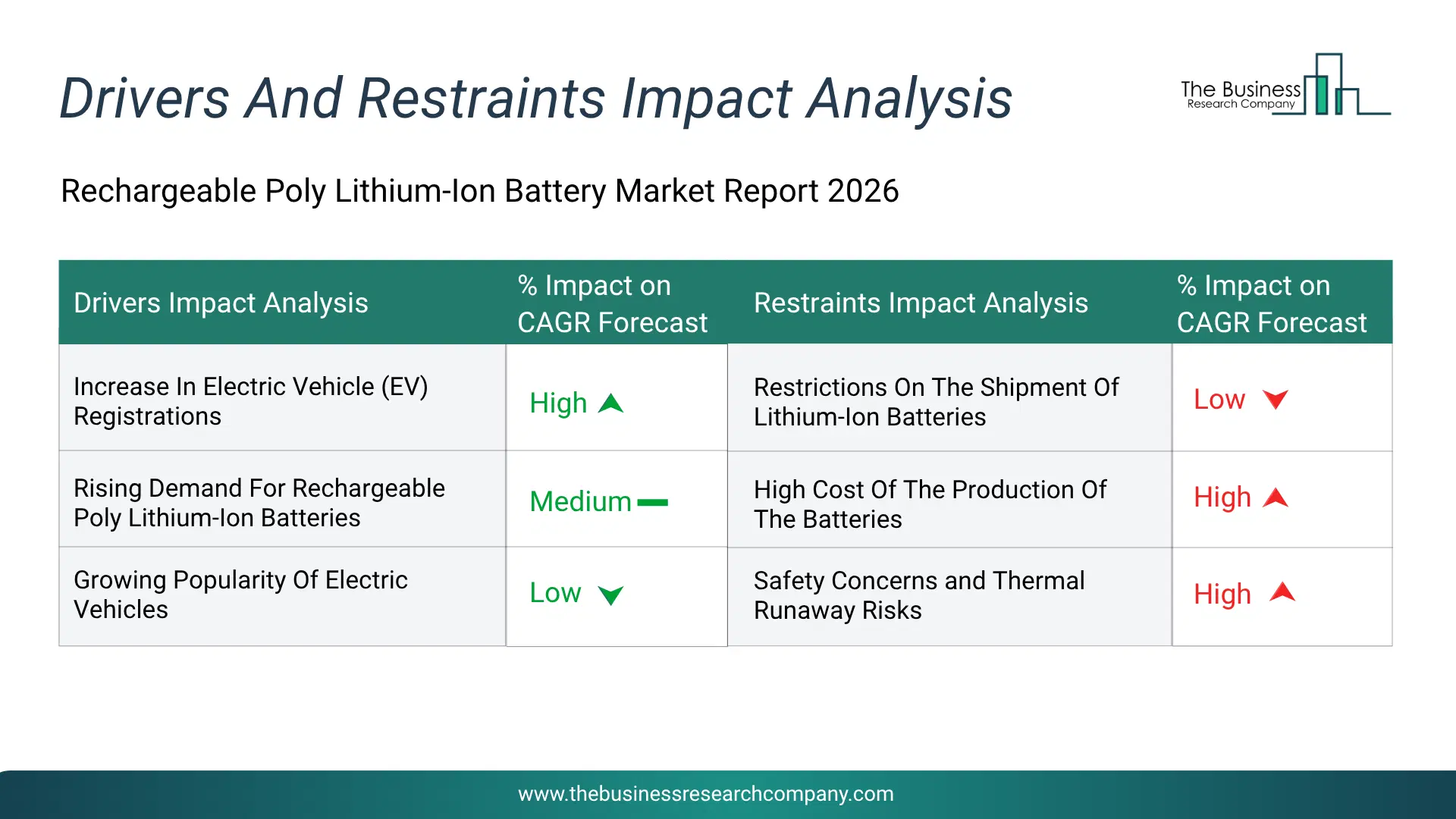
Infographic Chart Showing Key Market Drivers Analysis And Restraints For Rechargeable Poly Lithium-Ion Battery Market
The chart presents an impact analysis of key drivers and restraints, quantifying their relative influence on the market's growth rate and helping assess the balance between growth enablers and limiting factors. This chart offers a high-level perspective; the full report contains more detailed insights.
How Will The Drivers Impact Growth In The Global Rechargeable Poly Lithium-Ion Battery Market?
• Increase In Electric Vehicle (EV) Registrations (High) – During the forecast period, the increase in electric vehicle (EV) registrations is expected to become a key growth driver for the rechargeable poly lithium-ion battery market by 2030. The rising number of EVs on roads is accelerating demand for high-performance battery systems capable of delivering higher energy density and longer driving ranges. Automakers are increasingly integrating advanced lithium-ion battery packs to support extended vehicle lifecycles and improved efficiency. This surge in EV registrations is also driving large-scale battery production and supply chain expansion globally. • Rising Demand For Rechargeable Poly Lithium-Ion Batteries (Medium) – During the forecast period, the rising demand for rechargeable poly lithium-ion batteries is expected to emerge as a major factor driving the expansion of the market by 2030. The widespread adoption of portable electronic devices such as smartphones, laptops, and wearable technologies is creating sustained demand for efficient and long-lasting battery solutions. These batteries offer superior charge retention, flexibility, and compact design, making them suitable for next-generation electronic applications. Additionally, the shift toward wireless and battery-powered devices across industries is further strengthening demand. • Growing Popularity Of Electric Vehicles (Low) – During the forecast period, the growing popularity of electric vehicles is expected to act as a key growth catalyst for the rechargeable poly lithium-ion battery market by 2030. Increasing consumer preference for sustainable transportation solutions is accelerating EV adoption across both developed and emerging markets. This trend is encouraging advancements in battery performance, charging speed, and lifecycle efficiency to meet evolving consumer expectations. Furthermore, automotive manufacturers are expanding their EV portfolios, increasing the requirement for reliable and scalable battery technologies.How Will The Restraints Impact Growth In The Global Rechargeable Poly Lithium-Ion Battery Market?
• Restrictions On The Shipment Of Lithium-Ion Batteries (High) – During the forecast period, restrictions on the shipment of lithium-ion batteries act as a major restraint for the rechargeable poly lithium-ion battery market by creating logistical and regulatory challenges. These batteries are classified as hazardous materials due to potential risks such as overheating and fire, leading to strict transportation guidelines. Compliance with international safety standards increases shipping complexity and costs for manufacturers and distributors. Delays in transportation and limited shipping options can disrupt supply chains and affect timely delivery. This becomes particularly challenging for global trade and e-commerce distribution. Smaller manufacturers may face difficulties in adhering to these regulations, limiting their market reach. Overall, such restrictions slow down market expansion and reduce operational efficiency. • High Cost Of The Production Of The Batteries (Medium) – During the forecast period, high cost of the production of the batteries acts as a significant restraint for the rechargeable poly lithium-ion battery market by limiting affordability and large-scale adoption. The production process involves expensive raw materials such as lithium, cobalt, and nickel, along with complex manufacturing technologies. Fluctuations in raw material prices further increase cost uncertainty for manufacturers. High initial investment in production facilities and advanced equipment adds to the financial burden. These costs are often passed on to end users, making products like electric vehicles and electronics more expensive. This can slow down adoption, especially in price-sensitive markets. As a result, high production costs hinder market growth and reduce competitiveness compared to alternative battery technologies. • Safety Concerns and Thermal Runaway Risks (Low) – During the forecast period, poly lithium-ion batteries are susceptible to safety issues such as overheating, swelling, and in extreme cases, thermal runaway leading to fires or explosions. These risks are particularly concerning in consumer electronics, electric vehicles, and large-scale energy storage systems. Strict safety regulations and the need for additional protective components increase design complexity and costs. Negative public perception due to past battery incidents also affects market confidence. Consequently, safety concerns act as a barrier to widespread adoption and scalability.Key Players In The Global Rechargeable Poly Lithium-Ion Battery Market
Major companies operating in the rechargeable poly lithium-ion battery market are Samsung Electronics Co. Ltd., 3M Company, Toshiba Corporation, Sony Corporation, Shenzhen Honcell Energy Co. Ltd., Panasonic Holdings Corporation, Amara Raja Batteries Limited, Exide Industries Ltd., Maxell Holdings Ltd., YOK Energy Co. Ltd., China manufacturer LiPol Battery Co. Ltd., Engionix Inc., LG Chem Ltd., Hitachi Maxell Ltd., BYD Company Limited, A123 Systems LLC, E-One Moli Energy Corp., GS Yuasa Corporation, Saft Groupe S.A., Valence Technology Inc.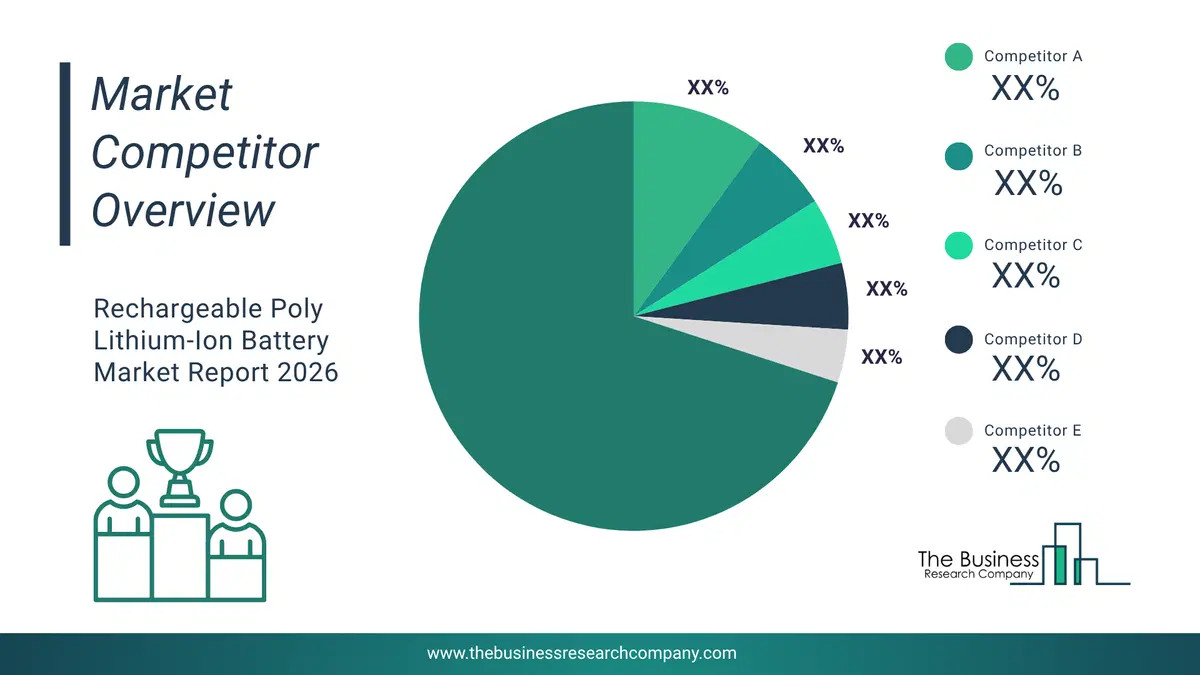
This chart is for illustrative purposes; the full report includes a detailed competitor analysis and comprehensive overview of the top 10 companies in the market.
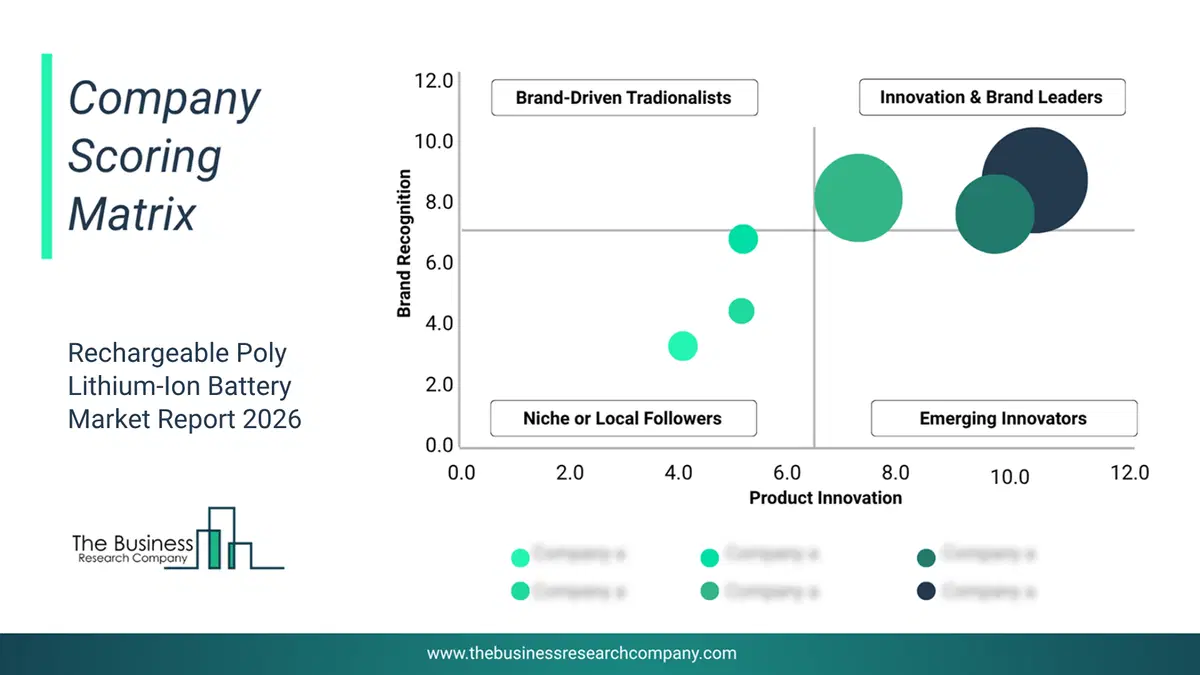
This chart maps companies by product innovation and brand strength, with bubble size indicating relative revenue, helping identify market leaders, challengers, and niche players. This is an illustrative chart; the full report provides a complete and accurate competitive analysis.
Global Rechargeable Poly Lithium-Ion Battery Market Trends and Insights
Major companies operating in the rechargeable poly lithium-ion battery market are focusing on developing innovative solutions, such as cobalt-free, 5 V-class high-potential cathode lithium-ion batteries, to meet the rising demand for higher-energy-density storage, faster charging, long cycle life, and sustainable material supply chains. A cobalt-free, 5 V-class high-potential cathode lithium-ion battery is one in which the cathode material achieves a higher operating voltage (~5 V nominal) without using cobalt (a scarce and costly metal). For instance, in November 2023, Toshiba Corporation, a Japan-based electronics and energy solutions company, launched a prototype cobalt-free 5 V-class high-potential cathode lithium-ion battery featuring the new cathode material paired with a niobium-titanium oxide (NTO) anode. The battery demonstrated fast charging to 80% in 5 minutes, more than 6,000 charge/discharge cycles retaining ~80% capacity, operation at high temperature (~60 °C), and the absence of cobalt plus reduced nickel content enabling improved supply-chain resilience and sustainability.What Are Latest Mergers And Acquisitions In The Rechargeable Poly Lithium-Ion Battery Market?
In April 2024, Advik Hi-Tech Private Limited, an India-based automotive component manufacturer, acquired Aceleron Energy for an undisclosed amount. The aim of ADVIK's acquisition of Aceleron Energy is to enhance its capabilities in the electric vehicle (EV) and energy storage system (ESS) markets by integrating advanced lithium-ion battery technology. This strategic move is designed to broaden ADVIK's product portfolio and customer base while promoting sustainable energy solutions. Aceleron Energy is a UK-based advanced lithium battery developer.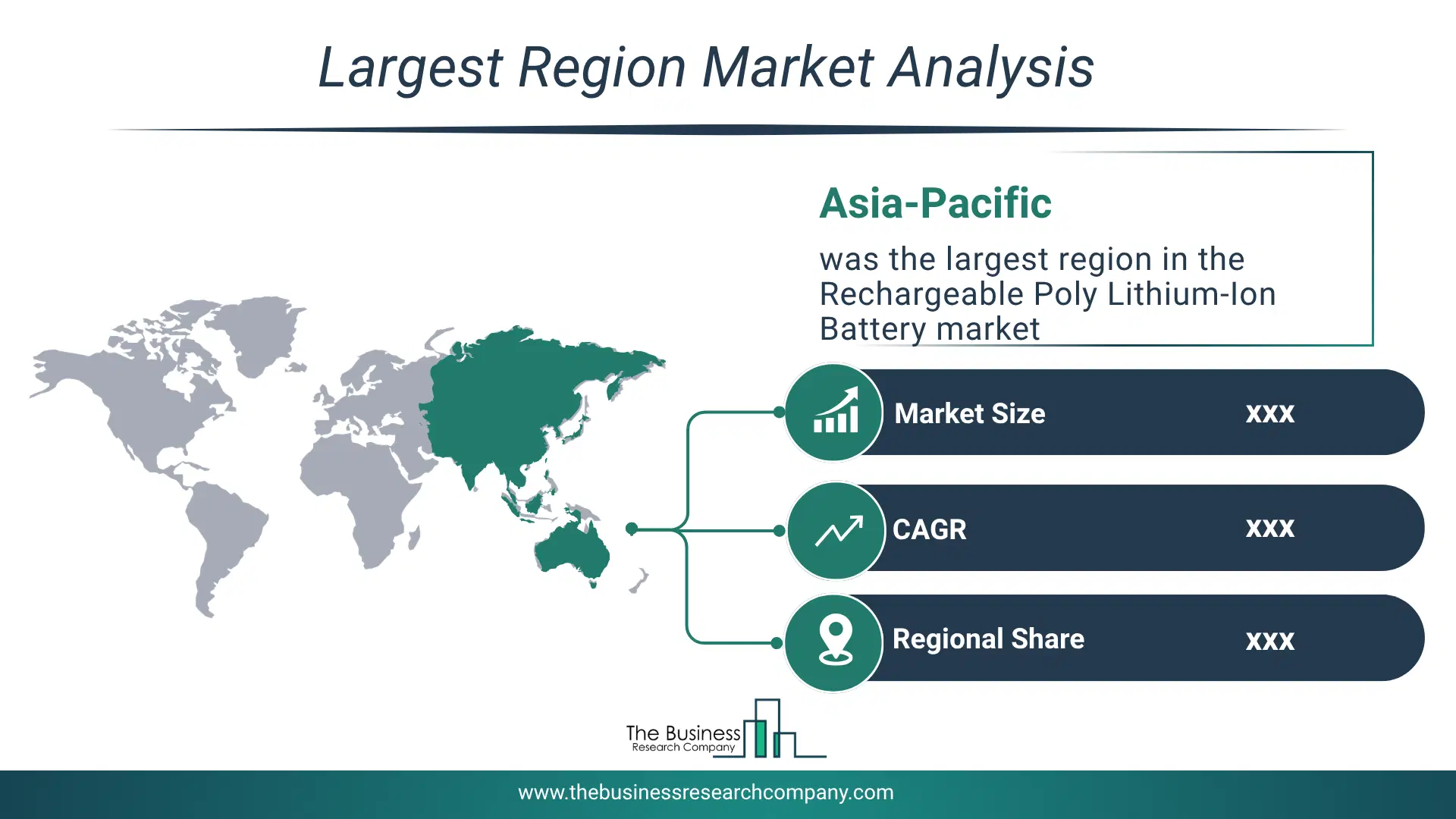
Regional Outlook
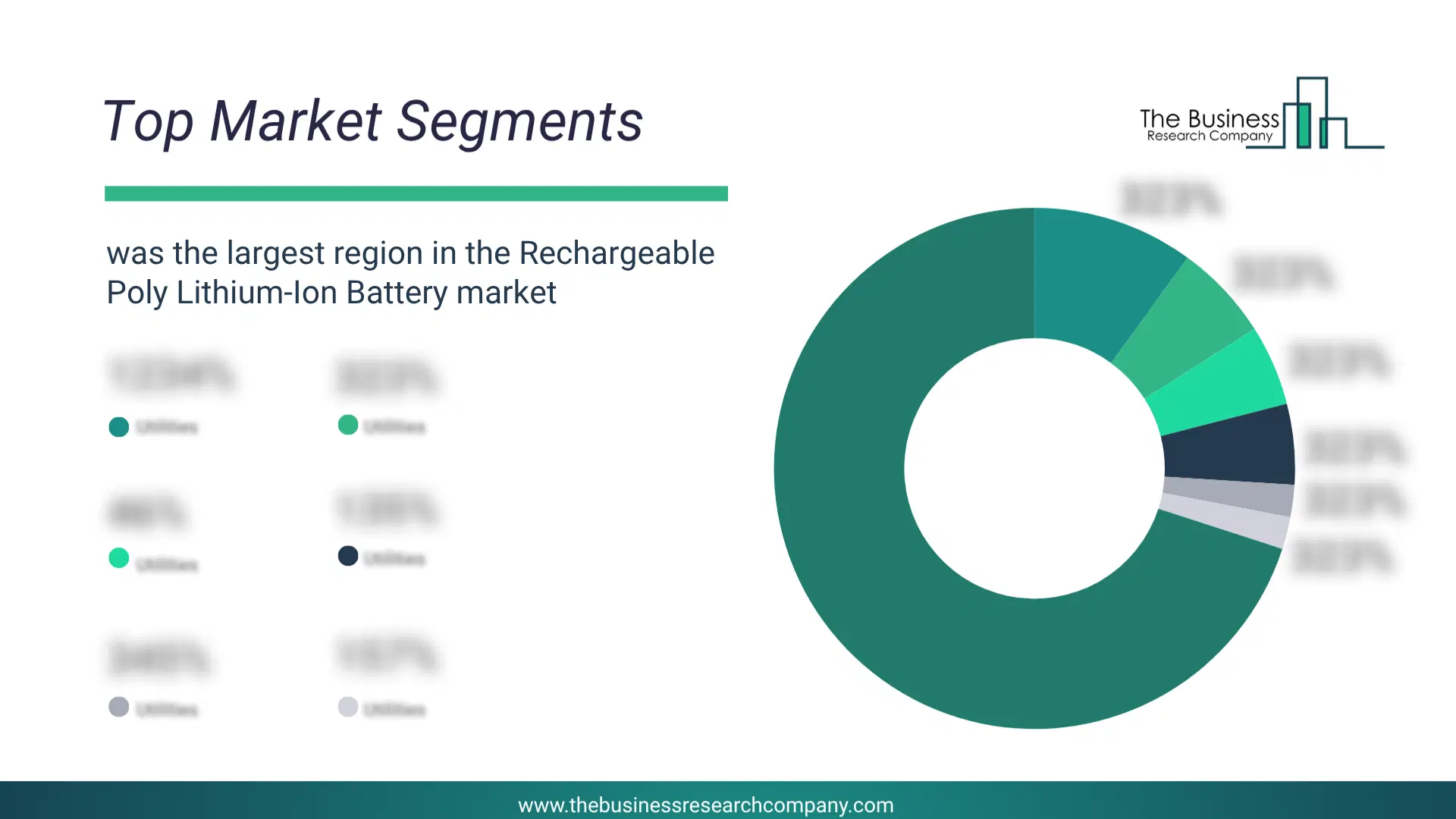
Asia-Pacific was the largest region in the rechargeable poly lithium-ion battery market in 2025. The regions covered in this market report are Asia-Pacific, South East Asia, Western Europe, Eastern Europe, North America, South America, Middle East, Africa. The countries covered in this market report are Australia, Brazil, China, France, Germany, India, Indonesia, Japan, Taiwan, Russia, South Korea, UK, USA, Canada, Italy, Spain.What Defines the Rechargeable Poly Lithium-Ion Battery Market?
The rechargeable poly lithium-ion battery market consists of sales of rechargeable poly lithium-ion batteries that are assembled, packaged, flat, pouch-like shape, and cylindrical shaped. Values in this market are ‘factory gate’ values, that is the value of goods sold by the manufacturers or creators of the goods, whether to other entities (including downstream manufacturers, wholesalers, distributors, and retailers) or directly to end customers. The value of goods in this market includes related services sold by the creators of the goods.How is Market Value Defined and Measured?
The market value is defined as the revenues that enterprises gain from the sale of goods and/or services within the specified market and geography through sales, grants, or donations in terms of the currency (in USD unless otherwise specified). The revenues for a specified geography are consumption values that are revenues generated by organizations in the specified geography within the market, irrespective of where they are produced. It does not include revenues from resales along the supply chain, either further along the supply chain or as part of other products.
This chart presents market attractiveness based on a quantitative evaluation of growth, competition, strategic alignment, and risk, offering a clear view of opportunity areas for decision-making. This chart is for illustrative purposes; the full report contains the complete analysis.

This chart highlights the Total Addressable Market (TAM) by estimating the maximum revenue opportunity using an assumption-driven approach, supporting strategic planning and opportunity sizing across markets. The chart is illustrative; the full report provides a more comprehensive analysis.
What Key Data and Analysis Are Included in the Rechargeable Poly Lithium-Ion Battery Market Report 2026?
The rechargeable poly lithium-ion battery market research report is one of a series of new reports from The Business Research Company that provides market statistics, including industry global market size, regional shares, competitors with the market share, detailed market segments, market trends and opportunities, and any further data you may need to thrive in the rechargeable poly lithium-ion battery industry. The market research report delivers a complete perspective of everything you need, with an in-depth analysis of the current and future state of the industry.Rechargeable Poly Lithium-Ion Battery Market Report Forecast Analysis Market Report Forecast Analysis
| Report Attribute | Details |
|---|---|
| Market Size Value In 2026 | $168.15 billion |
| Revenue Forecast In 2030 | $216.58 billion |
| Growth Rate | CAGR of 6.0% from 2026 to 2030 |
| Base Year For Estimation | 2025 |
| Actual Estimates/Historical Data | 2020-2025 |
| Forecast Period | 2026 - 2030 |
| Market Representation | Revenue in USD Billion and CAGR from 2026 to 2030 |
| Segments Covered | Component, Structure, Application |
| Regional Scope | Asia-Pacific, Western Europe, Eastern Europe, North America, South America, Middle East, Africa |
| Country Scope | The countries covered in the report are Australia, Brazil, China, France, Germany, India, Indonesia, Japan, Taiwan, Russia, South Korea, UK, USA, Canada, Italy, Spain. |
| Key Companies Profiled | Samsung Electronics Co. Ltd., 3M Company, Toshiba Corporation, Sony Corporation, Shenzhen Honcell Energy Co. Ltd., Panasonic Holdings Corporation, Amara Raja Batteries Limited, Exide Industries Ltd., Maxell Holdings Ltd., YOK Energy Co. Ltd., China manufacturer LiPol Battery Co. Ltd., Engionix Inc., LG Chem Ltd., Hitachi Maxell Ltd., BYD Company Limited, A123 Systems LLC, E-One Moli Energy Corp., GS Yuasa Corporation, Saft Groupe S.A., Valence Technology Inc. |
| Customization Scope | Request for Customization |
| Pricing And Purchase Options | Explore Purchase Options |