
Recombinant DNA Technology Market Report 2026
Global Outlook – By Product Type (Recombinant Protein Drugs, Vaccines, Genetically Modified Crops, Expression Systems, Cell And Gene Therapy, Gene Editing), By Component Type (Expression System, Cloning Vector), By Application Type (Food And Agriculture, Health And Disease, Environment, Other Application Types), By End-Use Type (Biotechnology And Pharmaceutical Companies, Academic And Government Research Institutes, Other End-Use Types) – Market Size, Trends, Strategies, and Forecast to 2030
Recombinant DNA Technology Market Overview
• Recombinant DNA Technology market size has reached to $913.42 billion in 2025 • Expected to grow to $1414.92 billion in 2030 at a compound annual growth rate (CAGR) of 9.1% • Growth Driver: Rising Development Of Genetically Modified Crops To Drive Market Growth • Market Trend: Advancements in Breakthrough Gene-Editing Innovations • North America was the largest region in 2025 and Asia-Pacific is the fastest growing region.What Is Covered Under Recombinant DNA Technology Market?
Recombinant DNA technology refers to fusing DNA molecules from other organisms and inserting those DNA molecules into a host organism to build a new genetic combination useful for science, medicine, agriculture, and industry. The recombinant DNA technology is used to address health issues by creating new medications and vaccines. The main product type of recombinant DNA technology includes recombinant protein drugs, vaccines, genetically modified crops, expression systems, cell and gene therapy and gene editing. The recombinant protein drugs are used in the biochemical analysis as well as medical diagnostic reagents in human healthcare, such as antibodies, medicines, or vaccines. Recombinant protein drugs are referred to as highly potent medicines that develop faster than small molecules and are safe from off-target negative effects. The component type includes expression system and cloning vector. The recombinant DNA technology is applied in food and agriculture, health and disease, environment and other applications and used in biotechnology and pharmaceutical companies, academic and government research institutes and other end-use industries.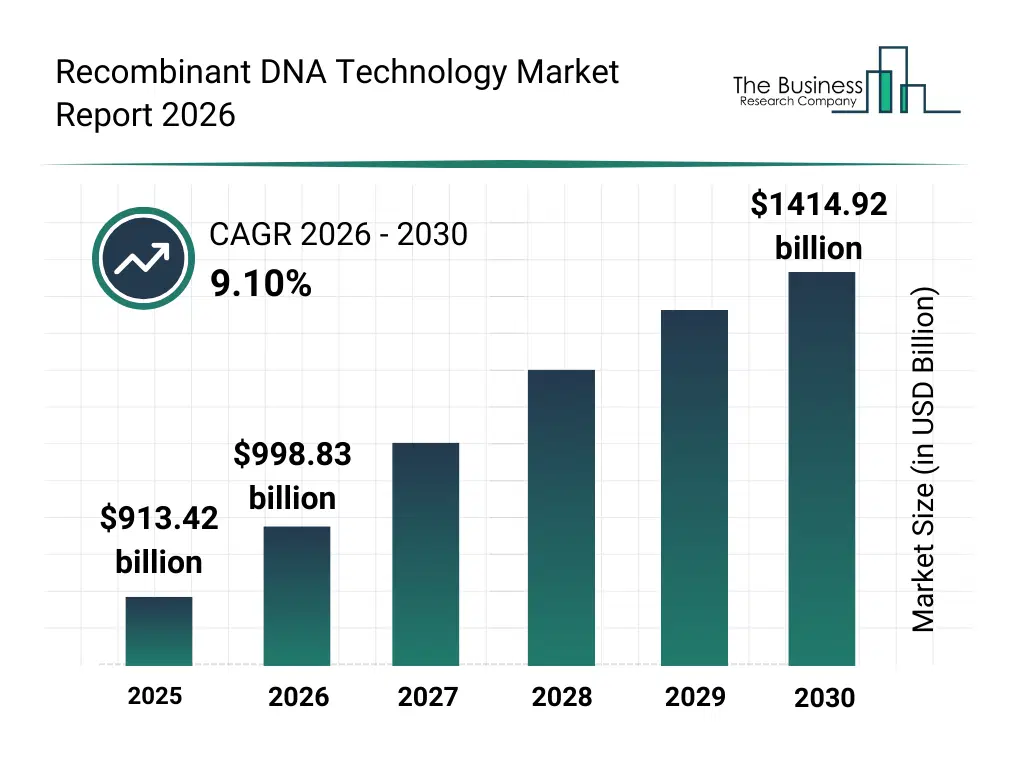
What Is The Recombinant DNA Technology Market Size and Share 2026?
The recombinant dna technology market size has grown strongly in recent years. It will grow from $913.42 billion in 2025 to $998.83 billion in 2026 at a compound annual growth rate (CAGR) of 9.4%. The growth in the historic period can be attributed to expansion of molecular biology research, increasing incidence of chronic diseases, growth in biologics development, rising academic and government research funding, early commercialization of recombinant therapies.What Is The Recombinant DNA Technology Market Growth Forecast?
The recombinant dna technology market size is expected to see strong growth in the next few years. It will grow to $1414.92 billion in 2030 at a compound annual growth rate (CAGR) of 9.1%. The growth in the forecast period can be attributed to increasing investments in gene therapy development, rising demand for personalized medicine, expansion of CRISPR-based applications, growing focus on sustainable bioproduction, increasing collaboration between academia and industry. Major trends in the forecast period include increasing adoption of gene editing platforms, rising development of recombinant vaccines, growing use of advanced expression systems, expansion of cell and gene therapy pipelines, enhanced focus on scalable biomanufacturing.
Global Recombinant DNA Technology Market Segmentation
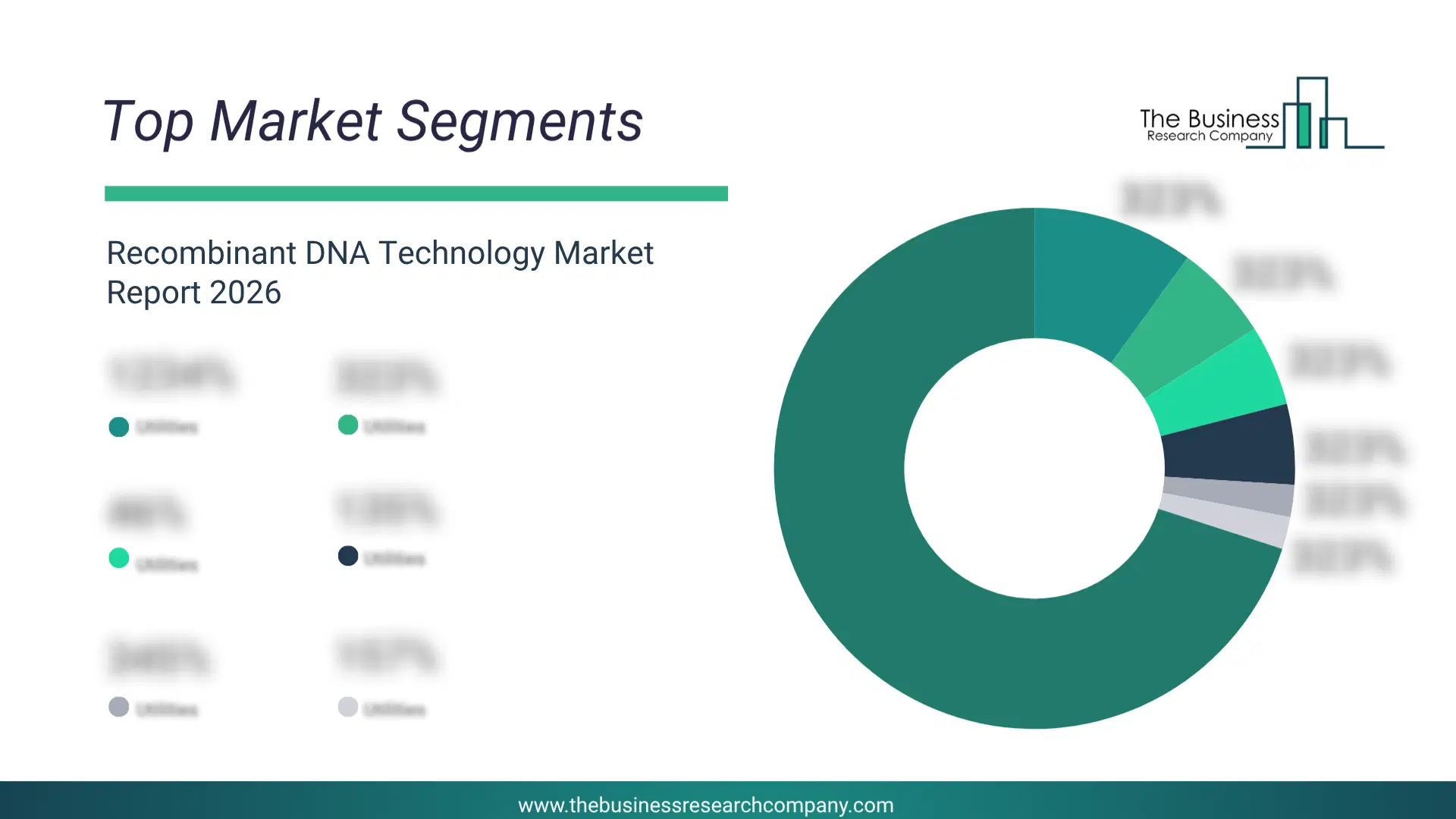
1) By Product Type: Recombinant Protein Drugs, Vaccines, Genetically Modified Crops, Expression Systems, Cell And Gene Therapy, Gene Editing 2) By Component Type: Expression System, Cloning Vector 3) By Application Type: Food And Agriculture, Health And Disease, Environment, Other Application Types 4) By End-Use Type: Biotechnology And Pharmaceutical Companies, Academic And Government Research Institutes, Other End-Use Types Subsegments: 1) By Recombinant Protein Drugs: Hormones, Growth Factors 2) By Vaccines: Recombinant Viral Vaccines, Recombinant Bacterial Vaccines, Subunit Vaccines 3) By Genetically Modified Crops: Herbicide-Tolerant Crops, Insect-Resistant Crops, Nutritionally Enhanced Crop 4) By Expression Systems: Bacterial Expression Systems, Yeast Expression Systems, Mammalian Expression Systems 5) By Cell And Gene Therapy: Cell-Based Therapies, Gene Replacement Therapies, CAR T-Cell Therapies 6) By Gene Editing: CRISPR Or Cas9 Technologies, TALENs (Transcription Activator-Like Effector Nucleases), ZFNs (Zinc Finger Nucleases)What Is The Driver Of The Recombinant DNA Technology Market?
The increasing development of genetically modified crops is expected to propel the growth of recombinant DNA technology market going forward. Genetically modified crops refer to plants whose genetic makeup has been intentionally altered using biotechnological techniques. Recombinant DNA (rDNA) technology is employed in genetically modified (GM) crops by isolating genes that confer desired traits, constructing recombinant DNA, introducing it into host crop cells, selecting and screening for successful integration, regenerating transgenic plants, testing for trait expression, conducting field trials, obtaining regulatory approval, and ultimately commercializing crops with improved characteristics. For instance, in December 2023, according to the United States Department of Agriculture, a US-based government agency, Canada planted 11.7 million hectares of genetically engineered (GE) crops, primarily consisting of canola, soybeans, and corn. This represents a 4% increase from 2022, driven by the expansion of canola planting areas. Therefore, the increasing development of genetically modified crops is driving the growth of the recombinant DNA technology industry.Key Players In The Global Recombinant DNA Technology Market
Major companies operating in the recombinant dna technology market are Profacgen BioTech Corp, Amgen Inc, Novartis International AG, GenScript Biotech Corporation, Pfizer Inc, Novo Nordisk A/S, Eli Lilly and Company, Sanofi S.A, Merck & Co. Inc, Biogen Inc, GlaxoSmithKline PLC, New England Biolabs Inc, Bayer CropScience, F. Hoffmann-La Roche Ltd, Regeneron Pharmaceuticals Inc, Gilead Sciences Inc, Vertex Pharmaceuticals Incorporated, CRISPR Therapeutics AG, Editas Medicine Inc, bluebird bio Inc, Lonza Group AG, Horizon Discovery Group PLC, Sarepta Therapeutics Inc, Sangamo Therapeutics Inc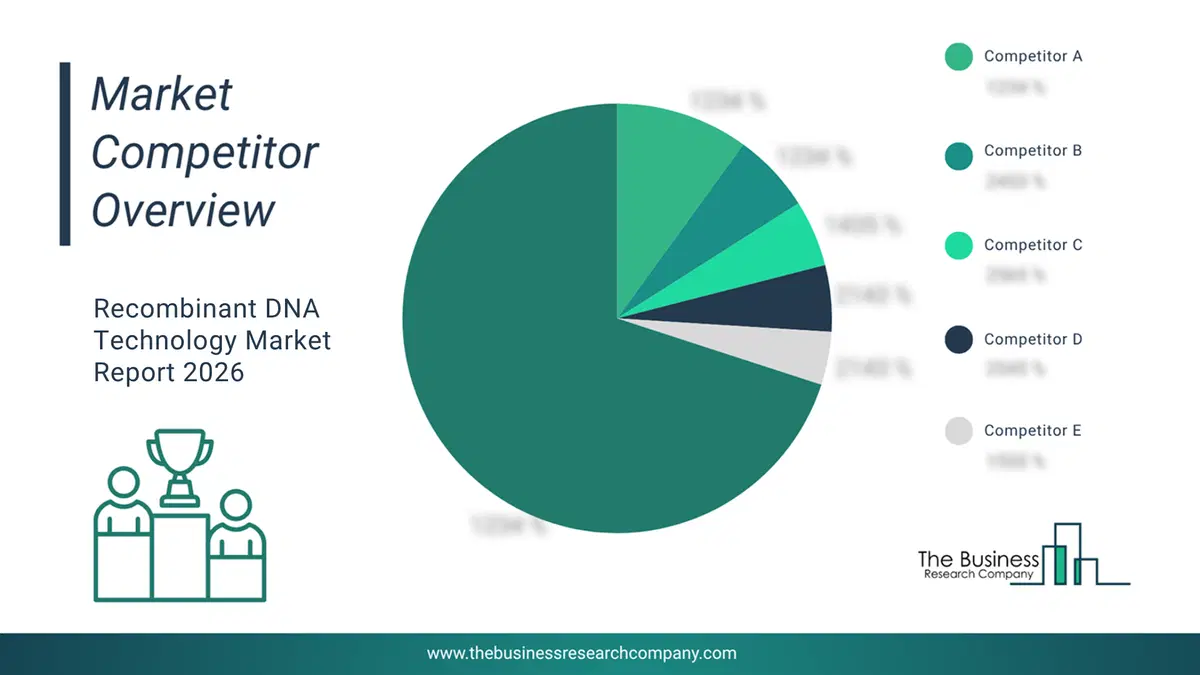
This chart is for illustrative purposes; the full report includes a detailed competitor analysis and comprehensive overview of the top 10 companies in the market.
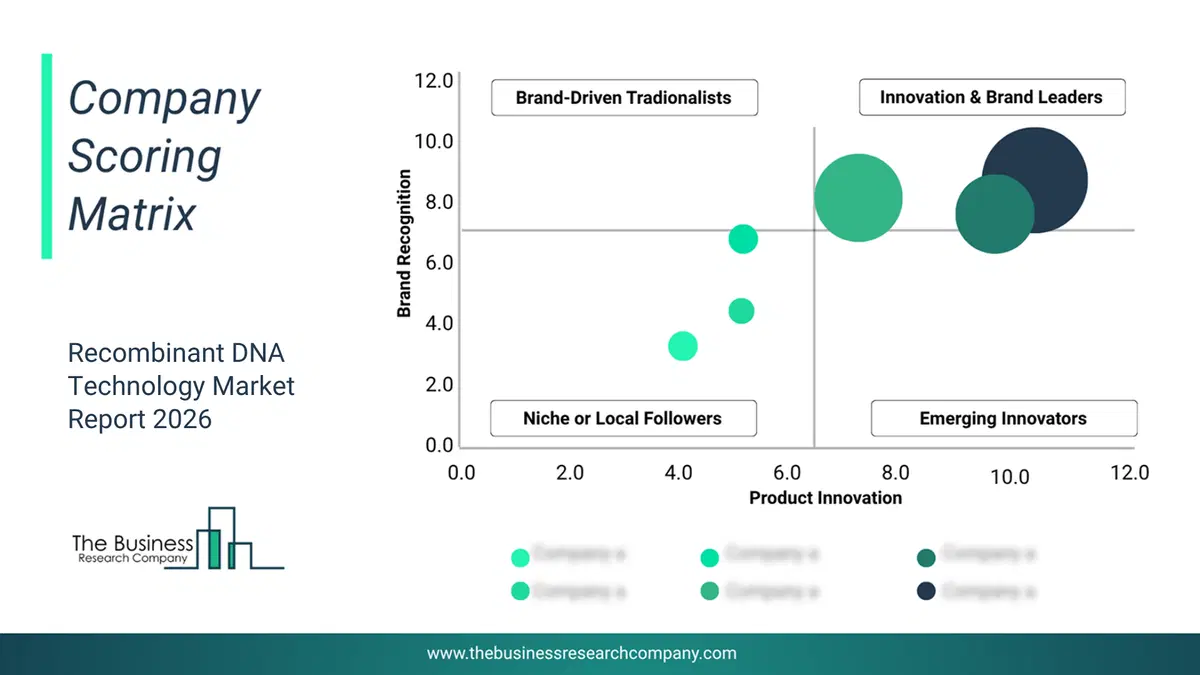
This chart maps companies by product innovation and brand strength, with bubble size indicating relative revenue, helping identify market leaders, challengers, and niche players. This is an illustrative chart; the full report provides a complete and accurate competitive analysis.
Global Recombinant DNA Technology Market Trends and Insights
Major companies operating in the recombinant DNA technology market are focusing on incorporating advanced gene-editing techniques such as clustered regularly interspaced short palindromic repeats (CRISPR)-based recombinant DNA engineering to enhance precision, therapeutic efficacy, and targeted genome modification. CRISPR-based recombinant DNA engineering is a molecular technique that uses a guide RNA and the Cas9 enzyme to locate and cut specific DNA sequences, enabling capabilities such as targeted gene correction, controlled DNA insertion, and efficient genomic modification. For instance, in December 2023, Vertex Pharmaceuticals, a US-based biotechnology company, together with CRISPR Therapeutics, a Switzerland-based gene-editing biotechnology company, received approval from the US Food and Drug Administration for Casgevy, a CRISPR-enabled recombinant DNA therapy designed for the treatment of sickle cell disease and transfusion-dependent beta thalassemia by editing a patient’s own stem cells to increase fetal hemoglobin production. Casgevy features targeted DNA cleavage, high-fidelity gene modification, and ex vivo cell processing. Casgevy improves treatment outcomes by enabling durable gene correction, reducing dependence on conventional treatments, and supporting long-term clinical benefits.What Are Latest Mergers And Acquisitions In The Recombinant DNA Technology Market?
In October 2024, SK bioscience, a South Korea–based vaccine and biotechnology company, acquired IDT Biologika for an undisclosed amount. Through this acquisition, SK bioscience aims to expand its global manufacturing capacity, accelerate growth in recombinant vaccines and cell and gene therapy (CGT), and double IDT Biologika’s sales by 2028. IDT Biologika is a Germany-based contract development and manufacturing organization (CDMO) providing vaccine production, recombinant vaccine development, viral vector manufacturing, and biopharmaceutical CDMO services.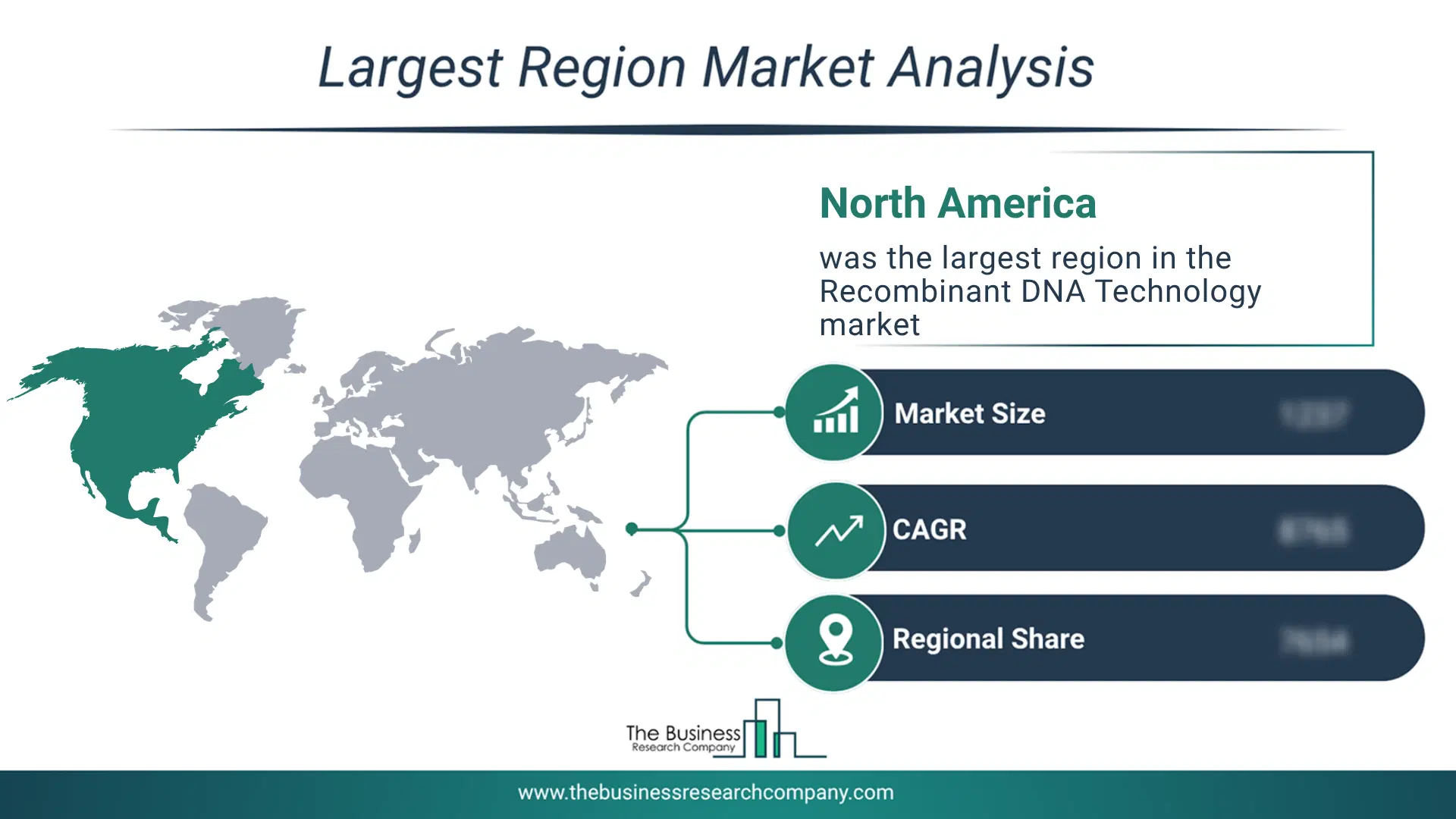
Regional Outlook
North America was the largest region in the recombinant DNA technology market share in 2025. Asia-Pacific is expected to be the fastest-growing region in the forecast period. The regions covered in this market report are Asia-Pacific, South East Asia, Western Europe, Eastern Europe, North America, South America, Middle East, Africa. The countries covered in this market report are Australia, Brazil, China, France, Germany, India, Indonesia, Japan, Taiwan, Russia, South Korea, UK, USA, Canada, Italy, SpainWhat Defines the Recombinant DNA Technology Market?
The recombinant DNA technology market includes revenues earned by entities by expression systems including mammalian, bacteria, yeast, and baculovirus / insect. The market value includes the value of related goods sold by the service provider or included within the service offering. Only goods and services traded between entities or sold to end consumers are included.How is Market Value Defined and Measured?
The market value is defined as the revenues that enterprises gain from the sale of goods and/or services within the specified market and geography through sales, grants, or donations in terms of the currency (in USD unless otherwise specified). The revenues for a specified geography are consumption values that are revenues generated by organizations in the specified geography within the market, irrespective of where they are produced. It does not include revenues from resales along the supply chain, either further along the supply chain or as part of other products.
This chart presents market attractiveness based on a quantitative evaluation of growth, competition, strategic alignment, and risk, offering a clear view of opportunity areas for decision-making. This chart is for illustrative purposes; the full report contains the complete analysis.

This chart highlights the Total Addressable Market (TAM) by estimating the maximum revenue opportunity using an assumption-driven approach, supporting strategic planning and opportunity sizing across markets. The chart is illustrative; the full report provides a more comprehensive analysis.
What Key Data and Analysis Are Included in the Recombinant DNA Technology Market Report 2026?
The recombinant dna technology market research report is one of a series of new reports from The Business Research Company that provides market statistics, including industry global market size, regional shares, competitors with the market share, detailed market segments, market trends and opportunities, and any further data you may need to thrive in the recombinant dna technology industry. The market research report delivers a complete perspective of everything you need, with an in-depth analysis of the current and future state of the industry.Recombinant DNA Technology Market Report Forecast Analysis
| Report Attribute | Details |
|---|---|
| Market Size Value In 2026 | $998.83 billion |
| Revenue Forecast In 2030 | $1414.92 billion |
| Growth Rate | CAGR of 9.1% from 2026 to 2030 |
| Base Year For Estimation | 2025 |
| Actual Estimates/Historical Data | 2020-2025 |
| Forecast Period | 2026 - 2030 |
| Market Representation | Revenue in USD Billion and CAGR from 2026 to 2030 |
| Segments Covered | Product Type, Component Type, Application Type, End-Use Type |
| Regional Scope | Asia-Pacific, Western Europe, Eastern Europe, North America, South America, Middle East, Africa |
| Country Scope | The countries covered in the report are Australia, Brazil, China, France, Germany, India, Indonesia, Japan, Taiwan, Russia, South Korea, UK, USA, Canada, Italy, Spain. |
| Key Companies Profiled | Profacgen BioTech Corp, Amgen Inc, Novartis International AG, GenScript Biotech Corporation, Pfizer Inc, Novo Nordisk A/S, Eli Lilly and Company, Sanofi S.A, Merck & Co. Inc, Biogen Inc, GlaxoSmithKline PLC, New England Biolabs Inc, Bayer CropScience, F. Hoffmann-La Roche Ltd, Regeneron Pharmaceuticals Inc, Gilead Sciences Inc, Vertex Pharmaceuticals Incorporated, CRISPR Therapeutics AG, Editas Medicine Inc, bluebird bio Inc, Lonza Group AG, Horizon Discovery Group PLC, Sarepta Therapeutics Inc, Sangamo Therapeutics Inc |
| Customization Scope | Request for Customization |
| Pricing And Purchase Options | Explore Purchase Options |