
Reconciliation Software Market Report 2026
Global Outlook – By Reconciliation Type (Bank Reconciliation, Customer Reconciliation, Inter Company Reconciliation, Other Reconciliation Types), By Component (Software, Services), By Deployment (Cloud, On-Premise), By Enterprise Size (Small And Medium-Sized Enterprises, Large Enterprises), By End User (Banking, Financial Services And Insurance (BFSI), Manufacturing, Retail And E-Commerce, Healthcare, Information Technology And Telecom, Energy And Utilities, Government And Public Sector, Other End Users) – Market Size, Trends, Strategies, and Forecast to 2030
Reconciliation Software Market Overview
• Reconciliation Software market size has reached to $2.8 billion in 2025 • Expected to grow to $6.43 billion in 2030 at a compound annual growth rate (CAGR) of 18% • Growth Driver: Rising Cybercrime And Security Breaches Fueling The Growth Of The Market Due To Increasing Digitization Of Financial Transactions And Sensitive Data • Market Trend: Advancements In Automation Boost Accuracy And Efficiency In Financial Reconciliation • North America was the largest region in 2025 and Asia-Pacific is the fastest growing region.What Is Covered Under Reconciliation Software Market?
Reconciliation software is a tool that helps compare two sets of records to make sure they match. It spots any differences between them so mistakes can be fixed. This saves time and reduces errors compared to checking manually. Its main purpose is to keep records accurate and reliable. The main types of reconciliation software are bank reconciliation, customer reconciliation, intercompany reconciliation, and others. Bank reconciliation refers to the process of comparing an organization’s internal financial records with its bank statements to identify and resolve discrepancies. The solutions include various components such as software and services, which can be deployed either on the cloud or on-premise. They are used across different enterprise sizes, including small and medium-sized enterprises and large enterprises, with key end users spanning banking, financial services and insurance (BFSI), manufacturing, retail and e-commerce, healthcare, information technology and telecom, energy and utilities, government and public sector, and others.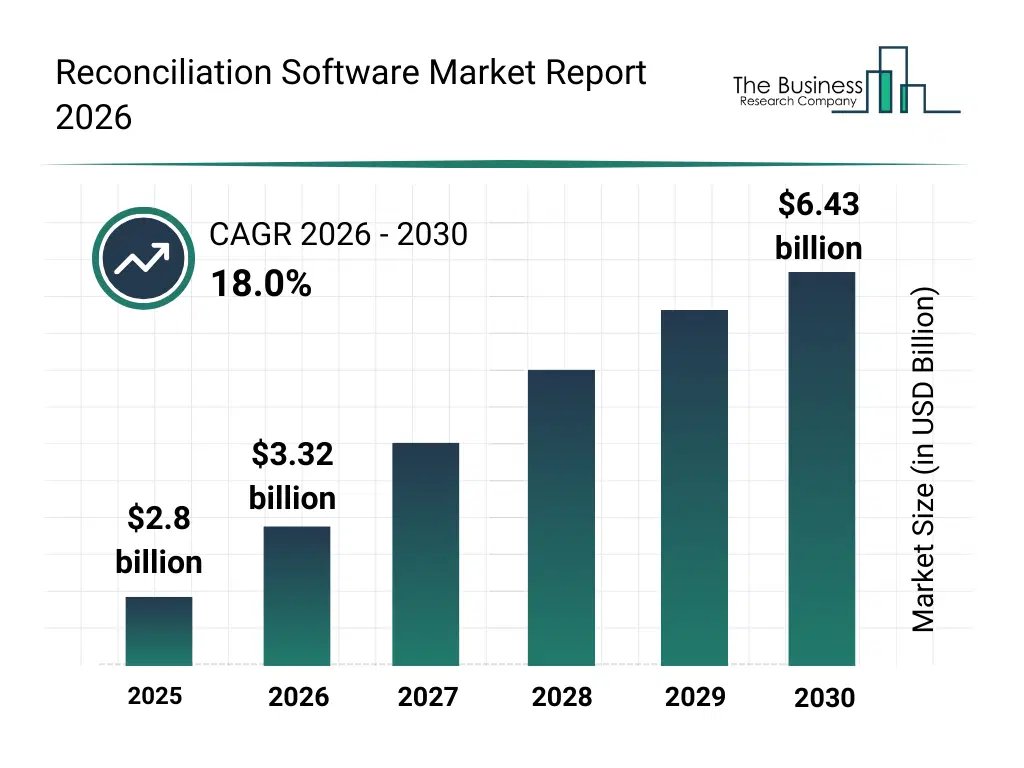
What Is The Reconciliation Software Market Size and Share 2026?
The reconciliation software market size has grown rapidly in recent years. It will grow from $2.8 billion in 2025 to $3.32 billion in 2026 at a compound annual growth rate (CAGR) of 18.6%. The growth in the historic period can be attributed to increasing transaction volumes across enterprises, growing complexity of financial records, expansion of digital payment systems, rising compliance reporting requirements, adoption of early automation tools.What Is The Reconciliation Software Market Growth Forecast?
The reconciliation software market size is expected to see rapid growth in the next few years. It will grow to $6.43 billion in 2030 at a compound annual growth rate (CAGR) of 18.0%. The growth in the forecast period can be attributed to increasing demand for real-time financial visibility, rising adoption of cloud-native finance software, expansion of ai-driven accounting systems, growing focus on operational efficiency, increasing regulatory compliance complexity. Major trends in the forecast period include increasing adoption of automated reconciliation platforms, rising use of ai-based exception management, growing integration of real-time transaction matching, expansion of cloud-based reconciliation solutions, enhanced focus on data accuracy and compliance.
Global Reconciliation Software Market Segmentation
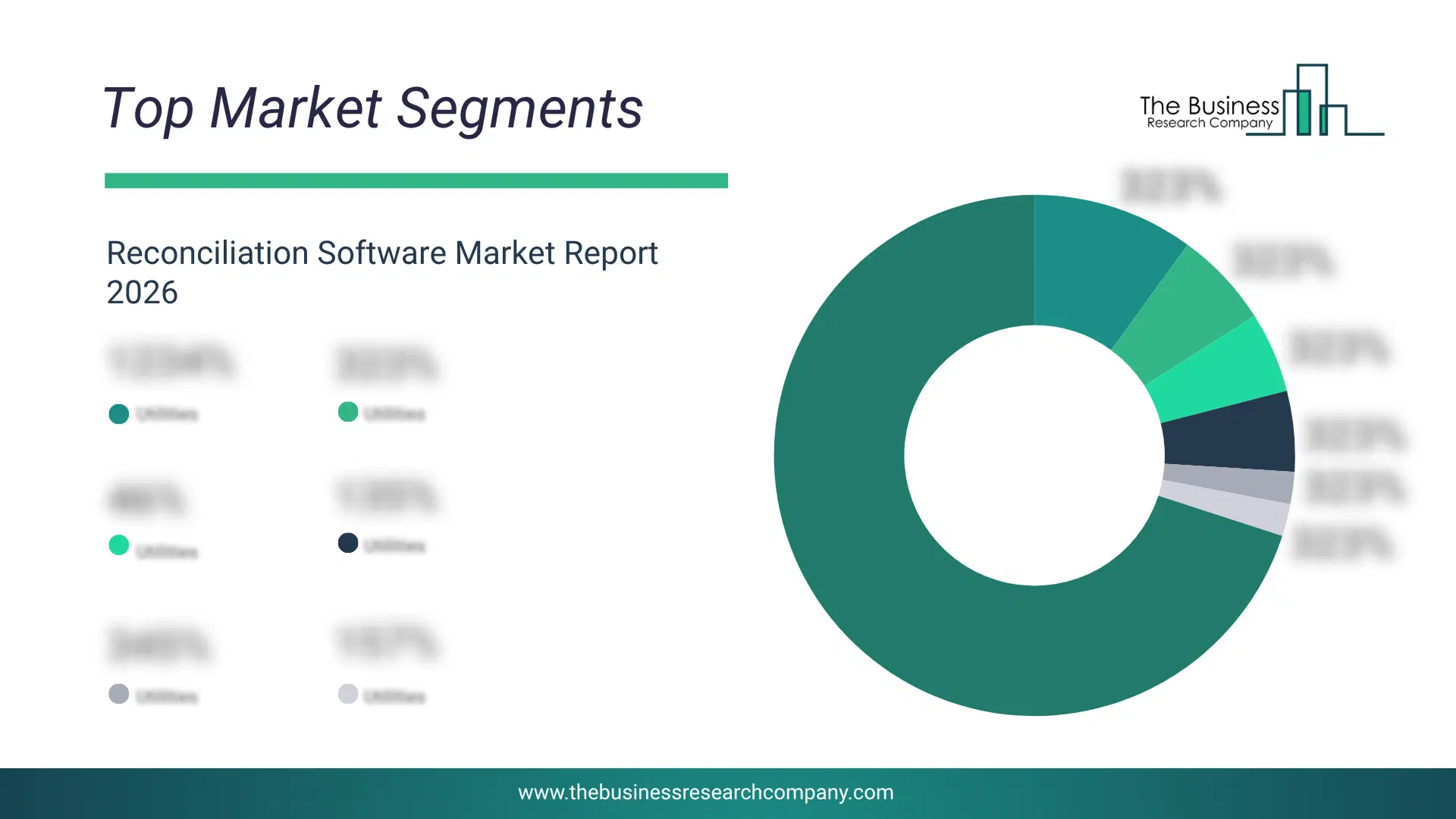
1) By Reconciliation Type: Bank Reconciliation, Customer Reconciliation, Inter Company Reconciliation, Other Reconciliation Types 2) By Component: Software, Services 3) By Deployment: Cloud, On-Premise 4) By Enterprise Size: Small And Medium-Sized Enterprises, Large Enterprises 5) By End User: Banking, Financial Services And Insurance (BFSI), Manufacturing, Retail And E-Commerce, Healthcare, Information Technology And Telecom, Energy And Utilities, Government And Public Sector, Other End Users Subsegments: 1) By Bank Reconciliation: Automated Bank Statement Matching, Cash Position Reconciliation, Bank Fee And Charge Verification, Outstanding Transaction Reconciliation 2) By Customer Reconciliation: Accounts Receivable Reconciliation, Invoice Matching And Verification, Payment Application Reconciliation, Customer Ledger Reconciliation 3) By Inter Company Reconciliation: Intercompany Account Balancing, Intercompany Transaction Verification, Intercompany Ledger Reconciliation, Transfer Pricing Reconciliation 4) By Other Reconciliation Types: Supplier Reconciliation, Payroll Reconciliation, Tax Reconciliation, General Ledger ReconciliationWhat Is The Driver Of The Reconciliation Software Market?
The growing threats of cybercrime and security breaches are expected to propel the growth of the reconciliation software market going forward. Cybercrimes and security breaches pose significant threats to organizations, necessitating robust cybersecurity measures and vigilant monitoring to protect sensitive data and maintain operational integrity. The threats of cybercrime and security breaches are rising due to the increasing digitization of financial transactions and sensitive data. Reconciliation software helps detect and prevent cybercrime and security breaches by identifying anomalies, unauthorized transactions, and inconsistencies in financial records. For instance, in November 2024, according to Australian Signals Directorate’s Australian Cyber Security Centre, Australia-based technical authority on cyber security reported that, in FY2023-24, ASD received over 36,700 calls to its Australian Cyber Security Hotline, an increase of 12% from the previous financial year. Therefore, the growing threats of cybercrime and security breaches are driving the expansion of the reconciliation software industry.Key Players In The Global Reconciliation Software Market
Major companies operating in the reconciliation software market are Oracle Corporation, SAP SE, Tata Consultancy Services Limited, Fiserv Inc., Fidelity National Information Services Inc. (FIS), Thomson Reuters Corporation, Broadridge Financial Solutions Inc., NICE Ltd., Xero Limited, Workiva, Tradeshift Inc., SmartStream Technologies Ltd., FloQast, Trintech Inc., KFin Technologies Limited, Gresham Technologies plc, Kyriba Corporation, Radial Systems Group Ltd. (AutoRek), SolveXia, Trust Fintech Limited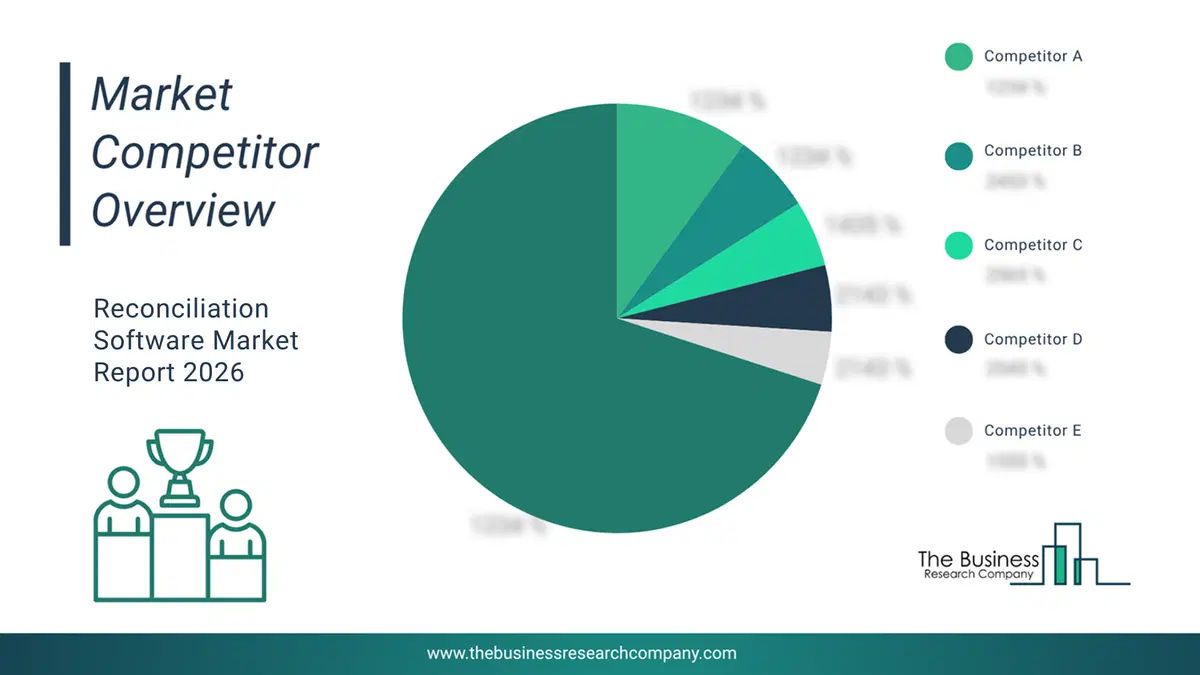
This chart is for illustrative purposes; the full report includes a detailed competitor analysis and comprehensive overview of the top 10 companies in the market.
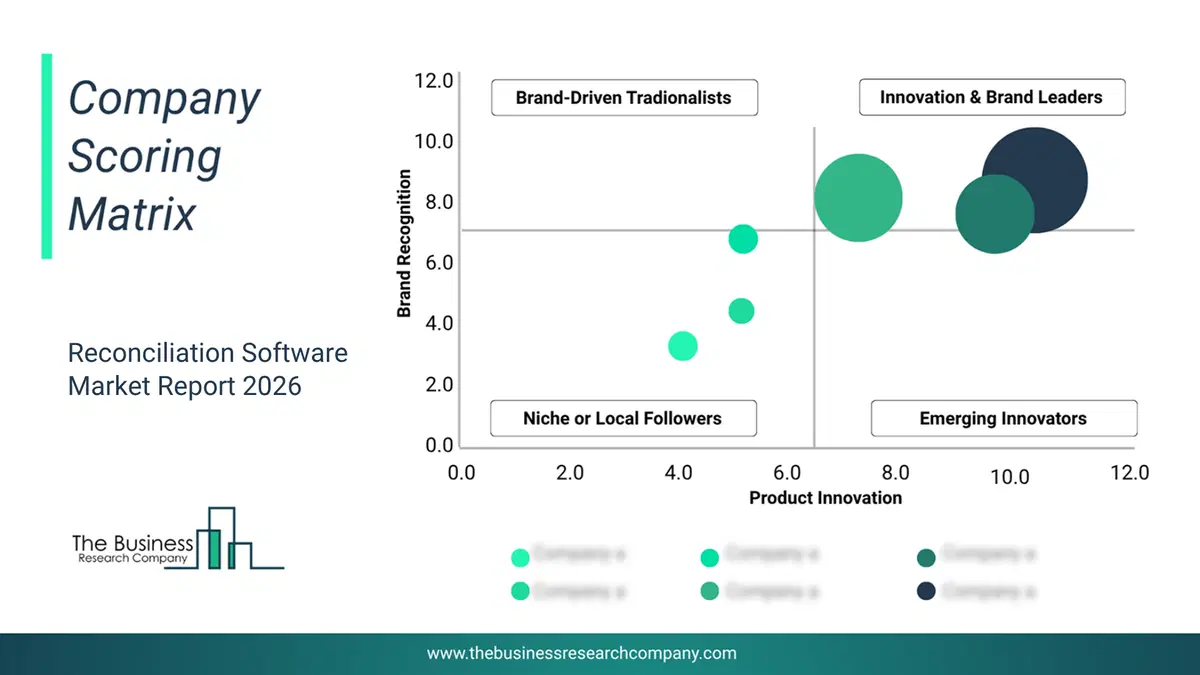
This chart maps companies by product innovation and brand strength, with bubble size indicating relative revenue, helping identify market leaders, challengers, and niche players. This is an illustrative chart; the full report provides a complete and accurate competitive analysis.
Global Reconciliation Software Market Trends and Insights
Major companies operating in the reconciliation software market are focusing on technological advancements such as automated compliance reconciliation which allows for the seamless identification and resolution of discrepancies between internal matter records and client billing requirements. Automated compliance reconciliation refers to a technology-driven process that automatically compares and aligns data across different systems to ensure it meets specific regulatory and client compliance requirements. For instance, in January 2024, Aderant Inc., a US-based provider of legal management software solutions, launched the Matter Reconciliation Module for Bill Blast, a module designed to streamline and automate the reconciliation of billing data by ensuring greater accuracy and efficiency in legal billing processes. It offers features such as automated matching of invoices to matters and comprehensive reporting capabilities to help law firms optimize their billing operations and reduce errors.What Are Latest Mergers And Acquisitions In The Reconciliation Software Market?
In July 2023, Trintech Inc., a US-based provider of financial close and reconciliation software, acquired financial reconciliation business from Fiserv, Inc for an undisclosed amount. The acquisition is intended to enhance Trintech’s capabilities in cloud-based reconciliation and financial automation solutions by integrating Fiserv’s reconciliation technologies and expanding its customer base. Fiserv, Inc is a US-based provider of financial services technology solutions.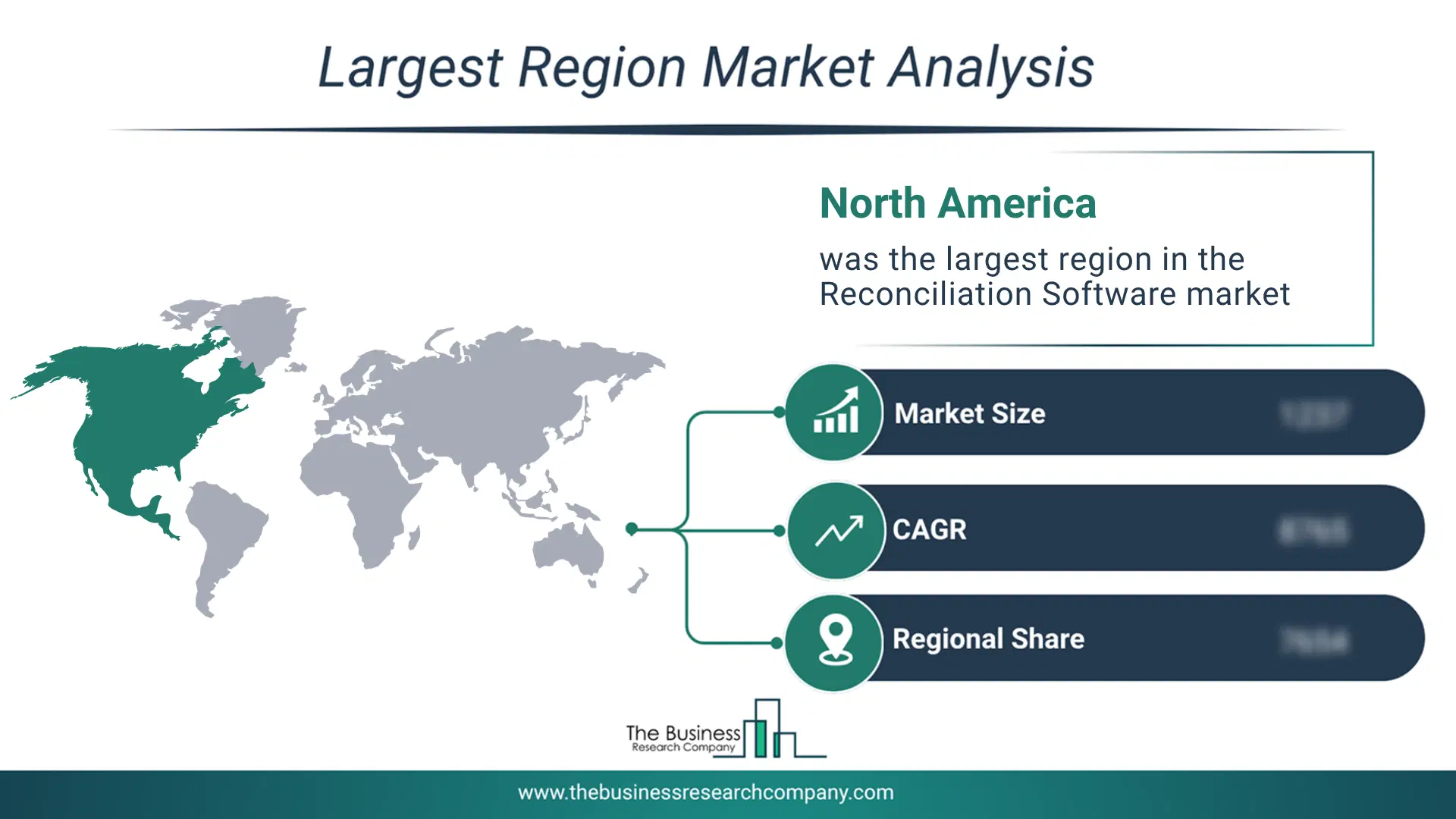
Regional Outlook
North America was the largest region in the reconciliation software market in 2025. Asia-Pacific is expected to be the fastest-growing region in the forecast period. The regions covered in this market report are Asia-Pacific, South East Asia, Western Europe, Eastern Europe, North America, South America, Middle East, Africa. The countries covered in this market report are Australia, Brazil, China, France, Germany, India, Indonesia, Japan, Taiwan, Russia, South Korea, UK, USA, Canada, Italy, Spain.What Defines the Reconciliation Software Market?
The reconciliation software market consists of revenues earned by entities by providing software solutions that help businesses compare, match, and verify records to ensure accuracy. The market value includes the value of related goods sold by the service provider or included within the service offering. The reconciliation software market includes sales of transaction matching software, automated reconciliation tools, exception management systems, and reporting dashboards. Values in this market are ‘factory gate’ values, that is, the value of goods sold by the manufacturers or creators of the goods, whether to other entities (including downstream manufacturers, wholesalers, distributors, and retailers) or directly to end customers. The value of goods in this market includes related services sold by the creators of the goods.How is Market Value Defined and Measured?
The market value is defined as the revenues that enterprises gain from the sale of goods and/or services within the specified market and geography through sales, grants, or donations in terms of the currency (in USD unless otherwise specified). The revenues for a specified geography are consumption values that are revenues generated by organizations in the specified geography within the market, irrespective of where they are produced. It does not include revenues from resales along the supply chain, either further along the supply chain or as part of other products.
This chart presents market attractiveness based on a quantitative evaluation of growth, competition, strategic alignment, and risk, offering a clear view of opportunity areas for decision-making. This chart is for illustrative purposes; the full report contains the complete analysis.

This chart highlights the Total Addressable Market (TAM) by estimating the maximum revenue opportunity using an assumption-driven approach, supporting strategic planning and opportunity sizing across markets. The chart is illustrative; the full report provides a more comprehensive analysis.
What Key Data and Analysis Are Included in the Reconciliation Software Market Report 2026?
The reconciliation software market research report is one of a series of new reports from The Business Research Company that provides market statistics, including Market Report 2026?global market size, regional shares, competitors with the market share, detailed market segments, market trends and opportunities, and any further data you may need to thrive in the reconciliation software Market Report 2026? The market research report delivers a complete perspective of everything you need, with an in-depth analysis of the current and future state of the Market Report 2026?Reconciliation Software Market Report Forecast Analysis
| Report Attribute | Details |
|---|---|
| Market Size Value In 2026 | $3.32 billion |
| Revenue Forecast In 2030 | $6.43 billion |
| Growth Rate | CAGR of 18.6% from 2026 to 2030 |
| Base Year For Estimation | 2025 |
| Actual Estimates/Historical Data | 2020-2025 |
| Forecast Period | 2026 - 2030 |
| Market Representation | Revenue in USD Billion and CAGR from 2026 to 2030 |
| Segments Covered | Reconciliation Type, Component, Deployment, Enterprise Size, End User |
| Regional Scope | Asia-Pacific, Western Europe, Eastern Europe, North America, South America, Middle East, Africa |
| Country Scope | The countries covered in the report are Australia, Brazil, China, France, Germany, India, Indonesia, Japan, Taiwan, Russia, South Korea, UK, USA, Canada, Italy, Spain. |
| Key Companies Profiled | Oracle Corporation, SAP SE, Tata Consultancy Services Limited, Fiserv Inc., Fidelity National Information Services Inc. (FIS), Thomson Reuters Corporation, Broadridge Financial Solutions Inc., NICE Ltd., Xero Limited, Workiva, Tradeshift Inc., SmartStream Technologies Ltd., FloQast, Trintech Inc., KFin Technologies Limited, Gresham Technologies plc, Kyriba Corporation, Radial Systems Group Ltd. (AutoRek), SolveXia, Trust Fintech Limited |
| Customization Scope | Request for Customization |
| Pricing And Purchase Options | Explore Purchase Options |