
Reconstituted Milk Market Report 2026
Global Outlook – By Product Type (Whole Reconstituted Milk, Low-Fat Reconstituted Milk, Non-Fat Reconstituted Milk, Flavored Reconstituted Milk), By Packaging Type (Cartons, Bottles, Packets, Bulk Packaging), By Form (Whole Milk Powder (WMP) Reconstitution, Skim Milk Powder (SMP) Reconstitution), By Distribution Channel (Supermarkets And Hypermarkets, Specialty Stores, Online Retail, Convenience Stores), By End Use Application (Dairy Products Manufacturing, Food And Beverage, Dietary And Nutritional Supplements, Infant Formula) – Market Size, Trends, Strategies, and Forecast to 2030
Reconstituted Milk Market Overview
• Reconstituted Milk market size has reached to $0.24 billion in 2025 • Expected to grow to $0.42 billion in 2030 at a compound annual growth rate (CAGR) of 11.3% • Growth Driver: Increasing Demand For Shelf-Stable Dairy Products Driving Market Growth Through Longer Shelf Life And Improved Dairy Accessibility • Market Trend: Technological Evolution Of Milk Powder Production Enhances Reconstituted Milk Processing Efficiency And Seasonal Supply Reliability • Asia-Pacific was the largest region and fastest growing region.What Is Covered Under Reconstituted Milk Market?
Reconstituted milk is a processed dairy product produced by mixing milk powder with water to restore the composition and nutritional properties of fresh liquid milk. It is manufactured under controlled conditions to ensure consistent quality, food safety, and shelf stability while retaining essential nutrients. It offers a practical and cost-effective alternative to fresh milk, particularly where availability, transportation, or storage is challenging. The main product types in the reconstituted milk market include whole reconstituted milk, low-fat reconstituted milk, non-fat reconstituted milk, and flavored reconstituted milk. Whole reconstituted milk refers to milk produced by combining whole milk powder with water to restore the composition and properties of liquid milk. These products are packaged in cartons, bottles, packets, and bulk packaging and produced through whole milk powder (WMP) reconstitution and skim milk powder (SMP) reconstitution. They are distributed through supermarkets and hypermarkets, specialty stores, online retail, and convenience stores and are used for dairy products manufacturing, food and beverage, dietary and nutritional supplements, and infant formula.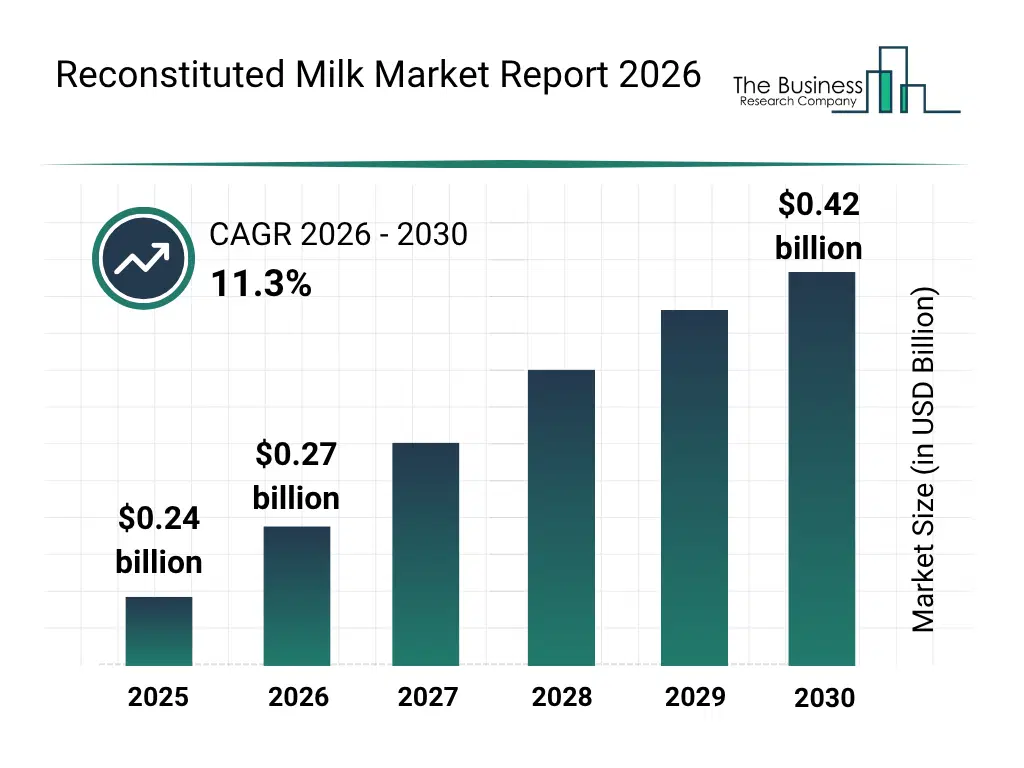
What Is The Reconstituted Milk Market Size and Share 2026?
The reconstituted milk market size has grown rapidly in recent years. It will grow from $0.24 billion in 2025 to $0.27 billion in 2026 at a compound annual growth rate (CAGR) of 11.8%. The growth in the historic period can be attributed to increasing demand for shelf-stable dairy products, limited availability of fresh milk in remote areas, rising dairy processing activities, need for cost-effective milk alternatives, expanding use of milk powder in food manufacturing.What Is The Reconstituted Milk Market Growth Forecast?
The reconstituted milk market size is expected to see rapid growth in the next few years. It will grow to $0.42 billion in 2030 at a compound annual growth rate (CAGR) of 11.3%. The growth in the forecast period can be attributed to growing demand for fortified dairy nutrition, expanding food and beverage processing applications, increasing urbanization and convenience-oriented consumption, rising demand for infant nutrition products, expanding retail and online distribution of packaged dairy products. Major trends in the forecast period include growing demand for extended-shelf-life dairy products, rising adoption of fortified reconstituted milk products, increasing use of reconstituted milk in food processing, expanding cold-chain and dry-storage distribution networks, rising consumer preference for convenient milk formats.Tariff Impact On Reconstituted Milk Market
Tariffs are impacting the reconstituted milk market by increasing the cost of imported milk powder, dairy ingredients, packaging materials, and processing equipment required for reconstituted milk production. This is increasing production costs and affecting the affordability and availability of reconstituted milk, particularly in regions dependent on imported dairy inputs. Product types such as whole reconstituted milk, low-fat reconstituted milk, and non-fat reconstituted milk are affected, while food and beverage and dairy product manufacturing applications face higher input costs. However, tariffs are also encouraging domestic milk powder production, local sourcing, supplier diversification, and investment in regional dairy processing infrastructure, supporting long-term supply-chain resilience.
Global Reconstituted Milk Market Segmentation
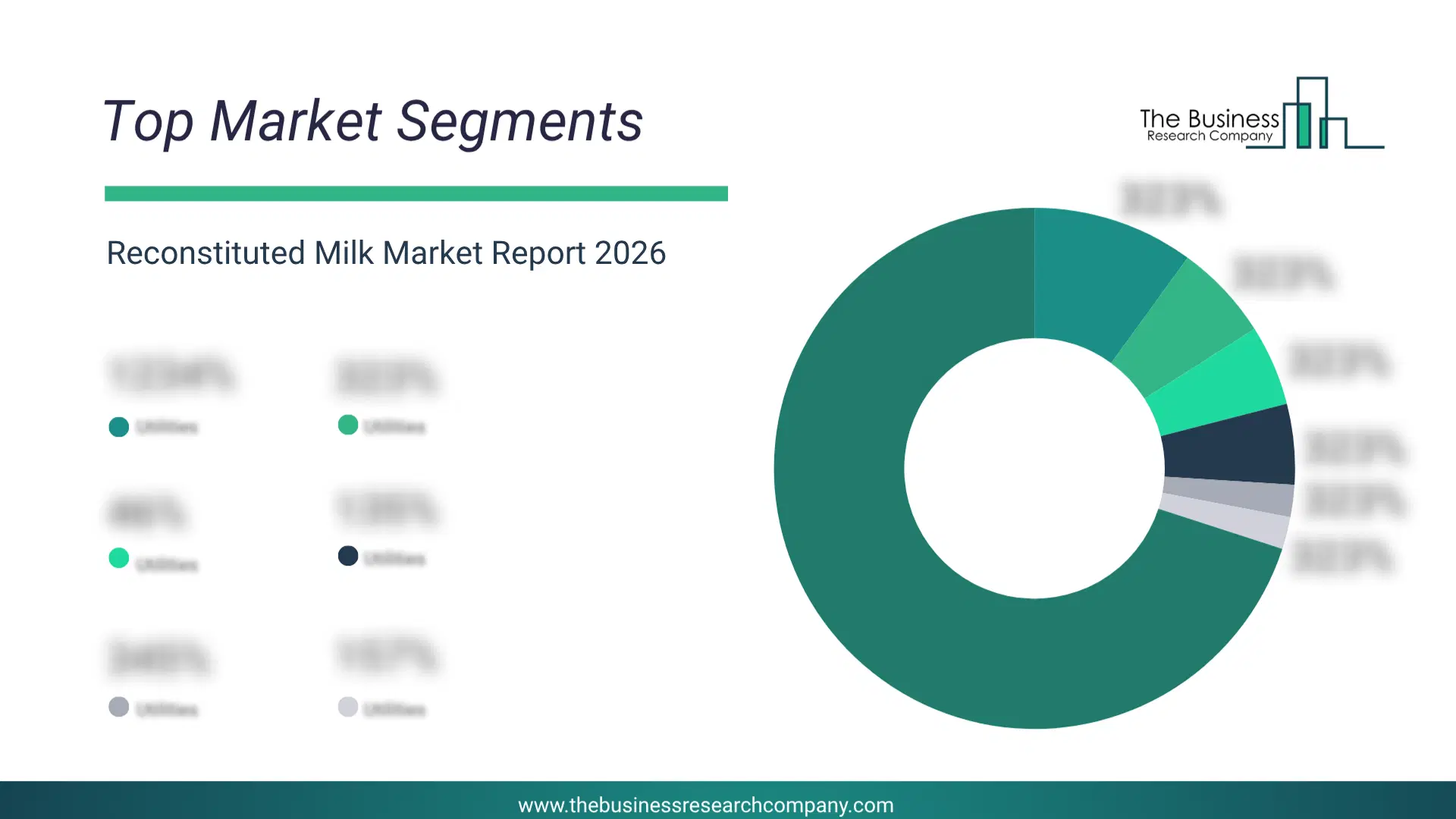
1) By Product Type: Whole Reconstituted Milk, Low-Fat Reconstituted Milk, Non-Fat Reconstituted Milk, Flavored Reconstituted Milk 2) By Packaging Type: Cartons, Bottles, Packets, Bulk Packaging 3) By Form: Whole Milk Powder (WMP) Reconstitution, Skim Milk Powder (SMP) Reconstitution 4) By Distribution Channel: Supermarkets And Hypermarkets, Specialty Stores, Online Retail, Convenience Stores 5) By End Use Application: Dairy Products Manufacturing, Food And Beverage, Dietary And Nutritional Supplements, Infant Formula Subsegments: 1) By Whole Reconstituted Milk: Plain Whole Reconstituted Milk, Fortified Whole Reconstituted Milk 2) By Low-Fat Reconstituted Milk: Plain Low-Fat Reconstituted Milk, Fortified Low-Fat Reconstituted Milk 3) By Non-Fat Reconstituted Milk: Plain Non-Fat Reconstituted Milk, Fortified Non-Fat Reconstituted Milk 4) By Flavored Reconstituted Milk: Chocolate Flavored Reconstituted Milk, Fruit Flavored Reconstituted Milk, Vanilla Flavored Reconstituted MilkWhat Is The Driver Of The Reconstituted Milk Market?
The increasing demand for shelf-stable dairy products is expected to propel the growth of the reconstituted milk market going forward. Shelf-stable dairy products are dairy products processed and packaged using preservation methods that allow them to maintain quality and safety for extended periods without requiring continuous refrigeration. The increasing demand for shelf-stable dairy products is due to growing consumer preference for convenient food products and the need for reliable dairy availability in areas with limited cold-chain infrastructure. Shelf-stable dairy products support reconstituted milk by enabling milk powder and dairy ingredients to be stored for extended periods and reconstituted into liquid milk when needed, ensuring consistent availability, efficient transportation, and reduced spoilage across retail, foodservice, and industrial applications. For instance, in February 2026, according to the United States Department of Agriculture (USDA), a US-based government agency, A $263 million Section 32 food purchase included $10 million worth of ultra-high temperature (UHT) milk. Therefore, the increasing demand for shelf-stable dairy products is driving the growth of the reconstituted milk industry.Key Players In The Global Reconstituted Milk Market
Major companies operating in the reconstituted milk market are Nestlé SA, BSA SA, Danone SA, Dairy Farmers of America Inc., Inner Mongolia Yili Industrial Group Co. Ltd., Fonterra Co-operative Group Limited, China Mengniu Dairy Company Limited, Arla Foods amba, Koninklijke FrieslandCampina NV, Saputo Inc., Gujarat Cooperative Milk Marketing Federation Ltd., Meiji Holdings Co. Ltd., Glanbia plc, DMK Deutsches Milchkontor GmbH, Schreiber Foods Inc., Sodiaal Union Union de Cooperatives Agricoles, Mother Dairy Fruit & Vegetable Pvt. Ltd., Parag Milk Foods Limited, Abbott Laboratories, Reckitt Benckiser Group plc, Kerry Group plc, Ornua Co-operative Limited, Savencia SA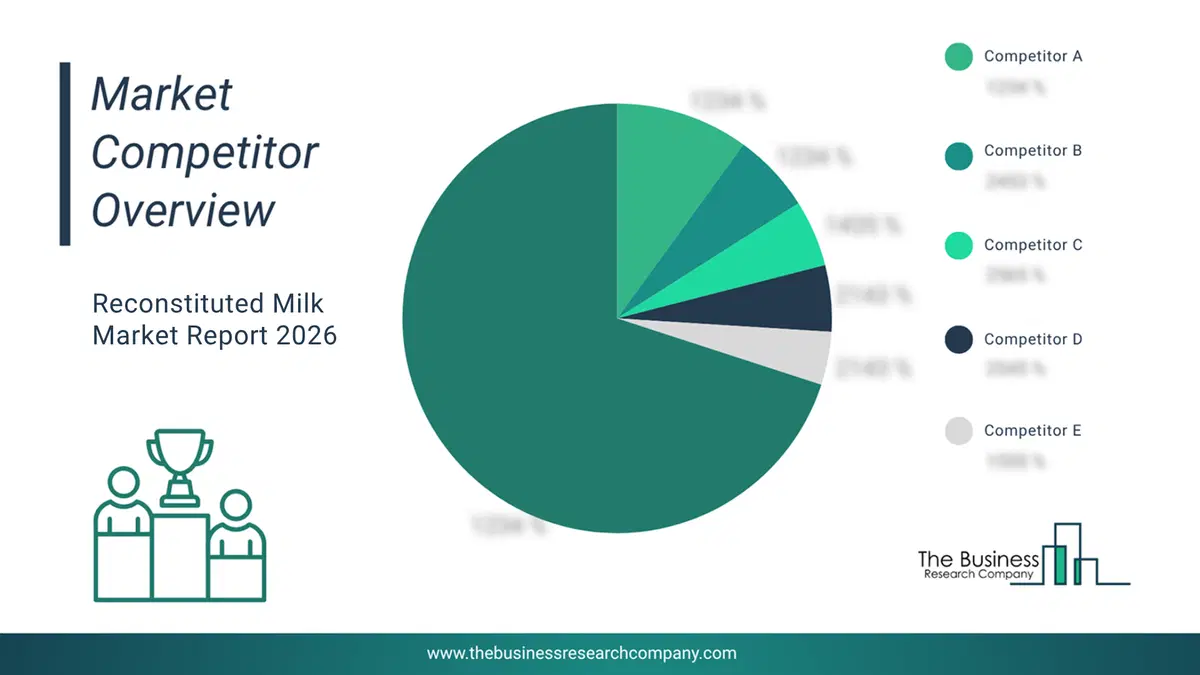
This chart is for illustrative purposes; the full report includes a detailed competitor analysis and comprehensive overview of the top 10 companies in the market.
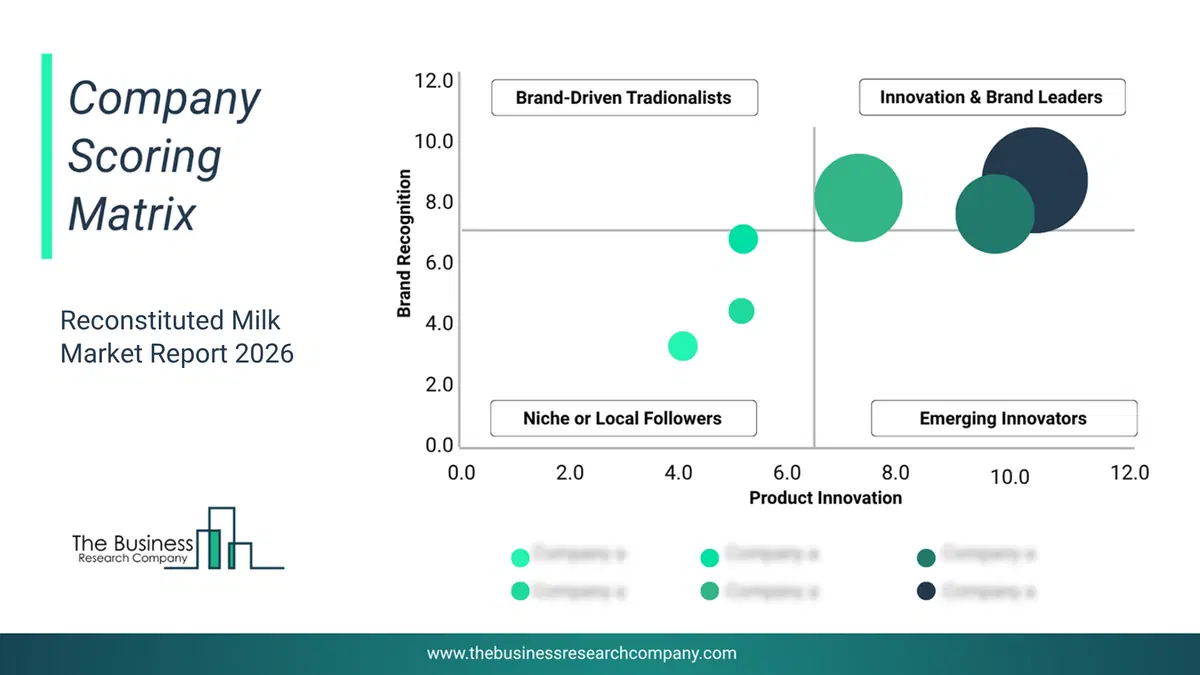
This chart maps companies by product innovation and brand strength, with bubble size indicating relative revenue, helping identify market leaders, challengers, and niche players. This is an illustrative chart; the full report provides a complete and accurate competitive analysis.
Global Reconstituted Milk Market Trends and Insights
Major companies operating in the reconstituted milk market are focusing on developing technological evolution of milk powder production, such as automated dairy processing facilities, to enhance production efficiency, maintain quality standards, and ensure a reliable supply of reconstituted milk during seasonal fluctuations. An automated dairy processing facility refers to a technologically integrated production plant that processes and standardizes milk, including reconstituted milk made from milk powder and butter oil, using automated systems to improve operational efficiency and hygiene. For instance, in April 2026, Krishna Milk Union, an India-based dairy cooperative, launched a new range of Vijaya dairy products to enhance reconstituted milk production capacity, improve processing efficiency, and ensure a consistent milk supply during seasonal fluctuations. The facility is designed with advanced milk handling, homogenization, separation, and digital monitoring systems and is capable of processing both fresh milk and reconstituted milk (RCM) during lean seasons.What Are Latest Mergers And Acquisitions In The Reconstituted Milk Market?
In August 2025, the A2 Milk Company, a New Zealand-based dairy enterprise, acquired Yashili New Zealand Dairy Co., Ltd. for NZ$282 million ($165.82 million). With this acquisition, the A2 Milk Company aims to strengthen its manufacturing capabilities, secure strategic production capacity in New Zealand, and support the expansion of its premium infant nutrition and dairy product portfolio across international markets. Yashili New Zealand Dairy Co., Ltd. is a New Zealand-based manufacturer of milk powder products that are used to produce reconstituted milk.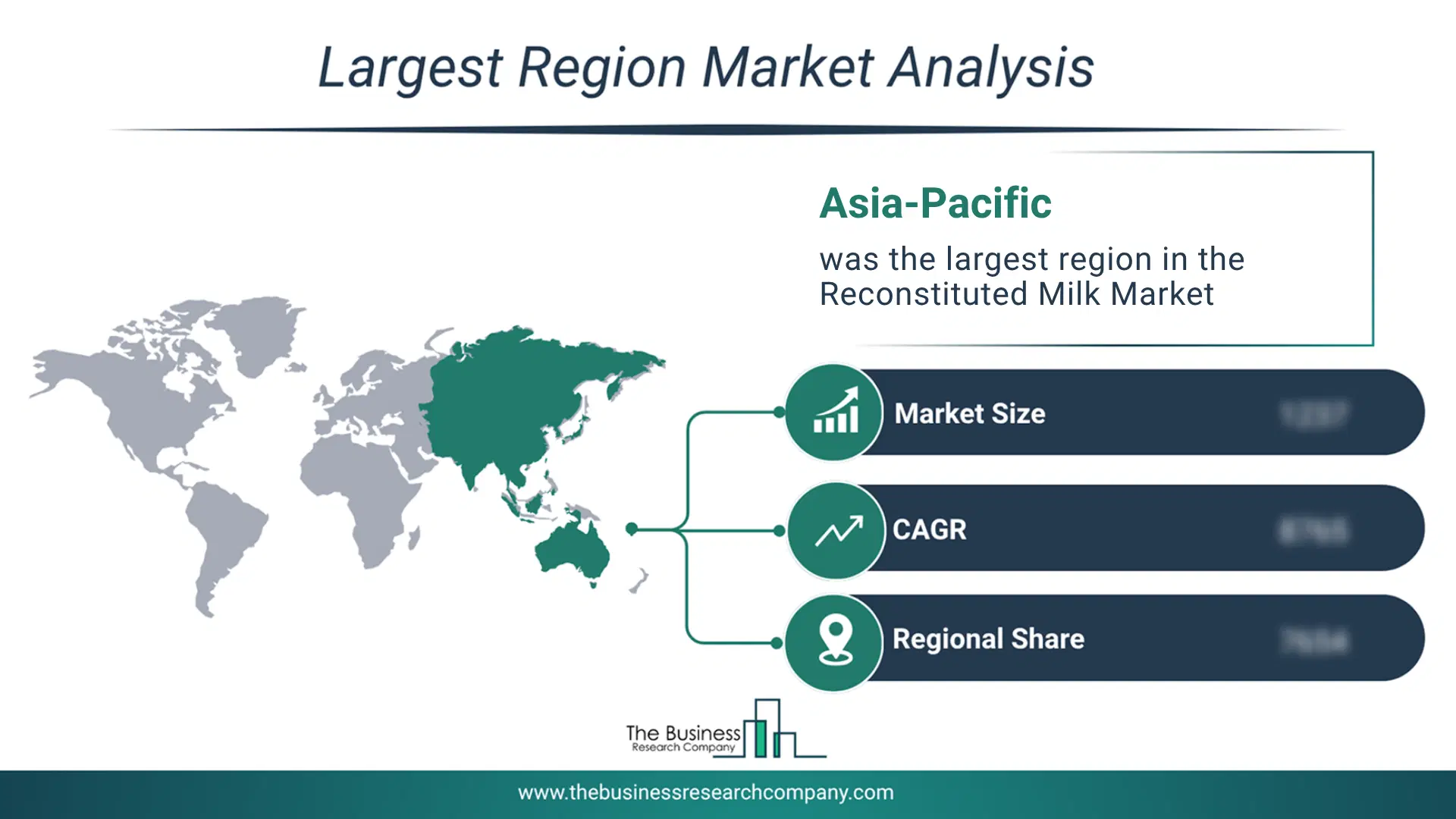
Regional Outlook
Asia-Pacific was the largest region in the reconstituted milk market in 2025. Asia-Pacific is expected to be the fastest-growing region in the forecast period. The regions covered in this market report are Asia-Pacific, South East Asia, Western Europe, Eastern Europe, North America, South America, Middle East, Africa. The countries covered in this market report are Australia, Brazil, China, France, Germany, India, Indonesia, Japan, Taiwan, Russia, South Korea, UK, USA, Canada, Italy, Spain.What Defines the Reconstituted Milk Market?
The reconstituted milk market consists of sales of reconstituted whole milk, reconstituted skimmed milk, reconstituted low-fat milk, and other reconstituted milk products produced by combining milk powder or other concentrated milk solids with water and, where applicable, milk fat or other permitted milk components to recreate milk with characteristics similar to fresh milk. Values in this market are ‘factory gate’ values, that is, the value of goods sold by the manufacturers or creators of the goods, whether to other entities (including downstream manufacturers, wholesalers, distributors, and retailers) or directly to end customers. The value of goods in this market includes related services sold by the creators of the goods.How is Market Value Defined and Measured?
The market value is defined as the revenues that enterprises gain from the sale of goods and/or services within the specified market and geography through sales, grants, or donations in terms of the currency (in USD unless otherwise specified). The revenues for a specified geography are consumption values that are revenues generated by organizations in the specified geography within the market, irrespective of where they are produced. It does not include revenues from resales along the supply chain, either further along the supply chain or as part of other products.
This chart presents market attractiveness based on a quantitative evaluation of growth, competition, strategic alignment, and risk, offering a clear view of opportunity areas for decision-making. This chart is for illustrative purposes; the full report contains the complete analysis.

This chart highlights the Total Addressable Market (TAM) by estimating the maximum revenue opportunity using an assumption-driven approach, supporting strategic planning and opportunity sizing across markets. The chart is illustrative; the full report provides a more comprehensive analysis.
What Key Data and Analysis Are Included in the Reconstituted Milk Market Report 2026?
The reconstituted milk market research report is one of a series of new reports from The Business Research Company that provides market statistics, including industry global market size, regional shares, competitors with the market share, detailed market segments, market trends and opportunities, and any further data you may need to thrive in the reconstituted milk industry. The market research report delivers a complete perspective of everything you need, with an in-depth analysis of the current and future state of the industry.Reconstituted Milk Market Report Forecast Analysis
| Report Attribute | Details |
|---|---|
| Market Size Value In 2026 | $0.27 billion |
| Revenue Forecast In 2030 | $0.42 billion |
| Growth Rate | CAGR of 11.3% from 2026 to 2030 |
| Base Year For Estimation | 2025 |
| Actual Estimates/Historical Data | 2020-2025 |
| Forecast Period | 2026 - 2030 |
| Market Representation | Revenue in USD Billion and CAGR from 2026 to 2030 |
| Segments Covered | Product Type, Packaging Type, Form, Distribution Channel, End Use Application |
| Regional Scope | Asia-Pacific, Western Europe, Eastern Europe, North America, South America, Middle East, Africa |
| Country Scope | The countries covered in the report are Australia, Brazil, China, France, Germany, India, Indonesia, Japan, Taiwan, Russia, South Korea, UK, USA, Canada, Italy, Spain. |
| Key Companies Profiled | Nestlé SA, BSA SA, Danone SA, Dairy Farmers of America Inc., Inner Mongolia Yili Industrial Group Co. Ltd., Fonterra Co-operative Group Limited, China Mengniu Dairy Company Limited, Arla Foods amba, Koninklijke FrieslandCampina NV, Saputo Inc., Gujarat Cooperative Milk Marketing Federation Ltd., Meiji Holdings Co. Ltd., Glanbia plc, DMK Deutsches Milchkontor GmbH, Schreiber Foods Inc., Sodiaal Union Union de Cooperatives Agricoles, Mother Dairy Fruit & Vegetable Pvt. Ltd., Parag Milk Foods Limited, Abbott Laboratories, Reckitt Benckiser Group plc, Kerry Group plc, Ornua Co-operative Limited, Savencia SA |
| Customization Scope | Request for Customization |
| Pricing And Purchase Options | Explore Purchase Options |