

Recurrent Implantation Failure Panels Market Report 2026
Global Outlook – By Product Type (Genetic Panels, Immunological Panels, Endometrial Receptivity Panels, Combined Panels, Other Product Types), By Technology (Polymerase Chain Reaction (PCR), Next-Generation Sequencing, Microarray, Immunoassay, Other Technologies), By Sample Type (Blood, Tissue, Other Sample Types), By End User (Hospitals And Clinics, Diagnostic Laboratories, Fertility Centers, Other End Users) – Market Size, Trends, Strategies, and Forecast to 2030
Recurrent Implantation Failure Panels Market Overview
• Recurrent Implantation Failure Panels market size has reached to $0.82 billion in 2025 • Expected to grow to $1.31 billion in 2030 at a compound annual growth rate (CAGR) of 9.8% • Growth Driver: Surge In Prevalence Of Infertility Fueling The Growth Of The Market Due To Delayed Childbearing And Rising Ivf Demand • North America was the largest region in 2025 and Asia-Pacific is the fastest growing region.What Is Covered Under Recurrent Implantation Failure Panels Market?
Recurrent implantation failure panels are comprehensive diagnostic test panels used in reproductive medicine to investigate possible causes of repeated failure of embryo implantation after assisted reproductive techniques such as IVF. These panels typically include a combination of genetic, immunological, hormonal, thrombophilia, and uterine receptivity tests to identify factors that may interfere with successful implantation. The main product types of recurrent implantation failure panels include genetic panels, immunological panels, endometrial receptivity panels, combined panels, and other product types. Genetic panels refer to collections of tests designed to assess genetic factors that may contribute to implantation failure. The technologies include polymerase chain reaction (PCR), next-generation sequencing, microarray, immunoassay, and other technologies. The sample types include blood, tissue, and other sample types, serving end users including hospitals and clinics, diagnostic laboratories, fertility centers, and other end users.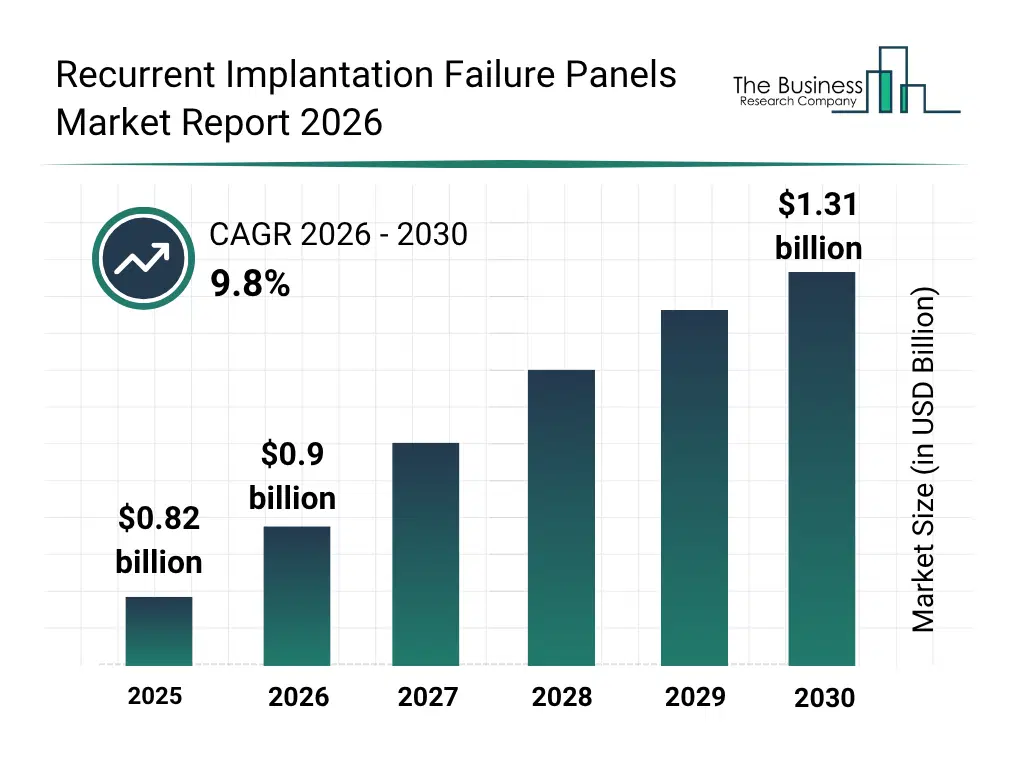
What Is The Recurrent Implantation Failure Panels Market Size and Share 2026?
The recurrent implantation failure panels market size has grown strongly in recent years. It will grow from $0.82 billion in 2025 to $0.9 billion in 2026 at a compound annual growth rate (CAGR) of 9.5%. The growth in the historic period can be attributed to rising infertility awareness, adoption of conventional IVF protocols, growth of diagnostic laboratories, increasing use of genetic testing, demand for endometrial evaluation.What Is The Recurrent Implantation Failure Panels Market Growth Forecast?
The recurrent implantation failure panels market size is expected to see strong growth in the next few years. It will grow to $1.31 billion in 2030 at a compound annual growth rate (CAGR) of 9.8%. The growth in the forecast period can be attributed to integration of ai and machine learning, expansion of fertility clinics, adoption of multi-omics approaches, development of automated testing platforms, increasing patient demand for personalized fertility solutions. Major trends in the forecast period include personalized implantation risk assessment, integration of multi-omics data, ai-based predictive fertility modeling, real-time monitoring of endometrial receptivity, automation in genetic and immunological testing.
Global Recurrent Implantation Failure Panels Market Segmentation
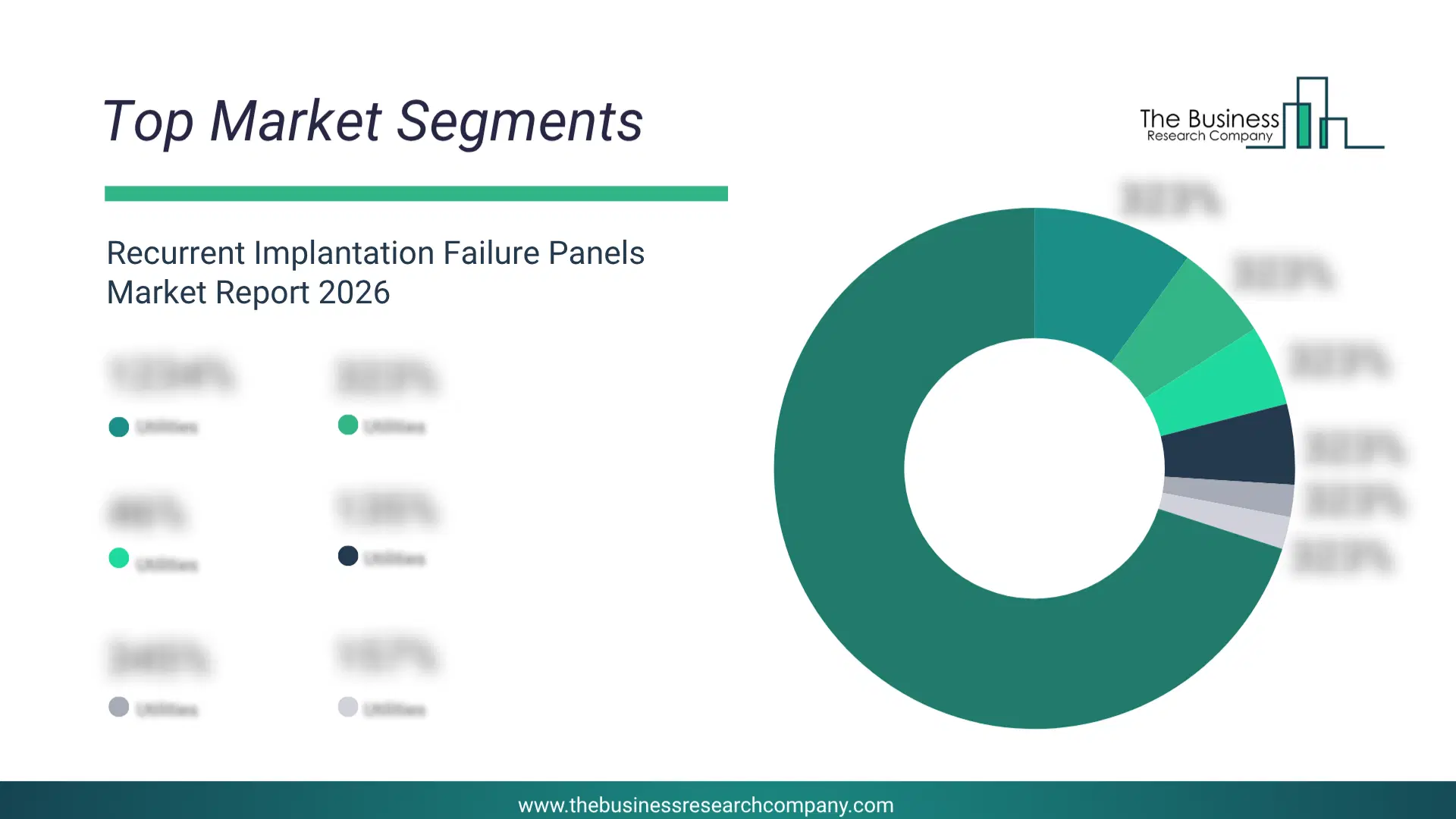
1) By Product Type: Genetic Panels, Immunological Panels, Endometrial Receptivity Panels, Combined Panels, Other Product Types 2) By Technology: Polymerase Chain Reaction (PCR), Next-Generation Sequencing, Microarray, Immunoassay, Other Technologies 3) By Sample Type: Blood, Tissue, Other Sample Types 4) By End User: Hospitals And Clinics, Diagnostic Laboratories, Fertility Centers, Other End Users Subsegments: 1) By Genetic Panels: Chromosomal Abnormality Panels, Gene Mutation Panels, Single Nucleotide Variation Panels, Epigenetic Marker Panels 2) By Immunological Panels: Cytokine Profile Panels, Autoantibody Detection Panels, Natural Killer Cell Activity Panels, T Cell Subset Panels 3) By Endometrial Receptivity Panels: Gene Expression Profiling Panels, Protein Marker Panels, Microbiome Analysis Panels, Histological Assessment Panels 4) By Combined Panels: Genetic And Immunological Panels, Genetic And Endometrial Panels, Immunological And Endometrial Panels, Multi Parameter Comprehensive Panels 5) By Other Product Types: Hormonal Assay Panels, Metabolic Function Panels, Inflammatory Marker Panels, Customized Research PanelsWhat Are The Drivers Of The Recurrent Implantation Failure Panels Market?
The increasing prevalence of infertility worldwide is expected to drive the growth of the recurrent implantation failure (RIF) panels market over the forecast period. Infertility is defined as the inability to conceive after 12 months of regular, unprotected sexual intercourse. Rising infertility rates are largely attributed to factors such as delayed childbearing, lifestyle changes, and age-related declines in reproductive potential, which increase the likelihood of conception difficulties and unsuccessful assisted reproductive outcomes. Recurrent implantation failure panels support infertility management by identifying genetic, immunological, and hormonal factors that may hinder successful embryo implantation, enabling clinicians to design more personalized treatment strategies and improve in vitro fertilization (IVF) success rates. For instance, in June 2025, data from the Human Fertilisation and Embryology Authority (HFEA), a UK-based statutory regulator of fertility treatment, indicated that approximately 52,400 patients underwent more than 77,500 IVF cycles at licensed fertility clinics in 2023. Therefore, increasing prevalence of infertility worldwide is driving the growth of the recurrent implantation failure panels industry. The growth in in vitro fertilization (IVF) and assisted reproductive technology (ART) cycles is expected to drive the expansion of the recurrent implantation failure (RIF) panels market over the forecast period. IVF and ART encompass medical procedures that assist conception by manipulating eggs, sperm, or embryos outside the body. The increasing adoption of these treatments is largely driven by rising infertility rates, delayed parenthood, and improved access to fertility services, prompting more individuals and couples to seek medical assistance to achieve successful pregnancies. Recurrent implantation failure panels support IVF and ART cycles by identifying genetic, immunological, and molecular factors that may impair embryo implantation, enabling clinicians to tailor treatment strategies and improve pregnancy success rates. For instance, in 2023, according to YourIVFSuccess, an Australia-based government-funded initiative, approximately 20,417 babies were born via IVF, meaning nearly one in every 16 Australian births resulted from assisted reproductive technologies. Therefore, growth in in vitro fertilization (IVF) and assisted reproductive technology (ART) cycles is driving the growth of the recurrent implantation failure panels industry. The expansion of fertility clinic networks is expected to drive the growth of the recurrent implantation failure (RIF) panels market over the forecast period. Fertility clinic networks consist of interconnected centers operating under a coordinated system or brand to deliver assisted reproductive services, including in vitro fertilization (IVF). The growth of these networks is primarily driven by increasing patient demand, as networked clinics expand geographic access, standardize care protocols, and offer more convenient treatment options across regions. Recurrent implantation failure panels support fertility clinic networks by enabling personalized assessment of implantation-related challenges, improving treatment success rates, and enhancing patient outcomes across multiple clinical sites. For instance, according to YourIVFSuccess, an Australia-based government-funded initiative, more than 112,000 IVF cycles were conducted nationwide in 2023, an increase of 23% from 2022. Therefore, expansion of fertility clinic networks is driving the growth of the recurrent implantation failure panels industry.Key Players In The Global Recurrent Implantation Failure Panels Market
Major companies operating in the recurrent implantation failure panels market are Thermo Fisher Scientific Inc., Laboratory Corporation of America Holdings (LabCorp), Quest Diagnostics Incorporated, Illumina Inc., Natera Inc., Redcliffe Labs, MedGenome Labs Ltd., Mayo Clinic Laboratories, Fulgent Genetics Inc., LifeCell International, Kindbody Genetics, MapmyGenome, DNA Labs India, Shree IVF Clinic, Inti Labs, Vida Fertility Genetics, Cleveland Clinic, ReceptivaDx (CicloMed), MatriceLab, Reproductive Genetic Innovations (RGI), BGI Genomics Co. Ltd., Embryolab Next Gen IVF, Aksigen IVF, Progenesis IVF, Vani IVF.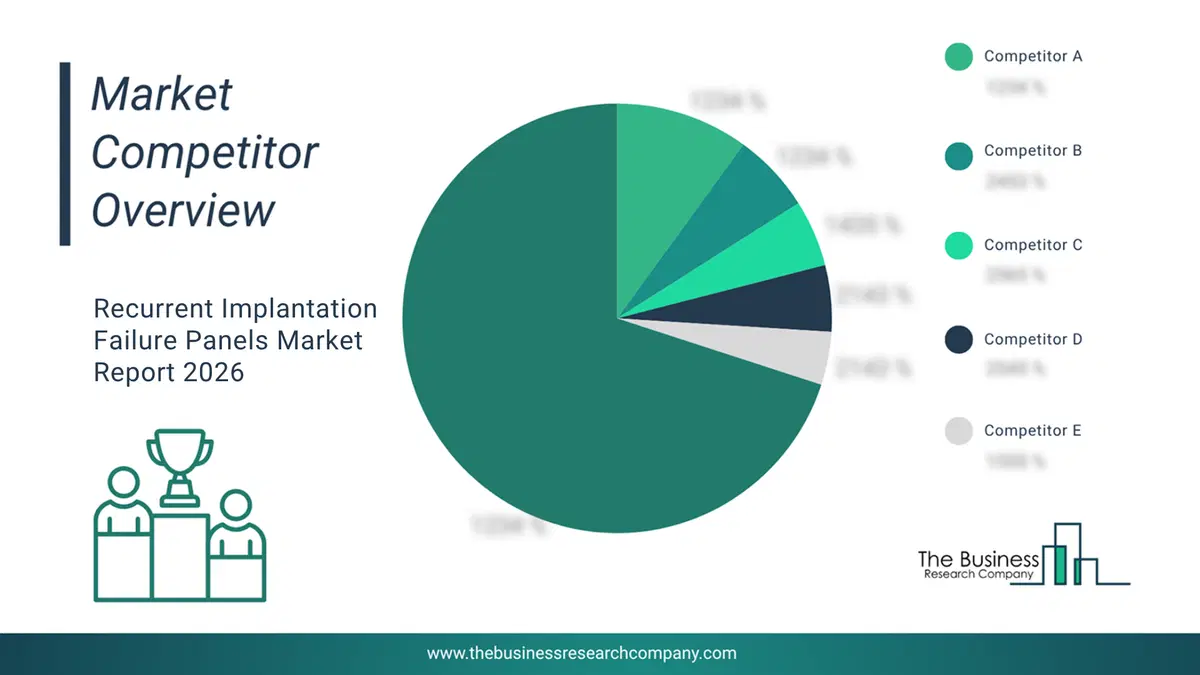
This chart is for illustrative purposes; the full report includes a detailed competitor analysis and comprehensive overview of the top 10 companies in the market.
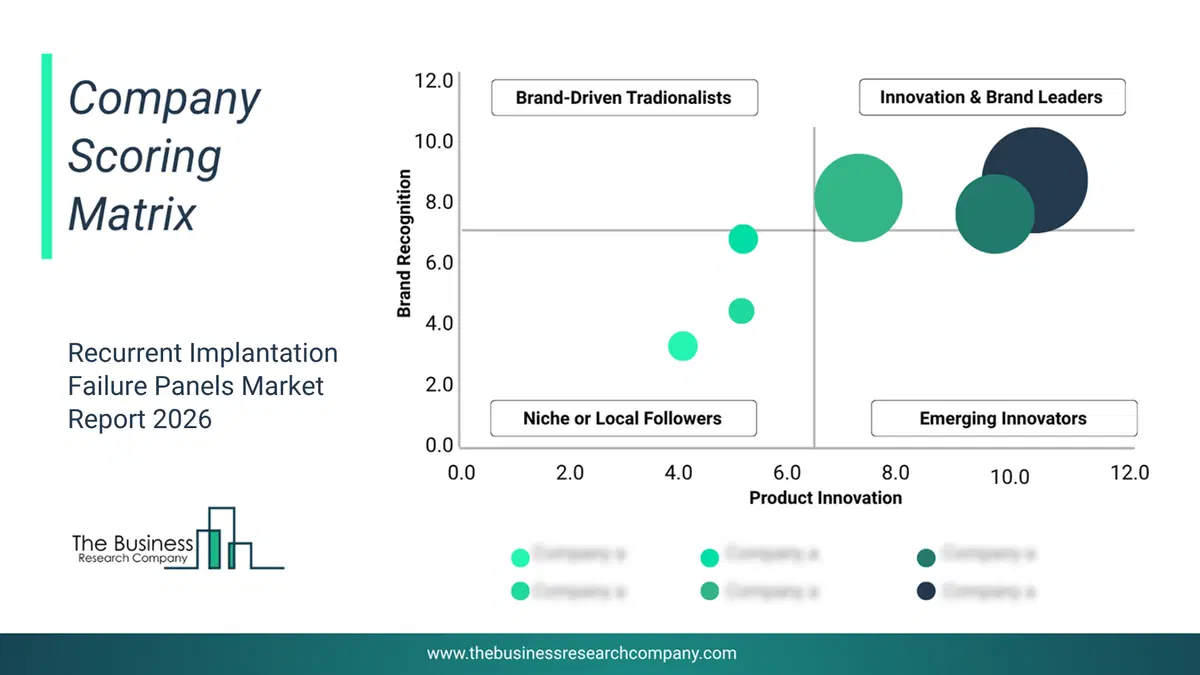
This chart maps companies by product innovation and brand strength, with bubble size indicating relative revenue, helping identify market leaders, challengers, and niche players. This is an illustrative chart; the full report provides a complete and accurate competitive analysis.
Regional Insights
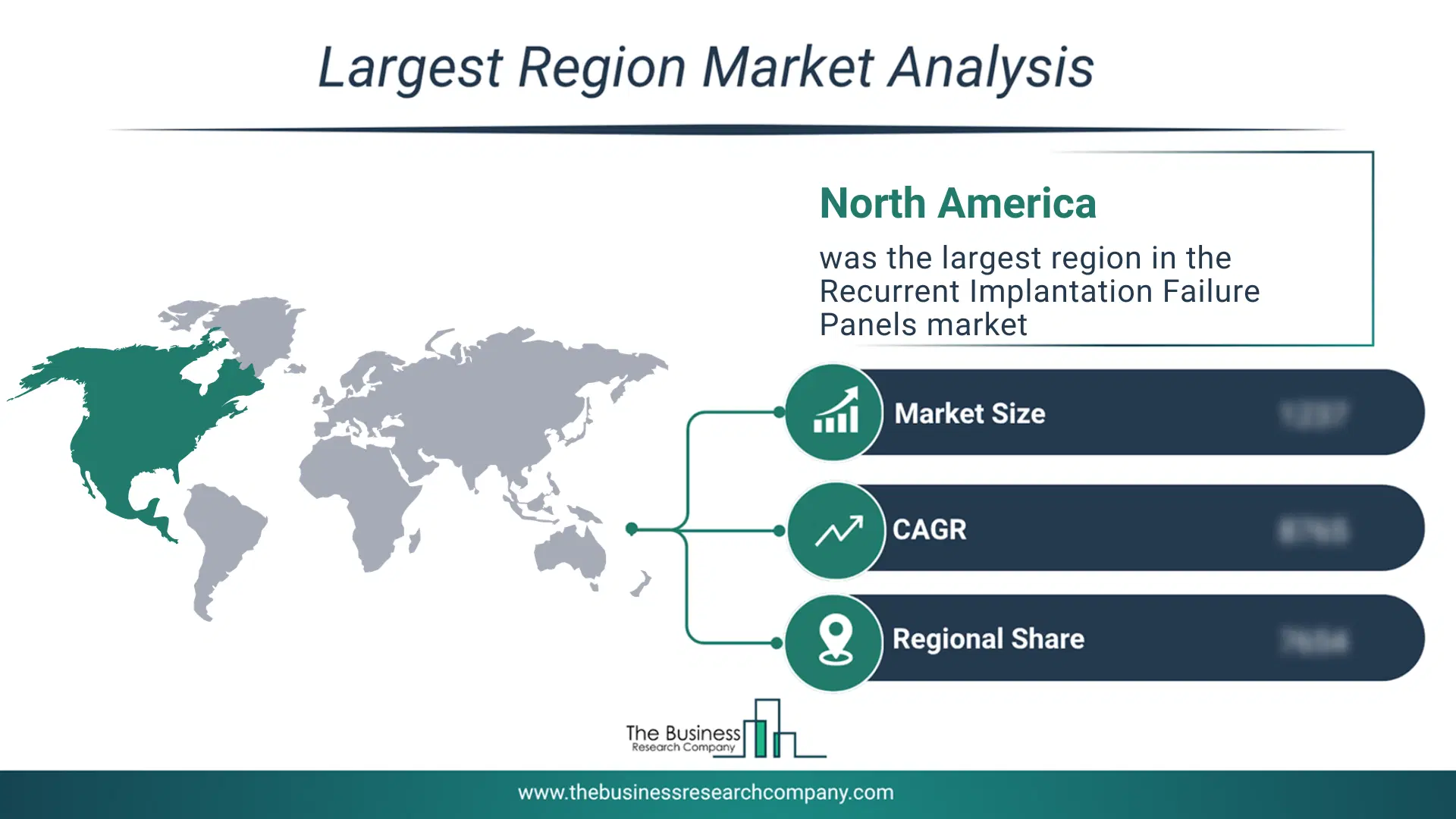
North America was the largest region in the recurrent implantation failure panels market in 2025. Asia-Pacific is expected to be the fastest-growing region in the forecast period. The regions covered in this market report are Asia-Pacific, South East Asia, Western Europe, Eastern Europe, North America, South America, Middle East, Africa. The countries covered in this market report are Australia, Brazil, China, France, Germany, India, Indonesia, Japan, Taiwan, Russia, South Korea, UK, USA, Canada, Italy, Spain.What Defines the Recurrent Implantation Failure Panels Market?
The recurrent implantation failure panels market consists of sales of blood collection tubes, biopsy instruments, and sample storage vials. Values in this market are ‘factory gate’ values, that is, the value of goods sold by the manufacturers or creators of the goods, whether to other entities (including downstream manufacturers, wholesalers, distributors, and retailers) or directly to end customers. The value of goods in this market includes related services sold by the creators of the goods.How is Market Value Defined and Measured?
The market value is defined as the revenues that enterprises gain from the sale of goods and/or services within the specified market and geography through sales, grants, or donations in terms of the currency (in USD unless otherwise specified). The revenues for a specified geography are consumption values that are revenues generated by organizations in the specified geography within the market, irrespective of where they are produced. It does not include revenues from resales along the supply chain, either further along the supply chain or as part of other products.
This chart presents market attractiveness based on a quantitative evaluation of growth, competition, strategic alignment, and risk, offering a clear view of opportunity areas for decision-making. This chart is for illustrative purposes; the full report contains the complete analysis.

This chart highlights the Total Addressable Market (TAM) by estimating the maximum revenue opportunity using an assumption-driven approach, supporting strategic planning and opportunity sizing across markets. The chart is illustrative; the full report provides a more comprehensive analysis.
What Key Data And Analysis Are Included In The Recurrent Implantation Failure Panels Market Report 2026?
The recurrent implantation failure panels market research report is one of a series of new reports from The Business Research Company that provides market statistics, including industry global market size, regional shares, competitors with the market share, detailed market segments, market trends and opportunities, and any further data you may need to thrive in the recurrent implantation failure panels industry. The market research report delivers a complete perspective of everything you need, with an in-depth analysis of the current and future state of the industry.Recurrent Implantation Failure Panels Market Report Forecast Analysis
| Report Attribute | Details |
|---|---|
| Market Size Value In 2026 | $0.9 billion |
| Revenue Forecast In 2030 | $1.31 billion |
| Growth Rate | CAGR of 9.8% from 2026 to 2030 |
| Base Year For Estimation | 2025 |
| Actual Estimates/Historical Data | 2020-2025 |
| Forecast Period | 2026 - 2030 |
| Market Representation | Revenue in USD Billion and CAGR from 2026 to 2030 |
| Segments Covered | Product Type, Technology, Sample Type, End User |
| Regional Scope | Asia-Pacific, Western Europe, Eastern Europe, North America, South America, Middle East, Africa |
| Country Scope | The countries covered in the report are Australia, Brazil, China, France, Germany, India, Indonesia, Japan, Taiwan, Russia, South Korea, UK, USA, Canada, Italy, Spain. |
| Key Companies Profiled | Thermo Fisher Scientific Inc., Laboratory Corporation of America Holdings (LabCorp), Quest Diagnostics Incorporated, Illumina Inc., Natera Inc., Redcliffe Labs, MedGenome Labs Ltd., Mayo Clinic Laboratories, Fulgent Genetics Inc., LifeCell International, Kindbody Genetics, MapmyGenome, DNA Labs India, Shree IVF Clinic, Inti Labs, Vida Fertility Genetics, Cleveland Clinic, ReceptivaDx (CicloMed), MatriceLab, Reproductive Genetic Innovations (RGI), BGI Genomics Co. Ltd., Embryolab Next Gen IVF, Aksigen IVF, Progenesis IVF, Vani IVF. |
| Customization Scope | Request for Customization |
| Pricing And Purchase Options | Explore Purchase Options |