
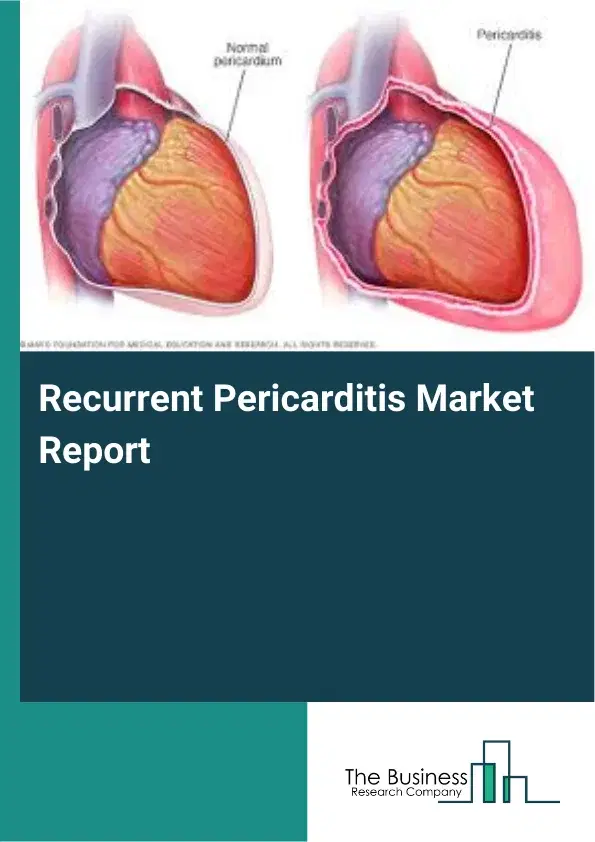
Recurrent Pericarditis Market Report 2026
Global Outlook – By Product Type (Non-Steroidal Anti-Inflammatory Drugs (NSAIDs), Corticosteroids, Colchicine, Biologics, Other Product Types), By Diagnosis And Assessment (Electrocardiography (ECG), Echocardiography, Physical Examination), By Route of Administration (Oral, Injectable), By Application (Colchicine Therapy, Corticosteroids, Non-Steroidal Anti-Inflammatory Drugs (NSAIDs)), By End-User (Hospitals, Ambulatory Surgical Centers, Clinics, Home Care Settings, Emergency Medical Services (EMS)) – Market Size, Trends, Strategies, and Forecast to 2030
Recurrent Pericarditis Market Overview
• Recurrent Pericarditis market size has reached to $0.79 billion in 2025 • Expected to grow to $1.32 billion in 2030 at a compound annual growth rate (CAGR) of 10.8% • Growth Driver: Surge In Precision Medicine Adoption Driving Market Growth Due To Personalized And Targeted Treatment Approaches • Market Trend: Advanced Clinical Research Seeks To Transform Care For Chronic Cardiac Conditions • North America was the largest region in 2025 and Asia-Pacific is the fastest growing region.What Is Covered Under Recurrent Pericarditis Market?
Recurrent pericarditis is a condition characterized by repeated episodes of inflammation of the pericardium following an initial acute pericarditis event. It is often immune-mediated and presents with recurrent chest pain, elevated inflammatory markers, and possible pericardial effusion. The main product types of recurrent pericarditis are non-steroidal anti-inflammatory drugs (NSAIDs), corticosteroids, colchicine, biologics, and other product types. Non-steroidal anti-inflammatory drugs (NSAIDs) are medications used to reduce inflammation, relieve pain, and manage symptoms associated with recurrent pericarditis. Diagnosis and assessment are carried out through electrocardiography (ECG), Echocardiography, and physical examination. Treatments are administered via different routes of administration, including oral and injectable. These therapies are applied in colchicine therapy, corticosteroids, and NSAIDs use cases, and serve various end-users, such as hospitals, ambulatory surgical centers, clinics, home care settings, and emergency medical services (EMS).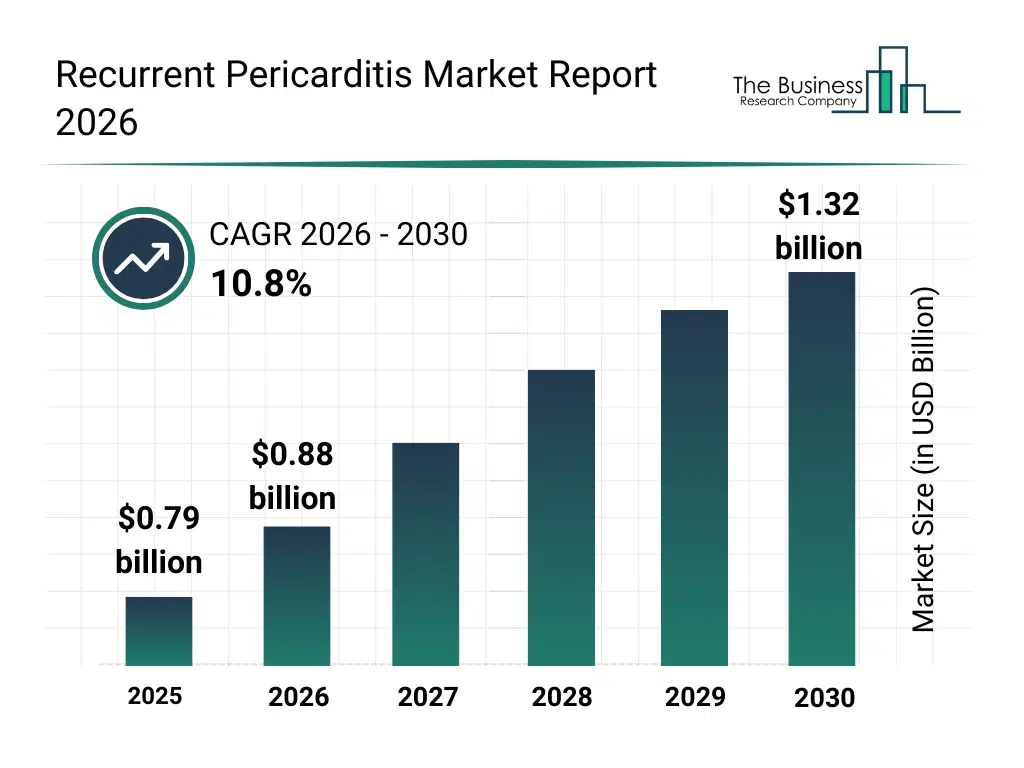
What Is The Recurrent Pericarditis Market Size and Share 2026?
The recurrent pericarditis market size has grown rapidly in recent years. It will grow from $0.79 billion in 2025 to $0.88 billion in 2026 at a compound annual growth rate (CAGR) of 10.6%. The growth in the historic period can be attributed to historical reliance on NSAIDs and colchicine, rising diagnosis of inflammatory heart conditions, established cardiology care pathways, increased availability of echocardiography, guideline driven anti inflammatory therapy use.What Is The Recurrent Pericarditis Market Growth Forecast?
The recurrent pericarditis market size is expected to see rapid growth in the next few years. It will grow to $1.32 billion in 2030 at a compound annual growth rate (CAGR) of 10.8%. The growth in the forecast period can be attributed to growing adoption of biologic drugs, improved recurrence risk stratification, expansion of specialty cardiology clinics, higher awareness of immune mediated pericarditis, increasing use of targeted cytokine inhibitors. Major trends in the forecast period include higher use of targeted biologic therapies, expansion of long term disease monitoring, growth in anti inflammatory combination therapy, increased adoption of IL-1 inhibitors, structured recurrence prevention protocols.
Global Recurrent Pericarditis Market Segmentation
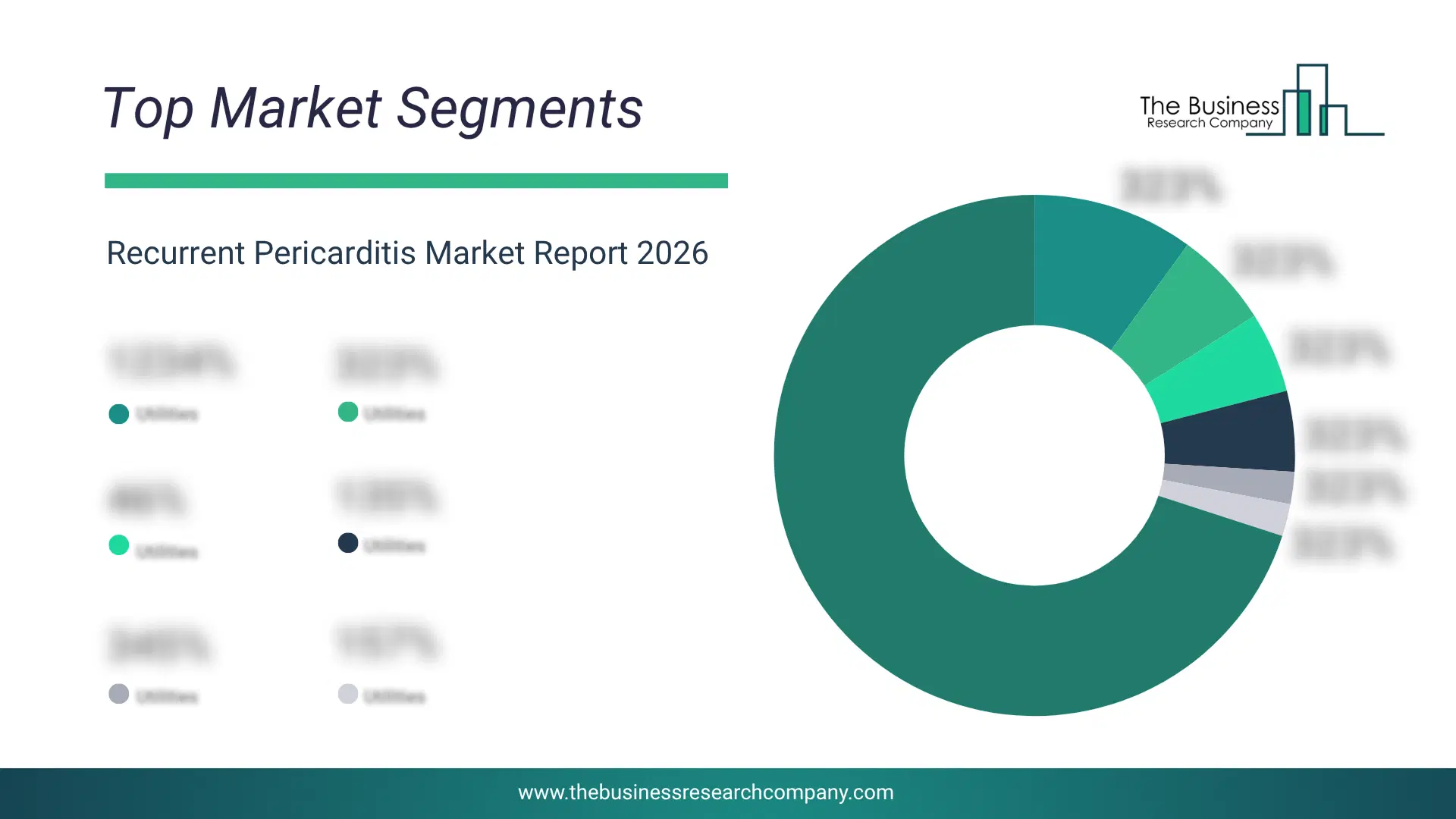
1) By Product Type: Non-Steroidal Anti-Inflammatory Drugs (NSAIDs); Corticosteroids; Colchicine; Biologics; Other Product Types 2) By Diagnosis And Assessment: Electrocardiography (ECG); Echocardiography; Physical Examination 3) By Route of Administration: Oral; Injectable 4) By Application: Colchicine Therapy; Corticosteroids; Non-Steroidal Anti-Inflammatory Drugs (NSAIDs) 5) By End-User: Hospitals; Ambulatory Surgical Centers; Clinics; Home Care Settings; Emergency Medical Services (EMS) Subsegments: 1) By Non Steroidal Anti Inflammatory Drugs: Ibuprofen; Aspirin; Indomethacin; Naproxen 2) By Corticosteroids: Prednisone; Methylprednisolone; Hydrocortisone; Dexamethasone 3) By Colchicine: Oral Colchicine; Low Dose Colchicine; Extended Duration Colchicine Therapy 4) By Biologics: Interleukin One Inhibitors; Monoclonal Antibody Therapies; Targeted Cytokine Inhibitors 5) By Other Product Types: Immunosuppressive Agents; Analgesic Therapies; Supportive Combination TherapiesWhat Is The Driver Of The Recurrent Pericarditis Market?
The growing emphasis on precision medicine approaches is expected to propel the growth of the recurrent pericarditis market going forward. Precision medicine is a medical approach that tailors prevention and treatment strategies to individual patients based on their genetic makeup, environment, and lifestyle. The rise in emphasis on precision medicine is driven by improved treatment effectiveness, as therapies are tailored to an individual’s genetic and biological profile, leading to better outcomes and reduced risk of adverse effects. Recurrent pericarditis helps advance precision medicine by enabling targeted treatment approaches that focus on patient-specific inflammatory pathways, such as interleukin-1–mediated mechanisms, allowing more personalized and effective disease management. For instance, in February 2025, according to the NHS England, a UK-based public healthcare body, in 2024 the NHS Genomic Medicine Service delivered over 810,000 genomic tests for patients across the life course in England. This has continued to increase year-on-year since the NHS Genomic Medicine Service was established, and increased by 8% compared to 2023. Therefore, the growing emphasis on precision medicine approaches is driving the growth of the recurrent pericarditis industry.Key Players In The Global Recurrent Pericarditis Market
Major companies operating in the recurrent pericarditis market are Johnson & Johnson Services Inc., Roche Holding AG, Merck & Co. Inc., Pfizer Inc., AbbVie Inc., Sanofi S.A., Novartis AG, AstraZeneca PLC, Bristol-Myers Squibb Company, GlaxoSmithKline plc, Eli Lilly and Company, Novo Nordisk A/S, Takeda Pharmaceutical Company Limited, Amgen Inc., Gilead Sciences Inc., Boehringer Ingelheim International GmbH, Regeneron Pharmaceuticals Inc., Biogen Inc., Lonza Group AG, Moderna Inc., and WuXi Biologics (Cayman) Inc.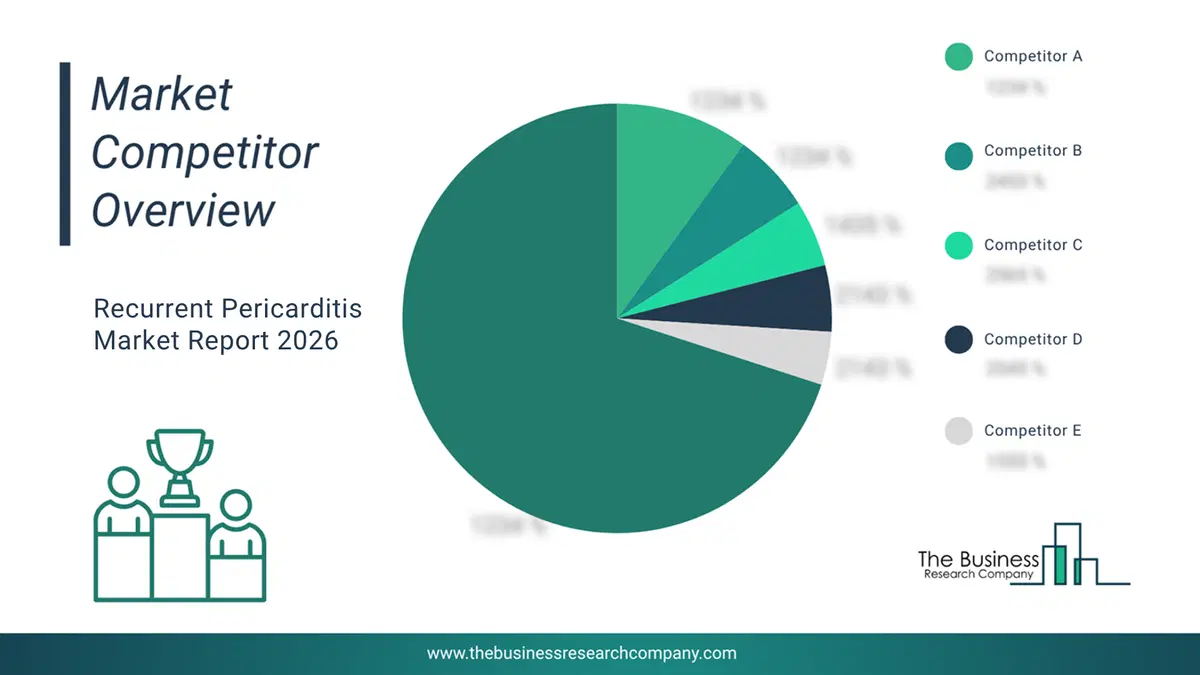
This chart is for illustrative purposes; the full report includes a detailed competitor analysis and comprehensive overview of the top 10 companies in the market.
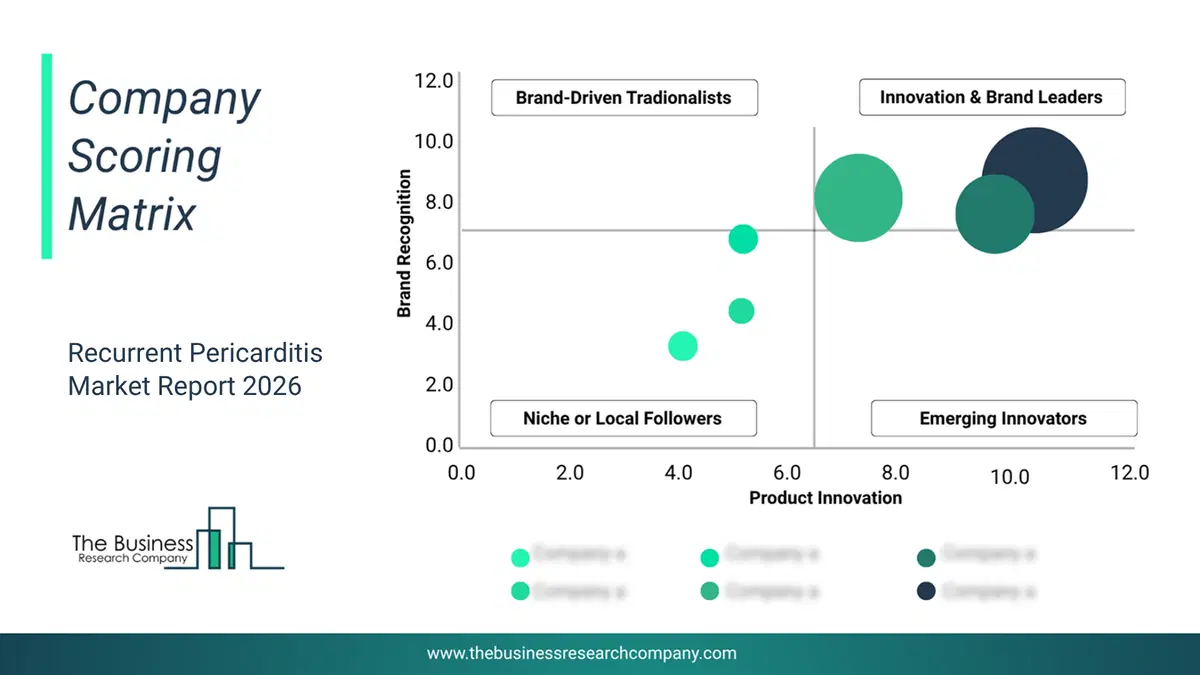
This chart maps companies by product innovation and brand strength, with bubble size indicating relative revenue, helping identify market leaders, challengers, and niche players. This is an illustrative chart; the full report provides a complete and accurate competitive analysis.
Global Recurrent Pericarditis Market Trends and Insights
Major companies operating in the recurrent pericarditis market are focusing on developing anti-inflammatory and anti-fibrotic effects to reduce pericardial inflammation, prevent long-term cardiac damage, improve patient quality of life, and minimize recurrence rates. Anti-inflammatory effects reduce inflammation in tissues, while anti-fibrotic effects prevent or reverse the formation of scar tissue, together helping to protect organs from damage and maintain normal function. For instance, in October 2024, Cardiol Therapeutics Inc., a Canada-based clinical-stage life sciences company, advancement of CardiolRx. CardiolRx offers a novel oral, non-immunosuppressive therapeutic approach for recurrent pericarditis by targeting the NLRP3 inflammasome, a key upstream driver of IL-1–mediated inflammation. It is being developed to prevent disease recurrence, particularly in patients who relapse after discontinuation of IL-1 blocker therapies such as rilonacept or anakinra. Through late-stage clinical programs, CardiolRx aims to reduce pericarditis flares, alleviate chest pain, and normalize inflammatory markers (CRP).What Are Latest Mergers And Acquisitions In The Recurrent Pericarditis Market?
In April 2024, Sanofi S.A., a France-based healthcare technology company, acquired Kiniksa Pharmaceuticals Limited for $2.5 billion. With this acquisition, Sanofi Société Anonyme aimed to expand its portfolio in rare inflammatory and cardiovascular-related diseases, strengthen its immunology and inflammation capabilities, and accelerate growth through the addition of a late-stage and commercialized therapy relevant to the recurrent pericarditis space. Kiniksa Pharmaceuticals Limited. is a US-based healthcare technology company that specializes in developing and commercializing targeted therapies for rare autoinflammatory and cardiovascular conditions, including monoclonal antibody treatments specifically approved for recurrent pericarditis.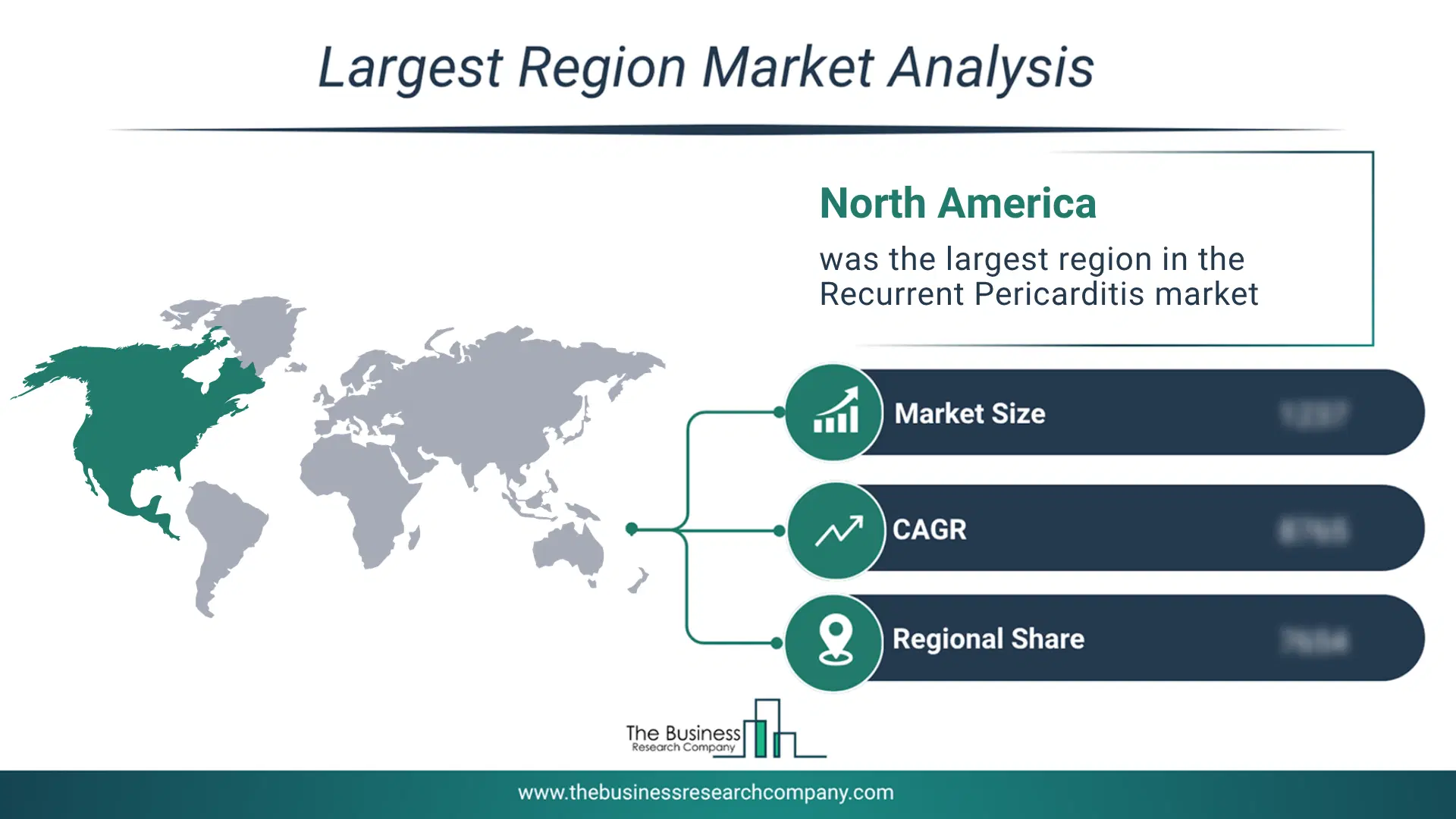
Regional Insights
North America was the largest region in the recurrent pericarditis market in 2025. Asia-Pacific is expected to be the fastest-growing region in the forecast period. The regions covered in this market report are Asia-Pacific, South East Asia, Western Europe, Eastern Europe, North America, South America, Middle East, Africa. The countries covered in this market report are Australia, Brazil, China, France, Germany, India, Indonesia, Japan, Taiwan, Russia, South Korea, UK, USA, Canada, Italy, Spain.What Defines the Recurrent Pericarditis Market?
The recurrent pericarditis market consists of revenues earned by entities by providing services such as cardiology consultations and clinical evaluations, diagnostic imaging and laboratory testing, monitoring of disease recurrence, patient follow-up and long-term care, and patient education and counseling services. The market value includes the value of related goods sold by the service provider or included within the service offering. The recurrent pericarditis market also includes sales of colchicine, immunosuppressive agents, disease-modifying anti-rheumatic drugs (DMARDs), analgesics, and adjunctive cardiovascular medications. Values in this market are ‘factory gate’ values, that is the value of goods sold by the manufacturers or creators of the goods, whether to other entities (including downstream manufacturers, wholesalers, distributors and retailers) or directly to end customers. The value of goods in this market includes related services sold by the creators of the goods.How is Market Value Defined and Measured?
The market value is defined as the revenues that enterprises gain from the sale of goods and/or services within the specified market and geography through sales, grants, or donations in terms of the currency (in USD unless otherwise specified). The revenues for a specified geography are consumption values that are revenues generated by organizations in the specified geography within the market, irrespective of where they are produced. It does not include revenues from resales along the supply chain, either further along the supply chain or as part of other products.
This chart presents market attractiveness based on a quantitative evaluation of growth, competition, strategic alignment, and risk, offering a clear view of opportunity areas for decision-making. This chart is for illustrative purposes; the full report contains the complete analysis.

This chart highlights the Total Addressable Market (TAM) by estimating the maximum revenue opportunity using an assumption-driven approach, supporting strategic planning and opportunity sizing across markets. The chart is illustrative; the full report provides a more comprehensive analysis.
What Key Data and Analysis Are Included in the Recurrent Pericarditis Market Report 2026?
The recurrent pericarditis market research report is one of a series of new reports from The Business Research Company that provides market statistics, including industry global market size, regional shares, competitors with the market share, detailed market segments, market trends and opportunities, and any further data you may need to thrive in the recurrent pericarditis industry. The market research report delivers a complete perspective of everything you need, with an in-depth analysis of the current and future state of the industry.Recurrent Pericarditis Market Report Forecast Analysis
| Report Attribute | Details |
|---|---|
| Market Size Value In 2026 | $0.88 billion |
| Revenue Forecast In 2030 | $1.32 billion |
| Growth Rate | CAGR of 10.8% from 2026 to 2030 |
| Base Year For Estimation | 2025 |
| Actual Estimates/Historical Data | 2020-2025 |
| Forecast Period | 2026 - 2030 |
| Market Representation | Revenue in USD Billion and CAGR from 2026 to 2030 |
| Segments Covered | Product Type, Diagnosis And Assessment, Route of Administration, Application, End-User |
| Regional Scope | Asia-Pacific, Western Europe, Eastern Europe, North America, South America, Middle East, Africa |
| Country Scope | The countries covered in the report are Australia, Brazil, China, France, Germany, India, Indonesia, Japan, Taiwan, Russia, South Korea, UK, USA, Canada, Italy, Spain |
| Key Companies Profiled | Johnson & Johnson Services Inc., Roche Holding AG, Merck & Co. Inc., Pfizer Inc., AbbVie Inc., Sanofi S.A., Novartis AG, AstraZeneca PLC, Bristol-Myers Squibb Company, GlaxoSmithKline plc, Eli Lilly and Company, Novo Nordisk A/S, Takeda Pharmaceutical Company Limited, Amgen Inc., Gilead Sciences Inc., Boehringer Ingelheim International GmbH, Regeneron Pharmaceuticals Inc., Biogen Inc., Lonza Group AG, Moderna Inc., and WuXi Biologics (Cayman) Inc. |
| Customization Scope | Request for Customization |
| Pricing And Purchase Options | Explore Purchase Options |