
Reduced Lactose Whey Market Report 2026
Global Outlook – By Type (Organic Reduced Lactose Whey, Conventional Reduced Lactose Whey), By Extraction (Extraction By Precipitation, Extraction By Filtration, Extraction By Dialysis), By End User (Food And Beverages, Nutraceuticals, Household And Retail Use) – Market Size, Trends, Strategies, and Forecast to 2030
Reduced Lactose Whey Market Overview
• Reduced Lactose Whey market size has reached to $15.83 billion in 2025 • Expected to grow to $24.86 billion in 2030 at a compound annual growth rate (CAGR) of 9.1% • Growth Driver: Demand For Plant-Based Diets Is Boosting The Reduced Lactose Whey Market • Market Trend: Advancing Low-Lactose Whey Nutrition Through Enzymatic Innovation • Europe was the largest region in 2025 and Asia Pacific is the fastest growing region.What Is Covered Under Reduced Lactose Whey Market?
Reduced lactose whey is a type of whey protein that has undergone a process to reduce its lactose content. Whey is the liquid remaining after milk has been curdled and strained, and it contains various proteins, including lactoglobulin and lactalbumin, along with some lactose and other nutrients. The main types of reduced lactose whey are organic reduced lactose whey and conventional reduced lactose whey. Organic reduced lactose whey refers to products derived from organically produced milk where the lactose content has been reduced. It can be extracted by precipitation, filtering, and dialysis, and by end users, including food and beverages, nutraceuticals, and household and retail use.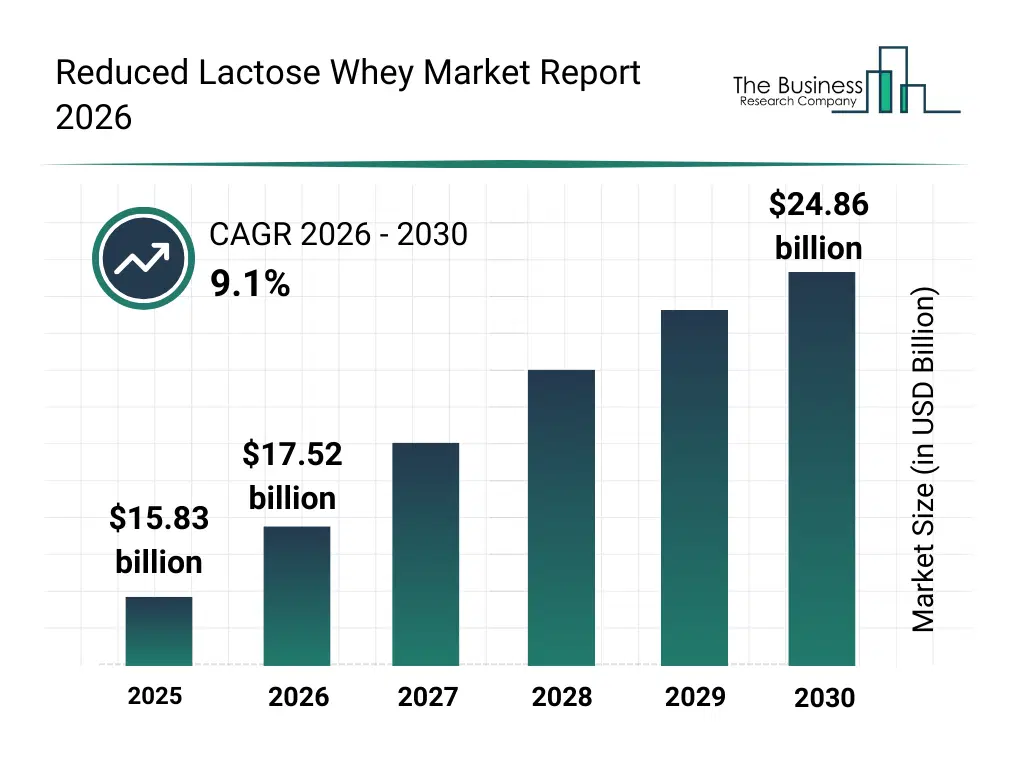
What Is The Reduced Lactose Whey Market Size and Share 2026?
The reduced lactose whey market size has grown rapidly in recent years. It will grow from $15.83 billion in 2025 to $17.52 billion in 2026 at a compound annual growth rate (CAGR) of 10.7%. The growth in the historic period can be attributed to growth in dairy processing capabilities, rising awareness of lactose intolerance, expansion of sports nutrition products, increasing use of whey in food formulations, improvements in whey extraction processes.What Is The Reduced Lactose Whey Market Growth Forecast?
The reduced lactose whey market size is expected to see strong growth in the next few years. It will grow to $24.86 billion in 2030 at a compound annual growth rate (CAGR) of 9.1%. The growth in the forecast period can be attributed to growing demand for personalized nutrition, rising consumption of functional foods, expansion of nutraceutical applications, increasing focus on clean-label dairy ingredients, advancements in protein processing technologies. Major trends in the forecast period include increasing demand for low-lactose dairy ingredients, rising use of advanced filtration techniques, growing adoption of organic whey products, expansion of functional protein applications, enhanced focus on nutritional customization.
Global Reduced Lactose Whey Market Segmentation
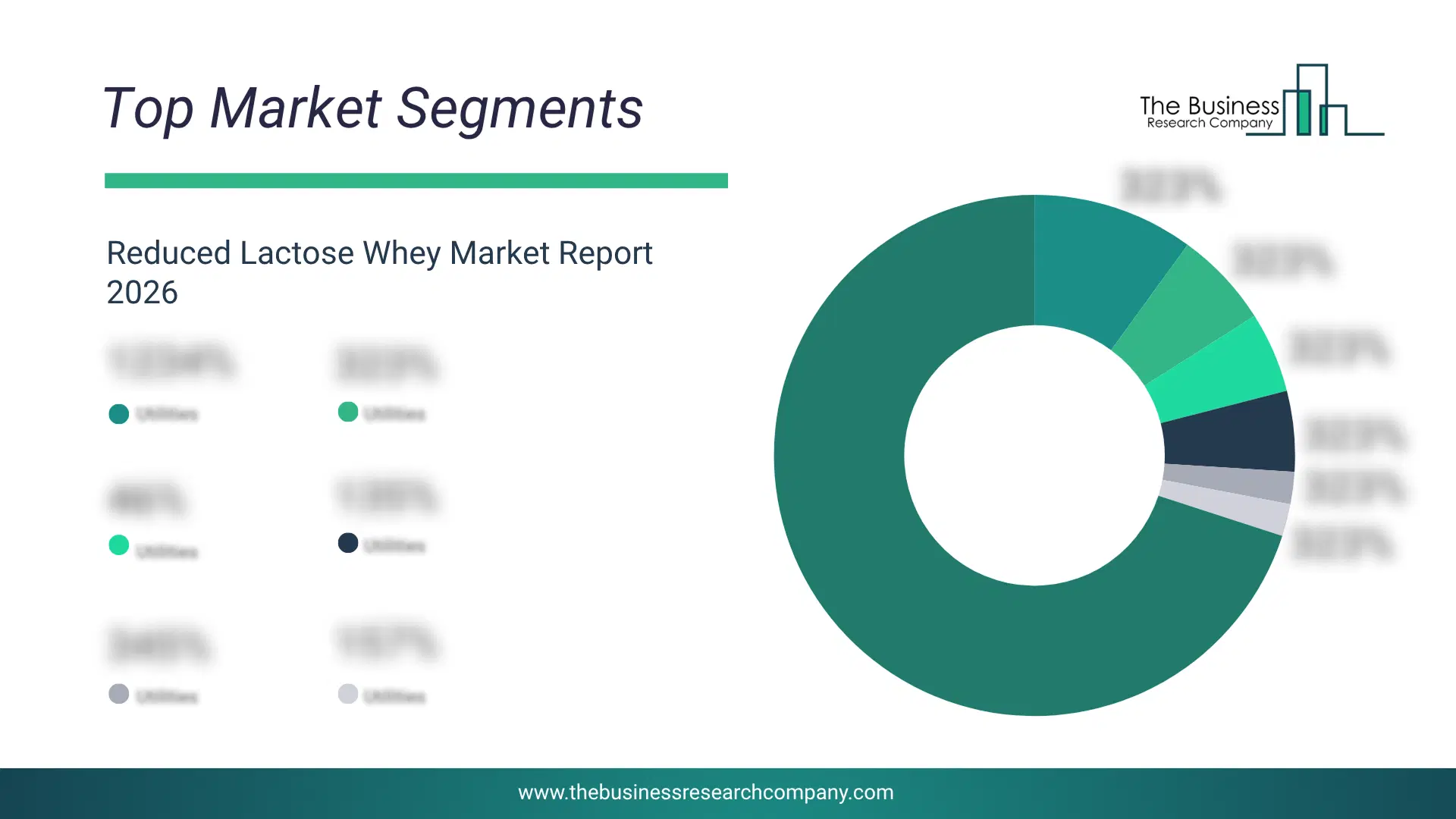
1) By Type: Organic Reduced Lactose Whey, Conventional Reduced Lactose Whey 2) By Extraction: Extraction By Precipitation, Extraction By Filtration, Extraction By Dialysis 3) By End User: Food And Beverages, Nutraceuticals, Household And Retail Use Subsegments: 1) By Organic Reduced Lactose Whey: Organic Reduced Lactose Whey Powder, Organic Reduced Lactose Whey Concentrate, Organic Reduced Lactose Whey Protein 2) By Conventional Reduced Lactose Whey: Conventional Reduced Lactose Whey Powder, Conventional Reduced Lactose Whey Concentrate, Conventional Reduced Lactose Whey ProteinWhat Is The Driver Of The Reduced Lactose Whey Market?
The growing popularity of plant-based diets is expected to propel the growth of the reduced-lactose whey market going forward. A plant-based diet typically refers to a dietary pattern that emphasizes foods derived from plants such as fruits, vegetables, grains, nuts, seeds, and legumes, while minimizing or excluding animal products. The increasing popularity of plant-based diets is growing due to awareness of environmental sustainability, health benefits, and ethical considerations regarding animal welfare. Reduced lactose whey is incorporated into plant-based diets as a source of high-quality protein, providing a dairy-free option for individuals seeking to supplement their plant-based eating with additional protein while minimizing lactose intake. For instance, in January 2025, according to The Good Food Institute, a US-based nonprofit organization, 53% of Americans report they have eaten plant-based meat at some point, and 40% say they have eaten it in the past year. Therefore, the growing popularity of plant-based diets is driving the growth of the reduced-lactose whey market.Key Players In The Global Reduced Lactose Whey Market
Major companies operating in the reduced lactose whey market are Fonterra Inc., Land O'Lakes Inc., Dana Foods Inc., Agropur Inc., Glanbia plc, Leprino Foods Company, Organic Valley, Hilmar Cheese Company Inc., Carbery Group, Volac International Limited, Westland Co-operative Dairy Company Limited, Davisco Foods International Inc., Interfood Inc., Redwood Hill Farm, MCT Dairies Inc., Idaho Milk Products Inc., Wapsie Valley Creamery Inc., Erie Foods International Inc., Grande Cheese Company, AMCO Proteins Company, Wheyco GmbH, Agri Dairy Products Inc.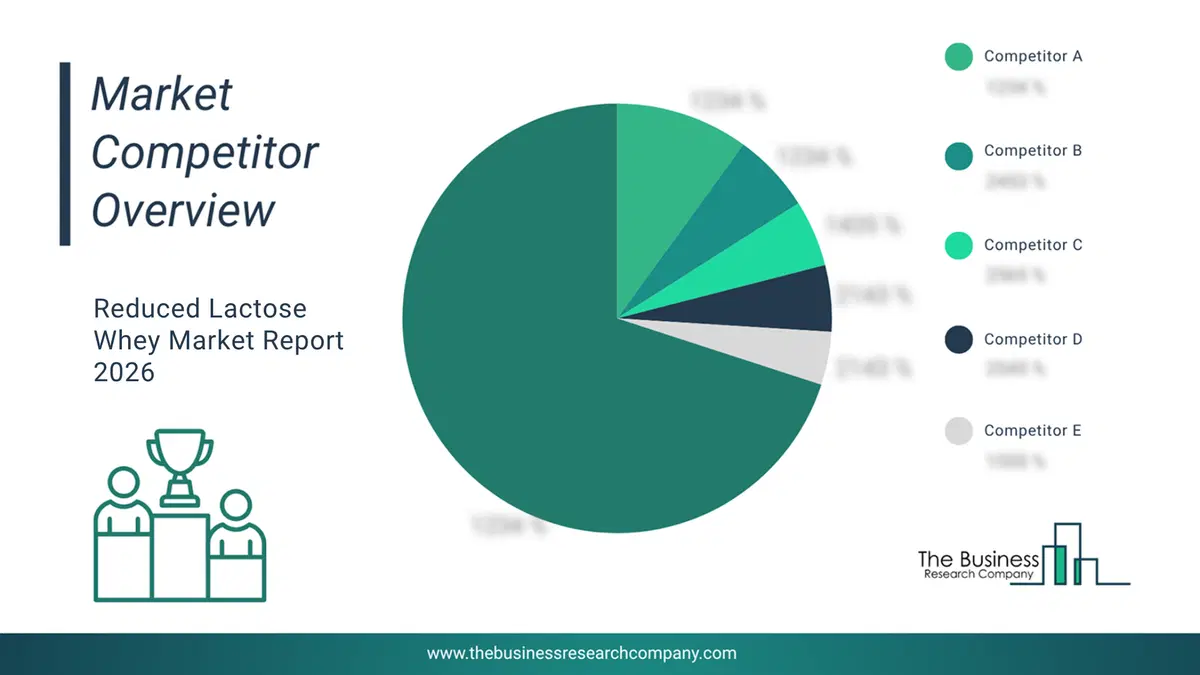
This chart is for illustrative purposes; the full report includes a detailed competitor analysis and comprehensive overview of the top 10 companies in the market.
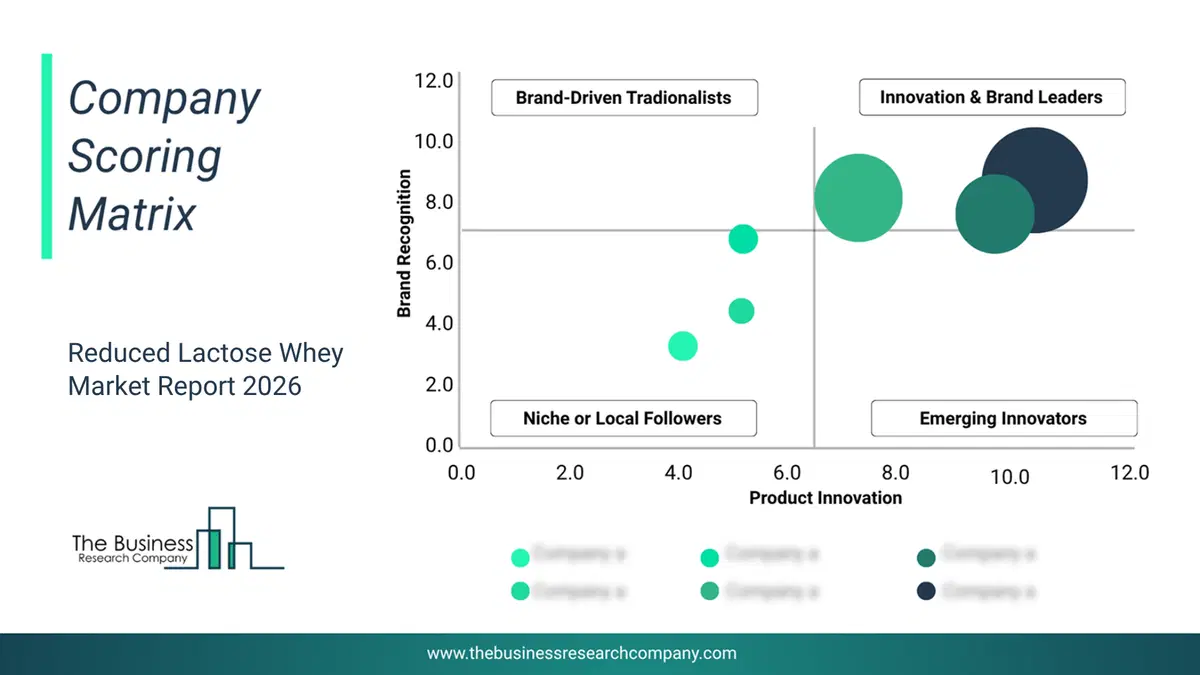
This chart maps companies by product innovation and brand strength, with bubble size indicating relative revenue, helping identify market leaders, challengers, and niche players. This is an illustrative chart; the full report provides a complete and accurate competitive analysis.
Global Reduced Lactose Whey Market Trends and Insights
Major companies operating in the reduced-lactose whey market are focusing on leveraging advanced ingredient-processing technology such as high-degree enzymatic hydrolysis to deliver low-lactose, highly digestible whey products. Enzymatic hydrolysis is a biochemical process that breaks down whey protein into smaller peptides, reducing lactose content and improving digestibility and suitability for lactose-sensitive consumers. For instance, in November 2024, Arla Foods Ingredients Group P/S, a Denmark-based global dairy-ingredient supplier, launched Lacprodan DI-3092, a highly hydrolysed whey protein ingredient designed for medical and nutrition applications, featuring high protein density (10 g per 100 ml) and minimal bitterness. Lacprodan DI-3092 improves digestibility, lowers lactose levels, and enhances taste and texture, making whey-based nutrition more tolerable and appealing for lactose-sensitive or lactose-intolerant individuals.What Are Latest Mergers And Acquisitions In The Reduced Lactose Whey Market?
In November 2024, Arla Foods Ingredients Group P/S, a Denmark-based dairy ingredients company, acquired Volac’s Whey Nutrition business for an undisclosed amount. With this acquisition, Arla Foods Ingredients aimed to expand its global whey-protein production capacity and strengthen its position in the sports nutrition and dairy-ingredients sector. Volac International Ltd is a UK-based dairy-nutrition company that specializes in converting whey into high-quality whey protein isolates and other whey-derived ingredients for sports, food, and animal nutrition.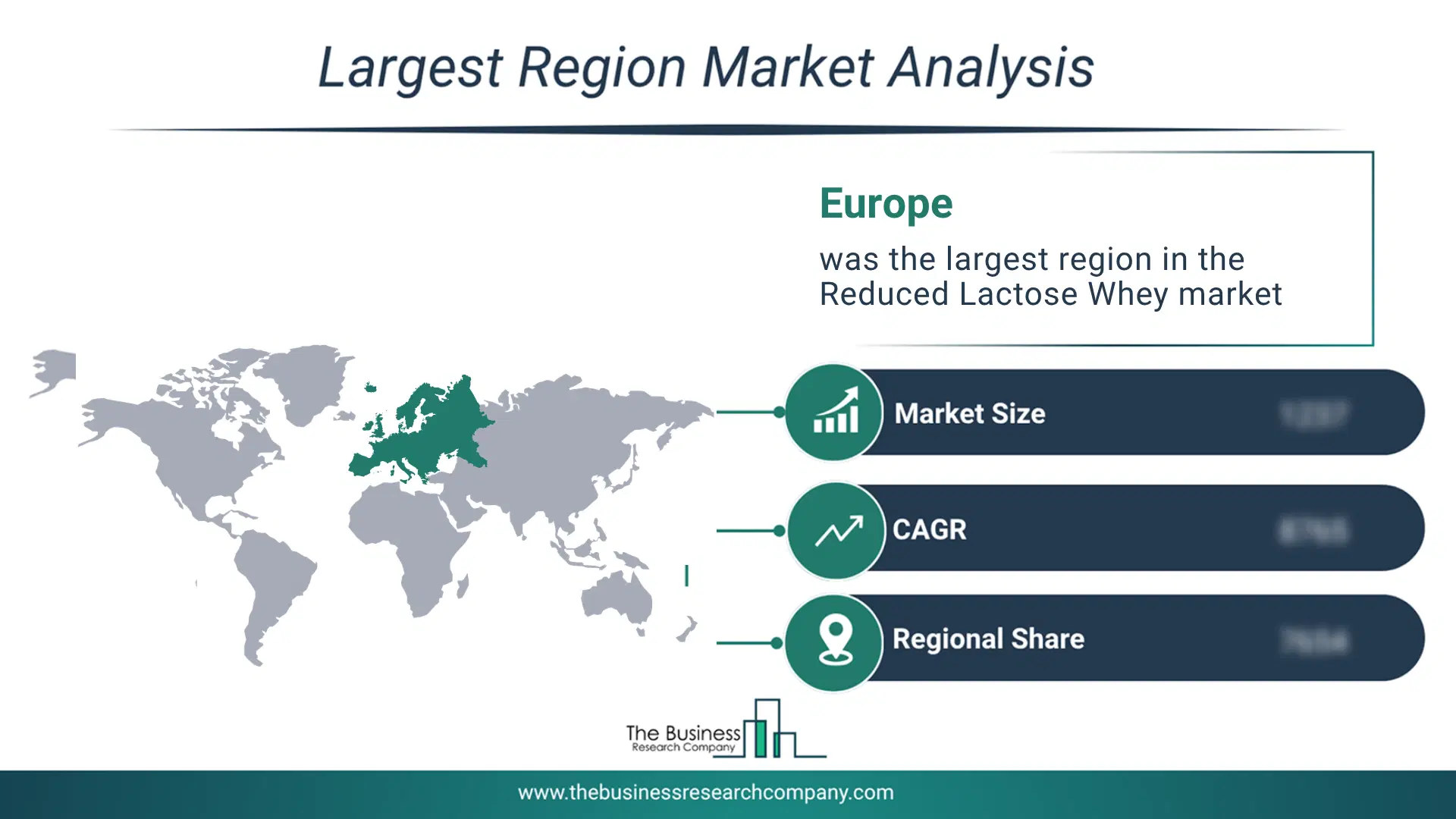
Regional Outlook
Europe was the largest region in the reduced lactose whey market in 2025. Asia Pacific is expected to be the fastest-growing region in the forecast period. The regions covered in this market report are Asia-Pacific, South East Asia, Western Europe, Eastern Europe, North America, South America, Middle East and Africa. The countries covered in this market report are Australia, Brazil, China, France, Germany, India, Indonesia, Japan, Taiwan, Russia, South Korea, UK, USA, Italy, Spain, CanadaWhat Defines the Reduced Lactose Whey Market?
The reduced lactose whey market consists of sales of ultrafiltrate whey, microfiltered whey, hydrolyzed whey, and lactose-free whey. Values in this market are ‘factory gate’ values, that is the value of goods sold by the manufacturers or creators of the goods, whether to other entities (including downstream manufacturers, wholesalers, distributors and retailers) or directly to end customers. The value of goods in this market includes related services sold by the creators of the goods.How is Market Value Defined and Measured?
The market value is defined as the revenues that enterprises gain from the sale of goods and/or services within the specified market and geography through sales, grants, or donations in terms of the currency (in USD unless otherwise specified). The revenues for a specified geography are consumption values that are revenues generated by organizations in the specified geography within the market, irrespective of where they are produced. It does not include revenues from resales along the supply chain, either further along the supply chain or as part of other products.
This chart presents market attractiveness based on a quantitative evaluation of growth, competition, strategic alignment, and risk, offering a clear view of opportunity areas for decision-making. This chart is for illustrative purposes; the full report contains the complete analysis.

This chart highlights the Total Addressable Market (TAM) by estimating the maximum revenue opportunity using an assumption-driven approach, supporting strategic planning and opportunity sizing across markets. The chart is illustrative; the full report provides a more comprehensive analysis.
What Key Data and Analysis Are Included in the Reduced Lactose Whey Market Report 2026?
The reduced lactose whey market research report is one of a series of new reports from The Business Research Company that provides market statistics, including industry global market size, regional shares, competitors with the market share, detailed market segments, market trends and opportunities, and any further data you may need to thrive in the reduced lactose whey industry. The market research report delivers a complete perspective of everything you need, with an in-depth analysis of the current and future state of the industry.Reduced Lactose Whey Market Report Forecast Analysis
| Report Attribute | Details |
|---|---|
| Market Size Value In 2026 | $17.52 billion |
| Revenue Forecast In 2030 | $24.86 billion |
| Growth Rate | CAGR of 10.7% from 2026 to 2030 |
| Base Year For Estimation | 2025 |
| Actual Estimates/Historical Data | 2020-2025 |
| Forecast Period | 2026 - 2030 |
| Market Representation | Revenue in USD Billion and CAGR from 2026 to 2030 |
| Segments Covered | Type, Extraction, End User |
| Regional Scope | Asia-Pacific, Western Europe, Eastern Europe, North America, South America, Middle East, Africa |
| Country Scope | The countries covered in the report are Australia, Brazil, China, France, Germany, India, Indonesia, Japan, Taiwan, Russia, South Korea, UK, USA, Canada, Italy, Spain. |
| Key Companies Profiled | Fonterra Inc., Land O'Lakes Inc., Dana Foods Inc., Agropur Inc., Glanbia plc, Leprino Foods Company, Organic Valley, Hilmar Cheese Company Inc., Carbery Group, Volac International Limited, Westland Co-operative Dairy Company Limited, Davisco Foods International Inc., Interfood Inc., Redwood Hill Farm, MCT Dairies Inc., Idaho Milk Products Inc., Wapsie Valley Creamery Inc., Erie Foods International Inc., Grande Cheese Company, AMCO Proteins Company, Wheyco GmbH, Agri Dairy Products Inc. |
| Customization Scope | Request for Customization |
| Pricing And Purchase Options | Explore Purchase Options |