
Refurbished Laboratory Equipment Market Report 2026
Global Outlook – By Type Of Equipment (Analytical Instruments, General Lab Equipment, Life Science Equipment, Clinical Laboratory Equipment, Chromatography Equipment), By Pricing (Low-Cost Equipment, Mid-Range Equipment, Premium Quality Equipment, Leasing Options), By Sales Channel (Direct Sales, Online Marketplaces, Distributor Networks, Auctions, Third-Party Resellers), By End-User (Healthcare Facilities, Pharmaceutical And Biotechnology Companies, Academic And Research Institutions) – Market Size, Trends, Strategies, and Forecast to 2030
Refurbished Laboratory Equipment Market Overview
• Refurbished Laboratory Equipment market size has reached to $26.25 billion in 2025 • Expected to grow to $36.96 billion in 2030 at a compound annual growth rate (CAGR) of 7% • Growth Driver: The Growth Of Academic Research Institutions Is Fueling The Growth Of The Market Due To Increasing Funding And Expansion Of Research Capabilities • Market Trend: Sustainability-Driven Innovation In The Refurbished Laboratory Equipment Market • North America was the largest region in 2025 and Asia-Pacific is the fastest growing region.Market Gains By 2030 – Top Opportunities By Segment
Market Gain identifies the most promising market opportunities by highlighting the segments or products expected to generate the highest incremental revenue growth over the next five years.
What Is Covered Under Refurbished Laboratory Equipment Market?
The refurbished laboratory equipment refers to previously owned instruments that undergo thorough inspection, testing, and restoration to ensure full functionality. It delivers reliable performance comparable to new equipment while offering a cost-effective alternative for acquiring high-quality laboratory tools. The refurbishment process enhances durability and extends the operational lifespan of the equipment, maximizing value for users. The main types of refurbished laboratory equipment are analytical instruments, general lab equipment, life science equipment, clinical laboratory equipment, and chromatography equipment. Analytical instruments are devices used to measure, analyze, and quantify chemical, physical, or biological properties of samples with precision. The equipment is available across several product pricing categories, including low-cost equipment, mid-range equipment, premium quality equipment, and leasing options. It is distributed through multiple sales channels, such as direct sales, online marketplaces, distributor networks, auctions, and third-party resellers, and serves various end-users, including healthcare facilities, pharmaceutical and biotechnology companies, and academic and research institutions.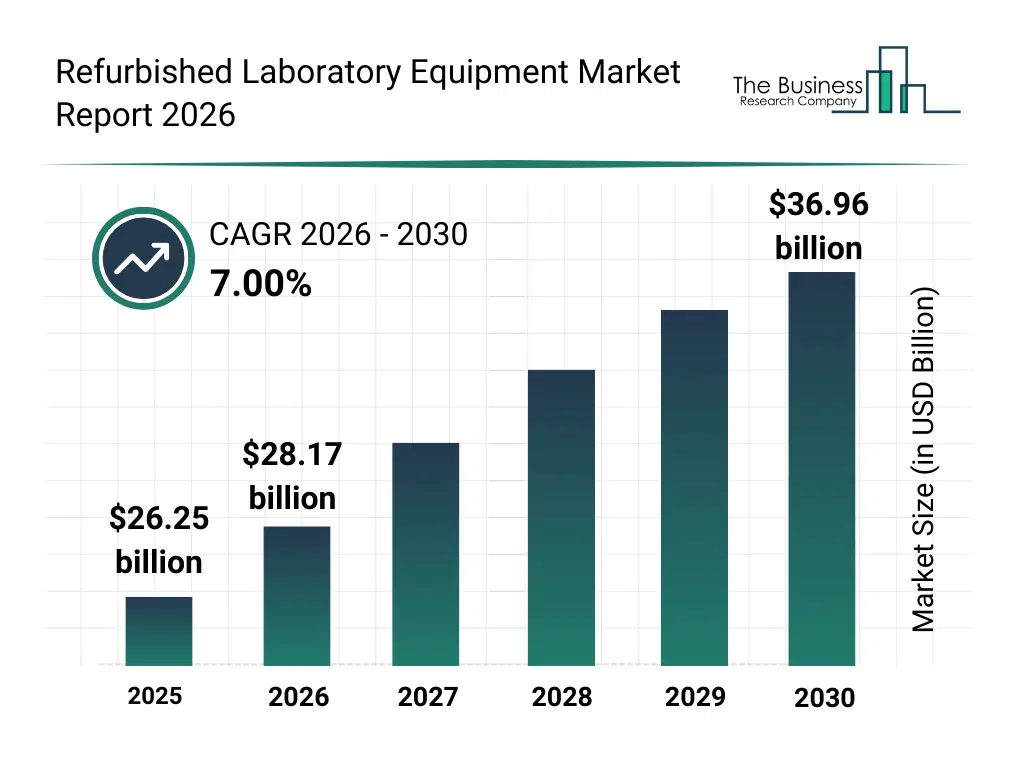
What Is The Refurbished Laboratory Equipment Market Size and Share 2026?
The refurbished laboratory equipment market size has grown strongly in recent years. It will grow from $26.25 billion in 2025 to $28.17 billion in 2026 at a compound annual growth rate (CAGR) of 7.3%. The growth in the historic period can be attributed to high cost of new equipment, budget constraints in labs, growth in academic research, demand for analytical instruments, laboratory expansion in emerging economies.What Is The Refurbished Laboratory Equipment Market Growth Forecast?
The refurbished laboratory equipment market size is expected to see strong growth in the next few years. It will grow to $36.96 billion in 2030 at a compound annual growth rate (CAGR) of 7.0%. The growth in the forecast period can be attributed to sustainable procurement policies, refurbished leasing growth, startup biotech expansion, government research funding, circular economy adoption. Major trends in the forecast period include cost-effective laboratory modernization, extended equipment lifecycle usage, certified refurbishment programs, rising demand from emerging labs, warranty-backed used instruments.
Global Refurbished Laboratory Equipment Market Segmentation
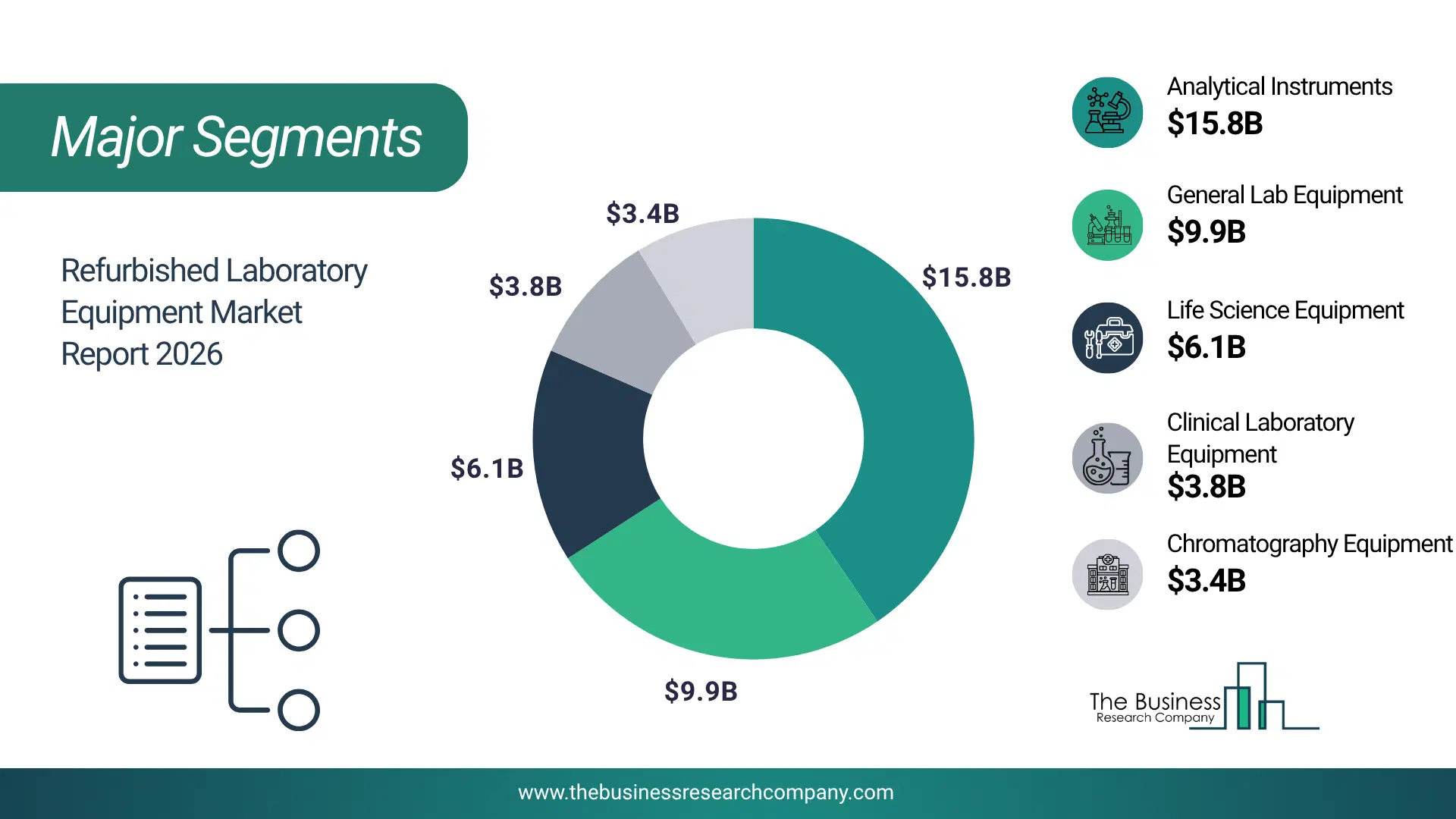
1) By Type Of Equipment: Analytical Instruments, General Lab Equipment, Life Science Equipment, Clinical Laboratory Equipment, Chromatography Equipment 2) By Pricing: Low-Cost Equipment, Mid-Range Equipment, Premium Quality Equipment, Leasing Options 3) By Sales Channel: Direct Sales, Online Marketplaces, Distributor Networks, Auctions, Third-Party Resellers 4) By End-User: Healthcare Facilities, Pharmaceutical And Biotechnology Companies, Academic And Research Institutions Subsegments: 1) By Analytical Instruments: Spectrophotometers, Microscopes, Balances, pH Meters, Titrators, Centrifuges 2) By General Lab Equipment: Hot Plates, Magnetic Stirrers, Incubators, Water Baths, Autoclaves 3) By Life Science Equipment: Polymerase Chain Reaction (PCR) Machines, Gel Electrophoresis Systems, Microplate Readers, Cell Counters, Cryogenic Freezers 4) By Clinical Laboratory Equipment: Hematology Analyzers, Clinical Chemistry Analyzers, Coagulation Analyzers, Urinalysis Analyzers 5) By Chromatography Equipment: High-Performance Liquid Chromatography (HPLC) Systems, Gas Chromatography (GC) Systems, Ion Chromatography (IC) Systems, Thin Layer Chromatography (TLC) Equipment The top segments in the refurbished laboratory equipment market will be: • Analytical Instruments will reach $15.71 billion by 2030. • General Lab Equipment will reach $9.88 billion by 2030. • Life Science Equipment will reach $6.03 billion by 2030. • Clinical Laboratory Equipment will reach $3.77 billion by 2030. • Chromatography Equipment will reach $3.3 billion by 2030.What Is The Driver Of The Refurbished Laboratory Equipment Market?
The growth of academic research institutions is expected to propel the growth of the refurbished laboratory equipment market going forward. Academic research institutions refer to universities, colleges, and dedicated research organizations that conduct systematic studies, experiments, and investigations to advance knowledge. The growth of academic research institutions is driven by rising government and private funding, fostering new centers, attracting talent, and enabling advanced scientific research. Refurbished laboratory equipment offers academic research institutions affordable access to advanced tools for quality experiments and practical training while supporting sustainability by extending the equipment’s lifecycle. For instance, in November 2024, according to the National Center for Science and Engineering Statistics, a US-based government organization, in fiscal year 2023, research and development (R&D) spending by academic institutions rose by 11.2%, marking the highest growth rate in current dollar terms. Total academic R&D expenditures reached $108.8 billion, reflecting an increase of $11.0 billion compared to fiscal year 2022. Therefore, the growth of academic research institutions is driving the growth of the refurbished laboratory equipment industry.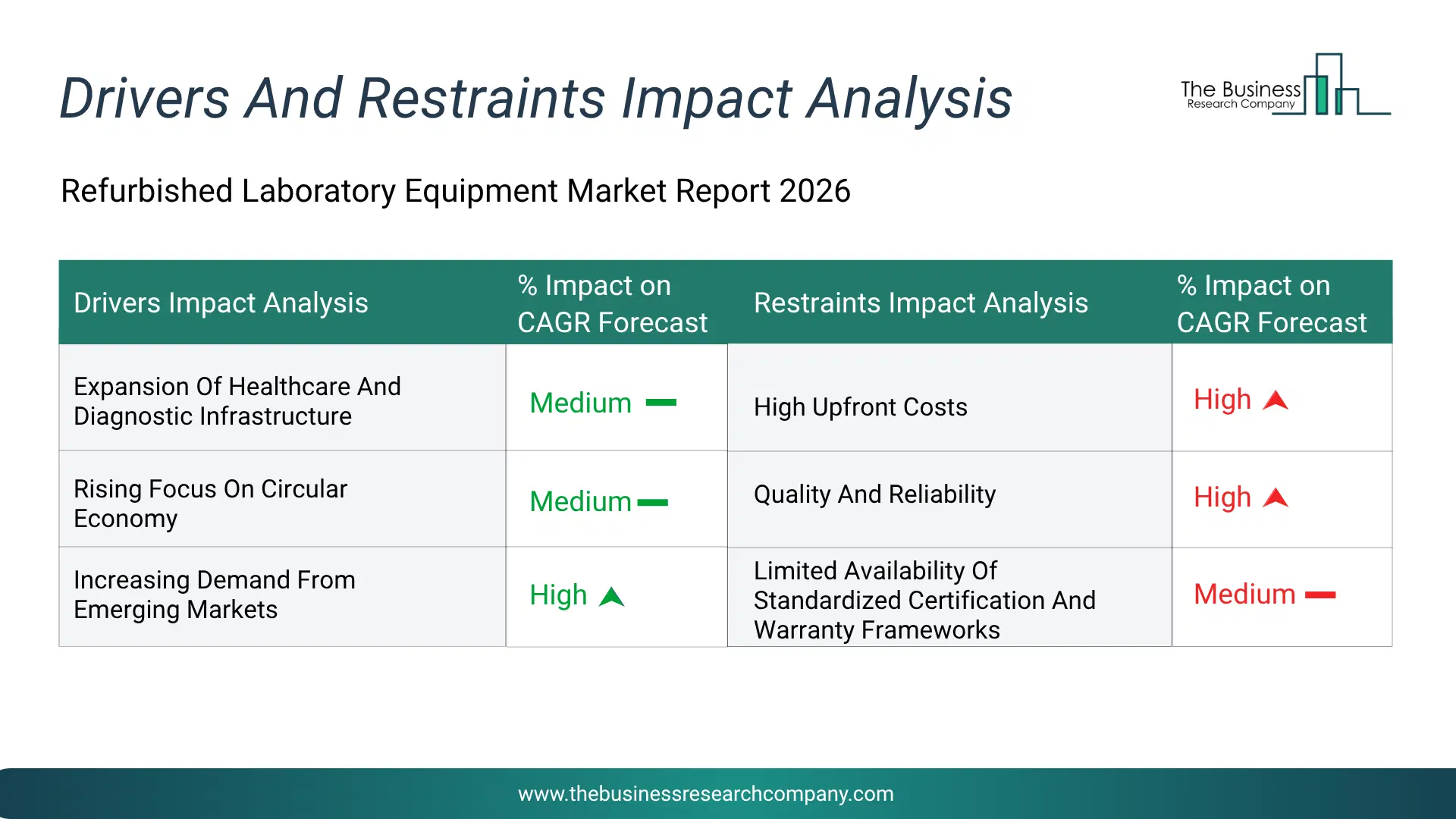
Infographic Chart Showing Key Market Drivers Analysis And Restraints For Refurbished Laboratory Equipment Market
The chart presents an impact analysis of key drivers and restraints, quantifying their relative influence on the market's growth rate and helping assess the balance between growth enablers and limiting factors. This chart offers a high-level perspective; the full report contains more detailed insights.
How Will The Drivers Impact Growth In The Global Refurbished Laboratory Equipment Market?
• Expansion Of Healthcare And Diagnostic Infrastructure (Medium) – During the forecast period, the expansion of healthcare and diagnostic infrastructure is expected to become a key growth driver for the refurbished laboratory equipment market by 2030. The establishment of new hospitals, clinics, research centers, and diagnostic laboratories is increasing demand for laboratory instruments. Budget limitations in many institutions make refurbished equipment an attractive and economical alternative to new systems. Faster deployment needs, particularly during public health crises, further strengthen demand for readily available and validated refurbished instruments. The steady development of laboratory networks globally continues to support consistent market growth. • Rising Focus On Circular Economy (Medium) – During the forecast period, the growing emphasis on circular economy principles is expected to emerge as a major factor driving expansion of the refurbished laboratory equipment market by 2030. Increasing regulatory and institutional pressure to reduce electronic waste and improve sustainability performance is encouraging laboratories to extend equipment lifecycles through refurbishment. Organizations are incorporating environmental, social, and governance (esg) criteria into procurement strategies, favoring reuse over replacement. Refurbishment providers are also enhancing quality certification and warranty offerings, strengthening buyer confidence. • Increasing Demand From Emerging Markets (High) – During the forecast period, the increasing demand from emerging markets is expected to act as a key growth catalyst for the refurbished laboratory equipment market by 2030. Rapid expansion of healthcare and academic research capacity in developing economies is driving the need for affordable laboratory solutions. Refurbished equipment enables institutions to scale operations efficiently while managing capital expenditure constraints. Growing government investment in diagnostics and life sciences research further strengthens procurement of cost-effective laboratory systems.How Will The Restraints Impact Growth In The Global Refurbished Laboratory Equipment Market?
• High Upfront Costs (High) – During the forecast period, the high upfront costs act as a restraint on the refurbished laboratory equipment market because, despite being cheaper than new instruments, some refurbished systems still require a significant initial investment that smaller labs and institutions may find challenging to afford. These costs can include inspection, calibration, and warranty services needed to ensure equipment reliability. In emerging markets or budget-constrained facilities, such expenses can limit adoption. Additionally, the perception that refurbishment involves extra maintenance or hidden costs may discourage potential buyers. As a result, high upfront expenses can slow market growth despite the long-term savings offered by refurbished equipment. • Quality And Reliability (High) – During the forecast period, the quality and reliability act as a restraint on the refurbished laboratory equipment market because potential buyers may perceive restored instruments as less dependable than new ones. Concerns over performance consistency, calibration accuracy, and the lifespan of refurbished components can limit adoption, especially in critical research and diagnostic settings. Strict regulatory and safety standards further heighten these concerns, making organizations cautious. Any past instances of equipment failure can reinforce doubts about reliability. Consequently, perceived or real quality and reliability issues can slow the market’s growth despite cost advantages. • Limited Availability Of Standardized Certification And Warranty Frameworks (Medium) – During the forecast period, the limited availability of standardized certification and warranty frameworks acts as a restraint for the refurbished laboratory equipment market by creating uncertainty regarding product quality and post-purchase support. The absence of uniform global standards makes it difficult for buyers to verify the condition, performance, and compliance of refurbished instruments. This lack of standardization increases perceived risk, particularly among hospitals, research institutes, and diagnostic laboratories that require high reliability. Additionally, inconsistent warranty coverage across suppliers reduces buyer confidence and slows purchasing decisions. As a result, market expansion is hindered due to trust and assurance gaps.Key Players In The Global Refurbished Laboratory Equipment Market
Major companies operating in the refurbished laboratory equipment market are Copia Scientific LLC, American Instrument Exchange Inc., ARC Scientific LLC, Spectralab Scientific Inc., International Equipment Trading Ltd., EquipNet Inc., LabX Media Group, LabMart Inc., GovDeals Inc., LabWorld Inc., GenTech Scientific Inc., New Life Scientific Inc., Marshall Scientific LLC, Lab Resale LLC, Scientific Equipment Source Inc., Atlantic Lab Equipment, EquipService Inc., LabXchange Inc., Scientific Surplus LLC, Lab Equipment Depot Inc.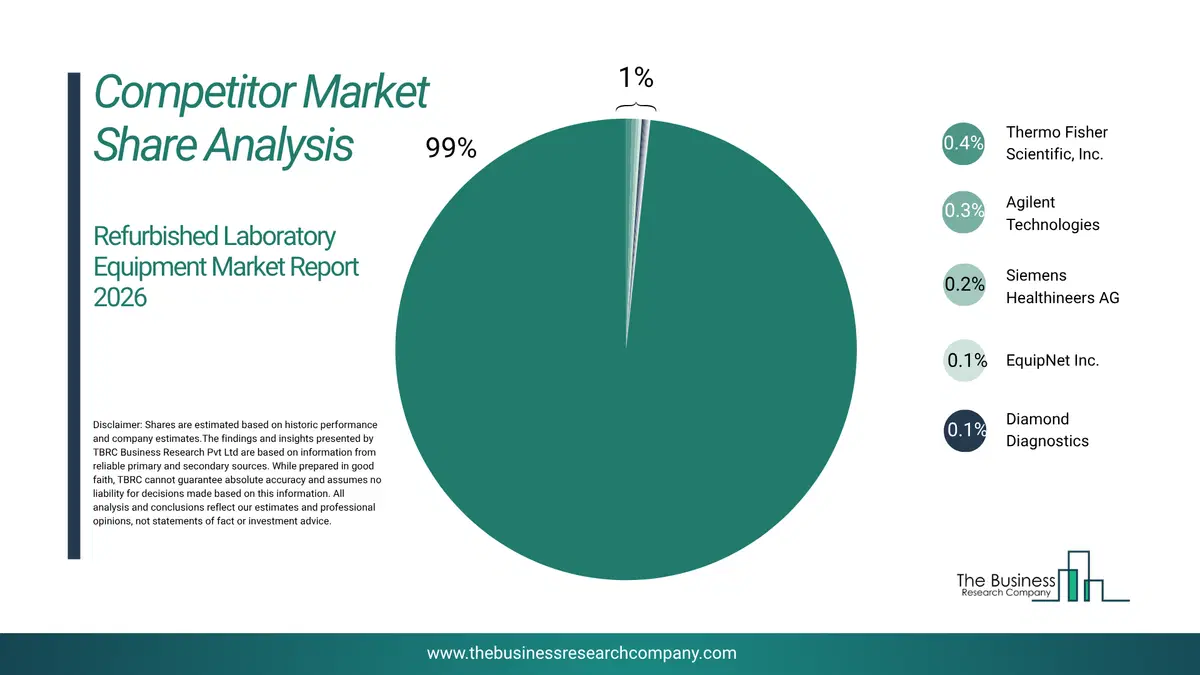
This chart is for illustrative purposes; the full report includes a detailed competitor analysis and comprehensive overview of the top 10 companies in the market.
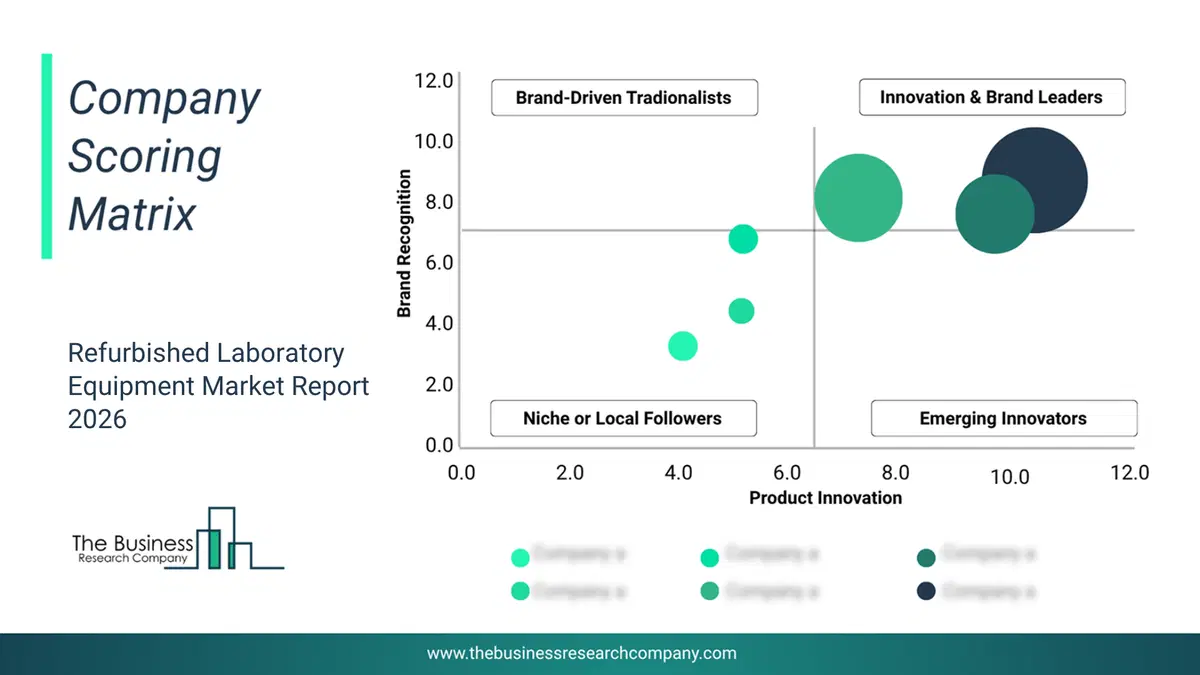
This chart maps companies by product innovation and brand strength, with bubble size indicating relative revenue, helping identify market leaders, challengers, and niche players. This is an illustrative chart; the full report provides a complete and accurate competitive analysis.
Global Refurbished Laboratory Equipment Market Trends and Insights
Major companies operating in the refurbished laboratory equipment market are focusing on sustainability-driven innovation, such as my green lab act-labeled products, to provide laboratories with environmentally responsible instruments and promote a circular economy through refurbishment and recycling programs. My green lab act-labeled products refer to laboratory instruments certified for their reduced environmental footprint, including lower energy use, minimized waste, and sustainable design. For instance, in June 2024, Agilent Technologies Inc., a US-based provider of instruments, software, and services, released its annual ESG report highlighting its commitment to sustainability. The report emphasizes a broad and expanding portfolio of eco-friendly solutions designed to help laboratories worldwide minimize waste and reduce the use of nonrenewable resources. Agilent’s initiatives include energy-efficient instruments, refurbishment programs, and environmentally responsible consumables. These efforts support labs in adopting greener practices while maintaining high operational efficiency.What Are Latest Mergers And Acquisitions In The Refurbished Laboratory Equipment Market?
In April 2025, Surplus Solutions LLC, a US-based company that provides Equipment Lifecycle Management (ELM) services, partnered with Certified Genetool to deliver comprehensive, high-quality refurbished laboratory equipment and technical services worldwide. Through this partnership, Surplus Solutions LLC and Certified Genetool aim to enhance services for managing the lifecycle of equipment by improving the refurbishment, maintenance, and technical support of laboratory instruments. Certified Genetool, Inc. is a US-based manufacturer and provider of refurbished, certified, and new laboratory equipment for the academic, biotech, and pharmaceutical industries.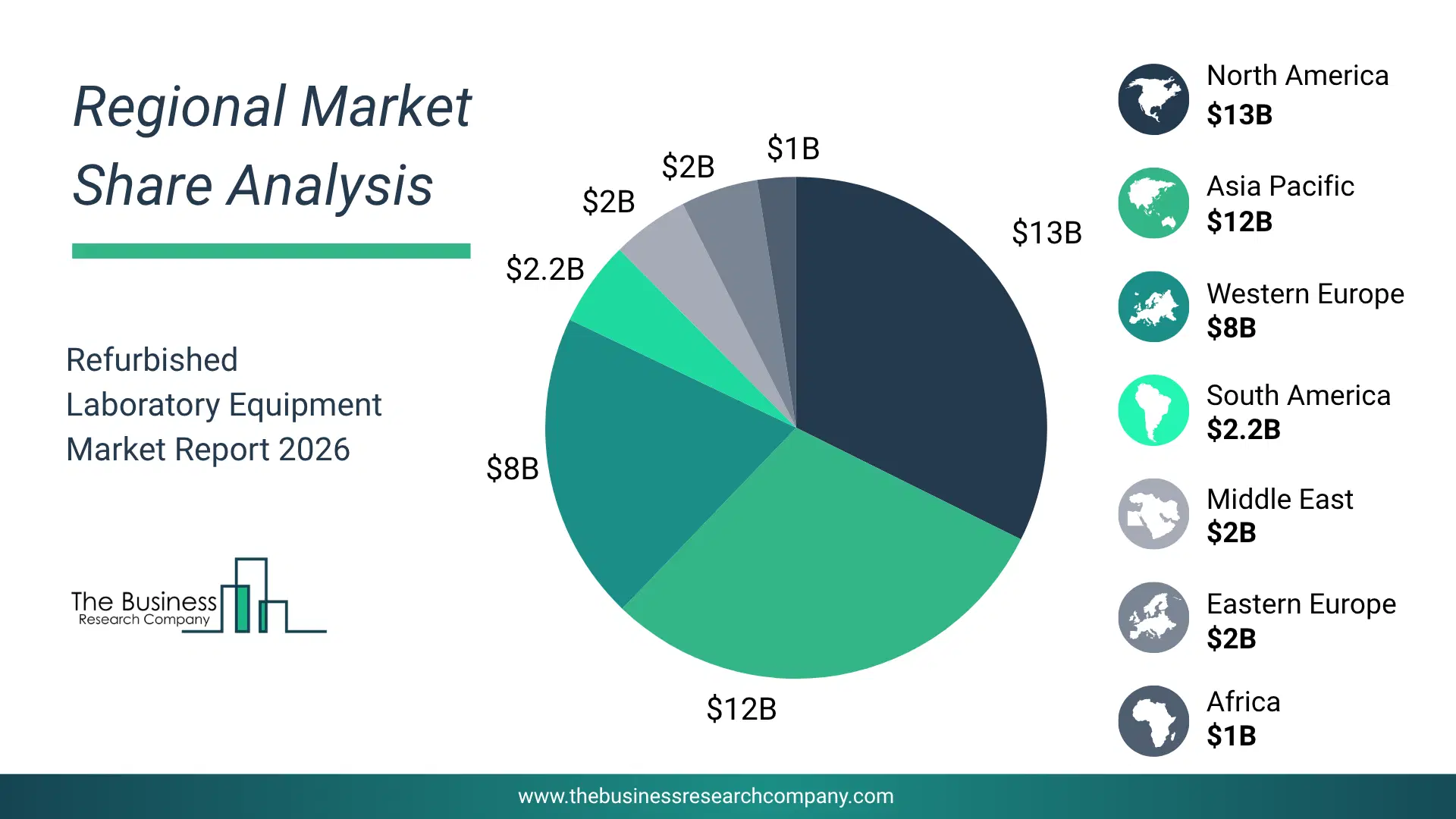
Regional Outlook
North America was the largest region in the refurbished laboratory equipment market in 2025. Asia-Pacific is expected to be the fastest-growing region in the forecast period. The regions covered in this market report are Asia-Pacific, South East Asia, Western Europe, Eastern Europe, North America, South America, Middle East, Africa. The countries covered in this market report are Australia, Brazil, China, France, Germany, India, Indonesia, Japan, Taiwan, Russia, South Korea, UK, USA, Canada, Italy, SpainWhat Defines the Refurbished Laboratory Equipment Market?
The refurbished laboratory equipment market consists of sales of centrifuges, microscopes, spectrophotometers, incubators, and freezers. Values in this market are ‘factory gate’ values, that is the value of goods sold by the manufacturers or creators of the goods, whether to other entities (including downstream manufacturers, wholesalers, distributors and retailers) or directly to end customers. The value of goods in this market includes related services sold by the creators of the goods.How is Market Value Defined and Measured?
The market value is defined as the revenues that enterprises gain from the sale of goods and/or services within the specified market and geography through sales, grants, or donations in terms of the currency (in USD unless otherwise specified). The revenues for a specified geography are consumption values that are revenues generated by organizations in the specified geography within the market, irrespective of where they are produced. It does not include revenues from resales along the supply chain, either further along the supply chain or as part of other products.
This chart presents market attractiveness based on a quantitative evaluation of growth, competition, strategic alignment, and risk, offering a clear view of opportunity areas for decision-making. This chart is for illustrative purposes; the full report contains the complete analysis.

This chart highlights the Total Addressable Market (TAM) by estimating the maximum revenue opportunity using an assumption-driven approach, supporting strategic planning and opportunity sizing across markets. The chart is illustrative; the full report provides a more comprehensive analysis.
What Key Data and Analysis Are Included in the Refurbished Laboratory Equipment Market Report 2026?
The refurbished laboratory equipment market research report is one of a series of new reports from The Business Research Company that provides market statistics, including industry global market size, regional shares, competitors with the market share, detailed market segments, market trends and opportunities, and any further data you may need to thrive in the refurbished laboratory equipment industry. The market research report delivers a complete perspective of everything you need, with an in-depth analysis of the current and future state of the industry.Refurbished Laboratory Equipment Market Report Forecast Analysis
| Report Attribute | Details |
|---|---|
| Market Size Value In 2026 | $28.17 billion |
| Revenue Forecast In 2030 | $36.96 billion |
| Growth Rate | CAGR of 7% from 2026 to 2030 |
| Base Year For Estimation | 2025 |
| Actual Estimates/Historical Data | 2020-2025 |
| Forecast Period | 2026 - 2030 |
| Market Representation | Revenue in USD Billion and CAGR from 2026 to 2030 |
| Segments Covered | Type Of Equipment, Pricing, Sales Channel, End-User |
| Regional Scope | Asia-Pacific, Western Europe, Eastern Europe, North America, South America, Middle East, Africa |
| Country Scope | The countries covered in the report are Australia, Brazil, China, France, Germany, India, ... |
| Key Companies Profiled | Copia Scientific LLC, American Instrument Exchange Inc., ARC Scientific LLC, Spectralab Scientific Inc., International Equipment Trading Ltd., EquipNet Inc., LabX Media Group, LabMart Inc., GovDeals Inc., LabWorld Inc., GenTech Scientific Inc., New Life Scientific Inc., Marshall Scientific LLC, Lab Resale LLC, Scientific Equipment Source Inc., Atlantic Lab Equipment, EquipService Inc., LabXchange Inc., Scientific Surplus LLC, Lab Equipment Depot Inc. |
| Customization Scope | Request for Customization |
| Pricing And Purchase Options | Explore Purchase Options |